May 18, 2026
The Structural Moment Zinc Has Been Waiting For
Energy storage technology rarely advances in a straight line. Breakthroughs in electrochemistry are followed by years of incremental engineering, policy uncertainty, and capital hesitation before any chemistry reaches meaningful commercial scale. Lithium-ion went through this cycle across the 1990s and 2000s, emerging dominant not purely on technical merit, but through a combination of consumer electronics demand, manufacturing scale, and regulatory frameworks that gradually coalesced around its specific risk profile. Today, a parallel process is underway for rechargeable zinc batteries, and the conditions shaping their trajectory are more complex, more contested, and arguably more consequential.
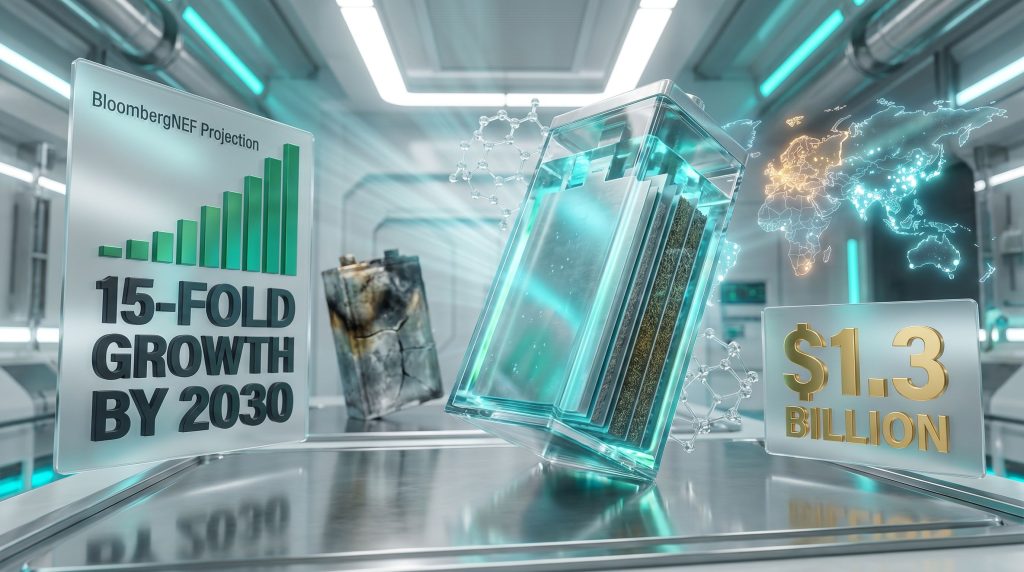
With BloombergNEF projecting that global energy storage demand will grow approximately 15-fold by 2030, the market opening for non-lithium chemistries is not theoretical. It is structural, and zinc-based systems are increasingly well-positioned to capture a meaningful share of it, particularly in applications where safety, material abundance, and long-duration performance outweigh the raw energy density advantages that lithium-ion currently holds.
When big ASX news breaks, our subscribers know first
Why Zinc Works as an Electrochemical Platform
Zinc is the fourth most consumed metal globally, sitting behind iron, aluminium, and copper. Its electrochemical properties have been exploited in primary (non-rechargeable) batteries for well over a century, which means the foundational chemistry is mature and the industrial supply chains are already developed. What has changed in the past decade is the concerted scientific and commercial effort to make zinc work reliably in rechargeable configurations.
The core appeal of zinc as an anode material centres on several interlocking advantages:
- Zinc operates safely in aqueous (water-based) electrolytes, which are intrinsically non-flammable and far less thermally volatile than the organic electrolytes used in lithium-ion cells
- The theoretical volumetric capacity of zinc is approximately 5,855 mAh/cm³, which is competitive with many alternative anode materials being explored for post-lithium systems
- Zinc is relatively abundant geographically, with major production concentrated in China, Peru, Australia, India, and the United States, reducing the single-source supply chain vulnerabilities that affect cobalt and lithium
- End-of-life processing for zinc batteries is considerably more straightforward than for lithium-ion, given that zinc is already extensively recycled in the global metals economy
At a systems level, comparing rechargeable zinc batteries to lithium-ion requires separating cell-level metrics from project-level economics. Lithium-ion, particularly lithium iron phosphate (LFP), currently holds advantages in gravimetric energy density and cycle life in many configurations. However, when total installed cost, insurance requirements, fire suppression infrastructure, permitting complexity, and regulatory compliance costs are factored in, the gap narrows considerably for stationary and long-duration applications.
The Main Rechargeable Zinc Chemistries and Their Commercial Status
Rechargeable zinc batteries are not a single technology. They encompass a family of distinct chemistries, each with different performance characteristics, commercialisation timelines, and application fits.
| Battery Type | Key Advantage | Primary Challenge | Commercialisation Stage |
|---|---|---|---|
| Zinc-Ion | Low cost, aqueous electrolyte | Dendrite growth, limited cycle life | Early commercial |
| Zinc-Air | Very high theoretical energy density | Rechargeability, catalyst durability | Research/pilot |
| Zinc-MnO₂ | Abundant materials, very low cost | Reaction complexity, cathode instability | Research/pilot |
| Zinc-Nickel | High performance, non-flammable | Higher manufacturing cost | Commercial (niche) |
| Zinc-Bromine | Long-duration suitability | Electrolyte management complexity | Commercial (scaling) |
Zinc-ion batteries are attracting the most broad-based research interest, operating through the insertion and extraction of zinc ions within a cathode host material, typically manganese dioxide or vanadium-based compounds. The primary engineering barrier remains dendrite formation at the zinc anode during repeated charge-discharge cycles, which progressively degrades cell performance and can cause internal short circuits.
Zinc-air systems theoretically offer energy densities approaching 1,000 Wh/kg, making them one of the most energy-dense electrochemical platforms available. In practice, the challenge of making the oxygen reduction and evolution reactions efficient and durable enough for deep cycling has prevented commercial scale-up beyond primary applications. Furthermore, the battery recycling breakthrough emerging from China may yet influence how these secondary chemistries are treated at end of life.
Zinc-bromine flow batteries are the furthest along in terms of grid-scale commercial deployment, largely because the flow architecture separates the energy storage medium from the power conversion components, allowing independent scaling and simpler management of the bromine electrolyte.
A Critical Insight on Zinc-MnO₂ Rechargeability
One of the more consequential recent findings in zinc battery research relates to the mechanism underlying apparent rechargeability in aqueous zinc-manganese dioxide cells. Research supported by the U.S. National Science Foundation found that the charge storage process in these systems is driven primarily by proton (hydrogen ion) insertion into the MnO₂ lattice rather than zinc ion reinsertion.
This distinction fundamentally reframes cathode design priorities: optimising for proton transport rather than zinc ion diffusion pathways opens entirely different materials engineering directions, and explains some of the cycle degradation patterns that had previously been attributed to zinc-side failure.
Capital Flows and Manufacturing Reality: What $1.3 Billion Has Built
Since the Zinc Battery Initiative was established in 2020 under the International Zinc Association, the sector has attracted over $1.3 billion in combined private and public investment, resulting in approximately half a dozen factory builds across North America and Asia. The investment pathways have varied significantly by company and chemistry.
| Investment Pathway | Example Application | Capacity Outcome |
|---|---|---|
| Combined public and private funding | Zinc-bromine grid storage manufacturing | Up to 8 GW anticipated annual output across two facilities |
| Purely private capital | Nickel-zinc data centre backup power | Niche commercial deployment at scale |
| Government contract revenue | Nickel-zinc defence applications | Specialised supply to military platforms |
Eos Energy Enterprises, which produces zinc-bromine batteries, has developed two manufacturing facilities in Pennsylvania with an anticipated combined annual output capacity of 8 GW, supported by both private capital and public funding mechanisms. ZincFive, a nickel-zinc manufacturer, has taken an entirely private funding route and established a commercial position in data centre uninterruptible power supply applications, where the non-flammable chemistry provides a decisive safety advantage over lithium-ion alternatives in densely occupied facilities.
AEsir Technologies, another nickel-zinc producer, has transitioned into fulfilling defence contracts, supplying backup power systems for military platforms including aircraft and submarines, a segment where performance reliability under extreme conditions and operational safety carry premium value. In addition, the broader battery metals investment landscape is increasingly recognising zinc as a credible long-duration storage candidate alongside more established chemistries.
Regional Dynamics and the Europe Problem
North America currently leads commercialisation momentum, with a combination of private capital, public funding programmes, and active engagement between battery developers and federal research infrastructure. Asia is accelerating rapidly: GP Energy Tech, a zinc battery manufacturer, is developing factory capacity within the Johor-Singapore Special Economic Zone, leveraging the infrastructure and policy environment of one of Southeast Asia's most strategically significant industrial corridors.
Europe presents a more complicated picture. Despite having a sophisticated energy storage policy framework and strong demand fundamentals driven by aggressive renewable penetration targets, zinc battery developers in the region lack equivalent access to the demonstration funding and production-scale incentives available in North America and Asia. Without targeted intervention to close this gap, the zinc battery manufacturing base that emerges over the next decade is likely to be geographically concentrated in ways that create new supply chain dependencies for European markets.
The Core Technical Barriers Limiting Commercial Scale
Dendrite Formation and Anode Degradation
The zinc anode problem is the most widely discussed technical barrier in rechargeable zinc battery development, and for good reason. During charging, zinc deposits unevenly on the anode surface, forming needle-like metallic structures called dendrites. Over repeated cycles, these dendrites grow progressively, eventually penetrating the separator and causing internal short circuits. Several engineering strategies are being pursued to address this:
- Electrolyte additive engineering: Introducing additives that modify zinc deposition behaviour and promote uniform plating
- Anode surface modification: Coating the zinc anode with materials that reduce nucleation barriers and guide uniform zinc deposition
- Three-dimensional anode architectures: Designing porous zinc structures that distribute current density and minimise localised deposition
- Separator modification: Developing separators with zinc-ion selective channels that physically inhibit dendrite propagation
Cathode Instability in Aqueous Environments
Manganese dioxide cathodes, which are widely used in zinc-ion systems due to their low cost and material abundance, dissolve progressively in aqueous electrolytes during cycling. Manganese ion dissolution represents a direct capacity loss mechanism and contributes to electrolyte contamination. Stabilisation strategies include pH buffering of the electrolyte, cathode coating approaches, and exploration of alternative cathode hosts such as vanadium oxides and Prussian blue analogue compounds.
Electrolyte Degradation Over Extended Cycling
Aqueous zinc battery electrolytes, while safer than organic alternatives, are not chemically static over thousands of charge-discharge cycles. pH shifts, water consumption through side reactions, and accumulated dissolved species progressively alter the electrochemical environment, affecting both anode and cathode performance. Designing electrolyte systems that maintain compositional stability across the intended service life of a grid storage installation remains an active research priority. Monitoring the battery raw materials market is consequently important for understanding how electrolyte material costs and availability may shift as these systems scale.
Regulatory Misalignment: The Hidden Competitive Disadvantage
Current battery safety standards were developed specifically to manage the thermal runaway risk inherent to lithium-ion chemistry. Applying those same frameworks to non-flammable zinc systems imposes compliance costs and monitoring requirements that have no meaningful safety justification for aqueous battery technologies.
This regulatory misalignment represents one of the most significant and least discussed barriers facing rechargeable zinc batteries in the near term. Lithium-ion safety standards require expensive thermal monitoring infrastructure, fire suppression systems, and facility design provisions that reflect the genuine risk of thermal runaway and potential fire propagation in lithium-based systems. Zinc batteries, operating in aqueous electrolytes, do not carry this risk profile.
The consequence is that zinc battery projects are currently assessed and priced against a safety compliance burden designed for a different chemistry, which distorts the true economic comparison. A zinc battery installation that requires no thermal monitoring hardware and no active fire suppression infrastructure should reflect those cost advantages in its project economics, but current standards prevent that from happening cleanly.
The Zinc Battery Initiative is actively working to address this through working group formation, engaging utilities, regulators, and standards bodies to develop chemistry-specific frameworks that assess zinc systems against their actual risk characteristics rather than inherited lithium-ion assumptions.
The next major ASX story will hit our subscribers first
The Pilot Line Cost Problem and the Financing Gap It Creates
One of the more practically significant barriers that receives insufficient attention in mainstream energy storage coverage is the cost of accessing validation infrastructure. National laboratory pilot line facilities, which battery developers need to validate production processes and generate the performance data required to attract manufacturing-scale investment, can cost in excess of $50,000 per week to access.
For a development-stage company working to bridge from bench-scale electrochemistry to pilot production, this cost structure is prohibitive. The practical effect is that companies that cannot raise sufficient pre-production capital are locked out of the validation infrastructure they need to attract that capital. It is a financing catch-22 that disproportionately affects zinc battery developers relative to well-capitalised lithium incumbents.
Policy intervention targeted at reducing pilot line access costs, through subsidised access programmes or national laboratory co-investment frameworks, represents one of the highest-leverage interventions available to accelerate zinc battery commercialisation.
Application Segments: Where Zinc Creates the Strongest Value Proposition
| Application Segment | Key Selection Criteria | Zinc Chemistry Fit |
|---|---|---|
| Grid / Long-duration storage | Safety, cost per kWh, cycle life | Strong: zinc-bromine, zinc-ion |
| Data centre UPS | Non-flammability, reliability, footprint | Strong: zinc-nickel |
| Defence / Aerospace | Performance density, operational safety | Emerging: zinc-nickel |
| Consumer / Flexible electronics | Form factor, energy density | Early-stage: zinc-ion |
The data centre application is particularly instructive. As hyperscale facilities concentrate enormous power loads in urban and suburban locations, fire risk associated with backup power systems has become a genuine liability concern for facility operators. Nickel-zinc systems, which are non-flammable and can be operated without the fire suppression infrastructure that lithium-ion installations require, carry a procurement advantage that goes beyond raw energy density comparisons.
In defence applications, the combination of operational safety, performance reliability across temperature extremes, and the absence of flammable electrolytes creates a differentiated value proposition for platforms where a battery failure can have consequences far beyond economic loss.
Frequently Asked Questions About Rechargeable Zinc Batteries
Are rechargeable zinc batteries safe compared to lithium-ion?
Zinc batteries using aqueous electrolytes are non-flammable and do not carry the thermal runaway risk that makes lithium-ion battery safety management complex and expensive. This is a fundamental chemistry-level difference, not a design optimisation.
How long do rechargeable zinc batteries last in terms of cycle life?
Cycle life varies considerably by chemistry and configuration. Commercial zinc-nickel systems have demonstrated thousands of cycles in real deployments. Zinc-ion systems are actively improving, with research efforts targeting 5,000-plus cycles through anode and electrolyte engineering. Zinc-bromine flow batteries have demonstrated strong long-duration cycling performance in grid applications.
What is the current cost per kWh for zinc-based storage systems?
Costs vary by chemistry, scale, and application. Zinc-bromine systems designed for long-duration grid storage are targeting cost structures competitive with lithium-ion LFP at comparable discharge durations. For short-duration applications, lithium-ion currently retains a cost advantage at scale.
Why haven't rechargeable zinc batteries replaced lithium-ion already?
The combination of regulatory frameworks built around lithium-ion assumptions, expensive pilot validation infrastructure, risk-averse utility procurement behaviour, and the incumbency advantages of a technology that has already achieved manufacturing scale at hundreds of gigawatt-hours per year explains the slower commercialisation trajectory for zinc, not any fundamental technical inferiority. Understanding critical minerals and energy transition policy is equally important context here.
Policy Levers That Could Shift the Trajectory
The most effective policy mechanisms for accelerating rechargeable zinc battery deployment share a common feature: they are targeted at the specific barriers that market forces alone are not resolving efficiently. These include:
- Production tax credits and investment tax credits extended explicitly to non-lithium long-duration storage technologies, levelling the fiscal landscape relative to lithium incumbents
- Performance-based incentives linked to delivered storage capacity and cycle durability rather than technology type, creating a technology-neutral competitive environment
- Subsidised pilot line access at national laboratory facilities, reducing the validation cost barrier for development-stage companies
- Guaranteed production orders or offtake agreements structured to de-risk the manufacturing scale-up decision for utilities and zinc battery producers alike
The Competitive Positioning of Zinc Against Other Non-Lithium Chemistries
Rechargeable zinc batteries do not compete only against lithium-ion. They exist within a broader landscape of alternative storage chemistries, each with distinct technical and economic profiles:
- Vanadium flow batteries offer excellent cycle life and calendar life but carry high upfront costs driven by vanadium electrolyte pricing, which is subject to significant commodity price volatility
- Sodium-ion batteries share many of the manufacturing process advantages of lithium-ion and are achieving rapid cost reduction in China, but rely on cathode materials with their own supply chain complexities
- Iron-air batteries are targeting multi-day storage durations with very low material costs, but remain at earlier commercial stages with questions around round-trip efficiency still being addressed
Zinc's structural advantages in this competitive landscape centre on material abundance, non-flammability, and the ability to use water-based electrolytes that simplify safety management, reduce insurance costs, and broaden the permissible deployment environments.
Supply Chain Fundamentals and Circular Economy Integration
Zinc as a raw material is produced in over 50 countries, with global refined zinc production exceeding 13 million tonnes annually. This geographic diversity contrasts sharply with the concentrated supply chains for lithium, cobalt, and nickel that create strategic vulnerability for lithium-ion battery manufacturing. Furthermore, global zinc production trends suggest that output diversification will continue, reinforcing zinc's supply chain resilience relative to competing battery materials.
Equally important is the end-of-life dimension. Zinc is one of the most extensively recycled metals in the global economy, with secondary zinc production accounting for approximately 30% of total zinc supply in developed markets. The recycling infrastructure, market mechanisms, and regulatory frameworks for zinc recovery are mature in a way that lithium battery recycling infrastructure is not yet. For rechargeable zinc batteries, this translates into a more credible and near-term circular economy pathway, a consideration that is becoming increasingly material to utility procurement decisions and policy evaluation frameworks.
The Long-Term Outlook Through 2030 and Beyond
The trajectory for rechargeable zinc batteries through the end of the decade will be shaped by the interaction of several converging forces. On the demand side, the BloombergNEF forecast of 15-fold growth in global energy storage capacity by 2030 creates a market environment large enough to support multiple competing chemistries at meaningful scale, rather than requiring zinc to displace lithium-ion head-to-head.
On the supply side, the manufacturing infrastructure being built now, particularly the zinc-bromine facilities in Pennsylvania targeting 8 GW of annual capacity, will establish cost and performance benchmarks that either confirm or revise current projections about where zinc systems can compete economically.
The geopolitical dimension is increasingly relevant. As governments in North America and Asia pursue domestic manufacturing strategies for critical energy technologies, zinc batteries benefit from supply chains that are more geographically distributed and less concentrated in any single jurisdiction than lithium-ion alternatives. This characteristic is likely to become more, not less, commercially significant as energy storage procurement decisions increasingly incorporate supply chain sovereignty considerations alongside pure cost comparisons.
Disclaimer: This article contains forward-looking statements and projections drawn from third-party research and industry analysis. These statements involve inherent uncertainty and should not be construed as investment advice. Readers should conduct independent due diligence before making any investment or commercial decisions related to energy storage technologies or companies operating in this sector.
Ready to Capitalise on the Next Major Battery Metals Discovery?
As zinc batteries reshape the global energy storage landscape and demand for critical minerals surges toward BloombergNEF's projected 15-fold growth by 2030, Discovery Alert's proprietary Discovery IQ model delivers real-time ASX alerts the moment significant mineral discoveries are announced — turning complex data across 30-plus commodities into clear, actionable insights. Explore historic discoveries and their extraordinary returns to understand what's at stake, then begin your 14-day free trial and position yourself ahead of the market.