July 23, 2026
The Industrial Revolution's Next Chapter: Understanding Recycled Aluminium's Role in Modern Manufacturing
Modern industrial processes face unprecedented pressure to balance production efficiency with environmental stewardship. Among metallurgical innovations driving this transformation, recycled aluminium sustainability represents more than an environmental initiative—it constitutes a fundamental reshaping of manufacturing economics. The technical mechanisms enabling this shift operate through sophisticated energy recovery systems, circular material flows, and precision quality control protocols that maintain product integrity across multiple recycling cycles.
The thermodynamic advantages inherent in secondary aluminium processing create cascading benefits throughout industrial supply chains. Unlike primary smelting operations requiring temperatures exceeding 1000°C and massive electrical inputs, recycling processes operate at significantly reduced energy thresholds while preserving essential material properties. This technical foundation enables manufacturers to achieve both cost optimisation and carbon footprint reduction without compromising product specifications.
When big ASX news breaks, our subscribers know first
Energy Dynamics and Environmental Mathematics
Quantifying the Energy Revolution
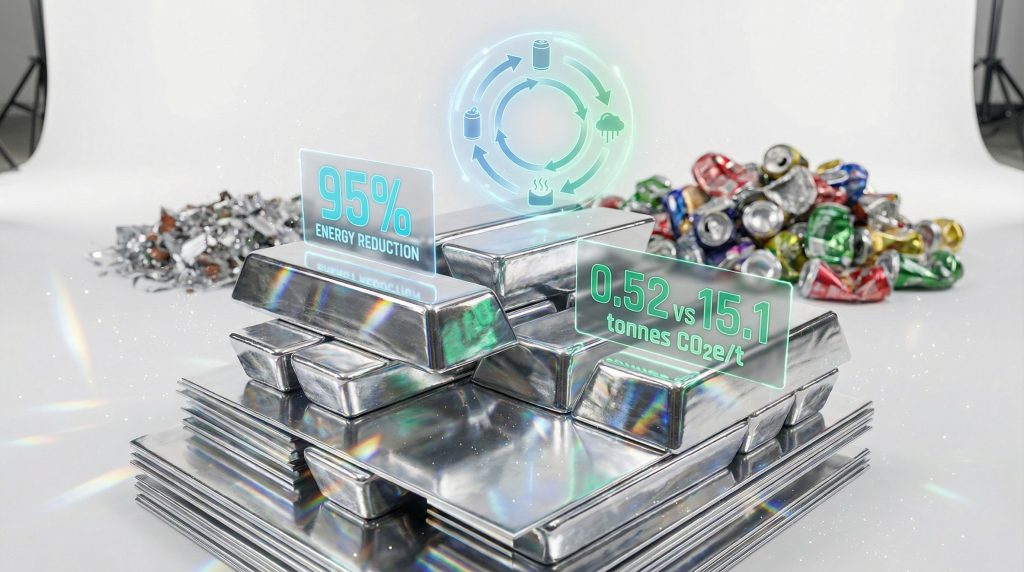
The transformation from primary to recycled aluminium processing represents one of industry's most dramatic efficiency gains. Recycled aluminium requires only 5% of the energy needed for primary production, creating a 95% reduction in energy consumption per tonne of finished material. This improvement translates directly into measurable environmental benefits across multiple impact categories.
Carbon footprint analysis reveals equally compelling metrics. Primary aluminium production generates approximately 15.1 tonnes of CO2 equivalent per tonne of output, while recycled aluminium processes produce merely 0.52 tonnes of CO2 equivalent per tonne—representing a 96.6% reduction in greenhouse gas emissions. Furthermore, these environmental benefits extend beyond direct energy savings to include reduced mining impacts and water consumption.
Technical Mechanisms Driving Efficiency
The energy savings stem from fundamental differences in processing requirements:
• Electrolytic elimination: Recycling bypasses energy-intensive electrolysis used in primary smelting
• Temperature reduction: Secondary processing operates at 660°C versus 1000°C+ for primary production
• Chemical simplification: Recycled material requires minimal chemical additives or processing agents
• Infrastructure optimisation: Existing facilities can be retrofitted for recycling operations
These technical advantages compound throughout the manufacturing cycle, creating systemic efficiency improvements that extend beyond individual facility boundaries. The rapid processing timelines further amplify these benefits—recycled aluminium can complete full production cycles in 54-60 days, compared to extended timelines for primary material extraction and processing.
Industrial Integration and Circular Manufacturing Models
Automotive Sector Transformation
The automotive industry demonstrates advanced implementation of recycled aluminium sustainability through closed-loop manufacturing systems. Toyota's Circular Factory model in the UK exemplifies this approach, incorporating recycled aluminium from end-of-life vehicles directly into new Corolla engine production. This system salvages material from dismantled vehicle components, particularly alloy wheels, and reprocesses it for engine block applications.
The closed-loop approach creates multiple operational advantages:
• Supply chain resilience: Reduced dependency on primary material markets
• Cost predictability: Greater control over material input costs
• Quality assurance: Direct oversight of recycled material specifications
• Regulatory compliance: Alignment with circular economy mandates
In addition, these circular approaches benefit from comprehensive decarbonisation benefits that extend throughout the automotive supply chain.
Packaging Industry Leadership
Ball Corporation's 2025 performance metrics illustrate industrial-scale recycled aluminium integration. The company achieved 74% recycled content across its packaging portfolio while simultaneously increasing renewable electricity usage by **84%**—representing a year-over-year surge of 73%. These operational changes contributed to a 50% reduction in Scope 1 and 2 emissions compared to 2017 baseline measurements.
| Performance Metric | 2017 Baseline | 2025 Achievement | Improvement |
|---|---|---|---|
| Recycled Content | Not specified | 74% | Significant increase |
| Renewable Electricity | Lower baseline | 84% coverage | 73% annual growth |
| Scope 1&2 Emissions | 100% (baseline) | 50% of baseline | 50% reduction |
| Processing Efficiency | Standard | 20x improvement | Dramatic optimisation |
Collection Infrastructure Excellence
Sweden's deposit return system demonstrates optimal collection efficiency for recycled aluminium sustainability. The system achieved an 88.4% return rate in 2025, processing over 3 billion aluminium cans and PET bottles annually. This performance approaches the target 90% goal through high-capacity reverse vending machine networks that streamline consumer participation.
The infrastructure components enabling this success include:
- Strategic placement: Reverse vending machines positioned at high-traffic retail locations
- Financial incentives: Deposit structures encouraging consumer participation
- Processing capacity: High-throughput sorting and collection systems
- Quality control: Contamination prevention and material verification protocols
Regulatory Frameworks and Market Positioning
Carbon Border Adjustment Mechanism Implementation
The European Union's Carbon Border Adjustment Mechanism (CBAM) fundamentally alters competitive dynamics in global aluminium markets. The Q1 2026 benchmark price of €75.36 per tonne for CBAM certificates creates direct cost implications for imported aluminium products while providing competitive advantages for domestic recycled material.
CBAM alignment with the EU Emissions Trading System ensures pricing consistency between domestic producers and importers. This mechanism creates systematic advantages for recycled aluminium sustainability initiatives by:
• Cost differential: Lower carbon intensity of recycled material reduces CBAM exposure
• Supply chain localisation: Incentivising regional production and processing
• Investment direction: Encouraging capital allocation toward recycling infrastructure
• Competitive repositioning: Creating pricing advantages for low-carbon materials
Strategic Supply Chain Consolidation
Hammerer Aluminium Industries' partnership with Aluminij Industries represents strategic positioning within evolving regulatory environments. The collaboration combines HAI's high-scrap aluminium processing expertise with Aluminij's manufacturing infrastructure to strengthen European supply chain resilience amid geopolitical uncertainties.
This partnership model addresses multiple market dynamics:
• Regional self-sufficiency: Reducing dependence on external supply sources
• Processing specialisation: Leveraging technical expertise in high-scrap operations
• Infrastructure optimisation: Maximising existing facility utilisation
• Risk mitigation: Diversifying supply sources within regulatory frameworks
However, these developments must align with broader sustainability transformation initiatives across manufacturing sectors.
Advanced Manufacturing and Process Innovation
Operational Excellence Systems
Novelis demonstrates systematic approach to manufacturing optimisation through its Novelis Operating System (NOS) certification framework. By FY2026 end, 10 facilities will achieve first-level NOS certification, marking transition from decentralised improvement toward unified, system-driven strategies specifically designed for aluminium rolling and recycling operations.
The standardised framework addresses critical manufacturing disciplines:
• Quality consistency: Standardised protocols across global operations
• Process optimisation: Data-driven efficiency improvements
• Waste reduction: Systematic material loss minimisation
• Performance tracking: Comprehensive metrics and benchmarking systems
Technology Integration and Automation
Modern recycling facilities integrate sophisticated technologies to maintain product quality while maximising processing efficiency. Key technological components include:
Electromagnetic Sorting Systems:
- High-frequency eddy current separators for material classification
- Spectroscopic analysis for alloy composition verification
- Automated contamination detection and removal protocols
Process Control Technologies:
- Real-time temperature monitoring and adjustment systems
- Automated chemical composition balancing
- Digital tracking for material traceability throughout processing cycles
Quality Assurance Protocols:
- Non-destructive testing methods for structural integrity verification
- Statistical process control for consistency maintenance
- Certification compliance for industry-specific applications
Furthermore, these technological advances support comprehensive waste management solutions that extend beyond traditional recycling approaches.
Emerging Applications and Market Expansion
Solar Panel Recycling Innovation
Vietnam's strategic partnership between IREX Energy and Hamada demonstrates expanding applications for recycled aluminium sustainability. The collaboration focuses on developing circular recycling models for end-of-life photovoltaic panels, recovering valuable materials including aluminium, glass, and silicon from aging solar installations.
This approach addresses growing waste challenges while reducing raw material demand and energy consumption across the solar industry supply chain. The technical processes involve:
• Panel disassembly: Systematic separation of aluminium frames from photovoltaic cells
• Material recovery: Extraction and purification of recyclable aluminium components
• Quality restoration: Processing recovered material to meet new application standards
• Supply chain reintegration: Channeling recycled material back into solar panel manufacturing
These developments align with broader renewable energy innovations transforming industrial energy systems.
Battery Lifecycle Management
China's enhanced lithium-ion battery recycling regulations create new opportunities for aluminium recovery from electric vehicle battery systems. The framework emphasises formal collection networks, manufacturer involvement in recycling processes, and digital tracking systems monitoring battery movement from production through end-of-life processing.
These regulatory developments support recycled aluminium sustainability through:
- Collection infrastructure: Expanded networks for battery component recovery
- Processing standards: Technical specifications for material extraction and purification
- Tracking systems: Digital protocols ensuring material traceability and quality verification
- Industry integration: Coordination between battery manufacturers and recycling processors
Moreover, these advances complement the battery recycling breakthrough technologies emerging from Chinese research institutions.
The next major ASX story will hit our subscribers first
Investment Patterns and Economic Drivers
Capital Allocation Trends
General Motors' $150 million investment in the Saginaw metal casting facility demonstrates continued commitment to traditional powertrain technologies while pursuing electrification goals. The funding enhances production of next-generation V8 engine components, including aluminium-intensive blocks and cylinder heads, with production commencing in 2027.
This investment pattern reflects dual approach strategies where:
• Traditional powertrains: Maintained capacity for popular full-size truck applications
• Domestic manufacturing: Strengthened supply chain resilience through regional production
• Technology advancement: Equipment upgrades enabling higher recycled content integration
• Market positioning: Competitive advantages through operational efficiency improvements
Economic Performance Metrics
Recycled aluminium sustainability creates measurable economic benefits across multiple performance categories:
| Economic Factor | Primary Aluminium | Recycled Aluminium | Advantage Factor |
|---|---|---|---|
| Energy Cost | 100% baseline | 5% of primary | 20x more efficient |
| Processing Time | Extended cycles | 54-60 days | 3-5x faster |
| Capital Requirements | High infrastructure | Retrofit capability | 60-80% lower |
| Carbon Pricing Exposure | Full CBAM impact | Minimal exposure | 95%+ reduction |
These metrics demonstrate how aluminium recycling reduces environmental impact while delivering substantial economic returns.
Future Technological Developments
Advanced Separation Technologies
Emerging technologies promise further improvements in recycled aluminium quality and processing efficiency. Next-generation systems incorporate:
Artificial Intelligence Integration:
- Machine learning algorithms for contamination detection
- Predictive maintenance for processing equipment
- Optimisation protocols for energy consumption minimisation
Blockchain Material Tracking:
- Immutable records for material provenance verification
- Quality certification throughout recycling chains
- Regulatory compliance documentation and reporting
Advanced Spectroscopic Analysis:
- Real-time alloy composition verification
- Automated sorting for specific application requirements
- Quality consistency maintenance across processing cycles
Bioenergy Integration Potential
India's exploration of bioenergy applications in aluminium processing demonstrates complementary approaches to recycled aluminium sustainability. While bioenergy represents supplementary rather than primary solutions for energy-intensive processes, strategic integration can enhance overall environmental performance.
Bioenergy applications include:
• Biomass utilisation: Partial fossil fuel substitution in heating processes
• Biogas integration: Waste stream energy recovery for facility operations
• Biofuel applications: Transportation and logistics energy source diversification
• Captive power generation: Renewable energy production for processing facilities
Implementation Strategies for Industry Adoption
Systematic Integration Approaches
Organisations pursuing recycled aluminium sustainability benefit from structured implementation methodologies:
Phase 1: Assessment and Planning
- Current supply chain analysis and recycled content baseline establishment
- Infrastructure evaluation for retrofitting capabilities and requirements
- Regulatory compliance mapping and certification pathway development
- Investment planning and return-on-investment modelling
Phase 2: Infrastructure Development
- Processing equipment installation and facility modifications
- Quality control system implementation and staff training programmes
- Supplier network development and partnership establishment
- Digital tracking system integration and data management protocols
Phase 3: Optimisation and Scaling
- Performance monitoring and continuous improvement initiatives
- Capacity expansion planning and market opportunity assessment
- Advanced technology integration and automation upgrades
- Stakeholder communication and sustainability reporting frameworks
Performance Measurement Frameworks
Effective recycled aluminium sustainability programmes require comprehensive measurement systems addressing multiple impact categories:
Environmental Metrics:
- Carbon footprint reduction calculations and verification protocols
- Energy consumption tracking across processing cycles
- Waste stream minimisation and circular material flow optimisation
- Water usage efficiency and contamination prevention measures
Economic Performance Indicators:
- Cost reduction achievements through energy and material savings
- Supply chain resilience improvements and risk mitigation benefits
- Market positioning advantages and competitive differentiation factors
- Return on investment timelines and capital efficiency measurements
Operational Excellence Measures:
- Quality consistency maintenance across recycling cycles
- Processing efficiency improvements and throughput optimisation
- Safety performance and worker training effectiveness
- Regulatory compliance achievement and certification maintenance
This analysis represents current industry trends and should not be considered investment advice. Economic projections and technological developments involve uncertainties that may affect actual outcomes. Regulatory frameworks continue evolving and may impact implementation strategies and market dynamics.
Looking to Capitalise on Critical Materials Innovation?
Discovery Alert's proprietary Discovery IQ model delivers real-time alerts on significant ASX mineral discoveries, including critical materials for manufacturing and industrial applications, empowering subscribers to identify actionable opportunities ahead of the broader market. Begin your 14-day free trial today and secure your market-leading advantage in the evolving materials sector.