June 18, 2026
Regional Energy Markets Face Unprecedented Vulnerability
Regional energy markets face unprecedented vulnerability as coordinated infrastructure targeting reshapes traditional risk assessment frameworks across the Middle East. The convergence of advanced drone technology, strategic facility selection, and multi-theatre operational coordination has fundamentally altered the security landscape for critical energy assets. Furthermore, our detailed oil price rally analysis demonstrates how investment models that previously relied on isolated incident probability calculations now confront systematic targeting patterns.
The evolution from opportunistic attacks on energy facilities to sophisticated, multi-front campaigns represents a paradigm shift in energy security risk modelling. Traditional approaches that compartmentalised geopolitical risk by individual facility or geographic region have proven inadequate when facing coordinated strikes across Saudi Arabia, Iraqi Kurdistan, and Israeli offshore fields within a compressed timeframe.
When big ASX news breaks, our subscribers know first
Understanding Critical Infrastructure Vulnerability in High-Threat Environments
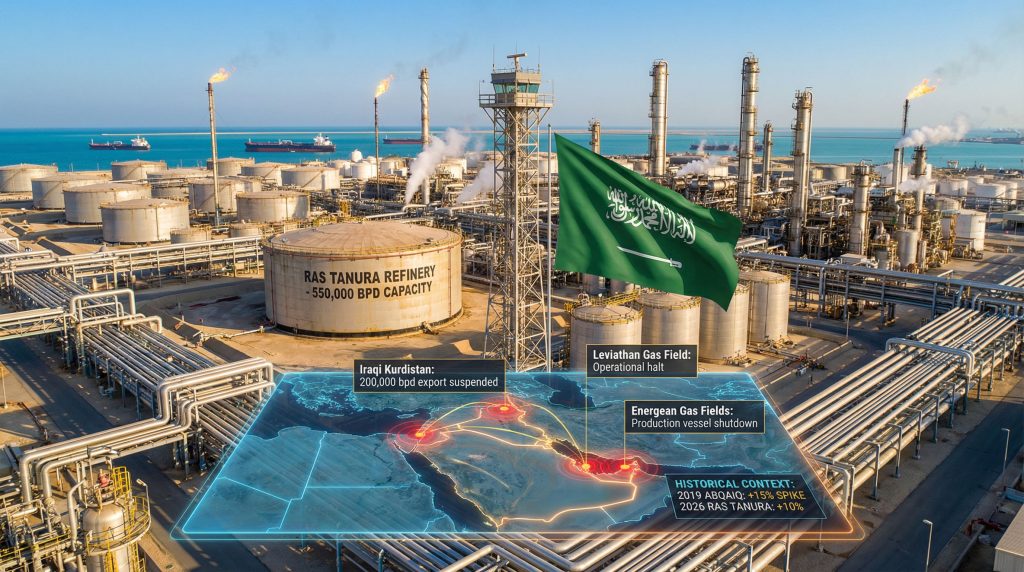
The saudi aramco ras tanura refinery shutdown demonstrates how modern energy facilities must balance operational continuity with threat mitigation in real-time scenarios. The facility's 550,000 barrels per day capacity represents substantial economic leverage for hostile actors seeking maximum market disruption through strategic targeting.
The distinction between precautionary and damage-based shutdowns has become critical for understanding operational risk exposure. Saudi Aramco's saudi aramco ras tanura refinery shutdown following drone interception illustrates how threat proximity alone can trigger substantial capacity offline periods, even without direct structural damage.
Operational Response Protocols Under Active Threat Conditions
Advanced facility management systems now incorporate rapid selective shutdown capabilities that enable domestic supply continuity while eliminating export capacity during high-threat windows. The Saudi facility maintained petroleum product supply to local markets despite precautionary unit shutdowns, demonstrating sophisticated operational flexibility designed for threat-responsive operations.
Drone interception debris caused limited fire damage, yet operational protocols required facility shutdown as standard procedure. This response pattern indicates that modern energy infrastructure operates under presumptive threat conditions rather than reactive damage assessment frameworks.
Regional Cascade Effects Across Multiple Energy Domains
The coordinated nature of disruptions spanning Iraqi Kurdistan's 200,000 barrels per day export capacity and Israeli offshore gas fields creates compound supply anxiety beyond individual facility impact calculations. Multiple operators including DNO, Gulf Keystone Petroleum, Dana Gas, and HKN Energy implemented precautionary production suspensions simultaneously across Kurdish fields.
Israeli gas field shutdowns affected both the Chevron-operated Leviathan field and smaller Energean production vessels, throttling gas exports to Egypt and demonstrating how offshore energy assets face similar vulnerability patterns to land-based facilities. In addition, our comprehensive US natural gas forecasts highlight how global energy interdependencies amplify regional disruption impacts.
Strategic Targeting Patterns and Economic Disruption Modelling
Energy infrastructure targeting has evolved from opportunistic strikes to systematic campaigns designed for maximum economic leverage and geopolitical escalation. The progression from historical attacks demonstrates increasing sophistication in target selection and operational coordination.
Historical Attack Pattern Analysis
| Year | Target Facility | Production Impact | Market Response | Recovery Timeline |
|---|---|---|---|---|
| 2019 | Abqaiq/Khurais | 50% Saudi production loss | +15% oil price spike | 10 days partial recovery |
| 2021 | Ras Tanura | Limited structural impact | +2-3% price adjustment | 24-48 hours |
| 2026 | Ras Tanura | Precautionary shutdown | +10% Brent surge | Assessment ongoing |
The 2019 Abqaiq attacks achieved substantial production disruption by targeting processing facilities rather than upstream production assets, establishing the strategic value of downstream infrastructure targeting. The September 2019 incidents temporarily eliminated more than half of Saudi crude production capacity, demonstrating the outsized impact available through sophisticated facility selection.
According to Reuters reporting on the incident, the facility shutdown was implemented as a precautionary measure following the drone strike interception.
Multi-Theatre Coordination and Escalation Dynamics
Current targeting patterns extend beyond individual facility strikes to coordinated campaigns across multiple energy domains. The three-day duration of attacks spanning Saudi refining capacity, Iraqi export infrastructure, and Israeli gas production represents systematic rather than opportunistic operational planning.
"Regional security analysis indicates that Gulf energy infrastructure has become a primary target for Iranian retaliation strategies, with attacks designed to force closer coordination between Saudi Arabia and US-Israeli military operations."
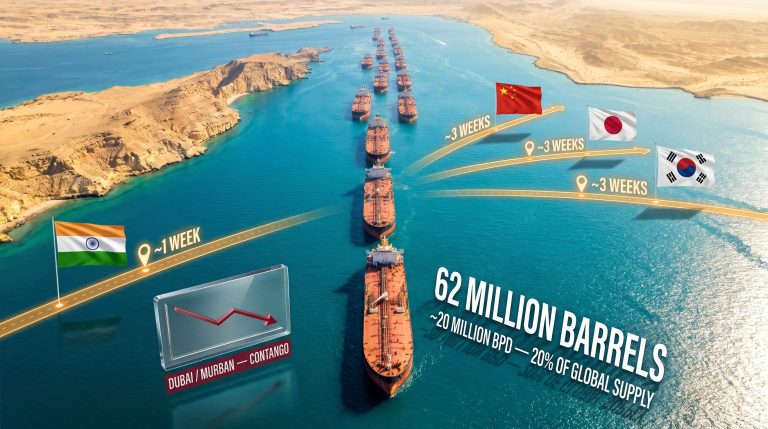
The Strait of Hormuz shipping disruptions compound facility-level vulnerabilities by targeting critical transport corridors through which approximately one-fifth of global oil consumption flows. Vessel attacks reduced shipping traffic to near-halt conditions, creating compound supply bottlenecks beyond production facility impacts.
Investment Risk Reassessment and Defence Spending Implications
Energy infrastructure investment models must now incorporate systematic targeting risk rather than isolated incident probability calculations. The escalation from limited-impact attacks to coordinated multi-theatre campaigns requires fundamental revision of capital allocation strategies for regional energy projects. However, understanding broader tariffs impact on investments provides additional context for portfolio risk management.
Defence System Investment Requirements
The successful interception of drones at Ras Tanura, while preventing major structural damage, still resulted in operational shutdown and market impact. This outcome suggests that defence system effectiveness must extend beyond physical protection to include threat deterrence and rapid operational recovery capabilities.
Current defence spending requirements encompass:
- Advanced early warning systems for drone and missile threats
- Rapid facility hardening against debris impact from intercepted weapons
- Selective shutdown system engineering for threat-responsive operations
- Enhanced coordination protocols across regional facility networks
- Alternative supply routing infrastructure for export capacity maintenance
Insurance Premium Adjustments and Risk Modelling
Brent crude futures surged approximately 10 percent to over $82 per barrel following the coordinated attacks, indicating substantial market recognition of supply risk escalation. Insurance markets must recalibrate premium structures to reflect systematic rather than isolated infrastructure threat patterns.
The distinction between precautionary shutdowns and damage-based closures creates new categories of business interruption risk that traditional energy facility insurance models have not adequately addressed. Facilities may remain structurally intact while becoming commercially non-productive for extended periods during high-threat conditions.
Operational Continuity Under Systematic Threat Conditions
Modern energy facilities must maintain operational flexibility that enables rapid response to threat escalation while preserving essential supply functions. The saudi aramco ras tanura refinery shutdown protocol demonstrates sophisticated facility management that isolates export functions while maintaining domestic supply continuity.
Precautionary Shutdown Engineering and Implementation
Precautionary shutdown protocols represent advanced operational capability that enables selective facility response to threat proximity rather than damage extent. The ability to maintain domestic petroleum product supply while eliminating export capacity requires sophisticated bypass system engineering and real-time operational decision-making.
Technical implementation of precautionary protocols includes:
- Selective unit shutdown capability independent of full facility closure
- Supply routing flexibility that maintains critical domestic distribution
- Rapid restart procedures for threat condition normalisation
- Coordinated communication systems across multiple operator networks
- Alternative export routing activation during primary facility downtime
Regional Operator Coordination and Standardisation
The simultaneous implementation of precautionary measures across Iraqi Kurdistan operations by multiple independent operators suggests coordinated threat assessment and response standardisation. Companies including DNO, Gulf Keystone Petroleum, Dana Gas, and HKN Energy suspended production without structural damage reports, indicating systematic risk management protocols.
This coordinated response pattern extends to Israeli offshore operations where both major (Chevron Leviathan) and smaller (Energean) gas field operators implemented simultaneous shutdown procedures, suggesting regional coordination in threat response protocols.
Long-Term Strategic Implications for Regional Energy Security
The escalation from isolated infrastructure attacks to coordinated multi-theatre campaigns represents a fundamental shift in regional energy security dynamics. Traditional risk models that compartmentalised geopolitical threats by individual facility or operator must evolve to address systematic targeting strategies. Furthermore, evolving US‑China trade strategies add additional complexity to global energy security considerations.
Alternative Supply Route Development and Diversification
Current targeting patterns demonstrate the vulnerability of concentrated energy infrastructure and export route dependencies. The impact on Iraqi Kurdistan's 200,000 barrels per day exports via Turkey's Ceyhan pipeline illustrates how single-route dependencies create systematic vulnerabilities during coordinated threat scenarios.
Regional energy security enhancement requires:
- Multiple export route development for individual production areas
- Enhanced pipeline network redundancy across national boundaries
- Flexible shipping route alternatives during maritime corridor disruption
- Increased strategic petroleum reserve capacity for extended disruption scenarios
- Regional energy sharing agreements for supply continuity during facility shutdowns
What Are the Geopolitical Alignment Implications?
The targeting of Saudi, Iraqi, and Israeli energy infrastructure within a coordinated timeframe suggests deliberate strategy to force closer military coordination between regional allies and international partners. Energy facility protection increasingly requires multi-national defence coordination rather than individual operator security measures.
Regional security analysts indicate that current targeting patterns are designed to accelerate Gulf state participation in broader military operations, using energy infrastructure vulnerability as strategic leverage for geopolitical realignment. Moreover, detailed reporting from The Media Line highlights the broader regional implications of such coordinated attacks.
The next major ASX story will hit our subscribers first
Market Psychology and Investor Behaviour Under Systematic Threat
Energy market psychology has shifted from isolated incident response to systematic threat anticipation. The 10 percent Brent crude surge to over $82 per barrel represents market recognition that coordinated targeting patterns create sustained rather than temporary supply risk.
Portfolio Rebalancing and Hedge Strategy Evolution
Investment strategies must now incorporate systematic infrastructure threat modelling rather than traditional country-specific political risk assessment. The coordinated nature of attacks across multiple jurisdictions requires portfolio diversification that addresses regional rather than individual facility exposure. Consequently, understanding the broader US economy under tariffs becomes essential for comprehensive risk assessment.
Modern energy investment hedge strategies include:
- Geographic diversification beyond traditional Middle East concentration
- Alternative energy source acceleration to reduce fossil fuel dependency
- Defence contractor exposure for infrastructure protection technology
- Strategic petroleum reserve investment for supply security positioning
- Insurance sector positioning for premium adjustment capture
Recovery Timeline Uncertainty and Investment Horizon Adjustment
The progression from 24-48 hour recovery periods for limited-impact incidents to extended assessment timelines for precautionary shutdowns creates new uncertainty categories for energy facility investment modelling. Recovery timelines now depend on threat condition normalisation rather than damage repair completion.
This uncertainty requires investment models that accommodate extended non-productive periods for structurally intact facilities, fundamentally altering cash flow projection methodologies for regional energy infrastructure projects.
Technology Integration and Advanced Threat Detection
Modern energy facility protection requires integration of advanced detection systems, rapid response protocols, and automated threat mitigation technology. The successful interception of drones at Ras Tanura demonstrates defensive capability evolution, while the resulting operational shutdown indicates continued vulnerability to sophisticated attack coordination.
Drone Technology Evolution and Defensive Countermeasures
The progression of attacks from the 2019 Abqaiq strikes through current coordinated campaigns demonstrates advancing drone technology and multi-vector attack capability. Defensive systems must evolve to address simultaneous multi-facility targeting rather than isolated facility protection.
Current technology integration requirements encompass early warning networks, automated interception systems, debris impact mitigation, and rapid facility restart capabilities following threat neutralisation.
Operational Decision-Making Under Real-Time Threat Assessment
The implementation of precautionary shutdowns based on threat proximity rather than damage assessment requires sophisticated real-time decision-making systems that balance operational continuity with personnel and asset protection. Modern facility management must incorporate predictive threat modelling alongside traditional operational optimisation.
The saudi aramco ras tanura refinery shutdown exemplifies how modern energy infrastructure must balance security protocols with operational efficiency in increasingly volatile geopolitical environments.
Disclaimer: This analysis is based on publicly available information and market data. Energy facility investment and geopolitical risk assessment involve substantial uncertainty and potential for loss. Investors should conduct independent analysis and consider professional advice before making investment decisions based on regional energy infrastructure developments. Geopolitical events and their market impacts cannot be predicted with certainty, and historical performance does not guarantee future results.
Considering Investment Opportunities in Energy Infrastructure During Volatile Times?
Discovery Alert's proprietary Discovery IQ model delivers real-time alerts on significant ASX mineral discoveries, including energy and resource sector opportunities that can provide portfolio diversification during geopolitical uncertainty. With energy markets facing systematic threats and traditional risk models being reassessed, Discovery Alert's dedicated discoveries page showcases historic examples of major mineral discoveries that have generated substantial returns, helping investors position themselves ahead of market volatility and begin their 14-day free trial today.