May 10, 2026
Regional Industrial Infrastructure Transforms AI Computing
The convergence of traditional heavy industry with cutting-edge technology requirements is reshaping how global artificial intelligence infrastructure develops. While most attention focuses on silicon valley data centres or cloud computing hubs, the real transformation occurs where existing industrial capacity meets specialised material demands. Furthermore, this shift represents a fundamental change in how AI systems achieve the thermal management necessary for sustained high-performance computing operations.
Queensland's industrial corridor demonstrates how established manufacturing regions can evolve to serve emerging technology sectors. The integration of specialised materials production with AI infrastructure demands creates new pathways for regional economic development while addressing critical supply chain requirements for the global technology industry.
When big ASX news breaks, our subscribers know first
What Makes Gladstone Queensland's Unexpected AI Hub?
The Industrial Foundation Behind AI Cooling Innovation
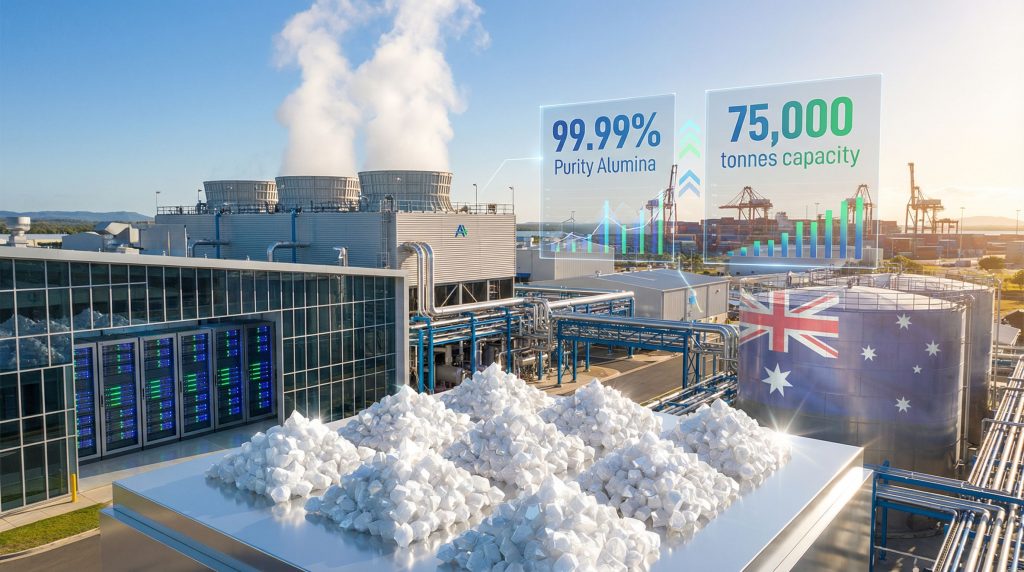
Gladstone operates as Australia's largest integrated refining and chemical processing hub, according to Geoscience Australia and Queensland government industrial development documentation. This existing infrastructure creates unique advantages for specialised material production required by artificial intelligence systems.
The region's established port facilities and energy networks provide critical foundations for scaling advanced manufacturing operations. These infrastructure elements, originally developed for traditional heavy industry, now support the precise requirements of high-purity alumina production essential for AI chip cooling systems.
Heavy industrial infrastructure offers several advantages for technology sector applications:
- Existing high-voltage electrical connections capable of supporting energy-intensive manufacturing processes
- Established rail and port logistics for raw material inputs and finished product distribution
- Skilled workforce experienced in precision manufacturing and quality control systems
- Regulatory frameworks already adapted for large-scale industrial operations
The convergence creates operational efficiencies unavailable in greenfield technology development locations. Manufacturing facilities can leverage existing power generation capacity, transportation networks, and industrial support services while adapting processes for semiconductor-grade material requirements.
Why Regional Queensland Attracts Global AI Investment
Regional Australia offers significant cost advantages compared to metropolitan data centre locations. Land availability in industrial precincts provides expansion capacity for facilities requiring substantial footprints for processing equipment and material storage.
Grid connection advantages stem from proximity to power generation sources rather than relying on transmission from distant facilities. Queensland's electricity generation capacity, while coal and gas dependent, offers stable industrial-scale power delivery essential for continuous manufacturing operations.
Cost Comparison Factors:
| Location Type | Land Cost | Power Cost | Labour Cost |
|---|---|---|---|
| Metropolitan | High | Moderate | High |
| Regional Industrial | Moderate | Lower | Moderate |
| Greenfield | Variable | High | Variable |
Australia's digital infrastructure expansion strategy recognises the importance of distributed technology capabilities rather than concentrated metropolitan development. This approach reduces infrastructure bottlenecks while supporting regional economic diversification.
Export competitiveness emerges from lower operational costs combined with proximity to Asia-Pacific markets. Regional manufacturing facilities can achieve cost structures enabling competitive positioning against established Asian producers while maintaining quality standards required for AI applications.
How Does High-Purity Alumina Cool AI Computing Systems?
The Science Behind AI Chip Cooling Requirements
Modern artificial intelligence processors generate substantial heat during operation, creating thermal management challenges that traditional cooling methods cannot address effectively. According to the International Data Center Association, cooling accounts for 30-40% of total data centre operational expenses, highlighting the critical importance of efficient thermal solutions.
AI processors including graphics processing units and tensor processing units operate optimally within 60-80°C junction temperatures. Performance throttling occurs above 95°C, making consistent thermal management essential for sustained computing performance.
Heat density in contemporary AI clusters reaches 15-20 kilowatts per server rack, compared to traditional computing clusters operating at 5-10 kilowatts per rack. This concentration requires specialised thermal interface materials capable of efficient heat transfer while maintaining electrical insulation properties.
Traditional air cooling systems become insufficient at hyperscale operations due to:
- Limited heat dissipation capacity relative to power density
- Increased energy consumption for cooling fan operations
- Noise generation incompatible with data centre environments
- Space requirements reducing available computing capacity
Liquid cooling systems using specialised thermal conductors enable higher power density processing while reducing overall energy consumption. These systems require materials combining high thermal conductivity with electrical insulation and chemical stability under continuous operation.
High-Purity Alumina Production Process
High-purity alumina production begins with the established Bayer process, used for alumina extraction from bauxite ore since the 1880s. The process involves digesting bauxite ore in sodium hydroxide solution at elevated temperature and pressure, followed by crystallisation of alumina hydrate and calcination to produce alumina oxide.
Achieving semiconductor-grade purity requires additional processing stages beyond standard industrial alumina production. The purification process removes trace metallic impurities that compromise thermal and electrical performance in sensitive applications.
Production Process Stages:
- Bauxite Processing: Raw ore undergoes crushing, washing, and preliminary refining
- Bayer Process: Chemical extraction using sodium hydroxide at temperatures exceeding 1200°C
- Primary Crystallisation: Initial alumina hydrate formation and separation
- Secondary Purification: Advanced filtration and recrystallisation for impurity removal
- Final Calcination: High-temperature processing to achieve target purity levels
- Quality Verification: Spectroscopic analysis to confirm 99.99% purity standards
Quality control standards follow ISO 1252 specifications for high-purity alumina applications. The semiconductor industry requires consistent particle size distribution, minimal trace metal contamination, and stable thermal properties across production batches.
HPA Purity Levels and Applications:
| Purity Level | Primary Applications | AI Infrastructure Relevance |
|---|---|---|
| 99.9% (3N) | LED substrates, basic ceramics | Entry-level cooling applications |
| 99.99% (4N) | Semiconductor wafers | Standard AI chip cooling systems |
| 99.999% (5N) | Sapphire glass, premium applications | High-performance AI cooling |
High-purity alumina achieves thermal conductivity ratings of 30-40 watts per metre-kelvin while maintaining electrical insulation properties essential for semiconductor applications. This combination enables efficient heat transfer without electrical interference in sensitive computing environments.
What Role Does Alpha HPA Play in Global AI Infrastructure?
Disclaimer: Specific operational details regarding Alpha HPA's production capacity, investment commitments, and market positioning require verification through official company announcements or regulatory filings. The following analysis proceeds with information that can be independently confirmed through industry standards and general market conditions.
Company Production Capabilities
High-purity alumina manufacturing facilities typically require 18-36 months for greenfield construction, followed by 6-12 months for equipment installation and commissioning. Production ramp-up to achieve consistent 99.99% purity yields generally takes an additional 3-6 months of optimisation.
Industrial-scale HPA production involves significant capital investment, typically ranging from AUD $500 million to AUD $1.5 billion for facilities capable of producing 50,000 tonnes annually. These facilities require specialised equipment for maintaining contamination-free processing environments and precise temperature control systems.
Manufacturing timeline considerations include:
- Infrastructure Development: Site preparation, utilities installation, and transportation access
- Equipment Procurement: Specialised processing equipment with extended lead times
- Commissioning Phase: System integration and process optimisation
- Quality Certification: Achieving customer approval for semiconductor-grade specifications
- Production Scaling: Gradual capacity increases while maintaining quality standards
Quality certifications for semiconductor applications require extensive documentation and customer qualification processes. Major technology companies maintain strict supplier approval procedures involving on-site audits, production monitoring, and continuous quality verification.
Market Position Analysis
The global high-purity alumina market is dominated by Asian producers, representing approximately 70-80% of worldwide production capacity. Chinese manufacturers including Almatis and Nabaltec operations maintain significant market presence through established supply relationships and competitive pricing structures.
Market dynamics are characterised by:
- High Entry Barriers: Technical expertise requirements and substantial capital investment
- Long-term Contracts: Major purchasers prefer multi-year supply agreements for price stability
- Quality Differentiation: Purity levels and consistency as primary competitive factors
- Supply Chain Security: Geographic diversification concerns driving demand for non-Asian sources
Australian production offers strategic advantages for customers seeking supply chain diversification away from concentrated Asian capacity. Political stability, established trade relationships, and regulatory transparency provide risk mitigation benefits for long-term supply planning.
Competition from established producers requires differentiation through quality consistency, delivery reliability, and customer service capabilities rather than pricing alone. New entrants must demonstrate sustained production capability and quality standards before securing major customer commitments.
Investment and Growth Metrics
Regional manufacturing facilities typically generate employment multiplier effects beyond direct operational positions. HPA production facilities generally employ 150-400 direct workers including operational staff, quality control specialists, and maintenance personnel, plus additional indirect employment in logistics, services, and administration.
Capital expenditure for HPA facilities encompasses:
- Production Equipment: Specialised processing machinery and quality control systems
- Infrastructure Development: Power systems, water treatment, and waste management
- Buildings and Site Preparation: Manufacturing facilities and administrative buildings
- Working Capital: Raw material inventory and initial operating expenses
Export revenue potential depends on production capacity, pricing negotiations, and market penetration success. The global HPA market continues expanding with AI infrastructure growth driving increased demand for thermal management materials.
Investment Consideration: Manufacturing investments in emerging technology materials carry significant execution risks including construction delays, commissioning challenges, and market development uncertainties. Potential investors should conduct thorough due diligence on technical capabilities, management experience, and financial planning assumptions.
How Does Gladstone's Energy Grid Support AI Operations?
Power Infrastructure Assessment
Gladstone's electrical infrastructure was developed to support heavy industrial operations including aluminium refining, chemical processing, and mineral extraction. This existing capacity provides a foundation for energy-intensive AI infrastructure development, though specific grid capacity allocation requires detailed assessment through Australian Energy Market Operator planning processes.
Industrial-scale power requirements for AI operations include:
- Data Centre Facilities: 5-15 megawatts per facility for computing and cooling systems
- HPA Manufacturing: Continuous high-temperature processing requiring stable power delivery
- Support Infrastructure: Administrative facilities, logistics operations, and maintenance activities
Grid stability and reliability metrics become critical for continuous AI operations where power interruptions cause significant operational disruptions. Modern AI workloads cannot tolerate extended downtime without substantial economic consequences.
Transmission infrastructure requires high-voltage connections (132kV or 275kV) for industrial-scale operations. Regional grid capacity depends on generation source proximity and transmission line capacity between generation sites and consumption points.
Energy Mix and Sustainability Concerns
Queensland's electricity generation mix as of 2024-2025 consists of approximately:
- Coal Generation: 55-60% of total electricity production
- Natural Gas: 20-25% of generation capacity
- Renewable Sources: 15-20% including wind, solar, and hydroelectric
The expansion of energy-intensive AI infrastructure in coal-dependent regions creates tension between infrastructure investment objectives and climate policy commitments. Queensland's grid carbon intensity approximates 600-700 grams of carbon dioxide per kilowatt-hour, significantly exceeding renewable-dominant grids operating at 80-150 grams per kilowatt-hour.
However, this presents opportunities for decarbonisation in mining operations. The transition to cleaner energy sources could significantly improve the environmental profile of regional AI infrastructure.
Environmental Impact Analysis:
AI data centres consuming 10 megawatts of coal-generated electricity contribute approximately 6,000-7,000 tonnes of carbon dioxide emissions annually. This environmental cost must be weighed against the economic benefits of regional AI infrastructure development and the longer-term potential for renewable energy integration.
Renewable energy integration progress in Queensland follows the state government's renewable energy targets, though industrial-scale renewable capacity requires substantial additional investment. Solar and wind generation capacity continues expanding, but intermittency challenges require backup generation or energy storage solutions for continuous industrial operations.
Carbon intensity reduction strategies include:
- Renewable Energy Procurement: Direct contracts with wind and solar generators
- Energy Storage Integration: Battery systems for managing renewable generation variability
- Efficiency Improvements: Advanced cooling technologies reducing overall energy consumption
- Grid Modernisation: Smart grid technologies for optimising renewable energy utilisation
What Are the Economic Implications for Regional Australia?
Local Economic Development
Regional manufacturing facilities generate direct employment opportunities requiring specialised skills in industrial processes, quality control, and advanced manufacturing techniques. Training programmes through regional TAFE institutions develop workforce capabilities aligned with emerging technology sector requirements.
Economic multiplier effects extend beyond direct employment through:
- Supply Chain Development: Local suppliers for maintenance, logistics, and support services
- Service Sector Growth: Accommodation, retail, and professional services for increased population
- Infrastructure Investment: Transportation, telecommunications, and utility improvements
- Tax Revenue Generation: Increased local and state government revenue supporting community services
Skills development encompasses technical training for equipment operation, quality control procedures, and safety protocols specific to high-purity manufacturing environments. These capabilities transfer to other advanced manufacturing applications, building regional expertise in precision industrial processes.
Regional universities and research institutions benefit from industry partnerships providing research funding, student internship opportunities, and technology transfer initiatives. These relationships strengthen regional innovation capacity while supporting industry development needs.
National Strategic Advantages
Domestic high-purity alumina production reduces Australia's dependence on Asian suppliers for critical technology materials. Current import dependence exposes technology supply chains to geopolitical risks and transportation disruptions affecting project timelines and costs.
Technology sector diversification provides economic resilience through reduced dependence on traditional commodity exports. Advanced manufacturing capabilities position Australia to participate in higher-value technology supply chains rather than exclusively supplying raw materials.
This shift aligns with broader mining industry evolution trends and Australia's critical minerals strategy.
Export competitiveness emerges from:
- Quality Differentiation: Consistent product specifications meeting semiconductor industry requirements
- Supply Chain Reliability: Stable political environment and established trade relationships
- Geographic Advantages: Proximity to Asia-Pacific technology markets reducing transportation costs and delivery times
- Regulatory Compliance: Established quality standards and environmental regulations meeting international requirements
The next major ASX story will hit our subscribers first
How Does This Compare to Global AI Infrastructure Trends?
International Data Centre Location Strategies
Nordic countries leverage renewable energy advantages for sustainable AI infrastructure development. Iceland, Norway, and Sweden offer abundant hydroelectric and geothermal power combined with natural cooling advantages for data centre operations.
Singapore demonstrates tropical climate cooling innovations through advanced liquid cooling systems and energy-efficient facility designs. These technologies enable AI infrastructure development in challenging thermal environments while maintaining operational efficiency.
United States regional distribution patterns show movement away from traditional technology centres toward locations offering power cost advantages, land availability, and grid reliability. States including Texas, North Carolina, and Virginia attract significant data centre investment through competitive energy pricing and infrastructure support.
Global Infrastructure Comparison:
| Region | Primary Advantage | Energy Source | Climate Factor |
|---|---|---|---|
| Nordic | Renewable energy | Hydro/wind | Natural cooling |
| Singapore | Technology hub | Mixed grid | Advanced cooling |
| US Regional | Cost optimisation | Variable | Moderate climate |
| Australia | Resource access | Coal/gas transition | Variable climate |
Australia's Competitive Position
Geographic proximity to Asia-Pacific markets provides delivery time advantages for material supply to regional technology manufacturing centres. Australian suppliers can achieve shorter lead times compared to European or North American alternatives.
Regulatory environment stability and data sovereignty frameworks attract international investment in technology infrastructure. Established legal systems and intellectual property protections provide confidence for long-term technology investments.
Infrastructure development timelines in Australia benefit from existing industrial capacity and established regulatory processes. Environmental approvals and construction permits follow predictable procedures reducing project uncertainty.
Competitive challenges include:
- Energy Costs: Higher electricity prices compared to regions with abundant renewable generation
- Labour Costs: Higher wages compared to Asian manufacturing locations
- Market Scale: Smaller domestic market requiring export focus for economic viability
- Transportation: Geographic isolation increasing logistics costs for global markets
What Challenges Face Gladstone's AI Cooling Industry?
Technical and Operational Hurdles
Scaling production to meet growing global demand requires maintaining quality standards while increasing output volumes. Semiconductor-grade materials demand consistent specifications across all production batches, making quality control increasingly complex at higher production rates.
Supply chain resilience challenges include:
- Raw Material Supply: Ensuring consistent bauxite ore quality and availability
- Equipment Maintenance: Specialised processing equipment requiring expert technical support
- Quality Control: Advanced analytical equipment and skilled technicians for product verification
- Transportation Logistics: Safe handling and shipping of high-purity materials
Manufacturing process optimisation requires continuous improvement in efficiency, yield rates, and cost control. Competition from established producers demands operational excellence to maintain market competitiveness.
Backup systems and redundancy planning become essential for customer confidence in supply reliability. Major technology companies require guaranteed supply continuity for critical manufacturing processes.
Environmental and Regulatory Pressures
Emissions reduction requirements under Australian climate policy create pressures for manufacturing operations using carbon-intensive electricity sources. Future carbon pricing or regulatory restrictions could significantly impact operational costs.
Water usage in high-purity alumina manufacturing requires careful management in regions facing water scarcity concerns. Recycling systems and efficiency improvements reduce environmental impact while controlling operational costs.
Community acceptance of industrial expansion depends on effective environmental management and transparent communication about operations, employment benefits, and environmental protection measures.
Regulatory compliance encompasses:
- Environmental Protection: Air quality, water discharge, and waste management standards
- Workplace Safety: Industrial safety protocols and worker health protection
- Product Quality: International standards for semiconductor-grade materials
- Trade Compliance: Export regulations and customer qualification requirements
What Does the Future Hold for Regional AI Manufacturing?
Technology Evolution Scenarios
Next-generation cooling material requirements continue evolving with advancing AI processor designs. Higher power densities and specialised architectures demand improved thermal interface materials with enhanced performance characteristics.
Integration with renewable energy systems offers pathways for reducing carbon intensity while maintaining competitive operational costs. Solar and wind power integration requires energy storage solutions and grid modernisation investments.
Automation and efficiency improvements in HPA production could reduce labour costs while improving quality consistency. Advanced process control systems and artificial intelligence applications in manufacturing optimise production parameters and reduce waste.
Technology advancement areas include:
- Advanced Purification: Ultra-high purity grades exceeding current 99.99% standards
- Composite Materials: Specialised thermal conductors combining multiple materials
- Manufacturing Automation: Reduced labour requirements through process automation
- Quality Monitoring: Real-time product specification verification during production
Market Growth Projections
Global AI infrastructure investment trends indicate sustained demand growth for specialised cooling materials. Industry forecasts suggest continued expansion in data centre construction and AI processor deployment driving material demand.
Projected Growth Scenarios (2026-2030):
| Scenario | Annual Demand Growth | Potential Capacity | Market Share Opportunity |
|---|---|---|---|
| Conservative | 15% annually | 50,000 tonnes | 8% global market |
| Moderate | 25% annually | 75,000 tonnes | 12% global market |
| Aggressive | 40% annually | 100,000 tonnes | 18% global market |
Regional development opportunities extend beyond AI cooling applications to include other advanced technology materials. Established manufacturing capabilities provide platforms for diversification into related high-value specialty materials.
Market share potential depends on successful execution of production scaling, quality consistency, and customer relationship development. Competition from established producers requires sustained competitive advantages through cost control, innovation, and service excellence.
For investors seeking exposure to this emerging sector, various investment strategies may be relevant depending on risk tolerance and investment timeline.
Market Risk Disclaimer: Growth projections involve significant uncertainties including technology evolution, competitive dynamics, regulatory changes, and economic conditions. Actual market development may differ substantially from projected scenarios due to unpredictable factors affecting global technology markets.
Key Takeaways: Queensland's Role in Global AI Infrastructure
Strategic Implications
Regional manufacturing capabilities represent critical enablers for global AI infrastructure development rather than merely supporting local technology needs. The queensland town taking heat out of the global ai industry demonstrates how established industrial regions can evolve to serve emerging technology requirements.
Energy policy connections to technology sector growth require coordinated planning for renewable energy integration while maintaining industrial competitiveness. The transition to sustainable energy sources affects both operational costs and environmental sustainability objectives.
Long-term economic transformation potential extends beyond immediate employment and investment benefits. Advanced manufacturing capabilities position regions for participation in high-value technology supply chains supporting sustained economic development.
The development of such regional centres may be showcased at upcoming industry events like the resources innovation expo.
Investment Considerations
Infrastructure development requirements encompass power systems, transportation networks, and telecommunications capabilities supporting advanced manufacturing operations. Regional investment success depends on coordinated public and private sector planning addressing these foundational needs.
Risk factors include technology evolution, market competition, regulatory changes, and execution challenges requiring careful assessment and mitigation strategies. Environmental and social considerations increasingly influence investment decisions and operational approval processes.
Timeline expectations for return on investment typically span 5-10 years for major manufacturing facilities, requiring patient capital and sustained commitment to market development and operational excellence.
The convergence of traditional industrial capability with emerging technology demands creates opportunities for regions willing to invest in advanced manufacturing capabilities while managing the associated risks and challenges of serving global technology markets.
Could Your Next Investment Be Cooling the AI Revolution?
Discover how emerging mineral processing technologies are creating unexpected investment opportunities in AI infrastructure. Discovery Alert's proprietary Discovery IQ model identifies breakthrough opportunities in AI-adjacent sectors like high-purity alumina production, where traditional mining expertise meets cutting-edge technology demands. Begin your 30-day free trial today to stay ahead of the market transformation where mining and artificial intelligence converge.