
May 15, 2026
Understanding Regional Naphtha Premium Fundamentals
Regional petrochemical feedstock markets operate within complex pricing frameworks where geographic proximity, supply concentration, and operational reliability converge to create distinct value differentials. The mideast gulf naphtha premiums represent one of the most closely watched indicators of regional supply-demand balance, particularly given the strategic importance of these markets for Asian petrochemical production.
Premium structures function as risk-adjusted pricing mechanisms that capture multiple variables: supply reliability, logistical advantages, quality specifications, and geopolitical stability assessments. These premiums reflect market participants' willingness to pay additional costs for guaranteed supply access during periods of uncertainty.
Furthermore, the complexity of regional markets requires understanding how broader OPEC production impact decisions influence downstream feedstock availability and pricing structures.
When big ASX news breaks, our subscribers know first
Current Market Dynamics (March 2026)
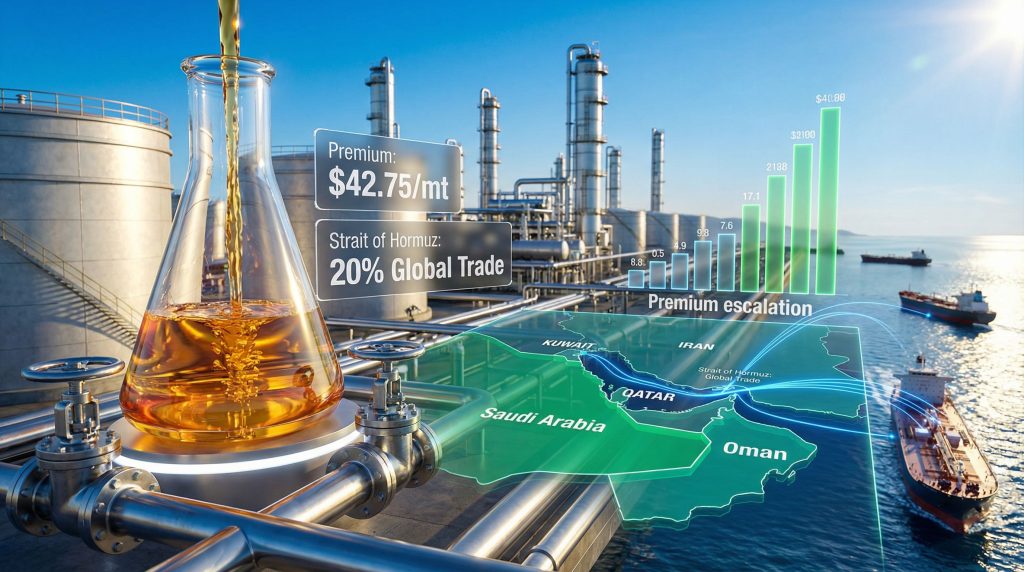
The FOB Persian Gulf naphtha premium reached $42.75 per metric ton on March 2, 2026, marking its highest level since March 2024. This premium represents the differential between regional export pricing and broader international spot assessments, serving as a critical benchmark for Asian buyers evaluating procurement strategies.
Historical analysis reveals premium volatility patterns that correlate strongly with regional stability indicators. The current premium approaches the previous peak of $44.75 per metric ton recorded during similar geopolitical tensions, indicating market memory effects in pricing behaviour.
However, current tensions demonstrate how mideast gulf naphtha premiums rally on rising tensions can accelerate within compressed timeframes, reflecting market participants' immediate response to supply security concerns.
Production Capacity Concentration
Regional naphtha supply originates from a limited number of major facilities, creating inherent concentration risk:
- Qatar's Ras Laffan Complex: Operates approximately 970,000 metric tons monthly export capacity, representing 20% of regional volumes
- Kuwait's Integrated Network: Combined output of 720,000 metric tons monthly across three major refineries
- Saudi Arabia's Facilities: Multiple integrated complexes with varying naphtha yields
- Oman's Duqm Operations: Approximately 220,000 metric tons monthly since reaching full operational status
The concentration of production within these facilities means that operational disruptions at any major complex immediately affect regional supply calculations and premium structures.
What Drives Premium Volatility in Gulf Naphtha Markets?
Supply-Side Operational Factors
Refinery Operational Status Assessment
Current operational disruptions demonstrate the immediate impact of facility-specific incidents on premium calculations. Saudi Aramco's temporary shutdown of the 550,000 barrel-per-day Ras Tanura refinery following drone strikes represents a significant capacity withdrawal, affecting approximately 15-25% of throughput converted to naphtha depending on processing optimisation.
Condensate Processing Capabilities
Qatar's condensate splitting operations utilise specialised technology to process natural gas condensates into petrochemical-grade feedstocks. The two 146,000 barrel-per-day condensate splitters at Ras Laffan represent world-class capacity for converting lighter hydrocarbon streams into naphtha with specific compositional characteristics valued by downstream processors.
This processing distinction creates quality differentiation in the market. Condensate-derived naphtha typically exhibits different gravity and composition profiles compared to crude oil refinery streams, influencing petrochemical producer purchasing decisions based on their specific cracking unit capabilities.
Loading and Transportation Infrastructure
Ship-tracking data reveals the immediate operational impact of facility disruptions. Two loaded vessels, the Zenovia Lady (72,000 metric tons) and the Front Cheetah (76,000 metric tons), remained idled following attacks on loading facilities, demonstrating how infrastructure incidents translate directly into supply delivery delays.
Demand-Side Market Dynamics
Asia-Pacific Petrochemical Requirements
Regional demand centres in South Korea, Japan, China, and Singapore consume the majority of Gulf naphtha exports, creating concentrated buying interest that amplifies premium sensitivity during supply uncertainty periods. These markets represent the core of global petrochemical production capacity, making supply security a critical operational priority.
In addition, broader oil price rally impact considerations influence the economics of petrochemical production and subsequently affect naphtha demand patterns.
Feedstock Competition Analysis
Petrochemical producers evaluate multiple light hydrocarbon feedstocks based on processing economics and availability:
| Feedstock Type | Processing Requirements | Typical Premium Structure |
|---|---|---|
| Light Straight-Run Naphtha | Minimal pre-treatment | Base pricing |
| Heavy Naphtha | Additional reforming | Discount to base |
| Condensate | Direct cracking capability | Premium for specific grades |
| LPG Components | Alternative cracking units | Variable based on supply |
Seasonal Demand Patterns
Asian petrochemical demand typically strengthens during Q2-Q3 periods as downstream plastic production increases ahead of consumer demand seasons. The March 2026 timing represents early spring demand strengthening, potentially amplifying premium sensitivity during supply disruptions.
How Do Geopolitical Tensions Impact Naphtha Premium Structures?
Risk Premium Quantification Methods
Documented Premium Escalation Analysis
The current conflict demonstrates measurable premium movement within compressed timeframes. Market data shows a 67.6% escalation from base levels of approximately $25.50 per metric ton to peak levels of $42.75 per metric ton within four days of conflict escalation.
| Conflict Period | Base Premium ($/mt) | Peak Premium ($/mt) | Escalation % | Duration |
|---|---|---|---|---|
| March 2024 Tensions | $22.00 | $44.75 | 103% | 32 days |
| Current Conflict 2026 | $25.50 | $42.75 | 67.6% | Ongoing |
This premium structure reflects market participants' assessment of supply disruption probability and the associated costs of securing alternative supply sources or managing delivery delays.
Furthermore, tariffs and market impact considerations demonstrate how trade policy uncertainty amplifies regional premium volatility during geopolitical tensions.
Insurance and Freight Cost Integration
War Risk Insurance Market Response
Insurance market reactions provide quantifiable indicators of perceived regional risk levels. Multiple containership operators and insurers have cancelled regional war-risk coverage following vessel strikes near the Strait of Hormuz, directly impacting shipping economics for all cargo classes including naphtha.
The Joint Maritime Information Center's elevation of threat levels to "critical" triggers automatic insurance surcharges and operational restrictions that shipping companies incorporate into freight rate calculations.
Alternative Routing Economics
Denmark's Maersk decision to suspend Strait of Hormuz transits and divert around the Cape of Good Hope adds approximately 7,000 nautical miles to Asia-bound voyages. For naphtha shipments, this represents 15-20 additional days transit time at standard tanker speeds, significantly impacting delivery scheduling and inventory management for buyers.
Which Production Facilities Drive Gulf Naphtha Supply Dynamics?
Major Producer Operational Profiles
Qatar's Integrated Complex Operations
Ras Laffan Industrial City represents the region's most concentrated production hub, hosting not only condensate processing but also LNG facilities and associated NGL recovery units. The integration of these operations means that disruptions affecting one process can cascade through multiple product streams.
Recent operational halts of LNG production following drone attacks demonstrate this integration risk. QatarEnergy's precautionary shutdown affects not only LNG exports but potentially associated condensate processing and naphtha production capabilities.
Kuwait's Multi-Facility Network
Kuwait's refining infrastructure spans three major complexes:
- Mina al-Ahmadi (346,000 b/d): Experienced debris impact but maintained operations
- Mina Abdullah (454,000 b/d): Continued normal operations
- Al-Zour (615,000 b/d): Maintained full operational status
This distributed capacity provides operational resilience, though the collective 720,000 metric tons monthly output represents significant regional supply concentration.
Saudi Arabia's Strategic Facilities
The temporary shutdown of Ras Tanura refinery demonstrates the immediate impact of facility-specific disruptions on regional supply calculations. With 550,000 barrel-per-day processing capacity, even short-term shutdowns remove proportional naphtha yields from regional export availability.
Capacity Utilisation Optimisation Strategies
Feedstock Flexibility Assessment
Regional producers maintain varying degrees of feedstock flexibility, allowing optimisation of product slates based on market conditions and operational requirements. Condensate splitters offer particular flexibility in processing lighter hydrocarbon streams, while conventional refineries optimise crude oil selection for naphtha yield maximisation.
Emergency Response Protocols
Current events demonstrate the importance of emergency response capabilities. Facilities with robust safety protocols can implement precautionary shutdowns when necessary, potentially minimising long-term operational impact while temporarily affecting supply availability.
What Are the Critical Shipping and Logistics Considerations?
Strait of Hormuz Transit Analysis
"Regional transportation infrastructure creates critical chokepoints where approximately 20% of global naphtha trade flows through the Strait of Hormuz, making this passage essential for Asian petrochemical feedstock security."
Vessel Traffic Management
Ship-tracking data reveals multiple Long-Range 1 and Medium Range tankers carrying naphtha idling near the strait, indicating potential delivery delays and route optimisation challenges. The concentration of vessel traffic through this narrow passage amplifies the impact of any operational restrictions.
Port Operations Coordination
Suspended operations at key ports including Jebel Ali and Duqm compound shipping disruptions by reducing alternative loading and discharge options. This operational constraint forces greater reliance on remaining functional terminals, potentially creating bottlenecks in cargo handling.
Alternative Transportation Pathways
Cape of Good Hope Routing Analysis
Diversion around the Cape of Good Hope represents the primary alternative for vessels avoiding the Strait of Hormuz, though this routing adds substantial time and cost to voyages. For Asian-bound naphtha shipments, the additional 15-20 days transit time affects inventory management and supply chain planning.
Regional Port Capacity Assessment
Alternative loading ports outside the immediate conflict zone provide backup capacity, though limited terminal availability and vessel scheduling constraints may create operational bottlenecks during peak diversion periods.
The next major ASX story will hit our subscribers first
How Do Asian Buyers Respond to Premium Volatility?
Procurement Strategy Adjustments
Contract vs. Spot Purchasing Optimisation
Asian petrochemical producers typically maintain flexible procurement strategies combining term contracts with spot market purchases. During premium volatility periods, buyers reassess this balance based on supply security requirements and price risk tolerance.
Regional Sourcing Diversification
Supply disruption concerns drive evaluation of alternative naphtha sources including European exports, US Gulf Coast production, and regional Asian refinery output. However, logistical constraints and quality specifications limit immediate substitution capabilities.
In particular, energy transition challenges in producing regions affect the availability of alternative supply sources during disruption periods.
Inventory Management Strategies
Strategic Stock Building
Uncertainty regarding supply continuity encourages inventory accumulation among buyers with adequate storage capacity. This behaviour can amplify short-term demand and contribute to premium escalation during crisis periods.
Processing Flexibility Assessment
Petrochemical facilities with feedstock flexibility can partially mitigate naphtha supply disruptions by increasing utilisation of alternative light hydrocarbons including LPG and condensate, though this requires specific processing capabilities and economic optimisation.
What Technical Factors Influence Naphtha Quality Premiums?
Specification-Based Pricing Differentials
Quality Grade Premium Structure
Different naphtha grades command distinct premiums based on downstream processing requirements:
| Grade Category | RON Rating | Benzene Content | Premium Differential |
|---|---|---|---|
| Light Naphtha | 60-65 | <1% | +$8-12/mt |
| Full Range Naphtha | 65-70 | 1-2% | Base pricing |
| Heavy Naphtha | 55-60 | 2-3% | -$5-8/mt |
These differentials reflect petrochemical cracker requirements and processing economics for specific downstream applications.
Consequently, market analysts observe that mideast gulf naphtha premiums continue to strengthen when supply disruptions particularly affect higher-quality grades.
Processing Requirement Alignment
Petrochemical Cracker Optimisation
Steam crackers require specific naphtha characteristics for optimal ethylene and propylene yields. Lighter naphthas with higher paraffinic content typically provide superior cracking economics, supporting premium pricing for appropriate specifications.
Reformer Unit Feed Quality
Refineries utilising naphtha for reforming operations value different characteristics including aromatic content and sulphur specifications, creating parallel demand streams with distinct quality premiums.
How Do Market Participants Manage Premium Risk Exposure?
Trading Strategy Development
Arbitrage Opportunity Identification
Premium volatility creates trading opportunities between regional markets, though participants must carefully assess execution risk during periods of operational uncertainty. Transportation constraints and timing considerations significantly impact arbitrage economics.
Portfolio Risk Balancing
Integrated market participants balance exposure across different naphtha grades, regional sources, and delivery timing to optimise risk-adjusted returns while maintaining supply security.
Financial Risk Management Tools
Derivative Instrument Utilisation
Market participants utilise various financial instruments to manage premium exposure:
- Premium swap structures for basis risk management
- Forward curve positioning for timing risk mitigation
- Cross-commodity hedging using related petroleum products
Credit Risk Assessment
Heightened geopolitical risk requires enhanced counterparty credit evaluation, particularly for transactions involving regional suppliers or transportation through affected areas.
What Are the Long-Term Implications for Gulf Naphtha Markets?
Infrastructure Development Projections
Capacity Expansion Planning
Regional infrastructure development continues despite short-term disruptions, with multiple refinery expansion projects and new condensate processing facilities planned across Gulf states. These developments will affect long-term supply dynamics and premium structures.
Transportation Infrastructure Enhancement
Port capacity expansions and pipeline connectivity improvements can provide greater operational flexibility and reduce concentration risk in regional supply chains.
Market Structure Evolution
Digital Trading Platform Adoption
Electronic trading platforms and enhanced price discovery mechanisms may improve market transparency and reduce information asymmetries that currently contribute to premium volatility.
Sustainability Requirements Integration
Emerging low-carbon naphtha requirements and sustainability certifications may create additional premium categories as petrochemical producers seek environmentally certified feedstocks.
Strategic Outlook: Navigating Premium Volatility in 2026
Short-Term Market Positioning
Supply Security Prioritisation
Current market conditions favour supply security over cost optimisation, supporting sustained premium levels as buyers prioritise delivery reliability over price minimisation.
However, oil price movements trade war dynamics continue to influence broader market sentiment and risk assessment methodologies used by procurement teams.
Operational Flexibility Enhancement
Market participants benefit from maintaining multiple supply sources, flexible delivery terms, and adequate inventory buffers to manage ongoing uncertainty.
Medium-Term Strategic Planning
Regional Integration Opportunities
Long-term market development may favour greater integration between Gulf producers and Asian consumers through joint ventures, strategic partnerships, and dedicated supply arrangements that provide mutual benefits during volatile periods.
Technology Adoption Acceleration
Enhanced market intelligence systems, predictive analytics, and risk management tools will likely see accelerated adoption as participants seek improved capability to navigate complex and rapidly changing market conditions.
The mideast gulf naphtha premiums will continue serving as a critical barometer for regional petrochemical market stability, with participants requiring sophisticated risk management approaches to navigate ongoing volatility effectively.
Disclaimer: This analysis is based on publicly available information and market observations as of March 2026. Commodity markets involve significant risks, and past performance does not guarantee future results. Market participants should conduct independent analysis and consult with qualified professionals before making investment or operational decisions. Geopolitical situations can change rapidly and unpredictably, potentially affecting market conditions beyond current assessments.
Looking for Strategic Insights into Resource Market Volatility?
Just as Gulf naphtha premiums reveal critical market dynamics through supply-demand imbalances and geopolitical tensions, mineral discovery announcements create similar volatility patterns in ASX markets that savvy investors can capitalise on. Discovery Alert's proprietary Discovery IQ model delivers instant notifications when significant mineral discoveries are announced, transforming complex geological data into actionable trading opportunities for both short-term market movements and long-term investment positioning. Begin your 14-day free trial today to gain the same market-leading edge that commodity traders use when navigating premium volatility in resource markets.