August 9, 2026
Regional Security Implications of Expanded Middle East Conflict Dynamics
Recent geopolitical shifts demonstrate how modern warfare increasingly relies on coordinated proxy networks to achieve strategic objectives while maintaining plausible deniability. The expansion of conflict zones beyond traditional boundaries creates new variables in security calculations that market participants must consider when assessing investment risk and operational continuity.
The complexity of multi-front engagements fundamentally alters resource allocation requirements for defense systems and creates cascading effects throughout global supply chains. Understanding these dynamics becomes essential for companies with exposure to affected regions or dependent on critical trade routes.
Strategic Calculations Behind Multi-Front Operations
The ballistic missile capabilities demonstrated in the March 2026 Houthi missile attack on Israel reveal sophisticated coordination mechanisms among Iranian-backed groups. This attack marked the first time Yemeni forces had directly targeted Israeli territory, representing a calculated escalation designed to signal solidarity while avoiding full-scale confrontation with US naval forces.
Mohammed al-Basha, founder of a Middle East risk analysis consultancy, characterised the strike as intended to communicate strategic priorities to multiple audiences: domestic Yemeni populations, Iranian-backed network partners, and international supporters. His assessment indicates that future operations would more likely target commercial shipping rather than direct US naval engagement, as disrupting Red Sea traffic creates pressure without triggering direct US intervention responses.
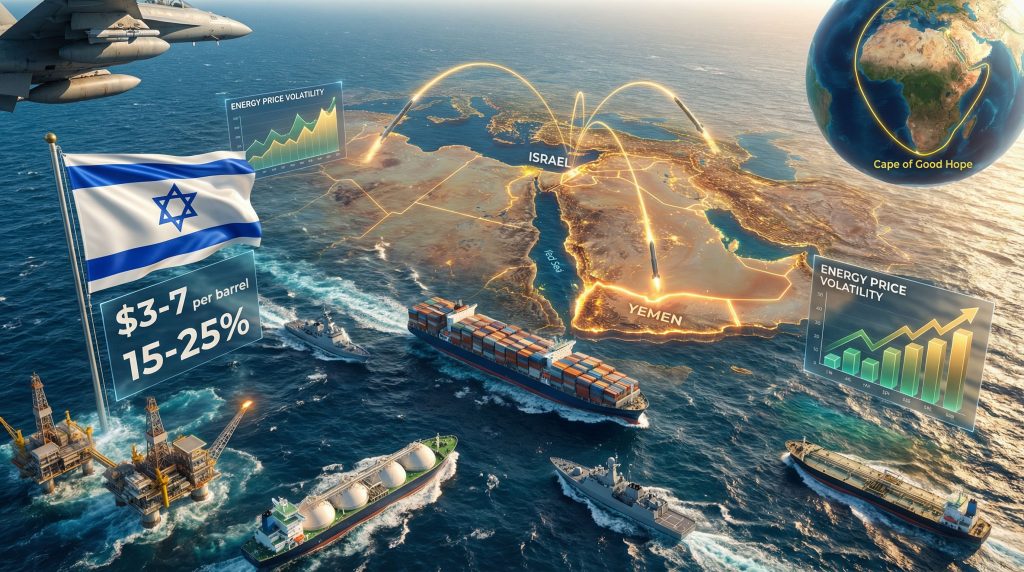
The measured approach reflects Houthi understanding of resource constraints following their sustained 23-month campaign against commercial vessels from November 2023 to October 2025. This previous campaign provided operational proof-of-concept for sustained disruption capability, cutting Suez Canal traffic through coordinated attacks that forced widespread rerouting around the Cape of Good Hope.
Air Defense System Strain and Resource Allocation
Israel's successful interception of the March 2026 attack demonstrated the effectiveness of its multi-layered air defense network, incorporating the David's Sling medium-range system, Arrow high-altitude interceptors, and Iron Dome short-range capabilities. However, the southern trajectory from Yemen creates additional operational strain on defensive resources already engaged across Lebanese and Iranian vectors.
The technical challenge of maintaining simultaneous coverage across multiple fronts tests the sustainability of current defence architectures. Historical precedent suggests unsustainable strain on military logistics within 6-12 months of sustained multi-front engagement without significant resource reallocation or international support.
Iranian Proxy Network Coordination Mechanisms
The synchronised nature of recent attacks demonstrates enhanced communication and strategic planning capabilities among Iranian-backed groups spanning Yemen, Lebanon, Iraq, and Syria. This coordination capability represents a force multiplier that fundamentally reshapes regional deterrence calculations.
The network's ability to maintain operational tempo across multiple theatres while preserving command structure indicates sophisticated logistical and communication systems. This coordination mechanism creates new variables in conflict modelling that traditional single-front analysis frameworks struggle to incorporate effectively.
When big ASX news breaks, our subscribers know first
Maritime Security Risk Assessment and Shipping Route Vulnerabilities
The Red Sea corridor handles approximately 12% of global trade, making disruptions to this route significant for international commerce. The demonstrated capability to strike targets in southern Israel from Yemeni territory expands the potential threat radius for commercial vessels transiting these waters, whilst recent oil price rally analysis suggests markets are underpricing this risk exposure.
Critical Chokepoint Analysis
| Chokepoint | Daily Transit Volume | Alternative Route | Additional Transit Time | Cost Impact |
|---|---|---|---|---|
| Bab al-Mandeb Strait | 4.8 million barrels oil/day | Cape of Good Hope | 10-14 days | $500,000-$1M per VLCC |
| Suez Canal | 2,000+ vessels monthly | Cape routing | Extended logistics chain | 15-25% freight increase |
| Strait of Hormuz | 21% global petroleum liquids | Limited alternatives | Supply disruption | $3-7/barrel risk premium |
The March 28, 2026 attack coincided with reports of no immediate merchant vessel attacks or new diversions, yet the expanded threat matrix will likely trigger immediate reassessment of war risk premiums by Lloyd's of London Market underwriters.
Insurance Market Dynamics and Freight Cost Projections
Historical analysis from the 2023-2025 Houthi campaign shows potential freight cost increases of 15-25% for affected routes when shipping companies implement widespread diversions. VLCC voyage fuel costs increase by $500,000-$1 million per vessel for alternative Cape of Good Hope routing, which adds 10-14 additional days to Europe-Asia transit times.
War risk premiums historically increase during active threat periods, though specific premium calculations depend on vessel type, cargo value, and route exposure. Container ships carrying manufactured goods face different risk calculations than bulk carriers transporting commodities or VLCCs carrying crude oil.
Alternative Routing Economics and Port Infrastructure
Should shipping diversions resume at levels seen during 2023-2025, the Cape route creates significant strain on port infrastructure capacity in both departure and arrival regions. South African ports experience increased congestion, whilst European and Mediterranean facilities must accommodate altered arrival schedules and cargo flows.
The economic calculation for shipping companies involves balancing insurance premium increases against fuel costs, transit time extensions, and port congestion fees. Companies with just-in-time supply chain dependencies face additional working capital requirements when transit times extend by two weeks.
Energy Market Transmission Mechanisms and Price Volatility
Current oil markets have not fully incorporated the expanded threat matrix represented by coordinated attacks across multiple fronts. The addition of a Yemeni vector creates new variables in geopolitical risk calculations, potentially adding $3-7 per barrel to crude prices if shipping disruptions materialise at significant scale.
Strategic Petroleum Reserve Considerations
The timing of this escalation coincides with relatively low global strategic reserves, limiting buffer capacity for supply disruptions. Key consuming nations including the United States, European Union, and Japan may need to reassess release strategies if multiple chokepoints face simultaneous threats.
Current US Strategic Petroleum Reserve capacity stands at approximately 714 million barrels as of 2025, with typical authorised release rates of 4.4 million barrels per day. However, coordinated disruptions affecting multiple supply routes could overwhelm existing reserve release protocols, necessitating early activation and international coordination.
LNG Market Vulnerabilities and European Supply Security
Qatar's LNG exports through the Strait of Hormuz represent the critical vulnerability in global natural gas markets. European buyers face particular exposure given reduced Russian pipeline capacity, creating additional dependency on Middle Eastern LNG supplies that must transit potentially contested waterways.
European LNG import capacity exceeds 200 million tonnes annually, yet supply concentration from Qatar creates single-point-of-failure risks if Hormuz transit faces sustained disruption. Furthermore, US natural gas forecasts indicate supply diversification opportunities could accelerate if traditional routes become unreliable.
Iranian Oil Export Infrastructure Analysis
Kharg Island serves as Iran's primary crude export terminal, handling approximately 92% of Iranian oil exports as of 2023-2025 according to shipping data. The facility's deep-water access allows Very Large Crude Carriers (VLCCs) to dock and load, whilst storage capacity reaches 32-34 million barrels of crude plus 5-7 million barrels of refined products.
Alternative export terminals offer limited replacement capability if Kharg faces disruption. The Jask terminal, located outside the Strait of Hormuz, was developed with 1 million barrel per day pipeline capacity from Bushehr province, yet actual throughput remains minimal with only a handful of cargoes loaded since late 2024.
Smaller terminals including Sirri, Lavan, and Soroosh primarily handle crude top-ups rather than full cargo loading, whilst Assaluyeh focuses on condensate exports. No viable alternative exists to replace Kharg's central role if the primary hub faces sustained disruption.
Supply Chain Resilience and Critical Material Transit Routes
The Red Sea corridor transits significant volumes of battery materials and rare earth elements essential for renewable energy infrastructure and electric vehicle production. Extended disruptions to this route could accelerate supply chain regionalisation efforts already underway across multiple industries, whilst critical minerals strategy development becomes increasingly urgent.
Critical Mineral Dependencies and Transit Vulnerabilities
Asian producers of lithium, cobalt, nickel, and rare earth elements rely heavily on Red Sea/Suez Canal transit to reach European and American markets. Supply chain mapping reveals concentrated dependencies:
- Lithium processing: 60% of global refining capacity concentrated in China
- Cobalt supply: 70% of production originates in Democratic Republic of Congo
- Rare earth elements: 85% of global processing occurs in China
- Nickel processing: Major facilities in Indonesia and Philippines
Transit disruptions create cascading effects throughout manufacturing sectors dependent on these materials for battery production, renewable energy systems, and advanced electronics.
Manufacturing Sector Contingency Planning Requirements
Automotive and electronics manufacturers face buffer stock requirement increases of 2-4% of operational costs if Asian sourcing experiences sustained disruption. Just-in-time inventory strategies prove vulnerable to concentrated chokepoint risks, forcing reassessment of component sourcing and storage requirements.
Extended transit times of 10-14 days create working capital pressures as inventory holding costs increase and production scheduling becomes less predictable. Companies with single-source supplier relationships face particular vulnerability to route disruptions.
Agricultural Commodity Flow Patterns
Black Sea grain shipments to Middle Eastern destinations face potential rerouting costs and delays if regional instability affects traditional transit routes. Wheat, barley, and other grains critical for food-insecure regions could experience price volatility and supply timing disruptions.
Food security implications extend beyond immediate pricing effects, as importing nations may need to establish alternative sourcing relationships or increase strategic grain reserves to buffer against supply chain volatility.
Long-Term Strategic Implications for Regional Stability
The demonstrated coordination capabilities among Iranian-backed groups represent a fundamental shift in regional security architecture. Multi-front pressure campaigns create force multiplication effects that traditional defence planning frameworks struggle to address effectively.
Multi-Front Conflict Sustainability Analysis
Israel's resource allocation across Lebanese, Iranian, and Yemeni vectors tests the limits of current military logistics and defensive capabilities. Historical analysis suggests potential strain on operational sustainability within 6-12 months without significant international support or conflict de-escalation.
The economic costs of maintaining multi-layered defence systems across expanded geographic areas create fiscal pressures that affect broader defence spending priorities and civilian sector resource allocation.
US Naval Deployment Requirements and Strategic Implications
Protecting commercial shipping whilst maintaining deterrent presence across multiple theatres requires significant naval resource allocation. Current deployment patterns suggest potential strain on fleet availability for other global commitments, including Indo-Pacific presence and Atlantic operations.
The Pentagon's reported deployment of 82nd Airborne Division soldiers reflects escalating resource commitments that affect broader strategic positioning. Naval escort requirements for commercial convoys compete with carrier strike group availability for power projection missions.
Regional Power Balance Evolution
Enhanced coordination among proxy networks creates new deterrence dynamics that affect regional state behaviour beyond immediate conflict participants. Gulf states, Egypt, and Jordan face pressure to choose sides or maintain neutrality as conflict geography expands.
The success of coordinated multi-front campaigns may encourage similar strategies in other regional conflicts, potentially affecting stability calculations in Eastern Europe, East Asia, and other contested regions with multiple proxy actors.
Investment Positioning Strategies for Market Disruption Scenarios
The expanded conflict geography creates both risks and opportunities across energy, transportation, defence, and commodity sectors. Market participants should consider positioning strategies that account for multiple disruption scenarios and their transmission mechanisms.
Energy Sector Investment Themes
Defensive positioning focuses on companies with minimal Middle East exposure:
- Pipeline operators with domestic route networks
- North American shale producers with low breakeven costs
- Renewable energy infrastructure outside conflict zones
- Strategic storage facility operators
Growth opportunities emerge from supply security premiums:
- LNG terminal operators and regasification facilities
- Alternative energy transportation infrastructure
- Energy efficiency technology providers
- Grid storage and backup power systems
Transportation and Logistics Opportunities
Companies offering alternative routing solutions or specialised risk management services benefit from increased demand for supply chain diversification. Maritime security services, satellite tracking systems, and convoy coordination platforms experience elevated demand during transit disruption periods.
Freight forwarding companies with Cape of Good Hope routing expertise gain competitive advantages when Red Sea diversions resume. Port operators in alternative transit zones capture increased throughput volumes and storage demand.
Defence and Security Sector Positioning
Defence contractors specialising in missile defence systems, maritime security, and surveillance technology benefit from increased government spending on regional security. Companies producing interceptor missiles, radar systems, and naval patrol vessels face elevated demand.
Private security firms offering maritime escort services and risk assessment capabilities experience increased demand from commercial shipping companies and commodity traders operating in contested zones.
Commodity Market Arbitrage Opportunities
The expanded conflict geography creates price differentials between regional markets, particularly for energy products and critical materials with concentrated production sources. Traders with storage capacity and flexible logistics networks can capitalise on location-based price spreads.
Key arbitrage considerations:
- Crude oil price differentials between Atlantic and Pacific basin markets
- LNG spot pricing variations based on delivery location flexibility
- Critical mineral pricing spreads between processing regions
- Agricultural commodity price differences across import/export zones
Additionally, commodities market hedging strategies become essential for managing the increased volatility across multiple asset classes.
The next major ASX story will hit our subscribers first
Scenario Planning Framework for Market Participants
Three primary scenarios emerge from current escalation dynamics, each with distinct probability assessments and market implications. Investment strategies should incorporate positioning flexibility to adapt as scenarios develop.
Scenario 1: Contained Regional Conflict (40% Probability)
Limited exchanges between proxy groups with minimal spillover to commercial shipping. Israeli defence systems maintain effectiveness across multiple fronts whilst diplomatic efforts prevent major infrastructure targeting.
Market implications:
- Oil prices remain elevated but stable with modest risk premium
- Shipping rates increase moderately without widespread diversions
- Defence spending increases regionally but remains contained
- Strategic reserve releases unnecessary
Scenario 2: Escalating Multi-Front Campaign (35% Probability)
Sustained attacks across Lebanese, Iranian, and Yemeni fronts leading to shipping diversions and energy price spikes. Commercial vessels resume Cape of Good Hope routing whilst governments activate strategic reserve release protocols.
Market implications:
- $3-7/barrel oil price premium materialises
- Freight costs increase 15-25% for affected routes
- LNG spot prices spike in European markets
- Manufacturing supply chains experience 10-14 day delays
- Strategic petroleum reserves activated internationally
Scenario 3: Critical Infrastructure Targeting (25% Probability)
Direct attacks on major energy infrastructure including Kharg Island, Qatari LNG facilities, or Saudi production centres. Supply emergency protocols activated with significant market intervention required.
Market implications:
- Oil prices spike above $100/barrel
- Global LNG shortages trigger emergency protocols
- Strategic reserve releases coordinated internationally
- Alternative energy infrastructure investment accelerates
- Supply chain regionalisation efforts intensify
Risk Management Recommendations for Market Participants
Companies with exposure to affected regions or dependent on critical transit routes should reassess risk management protocols and contingency planning frameworks. The Houthi missile attack on Israel represents more than an isolated incident, signalling a new phase of coordinated pressure designed to strain defensive capabilities whilst testing international resolve.
Immediate risk assessment priorities:
- Evaluate supply chain dependencies on Red Sea transit
- Review insurance coverage for war risk and business interruption
- Assess alternative sourcing options for critical materials
- Update contingency plans for extended logistics timelines
- Monitor early warning indicators of shipping route disruptions
Long-term strategic considerations:
- Supply chain diversification to reduce single-route dependencies
- Energy security investments including backup power and storage
- Regional manufacturing capabilities to reduce import dependence
- Strategic inventory increases for critical components and materials
The strategic implications extend beyond immediate price movements, potentially accelerating long-term trends toward supply chain regionalisation and energy security diversification. Market participants should balance short-term operational adjustments with longer-term structural changes in global trade patterns and security requirements.
Furthermore, analysis from Saudi exploration licenses suggests regional stability will become increasingly important for global energy security investments.
This analysis is based on publicly available information and should not be considered as investment advice. Market participants should conduct their own due diligence and consult with qualified professionals before making investment decisions. Geopolitical events involve significant uncertainty and actual outcomes may differ materially from scenario assessments presented.
For the latest updates on this developing situation, please refer to BBC News live coverage and CNN's ongoing reporting for real-time information.
Looking to Capitalise on Market Volatility from Geopolitical Events?
Discovery Alert's proprietary Discovery IQ model delivers real-time alerts on significant ASX mineral discoveries, helping subscribers identify actionable opportunities that emerge during periods of market uncertainty and supply chain disruption. With geopolitical tensions creating new investment themes around energy security and critical minerals, begin your 14-day free trial today to position yourself ahead of the market.