
June 20, 2026
Regulatory Frameworks and Industrial Policy Convergence
The intersection of corporate governance failures and strategic asset protection has emerged as a critical policy challenge for Australia's industrial oversight mechanisms. Recent enforcement actions by the Australian Securities and Investments Commission illuminate fundamental questions about regulatory responsiveness, foreign investment supervision, and the protection of sovereign manufacturing capabilities. These developments reveal systemic vulnerabilities in how complex corporate structures can obscure financial distress while operating critical infrastructure assets.
The corporate regulator's intervention in interconnected business failures demonstrates the evolving nature of modern industrial policy, where traditional regulatory boundaries intersect with national security considerations and worker protection frameworks. Understanding these dynamics requires examining both the technical mechanisms of corporate enforcement and the broader implications for Australia's strategic asset oversight.
When big ASX news breaks, our subscribers know first
Understanding the Scope of ASIC's Corporate Enforcement Action
The ASIC investigation into Sanjeev Gupta's business empire has confirmed active investigations into multiple entities and individuals within the GFG Alliance conglomerate following systematic corporate failures across three major Australian operations. This enforcement action represents one of the most significant corporate investigations involving foreign-owned strategic assets in recent years.
Investigation Framework and Legal Mechanisms
ASIC's investigation operates under the Corporations Act 2001, examining potential breaches across several critical areas of corporate compliance. The corporate regulator's statement confirmed investigations into related entities and individuals within Sanjeev Gupta's business empire, triggered by widespread financial reporting failures.
Key investigation areas include:
• Insolvent trading assessments – examining whether directors continued operations while knowing the companies could not pay existing debts
• Related party transaction analysis – investigating inter-company financing arrangements and asset transfers between GFG subsidiaries
• Directors' duty compliance – assessing whether corporate officers fulfilled their fiduciary responsibilities during periods of financial distress
• Financial reporting failures – analysing systematic non-compliance with mandatory disclosure requirements
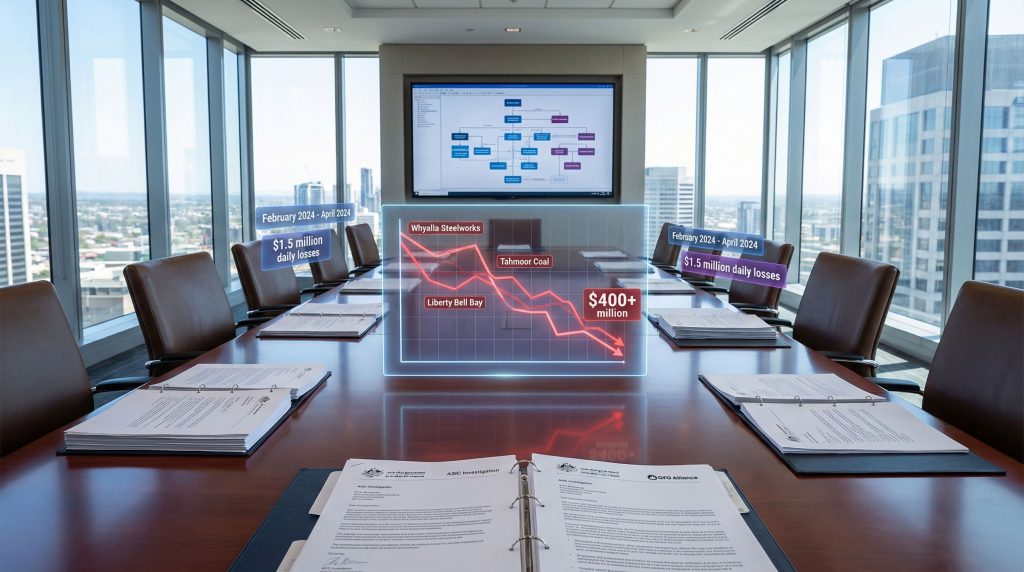
The investigation encompasses Liberty Primary Metals Australia (parent company of Whyalla steelworks), Tahmoor Coal, and Liberty Bell Bay smelter. According to ASIC, inquiries commenced after Liberty Primary Metals failed to file company reports in 2024, revealing that other related entities had similarly failed to lodge financial reports since 2021.
Timeline of Regulatory Enforcement Actions
| Date | Action Taken | Entity Affected | Outcome |
|---|---|---|---|
| February 2024 | Government administration | Whyalla Steelworks | Operational shutdown |
| March 2024 | ASIC winding up proceedings | Liberty Bell Bay | Voluntary administration |
| April 2024 | Liquidation proceedings | Tahmoor Coal | Closure with 238 redundancies |
Professor Jason Harris from Sydney University characterised these failures as representing the upper tier of serious financial collapses, noting the investigation was warranted given the extended trajectory of deterioration. His assessment highlighted that these businesses had been deteriorating for years in plain sight of regulators and industry participants.
Corporate Enforcement Challenges
The investigation reveals fundamental challenges in monitoring complex corporate structures spanning multiple jurisdictions. ASIC described the target entities as a complex web of private companies, highlighting the difficulties regulators face when overseeing interconnected operations with extensive related party transactions.
This complexity created regulatory gaps where traditional oversight mechanisms struggled to detect systemic risks across the corporate structure. The delayed intervention demonstrates how sophisticated corporate architectures can obscure financial distress until operational failures become unavoidable. Furthermore, identifying management red flags becomes increasingly difficult in such complex structures.
The Cascade Effect of Interconnected Business Failures
The sequential collapse of three major Australian industrial operations within the GFG Alliance demonstrates how corporate interconnectedness can amplify systemic risks across strategic asset portfolios. This cascade effect reveals critical vulnerabilities in how complex corporate structures manage liquidity crises and operational dependencies.
Financial Performance Deterioration
At the point of administration, Whyalla steelworks was losing approximately $1.5 million daily while operating in a state of disrepair that administrators deemed unsafe. This level of operational loss indicates fundamental business model failure rather than temporary market disruption.
"The scale of daily losses at Whyalla demonstrates how operational inefficiencies can compound into systemic financial crisis when management structures fail to address underlying performance issues."
Tahmoor Coal's liquidation revealed total debts exceeding $400 million, including substantial related-party claims that highlighted the financial entanglement between GFG subsidiaries. This debt structure created cascading payment obligations that propagated financial distress across the corporate group. According to Sky News, the steel tycoon's troubles have deepened amid the Australian probe.
Employment Impact Analysis
The employment consequences of these failures illustrate the human cost of regulatory delay and corporate mismanagement:
• Liberty Bell Bay: Over 200 smelter workers faced redundancy following voluntary administration
• Tahmoor Coal: 238 full-time equivalent positions eliminated through liquidation proceedings
• Whyalla Steelworks: Significant workforce impacts during administration transition
Worker testimonies revealed the personal impact of corporate failures that appeared sudden despite years of underlying deterioration. Mark Bryant, a contractor at Tahmoor Coal for five years, questioned how an operation could transition from what he characterised as one of its most successful years in 2023-24 to complete closure within 18 months.
Systemic Risk Propagation
The GFG Alliance structure created interconnected dependencies where the failure of one entity triggered immediate liquidity crises across related operations. This propagation mechanism operated through several channels:
Supply Chain Dependencies: Tahmoor Coal supplied feedstock to Whyalla operations, creating upstream supply disruption when mining operations ceased
Inter-company Financing: Related party debt obligations meant that one entity's inability to service loans created immediate funding gaps for creditor entities within the group
Operational Integration: Shared management, technical expertise, and administrative functions created operational dependencies that amplified the impact of individual business failures
The collapse pattern followed the 2021 failure of Greensill Capital, a key lender to the GFG Alliance, demonstrating how external financing shocks can propagate through complex corporate structures to create widespread operational failures.
Regulatory Warning Signs That Went Unaddressed for Years
The ASIC investigation into Sanjeev Gupta's business empire reveals a pattern of regulatory warning signs that persisted for years before enforcement action commenced. This delay raises fundamental questions about corporate monitoring effectiveness and the adequacy of current oversight mechanisms for complex multinational business structures.
Financial Reporting Compliance Failures
Liberty Bell Bay had failed to lodge financial reports since 2021, representing a minimum three-year period of non-compliance before ASIC initiated winding-up proceedings in March 2024. This extended reporting failure indicates systematic breakdown of corporate governance rather than administrative oversight.
Professor Jason Harris questioned the timing of regulatory intervention, noting that multiple accounts being delayed year after year suggested serious financial deficiencies within the businesses. His analysis indicated that such persistent non-compliance provided sufficient evidence for earlier regulatory action.
Parliamentary Inquiry Findings on ASIC Performance
Senator Andrew Bragg's parliamentary inquiry into ASIC, which reported in 2024, identified organisational deficiencies that may have contributed to delayed enforcement responses. The committee found ASIC to be an organisation lacking transparency, slow on enforcement, and in need of structural reform.
Key parliamentary recommendations included:
• Enhanced transparency in enforcement decision-making
• Accelerated investigation and prosecution timelines
• Structural organisational reforms to improve regulatory effectiveness
• Improved coordination mechanisms for complex corporate investigations
However, Bragg noted that approximately twelve recommendations from the parliamentary inquiry remained unimplemented, suggesting systemic resistance to regulatory reform initiatives. Additionally, understanding shareholder rights governance frameworks becomes crucial when addressing such systemic failures.
Expert Analysis of Regulatory Response Timing
Corporate law specialists characterised the business failures as a slow-moving car crash observable for years, questioning why earlier intervention did not occur. The pattern of deterioration included:
Operational Performance Decline: Daily losses of $1.5 million at Whyalla indicated fundamental business model failure extending over multiple years
Safety and Maintenance Deferrals: Administrator assessments revealed that Whyalla operations had become unsafe due to deferred maintenance and capital investment
Related Party Transaction Complexity: Inter-company financing arrangements created potential conflicts of interest and asset transfer mechanisms that may have masked financial distress
The investigation timeline suggests ASIC inquiries commenced only after Liberty Primary Metals failed to file reports in 2024, potentially five years after initial warning signs emerged at related entities.
Corporate Governance Framework Gaps
The delayed regulatory response highlights structural challenges in monitoring complex corporate groups operating across multiple jurisdictions. Current oversight mechanisms appear inadequate for detecting systemic risks in multinational corporate structures with extensive related party transactions.
These framework gaps include insufficient real-time financial monitoring, limited cross-border regulatory coordination, and inadequate early warning systems for identifying corporate distress in strategic asset owners.
Sovereign Manufacturing Capability and Foreign Investment Oversight
The collapse of critical steel and coal operations within the GFG Alliance raises fundamental questions about Australia's approach to foreign investment oversight and strategic asset protection. These failures highlight gaps in ongoing supervision mechanisms for foreign-owned infrastructure that supports domestic manufacturing capabilities.
Strategic Asset Protection Challenges
The failure of Whyalla steelworks represents a significant threat to Australia's sovereign steel production capacity, requiring unprecedented government intervention to preserve operational continuity. The South Australian and federal governments committed a $2.4 billion rescue package to support the facility's sale and maintain strategic manufacturing capabilities.
This taxpayer exposure demonstrates the hidden costs of inadequate foreign investment oversight, where initial acquisition approval processes failed to establish sufficient ongoing monitoring mechanisms to prevent strategic asset degradation. Recent developments in executive order permits demonstrate how regulatory frameworks continue to evolve.
Due Diligence and Ongoing Supervision Gaps
The GFG Alliance case reveals critical deficiencies in how Australia monitors foreign-owned strategic assets after initial acquisition approval. Current frameworks focus primarily on acquisition-stage assessment rather than ongoing operational and financial supervision.
Key oversight gaps include:
• Limited ongoing financial monitoring of foreign-owned critical infrastructure operators
• Insufficient related party transaction oversight for complex multinational corporate structures
• Inadequate early warning systems for identifying financial distress in strategic asset owners
• Limited cross-border regulatory coordination with home jurisdiction regulators
Economic Impact Assessment
| Economic Impact Category | Estimated Cost/Effect | Timeframe |
|---|---|---|
| Government rescue package | $2.4 billion | Multi-year commitment |
| Direct employment losses | 438+ positions | Immediate |
| Regional economic disruption | Significant community impact | Ongoing |
| Administrative costs | $1.3 million per fortnight | During administration |
The economic consequences extend beyond direct employment losses to include broader regional economic disruption, supply chain interruptions, and potential long-term damage to Australia's manufacturing competitiveness.
Policy Framework Enhancements
Addressing these vulnerabilities requires comprehensive reform of foreign investment oversight mechanisms, including enhanced due diligence requirements for critical infrastructure acquisitions and robust ongoing supervision frameworks.
Potential policy improvements include mandatory quarterly financial reporting for strategic asset owners, automated early warning systems based on financial performance metrics, and enhanced worker protection mechanisms during ownership transitions. Understanding industry evolution trends becomes essential for developing these frameworks.
The Challenge of Monitoring Interconnected Private Companies
The ASIC investigation into Sanjeev Gupta's business empire illustrates fundamental challenges regulators face when overseeing complex webs of interconnected private companies operating across multiple jurisdictions. This structural complexity creates regulatory blind spots that can obscure financial distress and delay intervention until systemic failures become unavoidable.
Corporate Structure Complexity Analysis
The GFG Alliance operates through multiple subsidiary companies that engage in extensive related party transactions, creating a corporate structure that regulators described as a complex web of private companies. This architecture creates several monitoring challenges:
Multi-jurisdictional Operations: GFG entities operate across Australia, the United Kingdom, and other international markets, creating coordination challenges for domestic regulators attempting to assess overall group financial health.
Related Party Financing Arrangements: Inter-company loans, guarantees, and financing arrangements create dependencies where the financial distress of one entity can rapidly propagate throughout the corporate group structure.
Asset Transfer Mechanisms: The ability to transfer assets between related entities can mask financial deterioration and complicate regulatory assessment of individual company viability.
Delayed Reporting Patterns: The systematic failure to lodge financial reports across multiple entities suggests coordinated non-compliance rather than isolated administrative failures.
Regulatory Oversight Limitations
Current regulatory frameworks struggle to provide comprehensive oversight of complex private company networks, particularly when these structures span multiple jurisdictions and involve extensive related party relationships. These limitations include:
• Limited real-time financial monitoring capabilities for private companies operating critical infrastructure
• Inadequate related party transaction disclosure requirements that fail to capture the full scope of inter-company dependencies
• Insufficient cross-border information sharing mechanisms between Australian and international regulators
• Reactive rather than proactive intervention approaches that respond to crises rather than preventing them
Furthermore, according to the ABC, Sanjeev Gupta's portfolio has seen three companies collapse amid ASIC investigations, highlighting the scope of the regulatory challenge.
Information Asymmetry Challenges
Private company structures create significant information asymmetries between corporate management and regulators, particularly when companies systematically fail to meet disclosure obligations. The three-year reporting gap at Liberty Bell Bay demonstrates how private companies can operate with minimal external scrutiny until crisis points emerge.
This information asymmetry is compounded by the technical complexity of related party transactions and the difficulty of assessing financial health across interconnected corporate networks without comprehensive disclosure frameworks.
Technological and Analytical Solutions
Addressing these monitoring challenges requires enhanced technological capabilities and analytical frameworks that can process complex corporate relationship data and identify emerging risks across interconnected business networks.
Potential technological solutions include automated monitoring systems that track financial performance indicators across related entities, machine learning algorithms that identify unusual transaction patterns, and integrated databases that provide comprehensive views of corporate group structures and dependencies.
The next major ASX story will hit our subscribers first
Strengthening Australia's Corporate Governance Framework
The lessons from the GFG Alliance failures provide critical insights for enhancing Australia's corporate governance and regulatory oversight frameworks. These reforms must address both the immediate challenges of monitoring complex corporate structures and the broader policy objectives of protecting strategic assets and worker interests.
Enhanced Monitoring and Early Warning Systems
Future regulatory frameworks should incorporate sophisticated early warning systems that can detect corporate distress before it reaches crisis levels. These systems should include:
Real-time Financial Monitoring: Quarterly reporting requirements for critical infrastructure owners, with automated triggers for regulatory review when key financial metrics deteriorate beyond specified thresholds.
Related Party Transaction Oversight: Enhanced disclosure requirements for inter-company transactions, including detailed reporting of loan agreements, guarantees, and asset transfers between related entities.
Operational Performance Indicators: Monitoring systems that track operational metrics alongside financial performance, including safety compliance, maintenance expenditure, and production efficiency measures.
Cross-border Information Sharing: Formal mechanisms for sharing regulatory information with international counterparts to provide comprehensive oversight of multinational corporate groups.
Worker Protection and Transition Mechanisms
The employment impact of the GFG Alliance failures highlights the need for enhanced worker protection frameworks that operate independently of corporate governance systems. Recommended protections include:
• Mandatory redundancy insurance for employees of foreign-owned strategic assets
• Early notification requirements for planned closures or significant workforce reductions
• Skills transition support programs funded through corporate ownership levies
• Community impact assessment requirements for strategic asset ownership changes
Regulatory Coordination and Reform Implementation
The parliamentary inquiry findings suggest that implementing effective corporate governance reforms requires addressing systemic organisational issues within regulatory agencies themselves. Priority reforms include:
Organisational Structure: Streamlined decision-making processes that enable rapid response to emerging corporate governance issues while maintaining appropriate due process protections.
Resource Allocation: Enhanced funding for complex corporate investigations and ongoing monitoring activities, particularly for cases involving strategic assets or significant employment impacts.
Enforcement Capabilities: Strengthened powers for early intervention in cases where warning signs indicate potential corporate failures, including temporary management orders and enhanced supervision requirements.
Industry-specific Expertise: Development of specialised regulatory capabilities for overseeing strategic industries including steel production, mining, and critical infrastructure sectors.
Long-term Policy Integration
Effective corporate governance reform requires integration with broader industrial policy objectives, including sovereign capability protection, foreign investment oversight, and regional economic development goals. This integration should ensure that regulatory frameworks support both market efficiency and strategic national objectives.
Future policy development should incorporate lessons from international best practices in corporate governance, while adapting these frameworks to Australia's specific economic structure and strategic priorities. Understanding different capital raising methods becomes crucial for companies seeking to maintain operational viability.
The ultimate objective is creating regulatory systems that protect worker interests and national capabilities while maintaining attractive conditions for legitimate foreign investment and business operation. Consequently, the ASIC investigation into Sanjeev Gupta's business empire serves as a critical case study for future regulatory improvements.
This analysis is based on publicly available information as of April 2026 and should not be construed as investment advice. Regulatory investigations are ongoing, and outcomes may differ from current assessments. Readers should consult authoritative sources for the most current information on specific regulatory actions and policy developments.
Looking for Opportunities in ASX Industrial and Mining Investments?
Discovery Alert's proprietary Discovery IQ model delivers immediate alerts on significant ASX mineral discoveries and industrial developments, helping investors identify actionable opportunities ahead of market movements. With comprehensive coverage across mining, industrial, and strategic asset sectors, subscribers gain rapid insights into potentially transformative announcements that could impact portfolio performance. Begin your 14-day free trial today to secure your competitive advantage in the Australian markets.