
August 14, 2026
India's Deep Coal Dilemma and the Technology That Could Solve It
For decades, energy planners have grappled with a paradox at the heart of India's resource endowment. The country sits atop one of the largest global coal reserves on the planet, yet a vast portion of that wealth lies permanently beyond the reach of conventional extraction technology. Mines can only go so deep before the economics collapse and the safety calculus becomes untenable. What lies beneath those thresholds has long been catalogued, mapped, and then quietly set aside as unreachable.
Underground Coal Gasification changes that equation fundamentally. Rather than extracting coal and burning it at the surface, UCG converts the resource into usable gas directly within the seam, eliminating the need to move material at all. It is this technological distinction that makes the Reliance Industries coal gasification project in Andhra Pradesh worth examining in depth, not merely as a corporate investment announcement, but as a potential inflection point for how India thinks about its domestic energy base.
When big ASX news breaks, our subscribers know first
The Scale of India's Stranded Coal Problem
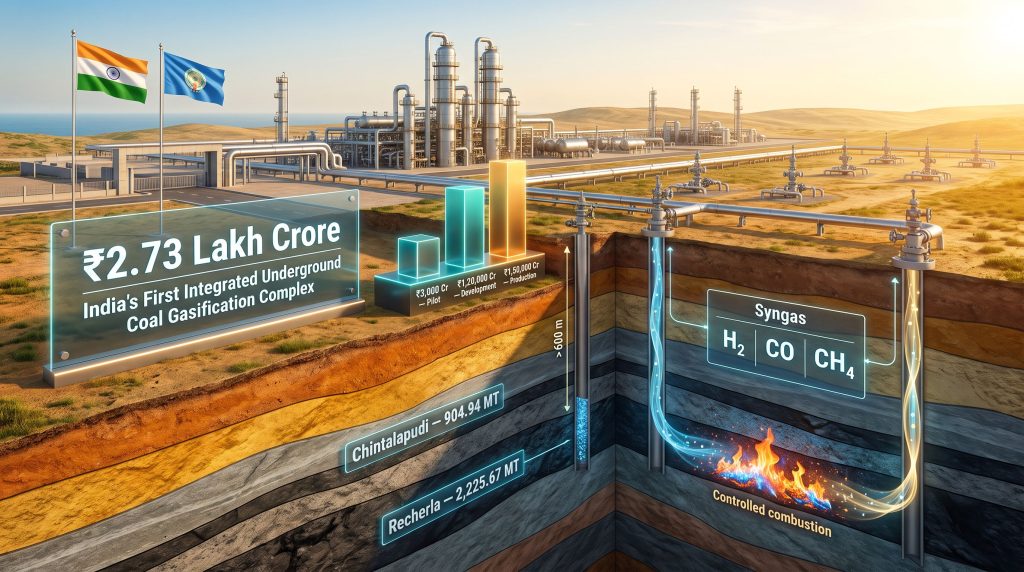
India's total coal endowment is estimated at approximately 360 billion tonnes, positioning the country among the most coal-rich nations globally. However, the geological reality is considerably more complex than that headline figure suggests. Close to 160 billion tonnes of those reserves sit at depths exceeding the viable range for conventional surface or underground mining operations, which typically becomes economically unworkable beyond 300 to 400 metres.
At depths greater than 600 metres, the combination of ground pressure, ventilation challenges, heat management requirements, and logistical complexity makes conventional extraction prohibitively expensive under most market conditions. These deep seams have therefore been classified as resources rather than reserves in the technical sense, meaning their extraction has not been demonstrated to be economically viable under current conditions.
UCG sidesteps this classification problem entirely. Because the conversion process occurs in-situ, the prohibitive cost of physically accessing deep seams is eliminated. The resource that geologists have long known exists but engineers could not economically reach becomes, in principle, accessible.
Understanding the In-Situ Gasification Process
The mechanics of UCG are worth understanding in detail, because the technology underpins every aspect of the Andhra Pradesh project's commercial logic.
The process works in the following sequence:
- Directional drilling equipment creates injection wells and production wells into the targeted coal seam at depth.
- Oxidants, typically a mixture of oxygen and steam, are injected into the coal seam through the injection well.
- The coal is ignited and a controlled combustion reaction begins within the seam itself.
- The heat and chemical reactions transform the coal into a mixture of hydrogen, carbon monoxide, carbon dioxide, and methane, collectively referred to as synthesis gas or syngas.
- Syngas migrates through the permeable rock structure and is drawn to the surface through the production well.
- Surface processing facilities separate, clean, and condition the syngas for downstream applications.
The critical variable throughout this process is the permeability and structural integrity of the coal seam and surrounding strata. Coal seams that are fractured, discontinuous, or overlain by highly permeable aquifer formations present significant engineering challenges. This is why the geological characteristics of the Chintalapudi and Recherla blocks are central to the project's viability assessment.
The Chintalapudi and Recherla Blocks: Geological Profile
Both coal blocks are situated in Eluru district in coastal Andhra Pradesh, a region whose sedimentary geology positions it within the Gondwana coal basin system. The following table summarises the key resource parameters for each block:
| Parameter | Chintalapudi Block | Recherla Block |
|---|---|---|
| Area | ~3,000 acres | ~5,500 acres |
| Estimated reserves | 904.94 million tonnes | 2,225.67 million tonnes |
| Coal grade | G-12 | G-13 |
| Depth of deposits | Greater than 600 metres | Greater than 600 metres |
| Combined total reserves | 3,130.61 million tonnes |
The coal grades assigned to these blocks, G-12 and G-13 under India's classification system, correspond to coal with relatively lower calorific values, which is an important nuance. In conventional power generation, lower-grade coal delivers less energy per tonne burned and carries higher ash content. However, in UCG operations, coal grade is less determinative of suitability than seam thickness, continuity, and depth. The conversion efficiency of the gasification process depends more heavily on the physical and structural properties of the seam than on the raw energy content of the coal itself, which is a distinction not widely appreciated outside specialist circles.
The combined reserve estimate of 3,130.61 million tonnes across these two blocks represents a resource base that, if successfully gasified, would dwarf the output of most conventional coal mining operations in the region.
Reliance Industries secured both blocks through India's Ministry of Coal competitive e-auction process, a government-administered mechanism designed to allocate coal assets to private developers under transparent commercial terms. The acquisition through auction rather than allocation is significant because it establishes market-determined terms and provides a degree of commercial clarity from the outset.
A ₹2.73 Lakh Crore Investment Structured Around Uncertainty
The headline investment figure of ₹2.73 lakh crore spread over 30 years is striking in its scale, but the more important analytical lens is the phased structure through which that capital would be deployed.
| Phase | Timeline | Capital Commitment | Core Activity |
|---|---|---|---|
| Exploration and Pilot | Q3 2026 to Q4 2027 | Up to ₹3,000 crore | Geological confirmation, UCG pilot testing |
| Development | 2028 to 2030 | ₹1,20,000 crore | Well network, surface infrastructure |
| Full Production | 2030 onwards | ₹1,50,000 crore | Syngas output, downstream processing |
The front-loaded risk management logic embedded in this structure deserves attention. The entire ₹2.73 lakh crore commitment is explicitly contingent on the pilot phase returning commercially viable results. Reliance is, in effect, committing ₹3,000 crore to answer a binary question: do these specific seams behave in the subsurface the way the geological surveys suggest they will?
This staged approach mirrors capital allocation frameworks used in frontier resource development globally, where the cost of being wrong in early-stage exploration is deliberately bounded. The exploration and pilot phase effectively functions as a real options structure, where the company purchases the right but not the obligation to proceed to the vastly larger development expenditure. A definitive feasibility study of the subsurface conditions will be central to that determination.
What the ₹3,000 Crore Pilot Phase Must Establish
The pilot phase carries the heaviest analytical burden of the entire project lifecycle. It must confirm:
- That the coal seams at depth have sufficient continuity and permeability for effective in-situ gasification
- That syngas yields per unit of coal are sufficient to underpin downstream economics
- That the chemical composition of the syngas, particularly its hydrogen and carbon monoxide ratios, supports the planned downstream applications
- That subsurface water management can be controlled to prevent groundwater contamination
- That the physical cavity formation underground does not create unacceptable ground movement or subsidence risk at surface
Each of these variables represents a genuine uncertainty that only real-world subsurface data can resolve. Desktop geological modelling and seismic surveys can reduce uncertainty but cannot eliminate it.
From Syngas to Economic Value: The Downstream Opportunity
Syngas produced through UCG is not a single-purpose output. Its composition, primarily hydrogen and carbon monoxide with varying proportions of methane and carbon dioxide, makes it a genuinely versatile industrial feedstock. Furthermore, the value proposition of the Reliance Industries coal gasification project in Andhra Pradesh is therefore not simply about energy generation but about the breadth of industries the syngas output could supply.
Potential downstream applications include:
- Power generation using gas turbines or combined cycle gas turbine configurations, where syngas substitutes for natural gas
- Hydrogen production via the water-gas shift reaction, which converts carbon monoxide and steam into hydrogen and carbon dioxide
- Ammonia synthesis for fertiliser production, an application of direct relevance to India's agricultural economy
- Methanol production, which serves both as a fuel additive and as a chemical industry feedstock
- Synthetic natural gas production, which could feed into India's piped gas distribution network
- Liquid fuel synthesis through Fischer-Tropsch processes, producing synthetic diesel or aviation fuel
The ability to direct syngas output toward whichever downstream market offers the best economics at a given point in time provides a degree of commercial flexibility not available to conventional coal power plants, which are locked into a single output pathway.
The Import Substitution Arithmetic
India's crude oil import bill represents one of the most persistent structural pressures on its current account balance. The country imports a substantial proportion of its total petroleum consumption, exposing the macroeconomy to oil price cycles, rupee depreciation dynamics, and supply disruptions from geopolitical events, including potential closure of critical maritime chokepoints such as the Strait of Hormuz.
Domestically produced syngas converted into liquid fuels or chemicals could reduce the volume of crude imports required, providing a structural, rather than cyclical, improvement in the trade balance. This is not a marginal consideration in the context of India's economic planning.
Employment, Regional Development, and the Eluru District Context
Project proposals of this scale routinely include employment projections, and the Andhra Pradesh submission is no exception. However, the numbers warrant closer examination.
The proposal estimates:
- 3,000 to 5,000 direct jobs at steady-state operations within the complex itself
- 20,000 to 35,000 indirect and induced livelihoods across the broader regional supply chain
The distinction between direct, indirect, and induced employment is technically important. Direct employment refers to roles within the UCG complex and its associated surface facilities. Indirect employment encompasses supply chain positions, including equipment suppliers, logistics providers, and specialist contractors. Induced employment captures the economic multiplier effect as wages earned by direct and indirect workers circulate through the local economy, supporting retail, services, construction, and hospitality sectors in Eluru district.
For coastal Andhra Pradesh, the significance extends beyond the employment numbers themselves. The region has historically lacked the kind of large-scale industrial anchor that generates durable multi-decade economic activity. A project with a 30-year operational horizon, if successfully developed, would represent a structural change in the regional economic base rather than a temporary construction-phase stimulus.
The next major ASX story will hit our subscribers first
Global UCG Precedents: What History Tells Investors
UCG is not a theoretical concept. It has been attempted at various scales across multiple countries, with results that range from sustained commercial operation to forced suspension. Understanding that track record is essential to calibrating expectations for the Andhra Pradesh project.
| Country | Project | Outcome | Primary Lesson |
|---|---|---|---|
| Uzbekistan | Yerostigaz, Angren | Long-running commercial operation since 1961 | Favourable shallow geology and stable political environment matter |
| Australia | Cougar Energy, Queensland | Suspended after groundwater contamination detected | Environmental monitoring and containment design are non-negotiable |
| South Africa | Eskom UCG pilot | Discontinued | Commercial viability at scale proved elusive |
| China | Multiple projects | Mixed results, ongoing development activity | Geological variability significantly affects outcomes |
| United Kingdom | Multiple historical pilots | Research-scale only | Regulatory frameworks significantly constrain commercial development |
The Uzbekistan precedent is frequently cited in UCG literature as the global proof-of-concept for sustained commercial operation. However, the Angren site benefits from relatively shallow coal seams by UCG standards, and the geological conditions differ materially from the 600-plus-metre depths targeted in the Andhra Pradesh blocks. Direct comparisons require significant qualification.
The Australian experience is particularly instructive for risk management purposes. The Cougar Energy suspension in Queensland followed detection of benzene and other contaminants in groundwater near the gasification cavity. That outcome, while site-specific, established the groundwater management challenge as the defining regulatory and reputational risk for UCG projects globally. Any viable operational framework for the Eluru complex will need to demonstrate robust subsurface containment design from the outset. Consequently, mining waste management protocols will be a foundational rather than supplementary consideration throughout the project lifecycle.
Regulatory Architecture and Approval Requirements
Projects of this scale and technical novelty require navigation of a multi-layered regulatory environment. The approval pathway for the Reliance Industries coal gasification project in Andhra Pradesh would typically involve:
- Environmental Impact Assessment under India's Environment Protection Act, including public consultation processes
- State-level environmental and land use clearances from Andhra Pradesh authorities
- Ministry of Coal approvals for UCG-specific operational frameworks, which remain less established in India than conventional mining regulations
- Groundwater and water body impact assessments given the critical sensitivity of subsurface water management in UCG operations
- Potential engagement with the Ministry of Petroleum and Natural Gas given the downstream fuel and chemical production ambitions
India does not yet have a comprehensive, purpose-built regulatory framework for UCG operations at commercial scale. The regulatory pathway will therefore likely involve both adaptation of existing frameworks and development of new guidelines, a process that introduces timeline uncertainty independent of the technical and geological variables.
UCG's Ambiguous Role in Energy Transition Discussions
UCG occupies an unusual and intellectually contested position in the energy transition debate. On one hand, it utilises a fossil fuel resource, coal, and produces syngas that, when combusted, generates carbon dioxide. On the other hand, the process eliminates the surface land disruption, community displacement, and occupational hazards associated with conventional coal extraction.
The more substantive transition argument relates to hydrogen. UCG-derived syngas can be processed through the water-gas shift reaction to produce hydrogen at potentially competitive costs compared to electrolysis-based green hydrogen, particularly in economies where renewable electricity costs remain elevated. If carbon capture and storage infrastructure were integrated downstream, this pathway could, in principle, produce what the industry terms blue hydrogen, fossil-derived hydrogen with carbon emissions captured rather than released.
Whether this constitutes a genuine contribution to decarbonisation or merely a slower trajectory toward the same fossil fuel endpoint remains genuinely contested among energy transition researchers. Indeed, green transition pressures are reshaping how governments and investors evaluate projects such as this one. The honest analytical position is that UCG, if successfully deployed at scale in India, would most likely function as a decades-long bridge technology that reduces crude import dependency and unlocks stranded resource value while the economics of renewable energy and green hydrogen continue to improve. Furthermore, questions around mining decarbonisation will inevitably shape how regulators and investors assess the project's long-term credentials.
Key Risks That Will Determine Project Outcomes
Investors and analysts assessing the long-term implications of the Reliance Industries coal gasification project in Andhra Pradesh should weigh the following risk categories against the substantial upside scenario:
- Geological risk: Subsurface conditions at 600-plus metres may not match the model predicted by surface surveys. Seam discontinuities, unexpected permeability profiles, or structural weaknesses could compromise gasification efficiency or cavity stability.
- Environmental and groundwater risk: The risk of subsurface contamination, as demonstrated in the Australian case, represents both an operational and reputational exposure that could trigger regulatory suspension.
- Technology scale-up risk: No UCG project has been demonstrated at the combined reserve scale that the Andhra Pradesh complex would ultimately target. Moving from pilot to full production at this depth introduces engineering uncertainties that cannot be fully modelled in advance.
- Regulatory timeline risk: The absence of a mature UCG-specific regulatory framework in India means approval timelines are inherently uncertain.
- Market risk: The economics of syngas downstream applications depend on the relative competitiveness of UCG-derived products against imported alternatives at the time of production, which will shift over a 30-year horizon.
This article is for informational purposes only. It does not constitute financial advice or investment recommendations. Readers should conduct independent due diligence and consult qualified advisers before making investment decisions. Forward-looking statements and projections referenced throughout reflect proposed plans and estimates that remain subject to commercial, regulatory, geological, and technical uncertainties.
Frequently Asked Questions
What is the Reliance Industries coal gasification project in Andhra Pradesh?
It is a proposed integrated Underground Coal Gasification complex in Eluru district, targeting deep coal seams in the Chintalapudi and Recherla blocks that lie at depths exceeding 600 metres. The project would convert coal into syngas without conventional mining, with a total proposed investment of ₹2.73 lakh crore structured across a 30-year project life.
What are the total coal reserves in the two blocks?
The combined estimated reserves across the Chintalapudi and Recherla blocks total 3,130.61 million tonnes, comprising 904.94 million tonnes of G-12 grade coal at Chintalapudi and 2,225.67 million tonnes of G-13 grade coal at Recherla.
When will exploration activities begin?
Exploration and pilot activities are scheduled to begin in the current fiscal year, with the exploration and pilot phase running from Q3 2026 through Q4 2027. Full-scale production is targeted from 2030 onwards.
How does UCG differ from conventional coal mining?
Unlike conventional mining, UCG does not require physical extraction of coal from the ground. The conversion process occurs in-situ through a controlled underground combustion and gasification reaction, eliminating the need for underground workers, reducing surface disruption, and enabling access to seams at depths where conventional mining is economically unviable.
Is the full ₹2.73 lakh crore investment committed?
No. The full investment figure is explicitly contingent on the exploration and pilot phase confirming commercial viability. Only the initial ₹3,000 crore pilot phase commitment is firm at this stage. The development phase investment of ₹1,20,000 crore and production phase investment of ₹1,50,000 crore are conditional on successful pilot outcomes.
How many jobs is the project expected to create?
The project proposal estimates 3,000 to 5,000 direct employment positions at steady-state operations and 20,000 to 35,000 indirect and induced livelihoods across the regional supply chain in Andhra Pradesh.
Want to Stay Ahead of Major Resource Discoveries Before the Broader Market Reacts?
While India's deep coal dilemma illustrates how transformative new extraction technologies can unlock previously stranded resources, similar paradigm-shifting discoveries are announced on the ASX with little warning — and speed of awareness is everything. Discovery Alert's proprietary Discovery IQ model delivers real-time alerts the moment significant mineral discoveries hit the ASX, translating complex geological data into actionable insights for investors at every experience level — begin your 14-day free trial today, or explore historic discovery returns to understand just how substantial the opportunity can be.