
May 16, 2026
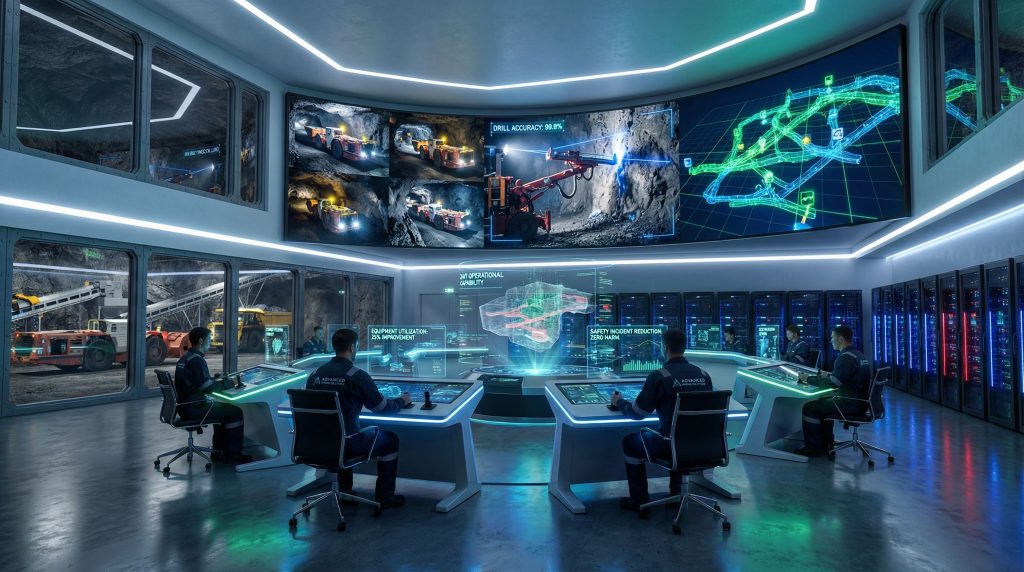
The Industrial Revolution of Remote and Autonomous Mine Operations
The convergence of artificial intelligence, advanced sensor systems, and wireless communication networks represents a watershed moment for extractive industries. Modern mining enterprises face mounting pressure from declining ore grades, increasingly complex geological formations, and escalating operational costs that traditional methods struggle to address effectively. This technological transformation emerges as mining companies seek sustainable solutions to productivity challenges that have plagued the sector for decades through remote and autonomous mine operations.
McKinsey's comprehensive analysis reveals a stark contrast between mining and other industrial sectors: while manufacturing and logistics achieved 150% productivity increases over two decades through innovation adoption, mining productivity declined by approximately 50% during the same period. This performance gap stems from deeper excavation requirements, more challenging geological conditions, and logistical complexities that compound operational difficulties.
The consulting firm identifies loading, hauling, comminution, and processing as critical bottleneck areas where automation technologies demonstrate the highest impact potential. Furthermore, strategic implementation of data-driven mining operations addresses these fundamental challenges through precision-driven processes that eliminate human error while maximizing equipment utilization rates.
When big ASX news breaks, our subscribers know first
Technical Architecture of Modern Mining Automation
Contemporary mining automation systems operate through sophisticated integration of multiple technological components that enable precise control over complex underground environments. These systems fundamentally differ from simple remote-controlled equipment by incorporating advanced decision-making capabilities and environmental adaptation protocols.
Core System Components Include:
- High-resolution sensor arrays combining LiDAR, thermal imaging, and acoustic monitoring
- Industrial-grade wireless networks with redundant communication pathways
- Real-time data processing units capable of millisecond response times
- Machine learning algorithms that adapt to changing geological conditions
- Centralized command centers with multi-site operational oversight capabilities
The distinction between teleoperated and fully autonomous systems lies in the decision-making hierarchy. Teleoperated equipment maintains human oversight for complex navigation and operational choices, while autonomous systems execute predetermined protocols with minimal human intervention. Semi-autonomous configurations represent the transitional phase where routine tasks operate automatically while complex situations trigger human operator involvement.
RCT's AutoNav technology exemplifies manufacturer-agnostic approaches that enable cross-platform integration. This compatibility allows mining operations to implement automation across diverse equipment fleets without requiring wholesale infrastructure replacement. According to Hari Prakash from RCT Powered by Epiroc, operations increasingly demand solutions that function across mixed equipment manufacturers while integrating seamlessly with existing operational systems.
Strategic Drivers Behind Automation Acceleration
The accelerating adoption of remote and autonomous mine operations reflects convergent pressures that make traditional mining methods increasingly untenable. Labor shortage challenges in remote mining locations compound with stringent safety requirements and productivity targets that manual operations struggle to achieve consistently.
Primary Adoption Catalysts:
- Operational Safety Enhancement: Remote operations eliminate human exposure to hazardous underground environments
- Productivity Optimization: Automated systems operate continuously without fatigue-related performance degradation
- Cost Structure Improvement: Reduced labor costs and improved equipment utilization rates enhance profitability
- Regulatory Compliance: Enhanced safety records support compliance with evolving mining regulations
McKinsey's strategic framework emphasizes targeted implementation approaches rather than comprehensive automation deployment. The consulting firm advises mining companies to identify their most critical operational bottleneck and concentrate resources on addressing that specific challenge, potentially at the expense of other optimization opportunities.
This focused strategy recognizes that successful automation requires substantial organizational commitment, including leadership dedication, workforce adaptation, and infrastructure development. However, companies that attempt simultaneous automation across multiple operational areas often experience implementation challenges that compromise overall effectiveness.
The geological factor represents a crucial consideration in automation adoption decisions. In addition, McKinsey notes that operations with favorable geological conditions may achieve success through traditional methods, while challenging geological environments make innovation adoption critical for competitive positioning and cost curve improvement as part of the broader mining industry evolution.
Equipment Category Leadership in Mining Automation
Load-Haul-Dump Vehicle Automation Systems
Load-Haul-Dump vehicle automation represents the most mature segment of mining automation technology, with proven implementations demonstrating substantial operational improvements. These systems have evolved from basic remote control capabilities to sophisticated autonomous navigation and fleet coordination protocols.
Key Performance Metrics:
| Automation Level | Operational Capability | Implementation Timeline | Productivity Gain |
|---|---|---|---|
| Teleoperated | Remote human control | 6-12 months | 10-15% |
| Semi-Autonomous | Automated routing with human oversight | 12-18 months | 15-20% |
| Fully Autonomous | Complete unmanned operation cycles | 18-24 months | 20-25% |
RCT's implementation at a New South Wales gold mining operation demonstrates the scalability of LHD automation technology. The operation doubled its automated fleet by adding four new Sandvik LH621i loaders to complement existing AutoNav-equipped machines that had operated successfully for multiple years. This expansion decision reflected confidence in proven technology performance and streamlined implementation processes.
The operation utilizes three AutoNav Centers for fleet management: two surface-based facilities and one underground command center. This distributed control architecture provides operational redundancy while enabling optimized response times for different operational zones through AI-powered mining efficiency protocols.
Owen Perrott from RCT Brisbane emphasizes that standardized automation across equipment fleets generates compounding benefits beyond basic productivity improvements. Standardization streamlines operator training processes, reduces maintenance complexity, and enables more sophisticated fleet coordination protocols that maximize overall operational efficiency.
Advanced Fleet Coordination Features:
- Multi-machine traffic management in constrained underground spaces
- Automated loading sequence optimization based on ore grade priorities
- Predictive maintenance scheduling that minimizes operational disruptions
- Real-time performance monitoring with deviation alert systems
Aramine's collaborative approach to LHD automation demonstrates the global scope of technology development. The company has developed three distinct automation partnerships targeting different geographic markets with region-specific regulatory requirements and operational preferences.
The Berlin-based Sensmore partnership focuses on European markets with comprehensive sensor integration including cameras, LiDAR, and radar systems. This configuration enables fully autonomous load-haul-dump cycles without human intervention, with remote operators assigning missions and monitoring progress through centralized control systems.
Precision Drilling and Blast Hole Automation
Drilling precision represents a critical factor in mining productivity that traditionally suffers from manual alignment limitations and inconsistent execution. Hexagon's Development Optimiser Lite addresses systematic inaccuracies that compound throughout the mining lifecycle, creating substantial downstream operational problems.
Cost Impact of Drilling Inaccuracies:
- Blast Profile Deviations: Poorly positioned holes create inconsistent fragmentation patterns
- Tunnel Profile Compromises: Over-break and under-break conditions requiring extensive remediation
- Development Timeline Extensions: Rework activities delay access to ore bodies
- Equipment Wear Acceleration: Additional drilling required to correct deficiencies
Andrew Clark from Hexagon identifies manual drilling alignment as the primary source of trajectory deviations that cascade into comprehensive operational problems. Traditional alignment methods lack the precision necessary to meet design specifications consistently, leading to blast outcomes that fail to achieve intended fragmentation and profile characteristics.
The Development Optimiser Lite system addresses these challenges through millimeter-precise drilling accuracy achieved via on-boom sensor technology and real-time guidance systems. Consequently, operations implementing this technology typically achieve 20-30% reductions in development costs through elimination of rework requirements and improved operational efficiency, particularly when combined with AI in drilling and blasting technologies.
Technical Capabilities Include:
- Real-time deviation alerts that prevent costly drilling errors
- Instant trajectory corrections during drilling operations
- Integration with mine planning software for direct design import
- As-built data export for continuous process optimization
The system's OEM-agnostic architecture ensures compatibility across diverse drilling equipment manufacturers, enabling rapid deployment without requiring comprehensive fleet replacement. This compatibility factor proves crucial for mining operations seeking automation benefits without substantial capital investment in new equipment.
Remote Operation Center Infrastructure Development
Centralized Command and Control Systems
Modern remote operation centers function as sophisticated command hubs that enable multi-site equipment control through advanced visualization and communication technologies. These facilities transform traditional mining operations by relocating human operators from hazardous underground environments to controlled surface facilities with comprehensive monitoring capabilities.
Essential Infrastructure Components:
- High-Definition Video Systems: Multiple camera angles with low-latency transmission for real-time situational awareness
- Data Visualization Dashboards: Integrated displays showing equipment status, productivity metrics, and environmental conditions
- Emergency Response Protocols: Automated failsafe mechanisms with immediate operator intervention capabilities
- Environmental Controls: Climate-controlled facilities optimized for continuous operator performance
Hari Prakash from RCT emphasizes that successful remote operations require reliable communication infrastructure and clear operational workflows. Variable underground environments and tasks requiring complex human judgment present challenges for full automation, necessitating semi-autonomous or operator-assisted operational modes.
The transition from frontline equipment operation to control room supervision fundamentally changes operator roles and skill requirements. For instance, operators develop expertise in multi-machine monitoring, system troubleshooting, and coordination protocols that maximize fleet productivity through optimized task scheduling and traffic management.
Communication Network Requirements and Standards
Underground mining environments present unique challenges for wireless communication systems that surface operations rarely encounter. Limited GPS availability, variable tunnel dimensions, and environmental factors including dust, moisture, and temperature variations require specialized network infrastructure designed for industrial mining applications.
Critical Network Specifications:
- Latency Requirements: Sub-100 millisecond response times for safe remote operation
- Bandwidth Capacity: Sufficient for high-definition video transmission and real-time data streams
- Coverage Redundancy: Multiple communication pathways to ensure continuous connectivity
- Industrial Hardening: Equipment designed to withstand harsh underground environmental conditions
Hexagon's RD Link solution demonstrates the viability of remote drilling operations by maximizing machine utilization during shift changes and periods when staffed operation proves impractical. This technology provides architectural foundations for extending autonomous capabilities from surface applications to underground development drilling operations.
The progression toward full automation requires establishment of precise positioning data, standardized execution protocols, and validated performance feedback systems. These foundational elements enable gradual transition from human-supervised operations to fully autonomous systems as operational confidence and system reliability improve.
Technical Challenges in Underground Automation Deployment
Environmental Adaptation and System Resilience
Underground mining environments present complex technical challenges that surface automation systems rarely encounter. Variable tunnel dimensions, irregular rock formations, and unpredictable geological conditions require adaptive automation systems capable of real-time environmental assessment and operational modification.
Primary Environmental Challenges:
- Geological Instability: Rock fall detection and avoidance protocols
- Atmospheric Conditions: Dust, humidity, and temperature variations affecting sensor performance
- Spatial Constraints: Narrow passages and irregular surfaces requiring precise navigation
- Communication Limitations: RF propagation challenges in underground environments
Hari Prakash notes that automation effectiveness depends heavily on site-specific conditions including draw point consistency, rock movement predictability, and data infrastructure reliability. Operations with highly variable or unstructured environments may require semi-autonomous operational modes rather than full automation deployment.
The geological assessment capability becomes crucial for autonomous systems operating in dynamic underground environments. Furthermore, advanced sensor systems must differentiate between normal operational conditions and potentially hazardous situations requiring immediate operator intervention or equipment evacuation.
Integration Complexity Across Equipment Manufacturers
Modern mining operations typically utilize equipment from multiple manufacturers, creating integration challenges for automation systems that must coordinate diverse platforms with different control protocols and communication standards. This complexity requires sophisticated middleware solutions that translate between incompatible systems while maintaining operational efficiency.
Integration Requirements Include:
- Protocol Standardization: Universal communication standards across equipment types
- Data Format Compatibility: Consistent metrics and reporting across diverse systems
- Legacy System Support: Integration with existing equipment lacking native automation capabilities
- Maintenance Coordination: Unified service protocols across multiple equipment brands
RCT's brand-agnostic automation approach addresses these challenges through universal compatibility that enables mixed-fleet automation without requiring wholesale equipment replacement. This capability proves particularly valuable for operations seeking gradual automation implementation that preserves existing capital investments.
The scalability factor enables operations to implement automation incrementally, equipping individual machines or complete fleets based on operational readiness and capital availability. This phased approach helps organizations build confidence in automation technology while adapting site processes and workforce capabilities for higher autonomy levels.
The next major ASX story will hit our subscribers first
Geographic Distribution of Automation Implementation
Regional Market Analysis and Adoption Patterns
Global mining automation adoption reflects regional variations in labor costs, safety regulations, and geological conditions that influence implementation priorities and technological preferences. Different regions emphasize distinct automation aspects based on local operational challenges and regulatory frameworks.
Regional Implementation Focus Areas:
| Region | Primary Automation Focus | Key Market Drivers | Technology Preferences |
|---|---|---|---|
| Australia | Autonomous haulage and remote drilling | High labor costs, strict safety regulations | Fully autonomous systems |
| North America | Underground LHD automation | Worker safety, productivity requirements | Semi-autonomous with human oversight |
| Europe | Precision drilling and environmental monitoring | Environmental compliance, efficiency | Integrated automation platforms |
| South America | Fleet management and optimization | Operational cost reduction | Scalable automation solutions |
The Australian market demonstrates the most advanced autonomous mining implementations, driven by high labor costs and extensive geographical distances that make remote operations economically attractive. Major mining companies in Australia have invested heavily in autonomous haulage systems that operate continuously without human intervention, as detailed in remote operation technologies.
North American operations focus primarily on underground automation applications where safety considerations outweigh pure productivity metrics. The emphasis on worker protection drives adoption of technologies that eliminate human exposure to hazardous underground conditions while maintaining operational flexibility.
European mining operations prioritize environmental compliance and energy efficiency, leading to automation implementations that optimize resource utilization and minimise environmental impact. Precision drilling technologies that reduce waste and improve extraction efficiency align with stringent European environmental regulations.
Phased Implementation Strategies for Risk Mitigation
Stage-Gate Approach to Automation Deployment
Successful automation implementation requires systematic progression through defined capability stages that build operational confidence while minimizing disruption to existing processes. This methodical approach enables organizations to validate technology performance before advancing to higher automation levels, supported by comprehensive autonomous remote operation research.
Stage 1: Teleoperated Introduction (6-12 Months)
- Remote equipment operation with continuous human oversight
- Basic sensor integration for environmental monitoring
- Operator training programs for new control interfaces
- Performance baseline establishment for productivity measurement
Stage 2: Semi-Autonomous Development (12-18 Months)
- Automated execution of routine operational tasks
- Human intervention protocols for complex decision scenarios
- Enhanced sensor integration for autonomous navigation through advanced sensor integration
- Predictive maintenance system activation and optimization
Stage 3: Fully Autonomous Achievement (18-24+ Months)
- Complete unmanned operational cycles across multiple shifts
- AI-driven decision making for routine and exceptional situations
- Advanced fleet coordination with traffic management protocols
- Continuous optimization through machine learning algorithm refinement
This progressive approach enables workforce adaptation and skill development while demonstrating tangible benefits that justify continued investment in automation technology. Each stage provides opportunity for process refinement and system optimization before advancing to higher automation levels.
Marc Melkonian from Aramine emphasizes that automation remains an evolving field with standards still developing, particularly for underground mining applications. The company's partnership strategy with regional automation leaders ensures solutions meet local regulatory requirements and operational expectations while adapting to specific market conditions.
Risk Assessment and Mitigation Protocols
Automation implementation involves technical, operational, and financial risks that require comprehensive mitigation strategies. Successful deployments address these challenges through systematic planning and contingency development that ensures operational continuity during technology transition periods.
Primary Risk Categories:
- Technical Integration Risks: Compatibility issues between automation systems and existing equipment
- Operational Disruption Risks: Productivity losses during implementation and operator training periods
- Financial Performance Risks: ROI timeline extensions due to implementation complications
- Safety Protocol Risks: Emergency response capability gaps during system transition phases
Hari Prakash notes that automation works most effectively when supported by reliable communication infrastructure, clear operational workflows, and consistent site practices. Operations with inconsistent draw point shapes, unpredictable rock movement, or limited data infrastructure may require extended implementation timelines or modified automation approaches.
The workforce transition component requires particular attention to change management and skill development programs that enable operators to adapt to new technologies while maintaining operational effectiveness. However, successful implementations provide comprehensive training that develops technical competencies while addressing concerns about job security and role evolution.
Return on Investment Analysis for Autonomous Mining
Productivity Enhancement Measurement Frameworks
Comprehensive ROI analysis for mining automation requires evaluation across multiple performance dimensions including productivity improvements, cost reductions, and safety enhancements. Traditional financial metrics often underestimate automation benefits by failing to capture indirect advantages such as improved operational consistency and reduced regulatory compliance costs.
Primary ROI Components:
- Equipment Utilisation Improvements: Typical gains of 15-25% through optimized operational cycles
- Maintenance Cost Reductions: Predictive analytics enable proactive maintenance scheduling
- Labor Cost Optimization: Reduced personnel requirements in hazardous operational areas
- Energy Efficiency Gains: Automated systems optimize power consumption through intelligent routing
Operations implementing Hexagon's Development Optimiser Lite typically achieve 20-30% reductions in development costs through elimination of rework requirements and improved operational efficiency. These savings result from precise drilling execution that meets specifications on initial attempts rather than requiring corrective drilling and remediation activities.
The productivity measurement extends beyond simple throughput metrics to encompass cycle consistency, quality improvements, and operational reliability. Automated systems eliminate performance variability associated with human factors including fatigue, skill variations, and decision-making inconsistencies.
Quantifiable Performance Improvements:
- Cycle Time Optimization: Consistent routing and operation timing reduces overall cycle duration
- Quality Consistency: Automated systems maintain performance standards across all operational shifts
- Uptime Maximisation: Reduced equipment downtime through predictive maintenance and optimal operation
- Safety Incident Reduction: Lower accident rates translate to reduced insurance and compliance costs
Long-Term Strategic Value Assessment
The strategic value of automation investment extends beyond immediate financial returns to encompass competitive positioning, operational flexibility, and future capability development. Organizations that establish automation expertise position themselves advantageously for continued technology evolution and market leadership.
Long-term value creation occurs through enhanced data collection capabilities that enable sophisticated analytics and optimization strategies. Automated systems generate comprehensive operational data that provides insights for continuous process improvement and strategic decision-making that manual operations cannot replicate.
The scalability factor enables operations to expand automation incrementally as operational confidence and capital availability permit. This flexibility allows organizations to adapt automation investment to changing market conditions and operational requirements without requiring comprehensive system replacement.
Strategic Advantages Include:
- Market Differentiation: Advanced automation capabilities provide competitive advantages in challenging operational environments
- Regulatory Compliance: Enhanced safety records support compliance with evolving mining regulations
- Workforce Development: Technical skill development through automation operation prepares organizations for future technology adoption
- Data-Driven Optimization: Comprehensive operational data enables sophisticated analytics and strategic planning
Emerging Technologies Shaping Future Mining Automation
Artificial Intelligence and Machine Learning Integration
Advanced AI systems represent the next evolution in mining automation, moving beyond programmed responses to adaptive decision-making capabilities that improve through operational experience. Machine learning algorithms analyse historical performance data to optimize routing, predict equipment failures, and adapt to changing geological conditions without human intervention.
AI Application Areas:
- Predictive Equipment Maintenance: Algorithms identify failure patterns before critical breakdowns occur
- Geological Assessment: Real-time analysis of rock formations and ore grade variations
- Traffic Optimization: Dynamic routing adjustments based on equipment availability and priority scheduling
- Energy Management: Intelligent power distribution that minimises consumption while maintaining productivity
The development of autonomous decision-making capabilities enables mining systems to operate effectively in complex scenarios that previously required human judgment. Advanced pattern recognition algorithms can assess geological conditions, equipment status, and operational requirements simultaneously to determine optimal operational strategies.
Machine learning systems continuously refine their performance through operational data analysis, identifying optimization opportunities that human operators might overlook. This continuous improvement capability represents a fundamental advantage over traditional automation systems that operate according to fixed programming parameters.
Advanced Sensor Technology and Environmental Monitoring
Next-generation sensor technologies expand automation capabilities through enhanced environmental perception and analysis. Multi-modal sensor integration combining LiDAR, thermal imaging, acoustic monitoring, and chemical detection provides comprehensive situational awareness that enables sophisticated autonomous operation in challenging underground environments.
Sensor Technology Applications:
- LiDAR Mapping: High-resolution 3D mapping for precise navigation and obstacle detection
- Thermal Monitoring: Equipment temperature analysis for predictive maintenance and safety monitoring
- Acoustic Analysis: Structural integrity assessment through sound pattern recognition
- Chemical Detection: Atmospheric monitoring for safety and environmental compliance
The integration of multiple sensor types creates redundant monitoring capabilities that enhance system reliability and safety. If individual sensors fail or provide inconsistent data, alternative sensor systems can maintain operational capability while alerting operators to potential issues.
Advanced sensor fusion algorithms combine data from multiple sources to create comprehensive environmental models that support sophisticated decision-making. These models enable autonomous systems to navigate complex underground environments while avoiding obstacles and optimising operational efficiency.
Operational Preparation for Autonomous Technology Integration
Infrastructure Development and System Requirements
Successful automation implementation requires comprehensive infrastructure preparation that addresses power systems, communication networks, and facility modifications necessary to support autonomous equipment operation. These foundational investments enable automation technology to achieve optimal performance while ensuring operational safety and reliability.
Critical Infrastructure Components:
- Power System Modifications: Enhanced electrical infrastructure to support automated equipment charging and operation
- Communication Network Upgrades: Industrial-grade wireless systems with redundant pathways and underground coverage optimization
- Workshop Facility Adaptations: Specialised maintenance areas equipped for autonomous system servicing and troubleshooting
- Data Processing Capabilities: Computing infrastructure for real-time analytics and system coordination
The communication network represents a particularly critical component requiring specialised design for underground mining environments. Traditional wireless systems often prove inadequate for the bandwidth and reliability requirements of sophisticated automation systems operating in challenging underground conditions.
Data storage and processing requirements increase substantially with automation implementation as systems generate comprehensive operational metrics, equipment status information, and environmental monitoring data. Organizations must establish robust data management capabilities to capture, process, and analyse this information effectively.
Workforce Transition and Skills Development
Automation implementation fundamentally transforms workforce requirements, creating new technical roles while modifying traditional equipment operation positions. Successful transitions require comprehensive planning that addresses skill development, career progression, and organisational adaptation to new operational models.
Workforce Development Priorities:
- Technical Training Programmes: Equipment-specific automation system operation and troubleshooting
- Data Analysis Skills: Interpretation of automation system metrics and performance optimization
- Multi-Machine Coordination: Fleet management and traffic coordination in automated environments
- Emergency Response Protocols: Safety procedures specific to automated equipment operation
The transition from direct equipment operation to remote supervision requires development of new competencies including system monitoring, data interpretation, and multi-machine coordination. Operators must learn to manage information-rich environments where decision-making relies on data analysis rather than direct sensory observation.
Change management strategies prove crucial for successful workforce adaptation as automation implementation often creates concerns about job security and role evolution. Organizations that address these concerns proactively through transparent communication and comprehensive retraining programmes typically achieve more successful automation adoption.
Career pathway development enables existing workforce members to advance into technical roles that support automation systems while maintaining operational knowledge that proves valuable for system optimization and troubleshooting activities.
Regulatory Framework Evolution for Autonomous Operations
Safety Standards and Compliance Requirements
Mining automation regulation continues evolving as technology capabilities advance and operational experience accumulates. Regulatory frameworks must balance innovation encouragement with safety assurance, creating standards that enable automation benefits while protecting workers and environmental resources.
Primary Regulatory Focus Areas:
- Equipment Certification Requirements: Autonomous system validation and approval processes
- Operational Protocol Standards: Safety procedures specific to automated equipment operation
- Emergency Response Planning: Protocols for autonomous system failures and emergency situations
- Data Security Requirements: Protection of operational data and communication systems
Marc Melkonian from Aramine notes that automation standards, particularly for underground mining applications, remain incompletely harmonised across different regions. This regulatory uncertainty requires partnerships with automation specialists who understand local requirements and can ensure compliance with regional standards for remote and autonomous mine operations.
The certification process for autonomous mining equipment involves comprehensive testing and validation that demonstrates safety and performance under various operational conditions. These requirements often extend implementation timelines but provide assurance that systems meet rigorous safety and reliability standards.
Regular safety audits and performance assessments ensure ongoing compliance with evolving regulations while identifying opportunities for continued system improvement. These assessments typically evaluate both technical performance and operational procedures to ensure comprehensive safety management.
Environmental Impact Assessment and Compliance
Autonomous mining systems offer substantial environmental benefits through optimised resource utilisation, reduced energy consumption, and precise extraction techniques that minimise ecological disruption. Regulatory frameworks increasingly recognise these advantages while establishing standards for environmental performance monitoring and reporting.
Environmental Compliance Benefits:
- Emissions Reduction: Optimised equipment operation reduces fuel consumption and emissions
- Noise Minimisation: Electric autonomous systems operate more quietly than traditional equipment
- Waste Reduction: Precision control minimises overbreak and material waste
- Ecosystem Protection: Reduced surface activity through underground automation
The precision capabilities of automated systems enable mining operations to extract resources more selectively while minimising environmental disturbance. Advanced planning and execution systems can optimise extraction patterns to preserve sensitive environmental areas while maintaining operational efficiency.
Environmental monitoring capabilities built into autonomous systems provide comprehensive data for regulatory reporting and impact assessment. Real-time monitoring enables immediate response to potential environmental concerns while supporting continuous improvement in environmental performance through enhanced remote and autonomous mine operations.
This analysis is based on industry developments and technological assessments current as of early 2026. Mining automation technologies continue evolving rapidly, and specific implementation results may vary based on operational conditions, geological factors, and regulatory requirements. Organizations considering automation adoption should conduct thorough feasibility assessments and pilot programs before large-scale implementation. Investment decisions should consider both technical capabilities and long-term strategic positioning within evolving competitive landscapes.
Looking to Capitalise on the Next Mining Technology Revolution?
Discovery Alert delivers instant notifications on significant ASX mineral discoveries using its proprietary Discovery IQ model, helping investors identify companies at the forefront of autonomous mining operations before the broader market catches on. Begin your 14-day free trial today and gain the competitive edge needed to spot tomorrow's mining technology leaders whilst they're still trading at today's prices.