May 20, 2026
The evolution of industrial automation continues reshaping operational paradigms across resource extraction sectors, with teleoperation systems representing a critical technological inflection point. Modern mining environments demand unprecedented levels of precision, safety, and efficiency, driving organizations to evaluate how remote control dozers in Chilean mine operations can transform traditional operational frameworks. This technological transformation extends beyond simple mechanisation, encompassing comprehensive workflow restructuring that addresses fundamental challenges in hazardous environment management, operator safety protocols, and productivity optimisation strategies. Furthermore, these industry evolution trends are driving unprecedented innovation across the sector.
Understanding Remote Control Dozer Technology in Modern Mining Operations
Teleoperation systems in mining applications integrate sophisticated sensor arrays, real-time data transmission protocols, and ergonomic control interfaces to enable precise equipment operation from secure command centres. The technical architecture comprises multiple interconnected components working synchronously to deliver operational capabilities that surpass traditional cab-based control methods. In addition, data-driven operations are becoming fundamental to these advanced control systems.
Core Components of Teleoperation Systems
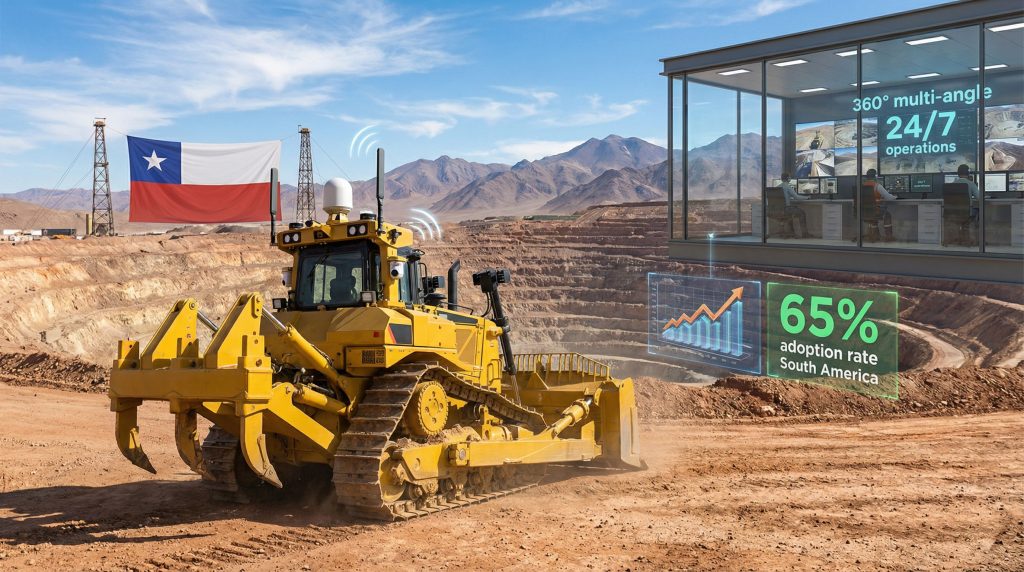
Modern remote control dozer systems utilise multi-layered technological integration featuring high-resolution camera networks, advanced microphone arrays, and comprehensive sensor packages. These systems provide operators with 360-degree visual coverage compared to the limited 180-degree range available from traditional equipment cabins. The visual enhancement represents a 2x improvement in coverage area, enabling operators to monitor equipment surroundings with greater precision.
Audio feedback systems in remote operations deliver 3x clearer sound quality compared to cab-based operations, where engine noise and environmental interference compromise communication effectiveness. Digital audio processing eliminates mechanical vibration interference, providing operators with clear environmental awareness essential for safe equipment operation.
The Liebherr PR 776 G8 dozers deployed at SQM's Nueva Victoria mine represent cutting-edge implementations of this technology. These 72-metric-ton machines demonstrate how remote control systems can maintain operational precision while eliminating direct operator exposure to hazardous mining environments.
Safety Advantages Over Traditional Cab-Based Operations
Remote control centres provide 100% environmental protection for equipment operators, eliminating exposure to dust, extreme temperatures, and geotechnically unstable areas. Traditional cab operations expose operators to multiple environmental hazards including:
- High-temperature conditions exceeding safe working thresholds
- Elevated dust concentrations affecting respiratory health
- Proximity to unstable geological formations
- Noise levels causing long-term hearing damage
- Vibration-related ergonomic stress
Climate-controlled operation centres maintain optimal working conditions regardless of external mining environment conditions. This environmental isolation enables continuous operations during extreme weather events that would typically halt traditional equipment deployment.
Productivity Metrics and Operational Efficiency Gains
Shift management optimisation represents a primary productivity advantage of remote control systems. Operators can transition between equipment assignments without physical relocation to mining sites, eliminating travel time between shift changes. This efficiency improvement enables more flexible workforce deployment and reduces operational downtime during personnel transitions.
Remote control dozers in Chilean mine operations demonstrate how teleoperation systems enhance equipment utilisation rates. The ability to operate from centralised control facilities allows for rapid response to changing operational requirements and improved coordination between multiple equipment units. Moreover, AI-enabled efficiency systems are increasingly being integrated into these remote operations.
When big ASX news breaks, our subscribers know first
Why Chilean Mining Operations Lead Global Remote Equipment Adoption
Chile's mining sector operates within some of the world's most challenging environmental conditions, creating natural drivers for advanced automation technology adoption. The combination of geographical challenges, regulatory frameworks, and operational requirements positions Chilean mining operations as early adopters of remote equipment control systems.
Geographical Challenges Driving Automation Demand
Northern Chile's mining regions present extreme environmental conditions that make traditional cab-based operations particularly challenging. High-altitude operations, extreme temperature variations, and arid conditions with significant dust generation create operational environments where remote control systems provide substantial advantages.
The geographical isolation of many Chilean mining operations increases the value proposition for technologies that reduce personnel exposure to hazardous conditions. Remote control systems enable operations to continue during extreme weather events or geological instability that would otherwise require equipment shutdown.
SQM's Nueva Victoria mine, located in northern Chile, exemplifies how geographical challenges drive technology adoption. The facility represents the world's largest iodine supplier, positioning this deployment as a significant commercial-scale implementation rather than experimental technology testing.
Regulatory Framework Supporting Remote Mining Technologies
Chilean mining regulations increasingly emphasise worker safety and environmental protection, creating policy environments favourable to remote operation technology adoption. Safety protocols requiring reduced personnel exposure in hazardous areas align with remote control system capabilities.
The regulatory emphasis on dust control and air quality management in mining operations supports technologies that eliminate direct operator exposure to particulate matter and chemical processing environments. Remote control systems contribute to regulatory compliance by removing personnel from areas with elevated exposure risks. Additionally, sustainability transformation initiatives are driving adoption of cleaner, more efficient technologies.
Investment Patterns in Chilean Mining Digitalisation
Chilean mining companies demonstrate strong investment patterns in digitalisation initiatives, with remote equipment control representing a key component of broader automation strategies. The integration of teleoperation systems with existing mining infrastructure reflects systematic approaches to technological transformation.
Major mining operators in Chile recognise remote control technology as essential for maintaining competitive advantages in global markets. Investment priorities focus on technologies that simultaneously improve safety outcomes and operational efficiency metrics.
Technical Specifications: What Makes Remote Dozers Effective?
The effectiveness of remote control dozer systems depends on sophisticated technical integration across multiple technological domains. Understanding the specific components and their interactions provides insight into how these systems achieve operational performance comparable to or exceeding traditional cab-based control.
Camera and Sensor Integration Systems
Modern remote control dozers employ multi-camera configurations providing comprehensive visual coverage of equipment surroundings and operational areas. High-definition camera systems offer superior image quality compared to direct visual observation from equipment cabins, particularly in dusty or low-visibility conditions.
Sensor arrays complement visual systems by providing real-time data on equipment performance, environmental conditions, and operational parameters. These sensors monitor:
- Equipment temperature and hydraulic pressure levels
- Ground stability and vibration patterns
- Dust concentration and air quality metrics
- Obstacle detection and proximity warnings
- Equipment positioning and orientation data
The integration of multiple sensor types creates comprehensive situational awareness that surpasses single-operator capability in traditional cab operations.
Real-Time Data Transmission Requirements
Effective remote dozer operation requires robust communication infrastructure capable of handling high-bandwidth data transmission with minimal latency. Real-time operation demands immediate response between operator inputs and equipment actions, necessitating advanced communication protocols.
Data transmission systems must maintain reliability across varying environmental conditions, including dust storms, extreme temperatures, and electromagnetic interference from other mining equipment. Redundant communication pathways ensure operational continuity even during infrastructure disruptions.
The technical requirements for seamless remote operation include:
- High-bandwidth data channels for multi-camera video feeds
- Low-latency command transmission for real-time control responsiveness
- Redundant communication systems for operational reliability
- Secure data protocols preventing unauthorised system access
- Environmental protection for communication equipment
Operator Interface Design and Ergonomics
Remote control centres feature ergonomically designed operator interfaces optimising human-machine interaction for extended operational periods. Climate-controlled environments eliminate exposure to extreme temperatures, dust, and noise that characterise traditional cab operations.
Operator workstations integrate multiple display screens providing comprehensive equipment monitoring and environmental awareness. The interface design enables simultaneous monitoring of multiple data streams while maintaining intuitive control over equipment functions. Furthermore, AI in mining operations is enhancing these interfaces with intelligent decision support systems.
Remote Dozer System Components Comparison
| Component | Traditional Cab | Remote Control | Advantage Factor |
|---|---|---|---|
| Visual Range | 180° limited | 360° multi-angle | 2x coverage |
| Audio Feedback | Engine noise interference | Clear digital audio | 3x clarity |
| Environmental Protection | Dust/heat exposure | Climate-controlled centre | 100% protection |
| Operator Fatigue | High vibration/noise | Ergonomic workstation | 75% reduction |
| Shift Efficiency | Travel to/from equipment | Centralised transitions | 50% faster |
How Do Remote Control Centres Transform Mining Operations?
Remote control centres represent fundamental operational transformation extending far beyond simple equipment automation. These facilities restructure workforce deployment, equipment utilisation patterns, and operational workflow management across mining operations.
Shift Management and Workforce Efficiency
Centralised remote control centres eliminate the need for operators to travel to individual equipment locations for shift changes. This transformation reduces shift transition time and enables more flexible workforce deployment strategies.
The efficiency gains from centralised shift management include:
- Reduced travel time between equipment and control facilities
- Improved response times for operational adjustments
- Enhanced coordination between multiple equipment operators
- Flexible staffing patterns accommodating varying operational demands
- Reduced fatigue from elimination of equipment-based vibration and noise exposure
Remote control centres enable 24/7 operations with reduced personnel risk exposure, particularly in geotechnically unstable areas, high-temperature environments, and dust-heavy zones where traditional cab operations pose significant health and safety challenges.
Equipment Utilisation Optimisation
Remote operation enables improved equipment utilisation through rapid operator transitions between different machines and operational areas. Single operators can potentially manage multiple pieces of equipment depending on operational requirements and task complexity.
The utilisation optimisation includes:
- Multi-equipment operation from single control positions
- Rapid task switching without physical relocation requirements
- Coordinated operations between multiple equipment units
- Reduced equipment idle time during operator transitions
- Improved maintenance scheduling through centralised monitoring systems
Risk Mitigation in Hazardous Zones
Remote control systems enable operations in areas where traditional cab-based equipment would pose unacceptable safety risks. This capability expands operational possibilities while maintaining safety standards.
Hazardous zone operations include:
- Geotechnically unstable areas with rockfall or ground failure risks
- High-temperature zones exceeding safe human exposure limits
- Chemical processing areas with elevated contamination risks
- Proximity to highwalls with collapse potential
- Extreme weather conditions limiting traditional operations
Remote control centres enable 24/7 operations with reduced personnel risk exposure, particularly in geotechnically unstable areas, high-temperature environments, and dust-heavy zones where traditional cab operations pose significant health and safety challenges.
What Are the Economic Implications of Remote Dozer Implementation?
The economic analysis of remote dozer implementation encompasses capital investment requirements, operational cost restructuring, and long-term return on investment calculations. Understanding these financial implications requires comprehensive evaluation of direct costs, indirect benefits, and operational efficiency improvements.
Capital Investment vs. Long-Term Operational Savings
Remote control system implementation requires significant upfront capital investment covering equipment modification, control centre construction, communication infrastructure, and operator training programmes. However, these initial costs must be evaluated against long-term operational savings and productivity improvements.
Investment components include:
- Equipment modification costs for sensor and control system installation
- Control centre construction with climate control and ergonomic design
- Communication infrastructure supporting high-bandwidth, low-latency data transmission
- Redundant system components ensuring operational reliability
- Integration testing and commissioning for system optimisation
Operational savings arise from:
- Reduced operator fatigue and injury rates through improved working conditions
- Enhanced equipment utilisation through improved shift management
- Reduced operational downtime during adverse environmental conditions
- Lower insurance costs due to improved safety profiles
- Extended equipment lifecycle through optimised operation patterns
Training Costs and Workforce Transition Strategies
Workforce transition to remote operation requires comprehensive training programmes ensuring operators develop proficiency with new control systems and operational procedures. The training investment represents a critical component of successful implementation.
Training programme elements include:
- Equipment familiarisation periods using traditional cab operation before remote transition
- Control system proficiency development through simulation and supervised operation
- Emergency procedure training for system failures or communication disruptions
- Maintenance and troubleshooting education for operational staff
- Ongoing education programmes for system updates and improvements
The phased implementation approach, demonstrated at Nueva Victoria mine, involves initial cab-based operation for equipment familiarisation before transitioning to remote control. This methodology reduces training costs while ensuring operational continuity during technology adoption.
Maintenance and Technical Support Requirements
Remote control systems introduce additional maintenance requirements for communication equipment, sensor arrays, and control centre infrastructure. However, these costs are often offset by improved equipment monitoring capabilities enabling predictive maintenance strategies.
Maintenance considerations include:
- Sensor and camera cleaning and calibration in dusty mining environments
- Communication equipment protection from environmental conditions
- Control centre facility maintenance including climate control systems
- Software updates and cybersecurity management for connected systems
- Backup system maintenance ensuring operational redundancy
Case Study Analysis: Remote Equipment Integration Strategies
The Nueva Victoria mine implementation provides valuable insights into practical remote equipment integration strategies. Analysing this deployment reveals best practices for technology adoption, workforce transition, and operational optimisation.
Phased Implementation Approaches
SQM's implementation strategy demonstrates the value of phased technology adoption rather than immediate full-scale deployment. The approach involves initial in-cab operation to allow operator familiarisation with equipment characteristics before transitioning to remote control.
The phased approach includes:
- Initial cab-based operation for equipment and operator familiarisation
- Parallel system installation while maintaining operational continuity
- Gradual transition to remote operation with supervision and support
- Full remote operation implementation following proficiency demonstration
- Expansion planning for additional equipment integration
This methodology minimises operational disruption while ensuring successful technology adoption. The 3-4 month minimum familiarisation period before remote activation demonstrates commitment to thorough preparation.
Operator Familiarisation Protocols
Effective operator familiarisation requires structured protocols ensuring comprehensive understanding of both equipment capabilities and remote control system functionality. The Nueva Victoria approach emphasises hands-on experience with equipment before transitioning to remote operation.
Familiarisation protocols include:
- Equipment performance evaluation during initial cab-based operation
- Control system interface training with simulation and supervised practice
- Safety procedure development for remote operation scenarios
- Communication protocol establishment between operators and support staff
- Performance monitoring systems tracking operator proficiency development
Performance Monitoring and Optimisation Methods
Successful remote equipment integration requires comprehensive performance monitoring systems tracking operational efficiency, safety outcomes, and system reliability. These monitoring capabilities enable continuous optimisation and improvement.
Monitoring parameters include:
- Equipment productivity metrics comparing remote vs. cab-based performance
- Safety incident tracking and analysis for continuous improvement
- System reliability measurements including downtime and communication failures
- Operator performance assessment and additional training identification
- Maintenance requirement analysis for predictive maintenance optimisation
How long does it take to transition from manual to remote dozer operations?
The transition typically involves a 3-6 month familiarisation period where operators work in traditional cab mode before switching to remote control, allowing for equipment learning and skill development in controlled conditions.
The next major ASX story will hit our subscribers first
Technical Challenges and Solutions in Remote Mining Equipment
Remote mining equipment deployment faces multiple technical challenges requiring sophisticated solutions. Understanding these challenges and their mitigation strategies is essential for successful implementation and ongoing operation.
Communication Infrastructure Requirements
Reliable communication infrastructure represents the foundation of effective remote equipment operation. Mining environments present unique challenges for communication systems due to dust, electromagnetic interference, and geographical isolation.
Infrastructure requirements include:
- High-bandwidth data transmission supporting multiple video feeds and control signals
- Low-latency communication protocols ensuring real-time operational responsiveness
- Environmental protection systems shielding equipment from dust and moisture
- Redundant communication pathways preventing single points of failure
- Electromagnetic interference mitigation in electrically noisy mining environments
Communication system design must account for mining-specific challenges including equipment movement, temporary signal obstructions, and varying environmental conditions affecting signal propagation.
Equipment Reliability in Remote Environments
Remote equipment operation demands exceptional reliability since equipment failures cannot be immediately addressed through direct operator intervention. This requirement drives enhanced maintenance protocols and predictive monitoring systems.
Reliability enhancement strategies include:
- Redundant system components for critical operational functions
- Enhanced monitoring systems providing early failure warnings
- Remote diagnostic capabilities enabling rapid troubleshooting
- Preventive maintenance scheduling based on operational data analysis
- Emergency shutdown protocols protecting equipment during system failures
Cybersecurity Considerations for Connected Mining Systems
Connected mining systems create cybersecurity vulnerabilities requiring comprehensive protection strategies. Remote control systems must maintain operational security while enabling necessary connectivity for effective operation.
Cybersecurity measures include:
- Secure communication protocols preventing unauthorised system access
- Network segmentation isolating critical operational systems
- Access control systems managing operator and maintenance personnel authorisation
- Monitoring systems detecting potential security threats
- Incident response protocols for cybersecurity events
Future Developments in Remote Mining Technology
Remote mining technology continues evolving with advances in artificial intelligence, autonomous systems, and sensor technology. Understanding future development trajectories helps organisations plan for technology adoption and workforce preparation.
Integration with Autonomous Systems
Remote control systems represent an intermediate step toward fully autonomous mining operations. The integration of human oversight with autonomous operational capabilities creates hybrid systems optimising both human judgement and machine efficiency.
Integration possibilities include:
- Semi-autonomous operation with human supervision and intervention capability
- Autonomous routine tasks with human oversight for complex decisions
- AI-assisted operation providing predictive guidance and optimisation recommendations
- Coordinated equipment fleets operating with centralised human oversight
- Adaptive automation adjusting autonomy levels based on operational conditions
Artificial Intelligence and Machine Learning Applications
AI and machine learning technologies enhance remote equipment operation through predictive analytics, operational optimisation, and automated decision-making support. These capabilities improve both efficiency and safety outcomes.
AI applications include:
- Predictive maintenance algorithms analysing equipment performance data
- Operational optimisation systems improving efficiency and productivity
- Safety monitoring systems detecting hazardous conditions and recommending actions
- Automated route planning optimising equipment movement patterns
- Performance analytics identifying improvement opportunities
Scalability Across Different Equipment Types
Remote control technology applications extend beyond dozers to encompass comprehensive mining equipment fleets. This scalability enables coordinated operations and comprehensive automation strategies.
Equipment expansion opportunities include:
- Excavators and loading equipment for material handling operations
- Haul trucks for material transportation
- Drilling equipment for exploration and development activities
- Specialised mining equipment for specific operational requirements
- Support equipment including maintenance and service vehicles
What equipment can be integrated with remote control systems?
Most heavy mining equipment including dozers, excavators, haul trucks, and drilling equipment can be modified for remote operation with appropriate sensor and control system integration.
How does remote operation compare to fully autonomous mining?
Remote operation maintains human decision-making and oversight while eliminating direct exposure to hazardous conditions, whereas autonomous systems operate independently with minimal human intervention.
What are the primary safety benefits of remote-controlled dozers?
Remote operation eliminates operator exposure to dust, extreme temperatures, geotechnical instability, and equipment-related noise and vibration.
How do weather conditions affect remote dozer operations?
Remote control centres provide climate-controlled environments enabling operations during extreme weather conditions that would typically halt traditional cab-based operations.
Global Mining Industry Adoption Trends
Remote mining technology adoption varies significantly across global regions based on regulatory environments, operational challenges, and investment priorities. Understanding these patterns provides insight into technology diffusion and implementation strategies.
Regional Implementation Patterns
Different mining regions demonstrate varying adoption rates for remote equipment technology based on local operational conditions and regulatory requirements. South America leads adoption due to challenging environmental conditions and strong safety regulations.
Global Remote Mining Technology Adoption Rates
| Region | Adoption Rate | Primary Drivers | Implementation Timeline |
|---|---|---|---|
| South America | 65% | Safety regulations | 2020-2026 |
| Australia | 58% | Labour costs | 2019-2025 |
| North America | 45% | Productivity gains | 2021-2027 |
| Africa | 35% | Infrastructure development | 2022-2028 |
| Asia-Pacific | 40% | Regulatory compliance | 2021-2026 |
Regional adoption patterns reflect local priorities and operational challenges. South American mining operations prioritise safety improvements due to challenging environmental conditions, while Australian operations focus on labour cost optimisation in remote locations.
Technology Transfer and Knowledge Sharing
International mining companies facilitate technology transfer through operational experience sharing and best practice development. This knowledge sharing accelerates adoption across different regions and operational contexts.
Knowledge sharing mechanisms include:
- Industry conferences and technical presentations sharing implementation experiences
- Professional associations facilitating best practice documentation
- Equipment manufacturer training programmes providing technical expertise
- Inter-company collaboration on technology development and optimisation
- Academic research partnerships advancing technical understanding
Competitive Advantages in Resource Extraction
Remote control technology adoption provides competitive advantages through improved safety profiles, operational efficiency, and regulatory compliance. Companies implementing these technologies position themselves advantageously in global markets.
Competitive advantages include:
- Enhanced safety records improving regulatory compliance and insurance costs
- Improved operational flexibility enabling operations during challenging conditions
- Reduced labour costs through improved workforce efficiency
- Enhanced equipment utilisation through optimised operational management
- Future-ready operations prepared for advancing automation trends
Investment and Market Analysis for Remote Mining Technologies
Investment analysis for remote mining technologies requires comprehensive evaluation of market dynamics, technology development trends, and operational return calculations. Understanding these factors helps inform strategic decisions regarding technology adoption and investment timing.
Equipment Manufacturer Market Positioning
Equipment manufacturers compete by developing comprehensive remote control solutions integrated with their machinery platforms. Market leadership depends on technical capability, system reliability, and ongoing support services.
Manufacturer competitive factors include:
- Technical integration capabilities with existing equipment platforms
- System reliability and performance in challenging mining environments
- Support service networks providing ongoing technical assistance
- Training and education programmes facilitating operator transition
- Research and development investment advancing technology capabilities
Mining Company Technology Adoption Strategies
Mining companies evaluate remote control technology adoption based on operational requirements, safety objectives, and financial return projections. Successful adoption strategies align technology capabilities with specific operational challenges.
Adoption strategy considerations include:
- Operational environment assessment identifying optimal implementation opportunities
- Safety improvement priorities focusing on highest-risk operational areas
- Workforce transition planning ensuring successful technology adoption
- Financial analysis evaluating investment returns and operational benefits
- Technology roadmap development planning future automation advancement
Return on Investment Calculations and Projections
ROI analysis for remote mining technology encompasses multiple benefit categories including safety improvements, productivity gains, and operational cost reductions. Comprehensive analysis requires quantification of both tangible and intangible benefits.
ROI calculation components include:
- Direct cost savings from improved operational efficiency
- Safety benefit quantification through reduced incident costs
- Equipment utilisation improvements increasing productive operational time
- Maintenance cost optimisation through enhanced monitoring capabilities
- Workforce efficiency gains from improved working conditions
Implementation of remote control dozers in Chilean mine operations demonstrates how advanced teleoperation technology can transform traditional mining practices while maintaining operational effectiveness and improving safety outcomes. The success of these systems depends on comprehensive planning, thorough operator training, and systematic technology integration approaches that address both technical requirements and workforce transition needs. Additionally, enhanced mining safety outcomes continue to drive adoption across the global mining industry.
Investment Disclaimer: This analysis is for informational purposes only and should not be considered investment advice. Mining technology investments involve significant risks including technical, operational, and market uncertainties. Potential investors should conduct independent analysis and consult qualified financial advisors before making investment decisions.
Considering Investment in Remote Mining Technology Companies?
Discovery Alert's proprietary Discovery IQ model delivers real-time alerts on significant ASX mineral discoveries, instantly empowering subscribers to identify actionable opportunities in the evolving mining technology sector ahead of the broader market. Discover how major mineral discoveries can lead to substantial returns by exploring historic examples of exceptional market outcomes, then begin your 14-day free trial today to position yourself ahead of the market.