June 19, 2026
Remote mining inspections are revolutionising safety protocols across underground operations, utilising advanced autonomous systems to eliminate personnel exposure while maintaining continuous operational monitoring. Modern mining ventures face intensifying challenges as extraction activities push deeper into the earth's crust, where traditional inspection methods prove inadequate for addressing complex environmental hazards.
The physics of subterranean environments become exponentially more complex beyond 1,500 metres, where temperature gradients, pressure differentials, and structural instabilities create hazardous conditions. This technological gap has prompted a fundamental reimagining of how safety assessments and operational monitoring are conducted in underground environments.
Furthermore, the convergence of autonomous robotics, advanced sensor networks, and artificial intelligence has created possibilities for continuous underground surveillance that were technologically unfeasible just a decade ago. These developments support the evolution of data-driven mining operations that prioritise both safety and operational efficiency.
What Are Remote Mining Inspections and Why Are They Essential?
Defining Remote Inspection Technology in Mining Context
Remote mining inspections utilise integrated autonomous systems to collect comprehensive operational data from hazardous underground environments without requiring human presence. These systems combine robotic mobility platforms, sophisticated sensor arrays, and centralised data analytics to create continuous monitoring capabilities that surpass traditional manual inspection methods.
The core distinction lies in the elimination of personnel deployment for routine data collection activities. Where conventional inspections require work crews to physically access potentially dangerous areas, remote systems deploy autonomous platforms equipped with specialised sensors that can operate continuously in environments hostile to human presence.
This technological approach addresses the fundamental conflict between production continuity and safety compliance that has historically plagued deep mining operations. Consequently, mining companies can maintain operational oversight whilst significantly reducing safety risks associated with traditional inspection protocols.
Critical Safety Drivers Behind Remote Inspection Adoption
The economic impact of production shutdowns for traditional inspections creates significant operational pressure. Weekly shutdown costs can exceed $250,000 for large-scale mining operations, according to industry analysis from Safe to Work Magazine.
This financial burden intensifies as mines extend deeper, where hazard complexity increases exponentially with depth. Personnel protection statistics demonstrate the direct safety benefits of remote inspection deployment.
A typical mining site can protect 12 or more workers annually from critical hazard exposure through autonomous monitoring systems. This transformation converts hazardous operational zones into remotely managed areas that eliminate direct personnel risk.
Key hazard categories addressed by remote mining inspections include:
- Rock bursts and structural instabilities in deep mining environments
- Mud rushes and atmospheric gas accumulations
- Equipment failure detection in extreme temperature and pressure conditions
- Blast area assessment and re-entry safety verification
The regulatory landscape increasingly emphasises predictive safety protocols that require comprehensive data collection frequencies impossible to achieve through manual inspection methods alone. Moreover, these developments align with broader industry trends towards boosting mining safety through technological innovation.
Economic Analysis: Production Continuity vs. Safety Compliance
| Cost Category | Traditional Method | Remote Inspection |
|---|---|---|
| Weekly shutdown impact | $250,000+ | $0 (continuous operation) |
| Personnel at risk | 12+ workers per site | 0 direct exposure |
| Data collection frequency | Weekly/monthly | 24/7 continuous |
| Response time to hazards | Hours to days | Real-time alerts |
When big ASX news breaks, our subscribers know first
Which Technologies Enable Effective Remote Mining Inspections?
Autonomous Robotic Systems for Underground Environments
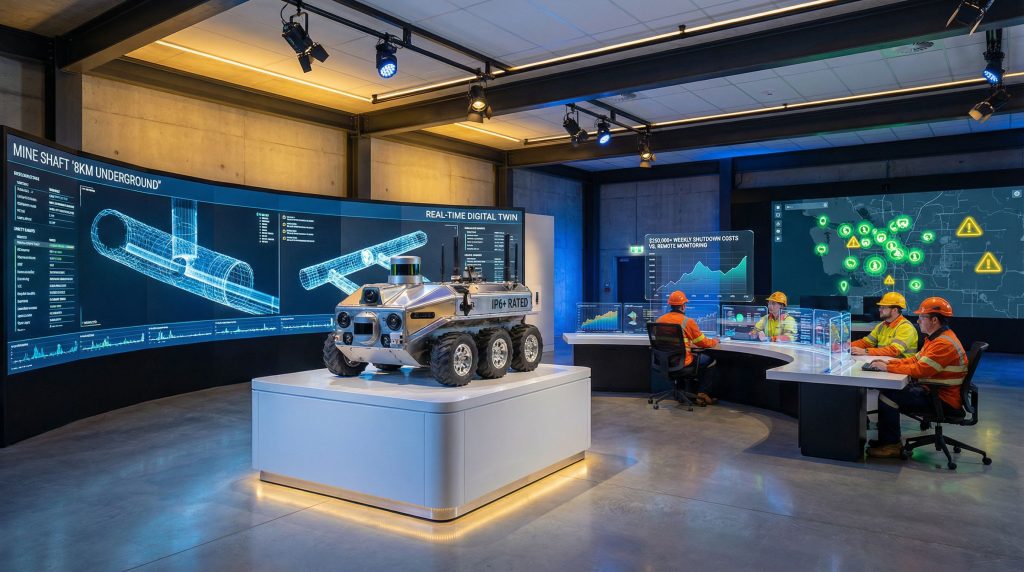
Modern remote inspection platforms demonstrate remarkable technical capabilities designed specifically for harsh underground mining conditions. The Explora XL system exemplifies this technology evolution, weighing 30 kilograms whilst maintaining the ability to travel up to 8 kilometres underground and navigate inclines of 45 degrees or greater.
Environmental resistance specifications include IP6 ratings that enable operation in wet, humid, and dusty conditions typical of underground mining environments. These platforms integrate multiple sensor systems whilst maintaining autonomous navigation capabilities that eliminate the need for manual retrieval or maintenance intervention in hazardous areas.
Critical robotic platform specifications:
- Operational range extending to 8+ kilometres underground penetration
- Environmental sealing rated for moisture, dust, and temperature extremes
- Autonomous climbing capabilities on steep inclines and uneven terrain
- 24/7 operational capacity with self-charging and sensor maintenance systems
Advanced Sensor Networks and Data Collection Methods
The transformation in data quality represents one of the most significant advantages of remote inspection technology. Current systems deliver nine times more data recovery at four times higher resolution compared to traditional manual inspection methods, according to technical analysis from Australian Droid and Robot leadership published in Safe to Work Magazine.
LiDAR (Light Detection and Ranging) technology enables creation of precise 3D digital twins of underground spaces. This capability supports 3D geological modeling initiatives that provide geometric accuracy impossible to achieve through visual inspection alone.
High-resolution imaging systems capture detailed visual documentation whilst thermal sensors detect temperature anomalies that may indicate equipment stress or geological instability. Additionally, these systems integrate seamlessly with drone operations for mining inspections to provide comprehensive coverage.
Integrated sensor capabilities include:
- Multi-gas atmospheric monitoring for hazardous gas detection
- Vibration analysis sensors for equipment condition assessment
- High-precision LiDAR scanning for spatial geometry capture
- Thermal imaging for temperature monitoring and anomaly detection
- High-resolution video documentation for visual inspection records
AI-Powered Analytics and Real-Time Decision Making
Machine learning algorithms process continuous data streams to identify patterns and anomalies that would be impossible for human inspectors to detect consistently. Predictive maintenance scheduling utilises historical data combined with real-time sensor inputs to forecast equipment failures before they occur.
This approach dramatically reduces unplanned downtime and safety incidents whilst supporting AI in mining operations initiatives. Automated reporting systems generate compliance documentation and safety alerts without manual intervention, ensuring regulatory requirements are met whilst enabling immediate response to developing hazards.
Furthermore, these capabilities represent a fundamental shift from reactive inspection protocols to predictive safety management systems that enhance overall AI-powered mining efficiency.
How Do Remote Inspections Address Critical Mining Safety Challenges?
Eliminating Human Exposure in Hazardous Environments
Safety Impact Statistics:
Remote inspection systems protect 12+ workers annually from critical hazard exposure per typical mining site, transforming dangerous operational zones into safely managed remote monitoring areas.
The deployment of autonomous inspection systems directly addresses the most significant challenge in deep mining operations: the exposure of personnel to increasingly dangerous conditions as mining activities extend deeper underground. Environmental stressors intensify dramatically beyond 1,500 metres depth, where rock burst risk escalates.
Atmospheric pressure creates complex gas dynamics, and temperature elevation stresses both equipment and personnel. Traditional inspection protocols require work crews to enter these hazardous areas regularly, creating unavoidable safety risks that compound with operational frequency.
However, remote systems eliminate this exposure entirely by deploying robotic platforms that can operate safely in conditions that would be extremely dangerous or impossible for human teams to navigate.
Continuous Monitoring vs. Periodic Manual Inspections
The frequency advantage of autonomous systems creates a fundamental improvement in hazard detection capability. Whilst manual inspections typically occur weekly or monthly due to logistical constraints and safety protocols, remote mining inspections operate continuously.
This operational persistence enables detection of gradual changes in structural stability, atmospheric conditions, or equipment performance that might develop between scheduled manual inspections. Consequently, operators can identify and respond to emerging hazards before they become critical incidents.
Comparative operational capabilities:
- Data frequency: 9x more data collection compared to traditional methods
- Resolution quality: 4x higher resolution sensor data
- Response timing: Real-time hazard detection vs. periodic assessment
- Coverage consistency: 24/7 monitoring vs. intermittent inspection schedules
Deep Mine Operational Challenges and Solutions
The 2021 Tennessee limestone mine collapse case study demonstrates the practical application of remote inspection technology in extreme scenarios. When the mine structure became too unstable for human entry, a deployment of 10 autonomous robots successfully gathered critical assessment data.
This intervention enabled the mine to reopen within one week, highlighting the unique capability of remote systems to access and evaluate areas that are completely inaccessible to human personnel. In scenarios involving structural collapse, atmospheric hazards, or equipment failures that create unsafe conditions, autonomous platforms can provide essential intelligence.
For instance, these systems support emergency response and recovery planning through remote inspection capabilities that maintain operational continuity during crisis situations.
What Are the Key Components of a Remote Inspection System?
Hardware Infrastructure Requirements
The foundation of effective remote mining inspections relies on ruggedised hardware systems designed to operate autonomously in extreme underground conditions. Platform specifications must address the unique challenges of subterranean environments, including temperature variations, humidity, dust contamination, and mechanical stress.
Navigation over rough terrain requires specialised engineering considerations that exceed typical industrial equipment specifications. The permanent docking station infrastructure enables true autonomous operation by providing automatic battery charging and sensor cleaning capabilities.
| Component | Specification | Operational Capability |
|---|---|---|
| Mobile Platform | 30kg autonomous robot | 8km underground range |
| Environmental Rating | IP6 dust/moisture protection | Wet, humid, dusty operation |
| Mobility System | 45° climbing capability | Steep terrain navigation |
| Power Management | Autonomous charging system | 24/7 continuous operation |
This infrastructure eliminates the need for personnel to enter hazardous areas for routine maintenance or equipment retrieval, maintaining safety benefits throughout the operational lifecycle.
Software Integration and Data Management
Centralised control room operations enable remote monitoring and mission management from safe locations that may be kilometres away from active mining areas. Real-time monitoring dashboards provide immediate visibility into ongoing inspections whilst automated mission scheduling ensures continuous coverage.
Data analytics platforms process the substantial volume of information collected by autonomous systems, transforming raw sensor data into actionable intelligence for operational decision-making. Integration capabilities allow remote inspection data to enhance existing mine management systems rather than requiring complete operational restructuring.
Critical software capabilities include:
- Remote mission planning and execution control
- Real-time data visualisation and monitoring dashboards
- Automated report generation and compliance documentation
- Predictive analytics for equipment condition assessment
- Integration interfaces with existing mine management systems
Deployment Strategies and Implementation Planning
Successful implementation requires comprehensive site assessment to customise system configurations for specific mining environments. Underground communication networks, power distribution, and docking station placement must be carefully planned to optimise operational coverage whilst maintaining system reliability.
Training protocols prepare operational teams to manage remote mining inspections effectively, focusing on mission planning, data interpretation, and emergency response procedures. Technical support frameworks ensure ongoing system maintenance and capability enhancement as operational requirements evolve.
How Do Remote Inspections Compare to Traditional Methods?
Cost-Effectiveness Analysis
The economic advantages of remote inspection systems become apparent when comparing operational costs against traditional manual inspection methods. Production shutdown costs exceeding $250,000 per week create substantial financial pressure that autonomous systems eliminate through continuous operation capability.
Long-term operational benefits extend beyond immediate cost savings. Remote systems enable optimised maintenance scheduling through predictive analytics, reducing unplanned equipment failures and extending asset lifecycles through better condition monitoring.
| Cost Factor | Traditional Inspection | Remote System |
|---|---|---|
| Production downtime | $250,000+ weekly shutdown | $0 continuous operation |
| Personnel deployment | 12+ workers in hazard zones | 0 direct exposure |
| Data collection frequency | Weekly/monthly intervals | 24/7 continuous monitoring |
| Emergency response time | Hours to days | Immediate alert capability |
Data Quality and Inspection Thoroughness
The quantitative improvement in data quality represents a fundamental advancement in mining operational intelligence. Remote systems deliver nine times more data recovery at four times higher resolution compared to traditional inspection methods, according to industry analysis from Safe to Work Magazine.
This enhanced data quality enables detection of subtle changes in structural conditions, equipment performance, or atmospheric characteristics that might be missed during brief manual inspections. Consistent documentation standards and automated record-keeping create comprehensive audit trails that support regulatory compliance.
Measurement accuracy improvements include:
- Precision sensor data eliminating human observation variability
- Comprehensive coverage of areas inaccessible to manual inspection
- Consistent documentation standards across all inspection activities
- Historical trend analysis enabling predictive maintenance planning
Response Time and Emergency Management
Real-time hazard detection capability transforms emergency response protocols by providing immediate alerts when dangerous conditions develop. Traditional inspection cycles may allow hazardous conditions to persist for days or weeks between scheduled assessments.
Conversely, autonomous systems can identify and report emergent risks within minutes of detection. Integration with emergency response protocols enables automated activation of safety procedures when critical thresholds are exceeded.
This capability is particularly valuable for scenarios involving gas accumulation, structural instability, or equipment failures that could rapidly escalate into serious safety incidents.
What Industries and Applications Benefit Most from Remote Mining Inspections?
Underground Mining Operations
Coal mining operations particularly benefit from continuous atmospheric monitoring capabilities that detect hazardous gas accumulations before they reach dangerous concentrations. Multi-gas sensors integrated into autonomous platforms provide real-time assessment of methane, carbon monoxide, and oxygen levels throughout underground workings.
Hard rock mining applications focus on structural integrity assessment through LiDAR scanning and vibration analysis. Deep shaft environments create complex stress patterns that require continuous monitoring to detect developing instabilities that could lead to rock bursts or structural failures.
Precious metals extraction in deep underground environments often involves operations in areas with limited accessibility and extreme conditions. Remote mining inspections enable comprehensive safety assessment without exposing personnel to the elevated risks associated with deep, high-value mining operations.
Surface Mining and Open Pit Operations
Large-scale open pit operations benefit from comprehensive slope stability monitoring across extensive operational areas. Autonomous platforms can cover vast surface areas more efficiently than manual inspection teams whilst providing consistent data quality and documentation standards.
Equipment condition assessment across multiple operational zones enables optimised maintenance scheduling and early detection of mechanical issues that could lead to costly equipment failures or safety incidents. Environmental compliance monitoring supports regulatory requirements by providing continuous documentation of operational impacts.
Specialized Mining Environments
Offshore mining platforms present unique challenges where personnel access is limited and environmental conditions are extreme. Remote inspection systems provide essential monitoring capabilities for underwater mining operations and floating platform infrastructure.
Arctic and extreme climate operations face weather-related access limitations that make scheduled manual inspections impractical or impossible during certain seasonal periods. Autonomous systems maintain operational monitoring capability regardless of surface weather conditions.
Abandoned mine monitoring and rehabilitation projects require long-term assessment capabilities to ensure environmental safety and structural stability. Remote systems provide cost-effective monitoring solutions for sites where ongoing human presence would be impractical or unsafe.
The next major ASX story will hit our subscribers first
What Are the Implementation Challenges and Solutions?
Technical Integration Obstacles
Legacy system compatibility represents a significant challenge for mining operations with established infrastructure and operational protocols. Data standardisation across different sensor types and communication systems requires careful planning to ensure seamless integration with existing mine management platforms.
Network connectivity in remote mining locations often lacks the bandwidth and reliability required for real-time data transmission from autonomous inspection systems. Solutions may require investment in dedicated communication infrastructure or hybrid systems that store data locally.
Equipment durability in harsh underground conditions demands robust engineering and comprehensive testing protocols to ensure reliable long-term operation. Environmental factors including temperature extremes, moisture, dust, and mechanical stress require specialised design considerations.
Workforce Transition and Training Requirements
Skill development programmes must prepare existing inspection teams for remote operation capabilities and data analysis responsibilities. The transition from hands-on inspection work to technology-enabled monitoring requires comprehensive training in system operation, data interpretation, and emergency response protocols.
Change management strategies address concerns about technology displacement whilst emphasising career advancement opportunities in technology-enhanced mining operations. Successful implementation often involves gradual integration that allows personnel to develop confidence and expertise with new systems.
Key training areas include:
- Remote system operation and mission planning
- Data analysis and interpretation techniques
- Emergency response protocols for autonomous system alerts
- Equipment maintenance and troubleshooting procedures
Regulatory Compliance and Industry Standards
Safety certification requirements for autonomous inspection systems vary significantly between jurisdictions and may require extensive documentation and testing to demonstrate compliance with existing mining safety regulations. Regulatory frameworks often lag behind technological capabilities, creating uncertainty about approval processes.
Data security and privacy compliance in industrial settings requires robust cybersecurity protocols to protect sensitive operational information whilst maintaining system accessibility for authorised personnel. Industrial IoT networks present unique security challenges that must be addressed through comprehensive security architectures.
International standards development for remote mining technologies is evolving rapidly as the industry adopts autonomous systems more broadly. Participation in standards development processes helps ensure compatibility and interoperability across different system providers and operational environments.
How Will Remote Mining Inspections Evolve in the Future?
Emerging Technologies and Innovation Trends
Market Growth Projections:
Investment in remote mining inspection technology is expected to accelerate significantly, with market valuations projected to reach $4.2 billion by 2030, driven by regulatory pressure for enhanced safety standards and the industry's need to address skills shortages.
The integration of 5G networks and edge computing capabilities will enable more sophisticated real-time analytics and immediate response capabilities. Enhanced communication bandwidth supports transmission of high-resolution sensor data and enables more complex autonomous behaviours including coordinated multi-robot operations.
Advanced artificial intelligence capabilities are evolving toward more sophisticated predictive safety management systems that can identify subtle patterns in operational data. Machine learning algorithms trained on historical incident data combined with real-time operational information create increasingly accurate risk assessment models.
Zero Entry Mining Concept Development
The concept of zero entry mining has evolved from the absolute goal of eliminating all human presence in mining operations to a more practical approach focused on minimising hazard exposure. This evolution maintains personnel outside designated autonomous operation zones.
This development reflects the recognition that complete automation may not be immediately feasible for all mining activities, but significant safety improvements can be achieved through strategic application of autonomous systems. Progressive reduction of human presence in operational zones represents a realistic pathway toward safer mining operations.
Remote mining inspections provide critical infrastructure for this transition by delivering the comprehensive monitoring capabilities required to manage operations from safe distances. Economic and safety benefits of expanded remote operation include reduced personnel insurance costs and elimination of certain types of safety incidents.
Industry-Wide Adoption Patterns and Drivers
Skills shortage mitigation through technology deployment addresses one of the mining industry's most persistent challenges. As experienced inspection personnel retire, remote systems provide a solution that reduces dependence on specialised human expertise whilst improving safety outcomes.
Environmental, social, and governance (ESG) compliance requirements increasingly emphasise reduction of personnel exposure to hazardous conditions. Remote inspection systems directly support ESG objectives by demonstrating commitment to worker safety whilst enabling more comprehensive environmental monitoring.
Regulatory pressure for enhanced safety standards continues to intensify globally, creating market drivers for technologies that can demonstrate measurable improvements in safety performance. Remote mining inspections provide quantifiable safety benefits that support regulatory compliance and risk management objectives.
What Should Mining Companies Consider When Implementing Remote Inspections?
Strategic Planning and ROI Assessment
Business case development requires comprehensive analysis of both direct costs and avoided expenses associated with remote inspection implementation. Direct benefits include elimination of production shutdown costs, reduction in personnel hazard exposure, and improved operational efficiency through continuous monitoring capabilities.
Phased implementation approaches enable gradual system integration whilst building operational experience and demonstrating value before full-scale deployment. Pilot programme design should focus on high-value applications where safety benefits and economic returns are most clearly demonstrable.
Success metrics for implementation assessment:
- Reduction in production downtime due to inspection requirements
- Decrease in personnel exposure hours in hazardous environments
- Improvement in hazard detection frequency and response timing
- Enhancement in regulatory compliance documentation quality
- Cost savings from predictive maintenance and equipment optimisation
Vendor Selection and Technology Partnership
Long-term technology partnerships require evaluation of vendor stability, ongoing research and development capabilities, and commitment to continuous system enhancement. The rapidly evolving nature of autonomous systems technology makes vendor selection a critical strategic decision that impacts operational capabilities for many years.
Compliance knowledge and regulatory experience are essential vendor qualifications for mining applications where safety certification and regulatory approval processes can be complex and time-consuming.
| Evaluation Criteria | Critical Considerations |
|---|---|
| Technical Capabilities | Proven performance in similar mining environments |
| Industry Experience | Track record with mining-specific applications |
| Support Services | 24/7 technical support and maintenance programmes |
| Scalability Options | Ability to expand system coverage and capabilities |
| Integration Compatibility | Seamless connection with existing operational systems |
Change Management and Organisational Readiness
Leadership commitment to technology transformation must be clearly communicated throughout the organisation to ensure successful adoption and optimal utilisation of remote inspection capabilities. Cultural transformation requirements include acceptance of data-driven decision making and confidence in autonomous system reliability.
Communication strategies for stakeholder engagement should address concerns about job displacement whilst emphasising opportunities for career advancement in technology-enhanced mining operations. Successful implementations often involve existing personnel in system deployment and operation, creating advancement pathways rather than replacement scenarios.
Risk management and contingency planning approaches must address potential system failures, communication disruptions, and emergency scenarios where backup inspection procedures may be required. Comprehensive planning ensures operational continuity whilst building confidence in system reliability.
Please note: Market projections, cost estimates, and technology performance claims should be verified through independent analysis and may vary significantly based on specific operational conditions and implementation approaches. Mining companies should conduct thorough due diligence before making technology investment decisions.
Ready to Discover the Next Major Mining Investment Opportunity?
Remote inspection technologies are just one example of how innovation continues to drive value in the mining sector—but investors need rapid access to emerging opportunities to capitalise on breakthrough developments. Discovery Alert's proprietary Discovery IQ model provides instant notifications on significant ASX mineral discoveries, helping subscribers identify actionable investment opportunities before the broader market catches on. Begin your 30-day free trial today to gain the market-leading advantage that comes from being first to know about major discovery announcements.