August 4, 2026
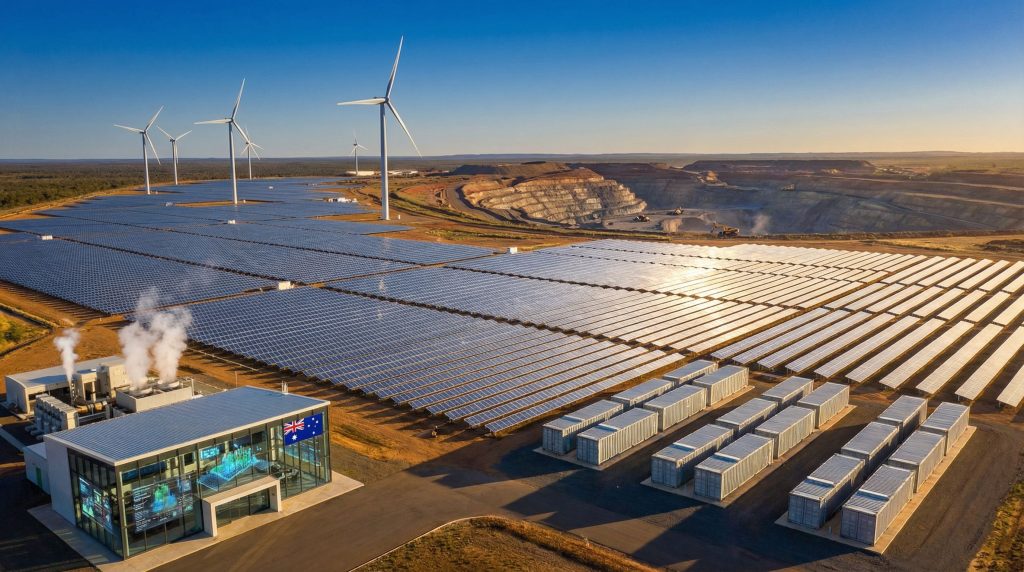
Australia's largest off-grid renewable hybrid power plant represents a transformative moment in remote mining operations. As mineral extraction activities expand deeper into isolated regions, traditional power generation methods face mounting challenges from rising costs and logistical complexities. The intersection of declining renewable technology costs, advancing battery storage capabilities, and corporate carbon reduction commitments has created unprecedented conditions for revolutionary energy infrastructure solutions.
This convergence signals more than incremental improvement in mining operations; it represents a technological shift that could redefine how large-scale industrial facilities approach energy independence in challenging environments.
Revolutionary Scale and Integration Capabilities
Australia's largest off-grid renewable hybrid power plant demonstrates sophisticated multi-source energy coordination that extends far beyond traditional backup power concepts. The Eva copper project in northwest Queensland establishes new technical benchmarks through its 118 MWp solar capacity, 250 MWh battery energy storage system, and 104 MVA thermal generation components operating within unified control architecture.
This scale represents a quantum leap in off-grid renewable integration. Furthermore, the facility's battery storage capacity alone exceeds the total generation capacity of many conventional mining power systems. This enables unprecedented renewable energy utilisation during variable weather conditions and operational demand cycles, supporting renewable energy in mining initiatives across the sector.
Key Technical Specifications:
- Solar photovoltaic arrays: 118 MW peak capacity
- Battery energy storage: 250 MWh total capacity
- Thermal backup generation: 104 MVA dispatchable power
- Grid-forming capabilities: Advanced frequency and voltage regulation
- Advanced energy management: Real-time optimisation algorithms
The technical achievement lies not merely in component sizing but in sophisticated integration methodologies. Grid-forming battery technology enables the system to maintain electrical stability without external grid reference, creating autonomous power networks capable of supporting complex industrial processes.
Advanced Energy Management Architecture
Modern off-grid hybrid systems employ hierarchical generation dispatch protocols that optimise power delivery across multiple energy sources. The integration involves sophisticated algorithms that predict energy demand patterns, weather conditions, and equipment availability to maximise renewable utilisation whilst maintaining operational reliability.
Multi-Source Coordination Framework:
| Generation Type | Capacity Range | Primary Function |
|---|---|---|
| Solar PV Arrays | 100-150 MW | Daytime baseload generation |
| Battery Storage | 200-300 MWh | Load balancing and backup |
| Thermal Generation | 80-120 MW | Reliability guarantee |
| Wind Integration | 20-50 MW | Additional renewable capacity |
The system architecture employs real-time forecasting models that analyse weather patterns, mining operational schedules, and equipment maintenance requirements. These predictive capabilities enable proactive energy management that optimises renewable generation utilisation whilst ensuring continuous power availability for critical mining processes.
Operational Benefits Include:
- Instantaneous load response capabilities (millisecond timing)
- Power quality improvement through advanced filtering
- Reduced thermal generation cycling and maintenance
- Enhanced equipment lifespan through stable power delivery
When big ASX news breaks, our subscribers know first
Economic Transformation of Remote Mining Operations
The financial drivers behind Australia's largest off-grid renewable projects extend beyond simple fuel cost reduction to encompass comprehensive operational transformation. The Eva copper project's $2.4 billion USD total investment includes a minimum 15-year power purchase agreement that demonstrates mining industry confidence in hybrid renewable technology economic viability.
Traditional remote mining power systems rely heavily on diesel generation with costs ranging $0.25-0.35 per kWh, including fuel transportation, storage infrastructure, and equipment maintenance. Hybrid renewable systems achieve operational costs of $0.15-0.25 per kWh over system lifecycle whilst providing superior power quality and reliability characteristics.
Financial Advantage Framework:
- Fuel cost elimination: 60-80% reduction in fossil fuel requirements
- Price stability: Long-term contract protection against fuel price volatility
- Carbon credit revenue: Additional income streams from emissions reduction
- Reduced logistics: Elimination of complex fuel transportation operations
Power Purchase Agreement Innovation
The Eva project establishes innovative PPA structures that transfer energy supply risk from mining operators to specialised infrastructure companies. Aggreko's build-own-operate model enables mining companies to focus on core extraction operations whilst accessing advanced energy technology without significant capital investment.
Contract Structure Benefits:
- 15+ year terms providing long-term cost predictability
- Performance-based pricing mechanisms tied to renewable energy delivery
- Scalability provisions accommodating mine expansion requirements
- Technology upgrade pathways for evolving energy needs
This approach represents fundamental restructuring of mining industry energy procurement, moving from commodity fuel purchasing to comprehensive energy services contracting.
Geographic Distribution and Resource Optimisation
Australia's most significant off-grid hybrid developments concentrate in regions with optimal combinations of renewable resources, mining activity, and grid isolation factors. The geographic distribution reflects sophisticated site selection criteria that maximise both renewable generation potential and mining operational requirements.
Major Development Regions:
| Location | Projects | Resource Advantages |
|---|---|---|
| Northwest Queensland | Eva Copper (118 MW hybrid) | High solar irradiance, copper resources |
| Western Australia Goldfields | Kathleen Valley (95 MW), Kalgoorlie-Boulder (530 MW planned) | Consistent wind patterns, established mining |
| Pilbara Region | Multiple developments | Exceptional solar resource, iron ore operations |
The Eva facility's location in northwest Queensland, positioned closer to Australia's northern coastline than major population centres, exemplifies the extreme isolation that makes hybrid renewable systems economically compelling. Traditional grid connection would require hundreds of kilometres of transmission infrastructure across challenging terrain.
Geographic Optimisation Factors:
- Solar irradiance levels exceeding 1,800-2,200 kWh/m²/year
- Minimal existing grid connectivity reducing connection costs
- Established mining operations providing reliable power demand
- Proximity to renewable resource zones for optimal generation
Regional Development Patterns
Western Australia's goldfields region demonstrates successful operational precedents for large-scale off-grid hybrid systems. The Kathleen Valley lithium mine facility combines 17 MW solar, 30 MW wind, and 17 MW/20 MWh battery storage with 27 MW gas and 5 MW diesel generation, creating operational templates for larger implementations.
Northern Star Resources' planned 530 MW facility near Kalgoorlie-Boulder represents the next evolution in hybrid system scale. This giant copper project signs deal for Australia's biggest off-grid hybrid renewables facility demonstrates industry confidence in scaling hybrid technology to unprecedented levels.
Battery Energy Storage System Capabilities
Grid-forming battery technology represents the critical enabling component that transforms intermittent renewable generation into reliable industrial power supply. The 250 MWh battery capacity at the Eva facility provides far more than simple energy storage; it creates autonomous grid functionality essential for remote mining operations.
Advanced Battery Functions:
- Grid-forming capabilities maintaining voltage and frequency regulation
- Black-start functionality enabling system restoration after outages
- Power quality improvement through harmonic distortion mitigation
- Load following capabilities responding to variable mining demands
Energy Storage Optimisation Strategies
Battery system sizing for mining applications requires sophisticated analysis of operational patterns, weather variability, and backup power requirements. The 250 MWh capacity at Eva reflects detailed modelling of copper mining power demands across various operational scenarios.
Sizing Methodology Components:
- Load Profile Analysis: Mining cycle power demands and variation patterns
- Weather Modelling: Seasonal solar generation variability and cloud cover impacts
- Backup Requirements: Duration and capacity needs during extended renewable shortfalls
- Expansion Planning: Future mining operation growth and energy demand increases
Modern lithium-ion battery configurations provide operational temperature ranges from -10°C to +50°C, essential for Australian climate extremes. Advanced battery management systems optimise charging patterns, extend equipment lifespan, and maintain performance across varying ambient conditions.
Technical Challenges and Solutions
Off-grid hybrid systems address complex technical challenges that traditional grid-connected facilities never encounter. System stability, power quality, and reliability requirements demand sophisticated engineering solutions that exceed conventional power system design parameters.
Critical Technical Solutions:
- Advanced inverter technology providing grid-forming capabilities
- Redundant generation sources ensuring continuous power availability
- Environmental protection systems for extreme weather conditions
- Automated control systems optimising generation source coordination
Power Quality and Reliability Engineering
Mining operations require exceptional power quality for sensitive processing equipment and continuous production schedules. Voltage fluctuations, frequency variations, and power interruptions can cause significant operational disruptions and equipment damage.
System Stability Measures:
- Multiple generation source availability preventing single-point failures
- Battery system modularity enabling partial operation during maintenance
- Thermal generation backup providing guaranteed dispatchable capacity
- Maintenance scheduling optimisation minimising operational impacts
The Eva facility's 104 MVA thermal capacity provides essential reliability guarantee during extended periods of reduced renewable generation. Gas turbine rapid-start capabilities enable immediate response to unexpected power demands or renewable generation shortfalls.
Mining Operational Benefits
Renewable energy solutions provide mining operations with advantages extending beyond cost reduction to encompass operational efficiency, environmental performance, and long-term sustainability. Consistent power delivery enables optimised processing schedules and improved equipment performance.
Operational Efficiency Improvements:
- Predictable energy costs enabling accurate operational budgeting
- Reduced maintenance downtime through improved power quality
- Enhanced equipment lifespan through stable electrical supply
- Improved safety through reliable backup power systems
Environmental and Social Impact Advantages
Hybrid renewable systems deliver 40-70% carbon footprint reduction compared to diesel-only generation whilst eliminating local air pollution and reducing noise impacts on surrounding communities. Water conservation benefits result from reduced diesel fuel transportation and storage requirements.
Environmental Benefits:
- Significant greenhouse gas emissions reduction
- Local air quality improvement eliminating diesel exhaust
- Noise pollution reduction through reduced generator operation
- Water conservation through simplified logistics requirements
The next major ASX story will hit our subscribers first
Thermal Generation Integration Strategies
Thermal generation components serve critical reliability and system stability functions within hybrid renewable architectures. Rather than primary power sources, gas turbines operate as sophisticated backup systems providing dispatchable capacity during renewable energy shortfalls.
Thermal Integration Functions:
- Rapid-start capabilities for immediate load response
- Load following for variable renewable output compensation
- System black-start capabilities during complete power restoration
- Maintenance period coverage ensuring continuous operations
Fuel Flexibility and Future Integration
Modern thermal generation systems incorporate fuel flexibility enabling transition toward lower-carbon alternatives. Natural gas primary fuel sources provide immediate emissions reduction compared to diesel generation, whilst hydrogen readiness prepares systems for future carbon-neutral operations.
Future Integration Pathways:
- Hydrogen fuel integration for carbon-neutral thermal generation
- Biogas utilisation in specific applications
- Grid connection preparation for potential future transmission access
- Energy export capabilities during periods of excess renewable generation
Scaling for Future Industry Demand
Australia's off-grid hybrid systems establish foundations for exponential capacity expansion across the mining sector. Energy transition trends indicate next-generation developments will feature 500+ MWh battery storage systems and advanced wind integration technologies.
Technology Evolution Trends:
| Development Phase | Capacity Range | Implementation Timeline |
|---|---|---|
| Current Operations | 100-200 MW | 2024-2026 |
| Under Construction | 200-400 MW | 2026-2028 |
| Planned Developments | 400+ MW | 2028-2030 |
Market Expansion Drivers
Mining industry innovation creates sustained demand for hybrid renewable solutions. Major mining companies establish carbon reduction targets requiring fundamental changes in energy procurement strategies, driving market expansion for off-grid renewable technologies.
Investment Pipeline Drivers:
- Corporate carbon reduction commitments requiring renewable energy adoption
- Competitive renewable energy costs versus fossil fuel alternatives
- Battery technology improvements enhancing system reliability and capacity
- Proven operational performance reducing technology risk perceptions
The success of facilities like Eva copper project creates operational precedents that demonstrate technical feasibility and economic viability, encouraging additional investment in larger-scale implementations.
Global Leadership in Off-Grid Industrial Power
Australia's largest off-grid renewable hybrid power plant establishes global benchmarks for remote industrial energy systems. The combination of scale, technical sophistication, and harsh operating conditions creates unique expertise applicable to mining operations worldwide.
Global Positioning Metrics:
- Leading off-grid renewable integration capacity per installation
- Advanced battery storage implementation at industrial scale
- Mining industry application leadership in extreme environments
- Remote location technical solutions transferable globally
International Technology Transfer Potential
Technical expertise developed through Australian off-grid hybrid projects creates export opportunities for engineering services, equipment technologies, and operational methodologies. Mining companies in Africa, South America, and North America face similar remote power challenges requiring comparable solutions.
Australia's largest off-grid renewable hybrid power plant represents fundamental transformation in how remote industrial operations approach energy supply. These projects demonstrate technical feasibility, economic viability, and environmental benefits of large-scale renewable integration in challenging operational environments.
The Eva copper project and comparable developments establish Australia as global leader in off-grid hybrid power technology, creating operational templates for worldwide implementation whilst supporting domestic mining sustainability transformation. The Pacific Energy delivers Australia's largest off-grid hybrid power system to Tropicana Gold Mine demonstrates continued momentum in this sector.
Investment decisions involving mining operations and renewable energy infrastructure should consider multiple risk factors including commodity price volatility, regulatory changes, and technology performance uncertainties. Historical performance does not guarantee future results.
Looking for Mining Investments That Benefit From Energy Transitions?
Discovery Alert's proprietary Discovery IQ model delivers real-time notifications on significant ASX mineral discoveries, including companies developing innovative energy solutions in remote mining operations. With major energy infrastructure transformations creating new investment opportunities across the mining sector, subscribers gain immediate market insights that position them ahead of the broader market through Discovery Alert's dedicated discoveries page. Begin your 14-day free trial today to capitalise on actionable opportunities in Australia's evolving mining and energy landscape.