June 6, 2026
How Resource Nationalism Transforms Global Commodity Markets
Complex supply management strategies across major exporting nations increasingly shape international commodity flows, with indonesia eased nickel coal production quotas representing sophisticated policy tools that respond to market conditions. This approach reflects how resource-rich countries balance domestic industrial objectives with export revenue optimisation, creating ripple effects that extend far beyond national borders.
Resource nationalism has evolved beyond simple export restrictions to encompass nuanced frameworks that adjust production levels based on market conditions. Countries with dominant positions in critical commodities now employ dynamic policy mechanisms that respond to price volatility, global demand fluctuations, and strategic economic priorities.
The Strategic Calculus Behind Indonesia's Supply Management Approach
Indonesia commands approximately 60% of global nickel production and 20% of worldwide thermal coal exports, positioning the archipelago nation as a critical supplier in both markets. This dominance enables sophisticated supply management strategies that can influence global pricing and availability across multiple commodity sectors.
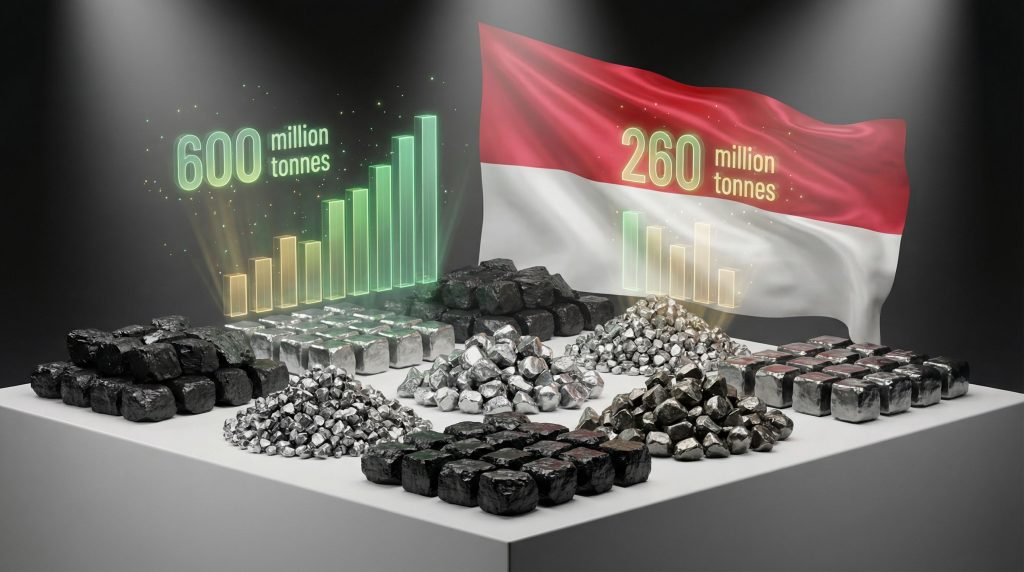
The nation's recent policy adjustments demonstrate calculated market positioning. Coal production targets were reduced from 790 million tonnes in 2025 to 600 million tonnes, representing a 24% decrease in planned output. Simultaneously, nickel ore quotas were capped at 260 million tonnes against industry demand of 340 million tonnes, creating an 80-million-tonne supply deficit.
| Commodity | 2025 Production | Current Quota | Reduction | Global Market Share |
|---|---|---|---|---|
| Thermal Coal | 790 million tonnes | 600 million tonnes | 24% | ~20% |
| Nickel Ore | Market-driven | 260 million tonnes | 23% below demand | ~60% |
Market Dynamics Driving Policy Flexibility
Price stability thresholds serve as primary triggers for quota adjustments, with Indonesian officials monitoring multiple market indicators before implementing production changes. Furthermore, energy transition impact considerations increasingly influence these decisions. Energy Minister Bahlil Lahadalia indicated that stable pricing conditions could prompt what officials term measured relaxation of production constraints.
Current market monitoring encompasses:
- London Metal Exchange nickel futures pricing
- Newcastle thermal coal benchmark rates
- Regional spot market volatility measures
- Chinese steel production demand indicators
- European energy transition coal requirements
The policy framework emphasises coordination between production decisions and market supply-demand dynamics, reflecting sophisticated understanding of Indonesia's market influence. This approach contrasts with fixed production quotas, instead creating responsive mechanisms that can adapt to changing global conditions. Additionally, commodity price trends across related sectors inform these strategic decisions.
"Indonesia's conditional production approach represents a hybrid model between market-driven output and strategic resource management, allowing flexibility while maintaining policy control over critical commodity supplies."
When big ASX news breaks, our subscribers know first
What Does "Measured Relaxation" Mean for Global Commodity Supply?
The concept of measured relaxation reflects graduated policy responses rather than binary production decisions. This framework suggests incremental quota increases based on sustained market conditions, potentially offering 10-30% production increases depending on specific commodity performance.
Decoding Indonesia's Quota Framework
The RKAB (Rencana Kerja dan Anggaran Biaya) approval system manages production quotas through annual work plans and budget submissions. This mechanism requires mining companies to submit detailed production proposals, which government agencies review against national policy objectives and market conditions.
Current quota parameters establish clear baselines:
- Coal sector: 600 million tonnes maximum annual production
- Nickel ore: 260 million tonnes approved allocation
- Smelter capacity: Regional processing constraints affecting ore distribution
- Export licensing: Additional controls on finished product exports
The gap between nickel ore demand (340 million tonnes) and approved quotas (260 million tonnes) creates immediate opportunity for quota expansion. Consequently, if relaxation occurs proportionally, coal quotas could potentially increase toward historical levels approaching 790 million tonnes.
Scenarios for Production Adjustment Implementation
Industry stakeholders anticipate graduated implementation rather than immediate quota elimination. Arif Perdana Kusumah, chairman of the Indonesian Nickel Smelter Association, welcomed potential supply increases while noting that formal RKAB revisions remain pending. Moreover, Indonesia may relax production quotas if market conditions remain favourable.
Potential Relaxation Scenarios:
| Relaxation Level | Coal Production | Nickel Ore Quota | Market Impact |
|---|---|---|---|
| Conservative (10%) | 660 million tonnes | 286 million tonnes | Modest price softening |
| Moderate (20%) | 720 million tonnes | 312 million tonnes | Significant supply increase |
| Substantial (30%) | 780 million tonnes | 338 million tonnes | Near full demand satisfaction |
Timeline considerations suggest measured implementation over 6-12 months, allowing market adjustment and preventing price volatility that could undermine policy objectives.
How Will Market Forces Influence Indonesia's Final Decision?
Price stability requirements form the cornerstone of Indonesia's quota adjustment framework, though specific threshold definitions remain undisclosed. Historical analysis suggests Indonesian officials monitor price volatility over 3-6 month periods before implementing policy changes.
Price Stability Requirements for Quota Changes
Market stability assessment encompasses multiple factors beyond absolute price levels. Volatility measures, trading volume patterns, and forward curve stability all contribute to policy evaluation processes. In addition, tariffs and investment markets influence global trade dynamics that Indonesian policymakers carefully consider.
Critical Price Indicators:
- Thermal coal: Newcastle benchmark stability within 15-20% ranges
- Nickel: LME three-month contract volatility below historical averages
- Basis differentials: Regional price premiums relative to international benchmarks
- Forward curves: Contango/backwardation patterns indicating supply expectations
Current market conditions as of March 2026 show thermal coal trading in the $80-95 per tonne range, while nickel prices hover around $16,000-18,000 per tonne. These levels represent moderate stability compared to the extreme volatility experienced during 2022-2024.
Global Demand Pressures and Supply Chain Considerations
Chinese steel production trends significantly influence Indonesian nickel policy decisions, given China's consumption of approximately 70% of global nickel supply. Recent Chinese steel output stabilisation around 1 billion tonnes annually provides predictable demand baseline for Indonesian planning.
European energy transition dynamics create complex coal demand patterns. While long-term coal consumption decreases, short-term demand may increase due to energy security concerns and renewable energy intermittency challenges.
Key Demand Drivers by Region:
- China: Steel production maintenance, energy storage battery expansion
- Europe: Energy transition balancing, industrial heating requirements
- India: Infrastructure development, steel sector growth
- Southeast Asia: Regional smelter capacity expansion, industrial development
Which Industries Stand to Benefit Most from Potential Supply Increases?
Indonesian smelter operations represent primary beneficiaries of increased nickel ore quotas, particularly integrated facilities that combine mining and processing operations. Current smelter capacity utilisation rates average 75-85%, indicating room for expansion with additional ore supply.
Downstream Processing and Value-Added Manufacturing
Indonesia's industrial strategy emphasises downstream processing over raw material exports, creating natural alignment between quota relaxation and domestic value-addition objectives. However, mining industry evolution continues to shape these strategic priorities. Nickel smelting capacity has expanded rapidly, reaching approximately 2.5 million tonnes of refined nickel equivalent annually.
Smelter Capacity by Region:
| Region | Installed Capacity | Current Utilisation | Expansion Potential |
|---|---|---|---|
| Sulawesi | 1.2 million tonnes | 82% | High |
| Halmahera | 800,000 tonnes | 78% | Moderate |
| Java | 300,000 tonnes | 90% | Limited |
| Kalimantan | 200,000 tonnes | 75% | High |
Increased ore quotas would enable higher utilisation rates and justify additional smelter investments, supporting Indonesia's objective of becoming the dominant global nickel processing hub.
International Trade Flow Adjustments
Quota increases would fundamentally alter international commodity trade patterns. Australia, currently the second-largest thermal coal exporter, could face increased competition from Indonesian suppliers offering competitive pricing. Furthermore, Saudi exploration licenses developments in other regions add complexity to global resource allocation strategies.
Philippine nickel producers, already competing with Indonesian supply, might experience additional market pressure if indonesia eased nickel coal production quotas expand significantly. This dynamic could accelerate consolidation among smaller regional producers.
Shipping Route Optimisation Opportunities:
- Indonesia to China: Direct routes through South China Sea
- Indonesia to India: Malacca Strait optimisation
- Indonesia to Europe: Suez Canal versus Cape of Good Hope routing
- Regional distribution: Southeast Asian port hub development
What Are the Broader Implications for Resource Sector Investment?
Infrastructure development requirements for increased production create significant capital investment opportunities across Indonesia's mining regions. Port capacity, rail networks, and processing facilities would require expansion to accommodate higher production volumes.
Strategic Investment Opportunities in Indonesian Mining
Mining equipment and technology upgrades represent immediate investment themes emerging from potential quota increases. Automation technologies, environmental management systems, and logistics optimisation solutions would benefit from expanded production scales.
Priority Investment Sectors:
- Port infrastructure: Capacity expansion at Balikpapan, Samarinda, and regional facilities
- Rail connectivity: Coal transportation networks from mining regions to ports
- Processing technology: Smelter efficiency improvements and capacity expansion
- Environmental systems: Tailings management and emissions control technology
The Indonesian government's infrastructure spending priorities align with mining sector expansion requirements, creating potential public-private partnership opportunities for large-scale projects.
Competitive Landscape Shifts for Global Producers
Australian thermal coal producers face intensified competition if Indonesian quotas increase substantially. Companies like BHP, Glencore, and Whitehaven Coal would need to adjust pricing strategies and potentially accelerate operational efficiency improvements.
Russian nickel producers, already facing sanctions-related market constraints, could lose additional market share to expanded Indonesian supply. This dynamic reinforces Indonesia's strategic position as a politically stable alternative supplier.
"Indonesia's quota flexibility creates both opportunities for domestic infrastructure investment and challenges for competing international producers, potentially reshaping global commodity market dynamics over the next 3-5 years."
How Should Investors Position for Indonesia's Evolving Resource Policy?
Resource sector exposure requires nuanced risk assessment given Indonesia's conditional policy approach. Direct equity positions in Indonesian mining companies offer the most direct exposure, while infrastructure plays provide indirect participation in sector expansion.
Risk Assessment Framework for Commodity Exposure
Policy uncertainty represents the primary risk factor for Indonesian commodity investments. The conditional nature of quota adjustments creates scenario-dependent returns rather than predictable production growth.
Five Key Risk Indicators to Monitor:
- Price volatility trends: Sustained periods above historical averages may delay quota increases
- Chinese demand patterns: Steel production changes directly affect nickel requirements
- European energy policy: Coal phase-out acceleration could reduce long-term demand
- Infrastructure bottlenecks: Port and transportation constraints limiting production increases
- Environmental compliance: Regulatory changes affecting mining operational costs
Hedging strategies should account for both upside and downside scenarios. Commodity futures positions can provide price protection while equity positions capture production volume benefits.
Long-term Strategic Positioning Considerations
Technology adoption trends favour companies investing in automation and environmental management systems. Indonesian mining operations implementing advanced extraction and processing technologies are likely to benefit most from quota increases.
Investment Timeline Considerations:
| Time Horizon | Coal Sector Focus | Nickel Sector Focus | Infrastructure Focus |
|---|---|---|---|
| 6-12 months | Production quota monitoring | Smelter utilisation rates | Port capacity constraints |
| 1-2 years | Market share dynamics | Downstream processing expansion | Rail network development |
| 3-5 years | Energy transition impacts | Battery supply chain integration | Regional hub development |
Diversification across the Indonesian resource value chain provides exposure to multiple policy scenarios while reducing concentration risk.
The next major ASX story will hit our subscribers first
What Market Signals Should Stakeholders Monitor Going Forward?
RKAB revision announcements represent the most direct policy implementation indicators. These typically occur during Indonesia's annual budget cycle, with preliminary discussions beginning in Q3 and final approvals in Q4. Additionally, ESDM approves significant tonnage for future production planning.
Policy Implementation Indicators
Industry consultation processes provide early warning signals for policy changes. The Indonesian Mining Association and regional smelter associations typically receive advance notice of potential quota modifications.
Critical Milestones for Policy Implementation:
- Ministry of Energy and Mineral Resources announcements: Official policy direction
- Industry association consultations: Stakeholder feedback incorporation
- RKAB submission deadlines: Company production plan submissions
- Parliamentary committee reviews: Legislative oversight and approval processes
Timeline expectations suggest 6-month minimum periods between policy announcements and implementation, allowing industry adjustment and preventing market disruption.
Economic and Technical Feasibility Factors
Production capacity constraints at existing operations may limit the effectiveness of quota increases. Many Indonesian mining companies operate near maximum sustainable production levels, requiring capital investment for meaningful output expansion.
Environmental compliance requirements create additional implementation complexity. Indonesia's increasingly stringent environmental standards may require upgraded equipment and processes before indonesia eased nickel coal production quotas can be fully realised.
Key Implementation Success Factors:
- Infrastructure readiness: Port, rail, and processing facility capacity
- Environmental compliance: Meeting enhanced sustainability standards
- Market demand stability: Sustained pricing supporting increased production
- Capital availability: Funding for necessary operational expansions
Strategic Implications for Commodity Market Participants
Indonesia's measured approach to quota relaxation reflects sophisticated resource diplomacy that balances domestic industrial objectives with international market responsibilities. This policy framework establishes Indonesia as a strategic market maker rather than a price taker in global commodity markets.
The conditional nature of production increases creates both opportunities and uncertainties for market participants. Companies with flexible operational capabilities and strong balance sheets are best positioned to capitalise on quota expansions while managing associated risks.
Key Takeaways for Different Stakeholder Groups:
- Mining companies: Prepare for graduated production increases while maintaining operational flexibility
- Commodity traders: Monitor price stability indicators and policy implementation timelines
- Manufacturing consumers: Develop supply chain strategies accounting for potential volume increases
- Infrastructure investors: Identify bottlenecks that could constrain production expansion benefits
Timeline expectations for policy clarification extend through the remainder of 2026, with initial implementation potentially beginning in 2027. This extended timeline provides opportunities for strategic positioning while policy details emerge.
"Effective navigation of Indonesia's evolving resource policy requires continuous monitoring of price indicators, policy announcements, and infrastructure development progress, combined with flexible operational strategies that can adapt to changing quota conditions."
The measured relaxation approach represents a new paradigm in resource sector policy making, emphasising market responsiveness over rigid production targets. This evolution toward dynamic policy frameworks is likely to influence resource management strategies across other commodity-producing nations, creating broader implications for global supply chain stability and investment allocation decisions.
Disclaimer: This analysis involves forecasts and speculation about future policy decisions and market conditions. Commodity investments carry inherent risks including price volatility, regulatory changes, and operational challenges. Investors should conduct independent research and consider professional advice before making investment decisions.
Ready to Capitalise on the Next Major Resource Discovery?
Discovery Alert's proprietary Discovery IQ model delivers real-time alerts on significant ASX mineral discoveries, instantly empowering subscribers to identify actionable opportunities ahead of the broader market. Understand why historic discoveries can generate substantial returns and begin your 14-day free trial today to position yourself ahead of evolving commodity market dynamics.