June 13, 2026
Mining operations worldwide generate substantial volumes of waste materials that traditionally represent environmental liabilities and storage challenges. The physical and chemical properties of these residual materials, however, contain recoverable resources that advanced processing technologies can transform into valuable industrial inputs. Understanding the fundamental characteristics that enable secondary applications requires examining the mineralogical composition, particle size distribution, and chemical stability of different tailings types. The reuse of mining tailings represents a critical advancement in mine reclamation innovation.
What Makes Mining Tailings Suitable for Industrial Reuse?
The transformation of mining waste from liability to asset depends entirely on the underlying mineralogy and chemistry present within the tailings matrix. Modern analytical techniques reveal that many tailings streams contain economically significant concentrations of metals and minerals that were either unrecoverable using historical processing methods or considered uneconomical at the time of original extraction. Furthermore, sustainable mining transformation practices increasingly focus on maximising resource utilisation.
Chemical Composition Analysis for Value Recovery
Successful tailings valorization begins with comprehensive geochemical characterisation that identifies target minerals and their liberation characteristics. Copper tailings, for instance, frequently contain elevated concentrations of cobalt-bearing pyrite minerals alongside magnetite phases that escaped initial processing circuits. These secondary minerals often exist in particle sizes and mineral associations that require specialised extraction approaches.
The Universidad de Atacama research demonstrated successful recovery of pyrite concentrates containing cobalt as a co-product, alongside magnetite extraction for steel industry applications. This dual-recovery approach maximises resource utilisation while addressing the growing demand for critical minerals in battery manufacturing sectors.
Key factors determining reuse potential include:
• Mineral grade distribution across different size fractions
• Chemical stability under various pH and oxidation conditions
• Presence of deleterious elements that may limit end-use applications
• Physical properties affecting processing and handling requirements
Physical Properties That Enable Secondary Applications
The mechanical and physical characteristics of tailings materials directly influence their suitability for construction industry applications. Particle size distribution, specific gravity, abrasion resistance, and freeze-thaw durability determine whether processed tailings can meet performance specifications for aggregate replacement or cement substitution.
Research conducted in Chile's Atacama region confirmed that tailings-derived materials can replace conventional aggregates and cement components without compromising mechanical properties. This breakthrough addresses critical supply chain constraints in construction sectors while providing sustainable disposal pathways for accumulated mining waste. Moreover, advances in mining industry innovation continue to enhance these applications.
Critical physical properties for construction reuse:
• Particle size gradation matching standard aggregate specifications
• Adequate compressive and tensile strength characteristics
• Chemical inertness preventing degradation in concrete matrices
• Dimensional stability under thermal and moisture cycling
Mineralogical Assessment Techniques for Tailings Characterisation
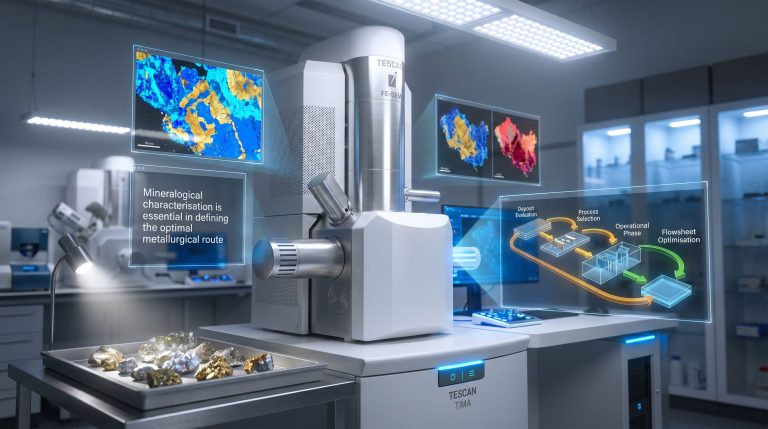
Advanced mineralogical analysis employs automated scanning electron microscopy, X-ray diffraction, and quantitative mineral liberation analysis to map the distribution and accessibility of valuable phases within tailings. These techniques enable process engineers to design selective extraction circuits that maximise recovery while minimising environmental impacts.
The integrated technological route developed by Chilean researchers demonstrates how systematic characterisation guides processing decisions. Sequential magnetic separation followed by flotation concentration allows operators to extract multiple valuable products from a single tailings stream, fundamentally changing the economics of waste management.
When big ASX news breaks, our subscribers know first
How Do Modern Extraction Technologies Transform Tailings into Resources?
Contemporary processing technologies enable the selective recovery of valuable minerals from complex tailings matrices through precisely controlled chemical and physical separation processes. These systems build upon established metallurgical principles while incorporating innovations in automation, reagent chemistry, and equipment design to achieve economic recovery rates from previously unprocessable materials. Additionally, AI in mining operations enhances process optimisation and recovery efficiency.
Magnetic Separation Systems for Magnetite Recovery
High-intensity magnetic separation represents the primary technology for recovering magnetite from tailings streams, particularly in iron ore and copper processing residuals. Modern magnetic separators operate at field strengths exceeding 1.5 Tesla, enabling separation of weakly magnetic minerals that conventional systems cannot process effectively.
The Atacama region demonstration project successfully implemented magnetic separation as the initial stage in a multi-product recovery circuit. This approach captures magnetite for steel industry applications while preparing tailings for subsequent flotation processing to extract cobalt-bearing minerals.
Magnetic separation advantages include:
• High throughput processing capabilities suitable for large tailings volumes
• Minimal reagent consumption reducing operating costs and environmental impacts
• Production of clean magnetite concentrates meeting steel industry specifications
• Integration compatibility with existing mine infrastructure
Flotation Circuit Optimisation for Critical Metal Concentration
Froth flotation technology enables selective concentration of sulfide minerals containing critical metals like cobalt through controlled surface chemistry modification. Advanced flotation circuits employ staged conditioning, precise pH control, and specialised collector reagents to achieve high-grade concentrates from low-grade tailings feed.
The Universidad de Atacama research validated sequential processing where magnetic separation removes magnetite, followed by flotation circuits targeting cobalt concentration from pyrite minerals. This approach demonstrates how multiple valuable products can be extracted from a single tailings source through optimised processing sequences.
| Tailings Source | Primary Recoverable Metals | Secondary Applications | Processing Complexity |
|---|---|---|---|
| Copper Operations | Cobalt, Molybdenum, Silver | Construction aggregates | Medium-High |
| Iron Ore Processing | Magnetite, Rare Earth Elements | Steel industry feedstock | Medium |
| Gold Mine Waste | Pyrite, Sulfur compounds | Acid production, construction | Low-Medium |
Pyrometallurgical Processing Routes for Complex Tailings
High-temperature processing enables the treatment of complex tailings containing refractory minerals or multi-element associations that resist conventional hydrometallurgical approaches. Pyrometallurgical routes typically require significant energy inputs but can achieve high recovery rates and produce high-purity products suitable for specialised applications.
Integration with existing smelting infrastructure presents opportunities for tailings processing without dedicated capital investment. However, energy costs and emissions considerations require careful evaluation against product values and environmental compliance requirements. Research from CSIRO on tailings management highlights innovative approaches to thermal processing technologies.
Which Construction Industry Applications Offer the Highest Value Potential?
The construction sector presents the largest volume market opportunity for tailings reuse, with global demand for aggregates, cement, and specialised building materials creating substantial commercial potential. Understanding specific application requirements and performance standards enables tailings processors to target the most profitable market segments while achieving environmental disposal objectives.
Concrete Aggregate Replacement Standards and Performance Metrics
Tailings-derived aggregates must demonstrate equivalent performance to natural materials across multiple standardised testing protocols. Compressive strength, durability under freeze-thaw cycling, chemical reactivity, and long-term dimensional stability represent critical benchmarks that processed tailings must achieve for commercial acceptance.
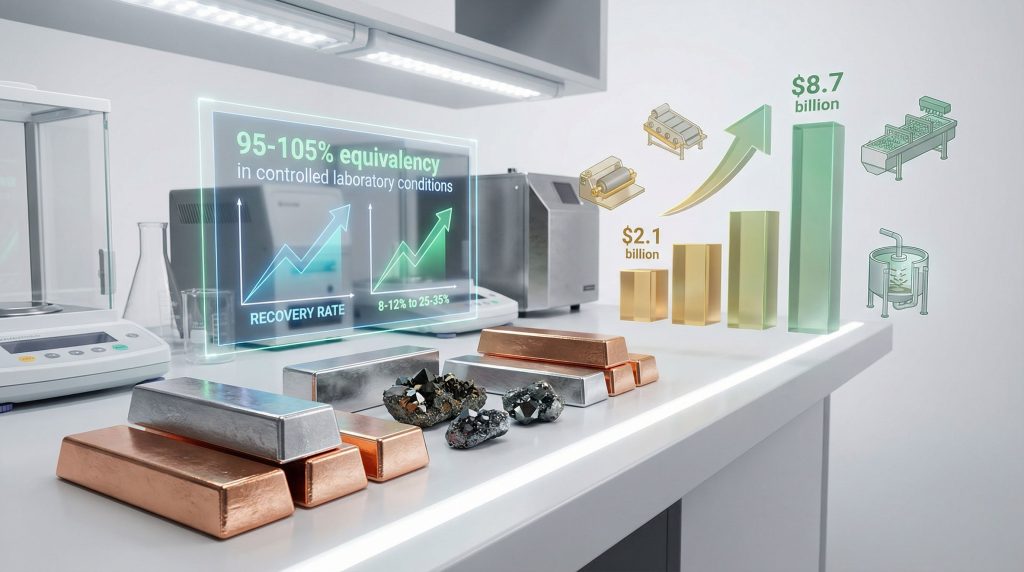
Research demonstrates that tailings-based construction materials can achieve identical structural performance standards as traditional aggregates, with compressive strength testing showing equivalent performance in controlled laboratory conditions.
The Chilean research validated that processed copper tailings maintain mechanical property equivalency when substituted for conventional aggregates in construction applications. This breakthrough enables large-scale utilisation of accumulated tailings volumes while addressing sustainable construction material demands. Furthermore, data-driven mining integration helps optimise these material properties.
Performance requirements for aggregate replacement:
• Compressive strength meeting or exceeding 35 MPa for structural applications
• Los Angeles abrasion loss below 40% per ASTM C131 standards
• Soundness testing demonstrating resistance to weathering processes
• Chemical composition limits preventing alkali-silica reactivity
Cement Clinker Substitution Using Tailings-Derived Materials
Certain tailings compositions provide suitable raw materials for cement manufacturing, either as clinker additives or partial replacement for limestone and clay inputs. The silica, alumina, and iron oxide content in many tailings aligns with cement chemistry requirements, potentially reducing virgin material consumption in cement production.
Successful cement applications require precise control of chemical composition and thermal processing conditions to achieve proper clinker formation and final cement performance. Quality control systems must ensure consistent feed composition and monitor trace element concentrations that could affect cement setting characteristics.
Specialised Building Products from Processed Mining Waste
Advanced processing enables the production of specialised construction materials including lightweight aggregates, ceramic products, and engineered fill materials. These higher-value applications often command premium pricing compared to commodity aggregate replacement while utilising tailings with specific mineralogical characteristics.
The development of specialised products requires detailed market analysis and customer specification requirements, but offers opportunities for differentiated positioning and improved project economics compared to simple aggregate substitution.
What Are the Economic Drivers Behind Tailings Valorisation Projects?
The financial viability of tailings reuse projects depends on multiple interconnected factors including processing costs, product values, transportation expenses, and regulatory compliance requirements. Successful projects typically require diversified revenue streams and strategic positioning relative to end-use markets to achieve acceptable investment returns.
Capital Investment Requirements for Processing Infrastructure
Tailings valorisation projects require substantial upfront investment in processing equipment, materials handling systems, and quality control infrastructure. Magnetic separation systems, flotation circuits, and materials processing equipment represent major capital expenditures that must be justified through projected cash flows over extended operating periods.
Implementation timelines typically range from 18 to 36 months depending on processing complexity and regulatory approval requirements. The integrated approach demonstrated in Atacama enables equipment sharing and infrastructure optimisation that can reduce per-unit capital costs compared to standalone processing facilities.
Major capital investment categories:
• Primary processing equipment (magnetic separators, flotation cells, grinding mills)
• Materials handling and storage infrastructure
• Quality control laboratories and analytical equipment
• Environmental monitoring and compliance systems
Revenue Stream Analysis from Multiple Product Outputs
The most successful tailings valorisation projects generate revenue from multiple product streams rather than relying on single commodity recovery. The Chilean demonstration project illustrates this principle by simultaneously recovering cobalt for battery applications, magnetite for steel production, and construction materials from processed residuals.
Critical mineral markets, particularly cobalt and rare earth elements, often provide the highest value per unit but may have limited volume potential. Construction materials offer large volume markets but typically generate lower per-unit revenues, requiring optimisation of both high-value and high-volume applications. Research from GHD on transforming mine waste provides insights into revenue optimisation strategies.
Revenue optimisation strategies:
• Market diversification across multiple end-use sectors
• Product quality enhancement to achieve premium pricing
• Long-term supply agreements providing revenue stability
• Geographic positioning minimising transportation costs
Cost-Benefit Modelling Against Traditional Disposal Methods
Comprehensive economic analysis must compare tailings valorisation returns against conventional disposal costs including perpetual storage, environmental monitoring, and potential liability remediation. Many mining operations face increasing disposal costs and regulatory pressures that improve the relative economics of reuse alternatives.
Successful projects typically achieve internal rates of return between 15 and 25 percent, dependent on proximity to end-use markets, processing technology costs, and regulatory compliance requirements. These returns reflect the dual benefit of revenue generation and disposal cost elimination.
How Do Regional Regulations Shape Tailings Reuse Implementation?
Regulatory frameworks significantly influence the technical and economic feasibility of tailings valorisation projects through environmental compliance requirements, product certification standards, and permitting procedures. Understanding regional regulatory environments enables project developers to design compliant processing approaches while minimising approval timelines and operational constraints.
Environmental Compliance Frameworks for Secondary Processing
Tailings reprocessing operations must demonstrate environmental safety across multiple regulatory domains including air quality, water discharge, soil contamination, and waste management. Secondary processing activities often require comprehensive environmental impact assessments and ongoing monitoring programmes to ensure compliance with applicable standards.
The Chilean regulatory context emphasises tailings valorisation as a priority pathway for sustainable mining development, particularly in regions like Atacama and Coquimbo where accumulated tailings volumes present significant environmental management challenges. This regulatory support facilitates project development while maintaining environmental protection objectives.
Key compliance requirements:
• Environmental impact assessments for processing infrastructure development
• Water quality monitoring and discharge permit compliance
• Air emissions control for materials handling and processing operations
• Soil and groundwater protection measures
Quality Control Standards for Construction Material Applications
Construction material applications require compliance with national and international standards governing material performance, safety, and environmental characteristics. Processed tailings must undergo rigorous testing to demonstrate equivalency with conventional materials while meeting specific technical specifications for intended applications.
Certification processes typically involve third-party testing laboratories, standardised test protocols, and ongoing quality assurance programmes. These requirements add complexity and cost to tailings valorisation projects but provide market credibility and customer confidence in tailings-derived products.
Permitting Pathways for Tailings-to-Product Operations
The permitting process for tailings valorisation involves multiple regulatory authorities including mining agencies, environmental protection departments, and construction material certification bodies. Coordinating approvals across these jurisdictions requires careful planning and often benefits from early stakeholder engagement.
Integrated permitting approaches that address processing, environmental compliance, and product certification simultaneously can reduce approval timelines and regulatory complexity. The Chilean experience suggests that regulatory alignment with sustainability objectives facilitates approval processes for well-designed valorisation projects.
What Processing Technologies Enable Large-Scale Tailings Transformation?
Industrial-scale tailings processing requires robust, proven technologies capable of handling large throughput volumes while maintaining consistent product quality and environmental compliance. The selection of appropriate processing technologies depends on tailings characteristics, target products, and integration requirements with existing mine infrastructure.
Hydrometallurgical Recovery Systems Design
Chemical processing routes enable selective metal recovery through controlled leaching, solvent extraction, and electrowinning processes. These systems excel at treating complex tailings containing multiple valuable elements but require careful management of reagent consumption, solution purification, and waste stream treatment.
Hydrometallurgical approaches typically achieve high recovery rates for target metals while producing environmentally stable residuals suitable for construction applications. However, these systems require specialised technical expertise and ongoing chemical management that may limit applicability in certain operational contexts.
Hydrometallurgical system advantages:
• High selectivity for target metal recovery
• Ability to process complex mineralogical assemblages
• Production of high-purity metal products
• Residual material suitable for secondary applications
Mechanical Beneficiation Equipment Selection
Physical separation technologies including magnetic separation, flotation, gravity concentration, and optical sorting provide proven approaches for mineral recovery from tailings. These technologies build upon established metallurgical principles while incorporating modern automation and control systems to optimise performance.
The sequential processing approach validated in Chilean research demonstrates how multiple mechanical separation techniques can be integrated to maximise resource recovery. This methodology enables extraction of different valuable minerals through staged processing while maintaining operational simplicity.
Equipment selection criteria:
• Throughput capacity matching tailings generation rates
• Recovery efficiency for target minerals
• Operating cost minimisation through energy and reagent optimisation
• Maintenance requirements and operational complexity
Integration with Existing Mine Infrastructure
Successful tailings valorisation projects leverage existing mine infrastructure including power systems, water supplies, maintenance facilities, and skilled personnel. This integration approach reduces capital requirements while utilising available resources and expertise.
The Atacama demonstration illustrates how valorisation circuits can be incorporated within operational mining contexts through technological integration that minimises infrastructure duplication. This approach enables the reuse of mining tailings without requiring completely independent facility development.
The next major ASX story will hit our subscribers first
Which Global Markets Drive Demand for Tailings-Derived Products?
Understanding end-use market dynamics enables tailings processors to align production capabilities with demand patterns and pricing structures. Different market sectors exhibit varying volume requirements, quality specifications, and price sensitivity that influence project economics and strategic positioning.
Battery Industry Requirements for Recovered Critical Metals
The global transition toward electric vehicles and renewable energy storage creates substantial demand for battery-grade critical minerals including cobalt, lithium, nickel, and rare earth elements. These markets often exhibit supply constraints and price volatility that create opportunities for alternative supply sources including tailings recovery.
Cobalt markets, in particular, face supply chain vulnerabilities due to geographic concentration and political instability in primary producing regions. Tailings-derived cobalt can provide supply diversification while meeting quality specifications for battery manufacturing applications.
Battery industry market characteristics:
• High-value markets with premium pricing for quality products
• Strict quality specifications requiring consistent chemical composition
• Long-term supply agreements providing revenue stability
• Growing demand driven by electrification trends
Steel Sector Specifications for Magnetite Concentrates
Steel production requires consistent supplies of iron-bearing raw materials including magnetite concentrates that can substitute for natural iron ore in blast furnace operations. Tailings-derived magnetite offers steel producers supply diversification while meeting technical specifications for metallurgical applications.
The integrated steel industry values reliable supply relationships and consistent product quality over lowest-cost procurement. This market characteristic benefits tailings processors who can demonstrate consistent magnetite quality and delivery reliability over extended contract periods.
Construction Market Standards for Alternative Aggregates
Global construction markets consume billions of tonnes of aggregates annually, creating substantial volume opportunities for tailings-derived materials. However, construction markets are typically price-sensitive and require local supply sources to minimise transportation costs.
Successful penetration of construction markets requires demonstration of equivalent performance to natural aggregates while offering competitive pricing. The large volume potential in construction applications can provide stable revenue streams that support the economics of integrated tailings valorisation projects.
| Global Metric | Current Status | Projected 2030 |
|---|---|---|
| Annual Tailings Generation | 14 billion tonnes | 18 billion tonnes |
| Reuse Rate | 8-12% | 25-35% |
| Market Value of Recovered Materials | $2.1 billion | $8.7 billion |
How Can Mining Companies Evaluate Tailings Reuse Feasibility?
Systematic feasibility evaluation enables mining companies to identify the most promising tailings valorisation opportunities while avoiding costly development of uneconomic projects. Comprehensive assessment requires technical, economic, and regulatory analysis across multiple evaluation criteria.
Resource Assessment Methodologies for Existing Tailings Facilities
Detailed resource evaluation begins with systematic sampling and analysis of existing tailings deposits to quantify recoverable mineral content and characterise processing requirements. Historical production records, metallurgical test work, and deposit modelling provide the foundation for resource estimation and process design.
Chile generates approximately one billion tonnes of tailings annually, with significant accumulated volumes in regions like Atacama and Coquimbo. This massive resource base requires systematic evaluation to identify the most attractive valorisation targets based on mineral content, accessibility, and market proximity.
Resource assessment components:
• Representative sampling across tailings deposit extents
• Detailed mineralogical and chemical analysis
• Metallurgical test work to optimise processing approaches
• Economic evaluation of recovery potential
Technology Selection Criteria Based on Tailings Characteristics
Processing technology selection must align with specific tailings characteristics including mineral composition, particle size distribution, chemical reactivity, and physical properties. The integrated approach demonstrates that sequential processing can maximise resource recovery while maintaining operational efficiency.
Technology selection also considers available infrastructure, technical expertise, and operational integration requirements. Projects that leverage existing capabilities typically achieve faster implementation and lower capital requirements compared to completely independent processing facilities.
Financial Modelling Tools for Multi-Product Revenue Streams
Comprehensive financial analysis must account for multiple revenue streams, varying product prices, and operational complexity across integrated processing circuits. Monte Carlo simulation and sensitivity analysis help identify key value drivers and assess project risks under different market scenarios.
The most successful projects achieve revenue diversification across high-value critical minerals and high-volume construction materials. This balanced approach provides both profit maximisation and revenue stability that improves overall project economics.
Financial modelling considerations:
• Multiple product price forecasting and correlation analysis
• Capital and operating cost estimation with contingency planning
• Sensitivity analysis for key technical and economic parameters
• Risk assessment for regulatory and market uncertainties
What Future Innovations Will Transform Tailings Management?
Emerging technologies and evolving market demands will continue reshaping approaches to tailings valorisation over the coming decade. Understanding these trends enables mining companies to position current projects for future opportunities while avoiding technological obsolescence.
Artificial Intelligence Applications in Tailings Characterisation
Machine learning algorithms enable rapid analysis of complex mineral assemblages and optimisation of processing parameters based on real-time feedback. AI-powered systems can identify valuable mineral phases, predict recovery performance, and optimise reagent consumption across varying feed compositions.
Automated analysis reduces characterisation costs while improving process control and product quality consistency. These technologies will become increasingly important as tailings valorisation scales to handle the massive volumes generated by modern mining operations.
Advanced Materials Science for High-Value Product Development
Research into advanced materials applications may unlock higher-value uses for processed tailings including specialised ceramics, engineered composites, and nanotechnology applications. These emerging markets could significantly improve project economics while creating entirely new industries based on mining waste streams.
The development of specialised products requires collaboration between mining companies, materials scientists, and end-use manufacturers to identify viable applications and develop appropriate processing technologies.
Circular Economy Integration Strategies for Mining Operations
Future mining operations will increasingly adopt circular economy principles that eliminate waste streams through comprehensive resource recovery and reuse. Tailings valorisation represents a critical component of this transition, requiring integration with broader sustainability and resource efficiency objectives.
Circular economy approaches may drive regulatory requirements for comprehensive tailings utilisation, creating both opportunities and obligations for mining companies. Early adoption of valorisation technologies positions companies advantageously for evolving regulatory environments while demonstrating environmental leadership.
Emerging technology applications:
• Sensor-based sorting for automated mineral recovery
• Biotechnology approaches for metal extraction and processing
• Advanced materials synthesis from tailings-derived precursors
• Integrated renewable energy systems for processing power
The reuse of mining tailings represents a fundamental shift from waste disposal toward resource maximisation that addresses environmental challenges while creating new revenue opportunities. As processing technologies continue advancing and market demand for critical minerals intensifies, tailings valorisation will become increasingly central to sustainable mining operations worldwide. Consequently, the integration of reuse of mining tailings into broader mining strategies will drive both environmental and economic benefits.
This analysis is provided for educational purposes and should not be considered as investment advice. Mining and processing operations involve significant technical, economic, and regulatory risks that require professional evaluation. Market projections and recovery estimates are subject to commodity price volatility and technological developments that may materially affect project outcomes.
Ready to Invest in the Next Major Mineral Discovery?
Tailings valorisation and critical mineral recovery projects like those demonstrated in Chile showcase the immense value potential hidden within mining operations. Discovery Alert instantly alerts investors to significant ASX mineral discoveries using its proprietary Discovery IQ model, turning complex mineral data into actionable insights that can help identify the next breakthrough in resource extraction and processing technologies.