August 8, 2026
Revolutionary Co-Precipitation Technology: The Science Behind Next-Generation Energy Storage
Battery manufacturers worldwide are discovering that traditional lithium-ion chemistries face fundamental limitations in energy density, thermal stability, and cost-effectiveness. Advanced Firebird manganese battery materials represent a technological breakthrough that addresses these constraints through sophisticated atomic-level engineering and proprietary processing methodologies. Understanding the mechanisms driving this transformation requires examining the molecular structure and electrochemical properties that make manganese-iron phosphate compounds superior to conventional approaches.
Atomic-Level Engineering in Manganese-Iron Phosphate Chemistry
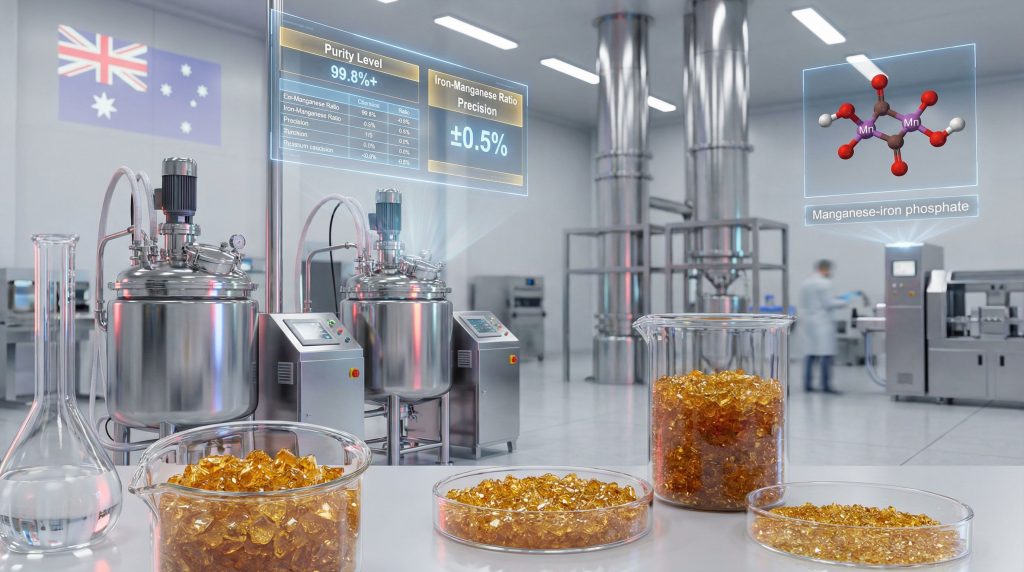
Manganese-iron phosphate (MFP) precursor materials achieve enhanced performance through precise atomic ratio control during synthesis. The co-precipitation process enables manufacturers to maintain manganese content between 32-35% and iron content between 18-22%, creating optimal electrochemical properties for energy storage applications. This atomic-level precision eliminates the compositional variations that plague traditional battery material production.
High-purity manganese sulphate monohydrate (HPMSM) serves as the critical feedstock, with purity levels exceeding 99.8% compared to industry standards of 99.5%. The enhanced purity translates directly into improved battery performance through reduced impurity interference and more consistent electrochemical behaviour. Particle size consistency improvements from ±15% industry standard to ±8% further optimise material performance.
The crystalline structure of properly engineered MFP materials exhibits superior thermal stability compared to nickel-cobalt-aluminium (NCA) or nickel-manganese-cobalt (NMC) chemistries. Operating temperature ranges extend safely beyond 60°C without thermal runaway risks, addressing critical safety concerns in electric vehicle and energy storage applications.
Direct Solution Processing: Eliminating Manufacturing Bottlenecks
Traditional manganese processing requires multiple crystallisation steps that introduce quality variations and increase production costs. Advanced co-precipitation techniques bypass these crystallisation phases entirely, utilising HPMSM solutions directly for precursor material synthesis. This methodological shift reduces energy consumption by approximately 25-30% while improving material consistency.
The elimination of crystallisation bottlenecks enables continuous processing workflows that enhance production efficiency. Iron-manganese ratio precision improves from ±2% industry standard to ±0.5%, demonstrating the superior control capabilities of direct solution methodologies. This precision directly correlates with enhanced battery performance and lifecycle durability.
Quality control mechanisms incorporate real-time monitoring of pH levels, precipitation timing, and chemical additive protocols. Furthermore, temperature control during co-precipitation maintains optimal conditions for atomic-level ratio management, ensuring consistent material properties across production batches.
Integrated Production Strategies: From Ore to Cathode Materials
Vertical integration in manganese battery material production delivers significant competitive advantages through supply chain control and cost optimisation. Companies implementing ore-to-cathode processing achieve 15-20% cost reductions compared to multi-supplier approaches while ensuring consistent material quality throughout the production chain. Additionally, this integrated approach complements the broader battery metals investment landscape emerging globally.
Supply Chain Security Through Domestic Processing
Australia's positioning in manganese processing represents a strategic advantage in global battery material supply chains. The country's demonstrated capability in converting raw manganese ore through multiple processing stages eliminates dependency on international suppliers for critical battery components. This domestic capability proved essential during recent supply chain disruptions affecting battery manufacturing worldwide.
Demonstration facilities completing over 150 test batches and producing 200 kilograms of MFP precursor materials validate the commercial viability of integrated processing approaches. With 30 kilograms already supplied to downstream customers, these facilities demonstrate successful technology transfer from laboratory development to pilot-scale production.
The first Australian demonstration plant capable of full ore-to-cathode processing utilises patented equipment and proprietary processing techniques. This technological infrastructure enables customer-specific research and development while de-risking the pathway to commercial-scale facilities, similar to how the recent battery-grade lithium refinery developments are transforming mineral processing globally.
Economic Advantages of Controlled Production Environments
Integrated production models optimise raw material costs through direct ore utilisation and eliminate intermediate supplier markups. Process efficiency improvements through proprietary equipment reduce energy consumption per kilogram of final product. Enhanced control over precursor quality minimises waste streams and improves yield rates throughout the production chain.
Working capital requirements decrease through reduced inventory needs and shorter production cycles. In addition, commercial scalability assessments indicate readiness for transition from demonstration to full-scale manufacturing, with customer qualification processes already underway.
Australia's Strategic Position in Global Battery Material Competition
Australia achieved a significant milestone in March 2025 when the first Australian-owned company successfully produced lithium manganese iron phosphate (LMFP) batteries for electric vehicle applications. This achievement positions the nation as a capable participant in advanced battery material manufacturing, challenging traditional supply chain dependencies on Asian producers. This development strengthens Australia green metals leadership on the global stage.
First-Mover Advantages in LMFP Battery Production
The Australian demonstration facility represents the country's first capability for converting manganese ore into high-purity manganese sulphate monohydrate, MFP precursors, and cathode active materials using integrated processing technologies. This comprehensive capability differentiates Australian production from international competitors who typically specialise in individual processing stages.
Intellectual property protection through patented processing techniques creates sustainable competitive advantages. Technology transfer opportunities enable licensing arrangements with international partners whilst maintaining domestic manufacturing capabilities. The proprietary equipment and processing methodologies developed for Australian operations provide technological leadership in Firebird manganese battery materials production.
Competitive Analysis Against International Producers
Australian MFP precursor materials demonstrate performance metrics that surpass established Chinese industry standards across multiple parameters. This achievement validates the technological capabilities developed through domestic research and development programmes. Quality benchmarking confirms that Australian-produced materials meet demanding requirements of international cathode manufacturers.
Transportation cost advantages emerge from proximity to major Asian battery manufacturing centres, reducing logistics expenses compared to alternative supply sources. Consequently, regulatory environment stability in Australia provides supply chain security for international customers concerned about geopolitical risks affecting battery material availability.
Technology Validation Through Demonstration Facilities
Demonstration-scale facilities serve essential functions in battery material commercialisation by providing customer qualification platforms and technical validation environments. These facilities enable controlled testing of proprietary processing techniques whilst generating materials for downstream customer evaluation. The approach aligns with broader renewable energy mining solutions being developed across the industry.
Pilot-Scale Production and Customer Validation
Customer-specific research and development capabilities allow demonstration facilities to optimise material properties for individual battery manufacturer requirements. This flexibility proves critical for establishing commercial relationships and securing long-term supply agreements. Independent testing protocols validate material performance against international benchmarks.
The completion of extensive test batch programmes demonstrates production consistency and scalability potential. With approximately 200 kilograms of validated material produced through over 150 individual test batches, demonstration facilities provide substantial evidence of commercial readiness. Moreover, leading companies like Firebird Metals are pioneering these validation approaches.
Risk Mitigation for Commercial Scale Implementation
Demonstration facilities enable optimisation of proprietary equipment before full-scale deployment, reducing capital risk for commercial facilities. Process parameter refinement through iterative testing ensures optimal production conditions for large-scale manufacturing. Commercial viability assessments conducted through demonstration operations validate investment decisions for commercial-scale facilities.
Technology de-risking strategies include validation of equipment reliability, process stability, and material quality consistency. These validation programmes provide essential data for engineering design and financial modelling of commercial operations.
Supporting Electric Vehicle Transformation Through Advanced Materials
Electric vehicle manufacturers require battery materials that deliver enhanced energy density, rapid charging capabilities, and improved safety characteristics. Manganese-based battery chemistries address these requirements through superior electrochemical properties and thermal stability compared to conventional lithium-ion technologies.
Performance Requirements for Next-Generation EV Batteries
Energy density improvements enable extended driving ranges without proportional increases in battery pack weight or volume. Fast-charging capabilities require materials that maintain structural integrity under high current loading conditions. Thermal management advantages reduce cooling system requirements and improve overall vehicle efficiency.
Lifecycle durability specifications for automotive applications demand materials that maintain performance characteristics through thousands of charge-discharge cycles. Safety considerations prioritise materials with inherent thermal stability and reduced fire risk compared to conventional battery chemistries.
Cost-Effectiveness Analysis of Manganese-Based Systems
Raw material availability and pricing stability for manganese-based systems provide cost advantages over cobalt-dependent chemistries. Manufacturing complexity remains manageable through proven processing techniques and equipment requirements. Total cost of ownership calculations for battery manufacturers favour manganese-based systems due to improved safety profiles and reduced thermal management requirements.
Supply chain security considerations increasingly influence battery manufacturer material selection decisions. However, domestic processing capabilities reduce dependency on international suppliers and provide supply chain resilience during geopolitical uncertainties.
Technical Specifications for High-Performance Manganese Materials
Battery-grade manganese materials require precise chemical composition, optimised crystalline structure, and controlled particle morphology to achieve desired electrochemical performance. Manufacturing specifications must address purity requirements, structural characteristics, and processing parameters that determine final material quality. These advances build upon recent battery recycling breakthrough technologies.
Chemical Composition and Structural Requirements
Table: Critical Specifications for Battery-Grade Manganese Materials
| Parameter | Target Range | Control Methodology |
|---|---|---|
| Manganese Content | 32-35% | Atomic ratio management |
| Iron Content | 18-22% | Co-precipitation timing |
| Moisture Content | <0.1% | Controlled drying protocols |
| Particle Size Distribution | 8-12 μm (D50) | Milling optimization |
| Crystalline Structure | Optimised lattice | Temperature control |
Crystalline structure optimisation requires careful control of precipitation conditions, including temperature profiles, pH management, and residence times. Surface area considerations influence electrochemical performance through active material accessibility and electrolyte interaction efficiency.
Impurity control mechanisms prevent contamination that could compromise battery performance or safety characteristics. Chemical analysis protocols verify composition accuracy and detect trace elements that might affect material behaviour.
Processing Parameter Optimisation
Temperature control during co-precipitation maintains optimal conditions for uniform particle formation and consistent material properties. pH management protocols ensure proper precipitation chemistry and prevent unwanted side reactions. Chemical additive sequences optimise material structure and electrochemical properties.
Quality assurance testing at each production stage validates material specifications and identifies potential issues before downstream processing. For instance, batch consistency measurements confirm production repeatability and commercial reliability.
Environmental and Safety Considerations in Production
Sustainable processing technologies minimise environmental impact whilst maintaining high material quality standards. Energy-efficient production methods reduce carbon footprint and operating costs. Waste minimisation strategies optimise resource utilisation and reduce disposal requirements.
Sustainable Manufacturing Approaches
Direct solution processing eliminates energy-intensive crystallisation steps, reducing overall energy consumption per kilogram of product. Closed-loop water systems minimise fresh water requirements and eliminate liquid waste streams. By-product recovery systems capture valuable materials that would otherwise require disposal.
Environmental impact assessments validate the sustainability advantages of advanced processing technologies. Carbon footprint analysis demonstrates reduced emissions compared to conventional manganese processing methodologies.
Safety Protocols for Battery Material Manufacturing
Chemical handling procedures address the specific requirements for manganese compounds and processing chemicals. Storage protocols prevent cross-contamination and maintain material quality during extended storage periods. Process safety management systems identify potential hazards and implement appropriate control measures.
Emergency response procedures address potential incidents involving chemical releases or equipment malfunctions. Containment systems prevent environmental impact from accidental releases and enable rapid response to operational issues.
Market Trends Driving Manganese Battery Material Innovation
Global demand for advanced battery chemistries accelerates driven by electric vehicle adoption and energy storage system deployment. Critical mineral supply chain security concerns motivate domestic processing capability development. Technology roadmaps prioritise materials that deliver improved performance whilst reducing dependency on scarce or geopolitically sensitive elements.
Global Demand Projections and Market Dynamics
Electric vehicle market growth forecasts indicate substantial increases in battery material demand over the next decade. Energy storage system deployment scenarios require materials capable of supporting grid-scale applications with enhanced safety and durability characteristics.
Critical mineral supply chain considerations increasingly influence government policy and industry investment decisions. Domestic processing capabilities receive priority support through funding programmes and regulatory frameworks designed to enhance supply chain resilience. Furthermore, insights from Australian Mining highlight the sector's rapid advancement.
Technology Development and Commercial Timelines
Research and development priorities focus on materials that deliver superior performance whilst utilising abundant raw materials. Commercialisation timelines accelerate through demonstration facility validation and customer qualification programmes.
Competitive landscape analysis reveals increasing investment in manganese-based battery technologies as manufacturers seek alternatives to cobalt-dependent chemistries. Technology licensing opportunities enable rapid deployment of proven processing methodologies across multiple production facilities.
Advanced manganese processing technologies represent a fundamental shift toward sustainable, high-performance battery materials that address the critical requirements of next-generation energy storage applications whilst providing supply chain security through domestic production capabilities.
Disclaimer: This analysis includes forward-looking statements regarding technology development, market trends, and commercial prospects. Actual results may vary based on technological developments, market conditions, and regulatory changes. Investment and commercial decisions should consider comprehensive due diligence and professional consultation.
The transformation of Firebird manganese battery materials through advanced processing technologies demonstrates the potential for domestic critical mineral processing to compete effectively in global markets. As demonstrated through successful pilot-scale operations and customer validation programmes, these technologies provide a foundation for establishing sustainable, high-performance battery material supply chains that support the transition to clean energy systems.
Looking to Invest in Australia's Battery Material Revolution?
Discovery Alert's proprietary Discovery IQ model delivers real-time alerts on significant ASX mineral discoveries in the battery metals sector, instantly empowering subscribers to identify actionable opportunities ahead of the broader market. Begin your 30-day free trial today and secure your market-leading advantage in this rapidly evolving sector.