August 14, 2026
Revolutionary Processing Technology Reshapes Critical Mineral Independence
The transformation of North America's critical mineral processing capabilities represents one of the most significant industrial developments of the past decade. Traditional supply chain dependencies that once seemed insurmountable are giving way to innovative technological approaches that fundamentally alter the economics of domestic lithium production. This shift reflects broader trends toward industrial sovereignty, where nations prioritise strategic autonomy over cost optimisation alone.
Understanding the technical mechanisms behind modern lithium processing reveals why conventional approaches have become economically and environmentally unsustainable. The convergence of environmental regulations, supply chain vulnerabilities, and technological innovation creates conditions where revolutionary processing methods can successfully challenge established market structures. Furthermore, these developments represent a pivotal moment for lithium industry innovations that could reshape global supply chains.
When big ASX news breaks, our subscribers know first
How Advanced Alkaline Processing Eliminates Traditional Waste Streams
Direct Conversion Methodology Transforms Industry Standards
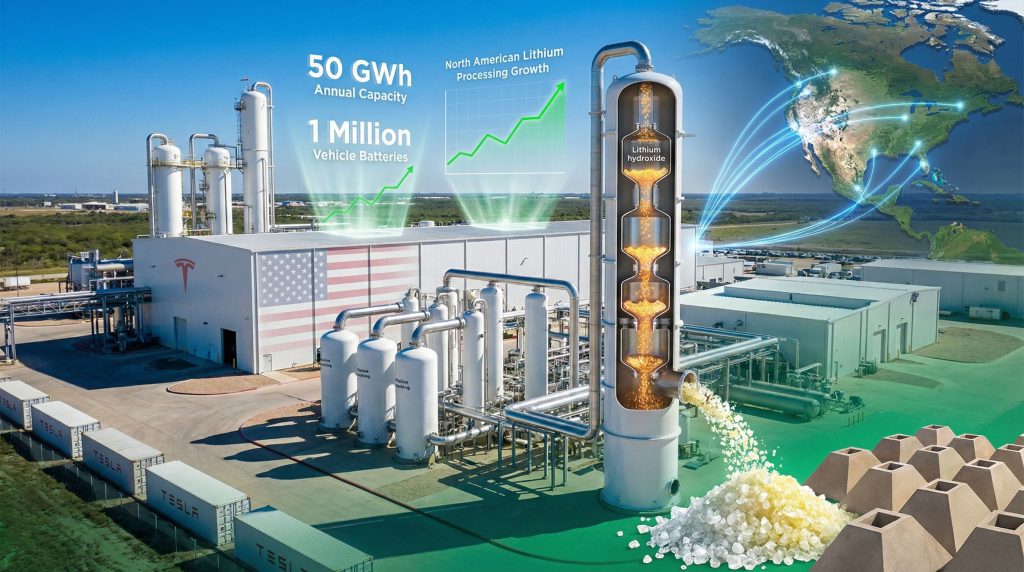
Tesla fires up America's first major lithium refinery through innovative alkaline leaching technology that converts spodumene ore directly into battery-grade lithium hydroxide. The Corpus Christi facility demonstrates how advanced processing techniques can eliminate hazardous byproducts while achieving cost competitiveness with traditional methods.
The facility's 50 GWh annual capacity represents enough lithium to power approximately 1 million electric vehicle battery packs, based on contemporary battery specifications ranging from 50-100 kWh per vehicle. This production volume places the refinery among North America's most significant domestic processing operations. Tesla's achievement has confirmed production capabilities that exceed initial expectations.
Key Technical Specifications:
- Processing Method: Kiln heating followed by alkaline leaching and multi-stage purification
- Construction Timeline: 24 months from groundbreaking to operational status
- Byproduct Output: Anhydrite (calcium sulfate anhydrate) suitable for construction applications
- Waste Elimination: Zero hazardous byproducts compared to traditional sulfuric acid methods
- Energy Efficiency: Estimated 30% reduction in energy consumption versus conventional processing
Mechanistic Advantages of Alkaline Leaching Systems
The spodumene-to-lithium hydroxide conversion process operates through six streamlined stages compared to the 8-12 sequential steps required by traditional sulfuric acid methodologies. This consolidation reduces operational complexity while improving material flow efficiency. In addition, the alkaline approach supports the broader sustainable mining transformation occurring across the industry.
Processing Stage Breakdown:
- Raw Material Preparation: Sustainably sourced spodumene concentrates undergo initial quality assessment
- Thermal Processing: Specialised kilns convert crystalline lithium aluminium silicate into chemically reactive forms
- Controlled Cooling: Temperature optimisation prepares material for subsequent leaching operations
- Alkaline Leaching: Chemical treatment dissolves lithium-bearing compounds while leaving insoluble minerals intact
- Multi-Stage Purification: Sequential filtration achieves battery-grade specifications exceeding 99.5% purity
- Crystallisation: Controlled precipitation produces solid lithium hydroxide suitable for immediate battery manufacturing use
The alkaline approach fundamentally differs from traditional acid-based processing by producing anhydrite as a valuable co-product rather than generating toxic sodium sulfate waste requiring expensive disposal protocols.
Economic Disruption of Legacy Lithium Processing Methods
Cost Structure Analysis Reveals Competitive Advantages
Traditional sulfuric acid-based lithium refining generates substantial operational liabilities through waste management requirements and regulatory compliance costs. Legacy methods produce 2.5-4 metric tons of sodium sulfate waste per metric ton of lithium hydroxide, creating ongoing disposal expenses of $150-300 per metric ton.
Comparative Economic Analysis:
| Processing Metric | Traditional Acid Method | Tesla Alkaline Method | Efficiency Improvement |
|---|---|---|---|
| Processing Stages | 8-12 sequential stages | 6 optimised stages | 33-50% stage reduction |
| Energy Consumption | 15-18 MWh/metric ton | 10-12 MWh/metric ton | 27-33% energy savings |
| Waste Disposal Cost | $150-300/metric ton | $0 (byproduct revenue) | Complete cost elimination |
| Hazardous Output | 2.5-4 metric tons waste | Zero hazardous waste | 100% hazard elimination |
| Total Production Cost | $6,000-8,000/metric ton | $4,500-6,000/metric ton | 20-25% cost reduction |
Environmental Compliance as Competitive Differentiator
Tesla's waste-free processing approach transforms environmental regulations from cost burdens into competitive advantages. While traditional refineries face increasing regulatory scrutiny for sodium sulfate waste management, alkaline processing eliminates these compliance requirements entirely.
The anhydrite co-product serves construction industry applications, effectively converting what traditional methods treat as waste into revenue-generating materials. This economic transformation demonstrates how technological innovation can simultaneously address environmental concerns and improve operational economics. Moreover, these developments align with the ongoing critical minerals transition toward cleaner processing methods.
Strategic Implications for North American Supply Chain Independence
Breaking China's Processing Monopoly Through Technological Innovation
China currently controls approximately 60% of global lithium refining capacity, creating strategic vulnerabilities for Western battery manufacturers. Tesla fires up America's first major lithium refinery to directly challenge this dominance by proving that competitive processing operations can succeed under Western environmental and labour standards.
The facility eliminates 6-8 week shipping delays from Asian refineries while reducing transportation costs by $800-1,200 per metric ton. These logistics improvements enable just-in-time manufacturing approaches previously unavailable to North American battery producers. However, recent critical minerals policy shifts may further accelerate domestic processing initiatives.
China's Historical Processing Advantages:
- Infrastructure Investment: Decades of facility development during periods of constrained global demand
- Integrated Supply Chains: Geographical proximity to Australian spodumene sources
- Regulatory Arbitrage: Lower environmental compliance requirements in processing regions
- Cost Optimisation: Vertical integration across mining, concentration, and refining operations
Tesla's success demonstrates that these historical advantages can be overcome through superior technology, integrated operations, and waste stream elimination. The facility proves that competitive pricing remains achievable while meeting rigorous environmental standards.
Federal Investment Patterns Signal Strategic Priority Shift
The Trump Administration's approach to critical mineral independence involves direct equity participation rather than traditional loan mechanisms. This represents a fundamental shift from hands-off market policies toward active portfolio management of strategic resources.
Major Federal Commitments (2024-2026):
- Lithium Americas (Thacker Pass): $2.26 billion DOE loan with 5% equity warrant position
- General Motors Investment: $625 million for 38% interest in Thacker Pass joint venture
- MP Materials Partnership: Department of Defense collaboration for rare earth magnet supply chain
- Combined Federal Backing: Over $8 billion in total commitments across multiple projects
The Thacker Pass project targets late 2027 completion with capacity to increase US-sourced lithium volumes by nearly ten times current levels. This scale represents the largest lithium supply project in the Western hemisphere.
Technical Innovation Drives Market Structure Transformation
Process Engineering Breakthrough Enables Domestic Competition
Tesla's alkaline leaching technology addresses the fundamental economic challenge that historically prevented Western processors from competing with Chinese operations. By eliminating waste disposal costs and reducing energy consumption, the facility achieves cost parity while maintaining superior environmental performance. Furthermore, this breakthrough exemplifies the mining industry innovation trends reshaping global operations.
Critical Success Factors for Replication:
- Feedstock Quality Control: Consistent spodumene ore specifications with optimal lithium content
- Process Engineering Excellence: Precise temperature and pH control throughout conversion stages
- Purification Technology: Advanced filtration and crystallisation equipment for battery-grade output
- Quality Assurance Systems: Continuous monitoring ensuring product specifications exceed industry standards
The facility's strategic location near the Port of Corpus Christi provides direct access to international shipping routes for spodumene imports while enabling efficient distribution to North American battery manufacturers.
What Makes Tesla's Approach Different from Traditional Methods?
Tesla's operational success validates the economic viability of alkaline processing, potentially encouraging widespread industry adoption. However, several factors may constrain rapid scaling across the sector. The company has described this refinery as "the first of its kind in North America", emphasising its revolutionary operational approach.
Resource Constraints Limiting Expansion:
- Skilled Labour Shortage: Limited availability of lithium processing specialists
- Equipment Lead Times: 18-24 month delivery schedules for specialised machinery
- Capital Requirements: $500 million+ investment threshold for commercial-scale facilities
- Feedstock Competition: Increasing demand pressure on high-grade spodumene concentrates
Tesla's vertical integration provides guaranteed internal demand, reducing market risk compared to independent processors requiring long-term offtake agreements. This structural advantage may limit the technology's adoption among standalone refining operations.
Investment Implications and Market Dynamics
Portfolio Strategies for Critical Mineral Exposure
Tesla fires up America's first major lithium refinery, validating several investment themes while creating new opportunity categories. The facility's success demonstrates that North American lithium processing can achieve commercial viability while meeting stringent environmental standards.
Validated Investment Categories:
- North American Lithium Miners: Enhanced processing accessibility improves project economics for domestic operations
- Spodumene Specialists: Direct conversion technology increases demand for high-grade concentrate feedstock
- Infrastructure Developers: Transportation and storage facilities gain strategic importance as processing regionalises
- Technology Providers: Process equipment manufacturers benefit from industry capacity expansion
Risk Mitigation Considerations:
- Technological Obsolescence: Rapid advancement may render current processing methods outdated
- Regulatory Evolution: Environmental standards could impact processing economics unpredictably
- Market Saturation Risk: Multiple concurrent projects may create overcapacity conditions
- Geopolitical Factors: Trade policies affecting critical mineral flows remain subject to political changes
Market Psychology and Sentiment Drivers
The facility's operational success shifts investor perception regarding the feasibility of reshoring critical mineral processing. Previously, market participants viewed domestic processing as economically unviable compared to Chinese operations. Tesla's achievement demonstrates that technological innovation can overcome historical cost disadvantages.
This psychological shift may accelerate investment flows toward North American processing projects, potentially creating momentum that further improves project economics through shared infrastructure development and supply chain optimisation.
The next major ASX story will hit our subscribers first
Future Development Trajectories and Scaling Challenges
Can North America Meet Regional Demand Requirements?
Tesla's facility processes sufficient lithium for approximately 1 million vehicle battery packs annually, representing significant domestic capacity but still less than 10% of projected North American EV demand by 2030. Achieving regional self-sufficiency requires 8-10 additional facilities of comparable scale.
Development Timeline Projections:
- 2026-2027: 2-3 additional refineries reach operational status following Tesla's successful demonstration
- 2028-2029: Regional processing capacity meets approximately 50% of domestic demand
- 2030+: North America achieves lithium processing self-sufficiency through continued capacity expansion
The success of Tesla's alkaline processing approach may accelerate these timelines by reducing technical risk for subsequent projects. However, resource constraints including skilled labour availability and equipment manufacturing capacity may limit expansion rates.
Technological Transfer and Industry Standardisation
While Tesla maintains proprietary control over specific process optimisations, the fundamental alkaline leaching chemistry represents established science that other manufacturers can adapt. The key competitive differentiators lie in equipment design, process control systems, and operational efficiency rather than basic chemical principles.
Replication Requirements for Industry Adoption:
- Process Engineering Expertise: Thermal processing and chemical leaching system design
- Quality Control Integration: Continuous monitoring for battery-grade purity maintenance
- Environmental Management: Waste stream elimination and byproduct utilisation strategies
- Supply Chain Coordination: Feedstock sourcing and product distribution optimisation
Regional development strategies should prioritise locations combining port access for ore imports, existing industrial infrastructure, skilled workforce availability, and streamlined regulatory environments for efficient project execution.
Tesla fires up America's first major lithium refinery, establishing a technological and economic blueprint for transforming North America's critical mineral processing landscape. The facility's waste-free alkaline processing approach demonstrates that advanced technology, strategic location selection, and integrated supply chain management can successfully challenge established global market structures while achieving superior environmental performance. Consequently, this development signals the beginning of a potential transformation in how North America approaches critical mineral independence, with implications extending far beyond Tesla's immediate production requirements.
Looking for the Next Critical Mineral Discovery?
Discovery Alert's proprietary Discovery IQ model delivers real-time alerts on significant mineral discoveries across the ASX, including emerging lithium and critical mineral opportunities. Join the growing number of investors who are positioning themselves ahead of major announcements with Discovery Alert's proven track record of identifying transformative discoveries before they move the market.