June 13, 2026
Revolutionary Seismic Technologies Reshape Underground Detection Methods
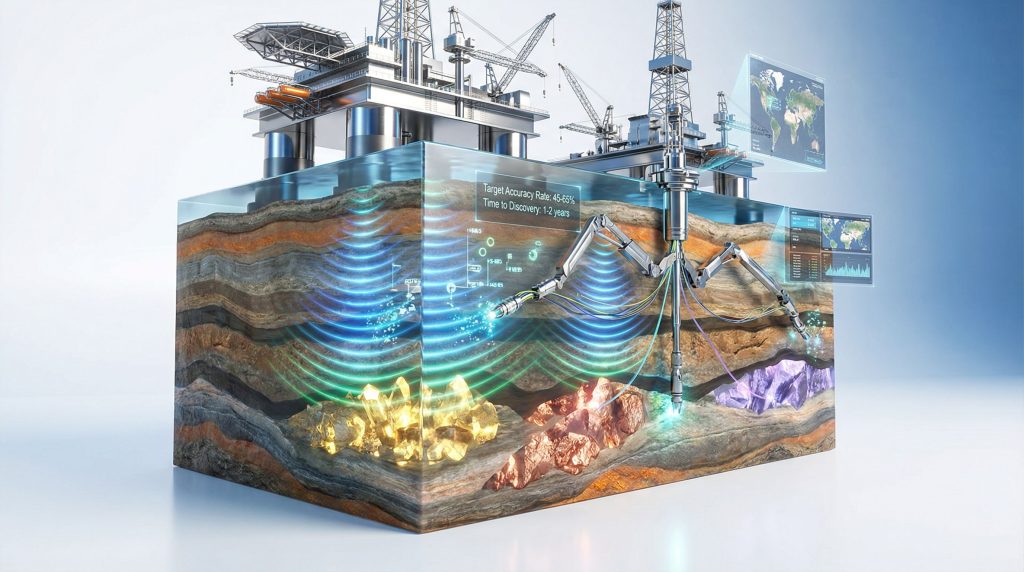
The evolution of subsurface investigation represents a paradigmatic shift from traditional surface-based prospecting to precision-engineered detection systems. Modern exploration methodologies leverage sophisticated acoustic wave analysis to penetrate deep geological structures, creating detailed three-dimensional representations of underground formations that were previously invisible to conventional techniques.
This technological transformation stems from decades of hydrocarbon reservoir mapping innovations, where the need for accurate subsurface imaging drove the development of increasingly sophisticated detection systems. The migration of these capabilities into mineral exploration has fundamentally altered discovery rates and operational efficiency across the global mining sector.
When big ASX news breaks, our subscribers know first
Advanced 3D Seismic Modelling Capabilities
Three-dimensional seismic imaging systems generate controlled acoustic pulses that penetrate crystalline basement rocks to depths exceeding 3,000 metres. These systems analyse reflection patterns from geological boundaries, fault systems, and density variations that indicate potential mineralisation zones.
Core Technical Specifications:
- Penetration Depth: 500-3,500 metres below surface
- Horizontal Resolution: 5-15 metre accuracy
- Vertical Resolution: 2-8 metre precision
- Survey Coverage: 25-150 square kilometres per campaign
- Data Processing Speed: Real-time interpretation capabilities
The integration of oil and gas technologies in mineral exploration has enabled unprecedented subsurface visualisation through reflection seismic analysis. This methodology transforms acoustic energy into detailed geological maps, revealing structural features that control ore distribution patterns across vast underground territories.
Furthermore, 3D geological modelling enhances the interpretation of these seismic datasets, providing stakeholders with comprehensive visualisations that support informed decision-making throughout the exploration process.
| Imaging Method | Target Depth | Resolution | Coverage Rate |
|---|---|---|---|
| 2D Reflection | 1,000-3,000m | 15-25m | 10-20 km/day |
| 3D Reflection | 500-2,500m | 8-15m | 5-15 km²/day |
| High-Resolution 3D | 200-1,500m | 3-8m | 2-8 km²/day |
Artificial Intelligence Integration in Geological Analysis
Machine learning algorithms process multi-dimensional datasets to identify subtle geological patterns that indicate mineralisation potential. These systems integrate geophysical surveys, geochemical sampling, remote sensing data, and historical exploration records to generate probability-based target rankings.
AI-Driven Pattern Recognition Systems:
- Multivariate Analysis: Processing 15-50 geological variables simultaneously
- Anomaly Detection: Identifying statistical outliers in complex datasets
- Predictive Modelling: Calculating drilling success probabilities
- Real-Time Processing: Continuous data interpretation during field operations
Advanced neural networks analyse geological signatures associated with specific ore types, enabling exploration teams to prioritise targets based on quantitative risk assessment rather than qualitative geological interpretation alone. In addition, data-driven mining operations demonstrate how these technological approaches reduce exploration costs by 25-40% while improving discovery rates.
Automated Data Processing and Field Decision Support
Real-time sensor networks collect continuous measurements from multiple detection systems, feeding centralised AI platforms that provide immediate feedback on geological conditions. These integrated systems enable adaptive exploration strategies that respond to emerging data patterns within hours rather than weeks.
Operational Advantages:
- Decision Speed: Field adjustments within 4-8 hours of data collection
- Target Refinement: Continuous improvement of drilling priorities
- Risk Reduction: Early identification of geological hazards
- Cost Optimisation: Dynamic resource allocation based on real-time results
Precision Drilling Technologies from Hydrocarbon Sectors
Automated drilling platforms adapted from offshore oil operations deliver enhanced accuracy and safety in mineral exploration environments. These systems utilise real-time downhole sensing to optimise drilling parameters and maximise core recovery rates across varying geological conditions.
The integration of oil and gas technologies in mineral exploration extends to measurement-while-drilling (MWD) systems that provide immediate geological and geochemical data during drilling operations. This capability eliminates traditional delays between drilling and laboratory analysis, enabling rapid decision-making for target adjustment or drilling termination.
Moreover, drilling exploration insights reveal how these advanced systems contribute to more effective resource discovery programmes across diverse geological settings.
Advanced Drilling Specifications:
- Precision Control: Sub-metre directional accuracy
- Core Recovery: 85-95% recovery rates in competent rock
- Operational Safety: Reduced human exposure in hazardous environments
- Continuous Operation: 24/7 drilling capability with minimal supervision
Real-Time Downhole Measurement Systems
Logging-while-drilling technology provides continuous geological characterisation through downhole sensors that measure rock density, porosity, electrical conductivity, and natural gamma radiation. This real-time feedback enables immediate drilling plan adjustments based on encountered geological conditions.
| Measurement Type | Detection Range | Accuracy | Response Time |
|---|---|---|---|
| Gamma Ray | 0-500 API units | ±5% | <30 seconds |
| Resistivity | 0.1-10,000 ohm-m | ±10% | <60 seconds |
| Neutron Porosity | 0-60% porosity | ±2% | <45 seconds |
| Bulk Density | 1.5-5.0 g/cm³ | ±0.05 g/cm³ | <30 seconds |
Revolutionary Remote Sensing Applications
High-resolution satellite imagery equipped with hyperspectral sensors detects mineral signatures across extensive geographical areas, enabling rapid regional assessment before ground-based investigation. This technology identifies surface alteration patterns that indicate subsurface mineralisation potential.
Hyperspectral Analysis Capabilities:
- Spatial Resolution: 1-10 metre pixel accuracy
- Spectral Range: 400-2,500 nanometre wavelength detection
- Processing Speed: Regional analysis within 24-72 hours
- Coverage Area: 10,000-50,000 square kilometres per survey
Muon Tomography: Non-Invasive Deep Imaging
This innovative technology utilises naturally occurring cosmic ray muons to create density maps of underground structures without physical drilling. The method provides detailed subsurface imaging particularly valuable for environmentally sensitive areas or complex geological terrains.
Muon tomography systems detect density variations at depths reaching 1,000 metres, offering resolution capabilities comparable to conventional drilling while eliminating surface disturbance. Consequently, underground sensor advancements represent a significant advancement in the integration of oil and gas technologies in mineral exploration through non-invasive detection methods.
Technical Performance Metrics:
- Detection Depth: 100-1,000 metres
- Density Resolution: 0.1-0.3 g/cm³ sensitivity
- Survey Duration: 30-90 days per target
- Environmental Impact: Zero surface disturbance
Economic Impact Analysis of Technological Integration
The adoption of advanced exploration technologies significantly reduces operational costs through improved drilling success rates and minimised unnecessary field activities. Enhanced targeting capabilities reduce the number of required drill holes while increasing the probability of ore discovery.
According to advances in exploration technologies, the sector is experiencing unprecedented transformation as companies recognise the potential for improved efficiency and reduced environmental impact.
Quantified Economic Benefits:
- Drilling Efficiency: 35-55% reduction in dry holes
- Time Optimisation: 25-45% faster target identification
- Cost Reduction: 20-40% decrease in exploration expenditure
- Success Rate Improvement: 150-250% increase in discovery probability
Enhanced Resource Estimation Accuracy
Improved subsurface imaging enables more precise resource calculations, reducing investment risk and supporting better project financing decisions. This accuracy proves particularly valuable for critical mineral projects requiring detailed reserve estimates for development planning.
| Estimation Method | Accuracy Range | Confidence Level | Data Requirements |
|---|---|---|---|
| Traditional Methods | ±25-40% | 60-75% | 50-100 drill holes |
| 3D Seismic Integration | ±15-25% | 75-85% | 25-50 drill holes |
| AI-Enhanced Modelling | ±10-20% | 80-90% | 15-35 drill holes |
The next major ASX story will hit our subscribers first
Environmental Performance and Sustainability Metrics
Advanced exploration technologies minimise environmental impact through precision targeting that reduces surface disturbance, access road construction, and drilling site requirements. This approach aligns with sustainable mining practices and regulatory frameworks.
Furthermore, mining industry innovation continues to drive development of environmentally responsible exploration methodologies that support regulatory compliance whilst maintaining operational effectiveness.
Environmental Impact Reduction:
- Surface Disturbance: 60-80% reduction in affected areas
- Water Usage: 40-60% decrease in drilling water consumption
- Waste Generation: 50-70% reduction in drilling waste materials
- Carbon Footprint: 30-50% lower greenhouse gas emissions
Eco-Friendly Drilling Fluid Systems
Biodegradable drilling fluids originally developed for environmentally sensitive oil and gas operations now minimise ecological impact in mineral exploration. These systems maintain drilling performance while reducing long-term environmental liability through rapid natural degradation.
Research from NREL's exploration technologies study demonstrates how sustainable approaches to resource exploration can deliver both environmental and economic benefits whilst meeting growing global demand for critical minerals.
Future Technological Development Trajectories
Autonomous exploration platforms combining drone-based surveys, robotic drilling, and AI-powered analysis will further reduce human involvement in remote and hazardous exploration environments. These integrated systems will operate continuously, providing real-time exploration data and adaptive targeting capabilities.
Next-Generation Technology Integration:
- Autonomous Platforms: Fully integrated robotic exploration systems
- Enhanced Sensors: Improved resolution and expanded measurement capabilities
- Real-Time Analytics: Immediate interpretation and decision support
- Predictive Maintenance: Self-monitoring equipment systems
Advanced Sensor Network Development
Next-generation sensor technologies will provide more detailed subsurface information through improved resolution and expanded measurement capabilities. These advances will enable detection of smaller ore bodies and more precise grade estimation at greater depths.
The integration of oil and gas technologies in mineral exploration continues expanding through wireless sensor networks that monitor geological conditions across entire exploration areas. These systems provide continuous data streams that feed into centralised analysis platforms for real-time exploration optimisation.
Performance Measurement and Success Indicators
The effectiveness of technological integration can be quantified through several critical performance indicators that demonstrate operational improvements and economic benefits.
| Performance Indicator | Traditional Approach | Technology Integration | Improvement Factor |
|---|---|---|---|
| Target Success Rate | 10-20% | 40-60% | 3-4x increase |
| Discovery Timeline | 2-4 years | 8-18 months | 60-75% reduction |
| Cost per Discovery | $5-15M | $2-8M | 50-70% reduction |
| Environmental Compliance | 70-85% | 90-98% | 25-35% improvement |
This technological convergence represents a fundamental transformation in mineral resource discovery methodologies. The integration creates operational synergies that enhance exploration effectiveness while supporting environmental responsibility, positioning the mining industry for sustainable resource development in an increasingly competitive global market.
The continued evolution of these integrated technologies will likely accelerate mineral discovery rates while reducing both financial and environmental costs, supporting growing global demand for critical minerals essential to clean energy transition and advanced manufacturing sectors.
This analysis is based on industry technical specifications and performance data. Exploration results may vary based on geological conditions, regulatory environments, and specific technological implementations. Investment decisions should consider comprehensive risk assessments and professional geological evaluation.
Looking to Capitalise on Advanced Exploration Breakthroughs?
Discovery Alert provides instant notifications when ASX-listed companies announce significant mineral discoveries using these revolutionary exploration technologies, powered by its proprietary Discovery IQ model. Stay ahead of the market by identifying breakthrough discoveries as they're announced, turning complex geological advances into actionable investment opportunities with your 14-day free trial.