
July 1, 2026
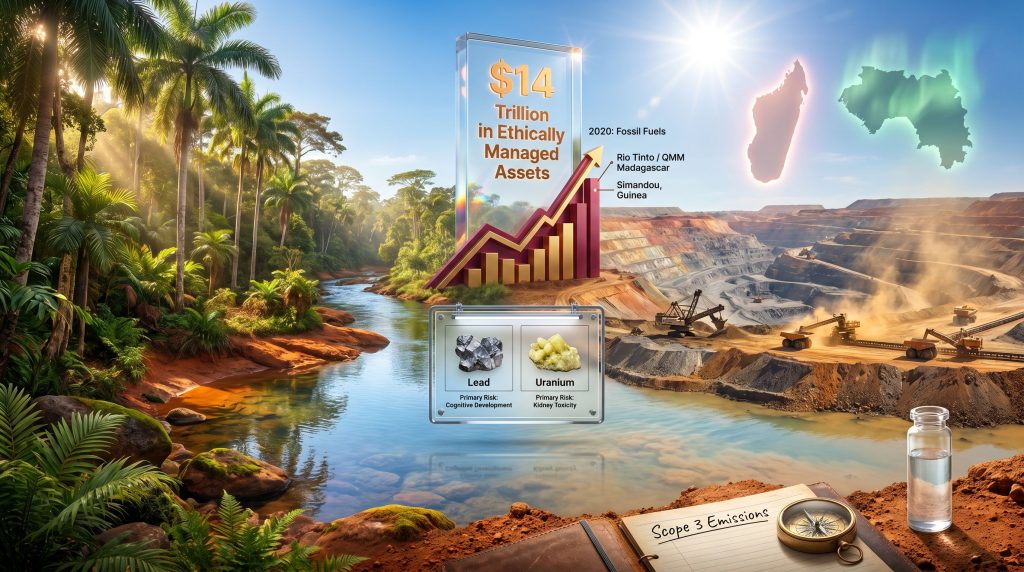
When Institutional Patience Runs Out: Environmental Accountability and the New Rules of Mining Capital
Institutional investors have always held the theoretical power to reshape corporate behaviour through capital allocation decisions. For decades, however, the mining sector largely operated on the assumption that this power would remain theoretical, tempered by returns-focused pragmatism and the complexity of divesting from essential commodity producers. That assumption is being challenged in ways that are structurally significant for the industry. The conversation around Jesuits in Britain divesting from Rio Tinto over environmental concerns has moved beyond fossil fuels, reaching directly into hard rock mining operations, with investors driving that shift commanding moral authority that purely financial actors rarely possess.
The question worth examining is not simply whether one religious order might sell shares in one mining giant. It is what the conditions that produced that decision reveal about where the relationship between extractive capital and ethical governance is heading.
When big ASX news breaks, our subscribers know first
Faith-Based Investors and the Architecture of ESG Pressure
Understanding why faith-based institutional investors carry disproportionate influence in ESG disputes requires stepping back from share price mechanics. Religious orders and mission-driven investment bodies do not operate with the same performance benchmarks as pension funds or hedge funds. Their mandate is explicitly values-aligned, which means their investment decisions are evaluated against ethical frameworks rather than purely against returns.
This creates a specific dynamic: when a faith-based investor declares it is considering divestment, the statement lands differently in public discourse than when a quant fund rebalances a portfolio. The moral framing amplifies media and stakeholder attention in ways that generate reputational consequences that extend well beyond the financial value of the shareholding being discussed.
The Jesuits in Britain, a Catholic religious order with a longstanding tradition of applying ethical criteria to capital allocation, have been engaged in direct dialogue with Rio Tinto over a period of approximately three to four years, according to statements made at Rio Tinto's Annual General Meeting on May 6, 2026. After that sustained engagement period produced insufficient remediation outcomes, the order's head of ethical investments publicly raised the possibility of divestment at the AGM itself, shifting the conversation from private correspondence to a formal public record. That escalation is itself a governance signal, not merely a financial one.
The Three Environmental Pillars of the Dispute
The concerns raised cover three distinct but interconnected areas of Rio Tinto's environmental and emissions profile:
- Water contamination and monitoring transparency at the QIT Madagascar Minerals (QMM) operation in southeastern Madagascar
- Environmental and community risk management associated with the Simandou iron ore development in Guinea
- Scope 3 greenhouse gas emissions across Rio Tinto's full value chain
Each of these concerns reflects a different dimension of modern ESG risk assessment. Madagascar represents an acute, site-specific contamination dispute. Simandou represents project-level environmental governance in a high-biodiversity, complex jurisdiction. Scope 3 emissions, furthermore, represent a systemic, portfolio-wide climate risk that affects Rio Tinto's long-term positioning within institutional ESG frameworks.
Madagascar: Contamination, Reporting Gaps, and a Community in Dispute
The QIT Madagascar Minerals operation in the Anosy region of southeastern Madagascar produces ilmenite, a titanium-bearing mineral used in pigment manufacturing and aerospace applications. Environmental organisations have raised concerns for several years about water quality in waterways downstream of this operation, with specific attention to elevated concentrations of uranium and lead. Reports of Rio Tinto's water use drying up sacred waterholes further illustrate the scale of environmental sensitivity surrounding the company's operations.
The health implications of these contaminants are well-documented in toxicological literature:
| Contaminant | Primary Health Mechanism | Population at Highest Risk |
|---|---|---|
| Lead | Neurological disruption, developmental impairment | Children |
| Uranium | Nephrotoxicity (kidney damage), organ accumulation | Adults and children |
Lead operates as a neurological toxin that interferes with calcium metabolism, with documented effects on cognitive development in children even at low chronic exposure levels. Uranium, while radioactive, is principally concerning as a chemical nephrotoxin in environmental contamination contexts, accumulating in kidney tissue and skeletal structures over extended exposure periods. Local residents in the Anosy region rely on nearby water sources, creating direct and ongoing exposure pathways.
Rio Tinto's stated position is that external assessments of the QMM operation show regulated metals at concentrations that fall consistently below laboratory detection thresholds. This framing suggests the company regards its operations as being within compliance parameters. However, critics, environmental groups, and affected communities contest both the methodology and the completeness of these assessments, and legal proceedings initiated by local villagers indicate the dispute has moved beyond institutional dialogue into formal judicial channels.
What makes the Madagascar situation particularly complex for investors is that the contamination debate and the reporting debate are two separate problems. Even if a company disputes contamination severity, systematic failures in the timeliness and completeness of water monitoring data constitute an independent governance concern that cannot be resolved by contesting the underlying measurements.
The Jesuits in Britain specifically identified that water quality reports from Rio Tinto's Madagascar operations had arrived late, lacked adequate detail, or had not been provided at all. This is not a peripheral concern. In ESG assessment frameworks including the Global Reporting Initiative and the Task Force on Climate-related Financial Disclosures, timely and complete environmental disclosure is itself a performance criterion. When reports are absent or inadequate, the absence becomes evidence of governance failure regardless of what those reports might have contained.
Simandou: Scale, Complexity, and Compounding Risk
Rio Tinto's involvement in the Simandou iron ore project in Guinea adds a second layer of investor concern. Simandou is one of the largest undeveloped iron ore deposits identified globally, located in a region characterised by significant biodiversity, complex infrastructure requirements, and governance sensitivities. The project's scale means that environmental and community management challenges are correspondingly large.
For ESG-focused investors already concerned about Madagascar, Simandou represents a forward-looking risk rather than a remediation problem. Separate news from May 2026 reported that mining had been halted at a Baowu-led Simandou site over a pay dispute involving workers seeking parity with counterparts on different project sections, illustrating the operational complexity of this environment. Consequently, the combination of an unresolved legacy environmental dispute in Madagascar and an active, complex development in Guinea creates a multi-jurisdictional risk profile that institutional investors applying screens for community protection and environmental governance find difficult to accommodate. The broader geopolitical landscape facing metals and mining further complicates how investors assess politically sensitive projects like Simandou.
Scope 3 Emissions: The Systemic Climate Risk Dimension
Scope 3 emissions represent indirect greenhouse gas emissions generated across a company's full value chain, including emissions produced when customers use the company's products. For a diversified miner supplying raw materials to steel production, aluminium smelting, and other carbon-intensive industries, Scope 3 can represent the largest single component of total emissions exposure.
The challenge for mining companies is that Scope 3 accounting requires transparency about downstream use of products that are often sold into global commodity markets with limited ability to track end applications. This creates both a data problem and a strategic problem: companies that cannot demonstrate credible Scope 3 reduction pathways face escalating pressure from climate-focused investors even when their direct operational emissions are managed effectively.
For the Jesuits in Britain, whose 2020 decision to exit fossil fuel investments was framed explicitly around climate ethics, Scope 3 emissions are not an abstract reporting metric. They represent a direct link between portfolio holdings and the climate outcomes the order has committed to opposing through its capital allocation decisions. Indeed, the critical minerals energy transition underscores why emissions accountability across entire value chains has become non-negotiable for ethically oriented capital.
The Engagement-to-Divestment Escalation Pathway
The three-to-four year engagement timeline that preceded the Jesuits' public AGM statement follows a structured escalation pathway that has become increasingly formalised among ethical institutional investors:
- Initial direct engagement through correspondence with company leadership
- Attendance at Annual General Meetings to raise concerns formally on the public record
- Participation in investor coalition letters or submission of shareholder resolutions
- Public declaration of divestment consideration as a final signalling mechanism
- Execution of divestment if satisfactory remediation commitments are not received
The critical dynamic is that reaching step four — the public declaration stage — represents more than a warning shot. It converts a private governance dispute into a public reputational event. Other institutional investors monitoring ESG performance become aware of the concerns. Media coverage amplifies the signal. And the company's ESG fund eligibility may come under review by fund managers applying automated screening criteria.
This is why the financial significance of a single religious order's shareholding is not the relevant measure of its leverage. The reputational multiplier effect means that the Jesuits' public statement at Rio Tinto's AGM generates investor attention that is orders of magnitude larger than the value of the shares they hold. Furthermore, Rio Tinto's global taxes and royalties profile is already under scrutiny, meaning each additional governance concern compounds existing investor unease.
How Mining Companies Are Evaluated Against ESG Frameworks
Institutional investors applying structured ESG analysis to mining companies typically work across several reporting dimensions simultaneously. The comparison below illustrates how investor expectations map against the specific gaps identified in the Rio Tinto Madagascar situation:
| Reporting Dimension | Investor Expectation | Identified Gap |
|---|---|---|
| Water quality monitoring | Regular, third-party verified, timely | Reports delayed, incomplete, or absent |
| Community health risk disclosure | Proactive and transparent | Contested by environmental groups |
| Scope 3 emissions accounting | Full value chain coverage | Under active scrutiny |
| Regulatory compliance evidence | Independently verified, below safety thresholds | Findings disputed by external researchers |
| Legal and community dispute disclosure | Timely and comprehensive | Ongoing litigation by local communities |
The frameworks most commonly referenced in this context include the Global Reporting Initiative, which establishes standards for environmental disclosure across water, biodiversity, and emissions categories; the Task Force on Climate-related Financial Disclosures, which requires analysis of climate-related financial risks including transition risks relevant to Scope 3 exposure; and the Responsible Minerals Initiative, which addresses supply chain due diligence in mining contexts. Gaps against any of these frameworks can trigger escalation by engaged institutional shareholders.
The Broader Trend: Which Mining Practices Are Most Likely to Drive Future Divestment?
The Rio Tinto situation is best understood as a leading indicator rather than an isolated event. Across the institutional investment landscape, the following categories of mining practice are emerging as primary triggers for ESG-driven divestment consideration in 2026 and beyond:
- Inadequate water management and contamination remediation in biodiverse or water-stressed regions
- Failure to establish credible Scope 3 emissions reduction pathways
- Insufficient application of free, prior, and informed consent processes with Indigenous and local communities
- Delayed or incomplete environmental monitoring reports that undermine investor confidence in governance
- Active legal proceedings by affected communities signalling unresolved harm
- Project development in jurisdictions with complex governance environments without demonstrated stakeholder management frameworks
Faith-based investors are not the only institutional category applying these criteria. Pension funds managing obligations to beneficiaries with ESG preferences, sovereign wealth funds operating under government sustainability mandates, and university endowments responding to student and faculty pressure are all applying increasingly granular screens to mining sector holdings. The consideration of Jesuits in Britain divesting from Rio Tinto over environmental concerns represents the visible, publicly articulate end of a much broader shift in institutional capital allocation behaviour. In addition, the growing focus on natural capital in mining operations signals that biodiversity and ecosystem accountability are becoming standard investor expectations.
The next major ASX story will hit our subscribers first
What Rio Tinto's Situation Signals for Mining Executives
There is a strategic lesson embedded in the three-to-four year engagement timeline that preceded the public escalation. Engagement quality matters as much as engagement frequency. A company can respond to every letter, attend every dialogue, and still fail engagement if its responses do not address the substantive concerns being raised.
The specific criticism that water reports arrived late, lacked detail, or did not materialise at all suggests that Rio Tinto's engagement process did not include the operational changes necessary to satisfy the reporting expectations of institutional investors. This is an internal governance problem as much as a communications problem.
For Rio Tinto and its peers, the structural implication is significant: environmental accountability is no longer a reputational management exercise. It is a capital access issue. Companies that cannot demonstrate credible environmental governance, transparent monitoring, and timely disclosure face growing risk of exclusion from ethically oriented portfolios. Moreover, mine reclamation practices are increasingly viewed as a baseline expectation rather than a voluntary commitment.
The extractive industries have spent decades treating environmental compliance as a floor to be met. The emerging institutional investor consensus is that the floor is rising, and that meeting it is no longer sufficient to retain the confidence of the capital base that major mining companies increasingly depend upon.
Frequently Asked Questions
Why are the Jesuits in Britain considering divesting from Rio Tinto?
After approximately three to four years of direct engagement with Rio Tinto's leadership, the order's ethical investment leadership raised unresolved concerns at Rio Tinto's May 2026 AGM regarding water contamination at the Madagascar QMM operation, environmental risks at the Simandou project in Guinea, and the company's Scope 3 emissions profile. The public AGM statement represents an escalation from private engagement to formal divestment consideration. Reporting on the Jesuits considering this divestment has drawn significant attention to this governance dispute.
What environmental risks have been identified at Rio Tinto's Madagascar operation?
Environmental organisations have documented elevated concentrations of uranium and lead in waterways downstream of the QIT Madagascar Minerals operation in southeastern Madagascar. Lead exposure is associated with cognitive and developmental harm in children, while uranium presents kidney toxicity risks. Concerns about the timeliness and completeness of Rio Tinto's water quality monitoring reports have added a separate governance dimension to the dispute. Local communities have also initiated legal proceedings.
What is Rio Tinto's official response to the contamination concerns?
Rio Tinto's chair has stated that external assessments of regulated metals at the QMM operation show concentrations consistently below laboratory detection thresholds. However, critics and affected communities continue to contest the adequacy, methodology, and independence of those assessments.
What are Scope 3 emissions and why are they relevant to this dispute?
Scope 3 emissions are the indirect greenhouse gas emissions generated across a company's entire value chain, including those produced when customers use its products. For a mining company supplying raw materials to carbon-intensive industries, Scope 3 often represents the largest share of total emissions exposure and is a central criterion for climate-focused institutional investors.
Have the Jesuits in Britain divested from other sectors on ethical grounds before?
The order made a decision in 2020 to exit investments in fossil fuel extraction companies, citing climate change as a moral obligation. The current consideration regarding Jesuits in Britain divesting from Rio Tinto over environmental concerns reflects a continuation of that values-aligned investment strategy applied to the hard rock mining sector.
What is the Simandou project and why does it concern ESG investors?
Simandou is one of the world's largest undeveloped iron ore deposits, located in Guinea in West Africa. Its scale, combined with its location in a region with significant biodiversity and complex operational conditions, has drawn scrutiny from investors concerned about environmental and community management risks. Operational difficulties at the site have added further complexity to the project's risk profile.
Disclaimer: This article is intended for informational purposes only and does not constitute financial or investment advice. References to investor engagement activities and environmental concerns reflect publicly reported information. Readers should conduct independent research before making any investment decisions.
Want to Stay Ahead of the Next Major ASX Mineral Discovery?
As institutional capital increasingly scrutinises environmental governance across the mining sector, identifying well-positioned explorers early has never been more critical — Discovery Alert's proprietary Discovery IQ model delivers real-time alerts on significant ASX mineral discoveries, turning complex data across 30+ commodities into actionable insights, so subscribers can act before the broader market catches on. Explore historic examples of major discovery returns and begin a 14-day free trial to secure a genuine market-leading advantage.