
August 20, 2026
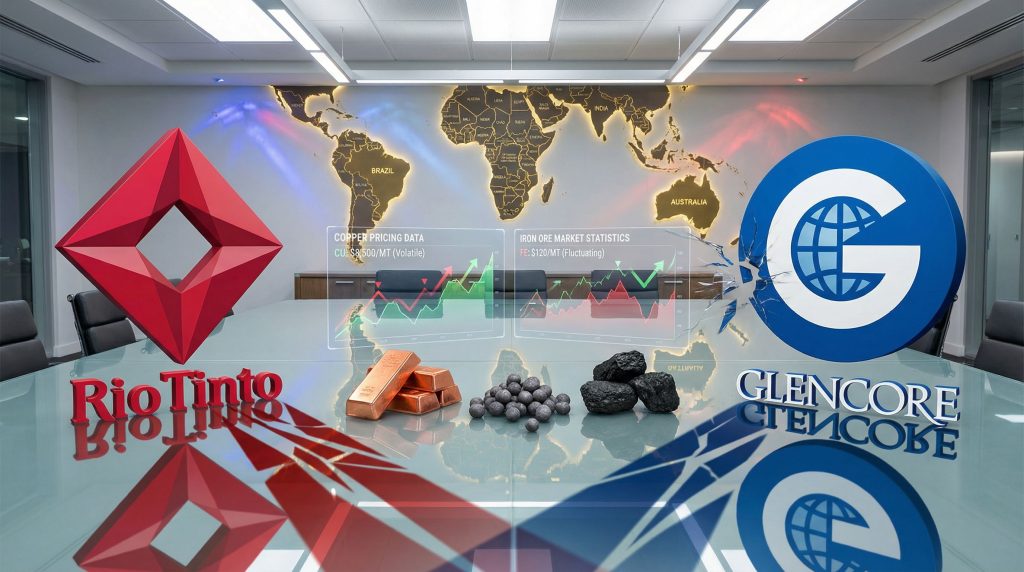
The global mining industry stands at a crossroads where traditional consolidation strategies increasingly collide with complex regulatory frameworks, cultural incompatibilities, and shifting geopolitical priorities. While mega-mergers historically drove industry evolution through economies of scale and operational synergies, today's mining landscape presents unprecedented challenges that extend far beyond conventional financial metrics and asset complementarity.
Understanding why the Rio Tinto and Glencore failed merger collapsed requires examining the fundamental tensions between industrial logic and institutional reality. This analysis reveals broader implications for mining industry consolidation, commodity market dynamics, and investor expectations in an era where strategic mineral security intersects with environmental transition priorities.
What Would a Rio Tinto-Glencore Combination Have Meant for Global Mining Markets?
Market Concentration in Critical Minerals Supply Chains
The proposed combination would have created unprecedented market concentration across multiple commodity segments, fundamentally altering global supply chain dynamics. According to the U.S. Geological Survey Mineral Commodity Summaries (2025), global copper mine production reached approximately 20.8 million metric tons in 2024, with the combined entity controlling an estimated 8-12% of global copper production capacity.
Rio Tinto's 2024 copper production of 623,000 tonnes combined with Glencore's 1,052,000 tonnes would have totaled approximately 1.675 million tonnes, representing roughly 8% of global copper supply. This concentration becomes more significant when considering regional market dynamics and the strategic importance of copper & uranium investment in electrification infrastructure.
Iron ore concentration presented different dynamics. Rio Tinto's Pilbara operations produced 317 million tonnes in 2024, representing approximately 14% of global iron ore supply. Glencore's minimal iron ore exposure meant the Rio Tinto and Glencore failed merger would not have materially altered iron ore market concentration, but would have created synergies through operational optimization and shared infrastructure.
The coal portfolio presented the most complex regulatory challenges. Glencore's coal assets represented approximately 126 million tonnes of annual production capacity across South Africa, Australia, and Colombia, making the combined entity one of the world's largest coal producers during a period of heightened environmental scrutiny.
Key Market Concentration Metrics:
- Copper Production: Combined 1.675 million tonnes (8% global market share)
- Iron Ore Production: 317 million tonnes (14% global market share, Rio-dominated)
- Coal Production: 126 million tonnes (significant global position)
- Geographic Exposure: Operations across 6 continents with varying regulatory frameworks
Strategic Portfolio Complementarity Analysis
Portfolio complementarity represented the core strategic rationale driving merger discussions. Rio Tinto's iron ore concentration, while generating substantial cash flows, created earnings vulnerability to single-commodity cycles. Furthermore, Glencore's diversified exposure across copper, zinc, nickel, cobalt, and coal segments offered natural hedging against commodity price volatility.
The strategic value extended beyond diversification to structural competitive advantages. Glencore's trading operations generate counter-cyclical cash flows that traditional mining operations lack, providing financial resilience during commodity downturns. This marketing capability, generating approximately USD 23.8 billion in revenues with USD 850-900 million EBITDA contribution annually, represented a unique competitive moat.
Copper scarcity dynamics added urgency to the strategic logic. Tier-one copper assets face increasingly complex permitting requirements and extended development timelines. However, the International Copper Study Group's 2024 Copper Market Report documented constrained refined copper production growth due to limited greenfield project development, making existing production assets increasingly valuable.
Portfolio Synergy Assessment:
- Revenue Diversification: Reduced dependence on iron ore price cycles
- Geographic Balance: Complementary asset locations reducing political risk
- Technology Integration: Shared mining technologies and operational expertise
- Marketing Capabilities: Enhanced commodity trading and price risk management
The combination would have created a mining entity with natural commodity cycle hedging, reducing earnings volatility compared to single-commodity focused competitors while maintaining exposure to critical transition minerals.
When big ASX news breaks, our subscribers know first
How Do Regulatory Frameworks Shape Mining Mega-Mergers?
Multi-Jurisdictional Approval Complexity
Mining mega-mergers face regulatory complexity that exceeds most other industries due to commodity market structure, national security considerations, and environmental policy intersection. The Rio Tinto and Glencore failed merger would have required approval from minimum four primary jurisdictions: Australia (ACCC), United Kingdom (CMA), European Union (EC), and various emerging market regulators.
Historical precedent suggests extended timeline complexity. The BHP-Billiton merger (2001) required approximately 14 months despite fewer jurisdictional complexities. For instance, the Glencore-Xstrata merger (2013) consumed approximately 10 months and required significant remedies across multiple jurisdictions, including coal asset divestments in Australia.
Regulatory Timeline Analysis:
| Jurisdiction | Review Period | Key Concerns | Likely Outcome |
|---|---|---|---|
| Australia (ACCC) | 6-9 months | Coal market concentration | Conditional approval |
| UK (CMA) | 4-6 months | Vertical integration concerns | Remedies required |
| EU (EC) | 8-12 months | Critical minerals security | Significant divestments |
| Emerging Markets | Variable | Resource sovereignty | Case-by-case assessment |
For the Rio-Glencore combination, estimated regulatory review timelines would have extended 18-24 months minimum, creating deal execution risk and market uncertainty that ultimately contributed to negotiation failure.
National security considerations have escalated significantly since 2022. The U.S. Department of Energy's Critical Materials Institute publications document heightened government scrutiny of consolidated foreign control over copper, nickel, and other strategic minerals. While neither company is U.S.-listed, the Committee on Foreign Investment in the United States (CFIUS) could theoretically review critical mineral supply implications affecting U.S. defense infrastructure.
Antitrust Implications in Commodity Markets
Commodity markets present unique antitrust challenges because competition analysis requires segmentation across geographic, product, and temporal dimensions. Unlike manufactured goods, commodity markets exhibit pronounced cyclical behavior where competitive dynamics shift based on supply-demand balances and marginal cost structures.
The proposed merger created specific concentration concerns across multiple commodity segments. Consequently, the copper market concentration would have positioned the combined entity as a top-5 global producer with ~1.675 million tonnes. Regional concentration concerns in southern African copper (Katanga operations) and London Metal Exchange pricing influence through approximately 8-12% of global flows raised additional regulatory flags.
Vertical Integration Analysis:
- Glencore's marketing business represents world's largest independent commodity trading operation
- Combined entity could theoretically restrict supply to competitors through preferential internal allocation
- Margin squeeze risks where integrated producers disadvantage non-integrated competitors
The Glencore-Xstrata precedent demonstrates specific remedies regulators impose for vertical integration concerns. The EU required divestment of Glencore's Peruvian Antamina copper stake (representing ~450,000 tonnes annual production) to address concerns that combined marketing and production capabilities could foreclose competitor access.
Competition Framework Considerations:
- Market Definition: Geographic submarkets due to transportation costs and regional customer bases
- Product Segmentation: Refined copper, concentrate, and cathode markets require separate analysis
- Temporal Dynamics: Regulatory assessment of competitive behavior during commodity downturns
What Corporate Governance Challenges Derailed the Negotiations?
Cultural Integration Barriers in Mining Operations
Corporate culture incompatibility represents a critical but often underestimated factor in mining mega-merger failures. Rio Tinto employs approximately 41,000 full-time employees with organizational structure reflecting centralized engineering discipline and hierarchical decision-making models.
In contrast, Glencore employs approximately 190,000 people globally with distributed organizational structure reflecting decentralized trading operations. The fundamental cultural tension centered on risk management philosophies.
Rio Tinto's culture has been shaped by safety incidents, public scrutiny, and shareholder pressure for predictable, disciplined operations. This engineering-led approach emphasizes systematic risk assessment, conservative capital allocation, and consensus-based decision making.
However, Glencore's culture emerged from trading floors and frontier jurisdictions where speed, optionality, and entrepreneurial accountability dominated organizational priorities. This trading-oriented culture tolerates higher leverage, pursues opportunistic transactions, and empowers decentralized decision making that would conflict with Rio Tinto's centralized governance structure.
Cultural Integration Challenges:
- Decision-Making Speed: Trading culture requires rapid response versus mining culture emphasizing deliberation
- Risk Tolerance: Entrepreneurial risk-taking versus conservative engineering discipline
- Capital Allocation: Opportunistic investment versus systematic project evaluation
- Organizational Structure: Decentralized autonomy versus centralized control systems
Historical precedent from other mining mergers illustrates cultural integration difficulties. For example, the Freeport-McMoRan acquisition of oil and gas assets (2013) created persistent integration challenges due to different commodity culture approaches, ultimately leading to asset divestments and strategic refocusing.
Shareholder Value Creation Disputes
Valuation methodology disagreements represented another fundamental obstacle to successful negotiation completion. Mining company valuations require complex assessment of commodity price impact assumptions, reserve life estimates, capital expenditure requirements, and regulatory risk factors across multiple jurisdictions.
Rio Tinto's valuation model emphasizes long-term iron ore cash generation from Pilbara assets with relatively predictable cost structures and established infrastructure. Furthermore, Glencore's valuation complexity includes commodity trading operations, coal asset transition value, and diversified geographical exposure requiring different analytical approaches.
Valuation Complexity Factors:
- Commodity Price Assumptions: Long-term copper, iron ore, and coal price forecasting disagreements
- Reserve Valuation: Different methodologies for reserve life and extraction cost estimates
- Trading Business Value: Difficulty quantifying Glencore's marketing operation value
- Environmental Liability: Uncertain costs associated with coal asset environmental obligations
Control premium expectations created additional negotiation tension. Rio Tinto shareholders would require substantial premiums to accept combination with more operationally complex and geographically diverse Glencore operations. Glencore shareholders would demand recognition of their trading business value that traditional mining valuation metrics underestimate.
Board composition and executive succession planning represented governance challenges that extended beyond financial considerations. Combining two organizations with fundamentally different leadership philosophies and operational approaches would require unprecedented integration planning that both companies ultimately determined infeasible.
How Will This Failed Merger Impact Future Mining Industry Consolidation?
Alternative Strategic Pathways for Both Companies
The failed merger redirects both companies toward alternative strategic pathways that may prove more achievable than mega-merger consolidation. Rio Tinto faces pressure to address iron ore concentration through copper acquisition strategy, likely pursuing joint ventures or mid-tier acquisitions rather than transformational combinations.
Rio Tinto's copper development pipeline includes Oyu Tolgoi expansion phases and potential participation in Peruvian or Chilean copper projects through partnership structures. This approach offers commodity diversification without regulatory complexity and cultural integration risks associated with corporate combinations.
Glencore maintains strategic optionality through portfolio optimization opportunities. Coal asset divestments or spin-offs could address ESG concerns while preserving trading business value and copper production capabilities. The company's marketing operations provide cash flow resilience enabling patient capital allocation during commodity cycles.
Strategic Alternative Assessment:
| Company | Near-term Strategy | Medium-term Options | Long-term Positioning |
|---|---|---|---|
| Rio Tinto | Copper JV development | Mid-tier acquisitions | Iron ore + copper focus |
| Glencore | Coal portfolio optimization | Asset-level partnerships | Trading + metals integration |
Industry-Wide Consolidation Trends and Implications
The failed mega-merger signals broader industry consolidation challenges that extend beyond company-specific factors. Mid-tier mining companies may experience increased acquisition interest as major miners pursue asset-level consolidation rather than corporate combinations.
Sovereign wealth fund involvement in strategic mineral assets has increased substantially since 2022. Countries prioritising critical mineral security may pursue direct investment or partnership arrangements with mining companies, creating alternative consolidation pathways outside traditional corporate merger structures.
Technology partnerships represent emerging alternatives to traditional M&A consolidation. Mining companies increasingly pursue joint technology development, shared infrastructure projects, and collaborative exploration arrangements that achieve operational synergies without regulatory complexity.
Consolidation Trend Analysis:
- Asset-Level Transactions: Increased focus on specific mine or project acquisitions
- Joint Venture Proliferation: Shared investment in high-capital development projects
- Government Partnership: Sovereign involvement in strategic mineral asset development
- Technology Collaboration: Shared innovation and operational efficiency initiatives
What Does This Mean for Commodity Market Dynamics?
Copper Supply Chain Resilience Analysis
The failed merger maintains existing copper supply chain structure, preserving competition but potentially delaying supply development needed for electrification infrastructure growth. Global copper demand projections suggest substantial supply deficits by 2030 without significant new production capacity additions.
Without mega-merger synergies, both companies must pursue independent copper development strategies that may prove less capital efficient than combined operations. This dynamic could exacerbate copper supply constraints during peak electrification demand periods, supporting higher long-term price expectations.
Alternative supply development requires extended timelines without consolidated development capabilities. Major copper projects typically require 8-12 years from discovery to production, suggesting any supply response to current market dynamics will emerge in the 2030s.
Copper Market Implications:
- Supply Development Delay: Independent development programs may prove less efficient
- Price Volatility: Maintained competition supports price discovery but increases volatility
- Investment Risk: Smaller-scale development projects face higher execution risk
- Geographic Concentration: Continued reliance on Chilean and Peruvian production
Iron Ore Market Structure Implications
Rio Tinto's continued Pilbara dominance maintains existing iron ore market structure where three major producers (Rio Tinto, BHP, Vale) control approximately 60% of seaborne iron ore trade. This concentration supports pricing power but also attracts regulatory scrutiny in steel-producing nations.
The failed merger preserves competitive dynamics between Rio Tinto and BHP in the Pilbara region, maintaining infrastructure competition and operational efficiency pressures that benefit steel industry customers through continued supply reliability. These dynamics directly influence iron ore demand insights and market forecasting.
Infrastructure investment requirements for market share defence remain substantial. Rio Tinto must continue autonomous hauling system deployment, rail capacity expansion, and port facility optimization to maintain competitive positioning against Brazilian and other suppliers.
Iron Ore Competitive Position:
- Market Share Stability: Rio Tinto maintains ~14% global market share
- Infrastructure Competition: Continued investment pressure from BHP competition
- Cost Leadership: Pilbara assets retain world-class cost position
- Customer Relationships: Maintained direct steel industry relationships
How Should Investors Evaluate Both Companies Post-Merger Failure?
Rio Tinto's Standalone Investment Thesis
Rio Tinto's investment thesis centres on iron ore cash generation sustainability combined with selective copper development opportunities. The Pilbara operations generate substantial free cash flow during infrastructure investment cycles, supporting dividend policy and capital return programs that attract income-focused investors.
Copper development pipeline execution represents the primary operational risk and opportunity. Oyu Tolgoi expansion phases require successful implementation of underground mining systems and continued positive relationships with Mongolian government authorities. Success would materially enhance copper exposure; delays or complications would maintain iron ore concentration.
ESG positioning and decarbonization strategy implementation provide competitive differentiation versus industry peers. Furthermore, Rio Tinto's renewable energy transition plans and carbon emission reduction commitments support premium valuation multiples among ESG-focused institutional investors.
Investment Thesis Components:
- Cash Flow Reliability: Pilbara operations provide predictable cash generation
- Copper Exposure Growth: Development pipeline offers commodity diversification
- ESG Leadership: Decarbonization strategy supports premium valuation
- Capital Discipline: Conservative capital allocation maintains investor confidence
Glencore's Independent Value Creation Strategy
Glencore's standalone strategy emphasises unique value creation through integrated trading and production operations that competitors cannot replicate. The marketing business provides cash flow stability during commodity volatility while production assets offer leverage to commodity price appreciation.
Coal asset management during energy transition represents both risk and opportunity. Disciplined coal portfolio optimization through selective divestments or joint ventures could address ESG concerns while maximising cash extraction from declining assets.
Debt management and capital return policies balance growth investment with shareholder returns. However, Glencore's higher leverage compared to pure mining companies requires careful cash flow management but also provides operational flexibility during commodity cycles.
Glencore Value Creation Framework:
- Trading Business Resilience: Marketing operations provide counter-cyclical cash flows
- Coal Transition Management: Optimised asset disposal maximises value extraction
- Copper Production Growth: Continued expansion in electrification metals
- Financial Flexibility: Leverage optimization supports strategic optionality
The next major ASX story will hit our subscribers first
What Lessons Does This Offer for Future Mining Mega-Deals?
Success Factors for Large-Scale Mining Consolidation
Future mining mega-mergers must address regulatory pre-clearance strategies through enhanced government relations and proactive competition authority engagement. Successful transactions require early regulatory consultation, remedy preparation, and timeline management that prevents deal fatigue and market uncertainty.
Cultural due diligence and investment strategy components assessment need fundamental enhancement beyond traditional financial and operational evaluation. Mining companies must develop systematic approaches to organisational compatibility assessment that prevent post-merger integration failures.
Shareholder communication and expectation management frameworks require sophisticated investor relation strategies that maintain market confidence during extended regulatory review periods. In addition, clear milestone communication and realistic timeline expectations prevent speculative volatility that undermines deal completion.
Critical Success Factors:
- Regulatory Strategy: Proactive competition authority engagement and remedy preparation
- Cultural Assessment: Systematic organisational compatibility evaluation methodologies
- Timeline Management: Realistic regulatory approval scheduling with contingency planning
- Stakeholder Communication: Enhanced investor relations during extended review processes
Alternative Transaction Structures in Mining
Joint venture models for specific commodity segments offer consolidation benefits without full corporate integration complexity. Shared development projects, infrastructure partnerships, and technology collaboration arrangements achieve operational synergies while preserving regulatory approval simplicity.
Asset-level acquisitions versus corporate combinations provide targeted exposure to desired commodities without unwanted portfolio elements. This approach enables strategic repositioning through selective transactions that avoid cultural integration and governance complexity.
Strategic partnerships with technology and infrastructure providers represent emerging consolidation alternatives. Consequently, mining companies increasingly pursue shared innovation platforms, collaborative exploration arrangements, and joint infrastructure development that achieve scale benefits without traditional merger structures.
Alternative Structure Assessment:
| Structure Type | Complexity Level | Regulatory Risk | Strategic Benefits |
|---|---|---|---|
| Joint Ventures | Medium | Low | Shared capital, preserved independence |
| Asset Acquisitions | Low | Low | Targeted exposure, operational integration |
| Technology Partnerships | Low | Minimal | Innovation sharing, cost reduction |
| Infrastructure Sharing | Medium | Low | Scale economics, risk distribution |
The Rio Tinto and Glencore failed merger ultimately demonstrates that mining industry consolidation requires evolution beyond traditional merger approaches. Future success depends on innovative transaction structures that achieve strategic objectives while navigating complex regulatory, cultural, and governance challenges that prevent mega-merger completion.
Both companies retain substantial strategic value and market position that enable independent value creation through alternative pathways. As noted by Reuters' merger analysis, investors should evaluate these opportunities within broader commodity market dynamics and electrification transition trends that continue supporting mining sector fundamentals despite consolidation complexity.
Furthermore, industry experts suggest this failure opens new opportunities for smaller-scale partnerships and strategic alliances that could deliver similar operational benefits without the regulatory and cultural integration risks.
Disclaimer: This analysis is for educational purposes only and does not constitute investment advice. Mining industry investments involve substantial risks including commodity price volatility, regulatory changes, and operational hazards. Readers should conduct independent research and consult qualified financial advisors before making investment decisions.
Ready to Capitalise on the Next Mining Mega-Merger Announcement?
Discovery Alert's proprietary Discovery IQ model delivers instant notifications when significant ASX mining announcements break, enabling investors to position themselves ahead of market movements driven by consolidation speculation, strategic partnerships, or major discoveries. Start your 14-day free trial today to gain the market-leading advantage that transforms complex mineral announcements into actionable trading opportunities.