August 9, 2026
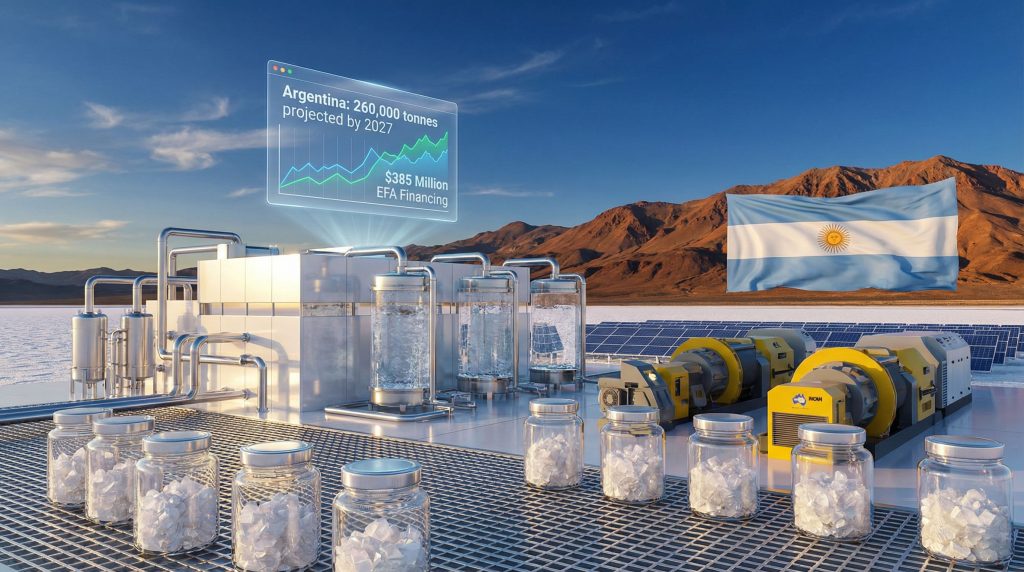
Rio Tinto's $2.5 billion USD investment in Argentina's lithium sector demonstrates how critical minerals strategy implementation creates opportunities for international collaboration. The project's comprehensive financing structure, including Export Finance Australia's $385 million AUD facility, illustrates sophisticated capital raising methods that enable multinational resource development. Furthermore, this initiative showcases how traditional extraction methods integrate with advanced processing technologies to enhance operational efficiency.
Understanding Export Credit Agency Mechanisms in Global Resource Development
Export credit agencies function as specialised government-backed institutions designed to facilitate international trade by reducing financial barriers for domestic suppliers. These organisations bridge the gap between commercial lending limitations and large-scale project requirements, enabling companies to participate in overseas developments that would otherwise exceed their financing capacity.
Export Finance Australia operates as the nation's official export credit agency, mandated to enhance Australian competitiveness in global markets. The organisation provides structured financing solutions that complement private sector investments, creating opportunities for domestic suppliers to engage with major international mining projects. This approach differs significantly from traditional commercial lending by incorporating risk-sharing mechanisms that account for political, currency, and project-specific uncertainties inherent in cross-border ventures.
The $385 million AUD financing facility supporting Australian suppliers in the Rio Tinto lithium project in Argentina demonstrates how export credit agencies coordinate with multinational investments. This financing arrangement operates alongside Rio Tinto's $2.5 billion USD primary project investment, illustrating the scale at which these mechanisms function. The structure enables qualified Australian suppliers to provide equipment, technology solutions, and specialised engineering services without requiring full project financing independently.
Risk-sharing frameworks form the foundation of export credit agency operations. Public sector financing reduces commercial lending exposure while private operators retain primary project execution responsibility. Disbursement typically follows milestone-based schedules aligned with construction phases, ensuring funds flow corresponds to actual project progression. Performance guarantees and quality standards create additional security layers protecting both financing providers and end users.
Comparative International Framework Analysis
Multiple export credit agencies participate in large mining developments, each bringing specific advantages and focus areas. The Japan Bank for International Cooperation emphasises technology transfer capabilities, particularly in advanced processing and automation systems. However, the International Finance Corporation, as a World Bank subsidiary, concentrates on infrastructure components and environmental compliance frameworks.
| Agency | Primary Focus | Typical Contribution Structure | Geographic Emphasis |
|---|---|---|---|
| Export Finance Australia | Equipment & Services | $200-500M USD facilities | Asia-Pacific, Americas |
| JBIC | Technology Transfer | Undisclosed bilateral arrangements | Global partnerships |
| IFC | Infrastructure Development | Multi-hundred million packages | Emerging markets |
| IDB Invest | Regional Development | Coordinated Latin American focus | Americas-specific |
These agencies often coordinate rather than compete, recognising that complex mining projects require diverse expertise and financing sources. Technology providers from one nation may integrate with equipment suppliers from another, creating multinational value chains supported by corresponding export credit mechanisms.
When big ASX news breaks, our subscribers know first
Strategic Geographic Positioning in South American Lithium Development
The Lithium Triangle spanning Argentina, Chile, and Bolivia contains approximately 60% of global lithium reserves, creating unique geological advantages for brine extraction operations. Salta Province in Argentina occupies a strategic position within this formation, offering high-grade lithium brine deposits combined with infrastructure accessibility superior to remote Chilean Atacama locations or politically complex Bolivian territories.
Argentina's regulatory environment provides additional competitive advantages through structured investment incentive programmes. Policy frameworks established in recent years offer long-term stability agreements extending up to 30 years, creating predictable operating conditions for major capital investments. Tax optimisation mechanisms reduce effective corporate rates for qualifying mining operations, enhancing project economics compared to alternative jurisdictions.
The Rio Tinto lithium project in Argentina targets approximately 60,000 tonnes of annual battery-grade lithium carbonate capacity over a 40-year operational timeline. This scale positions the development as a significant supply source within global lithium markets, particularly relevant as electric vehicle adoption accelerates demand growth. Production is scheduled to commence in 2028 following a three-year ramp-up to full capacity.
Regional infrastructure development supports the emergence of Salta as a lithium production hub. Transportation networks connecting mining sites to processing facilities and export terminals reduce logistical costs compared to more remote locations. Water management infrastructure becomes particularly critical in arid environments, where extraction processes must balance production requirements with environmental sustainability.
Geological and Technical Advantages
Lithium brine extraction benefits from specific geological conditions present in the Andean salt flat formations. High evaporation rates and low precipitation levels create concentrated lithium solutions, reducing processing requirements compared to hard rock extraction methods. Brine quality consistency enables standardised processing approaches, supporting economies of scale in production operations.
Rio Tinto's analysis identified ore reserves 60% higher than initially assumed at acquisition, demonstrating the potential for resource base expansion beyond original development plans.
Extraction efficiency metrics in Argentine salt flats typically achieve higher recovery rates than alternative global sources. Processing timelines benefit from climate conditions that accelerate natural evaporation cycles, though direct lithium extraction technologies may further optimise these advantages through controlled processing environments.
Australian Supplier Integration and Market Opportunities
Australian mining services and equipment suppliers possess specialised capabilities developed through decades of domestic resource sector experience. These competencies include advanced water management systems, automated processing equipment, and specialised engineering services adapted to harsh operating environments. Consequently, the $385 million financing facility creates structured pathways for these suppliers to compete in international markets.
Equipment categories likely to benefit from export financing include water treatment systems, automated handling equipment, analytical instrumentation, and specialised maintenance services. Australian engineering firms bring expertise in project design, commissioning protocols, and operational optimisation developed through extensive domestic mining experience. In addition, mining technology innovations may encompass software licensing, process optimisation methodologies, and training programmes.
Revenue Projections and Market Share Analysis
Conservative projections suggest Australian suppliers could capture 15-20% market share in equipment and services for Argentina's expanding lithium sector. If Argentina achieves projected 260,000-tonne annual capacity by 2027, this could generate $500-750 million in annual export revenue for Australian companies. However, these estimates require validation against actual procurement patterns and competitive positioning relative to Chinese, German, and North American alternatives.
Long-term contract structures typical in mining operations create sustained revenue streams extending beyond initial equipment supply. 40-year mine life developments generate ongoing opportunities in:
- Replacement equipment and component supply
- Maintenance and technical support services
- Process optimisation and efficiency upgrades
- Technology integration and modernisation programmes
- Training and knowledge transfer services
Supplier qualification requirements typically emphasise demonstrated technical capability, quality certifications, and financial stability. Australian content thresholds may apply to export financing, requiring specific minimum levels of domestic manufacturing or engineering contribution. Performance incentives and warranty arrangements create additional value opportunities for suppliers meeting or exceeding operational targets.
Direct Lithium Extraction Technology and Commercial Viability
Direct lithium extraction represents a technological advancement addressing traditional evaporation pond limitations. Conventional methods require 12-18 months for natural evaporation cycles, consuming substantial water resources while achieving 30-50% recovery rates. DLE technologies promise 2-4 week processing timelines with 70-90% recovery efficiency, though these metrics require verification through commercial-scale operations.
Water conservation benefits become particularly significant in arid regions where traditional extraction competes with agricultural and municipal uses. DLE systems operate through closed-loop processes, theoretically reducing water consumption by 85-90% compared to evaporation pond methods. This advantage addresses environmental concerns while potentially reducing operating costs in water-stressed regions.
Technology Implementation and Cost Analysis
Capital expenditure requirements for DLE systems typically range $500-1,000 USD per tonne of annual capacity, though specific costs vary significantly by technology provider and site conditions. Multiple DLE approaches exist, including solvent-based extraction, ion-exchange systems, and selective absorption methods. Each technology presents different operational characteristics, reagent requirements, and maintenance considerations.
| Extraction Method | Processing Time | Recovery Rate | Water Usage | Capital Intensity |
|---|---|---|---|---|
| Evaporation Ponds | 12-18 months | 30-50% | High | Low |
| Direct Extraction | 2-4 weeks | 70-90% | Minimal | Medium-High |
| Hybrid Systems | 6-9 months | 60-80% | Moderate | Medium |
Commercial viability depends on lithium carbonate pricing, operating cost structures, and production scale economics. DLE technology may command premium pricing through higher purity levels and consistent quality specifications required by battery manufacturers. However, reagent costs, energy consumption, and equipment maintenance must be evaluated against traditional method alternatives.
Quality consistency represents a significant advantage for battery-grade lithium production. DLE systems can achieve controlled impurity levels meeting strict battery manufacturer specifications, potentially commanding higher market prices compared to variable-quality evaporation pond output. This quality premium may offset higher capital and operating costs in favourable market conditions.
Regional Economic Development and Supply Chain Integration
Large-scale mining developments create cascading economic effects extending beyond direct project employment. The Rio Tinto lithium project in Argentina requires diverse support services including logistics, accommodation, maintenance, and technical services. Regional suppliers may capture portions of this demand, creating local economic multiplier effects.
Employment generation occurs across multiple phases, from initial construction through long-term operations. Specialised technical positions often require international recruitment or extensive training programmes, creating knowledge transfer opportunities for local workforce development. Construction phases typically employ 2,000-4,000 personnel, while operational phases maintain 400-800 permanent positions.
Skills development programmes become essential for sustainable operations in regions with limited mining industry presence. Training initiatives may encompass:
- Technical equipment operation and maintenance
- Safety protocols and emergency response procedures
- Quality control and analytical testing methods
- Environmental monitoring and compliance systems
- Leadership and supervision development programmes
Infrastructure improvements supporting mining operations often benefit broader regional development. Road upgrades, power system enhancements, and communications infrastructure create lasting advantages for other economic activities. Water management infrastructure may support agricultural development in areas where mining operations improve resource availability through advanced extraction and recycling technologies.
Community Integration and Social Impact Management
Mining operations in developing regions require careful community engagement to ensure sustainable long-term operations. Social investment programmes typically include education facility development, healthcare system improvements, and local business development support. These initiatives create positive community relationships while addressing potential social disruption concerns.
Environmental management becomes particularly important in water-stressed regions where mining operations must demonstrate responsible resource use. Advanced water recycling systems, dust control measures, and habitat restoration programmes address community concerns while meeting regulatory requirements. Independent monitoring systems provide transparency regarding environmental compliance and community impact metrics.
Australian Critical Minerals Strategy and International Partnerships
Australia's critical minerals policy emphasises supply chain diversification and strategic partnership development with allied nations. The Argentina lithium project represents implementation of this strategy through practical commercial relationships that reduce dependence on single-source supply arrangements. Furthermore, export credit agency support demonstrates government commitment to facilitating these strategic relationships through international mining partnerships.
Bilateral trade agreement leverage creates competitive advantages for Australian suppliers in qualifying jurisdictions. Preferential procurement policies, reduced tariff arrangements, and streamlined regulatory processes enhance Australian competitiveness compared to suppliers from non-partner nations. These advantages become particularly valuable in large-scale, long-term projects where relationship stability matters significantly.
Future project pipeline identification focuses on emerging critical minerals beyond lithium, including rare earth elements, cobalt, and specialised technology metals. Government support mechanisms continue evolving to address changing market dynamics and competitive pressures from other nation's export promotion programmes.
Integration with Domestic Processing Capabilities
Raw materials export represents only the initial phase of value chain development. Australian critical minerals strategy emphasises downstream processing capability development, creating higher value-added export opportunities. Lithium hydroxide production, battery component manufacturing, and recycling system development represent potential expansion areas building on raw materials supply relationships.
Technology development partnerships with international mining operations create intellectual property opportunities extending beyond equipment supply. Australian research institutions and technology companies may develop proprietary processes, analytical methods, or optimisation systems applicable across multiple projects globally.
The next major ASX story will hit our subscribers first
Global Lithium Market Dynamics and Supply Security
Argentina's projected lithium production expansion to 260,000 tonnes annually by 2027 could significantly alter global supply dynamics. Current market concentration in Australia, Chile, and China creates supply security concerns for battery manufacturing nations seeking diversified sourcing arrangements. Argentine production growth provides alternative supply sources reducing strategic vulnerability.
Production capacity expansion timelines must align with electric vehicle adoption curves and battery manufacturing capacity growth. Lithium carbonate pricing volatility reflects market imbalances between supply availability and demand growth, creating both opportunities and risks for new production developments. Long-term supply agreements with battery manufacturers provide revenue security while potentially limiting upside price participation.
Price stability considerations become increasingly important as lithium transitions from specialty chemical to industrial commodity status. Large-scale production developments like the Rio Tinto lithium project in Argentina contribute to market stabilisation by increasing supply diversity and reducing concentration risks. However, demand growth rates may continue exceeding supply additions in near-term periods.
Strategic reserve implications affect national energy security policies, particularly for nations pursuing aggressive electric vehicle adoption targets. Lithium supply security becomes analogous to oil supply security in previous decades, requiring diversified sourcing arrangements and strategic stockpile considerations.
Market Integration and Competitive Positioning
Rincón project positioning as a low-cost producer enhances competitive sustainability through commodity price cycle variations. 40-year operational timeline enables recovery from short-term market disruptions while maintaining long-term strategic value. Integration with Rio Tinto's global operations provides marketing advantages and operational synergies.
Technology advancement continues influencing competitive positioning as direct lithium extraction and other innovative methods may alter cost structures industry-wide. Early adoption advantages may create sustainable competitive positioning, while delayed implementation risks obsolescence compared to more efficient operations.
Replicable Framework Elements for Future Mining Developments
The Rio Tinto lithium project in Argentina financing structure demonstrates several elements applicable to other critical minerals developments. Multi-agency risk sharing distributes project exposure while leveraging complementary capabilities from different financing sources. Export credit agency coordination prevents redundant coverage while ensuring comprehensive support for qualifying suppliers.
Supplier financing integration with project development creates aligned incentives for timely completion and operational success. Rather than separate financing arrangements, integrated approaches reduce complexity while improving coordination between project execution and equipment supply timelines.
Success factors identified through this financing model include:
- Clear supplier qualification criteria and performance standards
- Milestone-based disbursement aligned with project progression
- Risk-sharing mechanisms appropriate to each participant's capabilities
- Long-term contract structures supporting sustained relationships
- Technology transfer provisions enhancing local capability development
Application to Emerging Critical Minerals Projects
Rare earth element extraction projects present similar characteristics suitable for export credit agency financing. Complex processing requirements, specialised equipment needs, and long-term supply relationships create opportunities for structured financing approaches. Copper and nickel developments may benefit from similar frameworks, particularly in jurisdictions where strategic partnership considerations influence procurement decisions.
Technology transfer models become increasingly important as critical minerals extraction evolves toward more sophisticated processing methods. Direct extraction technologies, automated processing systems, and environmental management innovations represent areas where developed nation suppliers maintain competitive advantages suitable for export credit agency support.
Monitoring mechanisms and performance measurement systems enable continuous improvement in export credit agency programme effectiveness. Project success metrics, supplier performance evaluation, and market impact assessment provide data supporting programme refinement and expansion to additional critical minerals sectors.
Building Sustainable International Mining Partnerships
Long-term strategic benefits from international mining partnerships extend beyond immediate commercial returns. Australian expertise development in complex project financing creates templates applicable to future bilateral cooperation initiatives. Relationship establishment with Argentine government and private sector entities provides foundations for additional critical minerals developments.
Export credit agency coordination mechanisms demonstrated through this project may influence similar arrangements with other allied nations pursuing critical minerals supply diversification. Standardised approaches to risk assessment, supplier qualification, and performance monitoring could streamline future international partnership development.
Risk management strategies must account for changing political, economic, and market conditions over extended project timelines. Adaptation mechanisms enabling contract modification, technology upgrades, and market response capability ensure partnership sustainability through inevitable change cycles. For instance, joint venture consolidation trends may influence future collaboration structures.
Success measurement requires balanced consideration of commercial returns, strategic objectives, and relationship development outcomes. Financial performance alone may not capture full partnership value, particularly where strategic supply security and technology development benefits accrue over extended periods.
This financing model demonstrates practical implementation of critical minerals strategy through commercial partnerships that advance multiple national interests simultaneously. Australian suppliers gain international market access, Argentina receives advanced technology and expertise, and global lithium supply chains become more diverse and resilient. These outcomes illustrate how well-structured export credit arrangements can create sustainable value for all participants while supporting broader strategic objectives in critical minerals development.
Want to Spot the Next Major Mining Discovery?
Discovery Alert's proprietary Discovery IQ model delivers real-time alerts on significant ASX mineral discoveries, instantly empowering subscribers to identify actionable opportunities ahead of the broader market. Understand why historic discoveries can generate substantial returns by exploring major breakthrough finds, then begin your 14-day free trial today to position yourself ahead of the market.