May 21, 2026
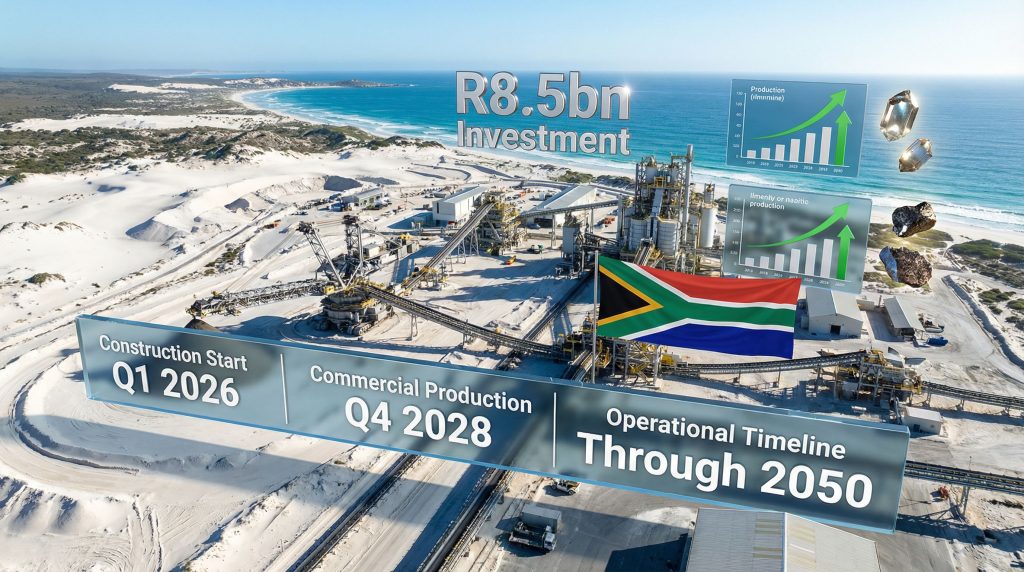
The Rio Tinto Zulti South project investment represents a pivotal moment for South Africa's mineral sands sector, demonstrating how strategic capital allocation can address resource depletion challenges whilst maintaining operational continuity. This R8.5 billion commitment reflects the mining industry's evolution towards industry evolution trends that prioritise infrastructure optimisation and stakeholder engagement. Furthermore, the project exemplifies how integrated operations can leverage existing processing capabilities to minimise total investment requirements compared to greenfield development scenarios.
Understanding the Strategic Context Behind RBM's Project Approval
Richards Bay Minerals operates as South Africa's sole integrated mineral sands mining, processing, and smelting operation, positioning it as a cornerstone asset within Rio Tinto's global titanium portfolio. The facility's strategic importance extends beyond its production capacity, serving as Rio Tinto's largest titanium dioxide feedstock operation outside Australia.
With Rio Tinto holding a 74% ownership stake in RBM, the mining giant bears primary responsibility for capital allocation decisions and operational funding requirements. This ownership structure establishes clear accountability for long-term strategic planning and investment commitments necessary for sustaining production through resource transitions.
The mineral sands sector in South Africa operates within a competitive landscape where integrated operations provide significant advantages over standalone mining ventures. RBM's combination of coastal mining capabilities, mineral separation plant infrastructure, and smelting facilities creates operational synergies that reduce per-tonne production costs compared to operations requiring external processing partnerships.
Market Dynamics Driving Investment Decisions
Global mineral sands markets have experienced constrained new project development in recent years, with most operators focusing on operational optimisation and life extension projects rather than greenfield development. This market environment creates opportunities for established operations to maintain competitive positioning through strategic reinvestment in resource continuity.
Zircon applications span refractory, ceramic, and foundry industries, with specialised uses in aerospace and advanced ceramics driving premium pricing for high-quality material. The U.S. Geological Survey identifies zircon as critical for foundry sand applications and ceramic manufacturing, supporting sustained demand growth projections.
Ilmenite serves as the primary feedstock for titanium dioxide pigment production, supporting paint, coatings, plastics, and paper industries globally. Rutile provides higher-grade titanium content for specialty applications requiring superior pigment quality and performance characteristics.
When big ASX news breaks, our subscribers know first
Addressing Operational Continuity Through Strategic Resource Transition
The Zulti South project addresses fundamental resource depletion challenges facing RBM's current Zulti North operations. As mature mining areas approach economic exhaustion, maintaining production requires systematic transition to adjacent undeveloped resources within the coastal dune system.
RBM's approach leverages existing mineral separation plant and smelting infrastructure to minimise capital requirements compared to greenfield development scenarios. This infrastructure utilisation strategy reduces the total investment required whilst maintaining operational continuity during the transition period.
The R8.5 billion investment supports extending RBM's operational horizon to 2050, representing a 24-year production timeline from the anticipated 2026 commissioning date. This extended mine life provides stakeholders with long-term revenue visibility and operational stability necessary for supporting local employment and community development programmes.
Production Integration Methodology
The operational transition strategy involves systematic migration of mining activities from depleted Zulti North areas to undeveloped Zulti South reserves whilst maintaining consistent throughput to existing processing facilities. This approach minimises production disruption risks during the transition period.
Moreover, the project demonstrates how sustainability transformation initiatives can be integrated into major capital investments. Additionally, effective waste management solutions will be crucial for the coastal dune rehabilitation process.
Key integration parameters include:
• Coordinated mine planning to ensure continuous ore supply to mineral separation facilities
• Equipment relocation and optimisation for new mining areas
• Workforce transition management for 5,000+ employees across RBM operations
• Supply chain continuity planning for zircon, rutile, and ilmenite customers
Technical Engineering and Construction Framework
China Harbour Engineering Company's appointment as engineering, procurement, and construction contractor reflects Rio Tinto's strategic focus on proven execution capability for complex coastal mining projects. CHEC's track record includes successful delivery of the Simandou iron-ore mine in Guinea, demonstrating competency in challenging African operational environments.
The 30-month construction timeline represents an aggressive execution schedule requiring sophisticated project management and coordination across multiple engineering disciplines. Construction phases include site preparation, infrastructure development, equipment installation, and commissioning activities.
| Construction Phase | Timeline | Key Activities |
|---|---|---|
| Site Preparation | Q1-Q2 2026 | Access roads, utilities, site clearing |
| Infrastructure Development | Q2-Q4 2026 | Processing plant modifications, power systems |
| Equipment Installation | Q1-Q3 2027 | Mining equipment, separation systems |
| Commissioning and Testing | Q1-Q3 2028 | System integration, performance validation |
| Commercial Production | Q4 2028 | Full operational capacity achievement |
Heavy Mineral Extraction Methodology
Coastal dune mining requires specialised equipment designed for high-volume sand processing and heavy mineral concentration. The extraction process involves systematic removal of overburden material followed by heavy mineral-bearing sand recovery using hydraulic dredging systems.
Mineral separation plant integration enables direct processing of extracted material through gravity separation, magnetic separation, and electrostatic separation technologies. These processes concentrate zircon, rutile, and ilmenite whilst removing silica and other gangue minerals.
Smelting facility optimisation supports increased throughput capacity for titanium dioxide slag and pig iron production. The integrated smelting operation converts ilmenite feedstock into higher-value titanium dioxide slag suitable for pigment manufacturing applications.
Investment Analysis and Financial Framework
The R8.5 billion investment represents a substantial capital commitment reflecting Rio Tinto's confidence in long-term mineral sands market fundamentals and RBM's operational capabilities. This Rio Tinto investment decision positions the project among the largest mineral sands developments globally in recent years.
Capital allocation priorities focus on mining equipment, processing plant modifications, and infrastructure development necessary for accessing Zulti South reserves. The investment structure emphasises capital efficiency through maximum utilisation of existing processing and smelting infrastructure.
Rio Tinto's 74% ownership stake establishes the company's primary funding responsibility whilst providing proportional control over strategic decision-making and operational management. This ownership structure enables Rio Tinto to optimise the project's integration with broader portfolio objectives and investment strategy components.
Return on Investment Projections
The 24-year operational horizon through 2050 provides substantial cash flow generation potential based on sustained mineral sands demand growth projections. Titanium dioxide market fundamentals support long-term pricing stability driven by construction, automotive, and aerospace industry growth.
Key financial metrics include:
• Extended mine life supporting long-term cash flow visibility
• Reduced unit costs through infrastructure amortisation over extended operational period
• Market positioning advantages in constrained supply environment
• Operational leverage benefits from integrated processing and smelting capabilities
Operational Risk Assessment and Project Restart Factors
The project's January 2020 suspension reflects the complex security and stakeholder challenges inherent in South African mining operations. The six-year suspension period enabled comprehensive risk assessment and mitigation strategy development addressing community relations, security protocols, and operational stability factors.
Project restart reflects improved security conditions and strengthened community partnerships developed through sustained stakeholder engagement efforts. Government support, traditional leadership coordination, and host community collaboration were identified as critical success factors enabling project advancement.
Risk mitigation strategies encompass enhanced security protocols, formalised community partnership agreements, and traditional leadership engagement frameworks designed to maintain operational stability throughout the construction and production phases.
Stakeholder Engagement Framework
Community partnership development emphasises local content commitments, employment creation, and community benefit programmes aligned with South African mining charter requirements. These programmes support local economic development whilst maintaining social licence to operate.
Key stakeholder engagement elements include:
• Traditional leadership (Amakhosi) consultation and coordination protocols
• Host community benefit sharing agreements
• Local content procurement and supplier development programmes
• Employment and skills development initiatives for local communities
Global Market Impact and Supply Chain Implications
RBM's position as Rio Tinto's largest titanium operation outside Australia establishes the facility's strategic importance for global titanium dioxide supply chain stability. The project's extension to 2050 supports long-term supply security for international pigment manufacturers and end-use industries.
Mineral sands supply chains face increasing geographic concentration risks as mature deposits approach depletion in established producing regions. RBM's continued operation provides geographic diversification benefits for global supply security.
The integrated operation's ability to produce multiple products from single ore sources creates operational efficiency advantages compared to single-product operations requiring dedicated processing infrastructure for each commodity.
Critical Minerals Supply Chain Positioning
Zircon's applications in refractory and ceramic manufacturing support essential industrial processes across multiple sectors. High-purity zircon grades command premium pricing for specialty applications including advanced ceramics and aerospace components.
Ilmenite's role as primary titanium dioxide feedstock positions the commodity as critical for paint, coatings, and plastics manufacturing. Growing automotive and construction sector demand supports sustained consumption growth projections.
Supply chain security considerations emphasise the importance of maintaining diverse geographic production sources to mitigate geopolitical risks and operational disruptions affecting global titanium dioxide availability.
The next major ASX story will hit our subscribers first
Future Development Strategy and Expansion Potential
The Zulti South project represents the initial phase of RBM's long-term development strategy, with additional phases planned as part of systematic resource development. Phase two development will follow based on market conditions and resource optimisation priorities.
Long-term resource development opportunities include potential expansion of mineral recovery capabilities and processing optimisation to maximise value extraction from available ore reserves. These development options provide operational flexibility for responding to market dynamics and technological advancement opportunities.
Integration opportunities with broader Rio Tinto operations may include technology transfer, operational best practices sharing, and supply chain optimisation across the company's global mineral sands portfolio.
Strategic Asset Portfolio Considerations
RBM's strategic value within Rio Tinto's portfolio reflects the operation's integrated capabilities, market positioning, and long-term cash flow generation potential. The investment demonstrates Rio Tinto's commitment to maintaining competitive positioning in critical minerals markets.
Portfolio optimisation strategies may consider RBM's alignment with Rio Tinto's decarbonisation objectives and critical minerals focus. Titanium dioxide's role in sustainable technologies including solar panels and energy-efficient coatings supports the operation's strategic relevance.
Environmental Compliance and Regulatory Framework
Coastal mining operations require specialised environmental management protocols addressing marine ecosystems, groundwater protection, and habitat rehabilitation. South African mining regulations establish comprehensive requirements for environmental impact assessment and ongoing compliance monitoring.
Heavy mineral sands extraction involves systematic rehabilitation of mined areas following ore recovery completion. Consequently, mine reclamation innovation plays a crucial role in the project's environmental stewardship approach. Rehabilitation protocols include topsoil replacement, vegetation establishment, and ecosystem restoration to pre-mining conditions.
Water management systems address both operational requirements and environmental protection objectives. Coastal mining operations require careful management of groundwater interactions and surface water quality protection measures.
ESG Investment Criteria Alignment
Environmental, social, and governance considerations influence project development priorities and operational management approaches. Community benefit programmes and environmental protection measures support sustainable development objectives.
Key ESG framework elements include:
• Environmental impact mitigation for coastal ecosystem protection
• Community development programmes and local content commitments
• Governance structures ensuring stakeholder engagement and transparency
• Biodiversity protection and habitat restoration protocols
Strategic Positioning for Long-Term Value Creation
The Rio Tinto Zulti South project investment demonstrates how established mining operations can navigate complex stakeholder environments whilst maintaining competitive positioning in essential commodity markets. The R8.5 billion investment reflects strategic commitment to sustaining critical mineral production through systematic resource development and stakeholder collaboration.
Rio Tinto's approach leverages existing infrastructure, strategic partnerships, and improved community relationships to extend asset life cycles whilst optimising capital efficiency. This methodology provides a framework for similar operations facing resource transition challenges in complex operational environments.
The project's success will influence broader industry approaches to operational continuity planning, stakeholder engagement, and sustainable development in mineral sands operations globally. Long-term value creation depends on maintaining operational excellence whilst addressing environmental and social responsibility requirements.
Investment in mining operations involves substantial risks including commodity price volatility, operational challenges, regulatory changes, and environmental factors. This analysis is for informational purposes only and should not be considered investment advice. Readers should conduct independent research and consult qualified financial advisors before making investment decisions.
Ready to Capitalise on Mineral Sands Discoveries Before They Hit Mainstream Markets?
Discovery Alert's proprietary Discovery IQ model delivers real-time alerts on significant ASX mineral discoveries, instantly empowering subscribers to identify actionable opportunities ahead of the broader market. Understand why major mineral discoveries can lead to substantial market returns by exploring Discovery Alert's dedicated discoveries page, showcasing historic examples of exceptional outcomes, and begin your 14-day free trial today to position yourself ahead of the market.