May 9, 2026
Understanding the Rio and WA Government Water Deal Revolution
Australia's critical minerals sector increasingly relies on innovative water management solutions to maintain operational sustainability in arid regions. The Rio and WA Government water deal represents a transformative approach to addressing escalating pressure on precious aquifer systems. Desert mining operations face unprecedented challenges securing reliable water supplies while minimizing environmental impacts, catalyzing groundbreaking collaboration between resource companies and state governments that fundamentally reshapes infrastructure investment models across the continent.
When big ASX news breaks, our subscribers know first
Strategic Partnership Framework: Redefining Water Infrastructure Investment
Public-private partnerships in water infrastructure represent a strategic evolution in resource sector sustainability planning. The collaborative approach between major mining corporations and state governments reflects recognition that traditional groundwater extraction methods face mounting environmental and regulatory constraints.
Mining operations in water-scarce regions require substantial volumes for dust suppression, mineral processing, and workforce accommodation. However, climate variability has intensified pressure on existing aquifer systems, necessitating alternative supply sources that can operate independently of rainfall patterns and groundwater recharge cycles.
Joint Venture Models: Risk Distribution Through Shared Ownership
The 50:50 ownership structure emerging in major water infrastructure projects demonstrates sophisticated risk allocation between private sector efficiency and public sector oversight. These joint venture models enable resource companies to secure operational water supply while governments maintain strategic control over regional water security assets.
Key advantages of balanced joint venture arrangements include:
- Shared capital burden reducing individual exposure to construction cost overruns
- Combined technical expertise from mining engineering and public utility management
- Long-term operational sustainability through diversified stakeholder commitment
- Regulatory compliance benefits from government co-ownership
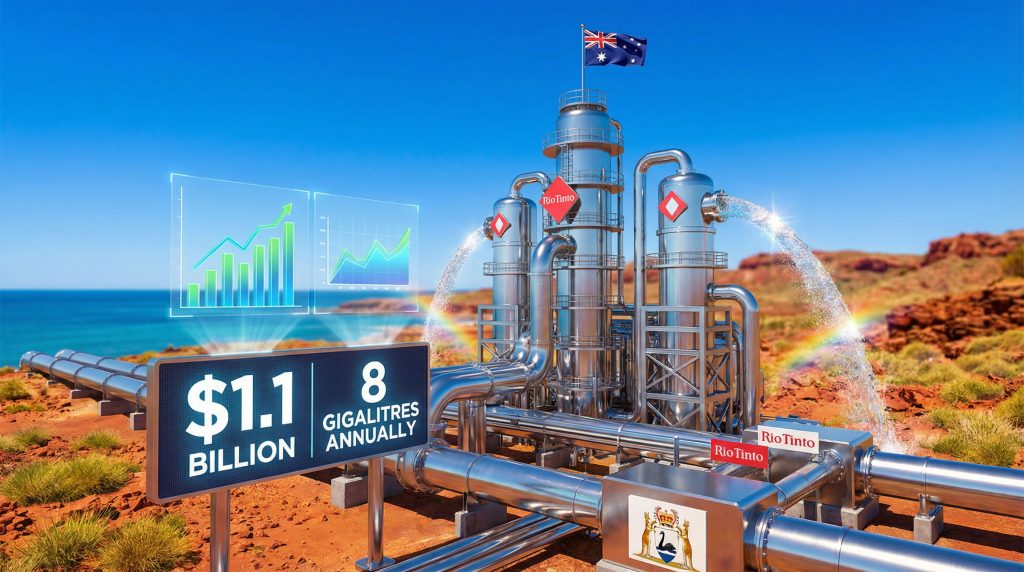
The $1.1 billion investment commitment split equally between partners represents one of Australia's largest water infrastructure collaborations, establishing a template for future resource sector partnerships across drought-prone regions.
Regulatory Frameworks Supporting Large-Scale Water Innovation
Western Australia's water licensing regime has evolved to accommodate complex industrial-municipal supply arrangements while maintaining environmental protection standards. The regulatory framework now explicitly recognises seawater desalination as a preferred alternative to groundwater extraction in environmentally sensitive areas.
Environmental approval processes for major desalination facilities integrate Indigenous consultation requirements, aquifer protection protocols, and marine ecosystem impact assessments. These comprehensive frameworks ensure that technological solutions align with broader sustainability objectives while respecting traditional land management practices.
Furthermore, modern water infrastructure projects must demonstrate compliance with climate adaptation strategies, incorporating projected rainfall reductions and temperature increases into long-term operational planning. This regulatory evolution reflects government recognition that water security underpins economic diversification in resource-dependent regions.
Aquifer Conservation and Indigenous Rights Integration
Traditional groundwater extraction practices face increasing scrutiny as mining operations expand in regions with culturally significant aquifer systems. The shift toward alternative water sources reflects both environmental necessity and recognition of Indigenous peoples' connection to groundwater resources.
Cultural Water Rights and Corporate Responsibility
Mining companies increasingly acknowledge that aquifer protection extends beyond environmental compliance to encompass cultural preservation responsibilities. The Bungaroo aquifer system serves as a prime example where corporate water strategy must balance operational requirements with Indigenous cultural values.
Resource sector water planning now incorporates formal consultation mechanisms with traditional owners, recognising that sustainable operations depend on community acceptance and cultural respect. These frameworks establish ongoing dialogue rather than one-time approval processes, creating accountability structures that extend throughout project lifecycles.
The Millstream aquifer collaboration with Yindjibarndi Aboriginal Corporation demonstrates emerging co-management models where Indigenous expertise informs technical decision-making. This approach leverages traditional ecological knowledge alongside scientific monitoring to optimise aquifer sustainability outcomes.
Environmental Impact Assessment Evolution
Contemporary environmental assessment processes for water infrastructure incorporate sophisticated modelling of ecosystem impacts, marine environment effects, and cumulative regional water balance considerations. These assessments extend beyond immediate project boundaries to evaluate broader watershed implications.
Desalination facility approvals now require comprehensive analysis of:
- Seawater intake impacts on marine biodiversity
- Brine discharge effects on coastal ecosystems
- Energy consumption and carbon footprint implications
- Noise and visual impact mitigation for surrounding communities
Environmental monitoring regimes establish baseline conditions and ongoing compliance verification through independent oversight mechanisms. In addition, these protocols ensure that technological solutions deliver promised environmental benefits while identifying potential unintended consequences early in operational phases.
Economic Policy Analysis: Billion-Dollar Infrastructure Investment
The scale of contemporary water infrastructure investment reflects fundamental shifts in resource sector capital allocation priorities. Companies increasingly view water security as essential infrastructure rather than operational overhead, justifying substantial capital commitments for long-term strategic positioning.
| Investment Component | Value (AUD Million) | Timeline | Output Capacity |
|---|---|---|---|
| Stage 1 Construction | 550 | 2026 delivery | 4 gigalitres annually |
| Stage 2 Expansion | 550 | 2027 completion | 4 gigalitres annually |
| Combined Annual Output | 1,100 total investment | Operational 2026-2027 | 8 gigalitres total |
| Joint Venture Structure | 50:50 risk sharing | Long-term partnership | Regional supply security |
Government Co-Investment Strategy Rationale
State government participation in major water infrastructure reflects recognition that resource sector sustainability directly supports broader regional economic impact objectives. The $550 million public investment represents strategic positioning for long-term industrial growth rather than short-term budget allocation.
Public co-investment enables governments to maintain oversight of critical infrastructure while leveraging private sector technical expertise and operational efficiency. This model reduces public sector capital requirements compared to full government ownership while ensuring community access to infrastructure benefits.
Regional economic development outcomes from major water infrastructure include enhanced industrial capacity, improved residential services, and increased investment attractiveness for complementary industries. Consequently, these multiplier effects justify substantial public investment through diversified economic benefits extending beyond immediate water provision.
Cost-Benefit Analysis Framework
Water infrastructure investment evaluation incorporates complex cost-benefit calculations extending decades into operational lifecycles. Key variables include energy price volatility, maintenance cost escalation, and demand growth projections across industrial and municipal sectors.
Desalination costs per kilolitre vary significantly based on:
- Energy source reliability and pricing structures
- Membrane replacement and maintenance schedules
- Facility capacity utilisation rates
- Brine disposal and environmental compliance costs
Alternative water supply options such as groundwater extraction, recycled water systems, or inter-basin transfers require comprehensive comparison including environmental externality costs and regulatory compliance expenses. These analyses inform long-term strategic decisions about optimal water portfolio composition.
Comparative Analysis: Australian Water Infrastructure Partnerships
Australia's mining regions have increasingly adopted collaborative water infrastructure models as traditional supply sources face sustainability constraints. However, comprehensive comparative analysis reveals significant variation in partnership structures, risk allocation mechanisms, and regulatory frameworks across different states and projects.
Precedent Analysis Across Mining Regions
Queensland's coal mining regions have historically relied on different water management approaches compared to Western Australia's iron ore sector. Queensland operations often utilise coal seam gas water, recycled water systems, or smaller-scale desalination facilities rather than large-scale seawater treatment plants.
South Australian mining operations, particularly in copper and uranium sectors, have developed unique partnerships incorporating federal government climate adaptation funding and state-based regional development initiatives. These models demonstrate how water infrastructure investment can integrate multiple policy objectives.
Northern Territory mining developments increasingly incorporate water infrastructure planning from project inception, reflecting lessons learned from water security challenges in established mining regions. This proactive approach contrasts with reactive infrastructure development in mature mining areas.
International Benchmarking Considerations
Global mining regions facing similar water scarcity challenges have developed diverse partnership models worthy of comparative evaluation. Chilean copper mining regions utilise extensive seawater desalination infrastructure with different ownership and financing structures compared to Australian approaches.
Peruvian mining operations have implemented community-corporate water sharing agreements that incorporate local agricultural and municipal needs within broader resource sector water planning. For instance, these models demonstrate alternative approaches to stakeholder engagement and benefit distribution.
Canadian mining regions in water-abundant areas focus on water quality management and treatment rather than supply security, offering different technical solutions and regulatory frameworks applicable to Australian operations with water quality challenges.
Regulatory Challenges in Arid Region Water Management
Contemporary water management in mining regions faces increasing regulatory complexity as environmental standards evolve alongside climate change adaptation requirements. Regulatory frameworks must balance immediate operational needs with long-term ecosystem sustainability while incorporating Indigenous rights recognition and community development objectives.
Climate Change Adaptation Integration
Water infrastructure planning now incorporates sophisticated climate modelling projecting rainfall patterns, temperature increases, and extreme weather event frequency over 30-50 year operational horizons. These projections directly influence facility sizing, technology selection, and operational planning assumptions.
The five-year pattern of below-average rainfall documented in recent regional assessments illustrates the vulnerability of traditional water supply methods to climate variability. Groundwater recharge limitations create cumulative impacts requiring adaptive management strategies that can respond to changing hydrological conditions.
Regulatory approval processes increasingly require demonstration of climate resilience through scenario planning, adaptive management protocols, and technology flexibility provisions. These requirements ensure that major infrastructure investments remain viable under various climate futures.
Multi-Stakeholder Governance Complexity
Modern water infrastructure projects involve diverse stakeholder groups with potentially conflicting interests requiring sophisticated governance mechanisms. Mining companies, government agencies, Indigenous traditional owners, environmental groups, and local communities each bring distinct priorities and expertise to collaborative planning processes.
Effective governance structures establish clear decision-making authorities while maintaining transparent consultation processes that respect all stakeholder perspectives. These frameworks often incorporate:
- Technical advisory committees with specialised expertise
- Community reference groups ensuring local input
- Indigenous advisory panels respecting cultural protocols
- Independent environmental oversight mechanisms
- Financial audit and performance monitoring systems
Regulatory frameworks must provide certainty for long-term investment while maintaining flexibility for adaptive management as conditions change. This balance requires sophisticated legal structures and ongoing relationship management across diverse stakeholder groups.
The next major ASX story will hit our subscribers first
Future Policy Implications for Resource Sector Water Strategy
The precedent established by major public-private water infrastructure partnerships signals fundamental shifts in resource sector strategic planning and government policy frameworks. These developments will likely influence infrastructure investment decisions across Australia's mining regions for decades to come.
Template Development for Regional Water Security
The joint venture model demonstrated in recent partnerships provides a replicable framework for other mining regions facing similar water security challenges. This template incorporates risk sharing, stakeholder engagement, and environmental protection principles applicable to diverse geological and social contexts.
Key template elements include:
- Balanced equity structures distributing financial risk appropriately
- Indigenous consultation and co-management provisions
- Environmental impact mitigation and monitoring protocols
- Regional economic development outcome requirements
- Long-term operational sustainability planning mechanisms
Future projects will likely refine these template elements based on operational experience and evolving regulatory requirements, creating increasingly sophisticated partnership models that optimise outcomes for all stakeholders.
Federal-State Coordination Evolution
Water infrastructure partnerships increasingly require coordination between state-based project approval and federal policy frameworks addressing climate adaptation, Indigenous rights, and environmental protection. This multi-level governance creates both opportunities and challenges for streamlined project delivery.
Federal government climate adaptation funding, critical minerals strategies, and Indigenous affairs policies all intersect with state-based water management and mining regulation. However, effective coordination mechanisms can reduce regulatory uncertainty while ensuring comprehensive policy integration across government levels.
Future policy development will likely establish clearer frameworks for federal-state collaboration on major infrastructure projects, potentially including standardised assessment processes and integrated funding mechanisms that optimise resource allocation across jurisdictions.
Strategic Resource Security Through Integrated Infrastructure
Australia's approach to water-energy-mining integration reflects broader recognition that resource sector sustainability depends on sophisticated infrastructure networks rather than isolated operational solutions. This systems-thinking approach creates opportunities for enhanced efficiency and resilience across multiple sectors.
Energy-Water Infrastructure Integration
Large-scale desalination facilities require substantial energy inputs, creating opportunities for integration with renewable energy projects and regional electricity grid development. These linkages can optimise both water and energy security while reducing operational costs and environmental impacts.
Mining operations increasingly incorporate on-site renewable energy generation to power water infrastructure, creating integrated systems that enhance overall operational sustainability. Solar and wind resources in many mining regions provide excellent opportunities for energy-water infrastructure co-development.
Energy storage technologies enable desalination facilities to operate during optimal renewable energy generation periods, storing treated water for use during peak demand periods. This approach maximises renewable energy utilisation while ensuring reliable water supply for critical operations.
Regional Development Through Infrastructure Synergies
Major water infrastructure investments create opportunities for broader regional economic development through improved services for existing communities and enhanced attractiveness for complementary industries. The 8 gigalitres of annual water production provides capacity for both industrial expansion and community growth.
Infrastructure investments often catalyse additional development including transportation improvements, telecommunications upgrades, and expanded residential and commercial facilities. These multiplier effects enhance the economic justification for major water infrastructure partnerships while distributing benefits across diverse regional stakeholders.
Future regional planning will likely incorporate water infrastructure as a foundational element for economic diversification strategies. This approach reduces dependence on single industries while building resilience through diverse economic activities supported by reliable infrastructure networks.
Environmental Innovation and Waste Management Integration
The Rio and WA Government water deal exemplifies how modern water infrastructure projects must integrate comprehensive environmental protection measures with operational efficiency requirements. This integration represents a significant advancement in mining waste management approaches that prioritise ecosystem preservation alongside resource extraction objectives.
Advanced Desalination Technology Applications
Cutting-edge desalination technology incorporated into major infrastructure projects demonstrates the evolution of water treatment capabilities in harsh mining environments. These systems utilise energy-efficient reverse osmosis processes optimised for high-salinity seawater treatment while minimising environmental footprint through sophisticated brine management protocols.
The technological innovations applied in large-scale desalination facilities include:
- High-recovery membrane systems reducing waste water production
- Energy recovery devices minimising electricity consumption
- Advanced pre-treatment systems protecting membrane integrity
- Automated monitoring systems ensuring consistent water quality
These technological advancements reflect broader trends in mining evolution trends that prioritise environmental stewardship alongside operational excellence through integrated systems design.
Post-Operational Environmental Legacy Planning
Contemporary water infrastructure projects incorporate comprehensive end-of-life planning ensuring that facilities can be safely decommissioned without creating long-term environmental liabilities. This forward-thinking approach aligns with emerging mine reclamation innovation principles that view infrastructure development through complete lifecycle perspectives.
Environmental legacy planning encompasses facility dismantling protocols, site rehabilitation requirements, and ongoing monitoring obligations extending decades beyond operational cessation. These comprehensive frameworks ensure that current infrastructure investments contribute to sustainable regional development rather than creating future environmental burdens.
Global Water Security Partnerships: Learning from International Experience
The Rio and WA Government water deal represents part of a broader global trend toward innovative public-private partnerships addressing water security challenges in resource-dependent regions. International examples provide valuable insights for optimising partnership structures and operational outcomes.
What makes this deal different from other water partnerships globally?
Unlike traditional water infrastructure projects focused solely on municipal supply or industrial demand, this partnership integrates mining operational requirements with broader regional water security objectives. The balanced 50:50 ownership structure contrasts with many international projects where government or private sector dominance creates potential governance challenges.
The Rio Tinto and WA Government partnership incorporates sophisticated Indigenous consultation mechanisms and cultural protection protocols that exceed standard international practice. This approach recognises that sustainable water infrastructure requires social licence alongside technical capability and financial viability.
How will this partnership influence future mining water strategies?
The success of this collaborative model will likely influence water infrastructure planning across Australia's resource sector and potentially internationally. The framework demonstrates that large-scale desalination can be economically viable when costs and risks are shared between public and private partners with complementary expertise and objectives.
Future mining projects will increasingly evaluate water infrastructure as strategic assets requiring long-term partnership approaches rather than short-term contractor relationships. This evolution reflects recognition that water security underpins operational sustainability and community acceptance in water-scarce regions.
The partnership's emphasis on environmental protection and Indigenous rights integration establishes new benchmarks for responsible resource sector development. Mining industry analysis suggests this comprehensive approach will become standard practice as regulatory requirements and community expectations continue evolving.
Economic and Strategic Implications for Australia's Resource Future
The Rio and WA Government water deal signifies fundamental changes in how Australia approaches resource sector infrastructure investment and regional development strategy. This partnership model creates precedents for future public-private collaboration while demonstrating the economic viability of large-scale sustainable water solutions.
Policy Framework Implications:
- Joint venture structures provide effective risk distribution while maintaining strategic oversight
- Indigenous consultation requirements create accountability for cultural protection alongside environmental compliance
- Climate adaptation integration ensures infrastructure viability under changing environmental conditions
- Regional development outcomes justify substantial public investment through diversified economic benefits
- Multi-stakeholder governance mechanisms enable complex partnerships while respecting diverse interests
The 8 gigalitres of annual production capacity represents more than operational water supply; it constitutes strategic infrastructure enabling long-term regional economic development and industrial diversification. This capacity provides foundation for expanded mining operations, population growth, and complementary industry development across the Pilbara region.
The integration of major water infrastructure partnerships with broader regional development strategies represents a fundamental shift toward systems-thinking approaches that optimise outcomes across multiple sectors while building long-term resilience in resource-dependent economies.
This analysis is based on publicly available information and should not be considered investment advice. Infrastructure projects involve substantial risks and potential investors should conduct independent due diligence before making investment decisions. Regulatory frameworks and policy settings may change, affecting project viability and returns.
Ready to Capitalise on Australia's Resource Sector Infrastructure Boom?
Discovery Alert's proprietary Discovery IQ model delivers real-time alerts on significant ASX mineral discoveries, instantly empowering subscribers to identify actionable opportunities in companies benefiting from water infrastructure partnerships and regional development projects. Understand why major mineral discoveries can lead to substantial market returns and begin your 14-day free trial today to position yourself ahead of the market.