June 4, 2026
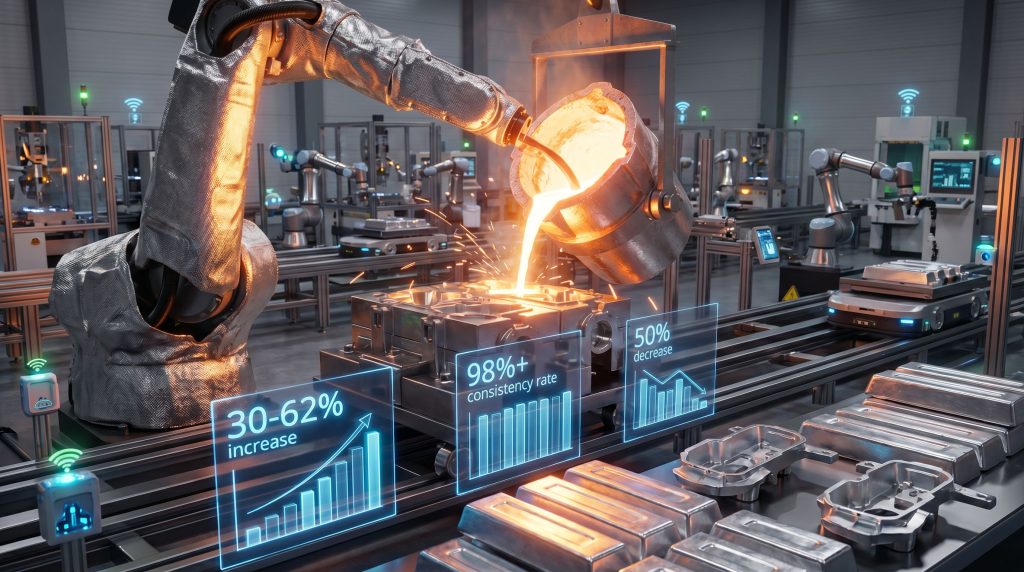
Robotic solutions in aluminium industry are revolutionising manufacturing operations across global markets, delivering unprecedented improvements in safety, efficiency, and product quality. The integration of sophisticated automated systems into aluminium processing workflows represents a fundamental transformation that addresses traditional manufacturing challenges while establishing new performance standards.
Manufacturing sectors worldwide are experiencing unprecedented transformation through automated systems, with metal processing industries leading this technological revolution. Furthermore, the integration of sophisticated mechanical systems into production workflows represents more than incremental improvement – it signals a fundamental shift toward precision-driven, safety-enhanced operations that redefine traditional manufacturing paradigms.
Aluminium processing operations present unique technical challenges that make them particularly suitable for robotic integration. The industry's demanding operational requirements, combined with specific material characteristics, create an environment where automated solutions deliver measurable performance advantages over conventional manual processes.
Material Characteristics Driving Automation Adoption
Lightweight Properties and Payload Optimization
Aluminium's density of approximately 2.70 g/cm³ creates favourable conditions for robotic handling systems. This lightweight characteristic reduces mechanical stress on robotic actuators and enables smaller, more agile automation systems to handle substantial production volumes without requiring heavy-duty industrial platforms.
The material's inherent properties allow robotic systems to operate with:
- Reduced energy consumption during material handling operations
- Lower mechanical wear on robotic components
- Enhanced precision through decreased inertial loads
- Improved cycle times due to faster acceleration capabilities
Thermal Management in High-Temperature Environments
Aluminium processing frequently involves operations at temperatures approaching 660°C, creating hazardous conditions for human operators. The material's thermal conductivity of approximately 237 W/m·K at room temperature necessitates specialised handling protocols that robotic solutions in aluminium industry can execute consistently without safety risks.
Automated systems excel in these environments by providing:
- Consistent performance in extreme temperature conditions
- Elimination of human exposure to thermal hazards
- Precise temperature monitoring and control integration
- Reduced cooling time requirements between operational cycles
Corrosion Resistance and Operational Longevity
The corrosion-resistant properties of aluminium create stable processing environments that complement robotic system durability. Unlike steel processing, which may generate corrosive byproducts, aluminium operations maintain cleaner working conditions that extend robotic component lifespan and reduce maintenance requirements.
When big ASX news breaks, our subscribers know first
High-Impact Robotic Applications in Aluminium Operations
Automated Casting and Molten Metal Management
Robotic Anode Processing Systems
Recent technological developments have introduced specialised robotic solutions for anode stub and butt cleaning operations. These systems automate previously manual processes that exposed workers to dust and vibration hazards while delivering superior consistency in cleaning quality.
The implementation of robotic anode processing addresses several critical operational challenges:
- Safety Enhancement: Complete elimination of worker exposure to hazardous cleaning environments
- Quality Consistency: Standardised cleaning protocols ensure uniform results across all processed components
- Operational Efficiency: Continuous operation capability without fatigue-related performance degradation
- Maintenance Reduction: Automated systems reduce equipment wear through precise, controlled operations
Molten Metal Handling and Skimming Operations
Fixed-base robotic systems for molten metal skimming represent significant advances in aluminium processing automation. These specialised applications enhance productivity and product quality while eliminating operator workload and safety risks associated with high-temperature metal handling.
Key operational improvements include:
- Precision Control: Consistent skimming depth and coverage patterns
- Temperature Monitoring: Integrated sensors for optimal processing conditions
- Quality Enhancement: Reduced contamination through controlled handling procedures
- Throughput Optimization: Continuous operation without cooling periods for operator safety
Advanced Manufacturing Cell Integration
Multi-Axis Machining Automation
Robotic solutions in aluminium machining operations encompass comprehensive manufacturing cells that integrate loading, processing, and unloading functions. These systems enable continuous operation while maintaining precise tolerances across complex geometries.
Manufacturing cell capabilities include:
- Automated Part Handling: Seamless integration between machining operations
- CAD/CAM Integration: Rapid changeover capabilities for diverse product lines
- Quality Verification: In-line measurement and inspection systems
- Adaptive Processing: Real-time adjustment based on material variations
Surface Treatment and Finishing Automation
Robotic surface finishing operations deliver consistent quality across grinding, deburring, and polishing applications. In addition, these systems eliminate variability associated with manual operations while maintaining precise surface finish specifications through AI transforming processes.
Surface treatment benefits encompass:
- Uniform surface roughness across production runs
- Reduced material waste through precise material removal
- Enhanced surface quality consistency
- Elimination of operator fatigue effects on finish quality
Advanced Technology Integration in Aluminium Processing
AI-Powered Quality Control and Process Optimization
SOFIA System Implementation
Smart On-the-Fly Inspection and Analysis (SOFIA) systems represent cutting-edge applications of artificial intelligence in aluminium processing. These solutions characterise anode butt process parameters while boosting operational quality through real-time analysis and adjustment capabilities.
SOFIA technology delivers:
- Real-Time Process Characterisation: Continuous monitoring of critical process parameters
- Quality Enhancement: Automated adjustment based on process analysis
- Operational Intelligence: Data-driven insights for process optimisation
- Predictive Capabilities: Early identification of potential quality issues
Vision-Based Inspection Systems
Machine vision technology integrated with robotic systems enables comprehensive quality control throughout aluminium processing operations. Furthermore, these systems detect defects, verify dimensions, and ensure compliance with specifications without interrupting production flow.
Vision system capabilities include:
- Surface defect detection and classification
- Dimensional accuracy verification
- Colour and finish quality assessment
- Automated sorting based on quality parameters
Predictive Maintenance and Equipment Optimization
IoT Sensor Network Integration
Industrial Internet of Things (IoT) sensors embedded throughout robotic systems enable predictive maintenance strategies that minimise unplanned downtime. However, these networks collect operational data to identify potential equipment failures before they impact production, supporting data‑driven operations across facilities.
IoT integration provides:
- Condition Monitoring: Real-time assessment of equipment health
- Failure Prediction: Advanced analytics for maintenance scheduling
- Performance Optimisation: Data-driven adjustments for peak efficiency
- Cost Reduction: Minimised emergency maintenance and production disruptions
Economic Impact and Financial Considerations
Implementation Cost Analysis and ROI Projections
Capital Investment Requirements
Robotic implementation in aluminium processing requires significant capital investment that must be evaluated against operational improvements and risk mitigation benefits. Investment considerations encompass equipment acquisition, installation, training, and ongoing maintenance costs.
Primary cost categories include:
- Equipment Procurement: Robotic systems, sensors, and control infrastructure
- Installation and Integration: Site preparation and system commissioning
- Training and Development: Workforce skill enhancement programs
- Ongoing Support: Maintenance contracts and technical support services
Operational Efficiency Improvements
Robotic solutions in aluminium industry deliver measurable improvements across multiple operational metrics that contribute to positive return on investment. These improvements compound over time as systems optimise performance through learning algorithms and process refinement.
| Performance Metric | Traditional Operation | Robotic Implementation | Improvement Factor |
|---|---|---|---|
| Production Consistency | Variable quality | Standardised output | Enhanced reliability |
| Safety Incidents | Human exposure risks | Eliminated hazards | Risk mitigation |
| Material Utilisation | Process variations | Optimised consumption | Waste reduction strategies |
| Equipment Longevity | Operator-dependent | Consistent operation | Extended lifespan |
Risk Mitigation and Insurance Considerations
Safety Enhancement and Liability Reduction
Robotic implementation eliminates numerous safety hazards associated with manual aluminium processing operations. This risk reduction translates to lower insurance premiums, reduced worker compensation claims, and improved regulatory compliance.
Safety improvements include:
- Elimination of high-temperature exposure risks
- Reduced repetitive strain injury incidents
- Minimised chemical and dust exposure
- Enhanced emergency response capabilities
Quality Assurance and Customer Satisfaction
Consistent product quality delivered through robotic processing reduces customer complaints, warranty claims, and product recalls. Consequently, this reliability enhancement strengthens customer relationships and supports premium pricing strategies.
Strategic Implementation Framework
Assessment and Planning Methodologies
Current State Analysis Protocol
Successful robotic implementation requires comprehensive assessment of existing operations, workforce capabilities, and infrastructure readiness. This analysis identifies optimisation opportunities and potential implementation challenges while considering industry evolution trends.
Assessment components include:
- Production Volume Analysis: Current throughput and capacity utilisation
- Quality Metrics Evaluation: Existing defect rates and consistency measures
- Safety Risk Assessment: Current hazard exposure and incident rates
- Infrastructure Readiness: Power, cooling, and space requirements
- Workforce Skill Inventory: Current capabilities and training needs
Technology Selection Criteria
Robotic system selection requires careful evaluation of technical specifications, vendor capabilities, and long-term support availability. Selection criteria should align with operational requirements and strategic objectives.
Key evaluation factors encompass:
- Payload Capacity: Adequate for current and future production requirements
- Environmental Ratings: Suitable for high-temperature and potentially corrosive conditions
- Integration Capabilities: Compatibility with existing control systems and software
- Vendor Support: Global service network and technical expertise availability
Deployment Strategy Development
Phased Implementation Approach
Successful robotic deployment typically follows a structured phased approach that minimises risk while building organisational capability and confidence in automated systems.
Phase 1: Pilot Program Development
- Single application focus for proof-of-concept validation
- Limited scope to demonstrate technical feasibility
- Performance baseline establishment for future expansion
- Workforce training and change management initiation
Phase 2: Selective Expansion
- Replication of successful pilot applications
- Integration of lessons learned from initial deployment
- Expanded workforce training and development programs
- Advanced system integration capabilities
Phase 3: Comprehensive Integration
- Full automation ecosystem implementation
- Advanced analytics and optimisation capabilities
- Strategic integration with enterprise systems
- Continuous improvement culture establishment
Change Management and Workforce Development
Organisational success with robotic implementation depends heavily on effective change management and workforce development strategies. These programs ensure smooth transition while maximising human and technological capabilities.
Change management priorities include:
- Communication Strategy: Clear explanation of benefits and timeline expectations
- Training Programs: Technical skill development for robot operation and maintenance
- Career Development: Redefining roles and advancement opportunities
- Performance Metrics: Establishing success measures and improvement targets
Future Technology Trends and Market Evolution
Emerging Technological Capabilities
Artificial Intelligence and Machine Learning Integration
Next-generation robotic systems increasingly incorporate sophisticated AI capabilities that enable autonomous decision-making and continuous process optimisation. These systems learn from operational data to improve performance over time.
AI advancement areas include:
- Autonomous Quality Control: Self-adjusting systems based on real-time analysis
- Predictive Process Optimisation: Anticipating optimal operational parameters
- Adaptive Learning: Continuous improvement through operational experience
- Intelligent Scheduling: Dynamic production planning based on demand patterns
Advanced Hardware Development
Robotic hardware continues evolving to address specific challenges in aluminium processing environments. These developments focus on enhanced durability, precision, and integration capabilities, as highlighted in recent innovation expo highlights.
Hardware innovation focuses on:
- Enhanced high-temperature resistance for extreme processing conditions
- Improved precision capabilities for micro-manufacturing requirements
- Advanced sensor integration for comprehensive environmental monitoring
- Wireless communication systems for flexible deployment configurations
Industry 4.0 Integration and Smart Manufacturing
Connected Manufacturing Ecosystems
The evolution toward fully integrated smart factories positions robotic solutions in aluminium industry as central components in comprehensive manufacturing ecosystems. These systems enable real-time visibility and control across entire production operations.
Smart manufacturing components include:
- Enterprise Integration: Seamless connection with business planning systems
- Supply Chain Visibility: Real-time coordination with suppliers and customers
- Predictive Analytics: Advanced forecasting for demand and maintenance planning
- Cloud-Based Monitoring: Remote access to operational data and control systems
Sustainability and Environmental Optimisation
Robotic systems increasingly contribute to sustainability objectives through energy optimisation, waste reduction, and environmental impact minimisation. These capabilities align with corporate environmental responsibility goals.
Sustainability benefits encompass:
- Energy Efficiency: Optimised power consumption through intelligent scheduling
- Waste Minimisation: Precision processing reduces material waste
- Environmental Monitoring: Continuous assessment of emissions and environmental impact
- Circular Economy Support: Enhanced recycling and reprocessing capabilities
Market Growth and Adoption Projections
Automation Penetration Trends
Industry analysis suggests accelerating adoption of robotic solutions in aluminium processing, driven by competitive pressures, safety requirements, and technological advancement.
| Projection Period | Market Characteristics | Growth Drivers |
|---|---|---|
| 2025-2027 | Early majority adoption | Safety and efficiency focus |
| 2028-2030 | Mainstream integration | Cost competitiveness achievement |
| 2031-2035 | Advanced AI integration | Autonomous operation capabilities |
Competitive Advantage Through Automation
Organisations implementing robotic solutions position themselves for sustained competitive advantage through operational excellence, quality leadership, and cost optimisation. Early adopters establish technological and market leadership positions.
Competitive advantages include:
- Operational Flexibility: Rapid response to market demand changes
- Quality Leadership: Consistent product excellence and reliability
- Cost Optimisation: Lower production costs through efficiency gains
- Innovation Capability: Platform for continuous technological advancement
The next major ASX story will hit our subscribers first
What Challenges Affect Robotic Implementation Success?
Modern aluminium facilities face several implementation challenges that require careful consideration during planning phases. Understanding these obstacles enables organisations to develop effective mitigation strategies and realistic timelines for deployment.
Technical integration challenges often involve legacy system compatibility, where existing control systems may require significant upgrades to communicate effectively with robotic automation systems. Additionally, environmental factors unique to aluminium processing, including electromagnetic interference from furnaces and extreme temperature variations, can affect robotic sensor accuracy and component reliability.
Organisational readiness represents another critical factor, as successful implementation requires workforce acceptance and technical competency development. Furthermore, maintenance team training and spare parts availability directly impact long-term operational success and return on investment calculations.
How Do Robotic Systems Enhance Product Quality?
Quality improvements through robotic implementation stem from consistent process execution and real-time monitoring capabilities. Unlike manual operations subject to human variability, robotic systems maintain identical processing parameters across all production cycles.
Advanced vision systems integrated with robotic platforms enable real-time defect detection and classification. These systems can identify surface imperfections, dimensional variations, and material inconsistencies faster than traditional inspection methods while maintaining comprehensive quality records.
Process repeatability represents perhaps the most significant quality benefit, as robotic solutions for aluminum manufacturing eliminate variations in handling force, positioning accuracy, and cycle timing. This consistency translates directly to reduced scrap rates, improved customer satisfaction, and enhanced brand reputation.
The transformation of aluminium manufacturing through robotic solutions represents a fundamental shift in industry operations. Consequently, organisations that strategically implement these technologies position themselves for sustained success in an increasingly competitive global marketplace, while those that delay adoption risk falling behind in operational efficiency, safety performance, and product quality standards.
Important Note: The information presented in this analysis is based on current industry trends and technological developments. Actual implementation results may vary based on specific operational conditions, equipment selection, and deployment strategies. Therefore, organisations should conduct thorough feasibility studies and consult with qualified automation specialists before making significant capital investments in robotic systems.
Are You Ready to Capitalise on the Next Industrial Revolution?
Whilst robotic automation transforms aluminium manufacturing, smart investors are positioning themselves in the companies driving this technological revolution. Discovery Alert's proprietary Discovery IQ model delivers real-time alerts on significant ASX mineral and technology discoveries, empowering subscribers to identify actionable opportunities before the broader market recognises their potential. Begin your 14-day free trial today to secure your market-leading advantage in the evolving industrial landscape.