
May 16, 2026
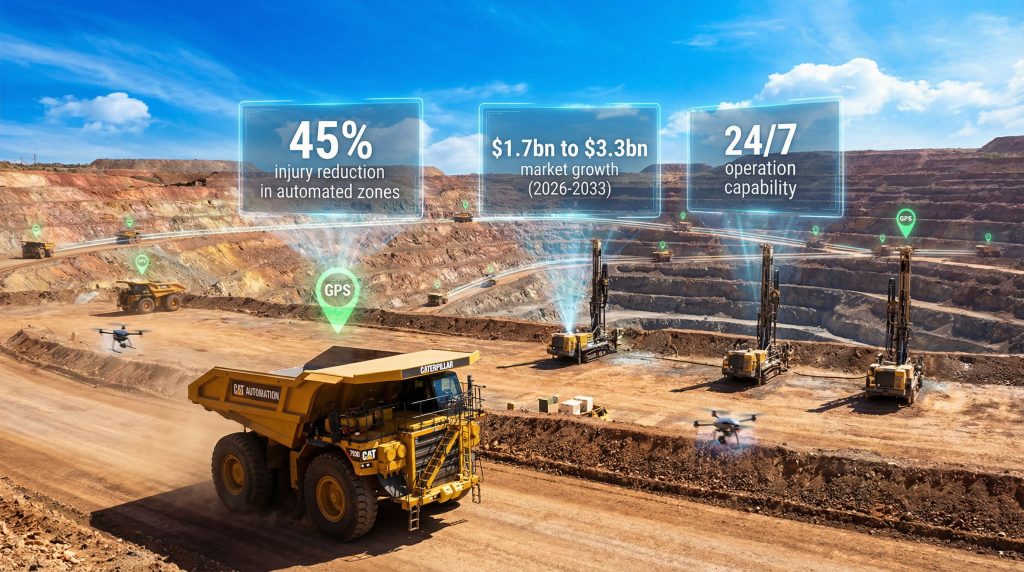
The global mineral extraction sector faces unprecedented challenges that demand revolutionary solutions. Traditional mining operations, constrained by human limitations and safety concerns, struggle to meet escalating demand for critical materials while maintaining profitable margins. This operational crisis has catalyzed a technological transformation through robotics in mining industry applications that extends far beyond incremental improvements, fundamentally reshaping how resources are extracted from the earth.
Mining companies worldwide are experiencing a convergence of pressures: persistent labour shortages, heightened safety regulations, and the urgent need to access increasingly complex ore bodies. These market forces have created an environment where conventional approaches prove insufficient, driving industry leaders toward comprehensive data-driven operations that promise to redefine operational excellence.
Revolutionary Technology Integration Reshaping Resource Extraction
Advanced Autonomous Systems Transforming Daily Operations
The integration of robotics in mining industry operations represents more than simple mechanisation. Modern autonomous mining systems combine sophisticated GPS mapping technologies with artificial intelligence algorithms to create self-navigating equipment capable of operating continuously in hazardous environments. These systems utilise real-time positioning data, advanced sensor networks, and predictive control mechanisms to execute complex extraction tasks with minimal human intervention.
Contemporary robotic mining platforms incorporate multiple technological layers working in harmony. Internet of Things sensors provide continuous environmental monitoring, while SCADA integration platforms enable seamless communication between autonomous units and central control systems. Remote operation centres serve as command hubs, where operators can monitor and adjust robotic fleet performance across multiple sites simultaneously.
The technological sophistication extends to predictive maintenance capabilities, where artificial intelligence analyses equipment performance patterns to prevent costly breakdowns. This proactive approach reduces operational downtime significantly, allowing continuous extraction processes that were previously impossible with human-operated machinery.
Precision Engineering Delivering Measurable Improvements
| Performance Metric | Traditional Methods | Robotic Solutions |
|---|---|---|
| Safety Incident Reduction | Manual safety protocols | 45% decrease in injury rates |
| Operational Precision | ±15cm drilling deviation | ±2cm accuracy with robotic systems |
| Weekly Downtime | 8-12 hours maintenance windows | 2-3 hours automated systems |
| Environmental Impact | Diesel-heavy operations | 35% emissions reduction |
| Operational Hours | Human shift limitations | 24/7 continuous operation |
These measurable improvements demonstrate the quantifiable benefits of robotic implementation across multiple operational dimensions. Furthermore, the precision drilling insights from automated systems particularly stand out, offering accuracy levels that surpass human operators by significant margins while maintaining consistent performance standards.
When big ASX news breaks, our subscribers know first
Market Dynamics Accelerating Automation Adoption
Financial Pressures Creating Automation Imperatives
The global mining robotics market demonstrates remarkable growth trajectories, with Persistence Market Research projecting expansion from US$1.7 billion in 2026 to US$3.3 billion by 2033. This growth reflects fundamental shifts in industry economics, where traditional labour-intensive approaches become increasingly unsustainable.
Labour shortage pressures across major mining regions compound the economic pressures driving automation adoption. Skilled mining professionals are increasingly difficult to recruit and retain, particularly for operations in remote or hazardous locations. This shortage creates operational vulnerabilities that robotic systems effectively address through consistent, reliable performance.
The demand for critical minerals and rare earth elements continues escalating, driven by renewable energy technologies and electronic device manufacturing. This demand surge requires mining operations to achieve unprecedented extraction volumes while maintaining cost competitiveness, objectives that align perfectly with robotic capabilities.
Regulatory Framework Evolution Supporting Technological Transition
Enhanced safety standards increasingly favour automated solutions that remove human workers from high-risk environments. Regulatory bodies worldwide are recognising the safety benefits of robotic mining systems, creating frameworks that encourage technological adoption while maintaining rigorous operational standards.
Environmental compliance requirements also support automation trends, as electric robotic systems offer significant emissions reductions compared to diesel-powered conventional equipment. These environmental sustainability benefits align with corporate sustainability commitments and regulatory expectations for reduced environmental impact.
Comprehensive Robotic System Categories Revolutionising Operations
Autonomous Transportation and Material Movement Systems
Large-scale autonomous haulage systems represent the most visible manifestation of robotics in mining industry implementation. These systems utilise fleets of driverless trucks capable of transporting massive quantities of materials across extensive mining sites. The autonomous haulage update technology incorporates advanced route optimisation algorithms that adjust dynamically based on real-time conditions, maximising efficiency while minimising energy consumption.
Fleet management software coordinates multiple autonomous vehicles simultaneously, preventing conflicts and optimising traffic flow across complex mining environments. These coordination capabilities enable operations to achieve material movement volumes that exceed traditional human-operated systems while maintaining superior safety records.
The operational benefits extend beyond simple transportation efficiency. Autonomous haulage systems operate continuously without fatigue concerns, maintaining consistent performance levels throughout extended operational periods. This reliability proves particularly valuable in remote mining locations where equipment failures can result in significant operational disruptions.
Precision Drilling and Controlled Blasting Technologies
Advanced drilling robotics deliver precision capabilities that fundamentally improve ore recovery rates while minimising waste generation. These systems utilise sophisticated geological analysis algorithms to optimise drilling patterns based on real-time subsurface data, ensuring maximum resource extraction efficiency.
Autonomous blasting coordination systems enhance safety protocols by eliminating human exposure to explosive materials and blast zones. These systems execute precisely timed detonation sequences that maximise ore fragmentation while preserving surrounding geological structures, optimising subsequent extraction processes.
Underground drilling applications prove particularly valuable in confined spaces where human operators face significant safety risks. Robotic drilling systems navigate complex underground environments using advanced mapping technologies, accessing ore bodies that would otherwise remain economically unviable to extract.
Specialised Material Processing and Handling Solutions
Load-haul-dump robotic systems transform underground material handling operations by operating autonomously in environments too dangerous for human workers. These systems utilise advanced navigation technologies to traverse complex underground passages while carrying substantial material loads.
Conveyor automation systems integrate with broader robotic networks to create seamless material processing workflows. These integrated systems reduce manual handling requirements while improving material processing consistency and quality control.
Robotic crushing and sorting technologies enhance ore processing efficiency by utilising artificial intelligence to identify and separate different material types. This automated sorting capability improves overall ore quality while reducing processing costs and environmental waste generation.
Advanced Monitoring and Inspection Capabilities
Drone-based aerial surveillance systems provide comprehensive site monitoring capabilities that exceed traditional inspection methods. These systems utilise high-resolution imaging and sensor technologies to create detailed maps and identify potential safety hazards or operational inefficiencies.
Underground inspection robots access hazardous areas to conduct safety assessments without exposing human workers to dangerous conditions. These robots carry specialised sensors capable of detecting gas concentrations, structural weaknesses, and other safety concerns that require immediate attention.
Predictive maintenance systems utilise continuous robotic monitoring to identify equipment issues before they result in operational failures. This proactive approach significantly reduces maintenance costs while improving equipment reliability and operational continuity.
Global Implementation Strategies and Regional Success Stories
Australian Mining Innovation Leadership
Australia's mining sector leads global automation implementation through comprehensive technology integration programs. Major operators have invested billions in robotic systems that demonstrate measurable improvements in safety, efficiency, and environmental performance. Moreover, these developments align with broader industry innovation trends shaping the global mining landscape.
The Pilbara region serves as a testing ground for autonomous mining technologies, where companies operate some of the world's largest robotic mining fleets. These operations provide valuable data and experience that inform global implementation strategies and technology development priorities.
Planned expansions include deployment of 360 battery-electric autonomous trucks by major operators between 2025-2030, representing the largest electrification programme in mining history. This initiative combines automation benefits with environmental sustainability objectives, creating operational models that other regions are likely to replicate.
South American Copper Mining Technological Integration
Chilean copper operations demonstrate successful integration of robotics in some of the world's most challenging mining environments. The El Teniente Division's implementation of the Arkytas MU-2.1 robot showcases how advanced robotics enable operations in areas previously inaccessible to human workers.
The robotic system enables digital recreation of hazardous mining areas through photogrammetry, transforming 22 high-resolution images into detailed 3D models while capturing critical data on humidity, granulometry, and dilution levels.
Underground robotic applications in Chilean copper mines address unique geological challenges while maintaining extraction efficiency. These systems navigate complex underground environments using advanced mapping and navigation technologies specifically adapted for copper extraction operations.
Asia-Pacific Expansion and Technology Adoption Patterns
China's mining sector demonstrates large-scale robotic implementation through projects like the Yimin Coal Mine's 300+ autonomous truck fleet. This massive deployment showcases the potential for robotics to transform mining operations at unprecedented scales.
Technology transfer and localisation strategies enable emerging markets to adopt advanced mining robotics while developing domestic technical capabilities. This approach creates sustainable technology implementation pathways that support long-term operational success.
Cost-benefit analyses in emerging market contexts demonstrate positive returns on robotic investments, even in regions with lower labour costs. These analyses reveal that productivity improvements and safety benefits justify automation investments across diverse economic environments.
Comprehensive Economic Impact Analysis
Direct Operational Cost Reduction Mechanisms
24/7 autonomous operations eliminate shift change delays and maximise equipment utilisation rates. This continuous operational capability typically increases daily production volumes by 15-25% compared to human-operated systems while maintaining consistent quality standards.
Maintenance cost optimisation through predictive robotic systems reduces unexpected equipment failures by 40-60%. These systems monitor equipment performance continuously, identifying potential issues before they result in costly breakdowns or safety incidents.
Electric robotic systems deliver substantial fuel cost savings compared to diesel-powered conventional equipment. Operations report 20-35% energy cost reductions when transitioning from diesel to electric autonomous systems, with additional benefits from reduced maintenance requirements.
Production Enhancement and Quality Improvements
Increased extraction rates result from continuous robotic operations that eliminate human fatigue and scheduling constraints. Operations typically achieve 10-20% higher extraction volumes through robotic implementation while maintaining superior ore quality standards.
Precision drilling capabilities improve ore recovery rates by 5-15% through optimised blast patterns and reduced ore dilution. This improvement directly impacts operational profitability by maximising valuable mineral recovery while minimising waste generation.
Reduced environmental remediation costs result from more precise extraction methods that minimise ecosystem disruption. Robotic systems typically reduce environmental impact by 25-40% compared to conventional extraction methods, lowering long-term environmental liability costs.
Long-term Investment Return Analysis
Capital expenditure analysis reveals 3-5 year payback periods for comprehensive robotic system implementations. While initial investments are substantial, operational savings and productivity improvements generate positive returns within commercially acceptable timeframes.
Technology depreciation considerations favour modular robotic systems that support incremental upgrades and capability enhancements. This approach enables operations to maintain technological competitiveness while managing capital investment requirements effectively.
Insurance and liability cost reductions reflect improved safety performance through robotic implementation. Operations report 20-30% reductions in insurance premiums following successful automation projects, reflecting measurably improved risk profiles.
Implementation Challenges and Strategic Solutions
Technical Integration and Infrastructure Requirements
Legacy system compatibility presents significant challenges for operations seeking to integrate advanced robotics with existing infrastructure. Successful implementations require comprehensive technical assessments and often substantial infrastructure upgrades to support robotic operations.
Cybersecurity considerations become critical as mining operations incorporate connected robotic systems. These systems require robust cybersecurity frameworks to protect against potential threats while maintaining operational efficiency and data integrity. However, robotics in underground mining applications have demonstrated successful security implementations.
Workforce transition management requires comprehensive training programmes that help existing employees adapt to robotic technologies. Successful implementations typically retrain 60-80% of existing workforce members for new roles supporting robotic operations rather than replacing human workers entirely.
Regulatory Compliance and Safety Certification
Autonomous vehicle certification processes vary significantly across different jurisdictions, creating compliance challenges for global mining operators. These processes typically require 12-24 months for complete certification, requiring early planning and regulatory engagement.
Environmental impact assessments for robotic technologies must demonstrate compliance with existing regulations while showcasing environmental benefits. These assessments typically reveal 25-40% reductions in environmental impact compared to conventional extraction methods.
International safety standards continue evolving to address robotic mining applications, requiring ongoing compliance monitoring and adaptation. Operations must maintain flexibility to adapt to changing regulatory requirements while maximising robotic system benefits.
Financial Planning and Risk Management Strategies
High initial capital investment requirements typically range from $50-200 million for comprehensive robotic implementations. These investments require careful financial planning and often involve phased implementation strategies to manage cash flow requirements.
Technology vendor selection requires evaluation of technical capabilities, support infrastructure, and long-term viability. Successful implementations typically involve partnerships with vendors offering comprehensive support services and proven track records in mining applications.
Risk management frameworks for early-stage technology adoption must balance innovation benefits with operational continuity requirements. These frameworks typically include contingency plans and backup systems to ensure operational reliability during technology transition periods.
The next major ASX story will hit our subscribers first
What Emerging Technologies Will Shape Future Mining Operations?
Artificial Intelligence and Machine Learning Integration
Predictive analytics capabilities continue expanding through machine learning algorithms that analyse vast quantities of operational data. These systems identify optimisation opportunities that human operators cannot detect, continuously improving operational efficiency and equipment performance.
Real-time decision-making algorithms enable robotic systems to adapt dynamically to changing conditions without human intervention. These capabilities prove particularly valuable in complex mining environments where conditions change rapidly and require immediate response.
Advanced pattern recognition systems analyse geological data to optimise extraction strategies and identify previously undetected mineral deposits. These capabilities enhance resource discovery and extraction planning while reducing exploration costs and environmental impact.
Next-Generation Robotic Applications
Humanoid robots designed for complex manual tasks are expected to enter mining operations by 2025-2027, addressing tasks that require human-like dexterity and problem-solving capabilities. These systems will complement existing autonomous equipment by handling specialised tasks that current robotic systems cannot perform.
Swarm robotics concepts enable coordinated operations between multiple robotic units working collaboratively on complex extraction projects. These systems promise to revolutionise large-scale mining operations by enabling unprecedented coordination and efficiency levels.
Fully integrated autonomous mining ecosystems represent the ultimate goal of robotics in mining industry, where all operational aspects function autonomously with minimal human intervention. These systems are expected to become commercially viable by 2030-2035 for appropriate mining applications.
Environmental Sustainability and Innovation
Electric and hydrogen-powered robotic fleets promise to eliminate direct emissions from mining equipment while maintaining operational capabilities. These technologies are expected to achieve cost parity with diesel systems by 2027-2029 while delivering superior environmental performance.
Carbon footprint reduction through automation typically achieves 30-50% emissions reductions compared to conventional mining operations. These improvements result from electric power systems, optimised operational efficiency, and reduced waste generation.
Circular economy applications in mining waste management utilise robotic systems to identify and process previously discarded materials, creating additional revenue streams while reducing environmental impact. These applications are expected to become economically viable for most operations by 2026-2028.
How Should Mining Companies Approach Robotic Implementation?
Comprehensive Readiness Assessment Protocol
Operational readiness assessments must evaluate existing infrastructure, workforce capabilities, and financial resources before implementing robotic systems. These assessments typically require 3-6 months to complete and should identify specific implementation priorities and potential challenges.
Technology roadmap development processes establish clear timelines and milestones for robotic implementation while maintaining operational continuity. Successful roadmaps typically span 5-10 years and include provisions for technology upgrades and capability expansion.
Stakeholder alignment strategies ensure that management, workforce, and regulatory bodies support robotic implementation initiatives. These strategies require comprehensive communication plans and often involve external stakeholder engagement to build implementation support.
Vendor Partnership and Technology Selection
Technology maturity evaluation criteria should prioritise proven systems with established track records in similar mining applications. Vendors should demonstrate successful implementations in comparable operational environments with measurable performance improvements.
Support infrastructure capabilities require evaluation of vendor technical support, training programmes, and maintenance services. Vendors should provide comprehensive support packages that ensure operational continuity throughout technology implementation and operation.
Integration compatibility assessments evaluate how robotic systems will interface with existing operational systems and infrastructure. These assessments should identify required modifications and ensure seamless technology integration without operational disruptions.
Implementation Timeline and Performance Optimisation
Phased rollout strategies minimise implementation risks by deploying robotic systems incrementally across different operational areas. These approaches typically begin with pilot projects lasting 6-12 months before expanding to full-scale implementation.
Performance measurement protocols establish clear metrics for evaluating robotic system effectiveness and identifying optimisation opportunities. These protocols should track safety, productivity, cost, and environmental performance indicators to ensure comprehensive evaluation.
Continuous improvement processes enable ongoing optimisation of robotic systems through performance analysis and technology upgrades. These processes typically identify 5-15% annual efficiency improvements through systematic optimisation efforts.
Disclaimer: This analysis is based on publicly available information and industry research. Mining investments involve significant risks, and companies should conduct comprehensive due diligence before implementing robotic technologies. Performance projections are estimates based on current technology capabilities and market conditions, which may change significantly over time.
Ready to Invest in the Next Major Mineral Discovery?
Discovery Alert instantly alerts investors to significant ASX mineral discoveries using its proprietary Discovery IQ model, turning complex mineral data into actionable insights. Understand why historic discoveries can generate substantial returns by visiting Discovery Alert's dedicated discoveries page, showcasing historic examples of exceptional outcomes, and begin your 14-day free trial today to position yourself ahead of the market.