July 22, 2026
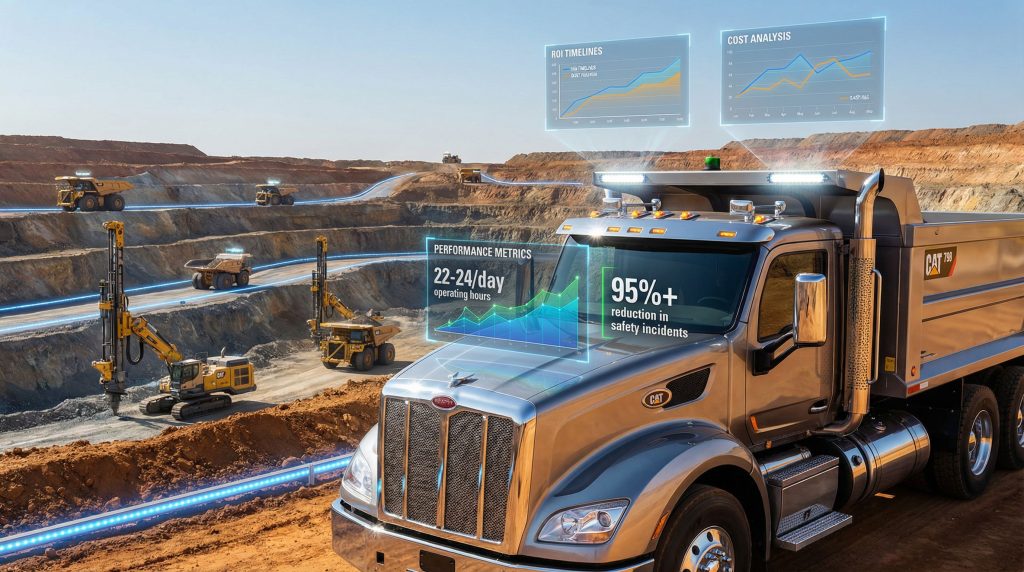
The modern mining industry faces unprecedented challenges in balancing operational efficiency with worker safety, particularly in underground environments where the evolution of robotics in mining has emerged as a transformative solution. Furthermore, this technological advancement represents more than incremental improvement; it constitutes a paradigm shift that eliminates human exposure to catastrophic risks entirely while enhancing productivity across all operational aspects.
Advanced Sensor Networks Redefine Hazard Detection
The evolution of robotics in mining centres on real-time environmental monitoring capabilities that surpass human sensory limitations. Underground methane accumulation, responsible for Europe's most devastating mining disasters, occurs through unpredictable geological mechanisms that can transform safe working environments into explosive atmospheres within minutes.
Robotic sensor arrays deployed throughout mining operations provide continuous atmospheric analysis, detecting methane concentrations as low as 0.1% by volume compared to the 5.0% lower explosive limit that creates catastrophic conditions. These systems integrate multiple detection technologies including infrared spectroscopy, catalytic bead sensors, and electrochemical detection methods to ensure redundant safety coverage.
Critical atmospheric parameters monitored include:
- Methane concentration levels
- Oxygen depletion rates
- Carbon dioxide accumulation
- Hydrogen sulfide presence
- Temperature fluctuations
- Humidity variations
The statistical foundation supporting robotic implementation reveals persistent occupational dangers despite decades of safety improvements. European mining operations experienced multiple catastrophic events between 2009 and 2014, including methane explosions in Slovakia's Handlová mine claiming 20 lives at 330 metres depth, Poland's Wujek-Slask operation resulting in 20 fatalities, and Turkey's Soma disaster causing 301 deaths from methane-induced explosion and fire.
When big ASX news breaks, our subscribers know first
Autonomous Load-Haul-Dump Systems Transform Underground Operations
Load-Haul-Dump robotic systems address the fundamental challenge of material transportation in confined underground spaces where human operators face multiple concurrent hazards. In addition, these autonomous vehicles eliminate worker exposure to structural collapse risks, toxic gas concentrations, and heavy machinery accidents that historically constitute primary causes of mining injuries.
Modern LHD robots operate through sophisticated navigation systems combining Real-Time Kinematic Global Navigation Satellite Systems achieving 2-5 centimetre positioning accuracy for surface operations. However, underground systems employ dead reckoning navigation using gyroscopic sensors and wheel odometry for precise tunnel navigation.
Key performance advantages of autonomous LHD systems:
- 22-24 hour daily operation versus 16-18 hours for manual systems
- 10-15% fuel efficiency improvement through optimised acceleration profiles
- 20% maintenance cost reduction via predictable operational patterns
- 95%+ safety incident reduction eliminating human factor accidents
Payload optimisation algorithms analyse material density, load distribution, and transport distance to maximise productivity while maintaining equipment longevity. Furthermore, real-time geological assessment capabilities enable selective material handling, extracting high-grade ore while leaving low-value material in place, reducing waste handling costs and environmental impact.
Precision Drilling Automation Enhances Extraction Accuracy
Robotic drilling systems revolutionise both production drilling and geological exploration through precision drilling analytics that exceed human operator limitations. Automated blast-hole drilling achieves millimetre-level accuracy in hole placement, optimising explosive charge distribution for maximum ore extraction with minimal waste rock generation.
Drilling automation technical specifications:
- GPS-guided positioning systems for accurate hole placement
- Real-time geological analysis during drilling operations
- Automated core sampling and cataloguing systems
- Dust suppression integration reducing airborne particulate exposure
Exploration drilling robots operate in hazardous terrain where human access proves dangerous or impossible, including areas with unstable geological formations, extreme temperatures, or atmospheric contamination. Consequently, these systems provide continuous core sampling and geological data collection without exposing human personnel to environmental risks.
The precision capabilities of robotic drilling systems enable selective mining techniques that target high-grade ore deposits whilst minimising waste material extraction. This technological advancement addresses both operational efficiency demands and environmental sustainability requirements by reducing the volume of material requiring processing and disposal.
Confined Space Robotics Eliminate Fatal Exposure Scenarios
Confined space operations represent mining's highest-risk activities, where atmospheric conditions can rapidly transition from safe to lethal. Statistical analysis reveals that confined space incidents in the United States resulted in 1,030 deaths between 2011 and 2019, with mining operations contributing significantly to this total.
Primary confined space hazards addressed by robotics:
- Oxygen depletion in enclosed areas
- Toxic gas accumulation (hydrogen sulfide, carbon dioxide)
- Structural instability in tunnels and shafts
- Engulfment risks in granular materials
- Temperature extremes in deep operations
Specialised robots designed for confined space operations incorporate atmospheric monitoring, emergency response capabilities, and maintenance functions that previously required human entry into dangerous environments. In addition, these systems provide continuous structural integrity assessment through imaging sensors and vibration monitoring, detecting potential collapse conditions before human workers enter affected areas.
Modern confined space robots can operate continuously in methane concentrations, extreme temperatures, and structural instability conditions that would prove immediately lethal to human workers, providing critical operational continuity whilst completely eliminating human risk exposure.
Emergency response robotics enhance rescue capabilities in disaster scenarios, providing search and recovery functions without exposing additional personnel to the conditions that created the original emergency. For instance, these systems proved crucial following incidents like the Gleision colliery flooding in 2011, where four fatalities resulted from workers attempting rescue operations in rapidly deteriorating conditions.
Economic Framework for Robotic Implementation
The financial justification for mining robotics extends beyond safety improvements to encompass operational efficiency gains, labour cost reductions, and regulatory compliance benefits. Capital investment requirements vary significantly based on system complexity and operational environment demands.
| System Type | Initial Investment | Payback Period | ROI Timeline |
|---|---|---|---|
| Autonomous Haul Trucks | $2-5M per unit | 2-3 years | 5-7 years |
| Underground LHDs | $1-3M per unit | 1.5-2.5 years | 4-6 years |
| Drilling Systems | $500K-2M | 1-2 years | 3-5 years |
| Specialised Robots | $100K-1M | Variable | 2-8 years |
Labour cost optimisation represents a primary economic driver, particularly for remote mining operations where geographic isolation creates recruitment challenges and wage premium requirements. Canadian mining operations report over 100 annual deaths from confined space incidents, whilst United States mining operations reduced confined space fatalities from 59 annually (2004-2010) to 37 annually (2011-2015) following intensive automation implementations after the Massey Energy disaster claiming 29 lives in 2010.
Insurance premium reductions reflect improved safety performance metrics, as robotic systems demonstrate 95%+ accident reduction rates compared to manual operations. Consequently, these reductions translate to significant annual cost savings for operations with historical high-risk profiles.
Artificial Intelligence Integration Drives Autonomous Decision-Making
The evolution of robotics in mining increasingly relies on AI in drilling blasting systems capable of real-time decision-making in complex, unpredictable environments. Machine learning algorithms analyse geological patterns, equipment performance data, and environmental conditions to optimise extraction processes continuously.
AI-powered mining applications include:
- Predictive maintenance scheduling based on equipment health monitoring
- Ore grade assessment through real-time geological analysis
- Route optimisation for autonomous vehicle fleets
- Environmental hazard prediction and mitigation
- Production scheduling optimisation
Real-time data processing enables autonomous systems to respond to changing conditions faster than human operators whilst maintaining consistent safety protocols. Furthermore, these systems process thousands of sensor inputs per second, identifying potential hazards or optimisation opportunities that exceed human cognitive capabilities.
Pattern recognition algorithms identify geological features indicating high-grade ore deposits, enabling selective extraction that maximises resource recovery whilst minimising waste generation. This capability proves particularly valuable in operations where ore grade varies significantly across extraction areas.
The next major ASX story will hit our subscribers first
Swarm Robotics and Coordinated Multi-Platform Operations
Advanced mining operations increasingly deploy multiple coordinated robotic systems that function as integrated teams rather than individual autonomous units. Swarm robotics principles enable distributed decision-making where multiple robots share information and coordinate activities to achieve complex operational objectives.
Coordinated robotic applications:
- Multiple drilling robots creating optimised blast patterns
- Autonomous haul truck fleets with dynamic route planning
- Distributed sensor networks for comprehensive environmental monitoring
- Coordinated maintenance robots for large-scale infrastructure
Communication protocols between robotic systems enable real-time data sharing and collaborative problem-solving that surpasses individual system capabilities. However, these networks create operational resilience where system failure in one unit does not compromise overall operational continuity.
Specialised Environmental Adaptation Technologies
Mining robotics must operate in extreme conditions that challenge standard engineering approaches. Deep mining operations experience temperatures exceeding 50°C, whilst methane-rich atmospheres require explosion-proof electronic systems and radiation exposure in uranium mining demands specialised shielding.
Environmental adaptation features include:
- High-temperature resistant components for deep operations
- Explosion-proof electrical systems for gaseous environments
- Radiation-hardened electronics for nuclear material mining
- Waterproof systems for underwater extraction operations
- Dust-resistant mechanisms for particulate-heavy environments
Underwater mining robots operate in offshore environments where traditional mining equipment proves inadequate. Consequently, these systems incorporate pressure-resistant hulls, corrosion-resistant materials, and specialised propulsion systems designed for subaqueous operations.
The integration of data-driven mining operations enables comprehensive environmental monitoring and adaptation strategies that respond to changing conditions automatically.
Regulatory Compliance and Safety Standard Evolution
Mining robotics development occurs within evolving regulatory frameworks that mandate specific safety requirements and operational standards. Mine Safety and Health Administration data for 2024 reports 31 total mining deaths in the United States, with 20 occurring in metal and non-metal operations, indicating continued regulatory focus on accident prevention.
Key regulatory drivers include:
- Confined space entry regulations (OSHA CFR 1910.146)
- Explosive atmosphere directives (EU Directive 1999/92/EC)
- Mine safety reporting requirements (MSHA standards)
- Environmental protection compliance
- Worker safety training mandates
Regulatory compliance costs associated with manual operations include workers' compensation insurance, regulatory penalty exposure, and operational shutdown risks following serious incidents. Furthermore, robotic systems reduce these compliance costs by eliminating human exposure to regulated hazardous conditions.
Workforce Transition and Skills Development
The evolution of robotics in mining requires comprehensive workforce development programmes that transition traditional mining roles to technology-focused positions. Rather than eliminating employment opportunities, robotic implementation typically shifts job requirements toward technical specialisation and system management.
Emerging technical roles include:
- Robotic system operators and supervisors
- Maintenance technicians for automated equipment
- Data analysts for production optimisation
- Safety system coordinators
- Environmental monitoring specialists
Training programmes must address both technical competencies (robot operation, system diagnostics, data analysis) and safety protocols for human-robot collaboration environments. In addition, these educational initiatives ensure that workforce development keeps pace with technological advancement whilst supporting the broader mining industry evolution.
Future Technological Horizons
Emerging technologies promise further advancement in mining safety and operational efficiency. Humanoid robotics development focuses on dexterous manipulation tasks in confined spaces where traditional industrial robots prove inadequate due to size or mobility constraints.
Next-generation capabilities under development:
- Humanoid robots for complex maintenance tasks
- Advanced AI for predictive geological modelling
- Quantum sensors for enhanced mineral detection
- Bio-inspired robots for extreme environment operations
- Integrated virtual reality for remote operation enhancement
The integration of these emerging technologies with existing robotic systems creates comprehensive automation platforms that address virtually all aspects of mining operations. However, maintaining zero human exposure to hazardous conditions requires continued investment in AI mill drive optimization and related technologies.
Furthermore, advanced robotics applications continue to evolve, offering solutions for increasingly complex mining challenges whilst maintaining focus on safety and efficiency improvements.
Investment considerations for emerging technologies:
- Technology maturity and commercial readiness
- Integration complexity with existing systems
- Regulatory approval requirements
- Training and implementation timelines
- Return on investment projections
The trajectory toward fully autonomous mining operations represents not merely technological evolution but a fundamental reimagining of how mineral extraction can be conducted safely and efficiently, establishing new industry standards that prioritise both human welfare and operational excellence.
Ready to Invest in Mining Technology Innovation?
Discovery Alert's proprietary Discovery IQ model identifies emerging opportunities in mining technology companies and robotics innovators, delivering real-time alerts on significant ASX mineral discoveries that could benefit from these technological advances. Begin your 30-day free trial today and gain immediate access to actionable insights that position you ahead of the market in this rapidly evolving sector.