August 20, 2026
Two Business Models, One Mining Legend: Understanding the Equinox Gold and Lumina Metals Playbook
Few sectors reward contrarian thinking as generously as mining. When commodity prices collapse and analysts declare a metal's commercial death, the investors who move decisively into quality assets at cycle lows tend to generate the most extraordinary long-term returns. It is precisely this counterintuitive discipline that has defined Ross Beaty on Equinox Gold and Lumina Metals across four decades and multiple commodity cycles, producing a body of work that spans silver, gold, copper, and now the critical minerals era reshaping global supply chains.
Understanding how Ross Beaty thinks about Equinox Gold and Lumina Metals requires first understanding that these are not simply two companies he built. They represent two structurally opposite theories of value creation in the mining industry, each rational in its own context, and each reflecting a deliberate choice about where in the mining lifecycle the greatest returns can be harvested.
When big ASX news breaks, our subscribers know first
From Field Geologist to Mining Architect: The Career Behind the Strategy
Beaty's professional formation is genuinely unusual. Trained as both a geologist and a lawyer, he has been candid that law was never a vocation for him. The day he was called to the bar, he left immediately for the Yukon to work on a drill rig prospecting for uranium. That combination of technical geological training and legal literacy, however, shaped a risk framework that proved consistently valuable throughout his career.
His track record spans multiple full commodity cycles, beginning with Equinox Resources in the mid-1980s and extending through Pan American Silver, the Lumina Copper Group, and its many subsidiaries, and eventually to Equinox Gold. The Lumina series alone generated ten separate companies across roughly two decades, each following a disciplined acquire-develop-divest strategy.
Beaty describes his age, now 75, with characteristic directness. The formation of Equinox Gold in late 2017 and early 2018 was conceived explicitly as his final producing company, designed to bracket his career symmetrically, beginning and ending with gold production under the Equinox name.
Two Companies, Two Entirely Different Business Models
The structural contrast between Equinox Gold and Lumina Metals is fundamental to understanding how Beaty thinks about value across different stages of the mining lifecycle.
| Dimension | Equinox Gold | Lumina Metals |
|---|---|---|
| Primary Strategy | Consolidation and roll-up | Acquire, de-risk, then sell |
| Commodity Focus | Gold | Copper and silver |
| Geography | Americas, multi-jurisdiction | Western Poland |
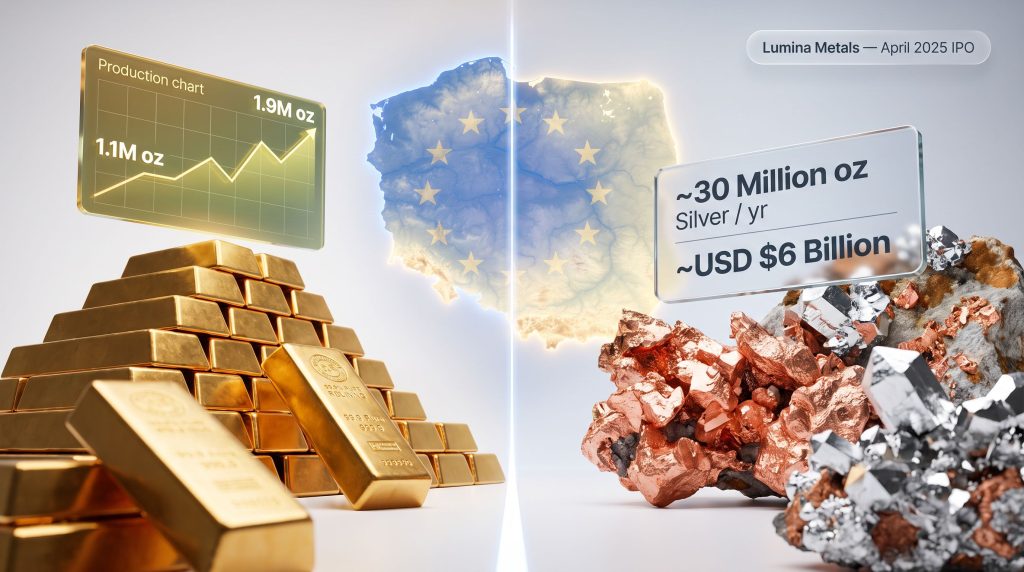
| Stage | Multi-mine producer (~1.1M oz/yr in 2025) | Advanced exploration and pre-development |
| Business Model | Build and operate at scale | Attract a major mining company buyer |
| Formation | Late 2017 / early 2018 | Taken public April 2025 |
| Estimated Capital Cost | N/A (operating) | ~USD $6 billion |
| Founder's Current Role | Chair Emeritus and Special Advisor | Executive Chair |
The Roll-Up Model: Building Equinox Gold Through Consolidation
Equinox Gold was built around a simple but demanding mission: grow from nothing to a top-tier global gold producer as quickly as possible through disciplined acquisition. Over roughly seven years, the company acquired four sizeable companies and several individual mine assets, assembling a portfolio of seven to eight operating mines across the Americas. Furthermore, the gold M&A activity driving this roll-up strategy has been a key feature of the broader sector in recent years.
The production trajectory tells the story clearly. From zero production at inception, the company reached approximately 1.1 million ounces annually in 2025, with a management target of 1.9 million ounces per year within the next few years. Reaching that level would place Equinox Gold among the top ten gold producers globally, an outcome Beaty describes as achievable entirely through organic growth within the existing portfolio, without any additional acquisitions.
Key growth catalysts already embedded in the portfolio include:
- A Record of Decision secured for the Railroad-Pinion project in Nevada, expected to contribute approximately 130,000 additional ounces annually
- An ongoing expansion at the Valentine Mine in Newfoundland
- The potential restart of Los Filos in Mexico, a 15-million-ounce deposit with existing infrastructure in place following a successfully renegotiated community land agreement, capable of producing between 200,000 and 500,000 ounces per year
The financial foundation supporting this growth is equally important. Equinox Gold carries near-zero debt, strong cash generation across its operating mines, and a balance sheet that Beaty described as very solid. His personal confidence signal was unambiguous: a USD $10 million purchase of new company shares at the time of his departure as Executive Chair.
The Spin-Out Model: The Lumina Group's De-Risking Philosophy
The Lumina model operates from an entirely different premise. Rather than building scale through consolidation, the strategy involves identifying undervalued mineral assets, typically at or near the bottom of a commodity cycle, systematically de-risking them through exploration and feasibility work, and then selling to a major mining company rather than proceeding to production.
Beaty started what became Lumina Copper around 2001 and 2002, at a moment when copper market trends pointed to cyclical lows and sentiment toward the metal was deeply negative. China's industrialisation trajectory was already visible to those willing to look past short-term price signals. The strategy was not based on predicting the precise timing of recovery, but rather on recognising that the cycle would eventually turn.
From Lumina Copper came six separate companies, each sold individually to majors. Additional companies followed across nickel, gold, and other commodities. Lumina Metals, taken public in April 2025, is the tenth and final company in the series.
What Makes Lumina Metals' Polish Copper-Silver Project Strategically Significant?
At the centre of Lumina Metals' investment case is what Beaty describes as potentially the largest copper-silver deposit on the planet. Located in western Poland, the project carries an estimated capital cost of approximately USD $6 billion and is projected to produce roughly 30 million ounces of silver annually at full operational capacity, a scale that would rank it among the top two or three silver producers globally. Indeed, the mineral exploration importance of identifying such large-scale deposits cannot be overstated in the current critical minerals landscape.
Why Poland as a Jurisdiction?
The choice of Poland is not incidental. Several jurisdictional factors reduce development risk compared to frontier locations:
- Poland is a stable European Union member state operating under a robust rule-of-law framework
- Existing infrastructure in western Poland significantly reduces the auxiliary capital requirements that burden remote projects
- Poland's position within NATO and the EU creates regulatory alignment with broader Western critical minerals policy objectives, though no project-specific government support has been confirmed
Lumina Metals' Dual-Track Exit Strategy
The company's strategic approach mirrors the Lumina Group's historical playbook but with an important contingency built in:
- Plan A: Attract a major mining company to acquire the asset outright, consistent with every prior Lumina divestiture
- Plan B: Proceed to independent development, leveraging current institutional capital appetite for large-scale critical minerals projects
On the financing question, Beaty was notably direct. He stated that assembling the roughly $6 billion in capital required would take approximately three phone calls, a reflection not of overconfidence but of genuine familiarity with the depth of institutional money currently targeting large copper-silver assets in politically stable jurisdictions.
Beaty's controlled vehicle, Kestrel Holdings Ltd., held a significant stake at the time of the April 2025 IPO, consistent with his stated preference for concentrated positions of between 5% and 15% in companies he backs.
How Does Ross Beaty Evaluate a Mining Project? The First-Hour Diligence Framework
One of the most instructive aspects of Beaty's career is his emphasis on direct, on-the-ground project assessment over desktop research. He is explicit that promotional materials systematically obscure the non-geological risks that most often determine whether a project can actually be built.
The Disqualifying Factors Identified Within the First Hour
When visiting a prospect for the first time, Beaty's attention moves quickly to factors that no drill result can resolve:
- Absence of proximate water access
- Community settlements adjacent to or overlapping the orebody
- Cultural or heritage sites, including cemeteries, within or near the resource footprint
- No accessible power supply or road infrastructure
- Extreme remoteness that would require complete infrastructure development from scratch
The Yukon provides a useful illustration of this risk framework in practice. While acknowledging several genuinely interesting geological opportunities there, including companies he has personally invested in, Beaty highlights the structural cost challenge of diesel power dependency in remote northern environments. The critical distinction he draws is between an investor's perspective, where entry and exit flexibility changes the calculus entirely, and a developer's perspective, where committing billions in capital over decades demands a fundamentally different level of risk scrutiny.
The combination of high geological risk, high infrastructure risk, and high social licence risk creates an unfavourable risk-reward profile unless the potential reward is extraordinary enough to justify the combined exposure.
This investor-versus-developer distinction is one of the lesser-appreciated nuances in junior mining analysis. Retail and institutional investors can exit a position when sentiment turns. A mining company that has acquired and begun developing an asset cannot.
What Ross Beaty's Career Reveals About Social Licence and Jurisdictional Risk
Beaty's experience across multiple jurisdictions over four decades provides a nuanced picture of how perceived risk and actual operating risk frequently diverge.
| Jurisdiction | Outcome | Key Lesson |
|---|---|---|
| Bolivia | Long-term production, minimal disruption | Perceived risk often significantly overstates actual conditions |
| Peru (1980s-90s) | Initially dangerous; became best Latin American jurisdiction | Political cycles eventually favour resource development |
| Argentina (Navidad Silver) | 14+ years undeveloped; community opposition persists | Social licence failure can strand even world-class deposits indefinitely |
| Russia | Asset effectively taken after 2000 | Sovereign risk under authoritarian governance is non-diversifiable |
| Guatemala (via Tahoe acquisition) | Deposit remains suspended, but gold assets returned the purchase price many times over | Portfolio construction can offset single-asset social licence failure |
The Peru example is particularly instructive. When Beaty entered the country in the 1980s, it was experiencing active revolutionary violence. The previous management of an early acquisition had suffered assassinations. Conventional risk assessment would have ruled out any investment. Peru subsequently became the most reliable mining jurisdiction in Latin America for three consecutive decades.
Argentina presents the inverse case. The Navidad silver deposit, acquired roughly 14 years ago, remains undeveloped due to persistent community opposition. Beaty acknowledges this openly as a misjudgement, while maintaining that world-class deposits of sufficient scale retain long-duration option value, capable of outlasting multiple political cycles if the balance sheet permits patience.
Political Cycles and Long-Duration Asset Strategy
A pattern that recurs throughout Beaty's commentary is the relationship between political cycles and mining development timelines. Pro-development administrations accelerate permitting; resource-nationalist governments freeze it. For companies holding high-quality, long-life deposits, the strategic response is financial durability rather than political prediction.
On Canada specifically, Beaty observes that the permitting environment has shifted materially. British Columbia's dedicated Major Project Office, which actively assists developers in navigating regulatory requirements, represents a departure from an earlier era when the same interaction could involve multi-year delays. Quebec, Ontario, Newfoundland, and Alberta are also cited as having moved toward more development-friendly postures, a notable observation from someone who has operated in Canadian jurisdictions for four decades.
The next major ASX story will hit our subscribers first
How Should Investors Think About the Junior Mining Exploration Sector?
Beaty's framework for where money is made in resource markets is built around two distinct phases, each with different risk profiles and different analytical requirements. In addition, understanding the broader junior mining investment landscape is essential context for applying these frameworks effectively.
Phase One: The Discovery Premium
The most explosive returns in junior mining occur during genuine discovery events. A well-structured drill programme can transform a million-dollar exploration budget into a billion-dollar market capitalisation, sometimes within months. This is the highest-risk, highest-return window, and it attracts speculative capital precisely because the upside is asymmetric.
Beaty draws a direct analogy to casino wagering to characterise the risk profile of exploration-stage investment. However, he identifies a critical structural difference: unlike a casino wager, exploration assets retain residual fundamental value even when the speculative premium deflates. A deposit with defined resources rarely goes to zero. It may wait years or decades for a price environment or political cycle that makes development viable.
Phase Two: Metal Price Cycle Timing
The second window for generating significant returns is broader and requires macro rather than asset-specific analysis. When commodity prices rise across the board, exploration stocks, developers, and producers all benefit, often regardless of individual asset quality.
Beaty's example from 2024 is illustrative: an investor who purchased almost any gold stock in June and sold in December would have achieved a double or triple return, independent of the fundamental quality of any individual project. A $100 per ounce move in gold lifts every gold company simultaneously, from early-stage explorers with no defined resources to the world's largest producers. This creates systematic mispricings that cycle-aware investors can exploit.
The practical implication is that timing analysis and asset-specific diligence serve different purposes and require different skill sets. Consequently, conflating them leads to poor decision-making in both directions.
Is Now a Good Time to Invest in Mining? A Cautiously Bullish Assessment
Beaty describes the current environment as uniquely favourable in his experience, characterised by record or near-record commodity prices, unprecedented access to capital for large-scale critical minerals projects, and a level of political and social acceptance for mining that he has not previously encountered across his career.
However, his enthusiasm is tempered by a cycle-aware perspective that is worth taking seriously given his track record. For instance, contrarian junior mining investing demands precisely this kind of sober assessment even amid optimistic market conditions.
The Counterargument: Supply Response and Demand Risk
Beaty has cautioned that the current synchronised encouragement of mining investment across virtually every jurisdiction globally will produce a significant supply surge, likely within five to seven years. When that supply enters a market potentially facing reduced demand from economic slowdowns in China, the United States, or Europe, the price implications could be substantial.
This is not a novel observation, but it carries more weight when articulated by someone who has lived through multiple full commodity cycles and has directly experienced both the euphoria of cycle peaks and the extended pain of the troughs that follow.
Metal-by-Metal Outlook
Beaty's views on specific metals reflect both structural conviction and honest cycle awareness. Furthermore, new large copper mines are already beginning to shift the paradigm for supply, a dynamic Beaty has addressed directly in recent commentary:
- Gold: Strong structural demand with current prices remaining compelling even after pulling back from peak levels. Long-term value remains entrenched despite short-term volatility.
- Silver: Deep long-term value supported by both monetary and industrial demand. Current prices, even after retreating from recent highs, represent a fundamentally different floor than was conceivable five years ago.
- Copper: Exceptional long-term demand fundamentals driven by electrification and infrastructure investment, but the scale of new discoveries and project activations globally could create medium-term oversupply pressure.
The unifying theme is that investors entering at cycle peaks face asymmetric downside if macro conditions deteriorate before the anticipated structural demand manifests at the scale commodity bulls project.
Key Takeaways: What This Framework Means for Mining Investors
The body of experience reflected in how Ross Beaty on Equinox Gold and Lumina Metals approaches the mining sector offers several practical frameworks for anyone evaluating the industry:
- Scale creates optionality: Equinox Gold's journey from zero to near-top-ten global gold producer in under eight years demonstrates what disciplined consolidation can achieve when executed with balance sheet discipline
- Production is not the only path to value: The Lumina model demonstrates that systematic de-risking and strategic divestiture can generate returns comparable to those of operating mining companies, without ever running a mine
- Non-geological risk is often the decisive variable: Infrastructure, water, power, community relationships, and jurisdictional stability frequently determine project viability more definitively than orebody quality alone
- The investor and developer perspectives require fundamentally different analytical frameworks: Entry and exit flexibility changes the risk calculation in ways that are easy to underestimate
- Cycle timing matters as much as asset selection: Knowing when to buy and when to sell across commodity price cycles is a distinct skill from asset-specific geological and technical diligence
This article contains forward-looking statements and analyst perspectives based on publicly available information and interview content. Mining investment involves substantial risk, including the possible loss of capital. Past performance of any individual or company does not guarantee future results. Nothing in this article constitutes financial or investment advice.
Want to Identify the Next Major Mineral Discovery Before the Broader Market Does?
Discovery Alert's proprietary Discovery IQ model delivers real-time alerts on significant ASX mineral discoveries, transforming complex geological and market data into actionable investment insights for both short-term traders and long-term investors — explore the historic returns major discoveries have generated and begin your 14-day free trial today to position yourself ahead of the market.