
May 14, 2026
What Makes Rumaila One of the World's Most Productive Oil Fields?
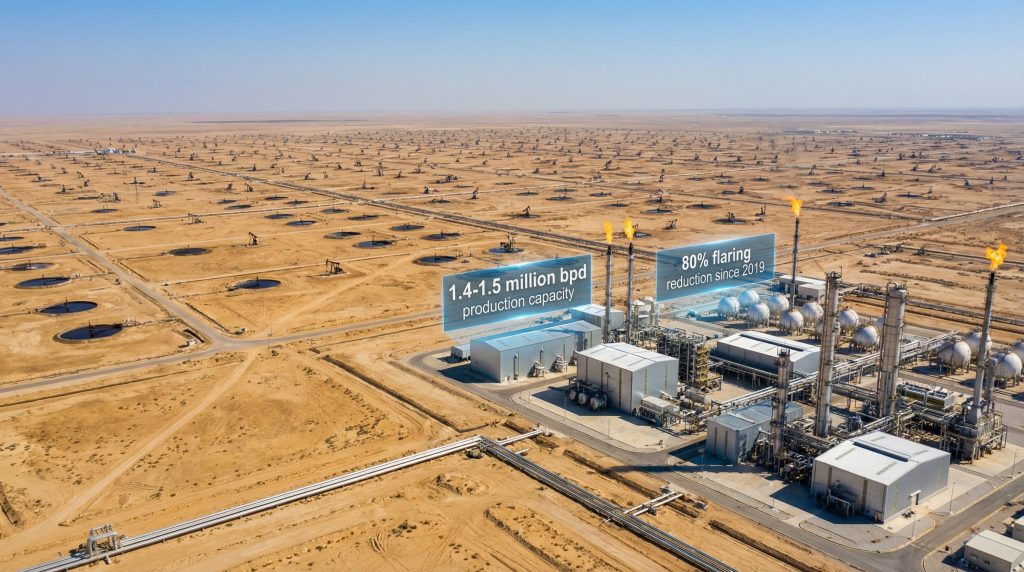
Complex reservoir engineering principles drive the exceptional production capabilities that distinguish Iraq's supergiant Rumaila oil field as one of the world's most technically sophisticated extraction operations. Understanding the intricate systems behind sustained high-volume output requires examining the geological foundations, infrastructure networks, and operational frameworks that enable consistent daily production exceeding 1.4 million barrels.
Reservoir Engineering Fundamentals
The geological architecture underlying Rumaila creates naturally favourable conditions for sustained hydrocarbon extraction. The field's southern sector benefits from connectivity to extensive natural aquifer systems that provide passive pressure maintenance, supporting oil displacement mechanisms without immediate artificial intervention. This aquifer-supported formation enabled extraction of more than 25% of total oil reserves before requiring water injection systems, contrasting sharply with comparable fields like Kirkuk that achieved only 5% recovery rates before pressure support became necessary.
Strategic positioning approximately 30 kilometres north of the Kuwait border provides advantageous access to transportation infrastructure whilst minimising cross-border operational complexities. Furthermore, the field's division into distinct North and South operational sectors allows for targeted development approaches tailored to specific reservoir characteristics and production optimisation requirements.
Key Reserve Statistics:
- Proven reserves: 17 billion barrels
- Recovery factor without injection: >25% of oil in place
- Cumulative production contribution: ~80% of Iraq's total output (combined with Kirkuk)
- Geographic coverage: North and South sectors spanning strategic southern Iraq territory
Production Capacity Metrics
Current operational performance demonstrates the field's maintained significance within global energy markets despite decades of production history. Daily output ranges between 1.4-1.5 million barrels per day, though recent assessments indicate production has edged below the 1.4 million barrel threshold due to natural reservoir pressure decline.
The International Energy Agency's 2020 projections anticipated production scaling to 1.7-2.2 million barrels per day with proper pressure maintenance systems. However, institutional constraints and delayed infrastructure development have prevented achievement of these technical targets, highlighting the gap between geological potential and operational reality.
Consequently, understanding these oil price movements becomes crucial when assessing Iraq's broader strategic positioning in global energy markets.
| Performance Metric | Current Status | Historical Context |
|---|---|---|
| Daily Production | 1.4-1.5 million bpd | Peak projections: 1.7-2.2 million bpd |
| Reserve Recovery | >25% without injection | Kirkuk comparison: <5% recovery |
| Operational Timeline | 1950s to present | 80-year continuous production |
| National Contribution | ~80% cumulative output | Combined with Kirkuk field |
When big ASX news breaks, our subscribers know first
Which Technical Systems Drive Rumaila's Operational Efficiency?
Well Architecture and Drilling Operations
The field maintains an active portfolio exceeding 700 total wells distributed across North and South operational sectors. This extensive well network includes both production wells for hydrocarbon extraction and injection wells for pressure maintenance operations. In addition, the strategic distribution pattern optimises reservoir contact whilst maintaining efficient pressure support across multiple production zones.
Well placement follows systematic methodologies designed to maximise reservoir drainage whilst supporting long-term pressure maintenance objectives. Producer wells extract crude oil from targeted reservoir formations, whereas injection wells supply pressure-maintenance fluids to sustain reservoir energy and extend productive field life.
Drilling expansion programmes coordinate with broader infrastructure development initiatives, ensuring new well capacity aligns with processing facilities, transportation systems, and pressure maintenance capabilities. The methodical approach to well development reflects sophisticated reservoir management practices aimed at optimising long-term recovery factors.
Water Injection Infrastructure
Phased water injection system deployment represents the technical cornerstone of sustained production capacity expansion. The five-phase programme targets cumulative injection capacity of 1.5 million barrels per day, with Phase 1 operational since 2025 and Phase 2 scheduled for completion by end-2027.
This systematic infrastructure scaling allows for technical validation and operational refinement between deployment phases, minimising risks associated with large-scale pressure maintenance system integration. The phased approach enables coordination with seawater processing facility development and pipeline infrastructure expansion.
Implementation Timeline:
- Phase 1: Operational (2025)
- Phase 2: Target completion end-2027
- Total capacity: 1.5 million barrels daily across five phases
- Integration: Coordination with CSSP seawater supply systems
How Do Seawater Processing Systems Transform Field Performance?
Common Seawater Supply Project (CSSP) Engineering
The CSSP represents transformative infrastructure addressing Iraq's most critical production constraint: sustainable water supply for reservoir pressure maintenance. Located near Um Qasr coastal facilities, the processing system targets 5 million barrels of seawater daily, sourced from Persian Gulf intake operations.
Technical specifications include comprehensive seawater treatment capabilities designed to meet injection water quality requirements for oil field operations. The coastal facility positioning optimises transportation logistics to inland production sites whilst leveraging abundant marine water resources unavailable through traditional freshwater sources.
Processing capacity targets reflect strategic alignment with Iraq's broader production expansion objectives, supporting multiple southern oil fields beyond Rumaila operations. This shared infrastructure approach maximises capital efficiency whilst providing scalable water supply solutions for regional field development.
Freshwater Conservation Impact
CSSP operations enable displacement of up to 250,000 cubic metres daily of freshwater previously allocated to oil field pressure maintenance. This substantial volume reallocation supports agricultural irrigation and municipal water supply in water-stressed regions where competing demands historically constrained oil sector development.
The Rumaila oil field represents one of Iraq's most significant hydrocarbon assets, and the International Energy Agency identified Iraq's future water injection requirements as approximately 2% of combined Tigris-Euphrates river flows, rising to 6% during low-season periods. These demands create direct competition with agricultural sectors that represent the region's primary economic activity outside hydrocarbon extraction.
By substituting seawater for freshwater in oil operations, the CSSP framework addresses fundamental resource allocation challenges that previously limited production expansion whilst supporting regional economic diversification through improved agricultural water access.
Water Resource Allocation Benefits:
- Freshwater displacement: 250,000 cubic metres daily
- Agricultural reallocation: Irrigation and regional farming support
- Source diversification: Reduced dependence on Tigris-Euphrates systems
- Regional impact: Enhanced water security for non-oil economic sectors
What Role Does Gas Processing Play in Rumaila's Operations?
Flare Reduction Technologies
Systematic gas flaring reduction represents both environmental compliance and energy security advancement for Iraq's broader strategic objectives. Recent achievements demonstrate 80% reduction in gas flaring since 2019, with continued progress toward UN Zero Routine Flaring initiative targets for 2030 elimination.
The Basrah Gas Company, established through joint venture between South Gas Company (51%), Shell (44%), and Mitsubishi Corporation (5%), manages associated gas capture across Rumaila, West Qurna 1, and Zubair oil fields. Furthermore, this integrated approach maximises gas utilisation efficiency whilst supporting coordinated flaring reduction across multiple production sites.
Recent inspections by Iraq's Undersecretary for Upstream Affairs documented continued progress at the Qurainat crude oil processing facility and degassing station. The facility completion, scheduled for Q1 2026, represents significant infrastructure advancement supporting gas capture optimisation.
Energy Recovery and Utilisation
Associated gas processing addresses critical energy independence objectives by reducing Iraq's historical dependence on Iranian gas and electricity imports, which averaged approximately 40% of total power requirements. This dependency created geopolitical vulnerabilities that constrained Iraq's strategic autonomy whilst providing leverage opportunities for regional competitors.
Effective gas utilisation supports domestic power generation capacity, reducing external energy import requirements whilst capturing economic value from previously flared resources. The transformation from waste gas flaring to productive energy recovery demonstrates operational efficiency improvements with broader economic benefits.
Baghdad's 2017 commitment to UN Zero Routine Flaring initiatives established binding multilateral obligations for systematic flaring elimination by 2030. At that time, Iraq ranked second globally in gas flaring volumes at 17.37 billion cubic metres annually, highlighting the scale of resource waste requiring systematic address.
Gas Processing Performance Indicators:
| Metric | Achievement | Target |
|---|---|---|
| Flaring Reduction | 80% decrease since 2019 | Zero routine flaring by 2030 |
| Global Ranking (2017) | 2nd largest flaring volume | UN compliance standards |
| BGC Operational Scope | Rumaila, West Qurna 1, Zubair | Integrated gas management |
| Infrastructure Status | Qurainat facility Q1 2026 | Enhanced processing capacity |
How Do International Partnerships Shape Technical Development?
Operator Structure and Responsibilities
The Basra Energy Company (BEC), established through BP-PetroChina joint venture, assumed operational management responsibilities from the former Rumaila Operating Organisation in 2022. This transition coincided with renewed infrastructure development initiatives and represented strategic modernisation of operational frameworks.
Original development partnerships established through 2009 Technical Service Contracts created fee-based compensation structures of $2.00 per barrel for oil recovery, significantly below initial $3.99 per barrel tender proposals. However, despite reduced fee structures, analysts projected 20% returns on estimated $15 billion investments, comparing favourably with alternative global opportunities offering 11% risk-adjusted returns across OPEC operations.
TotalEnergies' $27 billion four-pronged programme represents comprehensive infrastructure transformation spanning seawater supply, gas processing, and broader operational modernisation. This substantial investment commitment demonstrates international confidence in Iraq's supergiant Rumaila oil field long-term production potential despite historical institutional challenges.
Technology Transfer and Expertise
International operator involvement facilitates advanced extraction technique implementation and best practices adoption across field operations. The collaborative framework enables technology transfer from global industry leaders whilst supporting local workforce development and operational capacity building.
Moreover, joint venture structures balance international expertise with Iraqi institutional participation, creating sustainable operational frameworks that support long-term field development. This approach addresses both technical optimisation requirements and local economic participation objectives.
Partnership arrangements provide risk mitigation through diversified international involvement whilst maintaining Iraqi sovereign control over strategic energy resources. The collaborative model demonstrates effective balance between technical advancement and national resource management priorities.
What Are the Key Performance Indicators for Rumaila's Success?
Production Optimisation Metrics
Comprehensive performance assessment requires evaluation across multiple operational dimensions, from daily production rates to environmental compliance achievements. Current performance demonstrates both historical significance and ongoing technical challenges requiring systematic address.
The field's natural aquifer support system enabled extended production periods without artificial pressure maintenance, distinguishing Rumaila from comparable global operations requiring earlier intervention. This geological advantage provided operational flexibility that supported decades of sustained production despite limited infrastructure investment.
In addition, these operational realities directly influence broader oil price stagnation analysis as global markets assess Iraq's production capabilities against geopolitical factors.
Comprehensive Performance Analysis:
| Category | Current Performance | Technical Potential | Constraints |
|---|---|---|---|
| Daily Output | 1.4-1.5 million bpd | 1.7-2.2 million bpd | Pressure maintenance |
| Recovery Factor | >25% without injection | Enhanced through water injection | Infrastructure development |
| Gas Flaring | 80% reduction since 2019 | Zero routine flaring by 2030 | Processing capacity |
| Water Injection | Phase 1 operational | 1.5 million bpd across 5 phases | Timeline execution |
Economic Performance Analysis
Fee-based compensation structures provide sustainable economic frameworks for international operator participation whilst ensuring Iraqi revenue optimisation. The $2.00 per barrel recovery fee, though reduced from initial proposals, supports operator investment recovery whilst maintaining competitive national revenue shares.
Cost recovery thresholds established at 1.173 million barrels per day provide clear performance targets for operator compensation whilst incentivising production optimisation. These structured arrangements balance international operator returns with Iraqi national economic interests.
Revenue contribution to Iraq's national budget reflects Rumaila's continued strategic importance, with the field contributing approximately 25% of national hydrocarbon revenues through sustained high-volume production. This economic significance underscores the critical importance of technical optimisation and infrastructure modernisation.
The next major ASX story will hit our subscribers first
Which Challenges Could Impact Future Production Scaling?
Technical Infrastructure Constraints
Aging reservoir pressure management systems require systematic modernisation to support sustained production scaling. Natural aquifer support that historically enabled extended production without artificial pressure maintenance shows declining effectiveness, necessitating comprehensive water injection system implementation.
Equipment modernisation needs span multiple operational categories, from well completion technologies to surface processing facilities. Integration complexities between existing infrastructure and new system deployment create coordination challenges requiring careful project sequencing and technical validation.
The five-phase water injection deployment timeline extends through 2027, creating interim periods where production optimisation remains constrained by pressure maintenance limitations. Consequently, this timeline dependency highlights vulnerability to construction delays or technical complications that could impact production scaling objectives.
Institutional and Political Risk Factors
Iraq's energy sector demonstrates recurring patterns of political interference that historically constrained technical development and production optimisation. Institutional fragility creates uncertainty around long-term investment security and operational continuity, despite substantial international partnership commitments.
Regulatory stability requirements for sustained international investment face ongoing challenges from political transitions and policy modifications. Security considerations affecting continuous operations add additional complexity layers to technical planning and infrastructure development timelines.
Historical precedents indicate that promising technical developments can face unexpected constraints from institutional changes or political interference, creating ongoing uncertainty around delivery timelines and performance achievement despite technical feasibility. Furthermore, PDVSA policy changes in other regions demonstrate how political decisions can rapidly alter operational environments.
How Does Rumaila Support Iraq's Broader Production Targets?
National Capacity Expansion Strategy
Iraq's medium-term objective to exceed 6 million barrels per day from current 4.1 million barrel levels requires coordinated development across multiple major fields, with Rumaila representing a critical component of national capacity expansion. The field's potential scaling to 1.7-2.2 million barrels per day could contribute substantially to national production growth.
Integration with other major southern oil fields creates synergistic opportunities through shared infrastructure development, particularly seawater processing and transportation systems. The CSSP benefits multiple production sites beyond Rumaila, supporting coordinated regional capacity expansion.
OPEC quota considerations and compliance requirements add strategic complexity to production scaling decisions, balancing technical capacity expansion with international market coordination obligations. Iraq's production expansion must align with broader OPEC production impact management strategies.
Regional Energy Security Implications
Enhanced domestic gas utilisation through flaring reduction directly supports reduced dependence on Iranian energy imports that historically averaged 40% of Iraq's power requirements. This energy security improvement provides strategic autonomy benefits whilst capturing economic value from domestic resources.
Reduced reliance on external energy suppliers strengthens Iraq's geopolitical positioning whilst supporting domestic economic development through energy cost optimisation. The transformation from energy import dependence to domestic resource utilisation demonstrates strategic resource management advancement.
Strategic positioning within global oil supply chains benefits from Iraq's potential to become a more reliable and higher-volume supplier, supporting international energy security objectives whilst maximising national economic returns from hydrocarbon resource development. For instance, these developments could influence oil price rally insights as markets respond to increased Iraqi capacity.
What Future Technologies Could Transform Rumaila's Operations?
Enhanced Oil Recovery Innovations
Advanced injection techniques for mature reservoirs represent frontier technologies that could extend productive field life whilst improving recovery factors beyond current 25% achievements. Digital monitoring and optimisation systems enable real-time reservoir management and production optimisation.
Predictive maintenance technologies reduce operational downtime whilst extending equipment lifespan across complex multi-well operations. These technological innovations support operational efficiency improvements whilst reducing maintenance costs and production interruptions.
Integration of digital technologies with traditional extraction methods creates opportunities for production optimisation that surpass conventional operational approaches. The combination of proven reservoir engineering with advanced monitoring creates enhanced operational capabilities.
Environmental Technology Integration
Carbon capture and storage potential at large-scale operations like Iraq's supergiant Rumaila oil field could transform environmental compliance whilst supporting climate objectives. Integration of renewable energy sources for field operations reduces carbon footprint whilst demonstrating sustainable development approaches.
Circular economy approaches to waste management convert operational byproducts into valuable resources whilst minimising environmental impact. These approaches align operational efficiency with environmental stewardship objectives.
The scale of Rumaila operations creates opportunities for environmental technology demonstration that could influence industry-wide practices whilst supporting Iraq's international environmental commitments and sustainable development objectives. Detailed information about the field's technical specifications continues to evolve as new technologies are implemented.
What Are the Long-Term Prospects for Rumaila's Development?
The field's exceptional geological characteristics combined with ongoing infrastructure investments position it as a cornerstone of Iraq's energy strategy for decades to come. Advanced reservoir management techniques and international partnerships provide the technical foundation necessary for sustained high-volume production.
However, realising full production potential requires coordination between technical capabilities, political stability, and international market conditions. The successful implementation of planned infrastructure projects will determine whether Rumaila achieves its projected production targets.
Environmental considerations increasingly influence development strategies, with gas flaring elimination and water conservation representing both operational necessities and international commitments that shape future operational frameworks.
Disclaimer: This analysis is based on publicly available information and industry assessments. Oil field development involves substantial technical and political risks that can significantly impact project outcomes and investment returns. Readers should conduct independent research and consult qualified professionals before making investment or business decisions related to Iraq's energy sector.
Ready to Capitalise on Energy Market Opportunities?
Discovery Alert's proprietary Discovery IQ model delivers real-time alerts on significant ASX mineral and energy discoveries, instantly empowering subscribers to identify actionable opportunities ahead of the broader market. Begin your 14-day free trial today and secure your market-leading advantage whilst energy markets continue evolving.