July 27, 2026
When Maritime Chokepoints Become Pricing Mechanisms
Global oil markets have always been hostage to geography. The concentration of crude production in politically volatile regions, combined with the physical reality that seaborne trade must pass through a handful of narrow maritime passages, creates a structural fragility that no amount of strategic reserve policy or supply diversification can fully eliminate. When two of those passages face simultaneous disruption, the pricing consequences ripple across every barrel traded on global markets, regardless of origin.
The events that unfolded across the first half of 2026 demonstrated this vulnerability with unusual clarity. The interaction between the Iran-US military conflict, the Strait of Hormuz, Red Sea shipping lanes, and Russian crude export flows produced one of the most dramatic and compressed oil price cycles in recent memory, with Russia crude prices amid the Iran war becoming a genuine barometer of global supply anxiety. Understanding these crude oil price trends requires examining the underlying mechanics of how maritime chokepoints translate into pricing outcomes.
When big ASX news breaks, our subscribers know first
The Strait of Hormuz as a Systemic Pressure Point
Few geographic features carry the economic weight of the Strait of Hormuz. Roughly 20% of all seaborne crude oil passes through this narrow passage, making it the single most consequential chokepoint in global energy infrastructure. The strait connects the Persian Gulf, where Saudi Arabia, Iraq, Kuwait, the UAE, and Iran collectively hold some of the world's largest production capacity, to the broader Indian Ocean trade network.
When Iran effectively closed the strait in early March 2026, the consequences were not gradual — they were immediate. Tankers transporting Gulf crude found themselves physically unable to complete deliveries. The supply vacuum this created was not a theoretical futures market concern but a concrete logistical problem: physical barrels that buyers had contracted for simply could not reach them.
The cascading effect was swift. Large Asian importers, particularly India and China, which together absorb a substantial share of Gulf crude output, faced an urgent need to source replacement barrels from outside the Persian Gulf. The normal pace of crude procurement — a deliberate, weeks-long process involving term contracts, pricing negotiations, and shipping logistics — compressed into days of reactive purchasing.
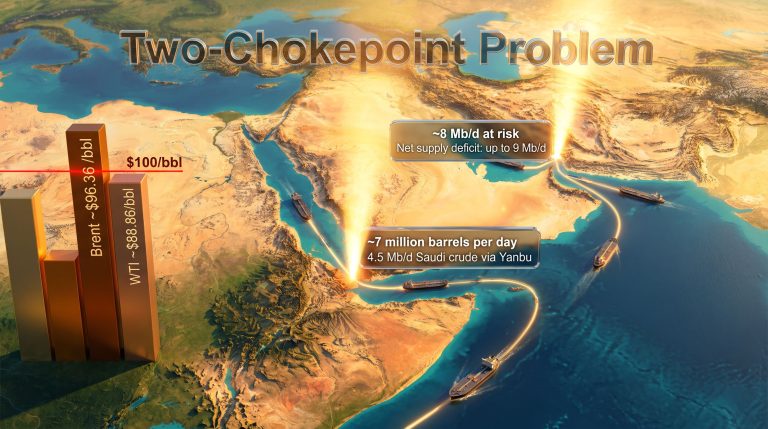
Furthermore, these oil market disruptions were compounded by simultaneous pressure on Red Sea shipping lanes, leaving buyers with increasingly few viable logistical workarounds.
"The Strait of Hormuz and the Red Sea together handle a disproportionate share of global seaborne crude. Simultaneous disruption to both creates a supply shock with no rapid logistical workaround — a scenario that had long existed in worst-case modelling but had never been empirically tested at this scale."
Russia Crude Prices Amid the Iran War: A Five-Phase Cycle
The pricing trajectory of Russian Urals crude during the conflict was not a simple upward spike followed by a correction. It followed a more complex, multi-phase arc that reflected the successive stages of geopolitical escalation, temporary resolution, and renewed hostility.
| Phase | Timeframe | Urals vs. Brent | Brent Level | Key Driver |
|---|---|---|---|---|
| Pre-War Baseline | Early 2026 | $10-14 discount | ~$70-75/bbl | Sanctions-driven structural discount |
| Conflict Escalation | Late March 2026 | Premium up to $20/bbl | Rising sharply | Hormuz closure, supply panic |
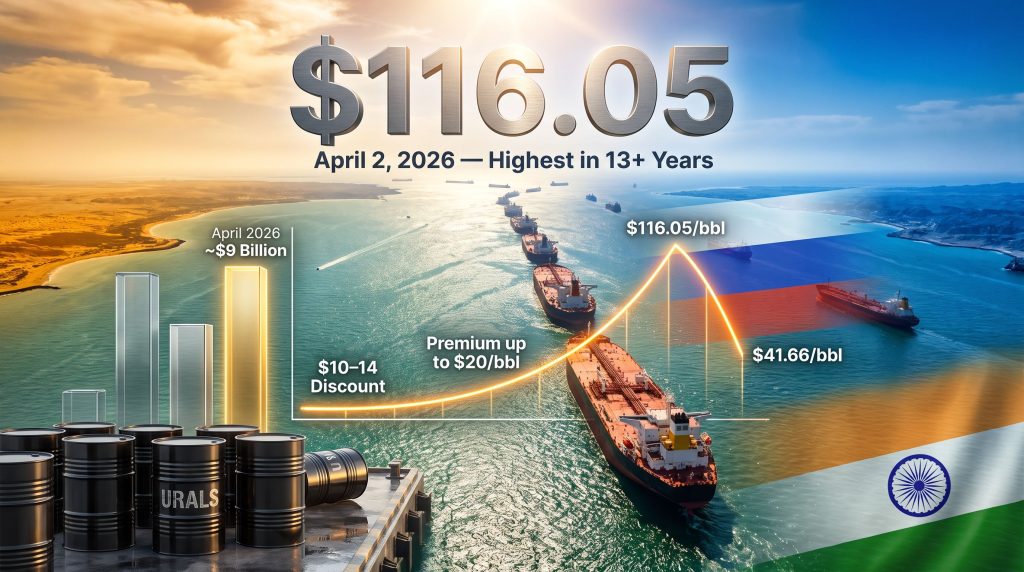
| Peak Crisis | April 2, 2026 | $116.05/bbl (Primorsk) | Above $120/bbl | Highest Urals price in 13+ years |
| Ceasefire Relief | May-June 2026 | ~$10 discount restored | ~$71/bbl | Iran-US interim agreement |
| Hostilities Resume | Late July 2026 | Near parity / tightening | ~$100/bbl | Renewed Houthi attacks, Red Sea disruptions |
The pre-war pricing structure reflected the accumulated effect of Western sanctions imposed following Russia's 2022 invasion of Ukraine. A restricted buyer pool, elevated insurance costs, and the shadow fleet logistics required to circumvent Western shipping services had embedded a structural discount of $10-14 per barrel into Urals pricing relative to Brent. This discount had become a near-permanent feature of the market.
What the Hormuz closure demonstrated was that geopolitical scarcity premiums can completely override politically imposed discount structures when supply alternatives are sufficiently constrained. Within weeks, the same crude that had been trading at a substantial discount was commanding a premium of up to $20 per barrel above Brent — an inversion of more than $30 per barrel from the pre-conflict baseline. Indeed, Russian oil sanctions that had previously suppressed Urals pricing proved powerless against the sheer force of emergency demand.
Notably, Urals crude reached a 13-year high in April, a remarkable reversal for a grade that had been systematically discounted throughout the post-2022 sanctions era.
The Mechanics Behind the Premium: Why Russian Crude Became Indispensable
Understanding why Russian crude specifically benefited from the Hormuz closure requires appreciating its unique logistical position. Russian export grades, particularly Urals, were already moving through Indian Ocean trade lanes via the Cape of Good Hope route and through eastern export terminals. This meant that when Gulf supply was cut off, Russian cargoes already afloat were among the most immediately accessible alternatives for Asian buyers.
Industry sources cited in ET EnergyWorld's reporting noted that ample Russian cargoes were already in transit, including within the Indian Ocean itself, allowing them to reach Indian refiners with considerably less delay than alternatives sourced from West Africa or Latin America.
This logistical proximity gave Russian crude sellers decisive negotiating leverage. With buyers competing aggressively for every available cargo, the seller's market dynamic allowed premiums to escalate rapidly. Indian refiners absorbed premiums of $12-20 per barrel for Russian crude at the height of the crisis — a figure that would have been unthinkable in the pre-conflict environment where those same refiners had been systematically reducing Russian purchases under sanctions pressure.
Market Paradox: India had been methodically diversifying away from Russian crude in the months before the conflict, reducing purchases in response to tightening US sanctions enforcement. The Hormuz closure forced a rapid and complete reversal of that strategy, demonstrating how geopolitical supply shocks can override policy-driven procurement decisions almost instantaneously.
India's Crude Import Pivot: Scale, Speed, and Cost
The Pre-War Reduction and Its Sudden Reversal
In the three months preceding the conflict, Indian refiners had been on a deliberate course of reducing their Russian crude exposure. The tightening of US sanctions enforcement had created real compliance risks, and diversification toward African and Latin American suppliers was underway. This made the speed of the subsequent reversal all the more striking.
When the Hormuz closure eliminated Gulf supply alternatives, Indian refiners essentially doubled Russian crude imports within March 2026 alone. The policy-driven procurement strategy was abandoned in favour of the most fundamental priority in refinery operations: maintaining feedstock supply continuity.
Russian crude's share of India's total crude imports held at 40% or above throughout the conflict period, according to ET EnergyWorld's reporting. This figure is particularly significant because it represents a higher concentration than many refinery operators consider optimal from an energy security standpoint, but it reflects the hard constraint imposed by cargo availability and refinery configuration compatibility.
Why Indian Refineries Cannot Simply Switch Grades
A factor that is not widely understood outside the downstream oil industry is the degree to which refinery configurations are optimised for specific crude grades. Indian refineries that have historically processed Urals-grade crude have invested in equipment calibrated to its specific sulphur content, viscosity, and yield characteristics. Switching to meaningfully different grades — such as lighter West African crudes or heavier Canadian grades — requires either blending strategies, processing adjustments, or in extreme cases, capital-intensive equipment modifications.
This refinery-grade compatibility constraint is one reason Indian operators were willing to pay $12-20 per barrel premiums for Russian crude rather than fully substituting with nominally available alternatives. The cost of paying the premium was in many cases lower than the operational disruption of processing incompatible feedstock grades.
Diversification Attempts and Their Limitations
Despite the Russian crude concentration, Indian refiners did attempt parallel diversification during the crisis:
- Cargoes were secured from Angola, Gabon, and Congo as West African producers benefited from redirected demand
- Saudi Arabia rerouted shipments through its Red Sea export terminals, partially offsetting Persian Gulf supply losses
- Improved availability from Brazil, Venezuela, the UAE, and Saudi Arabia through May contributed to gradually easing the Russian crude premium
By late April, the premium on Russian crude had compressed to approximately $10 per barrel. By May, as the Iran-US ceasefire was repeatedly extended and additional supply sources became accessible, the premium had nearly disappeared entirely.
China's Role as an Unintended Supply Release Valve
One of the less-discussed dynamics of the conflict period was the role played by Chinese demand deceleration in shaping Russian crude availability for other buyers. A pronounced slowdown in Chinese crude purchasing during the conflict freed up Russian cargo volumes that would otherwise have been committed to Chinese buyers under existing supply arrangements.
This supply reallocation effectively expanded the pool of Russian crude accessible to Indian refiners and other Asian buyers at a moment of acute market tightness. The dynamic illustrates a principle that is underappreciated in oil market analysis: demand-side shifts in one major buyer can materially alter pricing outcomes for all other participants in the same supply chain, even without any change in production levels.
China's reduced purchasing may have reflected a combination of factors, including domestic economic conditions, strategic reserve management decisions, and the elevated price environment itself reducing purchasing incentives. Whatever the cause, the practical effect was to provide additional cargo availability that prevented Russian crude premiums from rising even higher than they ultimately did.
The next major ASX story will hit our subscribers first
Russia's Fiscal Position: Windfall and Reversal
The April Revenue Surge
The pricing dynamics of the conflict period had direct and substantial consequences for Russian state finances. Russia's oil export revenues reached approximately $9 billion in April 2026 — roughly double the level recorded in the prior month — driven primarily by the Urals price surge.
The Russian government's average Urals reference price for tax calculation purposes was recorded at $94.87 per barrel in April, representing a 23% increase from March and more than double the early-2026 baseline established under the pre-war sanctions discount structure.
This revenue windfall provided a meaningful fiscal buffer at a time when Western sanctions had otherwise been progressively constraining Russian energy income. The irony of the situation was not lost on energy policy analysts: the same Western sanctions architecture designed to limit Russian oil revenues was temporarily overwhelmed by a separate geopolitical crisis that elevated those revenues to multi-year highs. Analysis from Bruegel's assessment of Russian budget gains highlights just how substantially Moscow's fiscal position improved during this period.
The Rapid Compression: A $74/Barrel Swing in One Quarter
The fiscal windfall proved short-lived. By early July 2026, the price cycle had fully reversed, with Urals crude at western export terminals averaging just $41.66 per barrel in the first three days of the month.
The price range experienced within a single quarter tells a striking story:
| Metric | Value |
|---|---|
| Urals price at peak (April 2, 2026) | $116.05/bbl |
| Russian avg. Urals tax reference price (April) | $94.87/bbl |
| Russia's oil export revenue (April 2026) | ~$9 billion |
| Urals price (early July 2026) | $41.66/bbl |
| Price range within single quarter | >$74/bbl |
| Brent at peak (April 2026) | >$120/bbl |
| Brent post-ceasefire (June 2026) | ~$71/bbl |
| Brent on hostility resumption (late July 2026) | ~$100/bbl |
This volatility magnitude within a single quarter underscores a structural shift in how Russian crude is priced. Rather than reflecting its own supply and demand fundamentals, Urals had effectively become a derivative instrument on Middle Eastern geopolitical outcomes, moving in response to events entirely outside Russia's own production or export decisions.
The Houthi Multiplier: A Second-Order Supply Shock
The conflict's impact on oil markets was further complicated by the behaviour of Iran-backed Houthi rebels in Yemen, who intensified attacks on commercial shipping in the Red Sea as the broader conflict escalated. This introduced a second-order supply shock operating independently of the Strait of Hormuz closure.
The significance of this secondary disruption cannot be overstated. Saudi Arabia had been serving as a partial supply compensator during the Hormuz crisis, rerouting shipments through Red Sea export terminals to offset Persian Gulf supply losses. When Houthi attacks began disrupting Red Sea commercial shipping, this compensatory mechanism was itself constrained.
For Indian refiners, Saudi Arabia represents the second-largest crude supplier after Russia. With both the primary Gulf supply route (Hormuz) and the Saudi compensatory route (Red Sea) facing simultaneous pressure, the number of viable crude supply alternatives for Asian buyers narrowed significantly, amplifying Russian crude's pricing power even as the broader conflict showed signs of intermittent de-escalation. These geopolitical trade tensions, consequently, proved far more destabilising than most market participants had anticipated.
The June Ceasefire and Its Market Aftermath
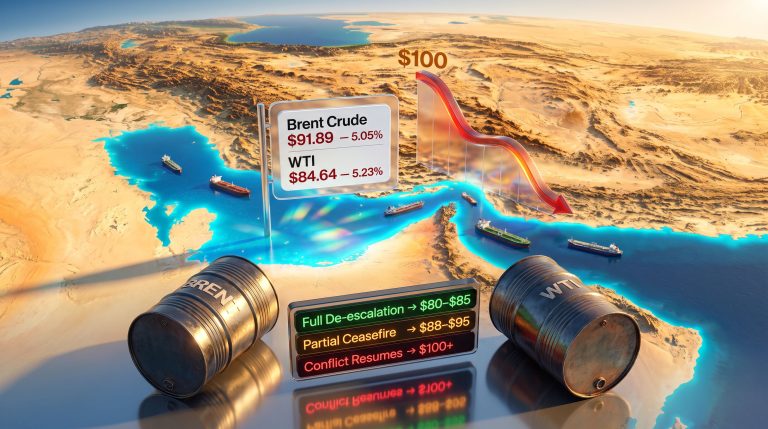
The interim Iran-US agreement reached in June 2026 triggered one of the most rapid crude price corrections in recent market history. Benchmark Brent collapsed from above $120 per barrel to approximately $71 per barrel within a compressed timeframe as traders priced out the geopolitical risk premium that had accumulated since March.
Russian Urals discounts re-emerged at approximately $10 per barrel below Brent, restoring something close to the pre-war pricing structure. Indian refiners resumed their gradual diversification efforts, and African and Latin American suppliers began regaining market share as Russian crude's emergency premium evaporated.
The speed of this correction revealed important truths about how geopolitical risk premiums function in oil markets. The premium that had built up over weeks collapsed in days, suggesting that traders had been pricing the risk rather than a permanent supply reality. Once the perceived probability of sustained Hormuz disruption declined, the pricing rationale for Russian crude premiums disappeared almost immediately.
The resumption of Iran-US hostilities subsequently reversed these gains, eliminating seller incentives to offer price concessions and pushing Brent back toward $100 per barrel as supply risk perceptions ratcheted upward again. In this regard, OPEC market influence proved largely secondary to the raw mechanics of chokepoint-driven scarcity.
Structural Vulnerabilities Exposed: What the 2026 Cycle Reveals
The Sanctions Discount Is Not Permanent
Perhaps the most significant analytical insight from the 2026 price cycle is that the sanctions-driven discount embedded in Russian crude pricing is not a permanent structural feature but a conditional pricing mechanism that can be overridden by sufficiently severe supply shocks. When buyers have no viable alternative, they will pay above-market prices regardless of the political origin of the crude.
This finding complicates future sanctions policy design. If Russian crude functions as an indispensable emergency supply buffer for major Asian economies during genuine supply crises, the political feasibility of maintaining strict buyer restrictions becomes harder to sustain — particularly for import-dependent nations with limited alternative supply options.
Three Scenarios for Russian Crude Pricing Going Forward
The trajectory of Russia crude prices amid the Iran war's ongoing evolution will depend heavily on which of three broad scenarios unfolds:
Scenario 1: Sustained Hostilities
- Brent remains near or above $100/bbl
- Russian crude trades near Brent parity or at a modest discount
- India maintains elevated Russian import volumes
- Russia's fiscal revenues remain supported
Scenario 2: Durable Ceasefire
- Brent retreats toward $70-75/bbl as risk premiums unwind
- Urals discount re-emerges at $10-14/bbl
- Indian refiners resume diversification toward African and Latin American suppliers
- Russian crude returns to its structurally discounted position
Scenario 3: Conflict Escalation and Prolonged Hormuz Closure
- Brent tests levels above $120/bbl
- Russian crude premiums potentially re-emerge
- Global recession risk rises, eventually capping price gains
- IEA member strategic petroleum reserve releases become the primary market stabilisation mechanism
Policy Implication: The 2026 Iran war price cycle demonstrates that geopolitical risk premiums in oil markets can materialise and reverse within weeks, not months. Energy security strategies built around strategic reserve adequacy and refinery feedstock flexibility are better positioned to absorb these shocks than procurement models optimised purely for cost efficiency.
The Limits of Diversification Under Crisis Conditions
India's experience during the conflict highlights a critical gap in energy security thinking. Pre-war diversification efforts — including reduced Russian crude purchases and expanded African and Latin American supplier relationships — proved insufficient to insulate the country from the pricing shock when genuine supply emergency conditions materialised.
Under crisis conditions, geographic proximity, cargo availability, and refinery grade compatibility override procurement policy preferences. This suggests that meaningful energy security for large crude importers requires not just supplier diversification on paper but investments in strategic reserve capacity, refinery flexibility, and genuine logistical alternatives that can be activated rapidly under supply stress.
The 2026 cycle provides empirical validation for a principle that energy security analysts have long argued: diversification strategies that work under normal market conditions may fail precisely when they are most needed.
Frequently Asked Questions
Why did Russian crude prices rise so sharply during the Iran war?
The Strait of Hormuz closure in early March 2026 eliminated a critical supply route for Gulf crude, forcing buyers to compete for available alternative barrels. Russian crude was already positioned in Indian Ocean trade lanes, making it the most immediately accessible substitute and giving sellers the leverage to demand premiums of up to $20 per barrel above Brent.
How high did Russian Urals crude prices reach during the conflict?
Urals crude reached $116.05 per barrel at the Primorsk export terminal on April 2, 2026, the highest recorded price in more than 13 years, briefly trading at a premium to Brent rather than the typical $10-14 discount.
How did the Iran-US ceasefire affect Russian crude pricing?
The interim agreement reached in June 2026 caused Brent to fall from above $120 per barrel to approximately $71 per barrel. Russian Urals discounts re-emerged at around $10 per barrel as supply risk perceptions normalised and alternative crude sources became more accessible to Asian buyers.
What happened to Russian crude prices when hostilities resumed?
The resumption of Iran-US military engagement, combined with intensified Houthi attacks on Red Sea shipping, pushed Brent back toward $100 per barrel and eliminated seller incentives to offer discounts, returning Russian crude to near-Brent parity pricing.
How did the Iran war affect India's Russian crude imports?
India had been reducing Russian crude purchases before the conflict under sanctions pressure but reversed course sharply when the Hormuz closure eliminated Gulf supply alternatives. Russian crude imports approximately doubled in March 2026, and Russian crude maintained a 40% or greater share of India's total imports throughout the conflict period.
What was the fiscal impact on Russia's oil revenues?
Russia's oil export revenues approximately doubled in April 2026 compared to the prior month, reaching around $9 billion, driven by the Urals price surge. By early July 2026, however, Urals prices had collapsed back to approximately $41.66 per barrel as geopolitical risk premiums unwound.
Disclaimer: This article contains forward-looking analysis, scenario projections, and market interpretations that involve inherent uncertainty. Readers should not treat any price forecasts, scenario descriptions, or market assessments as investment advice. Oil market dynamics are subject to rapid and unpredictable change, and past price cycles are not necessarily indicative of future outcomes.
Want to Stay Ahead of the Next Major Market-Moving Discovery?
While geopolitical shocks drive oil price volatility, savvy investors know that significant mineral discoveries on the ASX can generate equally dramatic returns — Discovery Alert's proprietary Discovery IQ model delivers real-time alerts the moment a major discovery is announced, turning complex data across 30+ commodities into clear, actionable insights. Explore historic examples of discovery-driven returns or start your 14-day free trial today to position yourself ahead of the market.