June 5, 2026
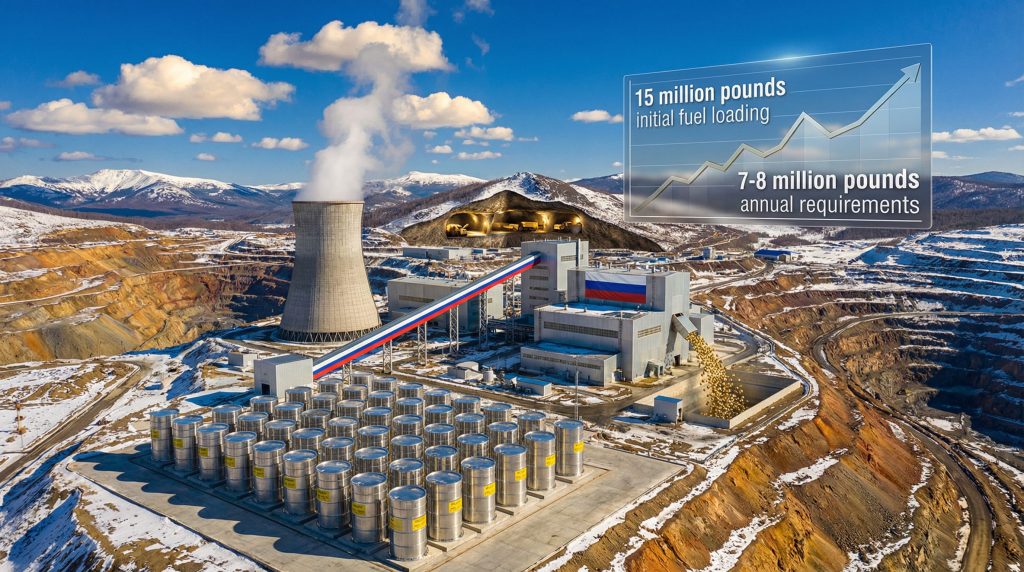
Russian uranium mining expansion continues to reshape global nuclear fuel markets as geopolitical tensions and growing reactor deployment schedules create complex supply chain dynamics. Traditional mining jurisdictions face increasing pressure to balance domestic supply security with international market participation, creating strategic considerations that extend far beyond conventional resource extraction models. Furthermore, the US Senate ban impact has intensified these dynamics across international uranium markets.
Understanding Russia's Strategic Position in Global Uranium Supply
Russia operates one of the world's most comprehensive nuclear fuel ecosystems, integrating uranium extraction, enrichment services, and reactor technology exports through a coordinated state-enterprise framework. This vertical integration creates unique competitive advantages that differentiate Russian operations from traditional mining-focused approaches employed elsewhere globally.
The strategic positioning encompasses multiple operational centers across diverse geological regions, from Eastern Siberian deposits to Buryatia mining complexes. This geographic distribution reduces operational risks while optimising transportation logistics to both domestic processing facilities and international customers.
Russian uranium mining expansion represents a calculated response to projected nuclear fuel demand increases, with state agencies coordinating reserve development across established mining centres while simultaneously planning entirely new extraction facilities for future decades. Federal Agency for Subsoil Use officials acknowledge that rapid growth in uranium consumption both domestically and internationally necessitates innovative approaches to raw material supply assurance.
When big ASX news breaks, our subscribers know first
Accelerated Development Timeline Drivers
Russia's expedited mining development schedule reflects multiple demand pressures converging simultaneously. Domestic nuclear fleet expansion creates immediate uranium requirements for initial reactor fuel loading, followed by sustained annual consumption once new units achieve operational status. This predictable demand trajectory justifies substantial capital investments in mining infrastructure and reserve development activities.
International reactor export agreements compound these requirements by extending uranium supply obligations beyond domestic consumption patterns. These commitments create additional supply channels that must be supported through expanded mining capacity, particularly as partner nations seek long-term fuel supply security alongside reactor purchases.
Key demand drivers include:
• Domestic reactor construction programmes requiring initial fuel inventories
• Ongoing operational fuel requirements for existing nuclear facilities
• International export commitments tied to reactor sales agreements
• Strategic reserve accumulation for supply security purposes
The integrated nature of Russian nuclear exports means uranium supply commitments often extend 15-20 years beyond initial reactor delivery, creating sustained demand visibility that supports major mining infrastructure investments. In addition, uranium market volatility continues to influence these strategic planning decisions.
Major Mining Centre Expansion Projects
Eastern Siberian Development Focus
The Shirondukuyskoye deposit represents Russia's most advanced expansion project, with licensing completed and capital mining work scheduled for 2026 completion. Viktor Svyatetsky from Rosatom Nedra confirmed plans to extract approximately 400 tonnes of uranium beginning in 2028, demonstrating the substantial timeline between infrastructure development and production startup.
The Elkon project holds particular strategic significance as Russia's largest uranium reserve, currently in hibernation status but planned for renewed development. This deposit's massive scale provides long-term supply security extending well beyond current operational requirements, positioning Russia for sustained production capability regardless of global market fluctuations.
Eastern Siberian Projects Summary:
| Project | Status | Timeline | Significance |
|---|---|---|---|
| Shirondukuyskoye | Capital work completion 2026 | Production start 2028 | 400 tonnes annual target |
| Elkon | Hibernation exit planned | TBD | Largest Russian reserves |
| Namarusskoye | Infrastructure construction | TBD | JSC Khiagda operation |
| Dybrynskoye | Infrastructure construction | TBD | JSC Khiagda operation |
Regional Diversification Strategy
Beyond Siberian developments, Russia pursues geographic diversification through projects in Buryatia and other regions. The Tetrakhskoye deposit in the Republic of Buryatia has achieved licensing completion, enabling future development when market conditions warrant expanded production capacity.
The JSC Dalur Dobrovolnoye deposit in the Kurgan Region achieved first uranium production, marking successful expansion beyond traditional Siberian mining centres. This geographic diversification reduces transportation costs to certain processing facilities while providing operational redundancy across multiple geological formations.
Infrastructure Modernisation Supporting Operations
The Krasnokamensk Thermal Power Plant modernisation exemplifies infrastructure investments supporting expanded mining operations. The planned 60 MW electricity generation increase specifically targets uranium mining energy requirements, ensuring stable power supply for energy-intensive extraction processes.
This infrastructure approach demonstrates integrated planning that coordinates power generation, mining operations, and processing capabilities within unified industrial complexes. The stable electricity and heat supply serves both mining enterprises and surrounding communities, creating sustainable operational foundations.
Current Production Performance Analysis
Russian uranium mining companies achieved their 2025 production plans according to official Rosatom reporting, demonstrating operational reliability during a period of global supply chain uncertainties. This performance record contrasts with production adjustments announced by other major global producers facing various operational or market challenges.
The consistent target achievement reflects several operational advantages:
Operational reliability factors:
• Integrated state enterprise coordination reducing bureaucratic delays
• Established infrastructure at existing mining centres
• Skilled workforce continuity across multi-year development projects
• Stable domestic demand providing predictable revenue streams
This production consistency positions Russia as a dependable supplier in global uranium markets, potentially increasing market share as other producers adjust capacity in response to various operational or economic considerations. However, these developments must be viewed alongside broader uranium investment strategies that consider long-term market dynamics.
Non-Uranium Revenue Stream Integration
Russian mining operations have achieved significant diversification beyond traditional uranium extraction, with non-uranium businesses now contributing 37.5% of total revenue across mining enterprises. This diversification reduces exposure to uranium price volatility while maximising resource extraction efficiency from developed mining infrastructure.
Gold Production Success
The Severnoye gold deposit in the Republic of Sakha (Yakutia) achieved commercial production status, contributing 1.5 tonnes of gold output to diversified revenue streams. This success demonstrates the viability of multi-mineral extraction strategies that leverage existing geological expertise and infrastructure investments.
Gold mining integration provides several strategic advantages:
• Stable revenue streams during uranium price fluctuations
• Utilisation of existing geological and mining expertise
• Shared infrastructure costs across multiple extraction activities
• Enhanced project economics through diversified cash flows
Furthermore, this diversification strategy aligns with broader market trends, as evidenced by gold price forecast projections showing continued strength in precious metals markets.
Rare Earth Elements Exploration
Ongoing geological exploration includes rare earth elements projects that represent potential future revenue diversification opportunities. While specific rare earth development timelines and production targets remain undisclosed, these activities indicate strategic planning for critical mineral supply chains beyond traditional nuclear fuel applications.
The rare earth exploration aligns with global trends toward critical mineral supply security, potentially positioning Russian mining operations in multiple strategic resource markets simultaneously.
Long-Term Supply Security Planning
Russia's uranium mining expansion addresses both immediate demand requirements and extended strategic planning horizons. Federal Agency for Subsoil Use projections indicate two distinct planning phases for sustained supply security achievement.
What are the 7-10 Year Development Priorities?
The immediate planning phase focuses on increasing economically viable uranium reserves within three existing mining centres over the next 7-10 years. This approach maximises returns on existing infrastructure investments while ensuring adequate reserve replacement at established operational locations.
Oleg Kazanov from the Federal Agency for Subsoil Use emphasised that rapid uranium consumption growth requires new approaches to raw material supply assurance, necessitating this accelerated reserve development timeline.
What Does the 15-20 Year Strategic Vision Entail?
The extended planning horizon involves creating entirely new mining centres over the next 15-20 years, indicating confidence in sustained nuclear energy growth both domestically and internationally. This long-term commitment extends well beyond current reactor construction schedules, suggesting strategic preparation for continued nuclear capacity additions.
The dual-timeline approach balances immediate operational requirements with strategic positioning for extended market leadership in global uranium supply chains.
The next major ASX story will hit our subscribers first
Geopolitical Implications and Market Dynamics
Russia's integrated uranium mining and enrichment capabilities create potential leverage in international energy markets, similar to strategic positioning in other energy sectors. Expanded mining capacity strengthens this position by reducing dependence on external uranium sources while increasing export capability to allied nations.
Strategic Resource Leverage
The combination of domestic mining expansion, enrichment services, and reactor exports creates comprehensive nuclear fuel cycle control that few other nations possess. This vertical integration provides strategic options during geopolitical tensions while ensuring supply security for partner countries.
According to industry analysis from World Nuclear Association, Russia's nuclear fuel cycle capabilities span the entire spectrum from uranium mining through reactor construction and operation.
Allied Nation Supply Integration
Reactor export agreements with Turkey, Egypt, Bangladesh, and other nations create dedicated uranium supply channels that extend beyond traditional market mechanisms. These arrangements ensure supply security for partner countries while generating predictable long-term revenue streams for Russian mining operations.
The integrated approach linking reactor sales, fuel supply, and technical support creates comprehensive nuclear cooperation frameworks that strengthen both economic and diplomatic relationships.
Investment and Capital Allocation Strategies
Russian uranium mining expansion requires substantial capital investment across multiple project phases, from initial geological exploration through production infrastructure development. The Shirondukuyskoye deposit development exemplifies significant capital deployment with clear production targets and established timelines.
Revenue Diversification Benefits
The 37.5% non-uranium revenue contribution provides financial stability during uranium price fluctuations, supporting sustained investment in uranium capacity expansion while maintaining operational flexibility. This diversified cash flow structure enables continued development activities regardless of short-term uranium market volatility.
Gold production and rare earth exploration activities create additional revenue streams that help finance uranium mining expansion while reducing overall business risk exposure to single commodity price movements.
Infrastructure Investment Priorities
Capital allocation priorities emphasise integrated infrastructure development that supports multiple extraction activities simultaneously. The Krasnokamensk power plant modernisation exemplifies investments that benefit uranium mining while supporting broader industrial complex operations.
This approach maximises capital efficiency by creating infrastructure that serves multiple revenue streams while ensuring operational reliability for primary uranium extraction activities.
Environmental and Regulatory Framework
Russian uranium mining operations function within established regulatory frameworks that coordinate environmental management, reserve development, and production planning across multiple agencies. The Federal Agency for Subsoil Use plays a central coordinating role in reserve assessment and development authorisation processes.
Environmental Management Approaches
Uranium mining operations require comprehensive environmental management due to potential groundwater impacts, heavy metal contamination risks, and radioactive waste handling requirements. International assessments of Russian mining operations, including expert reviews of the Krasnokamensk mine, have found no evidence of environmental harm or health impacts when proper management protocols are implemented.
Consequently, the importance of nuclear waste disposal safety continues to influence operational planning and regulatory compliance across the industry.
Regulatory Coordination
The integrated regulatory approach streamlines licensing processes while ensuring environmental compliance across multiple mining centres. This coordination reduces development timelines and regulatory uncertainties that can delay major mining projects in other jurisdictions.
Research from NucNet demonstrates how this coordinated approach has contributed to sustained production growth across Russian uranium operations.
Future Market Positioning and Strategic Outlook
Russia's comprehensive russian uranium mining expansion strategy positions the country for sustained leadership in global nuclear fuel supply chains extending well beyond current market dynamics. The combination of domestic demand growth, international export commitments, and strategic resource leverage creates multiple competitive advantages.
The integration of mining operations with enrichment services and reactor exports represents a unique competitive position that extends beyond traditional resource extraction business models. This vertical integration ensures sustained demand for Russian uranium production while creating multiple revenue streams and strategic flexibility.
Key strategic advantages include:
• Integrated supply chain control from mining through fuel fabrication
• Predictable domestic demand from ongoing reactor construction
• Long-term international commitments through reactor export agreements
• Revenue diversification reducing exposure to uranium price volatility
• Geographic diversification across multiple mining centres
The 15-20 year planning horizon for new mining centre creation demonstrates confidence in continued nuclear energy growth globally, positioning Russia for sustained market participation regardless of short-term industry fluctuations.
"The rapid growth of uranium consumption in Russia and globally requires a new approach to ensuring our country's raw material supply, necessitating increased reserves within existing mining centres and creation of entirely new facilities over extended planning horizons."
This strategic positioning creates significant implications for global uranium markets, nuclear fuel security, and international nuclear cooperation frameworks extending well into the 2040s and beyond. For instance, the russian uranium mining expansion continues to influence global supply dynamics and market strategies across the nuclear fuel cycle.
Could Your Portfolio Benefit From Mining Discovery Opportunities?
Discovery Alert's proprietary Discovery IQ model instantly identifies significant ASX mineral discoveries, including uranium and precious metals opportunities that align with global supply dynamics like Russia's expanding mining operations. Explore how major mineral discoveries have historically generated substantial returns by visiting Discovery Alert's dedicated discoveries page, then begin your 14-day free trial to position yourself ahead of the market with real-time mining discovery alerts.