August 3, 2026
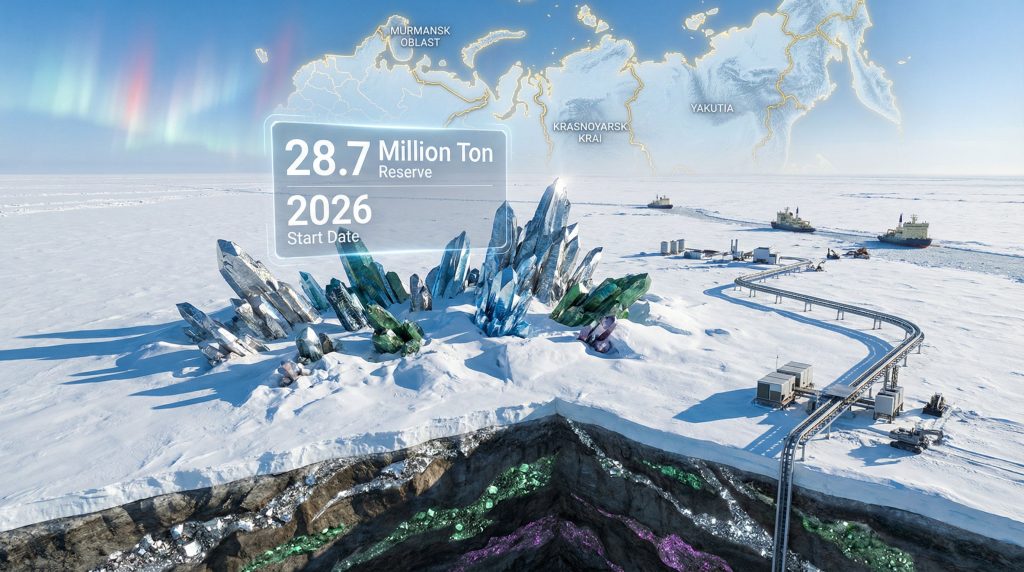
Russia's Arctic mineral consolidation represents a transformative approach to resource governance that extends beyond traditional market-driven extraction models. This strategic initiative demonstrates how state-controlled mineral development can reshape global supply chain dynamics, particularly in critical minerals and energy security sectors. Furthermore, the Arctic consolidation model contrasts sharply with Western diversification efforts, including initiatives like the European critical raw materials facility, highlighting the growing divergence in global resource strategies.
The implications of this consolidation extend well beyond immediate commodity markets to influence long-term geopolitical relationships and technological development pathways. As the mining industry evolution 2025 continues to unfold, Arctic resource control represents a significant departure from traditional commercial mining approaches.
What Does Russia's Arctic Mineral Consolidation Strategy Actually Mean?
Russia's Arctic mineral consolidation strategy represents a comprehensive approach to centralising control over critical mineral resources through state-directed governance structures rather than market-based development models. This strategy encompasses the systematic integration of resource extraction, processing capabilities, and transportation infrastructure under unified political oversight.
Defining the Scope of Arctic Resource Control
The scope of Russia's Arctic mineral consolidation extends across multiple resource categories, with rare earth elements forming a cornerstone of the strategic framework. According to the U.S. Geological Survey's 2023 Mineral Commodity Summaries, Russia holds approximately 12 million metric tons of identified rare earth reserves, representing roughly 12% of global reserves.
This positions Russia as a significant player in global rare earth markets, though actual influence depends on processing capabilities rather than raw material possession alone. In addition, the recent executive order on critical minerals in the United States demonstrates how geopolitical considerations increasingly shape mineral policy frameworks globally.
The consolidation strategy focuses on several key elements:
- Integrated resource extraction across multiple mineral categories
- Centralised processing and refining capabilities
- Strategic transportation corridor development
- Technology acquisition and development programs
- International partnership frameworks with non-Western allies
This comprehensive approach distinguishes Russia's strategy from traditional mining development models that typically focus on individual deposits or single mineral categories. However, the integration of rare earths with other strategic minerals creates potential synergies in processing and infrastructure development, though it also introduces operational complexities.
The Geographic Distribution of Critical Mineral Assets
Russia's Arctic mineral assets are distributed across three primary regions, each presenting distinct geological characteristics and development challenges. The Murmansk Oblast, centred on the Kola Peninsula, hosts the Lovozero deposit, which represents one of Russia's most significant rare earth concentrations.
The Yakutia Republic, also known as the Sakha Republic, contains extensive mineral resources including well-established diamond operations through ALROSA. Consequently, the region's vast territory encompasses diverse geological formations that may harbour additional undeveloped rare earth deposits.
Krasnoyarsk Krai presents significant potential through the Vilyuy Basin and other geological formations, though development data remains limited in publicly available sources. The region's existing metallurgical infrastructure provides a foundation for potential rare earth processing integration.
| Region | Primary Minerals | Controlling Entity | Development Status |
|---|---|---|---|
| Murmansk Oblast | REEs, Nickel, Platinum | Rosatom/Nornickel | Active Production |
| Yakutia | Gold, Diamonds, REEs | Regional/Federal Mix | Expanding |
| Krasnoyarsk Krai | Platinum, Nickel, REEs | Nornickel/Russian Platinum | Development Phase |
Timeline and Implementation Phases Through 2035
The implementation timeline for Russia's Arctic mineral consolidation extends through multiple phases, with critical milestones targeted for the late 2020s and early 2030s. However, the critical minerals strategy pivot observable in many countries demonstrates how rapidly strategic priorities can shift in response to geopolitical developments.
The phased approach typically involves:
- Infrastructure development (2025-2027)
- Processing capacity expansion (2027-2030)
- Production scaling (2030-2033)
- Market integration (2033-2035)
This timeline reflects the substantial lead times required for Arctic infrastructure development. Furthermore, success depends heavily on technology access, financing availability, and geopolitical stability throughout the implementation period.
When big ASX news breaks, our subscribers know first
How Does Political Centralisation Impact Arctic Mining Operations?
Political centralisation fundamentally alters the operational dynamics of Arctic mining through the creation of hierarchical decision-making structures that prioritise strategic objectives over traditional market considerations. This centralisation model affects everything from capital allocation and technology procurement to environmental oversight and international partnerships.
State Corporation Governance Models in Extreme Environments
Russian state corporations operate Arctic mining projects through specialised governance frameworks designed to manage the unique challenges of extreme environment operations. These structures typically involve multiple layers of federal oversight, with strategic decisions concentrated at the presidential administration level.
Rosatom's role in Arctic development extends beyond its traditional nuclear focus to encompass broader infrastructure management. This expanded mandate creates operational synergies between nuclear technology, Arctic transportation, and mineral extraction activities.
The state corporation model provides several advantages in Arctic environments:
- Centralised risk management across multiple operational domains
- Integrated infrastructure development spanning transportation and extraction
- Strategic coordination between different resource sectors
- Long-term capital commitment independent of short-term market fluctuations
However, this model also introduces potential inefficiencies through bureaucratic complexity and reduced operational autonomy at the project level.
Decision-Making Hierarchies in Resource Allocation
Resource allocation decisions in Russia's Arctic mineral sector follow a hierarchical structure that begins at the presidential administration level and extends through federal ministries, state corporations, and regional authorities. This hierarchy creates multiple approval layers that can affect project timelines and operational flexibility.
The decision-making process typically involves:
- Presidential Administration – Strategic direction and priority setting
- Federal Ministries – Regulatory framework and policy implementation
- State Corporations – Operational execution and subsidiary management
- Regional Authorities – Environmental permitting and local coordination
This structure reflects Russia's "power vertical" system, where strategic sectors converge at the apex of presidential authority. While this centralisation can accelerate certain types of decisions, it may also create bottlenecks when competing priorities emerge.
Coordination Mechanisms Between Federal and Regional Authorities
Arctic mining operations must navigate the complex relationship between federal mineral rights and regional environmental oversight. This dual authority structure requires sophisticated coordination mechanisms to ensure project approvals and ongoing compliance.
Federal authorities typically control subsurface mineral rights and extraction licences, strategic resource designation and export controls, international partnership approvals and sanctions compliance, plus major infrastructure investment decisions.
Regional authorities generally manage environmental impact assessments and monitoring, local community consultation and compensation, regional infrastructure coordination and permitting, and indigenous peoples' rights considerations.
The coordination between these levels often determines project feasibility and operational timelines, particularly in regions with significant indigenous populations or sensitive environmental considerations.
Why Are Rare Earth Elements Central to Arctic Development Plans?
Rare earth elements occupy a central position in Russia's Arctic development strategy due to their critical importance in defence technologies, renewable energy infrastructure, and advanced manufacturing applications. This strategic significance extends beyond immediate economic value to encompass long-term geopolitical positioning and technological independence objectives.
Russia's Reserve Advantage in Global Context
Russia's rare earth reserves provide a foundation for potential strategic influence in global supply chains, though the actual magnitude of these reserves requires careful verification. The U.S. Geological Survey identifies Russia as holding approximately 12 million metric tons of rare earth reserves, representing roughly 12% of global identified reserves as of 2023.
This positions Russia as the fourth-largest holder of rare earth reserves globally, behind:
- China: ~44 million metric tons (37% of global reserves)
- Vietnam: ~22 million metric tons (18% of global reserves)
- Brazil: ~7 million metric tons (6% of global reserves)
- Russia: ~12 million metric tons (10% of global reserves)
However, reserve size alone does not determine strategic influence in rare earth markets. The critical factors include processing capabilities, technological sophistication, and downstream manufacturing integration.
Russia's rare earth reserves are primarily concentrated in Arctic and sub-Arctic regions, including the Kola Peninsula's Lovozero deposit and various formations across Yakutia and Krasnoyarsk Krai, creating both strategic opportunities and logistical challenges.
Processing Capacity Gaps vs. Raw Material Abundance
Despite substantial reserve holdings, Russia faces significant processing capacity limitations that constrain its ability to translate raw materials into strategic influence. The rare earth value chain requires sophisticated separation technologies, purification processes, and downstream manufacturing capabilities that Russia has not fully developed domestically.
Current processing limitations include separation technology constraints for individual rare earth elements, purification capacity insufficient for magnet-grade applications, alloy production capabilities limited compared to Chinese facilities, and manufacturing integration gaps in permanent magnet production.
These limitations are compounded by international sanctions that restrict access to advanced Western processing technologies. While Russia has pursued partnerships with countries like China and India to address these gaps, meaningful progress requires substantial time and capital investment.
The processing bottleneck represents the fundamental constraint on Russia's rare earth strategic ambitions. Consequently, until these capabilities are developed, control over Arctic deposits provides limited immediate leverage in global supply chains.
Import Dependency Reduction Targets by 2030
Russia's Arctic rare earth development aligns with broader strategic objectives to reduce import dependency in critical technologies and materials. Current Russian import dependency for processed rare earth products remains substantial, particularly for magnet-grade materials and specialised alloys.
The strategic framework typically targets domestic production capacity for basic rare earth oxides, processing infrastructure for defence and energy applications, technology development for advanced separation and purification, and supply chain integration across multiple industrial sectors.
Achievement of these targets depends on successful technology acquisition, substantial capital investment, and stable geopolitical conditions that enable long-term infrastructure development.
Which Infrastructure Projects Enable Arctic Mineral Extraction?
Arctic mineral extraction requires specialised infrastructure designed to operate in extreme environments with limited existing transportation networks. The development of this infrastructure represents both the enabling foundation and the primary constraint for successful Arctic resource development.
Northern Sea Route Expansion and Mining Logistics
The Northern Sea Route serves as the primary transportation corridor for Arctic mineral exports, connecting remote extraction sites with global markets through a seasonally navigable Arctic Ocean passage. Recent expansion efforts focus on year-round navigation capabilities through enhanced icebreaker support and improved port infrastructure.
NSR advantages for mineral transportation include reduced shipping distances to European and Asian markets, lower transportation costs compared to southern route alternatives, strategic control over transportation infrastructure, and integration potential with processing facilities.
However, NSR limitations include seasonal navigation constraints, limited port infrastructure, and vulnerability to geopolitical disruptions. The expansion timeline for year-round commercial viability remains uncertain and depends on continued icebreaker fleet development and climate change impacts.
Port Development in Bezimyannaya Bay and Beyond
Specialised port facilities designed for Arctic mineral exports require substantial engineering capabilities and environmental adaptations. These facilities must accommodate both the extreme climate conditions and the specific handling requirements of various mineral concentrates.
Port development priorities include deep-water access for large bulk carriers, specialised loading equipment for mineral concentrates, environmental protection systems for sensitive Arctic ecosystems, and year-round operation capabilities through heating and ice management.
The development timeline for major Arctic ports typically spans 5-7 years from initial planning to operational capacity, reflecting the complexity of Arctic construction and the need for specialised equipment and expertise.
Transportation Networks Connecting Remote Deposits
Arctic mineral deposits often require dedicated transportation infrastructure connecting remote extraction sites with processing facilities and export terminals. This infrastructure development represents a major capital requirement and technical challenge.
Transportation solutions typically include all-weather roads designed for permafrost conditions, pipeline systems for concentrate transport, rail connections where geological conditions permit, and aviation support for personnel and specialised equipment.
The selection of transportation modes depends on factors including deposit size, mineral type, environmental constraints, and integration with existing infrastructure networks.
How Do Major Mining Projects Fit Into the Consolidation Framework?
Major mining projects within Russia's Arctic consolidation framework operate as integrated components of broader strategic objectives rather than standalone commercial ventures. This integration affects project design, financing structures, and operational priorities.
Integrated Project Development Approach
Arctic mining projects are typically developed as components of larger resource complexes that may include multiple mineral types, processing facilities, and infrastructure systems. This integrated approach creates potential operational synergies while also introducing coordination complexities.
Project integration typically involves multi-mineral extraction from single or adjacent sites, shared infrastructure across multiple operations, coordinated processing facilities for different mineral types, and integrated transportation and logistics systems.
This approach can improve overall project economics through shared costs and operational efficiencies, but it also increases planning complexity and capital requirements.
Processing and Refining Integration Strategies
The consolidation framework emphasises the development of domestic processing capabilities rather than raw material exports alone. This strategic focus reflects lessons learned from other resource sectors where processing capacity determines strategic influence.
Processing integration involves primary concentration at or near extraction sites, secondary processing at regional facilities with specialised capabilities, final processing at integrated manufacturing centres, and technology development for advanced separation and purification.
The timeline for developing comprehensive processing capabilities typically extends over multiple decades, requiring sustained investment and technology acquisition efforts.
What Are the Processing and Refining Bottlenecks?
Processing and refining represent the critical constraints in Russia's Arctic rare earth development strategy. These bottlenecks limit the ability to translate resource control into strategic market influence and highlight the gap between raw material possession and value chain dominance.
Separation Technology Limitations Under Sanctions
Advanced rare earth separation requires sophisticated technologies that are heavily concentrated among a limited number of global suppliers. International sanctions have restricted Russian access to the most advanced separation equipment and technical expertise, creating significant bottlenecks in processing capability development.
Key technology gaps include solvent extraction systems for individual rare earth element isolation, ion exchange technologies for high-purity separation, crystallisation equipment for final purification stages, and process control systems for consistent quality management.
These limitations force reliance on older technologies or partnerships with countries that may have competing strategic interests, potentially limiting processing efficiency and product quality.
Magnet-Grade Production Capacity Constraints
The production of magnet-grade rare earth materials requires the highest levels of purity and specific elemental compositions that are technically challenging to achieve. Russia's current capacity for magnet-grade production remains limited, constraining its ability to serve high-value applications.
Magnet-grade production challenges include ultra-high purity requirements (99.9%+ for critical applications), specific elemental ratios for different magnet compositions, quality control systems for consistent performance characteristics, and specialised packaging and handling to prevent contamination.
The development of magnet-grade production capabilities requires substantial investment in both equipment and technical expertise, with timelines typically measured in years rather than months.
Downstream Manufacturing Integration Challenges
Creating strategic influence in rare earth markets requires integration beyond raw material processing into downstream manufacturing of magnets, alloys, and finished products. This integration represents the most complex aspect of supply chain development.
Manufacturing integration involves permanent magnet production for motors and generators, specialised alloy development for specific applications, quality certification for critical applications including defence and aerospace, and research and development for next-generation materials and applications.
The technical and capital requirements for comprehensive downstream integration often exceed those of upstream mining and processing operations, representing a significant strategic challenge.
The next major ASX story will hit our subscribers first
How Does Arctic Consolidation Compare to Global Supply Chain Models?
Russia's Arctic consolidation strategy represents one of several competing approaches to critical mineral supply chain organisation, each with distinct advantages and limitations. Understanding these different models provides insight into potential future developments and strategic implications.
China's Vertical Integration vs. Russia's Resource-Heavy Approach
China's rare earth supply chain dominance stems from comprehensive vertical integration spanning from mining through finished product manufacturing. This model emphasises processing capabilities and downstream manufacturing rather than resource control alone.
Chinese model characteristics include comprehensive processing capabilities across all rare earth elements, extensive manufacturing integration for magnets and applications, technology development focus on efficiency and cost reduction, and market-based optimisation within strategic constraints.
Russia's emerging model emphasises resource control and strategic positioning rather than comprehensive market participation. This approach may provide geopolitical leverage but faces significant challenges in competing with established supply chains.
| Supply Chain Model | Strengths | Weaknesses | Arctic Application |
|---|---|---|---|
| Chinese Integration | Full control, efficiency | Concentration risk | Limited technology access |
| Western Diversification | Risk distribution | Higher costs | Sanctions impact |
| Russian Consolidation | Resource security | Processing gaps | Infrastructure challenges |
Western Diversification Strategies and Arctic Alternatives
Western countries have pursued supply chain diversification strategies aimed at reducing dependence on Chinese processing capabilities while developing alternative sources and technologies. Russia's Arctic resources represent a potential component of these strategies, though geopolitical considerations limit practical cooperation.
Western diversification efforts include alternative source development in friendly countries, processing capacity building in allied nations, technology innovation for improved efficiency and recycling, and strategic stockpiling for supply security.
The effectiveness of these strategies depends on sustained investment, technology development, and international coordination among allied countries.
Technology Transfer Restrictions and Self-Sufficiency Goals
International technology transfer restrictions significantly impact the development timeline and effectiveness of Russia's Arctic consolidation strategy. These restrictions force greater reliance on domestic technology development or partnerships with countries that may have limited technical capabilities.
Technology restrictions affect processing equipment access and modernisation, technical expertise and knowledge transfer, research collaboration opportunities, and quality certification for international markets.
Self-sufficiency goals may drive innovation but also increase costs and development timelines compared to strategies that utilise international technology transfer and cooperation.
What Investment Implications Emerge From Arctic Centralisation?
The centralisation of Arctic mineral resources under state control creates distinct investment implications that differ significantly from traditional mining sector dynamics. These implications affect both direct investment opportunities and broader portfolio considerations for institutions and individuals exposed to critical minerals markets.
Risk Assessment for International Mining Companies
International mining companies face elevated political and operational risks when considering Arctic projects within Russia's consolidation framework. These risks extend beyond traditional mining sector considerations to include geopolitical stability and sanctions compliance.
Key risk factors include regulatory uncertainty as consolidation structures evolve, technology access restrictions affecting operational capabilities, sanctions exposure limiting financing and partnership options, and asset nationalisation risks under changing political conditions.
The risk-return profile for Arctic projects may not align with traditional mining investment criteria, particularly for companies operating in multiple jurisdictions with varying regulatory requirements.
Commodity Price Impact Scenarios
Arctic mineral consolidation could influence commodity prices through multiple channels, though the magnitude and timing of these effects remain highly uncertain. The primary influence mechanisms include supply disruption risks and strategic stockpiling behaviours.
Potential price scenarios include short-term volatility from geopolitical developments, long-term supply security premiums for certain materials, market segmentation between strategic and commercial applications, and innovation incentives driving alternative material development.
The complexity of rare earth markets, with different prices for different elements and purities, makes simple price predictions challenging and potentially misleading.
Alternative Supply Chain Development Opportunities
Arctic consolidation creates investment opportunities in alternative supply chain development, including projects outside of Russian influence and technologies that reduce dependence on traditional rare earth sources.
Alternative investment themes include non-Russian Arctic projects in Alaska, Canada, and Greenland, processing capacity development in allied countries, recycling technologies for rare earth recovery, and alternative material development reducing rare earth requirements.
These opportunities often require longer development timelines and higher technical risks compared to traditional mining investments, but may offer strategic value in portfolio diversification.
How Do Sanctions Affect Arctic Mineral Development Timelines?
International sanctions significantly impact the timeline and feasibility of Arctic mineral development projects by restricting access to critical technologies, financing sources, and international partnerships. These effects compound the inherent challenges of Arctic operations and may fundamentally alter project economics.
Technology Access Restrictions on Processing Equipment
Advanced mineral processing requires specialised equipment and technologies that are primarily manufactured in countries with sanctions regimes affecting Russia. These restrictions create both immediate operational constraints and longer-term strategic challenges.
Technology restrictions encompass separation and purification equipment essential for high-grade production, process control systems required for consistent quality, maintenance and technical support for existing equipment, and research and development collaboration limiting innovation.
The development of domestic technology alternatives requires substantial time and investment, potentially extending project timelines by several years compared to pre-sanctions planning assumptions.
Financing Constraints for Large-Scale Projects
Arctic mineral projects require substantial capital commitments that extend over multiple years, often totalling billions of dollars for integrated development programmes. Sanctions significantly limit access to international financing sources and may affect project economics.
Financing challenges include international bank restrictions limiting project financing options, currency exchange limitations affecting international transactions, insurance availability for project risk management, and equipment financing for specialised Arctic equipment.
Alternative financing sources may be available through non-sanctioning countries, but often at higher costs or with less favourable terms compared to traditional international project finance.
International Partnership Limitations and Workarounds
Arctic development often benefits from international partnerships that provide technical expertise, financing, and market access. Sanctions limit these partnership opportunities while creating incentives for cooperation with countries outside the sanctions regime.
Partnership impacts include Western company withdrawal from joint ventures and partnerships, technology transfer limitations affecting capability development, market access restrictions for processed materials, and alternative partnership development with non-Western companies.
The shift toward partnerships with countries like China and India may provide some capabilities but often involves different technical standards and market requirements compared to Western alternatives.
What Long-Term Strategic Scenarios Could Emerge?
The long-term implications of Arctic mineral consolidation extend far beyond immediate supply chain considerations to encompass fundamental shifts in resource diplomacy, climate adaptation strategies, and technological development pathways.
Arctic Resource Diplomacy and International Relations
Arctic mineral resources may become increasingly important diplomatic tools as climate change improves access and global demand for critical minerals grows. The control of these resources could influence international relationships and alliance structures.
Diplomatic implications include resource-based alliance formation among countries with complementary capabilities, technology cooperation agreements for processing and development, climate adaptation partnerships addressing Arctic environmental changes, and indigenous peoples' rights considerations in resource development.
The balance between resource control and international cooperation will likely influence the strategic value of Arctic mineral assets and their role in broader geopolitical relationships.
Climate Change Impact on Extraction Feasibility
Climate change presents both opportunities and challenges for Arctic mineral extraction. While warming may improve access to previously inaccessible deposits, it also creates environmental risks and uncertainty about long-term extraction conditions.
Climate considerations include permafrost stability affecting infrastructure and operations, shipping season extension through reduced ice coverage, environmental impact on fragile Arctic ecosystems, and international environmental agreements potentially restricting development.
The interaction between climate change and Arctic development may create time-limited windows for resource extraction that influence project economics and strategic planning.
Technology Breakthrough Scenarios for Processing Capacity
Technological developments could significantly alter the strategic value of Arctic mineral resources by changing processing requirements, efficiency levels, or alternative material options.
Technology scenarios include advanced separation technologies reducing processing costs and complexity, alternative material development reducing rare earth requirements, recycling technology improvements providing alternative supply sources, and Arctic extraction technologies improving operational efficiency.
The pace and direction of technological development will influence whether resource control or processing capabilities remain the dominant factor in strategic influence.
How Should Investors and Policymakers Respond to Arctic Developments?
The evolving landscape of Arctic mineral consolidation requires adaptive strategies from both investors and policymakers that balance opportunity recognition with risk management across multiple scenarios and timelines. Understanding this strategic environment requires awareness of global developments, including the significance of Russia's expanding mineral resource policies and the broader implications of Arctic geopolitical competition.
Portfolio Diversification Strategies for Critical Minerals
Investment portfolios exposed to critical minerals should incorporate diversification strategies that account for the concentration risks and geopolitical uncertainties associated with Arctic resource development.
Diversification considerations include geographic distribution across multiple producing regions, supply chain stage diversification spanning exploration, production, and processing, technology exposure including both traditional mining and alternative approaches, and end-user market diversification across different industrial applications.
The goal of diversification extends beyond traditional financial risk management to include strategic exposure to different supply chain development scenarios and geopolitical outcomes.
Policy Framework Development for Alternative Supply Sources
Policymakers should consider developing frameworks that support alternative supply chain development while managing the strategic implications of consolidated resource control in critical regions like the Arctic.
Policy considerations include research and development support for domestic processing capabilities, international cooperation frameworks for allied supply chain development, strategic stockpiling programmes for supply security, and trade policy coordination addressing critical mineral dependencies.
Effective policy frameworks balance immediate supply security concerns with longer-term strategic objectives and economic efficiency considerations.
Technology Investment Priorities for Processing Independence
Investment in processing technologies represents a critical component of strategic independence in critical minerals, potentially reducing the strategic value of upstream resource control.
Technology priorities include advanced separation and purification technologies for improved efficiency, recycling and recovery systems for alternative supply sources, alternative material development reducing critical mineral requirements, and process automation and optimisation reducing technical expertise requirements.
The development of these technologies requires sustained investment and may benefit from international cooperation among countries with shared strategic interests.
The fundamental lesson from Arctic mineral consolidation is that processing capabilities rather than resource possession determine true strategic influence in critical mineral markets. Until this processing gap is addressed, resource control provides political leverage but limited market power.
The trajectory of Russia's Arctic mineral consolidation illustrates the complex relationship between geopolitical strategy and industrial capability in critical mineral markets. While political centralisation may provide leverage in international negotiations, the technical and capital requirements for meaningful supply chain influence extend far beyond resource control to encompass comprehensive processing and manufacturing capabilities.
For investors and policymakers, the Arctic consolidation trend highlights the importance of understanding the full value chain dynamics rather than focusing solely on upstream resource access. The strategic implications of these developments will likely unfold over decades rather than years, requiring adaptive approaches that can accommodate multiple scenarios and technological developments.
Disclaimer: This analysis is based on publicly available information and should not be considered as investment advice. Geopolitical developments and sanctions regimes may significantly affect the accuracy of projections and strategic assessments. Readers should consult appropriate professional advisors before making investment decisions related to critical minerals or Arctic resource development.
Are You Seeking Exposure to Early-Stage ASX Mineral Discoveries?
Discovery Alert instantly identifies significant ASX mineral discoveries through its proprietary Discovery IQ model, providing subscribers with real-time alerts that can uncover potential opportunities like those highlighted in Arctic consolidation strategies. Explore Discovery Alert's comprehensive discoveries database to understand how major mineral discoveries can generate substantial returns, then begin your 30-day free trial today to position yourself ahead of the market.