May 15, 2026
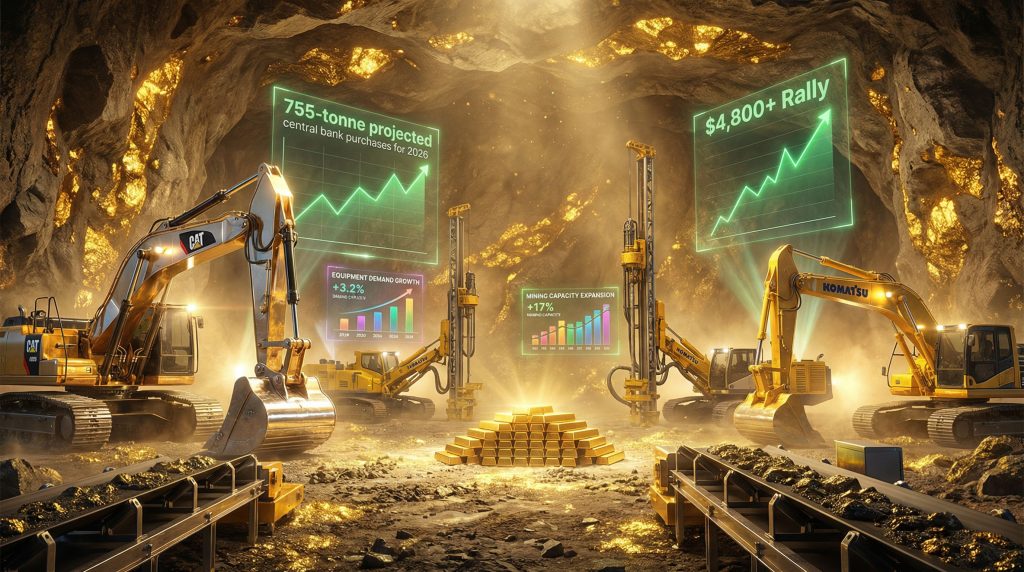
The current safe-haven gold boom is fundamentally reshaping the mining equipment landscape as institutional investors and central banks accelerate their search for alternatives to traditional dollar-denominated reserves. This structural shift has created unprecedented demand pressures across specialized mining technology sectors, with equipment manufacturers experiencing order book expansions that extend well beyond typical commodity cycle patterns. The convergence of monetary policy uncertainty, geopolitical tensions, and technological advancement in extraction methods has established a new paradigm for capital allocation within mining equipment markets.
What Economic Forces Are Driving the Current Safe-Haven Gold Boom?
The current precious metals rally reflects deeper institutional concerns about currency stability and long-term purchasing power preservation. With gold trading above $5,085 per ounce as of January 2026, according to ABC News, the traditional relationship between interest rates and precious metals demand has evolved into a more complex framework driven by structural economic uncertainties.
Central Bank Reserve Diversification Accelerates Gold Accumulation
Central banking institutions worldwide have fundamentally altered their reserve management strategies, moving away from concentrated dollar holdings toward diversified precious metals portfolios. This strategic pivot represents one of the most significant structural changes in global reserve management since the Bretton Woods system collapse.
Current data suggests central bank gold purchases could reach unprecedented levels, with institutional accumulation patterns showing sustained momentum through 2026. This represents a dramatic acceleration from historical purchase averages of 400-500 tonnes annually observed prior to 2022. Furthermore, the sustained buying pressure from sovereign institutions creates a floor effect for precious metals pricing that traditional supply-demand models struggle to capture.
Key factors driving central bank accumulation include:
- Currency diversification mandates across emerging market economies
- Reduced confidence in traditional reserve currencies
- Geopolitical risk management requirements
- Inflation hedging strategies for sovereign wealth preservation
Federal Reserve Policy Shifts Create Precious Metals Tailwinds
The Federal Reserve's evolving policy framework has created conditions particularly favourable to non-yielding assets like precious metals. Real yield compression occurs when nominal interest rates fail to keep pace with inflation expectations, effectively reducing the opportunity cost of holding gold relative to fixed-income alternatives.
This monetary environment becomes especially supportive when investors question the long-term sustainability of current fiscal trajectories. However, the relationship between currency debasement concerns and precious metals allocation has strengthened as institutional investors seek portfolio insurance against potential monetary system disruptions.
Critical monetary policy factors include:
- Lower neutral interest rate expectations creating reduced opportunity costs
- Persistent inflation concerns despite official policy targets
- Quantitative easing legacy effects on currency stability perceptions
- International monetary system transition uncertainties
Geopolitical Risk Premium Embedded in Current Pricing
The current precious metals pricing incorporates significant risk premiums related to global trade tensions and regional conflicts. Moreover, tariff uncertainty and trade war impact create additional demand for assets that maintain value independent of specific national economic performance.
Regional conflict spillover effects compound these concerns, as investors seek assets that preserve purchasing power during periods of heightened international tension. The safe-haven premium embedded in current gold pricing reflects market participants' assessment that traditional risk management tools may prove inadequate during periods of systemic stress.
When big ASX news breaks, our subscribers know first
Which Mining Equipment Sectors Benefit Most from Gold's Rally?
The precious metals boom has created asymmetric benefits across mining equipment categories, with specialised underground technology experiencing particularly strong demand growth. Equipment manufacturers with exposure to gold and copper mining operations report order intake acceleration that significantly exceeds broader industrial equipment trends.
Underground Mining Technology Experiences Surge in Orders
Underground mining equipment demand has accelerated dramatically as operators expand deeper, more complex extraction operations. Swedish equipment manufacturer Sandvik, considered an industry bellwether due to its broad customer base and relatively short lead times, reported 12% organic sales growth in Q4 2025, with order intake expanding 15% on an organic basis to 32.7 billion crowns.
The company's management noted sustained momentum across both surface and underground applications during the fourth quarter, indicating broad-based mining industry confidence. CEO Stefan Widing confirmed the company had increased delivery capacity to meet expanding order books and committed to ensuring continued demand fulfilment capability.
Equipment demand indicators include:
- Double-digit organic growth across specialised mining technology
- Extended lead times for complex underground systems
- Capacity expansion investments by major manufacturers
- Order book accumulation exceeding current delivery capabilities
Gold and copper exposure accounts for approximately 60% of Sandvik's commodity-related business, with strong price performance in both metals directly boosting equipment orders. This concentration provides clear evidence of how precious metals strength translates into tangible equipment sector benefits.
Cutting Tool Demand Reflects Broader Industrial Metal Strength
Precision cutting tool demand patterns reveal cross-sector industrial strength beyond precious metals extraction. Aerospace industry demand for specialised cutting tools remained robust through Q4 2025, whilst automotive sector demand continued to lag broader industrial recovery patterns.
The divergence between aerospace and automotive cutting tool demand illustrates how different industrial sectors respond to varying economic pressures. In addition, aerospace applications require high-precision, specialised tooling that commands premium pricing, whilst automotive applications face ongoing pressure from electrification transitions and changing manufacturing requirements.
Cross-sector demand analysis:
| Sector | Q4 2025 Performance | Outlook | Key Drivers |
|---|---|---|---|
| Aerospace | Strong growth | Positive | Defence spending, commercial aviation recovery |
| Mining | Accelerating | Very positive | Precious metals boom, infrastructure demand |
| Automotive | Subdued | Uncertain | Electrification transition, demand volatility |
| General Industrial | Moderate | Stable | Mixed economic indicators |
How Are Equipment Manufacturers Positioning for Extended Gold Cycle?
Equipment manufacturers have moved beyond reactive capacity adjustments toward proactive positioning for sustained precious metals demand cycles. This strategic shift reflects management confidence that current commodity strength represents structural rather than cyclical changes in mining industry dynamics.
Production Capacity Expansion Strategies
Leading manufacturers have implemented comprehensive capacity expansion programmes designed to capture sustained mining equipment demand. Sandvik's commitment to continued delivery capacity increases demonstrates confidence in long-term mining sector growth trajectories.
The company's 51% stock price appreciation in 2025, followed by an additional 12% gain in early 2026, reflects investor confidence in management's strategic positioning. The proposed dividend increase from 5.75 to 6.00 crowns per share indicates management expects sustained profitability levels that support both reinvestment and enhanced shareholder returns.
Strategic positioning elements include:
- Manufacturing facility capacity optimisation
- Specialised equipment production line expansion
- Supply chain resilience improvements
- Regional service network enhancement
Technology Innovation Accelerating in Gold Extraction
Advanced drilling and excavation technologies are experiencing accelerated development cycles as mining companies seek efficiency improvements to offset increasing extraction complexity. Furthermore, AI in mining technology and automation integration reduces operational costs whilst improving safety outcomes, creating compelling investment justifications for mining operators.
Environmental compliance requirements drive additional equipment upgrade cycles, as regulatory frameworks increasingly emphasise emissions reduction and resource efficiency. These compliance-driven upgrade cycles create sustained demand patterns that extend beyond traditional commodity price cycles.
Innovation focus areas include:
- Remote-controlled mining system deployments
- Predictive maintenance technology integration
- Data analytics-driven extraction optimisation
- Environmental impact reduction technologies
What Does Gold Price Volatility Mean for Equipment Investment Cycles?
Despite precious metals price volatility concerns, mining companies continue executing major capital expenditure programmes, suggesting sophisticated risk management frameworks that account for price uncertainty. The sustained equipment order growth during periods of acknowledged geopolitical and trade policy uncertainty indicates that miners have developed robust investment decision methodologies.
Capital Expenditure Planning Under Price Uncertainty
Mining companies appear to utilise commodity price ranges rather than point estimates when evaluating equipment investment decisions. This approach allows for continued capital allocation even during periods of price volatility, provided the expected range supports adequate project returns.
Equipment financing strategies during commodity booms often incorporate forward hedging mechanisms that reduce effective price exposure for mining operators. Consequently, these risk management tools enable continued equipment investment even when spot commodity prices experience significant volatility.
Investment decision frameworks typically include:
- Multi-scenario commodity price modelling
- Risk-adjusted return calculations
- Hedging strategy integration
- Operational flexibility preservation options
Regional Market Dynamics Influencing Equipment Demand
Regional mining investment patterns reflect varying geological, regulatory, and infrastructure conditions across major gold-producing areas. Asia-Pacific gold production expansion plans continue despite economic uncertainties, whilst African mining infrastructure development receives sustained investment attention.
North American mining investment shows increasing focus on brownfield expansion projects rather than greenfield developments, reflecting both regulatory complexity and infrastructure availability considerations. This regional variation creates different equipment demand patterns based on project types and operational requirements.
How Sustainable Is Current Mining Equipment Demand Growth?
The sustainability of current equipment demand growth faces several testing factors, including supply chain capacity constraints, skilled labour availability, and potential commodity price corrections. Early indicators from Q1 2026 suggest some moderation from peak Q4 2025 momentum levels.
Commodity Cycle Analysis and Equipment Market Correlation
Historical analysis reveals strong correlations between precious metals prices and mining equipment demand, though the relationship often exhibits significant lag periods. Current order book accumulation suggests equipment manufacturers expect sustained precious metals strength for extended periods.
Sandvik's report that cutting tool orders were "stable" in early Q1 2026, compared to accelerating growth in Q4 2025, provides real-time evidence that momentum may be moderating from peak levels. This represents a critical early indicator for broader equipment sector sustainability assessments.
Sustainability risk factors include:
- Supply chain capacity constraints limiting delivery capabilities
- Raw material availability for equipment manufacturing
- Skilled labour shortages in specialised manufacturing
- Potential commodity price corrections affecting new project economics
Economic Scenario Modelling for Equipment Manufacturers
Equipment manufacturer performance varies significantly across different economic scenarios, with specialised mining technology companies showing greater sensitivity to commodity price movements than diversified industrial equipment providers.
| Scenario | Gold Price Range | Equipment Demand Impact | Key Risk Factors |
|---|---|---|---|
| Bull Case | $5,000-$5,400/oz | 25-30% order growth | Supply chain constraints, labour shortages |
| Base Case | $4,000-$4,500/oz | 10-15% steady growth | Delivery capacity limits, input cost inflation |
| Bear Case | $3,500-$4,000/oz | 5-10% modest growth | Project deferrals, overcapacity risks |
Cross-commodity exposure provides some risk mitigation for diversified equipment manufacturers. For instance, Sandvik's significant copper exposure alongside gold creates hedging effects that reduce overall commodity price sensitivity compared to single-commodity focused competitors.
What Investment Implications Emerge from Equipment Sector Performance?
The mining equipment sector's performance provides valuable insights into broader economic trends and commodity cycle positioning. Bellwether companies like Sandvik offer early indicators of mining industry confidence levels and capital allocation priorities.
Bellwether Companies Signal Broader Market Trends
Sandvik's status as an industry bellwether stems from its broad customer base and relatively short lead times between order booking and delivery. This positioning makes the company's order patterns valuable predictive indicators for broader mining equipment sector trends.
The company's 15% organic order intake growth in Q4 2025, combined with management confidence in sustained demand fulfilment, suggests mining industry participants expect precious metals strength to continue. However, the moderation to "stable" orders in early Q1 2026, as reported by Investing.com, warrants careful monitoring for trend changes.
Investment indicator analysis:
- Order book growth rates as leading economic indicators
- Delivery capacity expansion as confidence measures
- Dividend policy adjustments reflecting profit sustainability expectations
- Stock price performance relative to broader industrial sectors
Supply Chain Resilience Testing During Demand Surges
Current demand surges test manufacturing supply chain resilience across multiple dimensions, including raw material availability, production capacity, and skilled labour access. Manufacturers that successfully navigate these constraints gain competitive advantages and market share expansion opportunities.
Geographic diversification strategies become increasingly important as companies seek to reduce concentration risks in specific manufacturing regions. Furthermore, the ability to maintain delivery commitments during demand surges differentiates successful equipment providers from competitors facing capacity constraints.
The next major ASX story will hit our subscribers first
Which Emerging Technologies Could Disrupt Traditional Gold Mining Equipment?
Technological advancement in mining equipment reflects both efficiency requirements and environmental compliance pressures. Automation integration and artificial intelligence applications are transforming traditional mining operations in ways that create both opportunities and disruption risks for established equipment manufacturers.
Automation and AI Integration Transforming Operations
Remote-controlled mining systems reduce operational risks whilst improving extraction efficiency, creating compelling value propositions for mining operators. Predictive maintenance technologies minimise equipment downtime and extend asset lifecycles, generating ongoing service revenue opportunities for equipment manufacturers.
Data analytics optimisation of extraction processes enables mining companies to maximise resource recovery whilst minimising environmental impact. These technological improvements often require equipment upgrades or replacements, creating sustained demand for advanced mining industry innovation.
Technology adoption drivers include:
- Safety improvement requirements
- Operational efficiency optimisation
- Environmental compliance mandates
- Labour cost reduction objectives
Environmental Regulations Driving Equipment Innovation
Carbon footprint reduction requirements increasingly influence equipment purchasing decisions as mining companies face growing environmental compliance obligations. Water management system improvements and waste processing technology advancement create additional equipment upgrade cycles.
Regulatory compliance driving equipment innovation ensures sustained demand patterns that extend beyond traditional commodity cycles. Mining companies must invest in environmental compliance regardless of commodity price movements, creating relatively stable demand foundations for specialised equipment categories.
Frequently Asked Questions About Safe-Haven Gold Boom Equipment Demand
Why Are Equipment Manufacturers Outperforming During Gold Rallies?
Equipment manufacturers benefit from gold rallies through multiple channels beyond direct commodity exposure. Mining companies increase capital expenditure during precious metals booms, creating sustained demand for both replacement equipment and capacity expansion investments.
The leveraged effect occurs because equipment purchases represent major capital commitments that mining companies defer during low commodity price periods. When precious metals prices rally, accumulated equipment replacement needs combine with expansion investments to create concentrated demand surges.
How Long Do Mining Equipment Investment Cycles Typically Last?
Mining equipment investment cycles typically extend 3-7 years, depending on commodity price sustainability and project development timelines. Current cycle characteristics suggest extended duration potential due to structural rather than cyclical demand drivers.
Central bank purchasing patterns and geopolitical risk factors create demand foundations that differ from traditional supply-demand commodity cycles. These structural factors suggest equipment demand sustainability may exceed historical cycle lengths, particularly given the current gold price forecast.
What Are the Key Risk Factors for Equipment Sector Investors?
Primary risk factors include commodity price corrections, supply chain disruptions, and competitive pressure from emerging technology providers. Equipment manufacturers with concentrated commodity exposure face greater volatility than diversified industrial companies.
Critical risk monitoring areas:
- Commodity price trend reversals
- Supply chain capacity constraints
- Technology disruption threats
- Regulatory environment changes
- Labour availability limitations
Navigating Equipment Market Opportunities in the Gold Boom Era
Strategic Positioning for Extended Precious Metals Cycle
The current safe-haven gold boom creates sustained opportunities for strategically positioned equipment manufacturers, though success requires careful attention to supply chain capacity, technology advancement, and market timing factors. Companies that successfully expand delivery capabilities whilst maintaining quality standards gain competitive advantages during demand surge periods.
Portfolio allocation considerations favour equipment manufacturers with diversified commodity exposure and strong balance sheet positions that enable capacity expansion investments. The combination of precious metals strength and technological advancement creates multiple demand drivers that support extended investment cycle potential.
Risk-adjusted return expectations across mining technology sectors reflect varying degrees of commodity sensitivity and competitive positioning. Investors should prioritise companies with proven ability to scale operations during demand surges whilst maintaining profitability through commodity cycle variations.
In addition, long-term structural demand drivers extend beyond current gold rally factors to include automation adoption, environmental compliance requirements, and global infrastructure development needs. These diversified demand sources provide sustainability foundations that reduce dependence on specific commodity price movements.
This analysis incorporates industry data and market observations through January 2026. Investment decisions should consider individual risk tolerance and portfolio objectives. Commodity-related investments involve significant volatility and potential for substantial losses.
Could Mining Equipment Stocks Be Your Next Strategic Investment?
Leverage the power of Discovery Alert's proprietary Discovery IQ model to identify emerging ASX mining equipment opportunities before they reach mainstream investor attention. With specialised mining technology companies experiencing accelerated demand from the ongoing precious metals boom, stay ahead of the market by accessing real-time mineral discovery alerts that could signal the next wave of equipment sector winners.