May 20, 2026
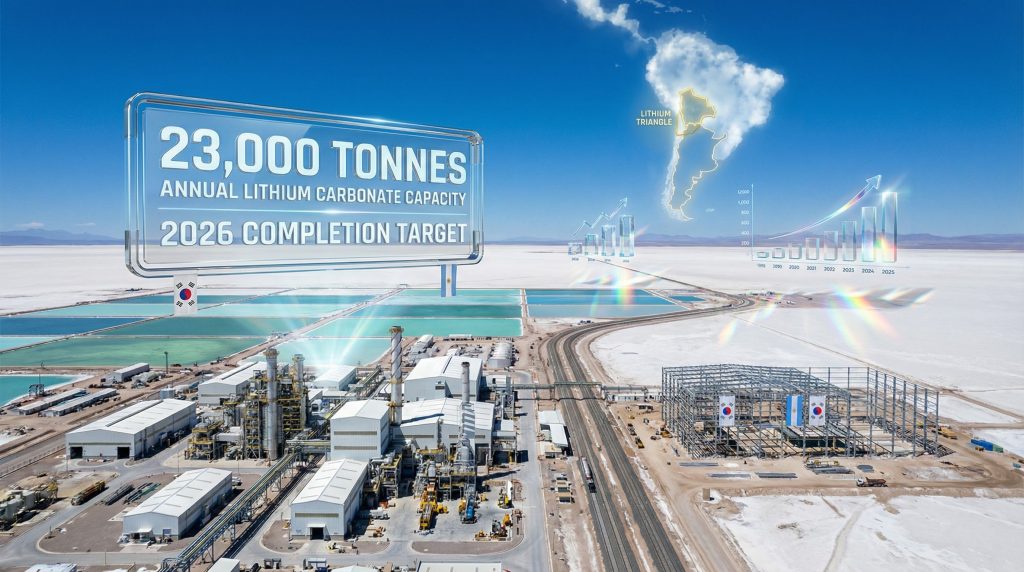
The Sal de Oro lithium carbonate plant stands at the forefront of Argentina's strategic transformation from a raw material exporter to a sophisticated processor of critical energy transition minerals. Global lithium markets face unprecedented structural transformation as battery manufacturers scramble to secure long-term supply agreements amid projected 40-fold demand growth by 2040. This supply crunch has elevated vertically integrated operations from tactical advantages to strategic necessities, fundamentally reshaping how major industrial conglomerates approach energy transition materials. Within this context, production facilities capable of delivering battery-grade lithium carbonate represent critical infrastructure assets that determine competitive positioning across entire value chains.
POSCO's Vertical Integration Strategy in Argentina's Lithium Triangle
South Korea's POSCO has established a commanding position within Argentina's lithium sector through its Sal de Oro operations at Salar del Hombre Muerto in Salta Province. This strategic expansion represents more than geographical diversification; it constitutes a fundamental shift toward controlling upstream lithium supply chains that feed directly into POSCO's downstream battery manufacturing ecosystem.
The facility operates a sophisticated dual-production system that maximises infrastructure utilisation while minimising capital expenditure redundancy:
-
Operational lithium hydroxide circuit: Currently processing concentrated brines through established evaporation pond networks
-
Under-construction lithium carbonate plant: Scheduled for 2026 completion, leveraging existing brine concentration infrastructure
-
Shared operational systems: Energy networks, environmental management protocols, and specialised workforce deployment across both production streams
This co-location strategy delivers immediate cost advantages by eliminating duplicate infrastructure investments whilst positioning POSCO to respond dynamically to battery chemistry evolution. As automotive manufacturers shift between lithium carbonate and lithium hydroxide specifications, POSCO's dual-capability model provides unprecedented supply flexibility that pure-play producers cannot match.
The International Energy Agency's net-zero scenario projections underscore the strategic value of such integrated approaches. Furthermore, with lithium demand potentially increasing 40-fold by 2040, companies controlling both mining operations and processing capabilities will capture disproportionate value compared to those dependent on spot market purchases or single-product facilities.
Table: Integrated Lithium Producers Comparison
| Company | Geographic Footprint | Production Capability | Annual Capacity (LCE tonnes) |
|---|---|---|---|
| POSCO (Sal de Oro) | Argentina | Hydroxide + Carbonate | 23,000 (carbonate target) |
| Albemarle Corp | USA, Chile, Nevada | Mining + Processing | 90,000+ |
| Ganfeng Lithium | China, Australia, Argentina | Full value chain | 180,000+ |
When big ASX news breaks, our subscribers know first
Production Capacity Projections and Market Impact Assessment
The Sal de Oro lithium carbonate plant's 23,000 tonnes annual capacity represents a carefully calibrated entry into Argentina's rapidly expanding production landscape. Current Argentine lithium carbonate capacity approximates 72,000 tonnes annually, with aggressive expansion plans targeting 600,000+ tonnes by 2035, representing a compound annual growth rate approaching 48%.
This expansion trajectory positions Argentina to capture approximately 60-65% of global lithium carbonate production capacity within the next decade, fundamentally altering supply chain dynamics that have historically favoured Chilean and Australian operations. Moreover, POSCO's Sal de Oro facility, while representing roughly 3.8% of Argentina's projected 2026 capacity, delivers strategic value through its integration with existing hydroxide production and proximity to high-grade brine resources.
Market Absorption Dynamics
Global lithium carbonate production reached approximately 320,000 tonnes in 2023, with projected demand escalating to 500,000-600,000 tonnes by 2030. Argentina's planned capacity expansion could theoretically satisfy this entire demand growth, creating potential oversupply scenarios that favour integrated producers with flexible cost structures over pure-play operations dependent on commodity pricing.
Critical Supply Chain Positioning Factors:
-
Brine concentration efficiency: 18-24 month solar evaporation cycles deliver lithium concentrations exceeding 50,000 mg/L from raw brines containing 600-800 mg/L
-
Battery-grade purity standards: 99%+ lithium carbonate with controlled impurity profiles (boron <50 ppm, sulfate <500 ppm, magnesium <100 ppm)
-
Energy infrastructure scalability: Dedicated grid expansion supporting 15-20 MW industrial loads with renewable energy integration potential
Technical Infrastructure and Process Innovation
Salar del Hombre Muerto's geological characteristics provide fundamental advantages for large-scale lithium brine extraction operations. Located 3,656 metres above sea level, the site delivers optimal solar evaporation conditions whilst accessing brine reserves with lithium concentrations substantially higher than most South American salars.
The technical processing methodology combines proven solar evaporation techniques with advanced chemical conversion systems:
Sequential Concentration Process:
-
Initial brine extraction: Underground reservoir pumping delivers raw brine at ~650 mg/L lithium concentration
-
Progressive evaporation: Engineered pond systems concentrate lithium over 18-24 months to 50,000+ mg/L
-
Chemical precipitation: Sodium carbonate addition converts lithium chloride to lithium carbonate precipitate
-
Thermal purification: High-temperature processing (900-1000°C) achieves battery-grade purity standards
The employment intensity of these operations extends far beyond direct facility staffing. Peak construction and operational phases generated approximately 5,000 direct and indirect jobs, with technical presentations conducted by locally-trained chemical and electrical engineers from regional universities. This workforce development approach reduces operational dependency on foreign expertise while building sustainable technical capacity within Salta Province's industrial ecosystem.
Environmental and Energy Considerations
Modern lithium carbonate facilities typically consume 5-8 MWh per tonne of production, with greenhouse gas emissions ranging 2-5 tonnes CO₂ equivalent for brine-based operations. Consequently, Sal de Oro's integration with renewable energy infrastructure development positions the facility to achieve lower carbon intensity compared to coal-dependent processing operations in other jurisdictions.
How Does Argentina's Regulatory Environment Shape Sal de Oro's Development Timeline?
Argentina's lithium sector regulatory framework has evolved dramatically from commodity-export models toward value-added manufacturing requirements that directly support projects like the Sal de Oro lithium carbonate plant. This policy transformation reflects strategic recognition that raw material exports capture minimal economic value compared to downstream processing operations.
Provincial Government Partnership and Industrial Policy Alignment
Salta Province has implemented an "industrialisation in origin" policy framework specifically designed to maximise local value capture from lithium resources. This approach moves beyond traditional mining taxation models toward comprehensive industrial development strategies that integrate employment generation, infrastructure development, and technology transfer requirements.
Ignacio Lupión, Minister of Production and Mining of Salta Province, articulated this strategic vision during his inspection of the Sal de Oro facility: "The challenge is to advance in lithium mining with industrial scale, technology, and predictability. The State has the responsibility to accompany these processes with clear rules and permanent dialogue, because industrialisation in origin is what generates qualified employment and sustained development."
This statement reflects fundamental policy priorities that directly support integrated operations like POSCO's global lithium strategy. Rather than simply extracting and exporting lithium brine, projects must demonstrate substantial local value addition through chemical processing, employment generation, and infrastructure development.
Regulatory Streamlining Mechanisms:
-
Unified environmental assessment processes: Consolidation of provincial and municipal approvals into single regulatory pathways
-
Infrastructure coordination: Government agencies synchronise energy grid expansion, water allocation, and transportation development with project timelines
-
Multi-stakeholder engagement: Monthly coordination meetings between provincial ministries, municipal governments, project operators, and community representatives
Environmental Compliance and Permitting Landscape
Environmental permitting for large-scale lithium operations in Argentina involves complex multi-jurisdictional approval processes that can significantly impact project timelines. In addition, the Sal de Oro lithium carbonate plant's 2026 completion target reflects successful navigation of these regulatory requirements through proactive engagement with environmental authorities and community stakeholders.
Key Regulatory Milestones:
-
Environmental impact assessment completion: Comprehensive evaluation of brine extraction impacts on local ecosystems and water resources
-
Water usage permits: Authorisation for industrial-scale brine extraction and process water consumption
-
Community consultation requirements: Formal engagement processes with indigenous communities and local municipalities
-
Air quality and emissions permits: Authorisation for industrial processing operations and associated atmospheric releases
Comparative Analysis: Regulatory Risk Assessment
Argentina's regulatory environment for lithium projects presents distinct advantages and challenges compared to competing jurisdictions. Understanding these dynamics helps contextualise Sal de Oro's development timeline and operational framework.
Table: Lithium Jurisdiction Regulatory Comparison
| Factor | Argentina | Chile | Australia |
|---|---|---|---|
| Environmental permitting timeline | 18-24 months | 24-36 months | 12-18 months |
| Corporate tax rate | 25-35% | 27% | 30% |
| Royalty structure | 3-5% provincial | 3-7% variable | 2.5-10% state |
| Political stability index | Moderate volatility | High stability | Very high stability |
| Infrastructure development support | High government co-investment | Limited public support | Private sector led |
The data reveals Argentina's competitive positioning through government infrastructure support and streamlined permitting processes, offset by higher political risk compared to established mining jurisdictions like Australia. For integrated operators like POSCO, these dynamics favour long-term investment commitments backed by substantial local value-added processing capabilities.
What Economic Multiplier Effects Will Sal de Oro Generate in Northwestern Argentina?
Large-scale lithium processing operations generate economic impacts extending far beyond direct facility employment through supplier network development, infrastructure investments, and human capital formation. Sal de Oro's economic footprint demonstrates how industrial processing facilities can catalyse regional development in previously underdeveloped areas.
Local Employment Creation and Skills Development Programmes
The facility's employment profile illustrates the high-skill job creation potential of downstream lithium processing compared to raw material extraction operations. Technical presentations during ministerial visits were conducted by locally-trained chemical and electrical engineers from regional universities, demonstrating successful knowledge transfer from international operators to domestic technical professionals.
Employment Distribution Analysis:
-
Direct operational employment: Approximately 200-300 permanent positions requiring specialised chemical processing, electrical systems, and industrial maintenance expertise
-
Construction phase employment: Peak construction activities generated 2,000+ temporary positions across engineering, construction, and logistics functions
-
Indirect supplier network employment: Estimated 2,700+ positions across transportation, equipment maintenance, catering, security, and professional services
-
Total economic impact: 5,000 direct and indirect employment positions at peak operational intensity
This employment multiplication effect demonstrates the economic rationale behind Salta Province's "industrialisation in origin" policy framework. Furthermore, raw brine extraction operations typically generate 50-100 direct jobs, while integrated processing facilities create employment opportunities across multiple skill levels and industrial sectors.
Regional Infrastructure Development Catalysts
Sal de Oro's infrastructure requirements have catalysed broader regional development investments that benefit multiple economic sectors beyond lithium processing. These infrastructure upgrades create permanent economic benefits that persist beyond individual project lifecycles.
Infrastructure Development Components:
-
Energy grid expansion: 15-20 MW capacity additions with renewable energy integration capabilities supporting broader industrial development
-
Transportation network improvements: Road upgrades and logistics infrastructure enabling efficient lithium carbonate transport to Pacific export terminals
-
Water management systems: Industrial water supply infrastructure and wastewater treatment capabilities
-
Telecommunications upgrades: Industrial-grade communications networks supporting remote operations and digital integration systems
Supply Chain Localisation Opportunities
POSCO's operational model emphasises supplier network development within Argentina to reduce import dependency and strengthen local industrial capabilities. This approach creates opportunities for domestic companies to develop specialised expertise serving lithium processing operations, reflecting broader mining innovation trends across the industry.
Localisation Priority Areas:
-
Chemical processing equipment maintenance: Local technical service capabilities for specialised lithium processing machinery
-
Industrial construction services: Regional contractors developing expertise in lithium facility construction and expansion projects
-
Transportation and logistics: Domestic companies specialising in lithium carbonate handling and export logistics
-
Environmental services: Local companies providing specialised environmental monitoring and compliance services for lithium operations
Hypothetical Economic Scenario: If Argentina successfully captures 10% of global lithium carbonate processing capacity, the economic impact could generate 50,000+ direct and indirect employment positions with annual export revenue exceeding $3 billion USD. This scenario assumes successful replication of the Sal de Oro integrated processing model across multiple operators and provinces.
Disclaimer: Economic projections involve substantial uncertainty related to lithium price volatility, global demand growth rates, and competitive dynamics from other producing regions. Actual economic impacts may vary significantly from theoretical projections.
How Does Sal de Oro's Production Technology Compare to Global Best Practices?
Lithium carbonate production technology varies significantly across global operations depending on resource type, geographic conditions, and target market specifications. The Sal de Oro lithium carbonate plant's technical approach reflects optimisation for high-altitude desert conditions whilst meeting stringent battery-grade purity requirements demanded by Asian manufacturers.
Brine Extraction and Concentration Methodology
Salar del Hombre Muerto's geological characteristics enable highly efficient solar evaporation processes that minimise energy consumption compared to hard rock processing alternatives. The facility leverages natural evaporation rates exceeding 2,000mm annually at 3,656 metres elevation, creating optimal conditions for brine concentration operations.
Technical Process Optimisation:
-
Initial lithium concentration: Raw brines contain 600-800 mg/L lithium, substantially higher than many competing South American salars
-
Concentration efficiency: 18-24 month evaporation cycles achieve 50,000+ mg/L lithium concentration through sequential pond systems
-
Recovery rates: Optimised operations typically achieve 40-60% lithium recovery from raw brines through controlled evaporation and chemical processing
-
Water consumption metrics: Brine-based processing requires approximately 1 tonne of water per 0.5-0.7 kg recoverable lithium, significantly lower than hard rock alternatives
Chemical Processing and Purity Standards
Battery-grade lithium carbonate requires exceptionally precise impurity control to meet specifications for cathode material production. Sal de Oro's processing technology addresses these requirements through multi-stage purification systems designed for Asian market standards.
Table: Technical Specifications Comparison
| Facility | Lithium Source | Energy Consumption (MWh/tonne) | Purity Achievement | CO₂ Emissions (tonnes/tonne) |
|---|---|---|---|---|
| Sal de Oro | High-grade brine | 5-8 | 99%+ | 2-5 |
| Atacama (Chile) | Desert brine | 6-10 | 99%+ | 3-6 |
| Greenbushes (Australia) | Hard rock spodumene | 12-18 | 99%+ | 8-15 |
The comparative data reveals brine-based processing advantages in energy consumption and greenhouse gas emissions, critical factors as battery manufacturers implement supply chain sustainability requirements. In addition, Sal de Oro's integration with renewable energy infrastructure further enhances these environmental performance advantages.
Impurity Control Systems:
-
Boron removal: Specialised ion exchange processes reducing boron concentrations to <50 ppm required for battery applications
-
Sulfate extraction: Chemical precipitation techniques minimising sulfate content to <500 ppm specifications
-
Magnesium separation: Selective crystallisation processes achieving magnesium concentrations <100 ppm
Automation and Digital Integration
Modern lithium processing facilities increasingly integrate digital monitoring and predictive maintenance systems to optimise operational efficiency and product quality consistency. POSCO's broader industrial IoT ecosystem provides advantages in implementing advanced automation systems at Sal de Oro.
Digital Integration Capabilities:
-
Real-time process monitoring: Continuous measurement of brine chemistry, flow rates, and processing parameters
-
Predictive maintenance systems: Equipment monitoring and failure prediction algorithms minimising unplanned downtime
-
Quality control automation: Automated sampling and analytical systems ensuring consistent product specifications
-
Supply chain integration: Digital logistics coordination with POSCO's downstream manufacturing operations
The next major ASX story will hit our subscribers first
What Market Positioning Advantages Does Sal de Oro Offer POSCO?
Strategic geographic positioning represents a fundamental competitive advantage in global lithium markets where transportation costs, supply chain reliability, and market access determine long-term profitability. Sal de Oro's location within Argentina's lithium triangle provides POSCO with unique market positioning benefits that extend beyond production cost advantages.
Strategic Geographic Location Benefits
Argentina's position relative to major lithium consumption markets creates significant logistical and economic advantages compared to alternative supply sources. The country's Atlantic and Pacific port access enables flexible shipping strategies optimised for different regional markets.
Geographic Advantages:
-
Pacific shipping routes: Direct access to Asian battery manufacturing hubs with 15-20 day shipping times versus 30-40 days from Australian operations
-
Reduced transportation costs: Overland transport from Salta to Pacific ports costs approximately $200-300 USD per tonne compared to $400-600 USD for equivalent Australian inland transportation
-
Market proximity flexibility: Alternative Atlantic shipping routes enable European and North American market access without reliance on single transportation corridors
-
Time zone coordination: Operational coordination with Asian headquarters benefits from manageable time zone differences compared to Australian operations
Cost Structure and Competitive Dynamics
Brine-based lithium extraction in Argentina delivers substantial cost advantages compared to hard rock processing alternatives, creating competitive positioning benefits that persist across lithium price cycles. These structural advantages become particularly valuable during periods of commodity price volatility.
Cost Structure Analysis:
-
Production costs: Argentine brine operations typically achieve $4,000-6,000 USD per tonne lithium carbonate versus $6,000-10,000 USD for Australian hard rock processing
-
Capital expenditure efficiency: Brine processing facilities require $15,000-25,000 USD capital investment per annual tonne capacity compared to $30,000-50,000 USD for hard rock alternatives
-
Currency advantages: Peso-denominated operational costs provide natural hedging against commodity price fluctuations for export-oriented operations
-
Energy cost benefits: Natural gas and renewable energy availability in Argentina delivers energy costs 30-50% lower than many competing jurisdictions
Risk Diversification and Supply Security
Global lithium supply chains face increasing concentration risks as Chinese companies control substantial processing capacity worldwide. POSCO's Argentine operations provide strategic diversification from Asian supply dependencies whilst maintaining direct operational control over critical battery materials. These considerations align with broader Argentine lithium insights regarding the country's emerging strategic importance.
Supply Chain Resilience Factors:
-
Reduced Chinese processing dependency: Direct control over lithium carbonate production eliminates reliance on Chinese toll processing arrangements
-
Political risk distribution: Operations across multiple South American jurisdictions reduce exposure to single-country regulatory or political changes
-
Technology transfer benefits: Local engineering workforce development reduces operational dependency on foreign technical expertise
-
Long-term resource security: Multi-decade resource life provides supply certainty for long-term customer contracts and investment planning
What Challenges Could Impact Sal de Oro's 2026 Completion Timeline?
Large-scale industrial construction projects in remote high-altitude environments face complex technical, logistical, and regulatory challenges that can significantly impact completion schedules. Understanding these risk factors provides insight into potential timeline variations and mitigation strategies for the Sal de Oro lithium carbonate plant.
Technical and Operational Risk Assessment
Construction complexity increases substantially in desert environments located over 3,600 metres above sea level, where extreme temperature variations, limited infrastructure, and specialised equipment requirements create operational challenges distinct from conventional industrial projects.
Construction Environment Challenges:
-
Extreme altitude effects: Reduced equipment performance and worker productivity at 3,656 metres elevation, requiring specialised equipment modifications and extended construction schedules
-
Temperature extremes: Daily temperature variations exceeding 30°C require specialised construction materials and techniques adapted for thermal stress cycles
-
Remote location logistics: Equipment and materials transport over hundreds of kilometres of desert terrain increases costs and extends delivery schedules
-
Specialised equipment procurement: Lithium processing equipment suppliers face extended manufacturing schedules due to global demand growth across multiple projects simultaneously
Skilled Workforce Availability:
The facility requires specialised technical personnel experienced in lithium chemical processing, a relatively limited global talent pool concentrated primarily in Chile, Australia, and China. Training local workforce to international standards requires 6-12 months of intensive technical development programmes.
Market and Financial Considerations
Lithium price volatility creates substantial financial risk for capital-intensive projects with multi-year construction timelines. Furthermore, price fluctuations can impact project economics, financing availability, and strategic priority within corporate capital allocation frameworks.
Financial Risk Scenarios:
-
Current lithium carbonate pricing: $12,000-18,000 USD per tonne (as of early 2026) provides strong project economics supporting completion timelines
-
Stress scenario impact: 30% price decline to $8,400-12,600 USD per tonne could delay completion or require operational optimisation to maintain project viability
-
Capital allocation competition: POSCO's global investment portfolio includes multiple expansion projects competing for engineering resources and management attention
Scenario Analysis – 30% Price Decline Impact:
A sustained 30% reduction in lithium carbonate prices would reduce Sal de Oro's annual revenue potential from $276-414 million USD to $193-290 million USD based on 23,000 tonne annual capacity. This scenario could trigger:
-
Construction timeline extensions: 6-12 month delays while optimising project design for lower price environment
-
Scope modifications: Potential capacity reductions or phased construction approach to preserve project economics
-
Technology upgrades: Investment in higher efficiency processing systems to maintain cost competitiveness
Disclaimer: Lithium price projections involve substantial uncertainty due to demand growth variability, new supply additions, and macroeconomic factors. Actual price movements may differ significantly from scenario analyses.
Environmental and Social Licence Maintenance
Sustainable operations in water-scarce desert environments require ongoing environmental monitoring and community engagement to maintain social licence and regulatory compliance. These requirements can impact operational flexibility and expansion timelines.
Environmental Compliance Challenges:
-
Water usage sustainability: Brine extraction rates must balance production requirements with long-term aquifer preservation in arid environments
-
Community benefit-sharing: Ongoing negotiation of employment opportunities, infrastructure investments, and revenue sharing arrangements with local communities
-
Evolving environmental standards: Potential changes in water usage regulations or environmental impact requirements could necessitate operational modifications
-
Biodiversity preservation: Monitoring and mitigation requirements for flora and fauna impacts in sensitive desert ecosystems
How Will Sal de Oro Influence Argentina's Position in Global Lithium Markets?
Argentina's emergence as a dominant lithium producer reflects systematic policy efforts to capture greater value from natural resource endowments through downstream processing and industrial development. The success of integrated facilities like the Sal de Oro lithium carbonate plant demonstrates the viability of this strategic approach and its potential for broader replication across the lithium sector.
National Strategic Resource Development
Argentina's lithium strategy extends beyond resource extraction toward comprehensive industrial capability development that positions the country as a critical supplier to global energy transition supply chains. This approach leverages substantial lithium reserves whilst building sustainable economic benefits through value-added processing.
National Development Metrics:
-
Resource base: Argentina contains approximately 20% of global lithium reserves, concentrated primarily in high-grade brine deposits across the lithium triangle region
-
Production trajectory: Planned expansion from 72,000 tonnes current capacity to 600,000+ tonnes by 2035 would establish Argentina as the world's largest lithium producer
-
Export revenue projections: At current pricing levels, full capacity utilisation could generate $7-12 billion USD annual export revenue, representing substantial balance of payments improvement
-
Technology transfer achievements: Successful development of local engineering expertise reduces dependency on foreign technical personnel while building sustainable industrial capabilities
Integration with Global Battery Manufacturing Hubs
Argentina's strategic positioning enables direct supply relationships with major Asian battery manufacturers, reducing supply chain complexity whilst providing cost and reliability advantages compared to multiple-intermediary procurement models. These developments reflect broader lithium industry innovations transforming global supply chains.
Table: Argentina's Potential Lithium Export Destinations by Volume
| Destination Region | Projected Volume (tonnes/year) | Market Share | Key End Users |
|---|---|---|---|
| Asia (China, Korea, Japan) | 350,000-400,000 | 58-67% | CATL, BYD, POSCO |
| Europe | 100,000-150,000 | 17-25% | Tesla, BASF, Umicore |
| North America | 50,000-100,000 | 8-17% | Tesla, General Motors |
This distribution pattern reflects proximity advantages to Asian manufacturing hubs while providing diversification across multiple regional markets to reduce concentration risk.
Direct Supply Relationship Benefits:
-
Reduced supply chain intermediaries: Direct producer-to-manufacturer contracts eliminate trading company margins and reduce price volatility
-
Quality control integration: Close cooperation between producers and manufacturers enables optimised product specifications for specific battery chemistry requirements
-
Supply security enhancement: Long-term contracts provide demand certainty for producers and supply security for manufacturers
Long-term Competitiveness Factors
Argentina's sustained competitiveness in global lithium markets depends on maintaining cost advantages whilst developing technological capabilities that adapt to evolving battery chemistry requirements and environmental standards.
Competitive Sustainability Elements:
-
Resource quality maintenance: Continued access to high-grade brine deposits with favourable lithium concentrations and manageable impurity profiles
-
Infrastructure development trajectory: Ongoing investment in energy, transportation, and telecommunications infrastructure supporting industrial expansion
-
Regulatory stability: Consistent policy frameworks that balance investment attractiveness with environmental protection and community benefits
-
Technological advancement: Development of advanced processing technologies that maintain efficiency advantages whilst meeting evolving product specifications
Political and Economic Stability Considerations:
Argentina's historical economic volatility presents ongoing challenges for long-term investment planning. However, the strategic importance of lithium for global energy transition creates incentives for policy stability that may exceed traditional commodity sector treatment. In addition, international partnerships like POSCO's acquisition strategy provide additional stability through diplomatic and commercial relationship diversification.
Strategic Implications for Stakeholders
The Sal de Oro lithium carbonate plant represents a convergence of technological capability, strategic resource access, and policy alignment that demonstrates Argentina's emergence as a critical supplier within global energy transition supply chains. Understanding these dynamics provides valuable insights for multiple stakeholder groups navigating lithium market evolution.
Investment Community Perspective
Lithium sector investments face complex risk-return dynamics combining commodity price volatility, technological change, and regulatory evolution across multiple jurisdictions. POSCO's Sal de Oro model provides a framework for evaluating integrated production strategies versus pure-play resource exposure.
Risk-Adjusted Return Considerations:
-
Operational risk mitigation: Integrated hydroxide-carbonate production provides flexibility to respond to battery chemistry evolution and market demand shifts
-
Geographic diversification benefits: Argentina operations reduce dependency on traditional lithium suppliers whilst accessing high-grade resources with favourable extraction economics
-
Currency hedge advantages: Peso-denominated operational costs provide natural hedging against commodity price fluctuations for export-oriented production
-
Infrastructure leverage: Government co-investment in energy and transportation infrastructure reduces private sector capital requirements while improving operational efficiency
Portfolio Diversification Analysis:
Resource-focused investors benefit from geographic and technological diversification across lithium operations to manage regulatory, operational, and market risks. The Argentina model demonstrates policy frameworks that actively support value-added processing, contrasting with purely extractive approaches in other jurisdictions.
Policy and Industry Development Outlook
Argentina's "industrialisation in origin" policy framework provides a replicable model for resource-rich countries seeking to capture greater value from natural resource endowments through downstream processing requirements and industrial development incentives.
Policy Success Metrics:
-
Employment generation: High-skill job creation through technical processing requirements versus traditional mining employment patterns
-
Technology transfer achievement: Development of local engineering and technical capabilities reducing dependency on foreign expertise
-
Infrastructure development catalysis: Private sector investment leveraging government infrastructure co-investment for broader regional development benefits
-
Export revenue maximisation: Value-added processing capturing substantially higher revenues compared to raw material exports
Regional Economic Development Model:
The Sal de Oro success demonstrates potential for replicating integrated processing approaches across other lithium operations in Argentina and neighbouring countries. This model creates opportunities for regional specialisation in battery materials processing that could establish South America as a dominant supplier to global energy transition industries.
Global Supply Chain Security Enhancement:
Geographic diversification of lithium processing capabilities reduces global supply chain concentration risks whilst providing alternative supply sources for critical battery materials. Argentina's emergence as a major processor enhances supply chain resilience for automotive and energy storage industries facing potential supply disruptions from traditional suppliers.
Disclaimer: Industry development projections involve substantial uncertainty related to technological change, regulatory evolution, and competitive dynamics. Actual outcomes may vary significantly from analytical projections based on current trends and policy frameworks.
The Sal de Oro lithium carbonate plant ultimately represents more than a single industrial facility; it embodies Argentina's strategic transformation from resource exporter to industrial processor within global energy transition supply chains. Success in achieving the 2026 completion timeline will provide valuable lessons for replicating this integrated approach across the broader lithium sector whilst demonstrating the viability of value-added resource development strategies in emerging markets.
Ready to capitalise on Argentina's lithium transformation?
Argentina's emergence as a global lithium processing powerhouse, exemplified by facilities like Sal de Oro, demonstrates how strategic mineral discoveries can reshape entire industries and create substantial investment opportunities. Discovery Alert's proprietary Discovery IQ model instantly identifies such transformative mineral announcements on the ASX, ensuring subscribers gain immediate market insights before broader awareness emerges. Begin your 14-day free trial today to position yourself ahead of the market for the next major discovery.