May 17, 2026
Sanctions Architecture and Maritime Compliance Networks
Contemporary sanctions enforcement mechanisms create multilayered compliance challenges that extend far beyond simple vessel designations. The Trump tariffs impact demonstrates how broader trade policies interconnect with energy sector compliance requirements. When vessels receive sanctions designations, operators must navigate complex risk assessment protocols that encompass insurance coverage, flag state considerations, and port access restrictions.
Key Compliance Factors:
- Vessel ownership structure verification and beneficial ownership mapping
- Insurance market availability and premium calculations for sanctioned operations
- Flag state diplomatic relationships and enforcement cooperation levels
- Port facility willingness to accept sanctioned cargo and associated documentation requirements
- Payment mechanism viability through correspondent banking networks
The March 2026 temporary waiver covering iranian crude cargo changes course from india to china illustrates how narrow regulatory windows create market uncertainty rather than sustained trade normalisation. Market participants indicated that compliance scrutiny remains elevated even during waiver periods, as financial institutions and shipping companies maintain conservative risk assessments regardless of temporary permissions.
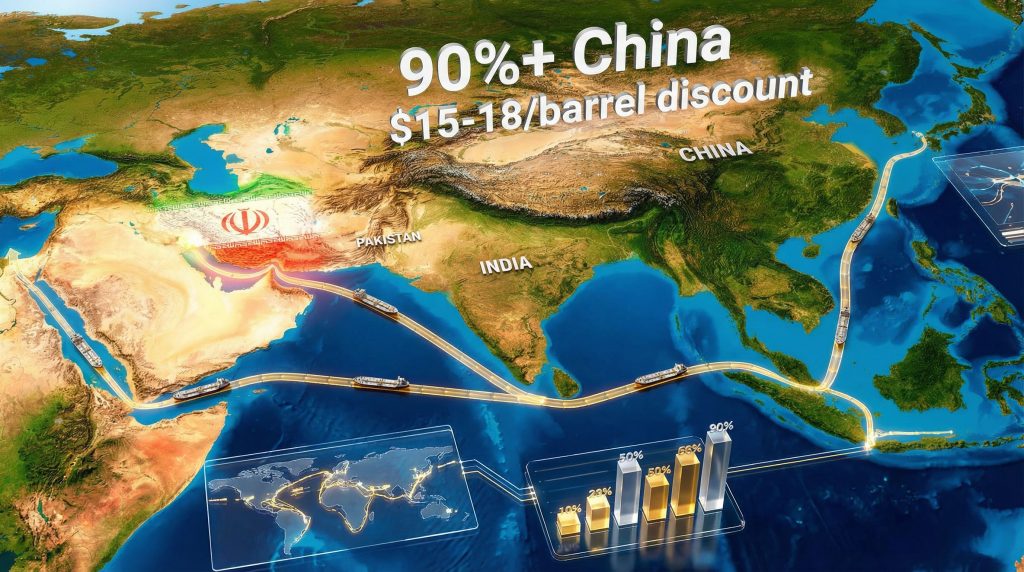
Furthermore, vessel tracking data reveals that the Aframax tanker Ping Shun, carrying approximately 600,000 barrels of Iranian crude, exemplifies these operational complexities. Initially signaling Vadinar, India as its destination after loading at Kharg Island in early March 2026, the vessel subsequently changed course toward Dongying, China, demonstrating how regulatory and commercial factors influence routing decisions during transit.
When big ASX news breaks, our subscribers know first
Economic Incentives Driving Route Selection
Destination choice in sanctioned crude movements reflects sophisticated economic calculations encompassing pricing structures, payment mechanisms, and operational risk factors. Moreover, the trade war impact on oil markets significantly influences these routing decisions. China's emergence as the dominant destination for Iranian crude stems from established bilateral payment arrangements, refinery infrastructure compatibility, and risk tolerance levels that differ substantially from other potential markets.
Iranian Crude Export Distribution (2025):
| Destination | Market Share | Typical Discount | Payment Structure |
|---|---|---|---|
| China | 90%+ | $15-18/barrel | Yuan/barter arrangements |
| India | <5% | $12-16/barrel | Rupee mechanisms |
| Others | <5% | Variable | Mixed frameworks |
The pricing discount structure for Iranian crude reflects both sanctions-related risk premiums and quality considerations. Heavy, sour crude grades from Kharg Island typically require specialised refinery configurations with adequate coking capacity, limiting the pool of potential buyers to facilities equipped for such processing requirements.
Transit time differentials significantly impact inventory carrying costs and working capital requirements. Iran-China routes average 12-14 days compared to 8-10 days for Iran-India shipments, creating additional financial considerations for cargo owners and vessel operators. These operational factors interact with payment settlement mechanisms, where currency exchange rate volatility and banking corridor availability influence ultimate destination selection.
Loading frequency at Kharg Island maintains approximately 2-3 vessels weekly, indicating sustained export capacity despite sanctions constraints and regional security concerns affecting Gulf operations.
In addition, China's strategic petroleum reserve accumulation patterns provide additional demand support, as state-controlled entities can absorb discounted crude for strategic storage rather than immediate refinery processing. This creates pricing flexibility that may not exist in purely commercial transactions with private sector refineries in other markets.
Maritime Intelligence and Vessel Tracking Methodologies
Modern maritime intelligence systems integrate multiple data sources to monitor vessel movements and predict cargo destinations, though accuracy varies significantly based on voyage stage and operational factors. According to reports from The Hindu, the Ping Shun case demonstrates limitations of destination signalling as predictive indicators, since vessels can modify AIS (Automatic Identification System) transmissions throughout transit periods.
Intelligence Gathering Framework:
- Satellite-based AIS monitoring with global coverage capabilities
- Port authority reporting systems and cargo manifest verification
- Behavioural pattern analysis comparing historical routing data
- Cross-referencing between Kpler, Vortexa, and MarineTraffic platforms
- Ship-to-ship transfer detection through proximity analysis
Destination signals serve multiple purposes beyond navigation, including geopolitical signalling to reduce attack likelihood in contested waterways. Non-Iranian VLCCs in the Middle East Gulf commonly signal Ras Markaz, Oman as destination to identify vessel nationality and minimise targeting risk from Iranian forces, regardless of actual discharge plans.
Dark fleet identification requires sophisticated ownership structure analysis, as sanctioned trade often involves vessels with obscured beneficial ownership through complex flag state arrangements and shell company networks. Maritime intelligence providers employ ownership mapping techniques that trace corporate structures, management companies, and financing arrangements to identify vessels engaged in sanctions evasion activities.
Technical Detection Capabilities:
- AIS signal manipulation identification through transmission pattern analysis
- Cargo volume estimation using vessel draft measurements and loading data
- Speed profile analysis indicating operational status changes
- Historical waypoint deviation patterns for route prediction refinement
- Port lingering time analysis suggesting cargo transfer operations
However, accuracy rates for destination predictions improve substantially within 48-72 hours of estimated arrival, as vessels approach port facilities and complete final navigation preparations. Nonetheless, cargo discharge locations can change until actual port entry, requiring continuous monitoring and assessment updates.
Regional Market Dynamics and Strategic Positioning
Asia-Pacific energy markets demonstrate varying approaches to sanctioned crude sourcing based on national energy security priorities, diplomatic relationships, and commercial risk tolerance levels. China's willingness to maintain Iranian crude imports reflects strategic energy diversification objectives and established state-to-state commercial frameworks that provide regulatory protection for participating entities.
US-China trade strategies particularly influence how the iranian crude cargo changes course from india to china phenomenon develops. India's historical engagement with Iranian crude through alternative payment arrangements demonstrates how sanctions compliance costs can outweigh commercial benefits. Despite previous infrastructure investments in rupee payment mechanisms and specialised insurance arrangements, Indian refineries have largely avoided Iranian crude since May 2019 due to elevated compliance complexity and alternative supply availability.
Strategic Considerations by Market:
- China: State enterprise participation reduces sanctions compliance risk through sovereign-level trade protection
- India: Private sector refinery focus increases compliance scrutiny and limits risk appetite for sanctioned trade
- Southeast Asia: Emerging diplomatic negotiations for safe passage arrangements reflect regional security concerns
- Europe: Complete avoidance due to banking sector sanctions exposure and regulatory enforcement intensity
The broader Middle East conflict context significantly affects maritime security calculations, as the US-Israel war with Iran has entered its second month with escalating tensions. President Trump's March 2026 statement regarding hitting Iran "extremely hard" over subsequent weeks creates additional uncertainty for vessel operators and cargo planners attempting to project safe transit conditions.
Consequently, the Saudi pipeline strategy demonstrates alternative infrastructure deployment capabilities, with the East-West pipeline reaching full 5 million barrels per day capacity by late March 2026. This infrastructure, originally developed during the 1980s Iran-Iraq "Tanker War," provides critical supply route diversification that reduces global market dependence on Hormuz transit.
What Payment Challenges Affect Sanctions Circumvention?
Financial settlement mechanisms represent perhaps the most complex aspect of sanctioned crude trade, as traditional banking channels face regulatory restrictions that limit transaction processing capabilities. The rerouting of the Ping Shun from India to China likely reflects payment-related challenges that made Indian discharge commercially unviable despite temporary regulatory permission.
Yuan-denominated settlement arrangements provide Chinese buyers with currency advantages, as bilateral trade agreements facilitate crude purchases without dollar-based banking system exposure. These frameworks enable sustained commercial relationships even during periods of elevated sanctions enforcement, creating structural advantages for Chinese refineries in Iranian crude procurement.
For instance, rupee payment mechanisms for Indian transactions require more complex documentation and verification procedures, as correspondent banking relationships remain limited for Iran-related transactions. Even during waiver periods, Indian financial institutions maintain conservative approach to transaction processing due to potential regulatory scrutiny and reputational risk considerations.
Financial Infrastructure Constraints:
- SWIFT alternative requirement for Iran-related transactions
- Correspondent banking relationship limitations affecting settlement options
- Currency exchange rate volatility impacting transaction economics
- Documentation requirements for sanctions compliance verification
- Insurance coverage availability for payment-related risks
Furthermore, the temporary nature of US sanctions waivers creates additional uncertainty, as market participants must evaluate whether investment in compliance infrastructure justifies limited-duration trading opportunities. This dynamic typically favours destinations with established long-term commercial frameworks over markets requiring new relationship development.
State Enterprise Roles in Sanctioned Commerce
National Iranian Oil Company time charter arrangements with sanctioned vessels like the Ping Shun reflect state-controlled approaches to maintaining export capacity despite regulatory constraints. These frameworks enable continued operations through sovereign-level commercial protection that private sector entities cannot access.
State-to-state energy agreements provide regulatory insulation that commercial transactions lack, as diplomatic channels can address compliance concerns through government-level negotiations rather than private sector risk assessment. China's willingness to maintain Iranian crude imports reflects these sovereign-level commercial protections that reduce sanctions enforcement risk for participating state enterprises.
Strategic petroleum reserve utilisation during sanctions periods demonstrates how state-controlled demand can support continued trade relationships. Chinese strategic reserve accumulation provides sustained demand that supports Iranian export capacity even during periods of reduced commercial refinery interest.
Government Entity Advantages:
- Diplomatic channel access for transaction dispute resolution
- Sovereign immunity considerations reducing enforcement risk
- Strategic reserve demand independent of commercial refinery economics
- Currency swap arrangement capabilities bypassing traditional banking
- Long-term bilateral agreement frameworks providing relationship stability
In addition, the Philippines' recent agreement with Iran for safe passage of Philippine-flagged vessels illustrates how government-level negotiations can address maritime security concerns that affect commercial shipping decisions. Similar diplomatic initiatives by other Southeast Asian governments reflect regional recognition that state-level engagement may be necessary for maintaining energy supply chain security.
The next major ASX story will hit our subscribers first
How Does Market Psychology Drive Trading Behaviour?
Temporary sanctions waivers create unique market psychology dynamics, as traders must rapidly assess whether compliance infrastructure investment justifies limited-duration opportunities. The phenomenon where iranian crude cargo changes course from india to china suggests that even with regulatory permission, transactional friction and relationship dynamics can make certain destinations commercially unviable.
Market participants approach waiver periods with extreme caution, as compliance violations during temporary permission windows can result in enhanced scrutiny for future transactions. This conservative approach often leads to continued avoidance of sanctioned trade even when legally permitted, particularly among entities with significant exposure to US financial systems.
Behavioural Risk Factors:
- Reputational damage concerns affecting long-term business relationships
- Compliance cost calculations exceeding potential transaction margins
- Insurance premium increases for sanctions-adjacent activities
- Banking relationship preservation prioritised over short-term trading gains
- Legal interpretation uncertainty regarding waiver scope and enforcement
The petroleum price environment significantly influences risk tolerance for sanctioned crude trading. Additionally, oil price rally factors demonstrate how May 2026 Nymex WTI crude futures trading around $108.84 per barrel reflect supply disruption premiums that enhance margins for discounted Iranian crude, potentially offsetting increased compliance costs for willing participants.
Economic Times reports indicate North Sea Dated crude reaching 18-year highs and European refined product prices hitting consecutive records demonstrate how supply chain disruptions create arbitrage opportunities that may justify elevated operational risks for certain market participants.
Technical Specifications and Infrastructure Considerations
Aframax tanker capacity limitations around 600,000 barrels per vessel create logistical constraints for large-volume crude movements, requiring multiple vessel coordination for substantial volume transactions. Port infrastructure at receiving terminals must accommodate these vessel specifications while managing sanctions compliance requirements.
Kharg Island loading facilities maintain operational capacity despite regional security concerns, with typical loading rates enabling 2-3 vessel departures weekly. However, discharge terminal capabilities vary significantly between potential destinations, affecting overall supply chain efficiency and cost structures.
Infrastructure Compatibility Factors:
- Draft restrictions limiting vessel size access at certain terminals
- Storage tank capacity affecting cargo acceptance timing
- Refinery crude slate compatibility with Iranian heavy, sour grades
- Discharge rate capabilities impacting demurrage cost calculations
- Security infrastructure at receiving ports for sanctions compliance verification
The East-West pipeline infrastructure deployed by Saudi Arabia demonstrates strategic value of alternative routing capabilities during supply chain disruptions. This 1,200-kilometre system enables up to 7 million barrels per day transit capacity, providing critical supply route diversification that reduces global dependence on Strait of Hormuz transit.
Consequently, Chinese receiving terminal infrastructure in Shandong Province provides substantial capacity for Iranian crude processing, with established refinery configurations optimised for heavy, sour crude grades. This technical compatibility, combined with established commercial relationships, creates structural advantages for China-bound Iranian crude compared to destinations requiring new infrastructure development or refinery modifications.
This analysis is provided for educational purposes and should not be construed as investment advice. Commodity trading involves substantial risk and may not be suitable for all investors. Sanctions compliance requirements change frequently and require consultation with qualified legal counsel.
Are You Missing Major Market Movements in ASX Mining Discoveries?
Discovery Alert instantly notifies investors of significant ASX mineral discoveries using its proprietary Discovery IQ model, delivering real-time alerts that transform complex mining announcements into clear investment opportunities. Explore historic examples of exceptional returns from major discoveries on Discovery Alert's discoveries page, then begin your 14-day free trial to position yourself ahead of the market.