June 30, 2026
Sanctions Enforcement Architecture in Global Maritime Trade
The complexity of modern sanctions regimes extends far beyond traditional economic penalties, creating intricate webs of legal authority that span multiple jurisdictions and enforcement agencies. Maritime sanctions enforcement represents one of the most challenging aspects of international trade regulation, where vessels operating in international waters must navigate competing legal frameworks while economic pressure mounts from multiple directions.
Current enforcement mechanisms reflect decades of evolving sanctions policy, where traditional blockade concepts have been replaced by sophisticated financial and technological surveillance systems. The intersection of maritime law, banking regulations, and geopolitical strategy creates unique enforcement challenges that test the boundaries of international legal cooperation.
The Legal Framework Behind Maritime Oil Sanctions
The Office of Foreign Assets Control operates under broad Treasury Department authority that extends to maritime commerce, though the practical application of these powers involves complex jurisdictional considerations. Maritime sanctions enforcement requires coordination between multiple federal agencies, including the Coast Guard, Treasury, and State Department, each operating under different legal mandates.
Primary sanctions target specific individuals, entities, and vessels directly, while secondary sanctions create broader networks of compliance requirements that affect third-party participants in global trade. The distinction becomes crucial when examining how sanctioned ships still loading Venezuelan oil despite U.S. blockade continue to find operational pathways through jurisdictional gaps.
International waters present unique challenges where U.S. enforcement authority intersects with flag state jurisdiction and international maritime law. Vessel interdiction requires specific legal justification that often depends on vessel registration, cargo origin, and destination factors that may not be immediately apparent to enforcement agencies.
Evolution of Venezuelan Oil Sanctions Policy
Venezuelan sanctions policy has undergone significant modifications since initial implementation, reflecting changing geopolitical priorities and enforcement capabilities. The December 23, 2025 Venezuelan legislative response demonstrates how targeted countries adapt their legal frameworks to counter sanctions enforcement.
Venezuela's new law establishing criminal penalties of up to 20 years in prison for facilitators of what the government characterises as "piracy or blockades" represents a defensive legal strategy. This legislation directly responds to U.S. Coast Guard interdiction operations that have intensified enforcement pressure on Venezuelan crude exports.
The timing of this legislative action coincides with increased maritime enforcement activity in the Caribbean region. Recent Coast Guard interceptions of Venezuelan-linked tankers signal an escalation in physical enforcement measures beyond traditional financial sanctions mechanisms, creating conditions where oil price movements trade wars significantly influence global energy markets.
Current enforcement represents a departure from earlier sanctions regimes that relied primarily on banking restrictions and insurance market pressure. The shift toward direct maritime interdiction reflects both policy evolution and the limitations of purely financial enforcement mechanisms.
When big ASX news breaks, our subscribers know first
What Enforcement Mechanisms Are Currently Active?
Naval Blockade Operations and Legal Authority
U.S. Coast Guard operations in Caribbean waters represent active enforcement of sanctions through direct vessel interdiction. These operations require careful legal coordination between multiple federal agencies to ensure compliance with international maritime law while achieving sanctions objectives.
Maritime interdiction authority derives from various legal sources, including flag state agreements, port state control measures, and specific sanctions authorisations. The complexity of these legal frameworks creates operational challenges where enforcement teams must rapidly assess vessel status, cargo ownership, and destination factors.
Coordination between Treasury, State, and Homeland Security departments involves real-time information sharing about vessel movements, cargo manifests, and beneficial ownership structures. This multi-agency approach reflects the sophisticated nature of modern sanctions evasion techniques that require comprehensive response strategies.
International law implications of vessel seizures extend beyond U.S. jurisdiction, potentially affecting diplomatic relations with flag states and port authorities. Enforcement actions must balance sanctions objectives against broader international maritime cooperation requirements.
Financial System Pressure Points
Banking restrictions create powerful leverage points that extend far beyond direct vessel financing arrangements. Correspondent banking relationships serve as critical enforcement mechanisms where major financial institutions face compliance risks for facilitating sanctioned trade.
Insurance market withdrawal represents another key pressure point, as legitimate marine insurers avoid coverage for vessels engaged in potentially sanctioned activities. The resulting insurance gaps force vessel operators to seek alternative coverage arrangements that often involve higher costs and reduced protection.
Vessel financing constraints affect not only purchase arrangements but also operational funding for crew, fuel, and maintenance expenses. These financial pressures create operational bottlenecks that may force vessels into extended anchorage periods while alternative financing arrangements are secured.
The effectiveness of financial system pressure depends on comprehensive coverage across multiple banking networks and insurance providers. Gaps in financial sector participation can create operational pathways for continued sanctioned trade activities.
Why Do Shadow Fleet Operations Persist Despite Increased Pressure?
Vessel Registration and Flag State Challenges
Flag-of-convenience jurisdictions present persistent challenges for sanctions enforcement, as some flag states maintain limited cooperation with U.S. enforcement agencies. These jurisdictions often lack the administrative capacity or political willingness to support comprehensive vessel oversight that sanctions enforcement requires.
Ship registration systems in certain jurisdictions allow for complex beneficial ownership structures that obscure actual vessel control and financing arrangements. Corporate shell companies and nominee directors create additional layers of complexity that enforcement agencies must navigate when establishing sanctions violations.
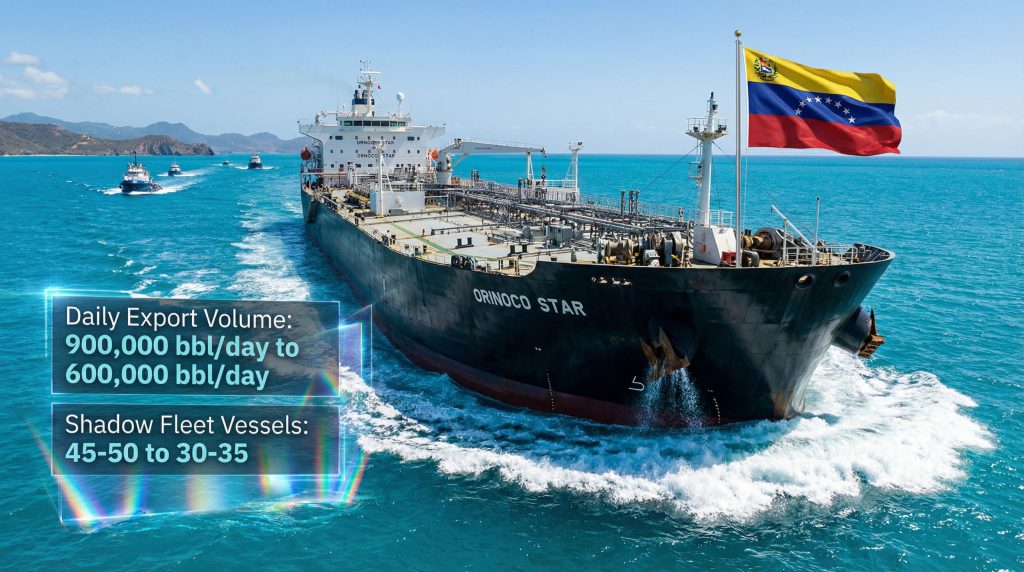
Ship-to-ship transfer techniques in international waters allow cargo to move between vessels without entering port facilities where inspection and documentation requirements apply. Furthermore, these transfers can occur in areas where enforcement agency surveillance capabilities are limited or where international cooperation is restricted, as sanctioned ships still loading Venezuelan oil despite U.S. blockade continue to operate through sophisticated evasion networks.
International maritime enforcement cooperation varies significantly between jurisdictions, creating operational gaps that sophisticated sanctions evasion networks can exploit. Limited information sharing between some flag states and U.S. agencies reduces the effectiveness of vessel tracking and interdiction efforts.
Trade Route Adaptation and Geographic Arbitrage
PDVSA's recent resort to floating storage reflects operational constraints rather than successful trade route adaptation. Multiple vessels carrying Venezuelan crude remain anchored offshore as onshore tank storage capacity reaches limits, creating potential supply bottlenecks that could affect regional energy markets.
The current situation indicates infrastructure constraints that force alternative operational procedures, with state oil company PDVSA implementing floating storage of excess barrels as export channels become increasingly restricted. However, this storage buildup reflects growing export bottlenecks that could tighten physical supply flows if sustained.
Current market pricing shows Brent crude trading at $62.46 as of December 24, 2025, with WTI at $58.48, representing gains of over 4.5% in the last five trading days. These price movements reflect geopolitical risk premiums associated with supply disruption concerns and demonstrate the broader oil price rally impact on global energy markets.
Alternative loading terminals and transshipment hubs face increasing scrutiny from enforcement agencies, reducing the operational flexibility that sanctions evasion networks previously enjoyed. Enhanced surveillance technology and international cooperation limit the effectiveness of geographic arbitrage strategies.
Economic Impact Analysis: Market Disruption vs. Continued Flows
Storage Infrastructure Constraints and Operational Bottlenecks
Current storage infrastructure limitations force Venezuelan state oil company PDVSA into floating storage arrangements that increase operational costs and reduce export flexibility. Onshore tank capacity constraints reflect both infrastructure limitations and export channel restrictions created by enhanced sanctions enforcement.
Vessel anchoring patterns offshore indicate significant infrastructure constraints where normal export procedures cannot function effectively. The accumulation of vessels in offshore anchorage areas creates potential environmental and operational risks while increasing costs for vessel operators.
Extended vessel charter periods result from operational delays and storage constraints, increasing costs for both vessel operators and cargo owners. These cost pressures affect the economics of Venezuelan crude trade and may influence future operational decisions by potential purchasers.
U.S. crude inventory data shows recent builds, with American Petroleum Institute figures indicating a rise of approximately 2.4 million barrels in recent week measurements. These inventory changes occur against a backdrop of supply disruption concerns that affect both immediate pricing and longer-term supply expectations.
Market Psychology and Price Formation
Current market sentiment reflects the complex interaction between supply disruption fears and broader inventory concerns. Oil prices have gained over 4.5% in recent trading sessions as geopolitical risk premiums outweigh structural oversupply concerns in near-term price formation.
Robust U.S. economic data provides fundamental support for energy demand expectations, with third-quarter economic growth reaching its fastest pace in two years. Strong consumer spending and rebounding exports create positive demand signals that support current price levels despite supply uncertainty.
Market participants must balance immediate supply disruption risks against longer-term structural surplus projections. Industry forecasts generally anticipate continued global oil inventory builds through 2026, creating potential downward pressure on prices beyond current quarter expectations.
The interaction between Venezuelan supply constraints and broader market fundamentals creates complex pricing dynamics where short-term geopolitical premiums compete with longer-term oversupply concerns for market influence. Meanwhile, concerns about Venezuelan oil supply security continue to create volatility in global energy markets.
Regulatory Compliance Challenges for Legitimate Market Participants
Due Diligence Requirements and Risk Management
Legitimate oil trading companies face enhanced due diligence requirements when evaluating potential transactions involving Venezuelan crude or related logistics services. These requirements extend beyond traditional Know Your Customer procedures to include vessel tracking, beneficial ownership verification, and destination monitoring.
Insurance and financing compliance protocols require comprehensive documentation and ongoing monitoring that increases transaction costs and processing times. Financial institutions implement enhanced screening procedures that affect not only direct Venezuelan trade but also transactions involving vessels or entities with potential Venezuelan exposure.
Supply chain diversification strategies become essential for companies seeking to avoid sanctions compliance risks while maintaining operational flexibility. These strategies often involve higher costs and reduced efficiency as companies avoid potentially problematic supply sources and logistics arrangements.
Real-time vessel tracking and sanctions screening requirements create ongoing compliance obligations that extend throughout transaction lifecycles. Companies must maintain comprehensive documentation and monitoring systems to demonstrate compliance with evolving sanctions requirements.
International Shipping Industry Response
Major shipping companies have implemented comprehensive compliance protocols that extend beyond minimum legal requirements to include enhanced risk assessment and monitoring procedures. These protocols reflect both regulatory requirements and commercial risk management strategies.
Insurance market withdrawal from Venezuelan trade affects vessel availability and charter rates for legitimate transactions involving Caribbean routing. The reduced insurance coverage availability creates operational constraints that affect broader regional shipping patterns.
Vessel financing constraints affect fleet availability for legitimate trade as financial institutions implement enhanced screening procedures. These constraints create operational bottlenecks that may affect charter rates and vessel availability for non-sanctioned trade activities.
Consequently, the shipping industry's compliance response creates operational segregation where vessels with any potential Venezuelan exposure face restricted access to financing, insurance, and port services. This segregation affects the economics of maritime trade beyond direct sanctions targets.
Enforcement Effectiveness Assessment
Comparative Analysis with Other Sanctions Regimes
Venezuelan maritime enforcement represents a different approach compared to Russian oil price cap mechanisms, where the focus shifts from price controls to physical interdiction and export volume reduction. This enforcement strategy reflects lessons learned from previous sanctions regimes and their limitations.
Iranian sanctions evasion patterns provide insights into potential Venezuelan response strategies, including sophisticated vessel registration changes, ship-to-ship transfers, and alternative financing arrangements. Understanding these patterns helps enforcement agencies anticipate and counter evasion techniques.
Success metrics for maritime sanctions enforcement extend beyond simple volume reductions to include broader strategic objectives such as revenue reduction, operational cost increases, and diplomatic pressure creation. In addition, the broader implications of tariffs economic implications contribute to the complex web of economic pressure mechanisms.
The effectiveness of maritime sanctions depends heavily on international cooperation and comprehensive coverage across multiple enforcement domains. Gaps in cooperation or enforcement coverage can significantly reduce overall effectiveness.
Unintended Consequences and Market Distortions
Regional oil pricing differentials reflect both supply disruption effects and transportation cost increases resulting from sanctions enforcement. These pricing distortions affect legitimate trade and may create unintended economic effects beyond sanctions targets.
Environmental risks from aging shadow fleet vessels create potential consequences that extend beyond immediate sanctions objectives. Older vessels with potentially inadequate maintenance or insurance coverage pose environmental and safety risks in international waters.
Effects on legitimate Caribbean shipping routes include increased scrutiny, higher insurance costs, and operational delays that affect regional commerce beyond sanctioned trade. These spillover effects create broader economic costs that may affect sanctions policy sustainability.
Market structure changes resulting from sanctions enforcement may persist beyond immediate enforcement periods, affecting long-term trade patterns and commercial relationships in ways that extend sanctions impact. Furthermore, the US–China trade war impact demonstrates how geopolitical tensions can create lasting changes in global trade patterns.
The next major ASX story will hit our subscribers first
Future Regulatory and Policy Scenarios
Potential Escalation Pathways
Enhanced maritime surveillance technology deployment could significantly increase enforcement effectiveness through improved vessel tracking and cargo identification capabilities. Advanced satellite monitoring and artificial intelligence applications may close current surveillance gaps.
Secondary sanctions expansion to third-country entities could broaden enforcement reach but may also create diplomatic tensions with ally nations whose companies become sanctions targets. This expansion requires careful balance between enforcement objectives and alliance relationships.
Coordination with allied nations' naval forces could enhance enforcement coverage but requires complex international agreements and operational coordination that may be difficult to achieve and maintain over extended periods.
Legal framework evolution may be necessary to address jurisdictional gaps and enforcement limitations revealed through current operations. These legal changes could affect both enforcement capabilities and international maritime law more broadly.
De-escalation Possibilities and Market Implications
Conditions for sanctions relief or modification depend on broader geopolitical developments that extend beyond immediate enforcement considerations. Political changes in either the United States or Venezuela could significantly affect sanctions policy direction.
Diplomatic negotiations possibilities remain limited by current political constraints, but changing circumstances could create opportunities for sanctions modification or removal that would significantly affect market dynamics. However, the complexity of tariffs impact investment markets suggests that policy changes must consider broader economic implications.
Long-term market structure changes resulting from current enforcement could persist even after potential sanctions relief, as companies and governments adjust operational procedures and commercial relationships to reduce future sanctions risks.
Investment in alternative energy infrastructure and supply diversification may reduce the strategic importance of Venezuelan oil exports over time, potentially affecting the cost-benefit calculation for continued sanctions enforcement.
Key Takeaways for Industry Stakeholders
Monitoring and Compliance Best Practices
Real-time vessel tracking and sanctions screening systems require substantial technology investment and ongoing maintenance but are essential for compliance risk management. These systems must integrate multiple data sources and provide timely alerts for potential sanctions exposure.
Documentation requirements for legitimate transactions demand comprehensive record-keeping that extends beyond traditional commercial documentation. Companies must maintain detailed records of vessel movements, cargo origins, and beneficial ownership structures throughout transaction lifecycles.
Legal and compliance team coordination becomes critical for navigating complex and evolving sanctions requirements. Regular training and system updates are necessary to maintain effective compliance programs as enforcement approaches and legal requirements change.
Industry stakeholders must balance sanctions compliance requirements against operational efficiency and cost considerations while maintaining commercial competitiveness in legitimate markets. This balance requires careful strategic planning and ongoing risk assessment.
Disclaimer: This article contains analysis of current sanctions enforcement activities and market conditions that are subject to rapid change. Readers should consult current regulatory guidance and legal counsel before making business decisions related to Venezuelan oil trade or sanctions compliance. The information presented reflects conditions as of December 2025 and may not reflect subsequent developments in sanctions policy or enforcement activities.
Want to Capitalise on Energy Market Volatility?
Discovery Alert's proprietary Discovery IQ model delivers real-time alerts on significant ASX mineral and energy discoveries, instantly empowering subscribers to identify actionable opportunities ahead of the broader market. Begin your 30-day free trial today and secure your market-leading advantage whilst geopolitical tensions continue to drive commodity price movements.