May 19, 2026
What Makes Sandvik's AutoMine Surface Drilling System Revolutionary for Large-Scale Mining?
Surface mining automation has reached a critical inflection point where traditional drilling methods face mounting pressure from operational demands that exceed human capabilities. The convergence of autonomous robotics, fleet management systems, and precision drilling technologies now enables mining operations to achieve continuous productivity gains previously constrained by safety protocols and operational limitations inherent to conventional drilling approaches. This technological evolution has positioned Sandvik autonomous surface drilling Vale partnerships at the forefront of industry innovation trends that are reshaping modern mining operations.
When big ASX news breaks, our subscribers know first
Core Technical Specifications of the DR416i and DI650i Platforms
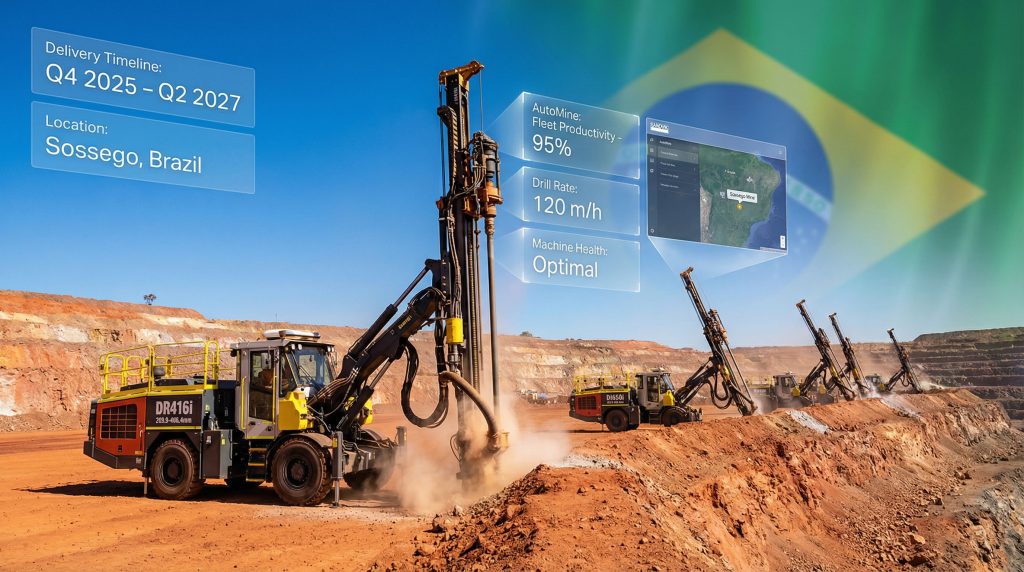
The Sandvik DR416i represents a fundamental advancement in autonomous rotary drilling technology, engineered specifically for large-scale blasthole operations. This platform operates within a 269.9-406.4 mm (10.625-16 inches) hole diameter range, positioning it as the primary solution for production-scale copper extraction where substantial blast patterns require consistent hole placement and penetration rates.
Technical specifications reveal the DR416i's advanced drilling capabilities through integrated sensor arrays that monitor penetration resistance, bit performance, and geological formation changes in real-time. The system's rotary mechanism delivers consistent torque application while maintaining precise hole trajectory control, critical for ensuring blast pattern effectiveness in copper ore formations.
The Leopard DI650i operates on fundamentally different drilling principles, utilising down-the-hole percussion technology for applications requiring 115-203 mm (4.5-9 inches) hole diameters. This crawler-mounted platform combines mobility with precision positioning capabilities, enabling operations in confined spaces and complex geological terrain where larger rotary systems cannot achieve optimal performance.
The DI650i's intelligent design incorporates self-contained systems that eliminate dependency on external air supply infrastructure, providing operational flexibility across varying site conditions. Its percussion drilling methodology delivers superior penetration rates in hard rock formations typical of copper deposits while maintaining hole straightness critical for precision blasting applications.
AutoCycle Functionality: From Manual to Fully Autonomous Operations
AutoCycle technology represents the pinnacle of Sandvik autonomous surface drilling Vale capabilities, enabling complete transformation from operator-dependent drilling to fully autonomous fleet operations. This system orchestrates complex drilling sequences through advanced algorithmic control that manages bit selection, penetration parameters, and hole completion protocols without human intervention, exemplifying the AI in drilling innovations that are revolutionising mining operations.
The autonomous drilling cycle begins with GPS-guided positioning that places drill rigs at precise coordinates within predetermined blast patterns. Automated levelling systems then stabilise each platform while drilling parameters are calculated based on geological data, hole depth requirements, and formation characteristics detected through real-time sensor feedback.
During drilling operations, AutoCycle continuously monitors multiple performance variables including:
- Penetration rate optimisation based on rock hardness variations
- Bit wear assessment through torque and vibration analysis
- Hole deviation tracking via integrated positioning systems
- Drilling fluid management for optimal cuttings removal
- Equipment health monitoring for predictive maintenance scheduling
The system's adaptive capabilities enable real-time parameter adjustments that optimise drilling efficiency while maintaining hole quality standards. When geological conditions change during drilling, AutoCycle automatically modifies rotation speed, feed pressure, and advance rates to maintain optimal performance parameters.
Remote Control Room Integration and Fleet Management Capabilities
Remote control room integration transforms traditional drilling operations by enabling centralised management of multiple autonomous drill rigs simultaneously. This operational model eliminates the need for individual operators at each drilling location, instead consolidating fleet oversight within protected control environments located away from active mining hazards.
Fleet management systems provide comprehensive operational visibility through integrated dashboards displaying real-time performance metrics, equipment status, and operational progress across entire drilling fleets. Operators can monitor drilling parameters, adjust operational priorities, and coordinate fleet movements from centralised locations while maintaining full operational control.
Furthermore, the system's communication architecture utilises high-bandwidth wireless networks that maintain constant connectivity between drill rigs and control centres. This enables instantaneous response to operational changes, emergency protocols, and optimisation adjustments that maximise fleet productivity whilst ensuring safety compliance. These advancements align with broader digital transformation in mining initiatives across the industry.
Advanced scheduling algorithms optimise drilling sequences across multiple rigs, ensuring efficient blast pattern completion while minimising equipment conflicts and maximising overall fleet utilisation rates. The system can dynamically reassign drilling tasks based on equipment availability, geological conditions, and operational priorities.
Why Did Vale Base Metals Choose Sandvik Over Competing Autonomous Drilling Solutions?
Performance Analysis from the 2021 Sossego Mine Trial Program
Vale Base Metals' selection of Sandvik autonomous surface drilling Vale technology stems from an extensive four-year evaluation program that commenced with DR416i trials at the Sossego mine in 2021. This extended validation period provided comprehensive performance data under actual operational conditions, enabling detailed assessment of equipment reliability, productivity improvements, and integration compatibility with existing mining infrastructure.
The trial program evaluated critical performance metrics including drilling accuracy, penetration rates, equipment uptime, and maintenance requirements across diverse geological formations characteristic of Brazilian copper deposits. Results from this multi-year assessment formed the foundation for Vale's decision to expand autonomous drilling deployment across multiple operations.
Operational data collected during the trial period demonstrated significant improvements in drilling consistency and blast pattern precision compared to conventional drilling methods. The autonomous systems maintained superior hole placement accuracy whilst reducing drilling cycle times through optimised parameter selection and continuous operation capabilities, providing enhanced drilling results analysis capabilities.
Cost-Efficiency Metrics: Productivity Gains vs. Traditional Drilling Methods
Sandvik autonomous surface drilling Vale technology delivers measurable cost advantages through multiple operational efficiency improvements that compound over extended operational periods. The system's ability to operate continuously without shift changes or operator fatigue limitations enables 24/7 operation capabilities that traditional drilling methods cannot achieve consistently.
Fleet utilisation optimisation represents a primary cost advantage, as autonomous systems can coordinate multiple drilling operations simultaneously while maintaining optimal spacing and sequence planning. This coordination eliminates downtime associated with equipment conflicts and enables more efficient blast pattern completion.
Maintenance cost reductions result from the system's integrated monitoring capabilities that enable predictive maintenance protocols. Real-time equipment health monitoring allows maintenance scheduling based on actual component condition rather than time-based intervals, reducing both planned and unplanned downtime whilst extending equipment service life.
Labor cost optimisation occurs through the remote control room model that enables single operators to oversee multiple drilling rigs simultaneously. This operational efficiency reduces per-hole labour costs while improving safety by removing personnel from active drilling hazards.
Integration Compatibility with Vale's Existing Mining Infrastructure
Sandvik's comprehensive surface solutions portfolio provided Vale Base Metals with seamless integration capabilities across existing mining infrastructure rather than requiring wholesale operational restructuring. The system's modular design accommodates varying site conditions and operational requirements whilst maintaining compatibility with established mining procedures.
Communication system integration utilised existing site networks and communication protocols, minimising infrastructure modifications required for autonomous drilling implementation. The AutoMine system's flexible architecture enabled integration with Vale's current fleet management systems and operational reporting structures.
Moreover, maintenance infrastructure compatibility ensured that existing service facilities could accommodate autonomous drilling equipment without extensive modifications. Sandvik's AutoMine training simulator capabilities have further enhanced operator preparation and system integration, whilst multi-year service and rock tools supply agreements provide integrated support that aligns with Vale's existing maintenance protocols and inventory management systems.
What Are the Technical Advantages of Rotary vs. Down-the-Hole Drilling in Copper Extraction?
DR416i Rotary Blasthole Technology: 269.9-406.4mm Hole Diameter Capabilities
Rotary drilling technology offers distinct advantages for large-scale copper extraction through its ability to create substantial hole diameters that accommodate high-explosive charges necessary for efficient ore fragmentation. The DR416i's 269.9-406.4 mm diameter capability positions it as optimal for production blasting where large blast patterns require consistent hole placement and substantial explosive capacity.
The rotary drilling mechanism operates through continuous bit rotation against the rock face, generating cutting action that efficiently penetrates medium to hard rock formations typical of copper deposits. This approach delivers superior penetration rates in formations where percussion drilling methods may experience reduced efficiency due to rock hardness variations.
Bit design optimisation for rotary applications focuses on cutting structure configurations that maintain sharpness across extended drilling cycles whilst providing consistent hole wall smoothness. The larger diameter capability enables use of multiple explosive charges per hole, increasing blast efficiency and reducing overall drilling requirements per ton of ore extracted.
Rotary systems excel in formations with consistent hardness characteristics where steady penetration rates can be maintained across extended drilling cycles. The technology's ability to handle larger hole diameters makes it particularly suitable for primary production blasting where maximum explosive utilisation drives operational efficiency.
Leopard DI650i DTH System: Precision Drilling for 115-203mm Applications
Down-the-hole drilling technology provides superior performance advantages in applications requiring precision hole placement and consistent penetration in variable geological conditions. The DI650i's 115-203 mm diameter range optimises it for pre-split applications and secondary production drilling where accuracy and hole quality take precedence over maximum explosive capacity.
The percussion mechanism delivers impact energy directly to the drill bit through compressed air systems, providing consistent drilling performance regardless of hole depth variations. This approach maintains uniform penetration rates across varying rock hardness conditions whilst delivering superior hole straightness compared to rotary methods in complex geological formations.
Crawler-mounted mobility enables precise positioning in confined spaces and irregular terrain where larger rotary systems cannot achieve optimal setup positions. This flexibility proves essential for pre-split drilling applications that require exact hole placement along planned excavation boundaries.
Consequently, the self-contained design eliminates dependency on external infrastructure beyond compressed air supply, providing operational flexibility across varying site conditions. This independence enables deployment in remote locations or temporary operations where extensive support infrastructure is not available.
Rock Formation Analysis: Matching Drill Type to Geological Conditions
Geological formation characteristics determine optimal drilling methodology selection based on rock hardness, structural integrity, and mineral composition factors that influence drilling performance. Copper ore formations typically exhibit varying hardness characteristics that require different drilling approaches to achieve optimal penetration rates and hole quality, often necessitating detailed 3D geological modelling for optimal drilling strategy development.
Hard rock formations with consistent mineral composition favour rotary drilling methods that can maintain steady cutting action across uniform geological conditions. The continuous rotation mechanism efficiently removes rock cuttings whilst maintaining hole wall integrity in stable formations.
Variable hardness formations with alternating hard and soft zones benefit from down-the-hole percussion drilling that delivers consistent impact energy regardless of formation changes. The percussion mechanism adapts to hardness variations without significant performance degradation or drilling parameter adjustments.
Fractured or unstable formations require drilling methodologies that minimise formation disturbance whilst maintaining hole stability. DTH systems excel in these conditions through controlled impact delivery that reduces formation stress compared to continuous rotary action.
Formation water content influences drilling methodology selection, as rotary systems typically handle wet conditions more effectively through continuous cutting action and cuttings removal. DTH systems may require additional air flow adjustments in high-water formations to maintain optimal drilling performance.
How Does Vale's Autonomous Drilling Expansion Compare Across Global Copper Operations?
| Mining Complex | Location | Drill Rig Type | Delivery Timeline | Operational Focus |
|---|---|---|---|---|
| Sossego | Canaã dos Carajás | 9x DR416i Rotary | Q4 2025 – Q2 2027 | Primary Production |
| Salobo | Marabá | 7x DI650i DTH | 4 units 2026, 3 units 2029 | Pre-split & Production |
Sossego Complex: Brazil's First Copper Operation Modernisation Strategy
The Sossego Mining Complex represents Vale's inaugural copper extraction facility, established in 2004 in Canaã dos Carajás, south-eastern Pará state. This operation's selection for comprehensive autonomous drilling modernisation reflects its strategic importance as the foundation of Vale's Brazilian copper portfolio and the operational experience gained through two decades of production.
The deployment of 9 DR416i rotary blasthole rigs across the Q4 2025 through Q2 2027 timeframe indicates a phased implementation strategy that allows operational integration whilst maintaining production continuity. This extended rollout enables workforce training, system optimisation, and operational procedure refinement without disrupting established production schedules.
Sossego's modernisation emphasises production drilling optimisation through rotary technology suited to the operation's large-scale blasting requirements. The complex's mature infrastructure and established operational procedures provide an ideal environment for autonomous drilling integration whilst serving as a technology validation platform for broader Vale Base Metals deployment.
The initial DR416i trial that commenced in 2021 provided four years of performance validation that informed the full-scale modernisation strategy. This extended evaluation period enabled comprehensive assessment of equipment performance, maintenance requirements, and operational integration challenges under actual production conditions.
Salobo Reserve Optimisation: Leveraging Brazil's Largest Copper Deposit
The Salobo Mining Complex in Marabá, south-eastern Pará, holds distinction as the largest copper mineral reserve in Brazil according to Vale, positioning it as a critical asset in the company's global copper strategy. The complex's selection for 7 DI650i down-the-hole rigs reflects operational requirements that prioritise precision drilling and pre-split applications.
The deployment timeline distributes equipment delivery across 4 units in 2026 and 3 units in 2029, suggesting either phased operational expansion or capital deployment scheduling that aligns with broader project development timelines. This extended implementation period may reflect complex operational requirements or integration with additional mine development activities.
Salobo's operational focus on both pre-split and production drilling applications requires the precision capabilities that DTH technology provides. Pre-split drilling demands exact hole placement and consistent depth control to achieve planned excavation boundaries, making the DI650i's precision capabilities essential for operational success.
The reserve's magnitude positions Salobo as a multi-decade operation that justifies long-term technology investments and operational optimisation initiatives. Autonomous drilling implementation represents strategic infrastructure development that will provide operational advantages throughout the reserve's production lifecycle.
What Safety and Operational Benefits Does Autonomous Surface Drilling Deliver?
Remote Operation Protocols: Eliminating Human Exposure to Blast Zones
Autonomous surface drilling fundamentally transforms operational safety by removing human operators from active drilling locations where multiple hazards create significant risk exposure. Remote control room operations enable drilling activities to proceed whilst personnel remain in protected environments separated from equipment hazards, geological instability, and explosive charge placement risks.
The spatial separation between operators and active drilling sites eliminates direct exposure to equipment-related hazards including hydraulic system failures, structural collapses, and mechanical malfunctions that pose immediate physical danger. Remote operation protocols ensure personnel safety whilst maintaining full operational control through advanced monitoring and control systems.
Blast zone hazard elimination represents a critical safety advancement, as traditional drilling operations require personnel proximity to areas where explosive charges will be deployed. Autonomous systems enable drilling completion and site evacuation well before explosive placement, removing the risk of premature detonation or explosive handling accidents affecting drilling personnel.
Emergency response protocols benefit from remote operation capabilities that enable immediate equipment shutdown and evacuation procedures without requiring personnel extraction from potentially hazardous locations. Control room operators can implement emergency procedures instantly whilst coordinating rescue operations from secure locations.
Predictive Maintenance Integration Through AutoMine Monitoring Systems
AutoMine monitoring systems provide comprehensive equipment health assessment through continuous sensor monitoring that tracks component performance, wear patterns, and operational stress indicators in real-time. This data enables predictive maintenance protocols that schedule interventions based on actual equipment condition rather than predetermined time intervals.
Sensor arrays monitor critical system components including:
- Hydraulic system pressure and fluid condition indicators
- Engine performance parameters and fuel consumption patterns
- Drilling mechanism wear through torque and vibration analysis
- Electrical system integrity and power consumption monitoring
- Structural stress indicators in drilling masts and support systems
Data analytics algorithms process sensor information to identify performance trends that indicate developing maintenance requirements before component failures occur. This proactive approach reduces unplanned downtime whilst optimising maintenance scheduling to minimise operational disruptions.
Maintenance cost optimisation results from targeted interventions that address specific component needs rather than comprehensive overhauls based on operating hours. Predictive protocols extend component life cycles whilst reducing maintenance material consumption and labour requirements.
Fleet Utilisation Optimisation: 24/7 Operation Capabilities
Autonomous drilling systems enable continuous operation capabilities that exceed traditional drilling limitations imposed by human operator constraints. 24/7 operation becomes achievable through automated systems that eliminate shift changes, operator fatigue limitations, and personnel availability constraints that restrict conventional drilling operations.
Fleet coordination algorithms optimise drilling sequences across multiple rigs simultaneously, ensuring efficient blast pattern completion whilst minimising equipment conflicts and idle time. The system can dynamically adjust drilling priorities based on operational requirements, equipment availability, and geological conditions.
Operational efficiency improvements include:
- Continuous drilling cycles without shift-change interruptions
- Optimised equipment positioning to minimise travel time between holes
- Coordinated blast pattern completion across multiple drilling rigs
- Dynamic workload distribution based on equipment performance capabilities
- Automated quality control monitoring throughout drilling operations
Weather condition adaptability enables continued operations during periods when human operators might suspend activities due to safety concerns. Autonomous systems can operate in challenging weather conditions whilst maintaining safety protocols through remote monitoring and automatic shutdown capabilities when conditions exceed safe operating parameters.
The next major ASX story will hit our subscribers first
How Does Sandvik's Surface Drilling Technology Stack Against Industry Competitors?
Market Position Analysis: Sandvik vs. Epiroc vs. Caterpillar Autonomous Solutions
The autonomous surface drilling market features intense competition among established equipment manufacturers, each pursuing distinct technological approaches and market positioning strategies. Sandvik's AutoMine platform competes directly with Epiroc's Rig Control System and Caterpillar's autonomous drilling solutions across various operational parameters and customer requirements.
Sandvik's competitive positioning emphasises comprehensive surface solutions integration across multiple equipment categories rather than standalone drilling platforms. This portfolio approach enables complete operational ecosystem management, from drilling through materials handling, providing customers with integrated technology solutions from a single supplier.
The company's AutoMine autonomous package represents its most advanced automation tier, incorporating AutoCycle capabilities that enable fully autonomous operation across drilling fleets. This technology level positions Sandvik at the premium end of the autonomous drilling market where operational sophistication justifies higher equipment investment levels.
Furthermore, market differentiation factors include equipment reliability, automation sophistication, service support quality, and total cost of ownership considerations that influence customer selection decisions. For instance, Australian mining companies have recognised the future potential of drill autonomy with Sandvik's technology, creating market segments based on operational priorities and technical requirements.
Technology Differentiation: AutoMine's Unique Positioning in Surface Applications
AutoMine technology distinguishes itself through comprehensive fleet coordination capabilities that enable multiple drilling rigs to operate simultaneously from centralised control rooms. This operational model provides significant advantages over competitors that focus primarily on individual equipment automation without fleet-level coordination.
The system's adaptive drilling parameter optimisation sets it apart from competitors through real-time geological condition assessment and automatic drilling parameter adjustments. This capability maintains optimal drilling performance across varying formation conditions without operator intervention or manual parameter modifications.
Integration capabilities with existing mining infrastructure provide competitive advantages for operations seeking autonomous drilling implementation without comprehensive operational restructuring. AutoMine's flexible architecture accommodates diverse site conditions and operational requirements whilst maintaining compatibility with established mining procedures.
Advanced sensor integration throughout drilling systems provides superior equipment monitoring and predictive maintenance capabilities compared to competitor solutions that may rely on simpler monitoring systems. This technological sophistication enables proactive maintenance protocols that reduce operational disruptions and equipment downtime.
Service Package Integration: Multi-Year Support and Rock Tools Supply
Sandvik's competitive strategy incorporates comprehensive service package integration that extends beyond equipment supply to include multi-year maintenance support and rock tools supply agreements. This approach provides customers with complete operational support whilst ensuring optimal equipment performance throughout service lifecycles.
The integrated service model reduces operational complexity by consolidating supplier relationships and maintenance protocols under single vendor management. This simplification provides operational advantages whilst ensuring parts availability and technical support consistency across equipment fleets.
Rock tools supply integration ensures drilling bit optimisation for specific geological conditions whilst maintaining inventory management efficiency. Sandvik's tools expertise enables bit selection recommendations that optimise drilling performance whilst extending bit life cycles and reducing consumable costs.
Technical support services include operator training programs, system optimisation consultation, and performance monitoring analysis that maximise autonomous drilling system utilisation. These services help customers achieve optimal return on equipment investment whilst accelerating technology adoption timelines.
What Are the Long-Term Implications for Brazil's Copper Mining Sector?
Production Capacity Projections: Impact on Brazil's Global Copper Market Share
Brazil's copper mining sector stands positioned for significant production capacity expansion through autonomous drilling technology adoption that enables more efficient ore extraction and processing capabilities. The Vale Base Metals modernisation represents a strategic investment in operational efficiency that could influence Brazil's position in global copper markets.
Autonomous drilling implementation enables more precise blast pattern execution that improves ore fragmentation and reduces processing energy requirements. These efficiency improvements translate to higher copper recovery rates and reduced production costs that enhance operational competitiveness in global copper markets.
The Salobo complex's designation as Brazil's largest copper mineral reserve positions it as a critical factor in the country's copper production capacity. Autonomous drilling optimisation at this operation could significantly impact Brazil's overall copper output and market position relative to major producing nations.
Production consistency improvements through autonomous systems reduce operational variability and enable more reliable copper supply commitments to global markets. This reliability enhances Brazil's attractiveness as a copper supplier whilst supporting long-term contract negotiations with international customers.
Technology Transfer Potential: Scaling Autonomous Drilling Across Latin America
The successful implementation of autonomous drilling technology in Brazilian copper operations creates potential for broader technology adoption across Latin American mining operations. Regional mining companies may pursue similar autonomous drilling investments based on demonstrated performance advantages and operational benefits.
Technology transfer opportunities include knowledge sharing between mining operations, equipment supplier expansion across regional markets, and workforce development programs that build autonomous mining capabilities throughout Latin America. These developments could accelerate regional mining technology advancement.
Regional equipment service infrastructure development becomes necessary to support autonomous drilling deployment across multiple countries and operations. This infrastructure expansion creates opportunities for technology suppliers whilst building regional capabilities for advanced mining technology support.
Cross-border collaboration potential exists for sharing operational experience, maintenance protocols, and optimisation strategies that maximise autonomous drilling performance. This knowledge sharing could accelerate technology adoption whilst reducing implementation risks for subsequent deployments.
Investment Signal Analysis: What This Deal Means for Mining Technology Adoption
Vale Base Metals' substantial investment in autonomous drilling technology sends clear signals to the mining industry regarding technology adoption priorities and operational modernisation strategies. This high-profile deployment validates autonomous drilling as a mature technology ready for large-scale implementation.
The investment timeline extending through 2029 indicates long-term confidence in autonomous drilling technology and suggests that major mining companies view this technology as essential for future operational competitiveness rather than experimental technology deployment.
Capital allocation patterns revealed through this investment demonstrate mining industry willingness to pursue significant technology investments that deliver operational advantages. This signals potential for broader autonomous technology adoption across various mining applications beyond surface drilling.
Supplier relationship implications include strengthened partnerships between major mining companies and technology providers, potentially leading to expanded collaboration on additional autonomous mining applications and next-generation technology development initiatives.
Frequently Asked Questions About Sandvik's Vale Partnership
What is the total value of Sandvik's Vale Base Metals contract?
The total financial value of Sandvik's Vale Base Metals contract has not been publicly disclosed by either company. The agreement encompasses 16 surface drill rigs including 9 DR416i rotary units and 7 DI650i DTH units, plus multi-year service agreements and rock tools supply contracts. Orders were primarily booked during the June and September quarters of 2025, with remaining units booked in 2026, suggesting the contract value represents a significant investment spanning multiple years of equipment delivery and service support.
How long does it take to retrofit existing mines with autonomous drilling systems?
Vale Base Metals' implementation timeline provides insight into autonomous drilling system deployment schedules. The DR416i rotary rigs began delivery in December quarter 2025 and continue through June quarter 2027, indicating an 18-month delivery and integration period for the primary drilling fleet. The DI650i units follow an extended timeline with 4 units delivered in 2026 and final 3 units in 2029, suggesting retrofit complexity varies based on operational requirements and site preparation needs.
Can AutoMine technology be integrated with non-Sandvik equipment?
Sandvik's AutoMine system has been specifically designed for integration with Sandvik drilling equipment, though the remote control room infrastructure and fleet management capabilities may accommodate mixed equipment environments. The system's communication protocols and monitoring capabilities focus on Sandvik equipment specifications and operational parameters. Integration with non-Sandvik equipment would likely require additional interface development and may not provide full autonomous functionality available with native Sandvik equipment configurations.
What training requirements exist for operators transitioning to autonomous systems?
Autonomous drilling system implementation requires comprehensive operator retraining to transition from traditional drilling operation to remote control room management. Training programs must address remote equipment operation, fleet coordination protocols, emergency response procedures, and system monitoring interpretation. The Vale Base Metals implementation likely includes extensive training programs as part of the multi-year service agreements, though specific training duration and curriculum details have not been publicly disclosed.
Future Outlook: Autonomous Surface Drilling Technology Roadmap
Next-Generation AutoMine Features in Development
Autonomous drilling technology continues evolving toward enhanced artificial intelligence integration that will enable more sophisticated decision-making capabilities and operational optimisation. Future AutoMine developments likely focus on advanced geological condition assessment, predictive performance optimisation, and enhanced fleet coordination algorithms that maximise operational efficiency.
Machine learning integration represents a significant development opportunity for autonomous drilling systems. Advanced algorithms could analyse historical drilling performance data to optimise future drilling parameters automatically, reducing operational variability whilst improving drilling efficiency across diverse geological conditions.
Enhanced sensor integration and data analytics capabilities may provide more detailed real-time geological assessment during drilling operations. This information could enable automatic drilling parameter adjustments that optimise performance for specific rock formations whilst maintaining hole quality standards.
Communication system advancement through 5G network integration could enhance remote control capabilities and enable more responsive fleet coordination. Improved connectivity supports more sophisticated remote operation protocols whilst reducing communication latency that affects operational responsiveness.
Potential Expansion to Vale's Iron Ore Operations
Vale's extensive iron ore operations represent significant potential for autonomous drilling technology expansion beyond copper mining applications. The operational experience and performance validation gained through copper operation implementation provides foundation knowledge for autonomous drilling deployment across iron ore extraction activities.
Iron ore extraction typically requires different drilling specifications compared to copper mining, potentially driving development of specialised autonomous drilling configurations optimised for iron ore geological conditions and operational requirements. This expansion could result in additional equipment orders and service agreements with Sandvik.
Scale economics associated with broader autonomous drilling deployment across Vale's global operations could justify additional technology investments and operational optimisation initiatives. The company's diverse mining portfolio provides opportunities for autonomous technology standardisation and operational efficiency improvements.
Industry-Wide Adoption Timeline for Autonomous Surface Mining
The mining industry's autonomous technology adoption continues accelerating as major operators validate operational benefits and technology maturity. Vale Base Metals' comprehensive deployment provides high-profile validation that may encourage broader industry adoption across various mining applications and geographical regions.
Technology cost reductions through increased production volumes and competitive pressures may accelerate adoption timelines for smaller mining operations that previously viewed autonomous drilling as economically prohibitive. Market expansion could drive technology refinement and cost optimisation that benefits industry-wide deployment.
Regulatory environment evolution may influence adoption timelines through safety requirements or operational standards that favour autonomous technology deployment. Mining safety regulations increasingly emphasise personnel hazard reduction, potentially creating regulatory incentives for autonomous technology adoption.
Workforce development requirements will influence adoption timelines as mining companies invest in training programs and operational procedure modifications necessary for autonomous technology implementation. Industry collaboration on training standards and certification programs could accelerate widespread adoption across the mining sector.
Want to Stay Ahead of Major Mining Technology Developments?
Discovery Alert's proprietary Discovery IQ model delivers instant notifications when significant ASX mineral discoveries are announced, helping investors identify the next wave of mining innovation before it reaches mainstream attention. Explore how historic mining discoveries have generated exceptional returns and begin your 30-day free trial today to position yourself ahead of the market.