May 21, 2026
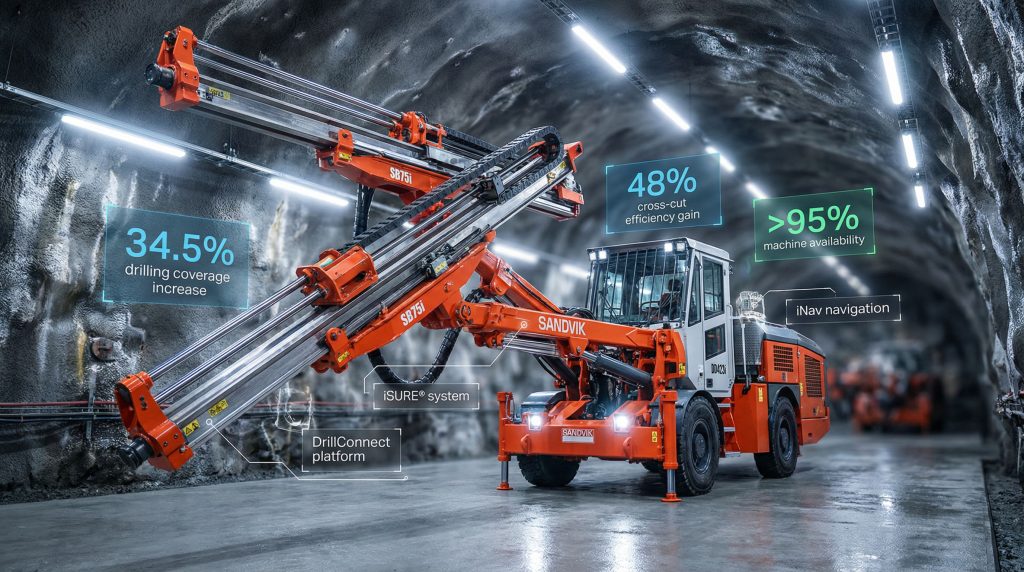
Underground mining operations have undergone a remarkable transformation over the past decade, driven by the relentless pursuit of efficiency, safety, and automation. The emergence of intelligent drilling systems represents a pivotal shift in how mining companies approach development drilling, fundamentally altering the relationship between operator expertise, equipment capability, and operational outcomes. The Sandvik DD423i drill rig exemplifies this technological evolution, addressing longstanding challenges in confined underground environments while establishing new benchmarks for productivity and precision.
Advanced Automation Technologies Reshaping Underground Development Drilling
The transition from conventional drilling systems to automated platforms reflects a comprehensive understanding of operational constraints in underground mining environments. Modern development drilling technology incorporates sophisticated boom positioning systems that eliminate manual setup delays while ensuring precise hole placement through integrated collision avoidance mechanisms.
Furthermore, contemporary development drilling platforms utilise advanced control architectures that enable intuitive operation across varying skill levels. These systems reduce the learning curve for equipment deployment while maintaining rigorous precision standards essential for development drilling applications.
Mechanical Innovation in Confined Space Applications
The SB75i boom system represents a significant advancement in mechanical engineering for underground applications. This double roll-over mechanism enables superior spatial coverage in room-and-pillar mining configurations, where traditional drilling systems face manoeuvrability limitations.
Key Performance Improvements:
- Drilling Coverage Enhancement: 34.5% improvement over predecessor systems
- Cross-Cut Performance: 48% efficiency gain in horizontal drilling operations
- Machine Availability: Consistent uptime exceeding 95% in field testing
- Visibility Improvement: 55% increase in operator cabin visibility
The mechanical design philosophy prioritises operational flexibility within spatial constraints characteristic of underground mining environments. In addition, automatic boom positioning capabilities enable faster drilling cycles by eliminating manual positioning requirements between holes.
Operator Environment and Safety Enhancements
Cabin redesign specifications address critical human factors in underground drilling operations. The 55% visibility improvement provides operators with enhanced situational awareness, while integrated noise reduction and dust control systems create superior working conditions.
Ergonomic improvements extend operational periods without fatigue-related performance degradation. However, enhanced component accessibility enables faster maintenance cycles, directly impacting equipment availability and operational economics.
When big ASX news breaks, our subscribers know first
Field Validation in Challenging Geological Conditions
Testing in Scandinavian geological formations provides robust validation of equipment durability and performance capabilities. The Skellefteå region of Sweden presents some of Europe's most demanding drilling conditions, characterised by extremely hard and abrasive rock formations.
Real-World Performance Metrics
Field testing achieved over 95% machine availability during extended deployment in challenging geological conditions. This reliability metric demonstrates equipment readiness for commercial deployment in continuous mining operations, particularly where underground sensor advancements enhance operational monitoring.
"The selection of testing environments with extreme geological conditions provides the most reliable performance validation for underground drilling equipment, particularly in regions known for exceptionally hard and abrasive rock formations."
Testing Environment Characteristics:
- Geological Composition: Extremely hard, abrasive Scandinavian formations
- Operational Conditions: Confined underground spaces with spatial constraints
- Performance Validation: Extended deployment under commercial operating conditions
- Durability Assessment: Component wear rates and maintenance requirements
The comprehensive testing protocol evaluated boom system performance under extreme load conditions. Consequently, control system reliability in challenging geological applications and operator system responsiveness under demanding operational requirements were thoroughly assessed.
Integration with Digital Mining Ecosystems
Contemporary development drilling systems function as integrated components within broader digital mining platforms. Multi-system compatibility enables seamless data exchange between drilling operations and mine management systems, supporting the evolution of data-driven mining operations.
Compatible Digital Solutions:
| System | Function | Primary Benefit |
|---|---|---|
| iSURE® | Predictive maintenance | Reduced unplanned downtime |
| DrillConnect | Real-time monitoring | Performance optimisation |
| iNav Navigation | Precision positioning | Submetre accuracy |
| Remote Monitoring | Off-site surveillance | Reduced on-site support |
| Data Analytics Platform | Performance analysis | Data-driven decisions |
Data-Driven Operational Optimisation
Real-time performance monitoring enables continuous operational optimisation through data analytics. Predictive maintenance scheduling based on actual component condition reduces unnecessary maintenance while preventing failure-related downtime.
Digital connectivity transforms development drilling from isolated equipment operation into an integrated component of comprehensive mine management systems. For instance, this integration enables data-driven decision-making at both equipment and operation-wide levels, particularly when combined with advanced drilling results interpretation capabilities.
The architecture supports remote monitoring capabilities that enable off-site equipment surveillance and early problem detection. Furthermore, this reduces specialised on-site technical support requirements while enhancing safety protocols.
Operational Advantages and Economic Benefits
The convergence of mechanical innovation, automation technology, and digital integration creates substantial operational advantages for mining companies. Productivity enhancements through reduced drilling cycle times directly translate to increased development metres per operational shift.
Cost Efficiency and Resource Optimisation
Enhanced component accessibility and serviceability reduce maintenance labour costs while minimising equipment downtime. The intuitive control system design enables faster deployment with newly hired or less experienced personnel without compromising safety standards.
Operational Benefits Analysis:
- Reduced Training Requirements: Intuitive controls decrease operator learning curves
- Maintenance Optimisation: Easy component access enables faster service cycles
- Productivity Enhancement: Automated positioning reduces cycle time per hole
- Equipment Reliability: Proven uptime metrics support continuous operations
The combination of improved drilling coverage and enhanced cross-cut performance enables mining operations to extract more development metres per unit of equipment investment. Consequently, this directly impacts project economics and operational efficiency whilst supporting broader mining innovation trends.
Implementation Considerations for Mining Operations
Technology adoption in underground mining requires careful consideration of existing operational frameworks and workforce capabilities. Implementation planning must address equipment integration with current fleet management systems and operator training requirements.
Capital Investment and ROI Analysis
The productivity gains achieved through automation and enhanced mechanical design must be evaluated against equipment investment costs. Long-term operational efficiency improvements and reduced maintenance requirements contribute to favourable return on investment calculations.
Investment Evaluation Framework:
- Productivity Enhancement: Quantified drilling coverage improvements
- Operational Efficiency: Reduced cycle times and maintenance requirements
- Safety Benefits: Enhanced operator protection and equipment reliability
- Integration Costs: Digital platform implementation and training requirements
Technology Transition Planning
Successful implementation requires structured transition planning that addresses operator training, equipment integration, and operational procedure updates. The Sandvik DD423i drill rig features intuitive control design that reduces training complexity while maintaining operational precision standards.
Common Implementation Questions:
How does automated boom collision avoidance improve safety?
The system prevents equipment damage and operator injury by automatically detecting potential collisions and adjusting boom positioning in real-time. However, this eliminates manual positioning errors that commonly occur in confined underground environments.
What skill level is required for effective operation?
The intuitive control system accommodates operators across all skill levels, reducing training time while improving operational consistency and precision. Furthermore, this accessibility supports broader workforce development initiatives.
How does improved serviceability reduce operational costs?
Enhanced component accessibility enables faster maintenance cycles, reducing equipment downtime and specialised labour requirements for routine servicing. In addition, this contributes to improved overall equipment effectiveness.
The next major ASX story will hit our subscribers first
Future Developments in Underground Drilling Technology
The evolution of automated development drilling technology reflects broader industry trends toward comprehensive digitisation and autonomous operations. Continuous connectivity and data analytics capabilities position modern drilling systems as integral components of intelligent mining operations, particularly where AI transforming drilling technologies enhance operational capabilities.
Technological Evolution Pathways
Industry advancement focuses on enhanced automation capabilities, expanded digital integration, and improved sustainability metrics. Equipment manufacturers continue developing systems that reduce environmental impact while maximising operational efficiency through advanced drilling technologies.
The integration of artificial intelligence and machine learning capabilities within drilling control systems represents the next frontier in autonomous underground operations. These technologies enable adaptive drilling parameters based on real-time geological conditions and performance optimisation.
Market adoption patterns indicate accelerating deployment of automated drilling systems as mining companies recognise the operational and safety benefits of reduced manual intervention in underground environments. The Sandvik DD423i drill rig exemplifies this technological progression through its comprehensive automation features.
Disclaimer: This analysis is based on publicly available information and industry reports. Mining equipment performance and operational benefits may vary based on specific geological conditions, operational practices, and implementation approaches. Readers should conduct independent due diligence before making equipment investment decisions.
Looking to Capitalise on Underground Mining Innovation?
Discovery Alert instantly identifies breakthrough ASX mining announcements through its proprietary Discovery IQ model, delivering real-time notifications on technological advancements and major discoveries that drive market value. Explore how historic mining discoveries have generated substantial returns and begin your 14-day free trial today to gain a competitive edge in identifying the next generation of mining technology leaders.