July 15, 2026
Australian mining operations face unprecedented pressures to maximise underground productivity while maintaining stringent safety standards and environmental compliance. The convergence of technological advancement, operational efficiency demands, and workforce optimisation has created a perfect storm driving equipment modernisation across the continent's gold sector. As mining companies navigate deeper underground operations and increasingly complex geological conditions, the selection of Sandvik underground mining equipment Australia becomes critical for maintaining competitive advantages in global markets.
The transformation of Australia's underground mining landscape reflects broader industry evolution trends toward digitalisation, automation readiness, and integrated fleet management systems. These technological shifts represent more than incremental improvements; they constitute fundamental changes in how mining operations approach productivity, safety, and sustainability challenges in underground environments.
Advanced Technology Integration Transforms Underground Operations
Australia's underground mining sector has embraced sophisticated equipment platforms that integrate connectivity, real-time analytics, and automation-ready capabilities. The latest generation of underground mining equipment represents a significant departure from traditional mechanical systems, incorporating advanced digital technologies that enable remote monitoring, predictive maintenance, and operational optimisation.
Modern underground mining equipment platforms feature comprehensive connectivity systems that enable real-time data transmission from underground operations to surface control centres. These systems capture operational parameters including equipment performance metrics, environmental conditions, and safety indicators, providing mining operators with unprecedented visibility into underground activities.
Key technological differentiators of modern i-series platforms include:
• Advanced connectivity enabling seamless data transmission between underground and surface operations
• Real-time analytics capabilities providing immediate operational insights
• Automation readiness features supporting future autonomous operation implementation
• Superior maintainability design reducing downtime and maintenance costs
• Optimised payload configurations maximising productivity per operational cycle
The integration of predictive maintenance algorithms represents a fundamental shift from reactive to proactive equipment management. These systems analyse equipment performance data to identify potential maintenance requirements before mechanical failures occur, significantly reducing unplanned downtime and associated production losses.
Digital fleet management systems enable centralised monitoring and control of underground equipment across multiple mine sites. Furthermore, the implementation of data‑driven mining operations proves particularly valuable for mining companies operating diverse underground assets, allowing standardised operational procedures and unified maintenance protocols across their entire fleet.
| Traditional Equipment | Modern i-Series Platforms |
|---|---|
| Manual monitoring systems | Real-time digital analytics |
| Reactive maintenance schedules | Predictive maintenance algorithms |
| Isolated equipment operation | Integrated fleet management |
| Limited remote capabilities | Advanced connectivity systems |
| Basic safety features | Comprehensive safety integration |
When big ASX news breaks, our subscribers know first
Fleet Modernisation Drives Strategic Investment Decisions
Australian mining companies increasingly adopt standardised fleet approaches to reduce operational complexity and maximise maintenance efficiency. This strategic shift toward single-manufacturer platforms reflects operational realities of managing diverse underground equipment across multiple mine sites and varying geological conditions.
The standardisation strategy provides significant advantages in training programmes, maintenance procedures, and spare parts inventory management. Mining operators report substantial cost reductions when implementing unified fleet approaches, particularly in specialised technical training requirements and maintenance expertise development.
Modern underground mining operations require sophisticated equipment platforms that can adapt to changing operational requirements while maintaining consistent performance across diverse geological conditions.
Benefits of standardised fleet approaches include:
• Reduced training complexity through unified operational procedures
• Streamlined maintenance programmes with standardised protocols
• Optimised spare parts inventory management
• Enhanced operational flexibility across multiple mine sites
• Improved technical expertise concentration within maintenance teams
Digital transformation initiatives across Australian underground mining operations focus on integrating equipment performance data with broader mine management systems. This integration enables comprehensive operational optimisation, from individual equipment performance to overall mine productivity metrics.
Regional Distribution Patterns
Western Australia continues to dominate Australia's underground gold mining activity, hosting the majority of major underground operations and driving significant equipment investment. The state's established mining infrastructure, geological advantages, and regulatory environment create favourable conditions for underground mining expansion.
Queensland and New South Wales contribute meaningful underground mining activity, with established operations requiring ongoing equipment modernisation to maintain competitive productivity levels. These regions benefit from existing mining expertise and infrastructure supporting underground operations.
| State | Major Underground Operations | Equipment Investment Focus |
|---|---|---|
| Western Australia | Dominant position | Fleet modernisation programmes |
| Queensland | Established operations | Technology upgrade initiatives |
| New South Wales | Selective operations | Efficiency improvement projects |
| Other States | Limited activity | Specialised applications |
Major Mining Companies Lead Equipment Investment
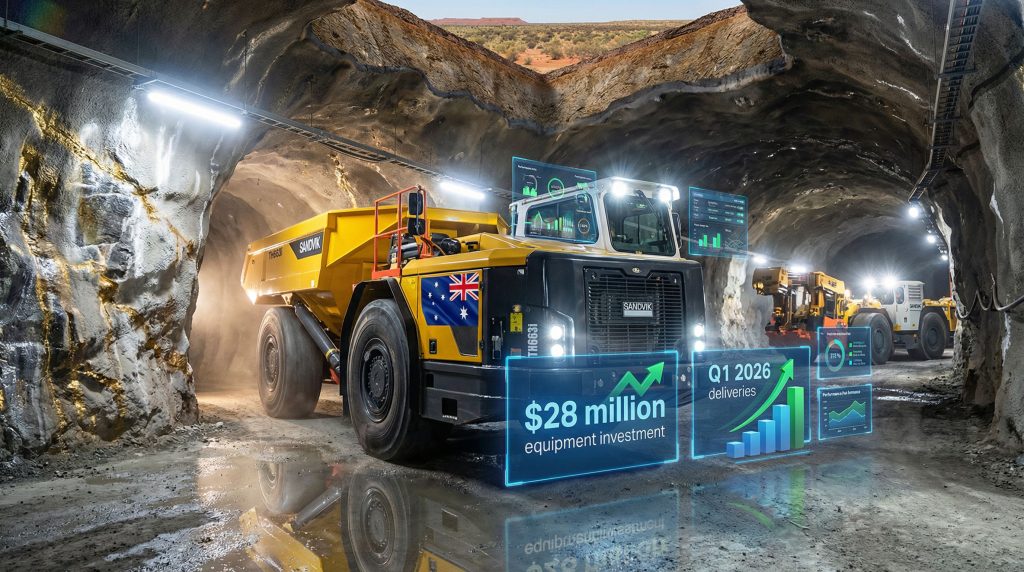
Northern Star Resources represents Australian mining companies' commitment to advanced underground equipment through significant investment programmes. The company's AUD $28 million equipment order demonstrates the scale of investment required for modern underground mining operations, with deliveries scheduled for Q1 2026 through the remainder of that year.
The investment encompasses multiple Toro TH663i underground trucks and Toro LH621i and LH517i intelligent loaders specifically configured for Western Australia operations. This equipment selection reflects strategic decisions to optimise underground productivity while maintaining safety and sustainability objectives.
Northern Star Resources' equipment investment timeline aligns with broader industry trends toward planned fleet replacement cycles and proactive equipment modernisation. The company's approach demonstrates how major mining operators balance capital raising methods requirements with operational efficiency objectives.
Northern Star Resources Investment Details:
• Total investment value: AUD $28 million (SEK260 million)
• Equipment types: TH663i trucks, LH621i and LH517i loaders
• Delivery schedule: Q1 2026 commencement, continuing through 2026
• Operation location: Western Australia mining assets
• Strategic focus: Productivity, safety, and sustainability optimisation
Evolution Mining pursues multi-site equipment standardisation across its diverse Australian operations, including Northparkes, Ernest Henry, and Mungari properties. This approach enables operational consistency and maintenance efficiency across geographically dispersed mining assets.
The multi-location fleet management strategy provides significant advantages in technical expertise development, maintenance scheduling, and equipment utilisation optimisation. Mining companies implementing these approaches report improved operational flexibility and reduced total cost of ownership across their equipment fleets.
Strategic Fleet Expansion Considerations
Mining companies evaluate equipment investments based on comprehensive analysis including operational requirements, geological conditions, safety performance, and sustainability objectives. These evaluations consider total lifecycle costs rather than initial capital expenditure alone.
The integration of new equipment with existing mine infrastructure requires careful planning and coordination to minimise operational disruption. Successful equipment deployment programmes incorporate comprehensive commissioning procedures, operator training, and ongoing support arrangements.
Technical Specifications Drive Equipment Selection
The Toro TH663i underground truck represents advanced engineering specifically designed for demanding underground mining environments. These vehicles incorporate sophisticated systems enabling high-productivity operations while maintaining safety and reliability standards required for underground applications.
Modern underground trucks feature automation-ready capabilities supporting future autonomous operation implementation. This forward-looking design approach enables mining companies to invest in equipment platforms that can evolve with advancing automation technologies.
Toro TH663i Underground Truck Features:
• Advanced connectivity systems for real-time monitoring
• Automation-ready platform supporting future upgrades
• Optimised payload capacity for underground applications
• Superior maintainability design reducing service requirements
• Integrated safety systems protecting operators and equipment
Intelligent Loader Systems
The Toro LH621i and LH517i intelligent loader systems provide flexible solutions for diverse underground loading applications. These machines incorporate advanced hydraulic systems, operator-friendly controls, and connectivity features enabling integration with modern mine management systems.
Intelligent loader platforms feature energy-efficient operation reducing fuel consumption and environmental impact compared to previous generation equipment. The systems incorporate advanced hydraulic designs optimising power delivery whilst minimising energy waste.
Key operational advantages of intelligent loader systems include:
• Optimised bucket configurations for specific geological conditions
• Advanced hydraulic systems maximising loading efficiency
• Integrated safety features protecting operators and surrounding personnel
• Connectivity capabilities enabling real-time performance monitoring
• Energy-efficient operation reducing environmental impact
| Specification Category | TH663i Truck | LH621i Loader | LH517i Loader |
|---|---|---|---|
| Application Focus | Underground transport | Heavy loading operations | Medium-duty loading |
| Automation Readiness | Full capability | Integrated systems | Integrated systems |
| Connectivity Features | Advanced | Comprehensive | Comprehensive |
| Maintenance Optimisation | Superior design | Enhanced accessibility | Enhanced accessibility |
Australian Service Network Supports Operations
Sandvik underground mining equipment Australia benefits from comprehensive local service capabilities spanning equipment delivery, commissioning, and ongoing lifecycle management. The company's Australian service network provides critical support for underground mining operations across the continent's diverse geographical regions.
Regional service centres across major mining states ensure rapid response capabilities for both routine maintenance and emergency support requirements. This local presence proves essential for maintaining underground equipment uptime and operational continuity.
Comprehensive service package inclusions:
• Equipment delivery and installation support
• Commissioning services ensuring optimal operational setup
• Operator training and certification programmes
• Ongoing maintenance and technical support
• Parts availability and logistics coordination
The commissioning and training services represent critical components of successful equipment deployment programmes. These services ensure mining operators can maximise equipment performance whilst maintaining safety standards and operational efficiency.
Long-Term Partnership Approach
Equipment manufacturers increasingly emphasise lifecycle management partnerships rather than traditional equipment sales relationships. This approach provides mining companies with ongoing technical support, performance optimisation, and equipment upgrade pathways throughout the operational lifespan.
Comprehensive training programmes ensure mining operators can fully utilise advanced equipment capabilities whilst maintaining safety standards. These programmes combine classroom instruction with hands-on operational experience, providing thorough preparation for underground equipment operation.
Modern equipment deployment success depends on comprehensive support programmes spanning initial commissioning through ongoing operational optimisation and maintenance management.
Economic Impact Analysis
The AUD $28 million Northern Star Resources equipment investment reflects broader capital expenditure trends across Australian underground mining operations. This investment level demonstrates the significant financial commitments required for modern underground mining equipment procurement.
Currency considerations play important roles in equipment procurement decisions, with major manufacturers pricing equipment in international currencies. The Northern Star investment, originally denominated in Swedish Kronor (SEK260 million), illustrates the global nature of mining equipment markets and associated foreign exchange considerations.
Recent major equipment investments in Australian mining:
• Northern Star Resources: AUD $28 million underground equipment order
• Delivery timeline: Q1 2026 through end of 2026
• Currency: Originally SEK260 million, converted to AUD equivalent
• Equipment focus: Advanced underground trucks and loaders
• Strategic objectives: Productivity, safety, and sustainability enhancement
Productivity and Cost Analysis
Modern underground equipment platforms deliver measurable productivity improvements through optimised operational cycles, reduced maintenance requirements, and enhanced safety performance. These benefits translate into improved cost per tonne metrics and overall operational efficiency.
The integration of advanced connectivity and analytics capabilities enables continuous operational optimisation, identifying efficiency opportunities and performance improvements throughout equipment lifecycles. Mining operators utilise this data to refine operational procedures and maximise equipment utilisation.
| Investment Category | Traditional Equipment | Modern Platforms |
|---|---|---|
| Initial Capital Cost | Lower | Higher |
| Operating Cost per Tonne | Higher | Lower |
| Maintenance Requirements | Reactive | Predictive |
| Safety Performance | Basic compliance | Enhanced systems |
| Environmental Impact | Standard | Optimised efficiency |
Equipment financing and leasing options provide mining companies with flexibility in managing capital expenditure requirements whilst accessing advanced equipment platforms. These arrangements enable operational cash flow optimisation and risk management across equipment lifecycles.
The next major ASX story will hit our subscribers first
Safety and Sustainability Integration
Advanced underground mining equipment incorporates comprehensive safety systems addressing collision avoidance, proximity detection, and emergency response requirements. These systems represent significant improvements over traditional equipment safety features, providing enhanced protection for operators and surrounding personnel.
Modern equipment platforms feature remote operation capabilities reducing personnel exposure to underground hazards. AI‑enhanced operations enable mining operations to maintain productivity whilst minimising safety risks associated with underground environments.
Advanced safety systems in modern underground equipment:
• Collision avoidance technology preventing equipment interactions
• Proximity detection systems protecting personnel in operational areas
• Emergency response integration with mine safety systems
• Remote operation capabilities reducing operator exposure
• Real-time monitoring enabling immediate response to safety concerns
Environmental Performance Optimisation
Energy efficiency improvements in modern underground equipment deliver environmental benefits whilst reducing operational costs. These systems incorporate advanced engine technologies, optimised hydraulic systems, and intelligent power management reducing fuel consumption and emissions.
Sustainability reporting benefits from modern equipment deployment include documented energy consumption reductions, emissions improvements, and operational efficiency gains. Mining companies increasingly utilise these metrics for environmental compliance and corporate sustainability programmes.
| Environmental Metric | Legacy Equipment | Modern Platforms |
|---|---|---|
| Fuel Consumption | Higher baseline | Optimised efficiency |
| Emissions Output | Standard levels | Reduced emissions |
| Energy Management | Basic systems | Intelligent optimisation |
| Reporting Capabilities | Limited data | Comprehensive metrics |
Regulatory compliance advantages of modern equipment include enhanced environmental monitoring capabilities, improved safety system integration, and comprehensive operational data recording. These features support mining companies' compliance with evolving environmental and safety regulations.
Future Developments in Underground Mining Equipment
Automation technologies continue advancing toward fully autonomous underground mining operations, with current equipment platforms incorporating automation-ready capabilities supporting future implementation. The timeline for widespread automation adoption depends on technological development, regulatory acceptance, and industry readiness.
Current automation capabilities focus on specific operational aspects including equipment monitoring, predictive maintenance, and safety system integration. Future developments will expand autonomous capabilities to include navigation, operational decision-making, and coordinated fleet management.
Timeline for automation advancement:
• 2025-2027: Enhanced remote operation capabilities
• 2027-2030: Semi-autonomous operational functions
• 2030-2035: Advanced autonomous system integration
• Beyond 2035: Fully autonomous underground operations
Workforce Transition Considerations
The evolution toward automated underground mining requires comprehensive workforce transition planning addressing training requirements, skill development, and employment adaptation. Mining companies increasingly invest in employee development programmes preparing workers for technology-enhanced operational environments.
Equipment manufacturers provide specialised training programmes supporting workforce adaptation to advanced equipment platforms. These programmes combine technical training with safety instruction, ensuring personnel can effectively operate sophisticated Sandvik underground mining equipment Australia.
Market Growth Projections
Underground mining expansion forecasts for 2025-2030 indicate continued growth driven by resource demand, technological advancement, and operational efficiency improvements. Equipment replacement cycles align with these growth projections, creating ongoing demand for advanced underground mining equipment.
Key factors driving continued investment include:
• Increasing underground mining activity across Australian gold operations
• Equipment replacement requirements for aging fleet assets
• Technology advancement opportunities improving operational efficiency
• Safety and environmental compliance requirements
• Productivity optimisation demands in competitive markets
Technology advancement impact on procurement decisions reflects mining companies' recognition that equipment investments must support long-term operational objectives whilst providing flexibility for future technological integration. Moreover, the development of underground engineering marvels continues to drive demand for sophisticated equipment platforms.
Frequently Asked Questions
What is the typical lifespan of modern underground mining equipment?
Modern underground mining equipment platforms typically operate for 10-15 years under normal conditions, with actual lifespan depending on operational intensity, maintenance quality, and technological obsolescence factors. Advanced equipment monitoring systems enable operators to optimise equipment lifecycles through predictive maintenance and performance optimisation.
How does modern equipment compare to competitors in the Australian market?
Equipment comparison factors include technological capabilities, service network coverage, operational performance, and total cost of ownership. Australian mining companies evaluate equipment based on specific operational requirements, geological conditions, and long-term strategic objectives rather than initial purchase price alone.
What financing options are available for large equipment purchases?
Mining equipment financing options include traditional purchase arrangements, operational leasing programmes, and comprehensive service agreements combining equipment access with maintenance coverage. Many mining companies utilise structured financing arrangements enabling cash flow optimisation whilst accessing advanced equipment platforms.
How long does equipment delivery and commissioning typically take?
Equipment delivery timelines vary based on customisation requirements, manufacturing capacity, and logistical considerations. Complex underground mining equipment typically requires 12-18 months from order placement to operational deployment, including manufacturing, delivery, installation, commissioning, and operator training phases.
For the latest developments in mining equipment technology and fleet management solutions, companies can explore Sandvik's comprehensive mining solutions and stay updated with recent major equipment orders across the Australian market.
Disclaimer: Equipment specifications, pricing, and availability are subject to change. Mining companies should consult directly with equipment manufacturers for current information regarding products, services, and commercial arrangements. Investment decisions should be based on comprehensive analysis of operational requirements, financial considerations, and risk factors specific to individual mining operations.
Want to Capitalise on Australia's Underground Mining Boom?
Discovery Alert's proprietary Discovery IQ model delivers instant notifications on significant ASX mineral discoveries, helping investors identify actionable opportunities in mining equipment suppliers, technology providers, and the miners themselves before the broader market catches on. Start your 30-day free trial at Discovery Alert today and gain the market-leading edge you need to stay ahead of underground mining investment opportunities.