June 6, 2026
The Engineered Material Beneath Industrial Civilisation
Most discussions about aluminium focus on the metal itself, the ingots, rolled sheets, and extruded profiles that form the visible skeleton of modern manufacturing. Yet beneath that familiar narrative lies a far more technically intricate world: the realm of specialty alumina, where purity thresholds measured in parts per million determine whether a catalyst performs at design specification or degrades prematurely, whether a ceramic component survives thermal cycling or fractures under stress, and whether a medical implant integrates with human tissue or provokes rejection.
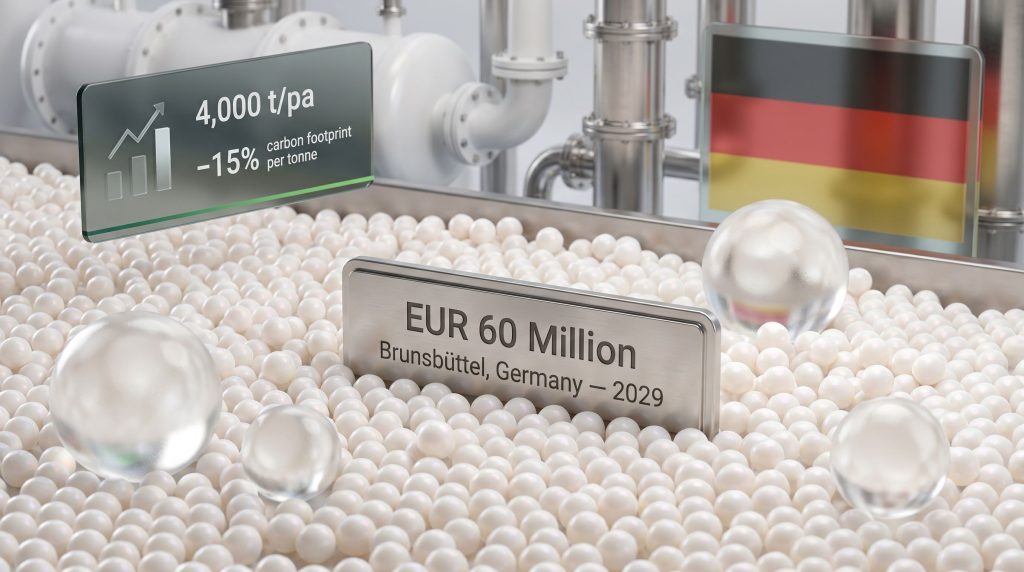
It is within this high-specification, low-volume, high-margin segment of the advanced materials landscape that Sasol advanced alumina production in Germany carries its most significant meaning. The company's EUR 60 million (approximately USD 69.7 million) investment in its Brunsbüttel facility signals a decisive commitment. Understanding what this capital commitment signals requires stepping back from the announcement itself and examining the structural forces reshaping how Europe sources, qualifies, and secures supply of engineered alumina grades.
When big ASX news breaks, our subscribers know first
What Separates Specialty Alumina From Its Commodity Counterpart
The Purity Spectrum and Why It Defines Industrial Outcomes
Standard smelter-grade alumina, the form produced in enormous quantities via the Bayer process from bauxite ore, serves a single primary purpose: feed material for electrolytic aluminium smelters. The bauxite production outlook for 2025 and beyond underscores just how central this raw material remains to the broader aluminium supply chain. Its purity requirements, while not trivial, are relatively forgiving compared to what advanced industrial applications demand.
Specialty alumina occupies an entirely different position on the purity spectrum. High-purity alumina (HPA) is generally defined as material with alumina content of 99.99% (4N) or above, while ultra-high-purity (UHP) grades push even further, approaching 99.999% (5N) in the most demanding applications. At these purity levels, the material transitions from a bulk commodity into an engineered platform with properties that are precisely calibrated rather than merely adequate.
What makes this technically fascinating, and commercially significant, is that chemical purity alone does not determine performance. Particle morphology plays an equally critical role. In catalyst support applications specifically, the geometry of alumina particles governs:
- Surface area availability for catalytic active sites
- Pore size distribution and its effect on reactant diffusion
- Mechanical strength under process conditions including pressure, temperature, and flow velocity
- Resistance to sintering and surface area loss over operational lifetimes
Spherical alumina particles, in particular, unlock a combination of high surface area, predictable packing geometry, and superior mechanical durability that irregular or platelet morphologies cannot replicate. This is precisely why Sasol's Brunsbüttel expansion places spherical alumina supports for advanced catalyst systems at its strategic centre.
The 400-Grade Reality: Why Specification Breadth Is a Competitive Moat
One of the least understood aspects of the specialty alumina industry is the sheer diversity of product specifications required across its application base. Sasol's advanced alumina portfolio reportedly spans more than 400 distinct product specifications, each engineered to perform within a defined application context. Furthermore, the aluminium supply chain dynamics shaping 2025 reinforce why such specification depth matters across global markets.
Specialty alumina is not a commodity that buyers select on price alone. It is an engineered material platform where suppliers are qualified based on specification reproducibility, technical service capability, and supply continuity, not cost per tonne.
This specification depth creates barriers to substitution that commodity-scale producers simply cannot overcome. An alumina producer capable of manufacturing large volumes of standard-grade material is structurally unable to serve a customer requiring a specific pore volume, surface area, crystal phase composition, and particle size distribution for a next-generation hydrocracking catalyst. The qualification process for such materials typically spans multiple years and involves extensive application testing, making supplier switching both costly and operationally risky for the buyer.
Applications served by this diverse specification landscape include:
- Catalyst carriers and support structures for refining and petrochemical processing
- Technical ceramics used in precision machining, semiconductor fabrication tooling, and wear-resistant components
- Industrial and specialty abrasives requiring controlled particle hardness and fracture mechanics
- High-intensity lighting components where alumina's optical translucency and thermal stability are critical
- Medical prosthetics and orthopaedic implants where biocompatibility and mechanical performance under cyclic loading are non-negotiable
Investment Architecture: What EUR 60 Million Actually Builds at Brunsbüttel
Project Parameters and Execution Readiness
The following table summarises the confirmed parameters of Sasol's Brunsbüttel expansion as publicly disclosed:
| Parameter | Detail |
|---|---|
| Total Investment | EUR 60 million (approx. USD 69.7 million) |
| Facility Location | Brunsbüttel, Germany |
| Primary Focus | High-purity and ultra-high-purity alumina capacity expansion |
| Key Product Area | Spherical alumina supports for catalyst systems |
| Construction Approvals | Already secured prior to public announcement |
| Procurement Status | Underway at time of announcement |
| General Contractor | Appointment anticipated shortly after announcement |
| Target Operational Date | Approximately 2029 |
| Carbon Footprint Reduction | Up to 15% per tonne versus current production levels |
| Spherical Alumina Capacity | 4,000 tonnes per annum post-expansion |
A detail that deserves more analytical attention than it typically receives is the pre-announcement status of construction approvals. The fact that all regulatory and permitting clearances were secured before the investment was publicly disclosed indicates a high degree of execution certainty. This is not a project contingent on approvals that may or may not materialise; it is a capital commitment entering the procurement and contracting phase with the permitting pathway already cleared.
Physical Scope: What Changes at the Brunsbüttel Site
The investment is structured as a capacity and capability expansion of existing production infrastructure rather than a greenfield build. This distinction carries important operational and financial implications. Expanding within an established manufacturing footprint allows Sasol to leverage existing utilities, logistics connections, workforce capabilities, and quality systems while concentrating capital expenditure on the specific process lines and equipment required for the HP and UHP alumina scale-up.
Specific physical changes planned include:
- Capacity expansion across existing Brunsbüttel alumina production lines
- Integration of energy-optimisation systems into the core manufacturing process architecture
- Upgraded process engineering infrastructure to support consistent HP and UHP alumina output quality
- New spherical alumina sphere production capacity targeting 4,000 tonnes per annum at full operation
Why Brunsbüttel: The Locational Logic
Germany's North Sea coast location at Brunsbüttel positions the facility within one of Europe's most industrially dense chemical manufacturing corridors. The site benefits from established infrastructure, deep-water port access, and proximity to the concentration of European customers in specialty chemicals, advanced catalysts, and technical ceramics who require predictable, near-shore supply.
The geopolitical argument for European-based specialty chemicals manufacturing has strengthened considerably since the supply chain disruptions that characterised the 2020 to 2024 period. Procurement teams across European industrial sectors elevated supply continuity from a logistics preference to a board-level risk management priority during this period. Indeed, Europe's minerals supply chain vulnerabilities have only reinforced this urgency across the continent. German manufacturing, with its regulatory stability, established workforce, and integration into European supply networks, directly addresses this concern.
Demand Dynamics Driving the Business Case
Catalyst Technologies as the Primary Demand Engine
The largest single driver of growing demand for high-purity and ultra-high-purity alumina in the near term is the evolution of industrial catalyst technology. Alumina serves as the structural backbone of heterogeneous catalysts used across refinery operations, petrochemical processing, and increasingly in the chemical conversion technologies associated with energy transition processing pathways.
As process engineers push catalyst systems toward higher operating temperatures, greater selectivity, and extended service lifetimes, the specifications demanded of alumina support materials become more exacting. Surface area stability at elevated temperatures, resistance to phase transformation from gamma to alpha alumina under prolonged thermal exposure, and precisely controlled pore architecture are all characteristics where UHP alumina with engineered morphology outperforms standard-grade material.
Technical Ceramics, Medical, and Specialty Lighting: High-Margin Secondary Demand
Beyond catalysis, several additional application segments are contributing to demand growth for advanced alumina grades in Europe:
- Semiconductor tooling and precision ceramics: Alumina ceramics are increasingly specified in semiconductor fabrication equipment where dimensional stability, electrical insulation, and chemical inertness under plasma processing conditions are required
- Medical prosthetics: Implant-grade alumina, used in orthopaedic applications including femoral heads in hip replacement systems, represents a low-volume but extremely high-margin demand segment where purity and microstructural consistency are subject to regulatory scrutiny
- Specialty illumination: High-purity translucent alumina remains the material of choice for certain high-intensity discharge lamp applications where alternative materials cannot replicate its combination of optical and thermal properties
The Carbon Footprint Reduction as a Commercial Differentiator
Sasol's stated target of reducing the product carbon footprint by up to 15% per tonne compared to current production levels at Brunsbüttel is worth examining beyond its environmental framing. As European industrial buyers face mandatory Scope 3 emissions reporting obligations under evolving regulatory frameworks, the embodied carbon of purchased materials is increasingly appearing in procurement evaluation criteria alongside price, quality, and supply security.
When a specialty chemical manufacturer can demonstrate a materially lower carbon intensity per tonne for a product that is already specification-qualified and supply-approved, sustainability investment effectively becomes a commercial margin lever.
This dynamic transforms what might appear to be a purely environmental commitment into a direct competitive advantage in customer retention and new business development. Low-carbon specialty alumina, produced at scale in Germany with documented process improvements, may command a pricing premium from European buyers whose own customer commitments depend on demonstrating reduced supply chain emissions intensity.
Competitive Context and Sasol's Strategic Positioning
Global Specialty Alumina Supply Geography
Global production of high-purity and ultra-high-purity alumina is concentrated in a relatively small number of facilities across North America, Europe, and increasingly Asia-Pacific. The competitive dynamics across these geographies differ substantially:
| Geography | Competitive Characteristic |
|---|---|
| Europe | High specification capability; supply reliability premium; proximity to industrial customers |
| North America | Established HPA producers; serving domestic catalyst and ceramics industries |
| Asia-Pacific | Growing capacity; primarily commodity and lower-specification HPA grades |
| China | Significant volume growth; increasing specification breadth but quality consistency scrutiny remains |
European-manufactured specialty alumina occupies a distinct competitive position that cannot easily be replicated by Asian commodity-grade producers, regardless of price advantage. The qualification requirements, specification reproducibility expectations, and supply security premiums that European industrial buyers apply systematically favour established, proximate suppliers with demonstrated technical capability. In this context, the broader push for European critical materials supply security adds further strategic weight to Sasol's positioning.
Dual-Geography Supply Architecture
Sasol's combination of its Brunsbüttel German facility and its North American production capacity creates a dual-geography supply security architecture that is increasingly valued by multinational industrial customers seeking to eliminate single-point supply failure risk in critical material categories. This structural approach to supply resilience also reflects broader trends in alumina sector investment across global markets.
| Geography | Strategic Function |
|---|---|
| Brunsbüttel, Germany | Primary European supply hub for HP/UHP alumina; serves European catalyst and ceramics customers |
| United States Facility | North American market coverage; provides geographic redundancy for global accounts |
| Combined Network Benefit | Reduces concentrated supply failure risk; supports global customer supply security requirements |
Reading the 2029 Timeline Strategically
The approximately four-year construction and commissioning window to the 2029 operational target has implications that extend beyond logistics. For industrial customers requiring long-term supply assurance for specification-qualified materials, a confirmed 2029 start date provides a contractual anchor point around which multi-year supply agreements can be structured.
Customers who initiate qualification discussions and supply contracting now position themselves ahead of competitors who may face capacity constraints if they delay engagement until the facility approaches operational readiness. Furthermore, Sasol's expanded capacity at Brunsbüttel during a period when no comparable new European HP alumina capacity is publicly known to be in development may establish a first-mover positioning in European specialty alumina that proves difficult to replicate given the capital intensity, permitting complexity, and technical knowledge requirements involved.
Frequently Asked Questions: Sasol Advanced Alumina Production in Germany
What is Sasol investing in at its German facility?
Sasol is committing EUR 60 million, equivalent to approximately USD 69.7 million, to expand advanced alumina and specialty chemicals manufacturing capacity at its Brunsbüttel plant in Germany. Sasol advanced alumina production in Germany targets high-purity and ultra-high-purity alumina grades, with particular emphasis on spherical alumina supports for advanced catalyst systems.
When will the expanded Brunsbüttel facility become operational?
Operations at the expanded facility are targeted to commence around 2029. All construction approvals had already been secured at the time of announcement, with procurement activities already underway and general contractor appointment expected shortly thereafter.
What is spherical alumina and why does its geometry matter?
Spherical alumina is an engineered form of alumina where the particle geometry is controlled to produce near-perfect spherical shapes. This morphology enables optimised surface area distribution, predictable packing density in reactor beds, superior mechanical strength under industrial process conditions, and improved resistance to attrition compared to irregularly shaped alumina particles. These characteristics make spherical alumina the preferred support geometry in high-performance catalyst systems.
How does this investment support sustainability objectives?
The expansion integrates energy-optimisation measures and upgraded manufacturing process engineering designed to reduce the product carbon footprint by up to 15% per tonne relative to current Brunsbüttel production levels. This target reflects both process efficiency improvement and the growing commercial importance of low-carbon certified materials in European industrial procurement.
Why does European manufacturing location matter for specialty alumina customers?
Following the supply chain disruptions of the 2020 to 2024 period, European industrial buyers substantially elevated supply continuity and geographic proximity in their supplier selection criteria. German manufacturing offers regulatory stability, established industrial logistics infrastructure, and near-shore supply assurance that reduces dependence on long-haul supply chains for specification-critical materials.
The next major ASX story will hit our subscribers first
Key Takeaways for Industry Participants and Market Observers
- EUR 60 million in execution-ready capital: With construction approvals already secured, this investment carries a materially higher execution probability than announcements still contingent on permitting outcomes
- Spherical geometry as a performance differentiator: The focus on spherical alumina supports reflects growing demand for morphologically engineered catalyst support materials where particle shape is as important as chemical composition
- 400-specification portfolio as a structural barrier: Specification breadth of this scale creates qualification-based switching costs that insulate established specialty alumina suppliers from commodity-grade competition regardless of price dynamics
- 15% carbon intensity reduction as a commercial lever: In a European procurement environment increasingly governed by Scope 3 emissions criteria, documented carbon footprint reduction in specification-qualified materials translates directly into customer retention and pricing power
- 2029 as a supply contracting milestone: Industrial customers requiring long-term HP and UHP alumina supply assurance have a defined timeline around which qualification processes and supply agreements can be structured
- Dual-geography resilience: The combination of German and North American production capacity positions Sasol as a structurally resilient partner for multinational industrial customers with zero-tolerance supply continuity requirements
Disclaimer: This article is intended for informational and educational purposes only. It does not constitute financial advice or an investment recommendation. Projections regarding operational timelines, carbon footprint reduction targets, and market demand trends are subject to change based on factors outside any single company's control. Readers should conduct independent research and consult qualified advisers before making investment or procurement decisions.
Want To Stay Ahead Of The Next Major ASX Mineral Discovery?
Discovery Alert's proprietary Discovery IQ model delivers real-time alerts on significant ASX mineral discoveries — turning complex data across more than 30 commodities into clear, actionable insights for both traders and long-term investors. Explore historic discoveries and their returns to understand the potential at stake, then start your 14-day free trial at Discovery Alert and position yourself ahead of the broader market.