August 6, 2026
Why Industrial Legacy Sites Are Quietly Shaping the Future of Green Hydrogen
The global race to commercialise green hydrogen is frequently framed as a battle between purpose-built gigafactories and offshore wind-powered coastal export terminals. Yet some of the most strategically defensible positions in this emerging industry are not being staked out in remote deserts or along pristine coastlines. They are quietly taking shape inside ageing industrial complexes where decades of chemical processing infrastructure, skilled workforces, and existing utility connections create a structural cost advantage that no greenfield project can replicate overnight.
Sasolburg, a mid-sized industrial city in South Africa's Free State province, is a compelling example of this dynamic. Long defined by coal-to-liquids chemistry and petrochemical manufacturing, the site is now being repositioned as a potential anchor for South Africa's green hydrogen economy. The question worth examining carefully is not simply whether this transition is happening, but whether the underlying economics, partnerships, infrastructure gaps, and regulatory tailwinds are aligned tightly enough to carry the Sasolburg green hydrogen hub from pilot ambition to commercial reality.
When big ASX news breaks, our subscribers know first
Why Sasolburg? Understanding the Site's Strategic Logic for Green Hydrogen Development
The Industrial Heritage Advantage: From Coal Chemistry to Clean Feedstocks
Sasolburg's appeal as a green hydrogen development site is rooted in a counterintuitive logic. The very infrastructure that made it a centre of carbon-intensive chemistry is now providing a lower-cost platform for clean hydrogen production. Specifically, the site houses a 60 MW chlor-alkali electrolyser that was originally installed for industrial chemical manufacturing. Repurposing this existing asset for green hydrogen pilot production dramatically compresses the capital expenditure required at the early stages of technology validation.
This matters enormously in a sector where pre-commercial projects are notoriously capital-intensive and where investors routinely demand extensive proof-of-concept data before committing to full-scale funding. By leveraging existing electrolyser infrastructure rather than procuring new units from scratch, the Sasolburg hub enters the technology validation phase at a structural cost advantage that few competing sites across the African continent can replicate.
Key Insight: Unlike greenfield hydrogen projects that require entirely new industrial infrastructure, Sasolburg's repurposing of an existing 60 MW chlor-alkali electrolyser dramatically compresses early-stage capital requirements. This is a structural advantage that competing sites in Africa cannot easily replicate, and it is precisely the kind of asset-backed differentiation that institutional investors look for when evaluating pre-FID project risk.
Geographic and Infrastructure Positioning Within South Africa's Energy Transition Landscape
Sasolburg sits within the Vaal Triangle industrial region, historically one of South Africa's most energy-intensive manufacturing corridors. This geographic positioning offers access to existing electricity transmission infrastructure, water supply systems, and road and rail connectivity. These are not trivial considerations for an energy carrier like hydrogen, which requires substantial utility inputs during production and robust logistics networks for distribution.
The site's proximity to Johannesburg and its integration within an established industrial ecosystem also provides access to engineering services, maintenance contractors, and technical skills that remain scarce in more remote locations being considered for hydrogen development across Africa.
How Existing Assets Create a Lower-Cost Entry Point for Green Hydrogen Pilots
Beyond the chlor-alkali electrolyser, Sasolburg's existing utility infrastructure includes process water treatment systems, electrical substations, and extensive pipework that can be adapted for hydrogen service. These assets collectively represent hundreds of millions of rands in embedded capital that a new-build project would need to fund from scratch. Furthermore, the decarbonisation economics of repurposing existing infrastructure materially improve the project's viability during the critical pre-commercial phase.
What the Sasolburg Green Hydrogen Hub Is Actually Building Toward
Phase One: Pilot-Scale Production and Technology Validation
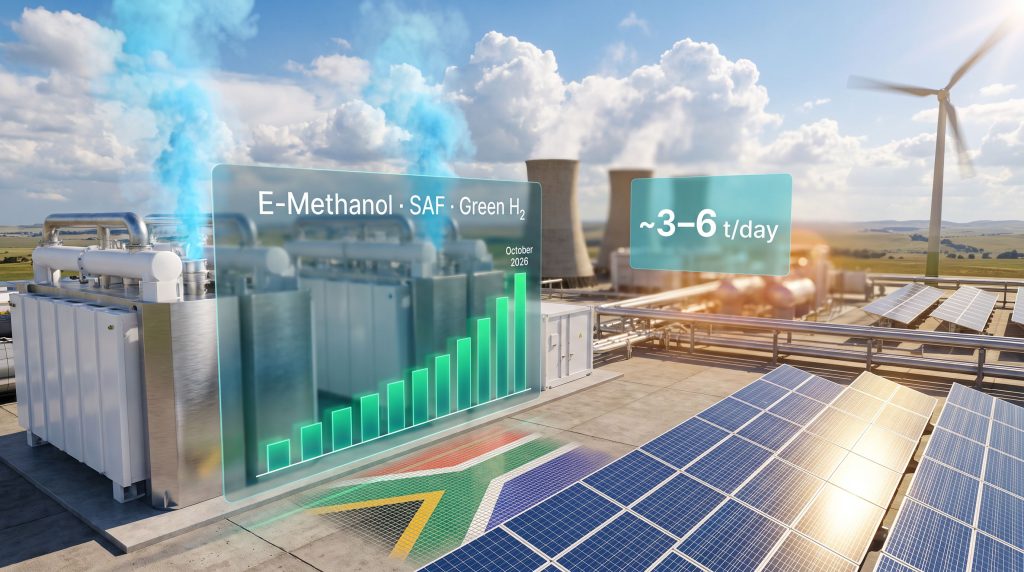
The Sasolburg green hydrogen hub reached an important early milestone when it achieved its first green hydrogen production in June 2023, powered by an approximately 3 MW solar PV installation on-site. Pilot output targets are in the range of 3 to 6 tonnes of green hydrogen per day, which while modest in absolute terms, is sufficient to generate the operational data needed to validate electrolyser performance, assess renewable energy integration, and build the engineering case for scale-up.
South Africa's Industrial Development Corporation (IDC) committed approximately R23 million in conditional grant funding to support the pilot's path toward a final investment decision. This funding is conditional rather than unconditional, meaning it is tied to the project meeting specific technical and commercial milestones. A 2 kW PEM (proton exchange membrane) electrolyser was also launched at Sasolburg's research campus, signalling continued investment in local technology development rather than pure reliance on imported systems. PEM electrolyser technology of this kind is increasingly recognised as a critical enabler for scaling green hydrogen production efficiently.
Phase Two: Engineering Study and Commercial Scale Evaluation
Sasol has commissioned a front-end engineering study in partnership with Chinese renewable energy group Envision Energy to assess the full scope of renewable energy integration, storage system requirements, and electrolyser scaling options. The study is targeted for completion by October 2026 and will generate the technical and commercial data required to make a Final Investment Decision (FID) on commercial-scale production.
If the engineering study confirms viability, the primary planned downstream output is e-methanol, a synthetic liquid fuel synthesised from green hydrogen and captured carbon dioxide that is attracting growing interest from the maritime shipping industry. A secondary pathway toward sustainable aviation fuel (SAF) has also been identified, though this is considered a longer-term commercial target.
It is worth noting that Sasol has not yet publicly disclosed the planned electrolyser capacity or targeted e-methanol production volumes for the commercial phase. This absence of specific figures is itself informative: it signals that the engineering study process is genuinely exploratory rather than a post-hoc validation of predetermined outcomes.
Phase Three: Hub Facilitation and Regional Cluster Development
Looking further ahead, Sasolburg is positioned as one of two priority green hydrogen cluster nodes within Sasol's broader decarbonisation strategy, alongside the Secunda complex in Mpumalanga. The long-term ambition is to convert ammonia and methanol value chains from grey feedstocks (coal-derived hydrogen) to green feedstocks, representing a fundamental transformation of Sasol's core industrial chemistry.
This broader ambition reflects a wider green industrial transition occurring globally, where legacy chemical sites are being reimagined as clean energy producers. Mobility applications, including hydrogen fuel cell vehicles and potentially hydrogen refuelling infrastructure, have been identified as near-term commercial pathways for green hydrogen offtake that could generate early revenue while large-scale e-methanol production capacity is developed.
The Sino-South African Partnership: What the Envision Energy Collaboration Signals
Profiling Envision Energy's Role in the Global Green Hydrogen Supply Chain
Envision Energy is one of China's largest smart energy technology groups, with a portfolio spanning wind turbines, energy storage systems, and green hydrogen production technology. The company has been expanding aggressively into global green hydrogen markets, leveraging China's dominant position in electrolyser manufacturing and renewable energy component production to position itself as a technology partner of choice for emerging market hydrogen projects.
For the Sasolburg project specifically, Envision's role centres on conducting the front-end engineering study and contributing renewable energy systems integration expertise. This is a deliberate risk-sharing structure: the engineering study phase generates knowledge without requiring either party to commit full commercial capital before viability is confirmed.
Geopolitical Dimensions: The Agreement's Signing in Chifeng, Inner Mongolia
The formalization of the Sasol-Envision partnership was notable not just for its commercial content but for its diplomatic setting. The agreement was signed during South Africa's Energy Minister Kgosientsho Ramokgopa's visit to China, with the ceremony taking place in Chifeng, Inner Mongolia. During the signing, the minister described Sasol's direction as a shift toward cleaner technological solutions, as reported by Green Building Africa.
This diplomatic context elevates the Sasolburg partnership from a bilateral corporate arrangement to a visible signal within South Africa-China industrial cooperation. Green hydrogen is increasingly being positioned as a pillar of South Africa's engagement with China on energy transition, which adds a layer of geopolitical durability to the partnership that purely commercial agreements often lack.
Technology Transfer Implications: What South Africa Gains Beyond Engineering Studies
A less-discussed dimension of the Envision partnership is its potential to accelerate local knowledge accumulation in green hydrogen engineering. South Africa's capacity to design, procure, and commission large-scale electrolysis systems domestically remains limited. Collaborative engineering studies with technically advanced partners create structured knowledge transfer opportunities that can help build this capability over time, reducing long-term import dependency on foreign systems.
This dynamic is reinforced by the parallel inauguration of South Africa's first locally manufactured electrolyser at Sasolburg in partnership with the Hydrogen South Africa (HySA) program, an initiative that provides institutional validation for the ambition to develop indigenous electrolyser manufacturing capability.
How EU Regulatory Frameworks Create Commercial Pull for Sasolburg's Output
Decoding the European Demand Signal for E-Methanol and SAF
The commercial logic underpinning the Sasolburg green hydrogen hub is not driven primarily by spot market economics for hydrogen itself. Instead, it is anchored in the derivative products that green hydrogen enables, particularly e-methanol and SAF, both of which are increasingly subject to mandatory blending requirements and carbon accounting frameworks within European Union regulatory architecture.
Sasol's industrial policy specialist Jak Koseff made this point explicitly, stating that the scale of renewable energy investment will determine the ability to participate in the hydrogen market, but that certain products already attract pricing premiums because of the European regulatory mandates that govern them, as reported by Mining Weekly. This is a critically important observation for understanding the project's commercial pathway: the value proposition is not pure commodity hydrogen pricing, but rather compliance-driven premium pricing for certified low-carbon fuels.
| Downstream Product | Primary End Market | EU Regulatory Driver | Sasolburg Relevance |
|---|---|---|---|
| E-Methanol | Maritime shipping | FuelEU Maritime Regulation | Primary target output |
| Sustainable Aviation Fuel (SAF) | Aviation | ReFuelEU Aviation Mandate | Secondary, longer-term target |
| Green Ammonia | Fertilizers and Energy | EU Hydrogen Strategy | Potential future derivative |
Premium Pricing Dynamics: When Regulatory Mandates Justify Higher Input Costs
The FuelEU Maritime Regulation, which entered into force in 2025, establishes a progressive greenhouse gas intensity reduction requirement for ships calling at EU ports, with escalating targets through 2050. E-methanol produced from certified green hydrogen qualifies as a compliant fuel under this framework. Because shipping companies face financial penalties for non-compliance, they have a strong incentive to secure supply contracts for compliant fuels even at price premiums above conventional bunker fuel.
This creates an unusual market dynamic where the buyer's cost of not purchasing the premium product (regulatory non-compliance penalties) effectively subsidises the producer's ability to charge above spot prices. For a project like Sasolburg that must bridge a cost gap relative to fossil-derived methanol, this regulatory premium is not a marginal benefit but a foundational element of the commercial case.
What Happens to Project Economics If EU Mandates Are Delayed or Diluted?
This question represents one of the most significant risks in the project's commercial scenario map. European regulatory timelines have historically been subject to political negotiation and adjustment, and the pace of implementation for fuel mandates is not guaranteed. If blending requirements are delayed, phased more slowly than anticipated, or subject to significant exemptions, the premium pricing that underpins Sasolburg's e-methanol economics would compress, potentially undermining the FID case.
This is a structural vulnerability that investors evaluating the Sasolburg project should model explicitly rather than treat as a fixed assumption.
Critical Barriers Between Sasolburg and Commercial Viability
The Renewable Energy Capacity Gap
The 69 MW Msenge Emoyeni wind farm and contracted renewable electricity supply are foundational to delivering consistent green hydrogen production at scale. However, large-scale electrolyser deployment requires substantially greater renewable capacity than the approximately 3 MW currently available on-site during the pilot phase. Sasol's first large-scale renewable electrons from the Msenge Emoyeni wind farm represent a meaningful step forward, though the scale-up from pilot to commercial production remains a significant renewable energy procurement challenge.
South Africa's constrained electricity grid and the competitive nature of renewable energy procurement processes create real pipeline risk. The country's energy transition is advancing, but the pace of new renewable capacity addition remains uncertain relative to the volumes that a commercial-scale hydrogen project would require.
Electrolyser Cost Economics
Large-scale electrolysers remain capital-intensive relative to current green hydrogen market prices, according to assessments by the HySA program. The cost curve for electrolysers is declining, driven by Chinese manufacturing scale and improving technology, but it has not yet reached the level where green hydrogen production is broadly cost-competitive with grey hydrogen without some form of premium pricing or carbon pricing support.
The Sasolburg project's economics are therefore highly sensitive to the pace of electrolyser cost reduction, the cost of renewable electricity procurement, and the premium achievable for e-methanol in target markets. In addition, the growing critical minerals demand required for electrolyser components adds further complexity to long-term cost projections.
Infrastructure Deficit: South Africa's Missing Hydrogen Transport Network
No dedicated hydrogen transportation infrastructure currently exists at national scale in South Africa. This creates a fundamental challenge for any project that aspires to move beyond localised industrial use into broader commercial distribution. Sasolburg's geographic distance from major port infrastructure adds logistical complexity for export-oriented e-methanol production, since the hydrogen would need to be converted into e-methanol on-site and then transported to port via road or rail.
Comparing South Africa's infrastructure position with leading hydrogen export nations illustrates the scale of the gap:
- Australia has invested in dedicated hydrogen export terminals and established bilateral supply agreements with Japan and South Korea.
- Chile benefits from established mining-sector logistics infrastructure adaptable to hydrogen export.
- Morocco has leveraged its proximity to European markets and pipeline connectivity ambitions to position itself as a priority green hydrogen supplier to the EU.
South Africa's infrastructure development trajectory is positive but slower, and this gap represents a systemic risk for all projects in the country's hydrogen pipeline, not just Sasolburg.
The next major ASX story will hit our subscribers first
How the Sasolburg Hub Fits Within Sasol's Broader Decarbonisation Scenario Map
Comparing the Two Major Hydrogen Nodes: Sasolburg vs. Secunda HySHiFT
| Metric | Sasolburg Hub | Secunda HySHiFT Consortium |
|---|---|---|
| Electrolyser Scale | Pilot (existing 60 MW chlor-alkali repurposed) | Planned 200 MW dedicated electrolyser |
| Renewable Energy Paired | ~3 MW solar (pilot); additional wind contracted | 450 MW renewable energy planned |
| Primary Output | E-methanol (and potential SAF) | 50,000 metric tons SAF per year |
| Development Stage | Engineering study phase, FID pending | Consortium formation and pre-FID |
| Key Partners | Envision Energy, IDC, HySA | HySHiFT consortium members |
According to the Green Hydrogen Organisation, the Secunda HySHiFT consortium targets annual SAF production of 50,000 metric tons, supported by a 200 MW electrolyser and 450 MW of dedicated renewable energy capacity. This positions Secunda as the larger-scale commercial ambition within Sasol's hydrogen portfolio, while Sasolburg serves as the technology validation and near-term commercial development node.
Scenario Analysis: Three Possible Outcomes for the Sasolburg Hub by 2030
Scenario A: Accelerated Commercialisation
Engineering study confirms viability by late 2026, FID is reached in 2027, and first commercial e-methanol production begins by 2029. This pathway requires rapid renewable energy procurement, meaningful electrolyser cost reductions, and a stable EU regulatory environment for maritime fuel mandates.
Scenario B: Phased Pilot Expansion
Sasolburg remains primarily a technology demonstration and pilot hub through 2030, with incremental capacity additions and near-term offtake through mobility sector applications. This scenario preserves optionality without requiring full commercial capital commitment.
Scenario C: Strategic Pause
The engineering study reveals unfavourable economics, the FID is deferred, and Sasol prioritises capital allocation toward Secunda's larger-scale HySHiFT program. This outcome could be triggered by electrolyser cost overruns, renewable energy procurement delays, or softening EU regulatory demand signals.
Danie Cronje, Sasol's Senior Vice President, captured the cautious but constructive framing of the project's current status when he described the engineering study as a significant step in evaluating how integrated renewable energy, storage, and electrolyser technologies could enable competitive green hydrogen production at Sasolburg, as quoted by PR Newswire.
What South Africa's Broader Green Hydrogen Ambition Actually Requires
National Hydrogen Strategy Gaps
South Africa published its National Hydrogen Society Roadmap in 2021, establishing an aspirational framework for hydrogen development across production, distribution, and end-use applications. However, the gap between strategic aspiration and actionable infrastructure investment remains significant. Key missing elements include:
- A dedicated hydrogen transport and distribution network
- Clear carbon pricing mechanisms that would improve the economics of green versus grey hydrogen
- Streamlined offtake frameworks for international hydrogen trade
Strategic Warning: Without a dedicated national hydrogen transport infrastructure framework, even technically successful pilot projects risk remaining stranded at demonstration scale, unable to connect production capacity to export markets or domestic industrial consumers at commercially meaningful volumes.
How Sasolburg Compares to Other African Green Hydrogen Initiatives
Across the continent, several competing green hydrogen hub ambitions are at various stages of development, including projects in Namibia, Morocco, and Egypt. Each of these is pursuing similar downstream product strategies, targeting European export markets, and facing analogous infrastructure challenges. The differentiator for the Sasolburg green hydrogen hub is its embedded industrial infrastructure and the scale of Sasol's existing chemistry operations, which provide a built-in foundation for hydrogen offtake that purely greenfield projects lack.
Frequently Asked Questions: Sasolburg Green Hydrogen Hub
What is the Sasolburg green hydrogen hub?
The Sasolburg green hydrogen hub is a developing industrial project located at Sasol's existing chemical complex in Sasolburg, South Africa. It aims to produce green hydrogen using renewable electricity, with the primary goal of manufacturing e-methanol for maritime markets and potentially sustainable aviation fuel.
Who are the key partners involved in the Sasolburg green hydrogen project?
The principal partners include Sasol as project developer and operator, Envision Energy as the engineering study and renewable technology partner, the Industrial Development Corporation (IDC) as a conditional grant financier, and the Hydrogen South Africa (HySA) program as a local technology development collaborator.
What products will the Sasolburg hub produce?
E-methanol is the primary target output, destined for the maritime shipping sector. Sustainable aviation fuel is a secondary longer-term ambition. Near-term mobility applications for green hydrogen are also being pursued as an early commercial offtake pathway.
When will the Sasolburg green hydrogen hub reach commercial production?
The engineering study is targeted for completion by October 2026. Its findings will determine whether a Final Investment Decision is viable. Commercial production timelines remain conditional on that assessment and are not yet confirmed.
How is the project funded?
Funding at the current stage includes a conditional grant of approximately R23 million from the IDC, Sasol's internal capital allocation for pilot operations, and the risk-sharing structure provided by the Envision partnership, which contributes engineering study capacity without requiring full commercial capital upfront.
What is the difference between the Sasolburg hub and the Secunda HySHiFT project?
Sasolburg is at an earlier, smaller-scale development stage focused on e-methanol production using repurposed electrolyser infrastructure and pilot-scale renewable power. Secunda's HySHiFT consortium targets a 200 MW electrolyser paired with 450 MW of renewable energy to produce 50,000 metric tons of SAF annually, representing a larger and later-stage commercial ambition within Sasol's hydrogen portfolio.
Key Takeaways: Sasolburg Green Hydrogen Hub at a Glance
| Dimension | Current Status |
|---|---|
| Pilot Green Hydrogen Output | 3 to 6 tonnes per day (target) |
| On-Site Renewable Power | ~3 MW solar PV (pilot phase) |
| IDC Grant Funding | ~R23 million (conditional) |
| Engineering Study Deadline | October 2026 |
| Primary Downstream Product | E-Methanol (maritime market) |
| Secondary Product Target | Sustainable Aviation Fuel (SAF) |
| Local Electrolyser Milestone | First locally manufactured electrolyser inaugurated via HySA partnership |
| Commercial FID Status | Pending engineering study results |
This article contains forward-looking assessments and scenario projections based on publicly available information as at August 2026. Commercial timelines, funding commitments, and regulatory frameworks referenced are subject to change. Nothing in this article should be construed as financial or investment advice. Readers should conduct their own due diligence before making any investment decisions.
Want to Track the Next Major Mineral Discovery Before the Market Does?
Discovery Alert's proprietary Discovery IQ model scans ASX announcements in real time, delivering instant alerts on significant mineral discoveries — including those tied to the critical minerals and energy transition metals driving the green hydrogen economy — so subscribers can act on actionable opportunities ahead of the broader market. Explore Discovery Alert's discoveries page to see how historic ASX discoveries have generated substantial returns, and begin your 14-day free trial today to secure your market-leading edge.