May 20, 2026
Understanding Satellite Communications Infrastructure for Industrial Applications
Industrial operations across remote territories face mounting pressure to modernise monitoring systems while maintaining operational continuity in environments where traditional telecommunications infrastructure remains unreliable or non-existent. The convergence of satellite technology, autonomous data collection, and industrial-grade hardware has created new possibilities for organisations managing assets across vast geographic footprints.
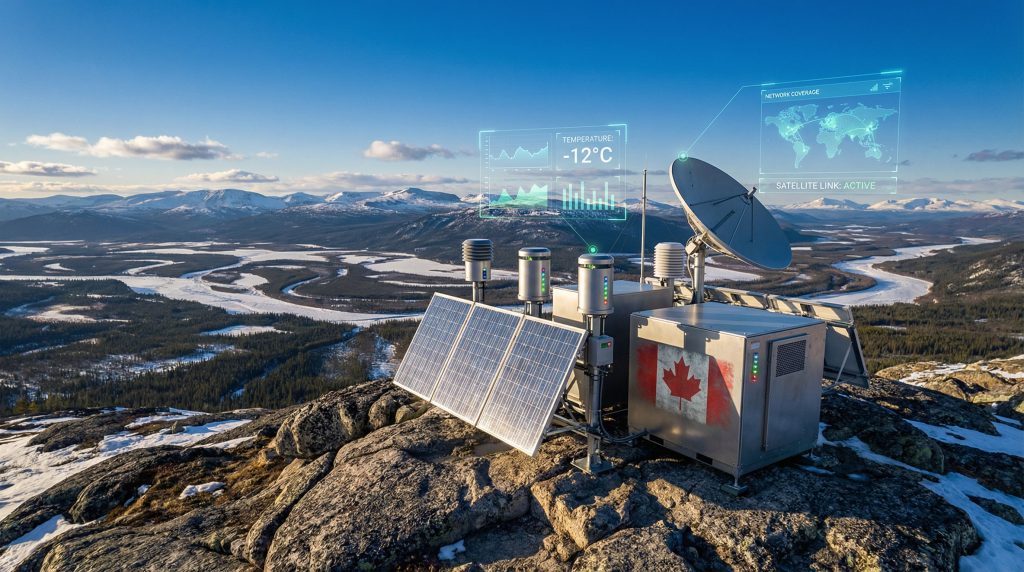
For companies operating in regions where seasonal weather patterns, extreme temperatures, and geographic isolation create operational challenges, the transition from manual data retrieval to autonomous satellite-enabled monitoring in Canada systems represents a fundamental shift in how industrial assets are managed and maintained.
When big ASX news breaks, our subscribers know first
What Makes Satellite-First Monitoring Systems Essential for Canadian Remote Operations?
Geographic Challenges Driving Autonomous Technology Adoption
Canada's 9.98 million square kilometres of terrain present unique logistical challenges that traditional monitoring approaches struggle to address effectively. Industrial operators frequently manage assets distributed across regions where access depends entirely on seasonal conditions, weather windows, and specialised transportation methods.
In northern territories, monitoring locations often become accessible only through ice roads, boat access, or helicopter deployment during limited seasonal windows. This accessibility constraint creates significant operational bottlenecks when organisations rely on manual data collection methods that require physical site visits.
| Challenge Category | Traditional Solution | Satellite-First Approach |
|---|---|---|
| Seasonal Access Limitations | Schedule visits during optimal conditions | Continuous data transmission regardless of season |
| Transportation Costs | Helicopter/ATV deployment for data retrieval | One-time installation with remote monitoring |
| Personnel Safety Risks | Repeated exposure to remote locations | Eliminate routine site visits |
| Data Collection Frequency | Limited by access windows | Real-time continuous monitoring |
| Weather Dependencies | Postpone operations during severe conditions | Uninterrupted operation in extreme weather |
The economic implications of helicopter deployment versus satellite systems become apparent when modelling the true cost of sending technical teams to remote locations. When organisations factor in transportation costs, personnel time, safety insurance, and weather-related delays, the operational expense frequently exceeds the total cost of deploying satellite-enabled devices that transmit data continuously.
Technical Architecture of Satellite-First Data Systems
Satellite-first monitoring systems operate on fundamentally different design principles compared to traditional data loggers that assume reliable local connectivity. These systems integrate Iridium network connectivity as the primary communication protocol while maintaining compatibility with cellular, radio, and LoRaWAN networks for hybrid deployment scenarios.
The technical architecture prioritises several key performance characteristics:
- Environmental durability: Hardware designed for continuous outdoor exposure rather than controlled laboratory conditions
- Low power consumption: Extended deployment cycles without maintenance intervention
- Sensor agnosticism: Seamless integration with third-party instrumentation across multiple industrial applications
- Intuitive commissioning: Plug-and-play deployment that begins transmitting immediately upon power-up
Battery performance becomes critical in extreme Canadian conditions where temperatures regularly reach -40°C during winter months. Advanced satellite monitoring systems maintain consistent power delivery and transmission reliability across temperature ranges that would compromise consumer-grade electronics.
Modern satellite-first data loggers eliminate the complexity of configuring communications protocols or integrating multiple third-party systems. The simplified deployment process translates directly into reduced installation time, lower technical risk, and faster operational readiness in remote environments.
Which Industries Benefit Most from Autonomous Satellite Monitoring in Canada?
Mining Sector Applications and ROI Analysis
The mining sector represents the primary adopter of satellite-enabled monitoring technology due to the distributed nature of mining operations and stringent environmental compliance requirements. Furthermore, data-driven mining operations typically operate across multiple provinces with assets located in areas where traditional telecommunications infrastructure remains limited or unreliable.
Groundwater monitoring applications in the mining sector include:
- Tailings management: Continuous water level monitoring for dam safety and environmental compliance
- Geotechnical stability assessment: Real-time monitoring of permafrost movement and slope stability in northern operations
- Environmental compliance reporting: Automated data collection for regulatory submission requirements
- Groundwater contamination tracking: Early detection systems for environmental protection
Industry professionals with backgrounds in hydrology, hydrogeology, meteorology, and geotechnical engineering have developed monitoring solutions specifically for mining industry evolution requirements. This sector-specific expertise ensures that monitoring systems address real operational challenges rather than theoretical capabilities.
| Cost Component | Manual Collection | Autonomous Satellite System |
|---|---|---|
| Initial Setup | Low equipment cost | Higher upfront investment |
| Transportation | $2,000-5,000 per helicopter deployment | One-time installation cost |
| Personnel Time | 2-3 technicians per site visit | Remote monitoring by single operator |
| Data Frequency | Monthly or quarterly visits | Continuous real-time data |
| Weather Delays | 20-30% trip cancellation rate | Unaffected by weather conditions |
| Safety Insurance | High-risk activity premiums | Reduced liability exposure |
Oil and Gas Infrastructure Surveillance
Oil and gas companies manage extensive pipeline networks and wellhead installations across Canada's energy-producing regions. These assets require continuous monitoring for operational efficiency, environmental protection, and regulatory compliance.
Key monitoring applications include:
- Pipeline integrity monitoring: Pressure sensors and flow metres provide real-time data on pipeline performance
- Wellhead monitoring: Automated tracking of pressure, temperature, and production rates
- Environmental leak detection: Early warning systems for product releases or groundwater contamination
- Remote facility security: Monitoring systems that detect unauthorised access or equipment tampering
The sensor-agnostic design of modern satellite monitoring platforms allows oil and gas operators to integrate existing instrumentation without replacing functional equipment. This compatibility reduces implementation costs while extending the operational life of legacy monitoring assets.
Dam Safety and Flood Management Systems
Dam operators face increasing regulatory requirements for continuous monitoring and real-time reporting of structural conditions. Climate change has intensified the importance of flood management systems, particularly in regions experiencing more frequent extreme weather events.
Critical monitoring parameters include:
- Water level and flow rates: Continuous measurement of reservoir levels and downstream flow
- Structural health indicators: Monitoring of concrete stress, foundation movement, and seepage rates
- Weather station integration: Correlation of local precipitation data with reservoir management
- Emergency notification systems: Automated alerts for rapid response during flood events
Satellite monitoring systems eliminate the risk of communication failures during extreme weather events when traditional cellular and landline communications may be compromised. This reliability becomes essential for emergency response coordination and public safety notifications.
How Do Canadian Regulatory Requirements Shape Monitoring Technology?
Federal and Provincial Compliance Standards
Canadian environmental regulations require specific data collection frequencies and accuracy standards that vary by jurisdiction and industry sector. Organisations must maintain detailed records of environmental parameters and demonstrate compliance through regular reporting to multiple regulatory agencies.
Key regulatory considerations include:
- Data validation requirements: Regulatory agencies require calibration documentation and accuracy verification
- Reporting frequency mandates: Monthly, quarterly, or annual submission schedules depending on facility type
- Record retention standards: Long-term data storage requirements for historical compliance documentation
- Emergency notification protocols: Immediate reporting requirements for threshold exceedances
The automated data collection capabilities of satellite monitoring systems improve regulatory compliance by eliminating manual transcription errors and ensuring consistent data collection intervals. Additionally, understanding mining permitting insights can help organisations navigate the complex regulatory landscape more effectively.
Integration with Government Monitoring Networks
The Canadian Space Agency operates the RADARSAT Constellation Mission for Earth observation and environmental monitoring. While private satellite monitoring systems operate independently, opportunities exist for data correlation and validation through government monitoring programs.
Collaboration opportunities include:
- Environmental baseline studies: Correlation of private monitoring data with government environmental assessments
- Climate change research: Contributing operational data to national climate monitoring initiatives
- Emergency response coordination: Integration with federal emergency management systems
- Indigenous consultation support: Data sharing protocols that respect traditional knowledge and sovereignty
Cross-border data sharing agreements become relevant for organisations operating near the United States border, where environmental monitoring may require coordination between Canadian and American regulatory agencies.
What Are the Economic Drivers Behind Satellite Monitoring Adoption?
Total Cost of Ownership Analysis
The economic case for autonomous satellite-enabled monitoring in Canada systems extends beyond simple equipment costs to encompass operational efficiency, safety improvements, and regulatory compliance benefits. Organisations typically evaluate satellite monitoring investments through comprehensive Total Cost of Ownership (TCO) analysis that includes all direct and indirect costs over the system's operational life.
Primary cost drivers include:
- Initial capital investment: Equipment procurement, installation, and commissioning costs
- Ongoing operational expenses: Satellite communication fees, maintenance, and technical support
- Personnel cost savings: Reduced site visits and manual data collection requirements
- Insurance and liability reductions: Lower risk exposure from reduced personnel deployment to remote locations
Industry analysis indicates that organisations typically achieve cost neutrality within 18-24 months of deployment when factoring in reduced helicopter transportation costs, eliminated weather delays, and improved data collection efficiency.
Productivity Gains Through Real-Time Data Access
Real-time data access fundamentally changes how organisations respond to operational conditions and make strategic decisions. Traditional monitoring approaches create information delays that can result in reactive rather than proactive management strategies.
Productivity improvements include:
- Accelerated decision-making: Immediate access to current conditions enables faster response to changing circumstances
- Predictive maintenance scheduling: Trend analysis identifies equipment service needs before failures occur
- Resource allocation optimisation: Real-time data supports dynamic resource deployment based on actual conditions
- Regulatory compliance efficiency: Automated data collection eliminates manual reporting preparation time
Organisations with multi-million dollar investments in Canadian operations report that the operational responsiveness enabled by satellite monitoring systems provides competitive advantages that extend well beyond the direct cost savings from reduced site visits.
Which Technical Specifications Define Effective Satellite Monitoring Systems?
Hardware Requirements for Extreme Canadian Conditions
Canadian operating environments demand industrial-grade hardware specifications that exceed typical commercial equipment standards. Temperature extremes, precipitation, wind loading, and wildlife interactions create challenging conditions for electronic monitoring equipment.
Environmental performance specifications include:
| Parameter | Specification | Application Context |
|---|---|---|
| Operating Temperature | -50°C to +60°C | Arctic operations to summer heat |
| Ingress Protection | IP68 rating minimum | Snow, rain, and moisture exposure |
| Vibration Resistance | IEC 60068-2-6 standards | Transportation and installation stress |
| Solar Panel Efficiency | >20% in low-light conditions | Winter operations with limited daylight |
| Battery Life | 5+ years in extreme conditions | Extended deployment without maintenance |
Engineers design satellite monitoring hardware for environmental exposure rather than laboratory conditions, recognising that remote deployment environments subject equipment to conditions that controlled testing cannot fully replicate.
Data Transmission and Storage Capabilities
Satellite bandwidth optimisation becomes critical for cost-effective operation of monitoring networks. Organisations must balance data transmission frequency with communication costs while ensuring adequate information flow for operational decision-making.
Key technical capabilities include:
- Data compression algorithms: Efficient encoding reduces satellite transmission costs without compromising information quality
- Local data buffering: Equipment stores data during communication outages and transmits when connectivity is restored
- Cloud integration protocols: Seamless data flow to enterprise systems and analytical platforms
- Cybersecurity measures: Encryption and authentication protocols protect sensitive operational information
Advanced monitoring systems employ adaptive transmission scheduling that adjusts data upload frequency based on operational conditions. During normal operations, systems may transmit data at scheduled intervals, but automatically increase transmission frequency when sensors detect abnormal conditions requiring immediate attention.
Sensor Integration and Compatibility Standards
Modern satellite monitoring platforms support sensor-agnostic architecture that integrates with third-party instrumentation from multiple manufacturers. This compatibility eliminates vendor lock-in while allowing organisations to utilise existing sensor investments.
Integration capabilities include:
- Multi-parameter measurement: Single data loggers support multiple sensor types simultaneously
- Protocol flexibility: Support for analogue, digital, and wireless sensor communication standards
- Calibration management: Automated calibration verification and drift detection
- Scalability features: Network expansion capabilities without system architecture changes
Third-party sensor integration extends across groundwater, geotechnical, and environmental instrumentation applications, allowing organisations to standardise monitoring platforms while maintaining sensor diversity for specific measurement requirements.
The next major ASX story will hit our subscribers first
How Do Deployment Strategies Vary Across Canadian Regions?
Arctic and Sub-Arctic Considerations
Arctic and sub-arctic deployments present unique challenges related to permafrost movement, extreme cold, wildlife interactions, and traditional Indigenous land use. Monitoring equipment must withstand not only temperature extremes but also the mechanical stress of freeze-thaw cycles that can damage improperly designed installations.
Permafrost considerations include:
- Foundation movement: Seasonal frost heave can displace monitoring equipment and affect measurement accuracy
- Installation timing: Equipment deployment must coincide with optimal ground conditions for secure anchoring
- Thermal management: Equipment heating may be necessary to maintain operational performance
- Wildlife protection: Monitoring installations require protection from curious or aggressive wildlife
Engineering principles developed in extreme heat environments translate effectively to Arctic conditions. Battery performance, enclosure integrity, and satellite transmission reliability remain consistent across severe climate variations when hardware is designed for environmental exposure rather than controlled conditions.
Indigenous consultation protocols become essential in northern regions where traditional knowledge and land use practices must be integrated with industrial monitoring requirements. Successful deployments often incorporate traditional ecological knowledge to improve monitoring system effectiveness while respecting Indigenous sovereignty.
Boreal Forest and Remote Prairie Applications
Boreal forest environments present fire risk, seasonal flooding, and accessibility challenges that differ from Arctic conditions but require specialised deployment strategies. Remote prairie locations may offer easier ground access but present exposure to severe weather events and agricultural activities.
Regional considerations include:
- Fire risk assessment: Equipment placement and protection strategies for wildfire-prone areas
- Seasonal flooding impact: Installation elevation and waterproofing requirements for spring runoff
- Agricultural integration: Monitoring systems that complement rather than interfere with farming operations
- Transportation corridor surveillance: Equipment positioning for road and rail infrastructure monitoring
Vegetation management becomes important in forested areas where tree growth can interfere with satellite communication paths. Deployment teams must consider long-term vegetation changes when selecting installation locations.
Coastal and Maritime Monitoring Networks
Coastal monitoring applications face unique challenges from tidal variations, salt exposure, and marine weather patterns. Equipment must withstand not only temperature extremes but also corrosive salt environments and potential storm surge impacts.
Maritime deployment considerations:
- Corrosion resistance: Specialised materials and coatings for salt water exposure
- Tidal positioning: Installation height considerations for extreme tide variations
- Storm protection: Equipment securing and protection from high winds and wave action
- Marine traffic integration: Coordination with navigation systems and shipping traffic patterns
Climate change adaptation strategies become increasingly important for coastal monitoring networks as sea level rise and changing storm patterns affect equipment placement and operational reliability.
What Future Developments Will Enhance Satellite Monitoring Capabilities?
Emerging Satellite Technologies
The satellite communications landscape continues evolving with Low Earth Orbit (LEO) constellation deployment offering potential advantages in latency, bandwidth, and cost compared to traditional geostationary satellite networks. These developments may significantly enhance autonomous monitoring capabilities over the next decade.
Technology development trends include:
| Technology | Current Status | 2026-2030 Projection |
|---|---|---|
| LEO Constellations | Limited commercial availability | Widespread industrial deployment |
| 5G Integration | Early trials | Hybrid connectivity standard |
| AI Analytics | Basic pattern recognition | Predictive failure modelling |
| Edge Computing | Centralised processing | Distributed intelligence |
5G integration for hybrid connectivity represents a significant development for monitoring systems deployed in areas with improving telecommunications infrastructure. Systems designed for satellite-first operation can utilise 5G networks when available while maintaining satellite backup for reliability.
Integration with Autonomous Vehicle Networks
Autonomous vehicle technology creates opportunities for coordinated data collection that combines fixed monitoring stations with mobile platforms. Unmanned Aerial Vehicles (UAVs) and ground-based robots can provide supplementary data collection and equipment maintenance capabilities.
Integration opportunities include:
- UAV data collection coordination: Scheduled flights to supplement fixed monitoring station data
- Automated maintenance deployment: Robots that perform routine equipment cleaning and calibration
- Beyond Visual Line of Sight (BVLOS) operations: Extended range UAV missions for large-scale monitoring
- Autonomous transportation monitoring: Integration with self-driving vehicle systems for comprehensive infrastructure surveillance
The convergence of autonomous monitoring and autonomous vehicles may enable completely unmanned industrial operations in remote locations where human presence is limited to periodic maintenance activities. Similarly, innovations like AI in drilling & blasting and electric vehicles in mining are reshaping industrial operations.
Advanced Analytics and Machine Learning Applications
Machine learning algorithms applied to continuous monitoring data can identify patterns and predict equipment failures before they occur. These capabilities transform monitoring systems from reactive data collection tools to proactive management platforms.
Analytical capabilities include:
- Anomaly detection: Pattern recognition that identifies unusual conditions requiring investigation
- Predictive maintenance modelling: Algorithm-based prediction of equipment service requirements
- Environmental trend analysis: Long-term pattern identification for climate change adaptation
- Automated regulatory reporting: Intelligent systems that generate compliance documentation automatically
Advanced analytics require significant historical data sets to develop accurate predictive models. Organisations with extensive monitoring networks may achieve competitive advantages through superior data analytics capabilities.
How Should Organisations Evaluate Satellite Monitoring Providers?
Technical Performance Metrics
Organisations evaluating satellite monitoring providers should establish clear performance criteria that reflect operational requirements and industry standards. Technical evaluation should encompass not only equipment specifications but also service delivery capabilities and long-term support commitments.
Key evaluation criteria include:
- System uptime guarantees: Minimum operational availability commitments with penalty clauses
- Data accuracy specifications: Sensor precision and calibration maintenance procedures
- Response time commitments: Technical support availability and problem resolution timelines
- Scalability demonstrations: Evidence of successful large-scale network deployments
Providers with 12-year operational histories and proven track records in extreme environments offer greater confidence for long-term deployments. Organisations should seek providers with relevant industry expertise rather than generic technology companies adapting consumer products for industrial applications.
Service Level Agreement Considerations
Comprehensive Service Level Agreements (SLAs) should address all aspects of monitoring system operation including data delivery guarantees, maintenance procedures, training programmes, and performance metrics. Well-structured SLAs protect organisational interests while establishing clear expectations for provider performance.
Critical SLA components:
- Data delivery guarantees: Minimum transmission frequency and maximum acceptable delays
- Backup procedures: Contingency plans for equipment failures or communication outages
- Maintenance scheduling: Preventive maintenance programmes and emergency repair commitments
- Training provisions: Technical training for organisational personnel and knowledge transfer programmes
Organisations should evaluate provider financial stability and workforce capabilities to ensure long-term service delivery. Providers with approximately 35 global staff members may offer more personalised service but might face capacity limitations during rapid expansion phases.
Total Implementation Timeline Planning
Successful satellite monitoring implementations require comprehensive planning that addresses site assessment, equipment installation, personnel training, and performance validation. Organisations should develop realistic timeline expectations that account for seasonal weather windows and regulatory approval processes.
Implementation phase timeline:
- Site assessment (4-8 weeks): Detailed evaluation of installation locations and communication requirements
- Equipment procurement and configuration (6-12 weeks): Custom system design and manufacturing
- Installation and commissioning (2-4 weeks): Field deployment and system activation
- Training and knowledge transfer (2-3 weeks): Personnel education and operational procedures
- Performance validation (4-6 weeks): System verification and acceptance testing
Organisations should plan installations during optimal weather windows to minimise deployment risks and ensure proper equipment commissioning. Winter installations in northern regions may require specialised procedures and equipment that extend timeline requirements.
Strategic Implementation of Satellite-Enabled Monitoring
Key Success Factors for Canadian Deployments
Successful satellite monitoring implementations in Canadian environments require comprehensive planning that addresses technical, regulatory, and operational considerations. Organisations achieving optimal results typically employ systematic approaches that integrate stakeholder consultation, phased deployment strategies, and continuous improvement processes.
Critical success factors include:
- Comprehensive site assessment: Detailed evaluation of environmental conditions, access requirements, and communication challenges
- Multi-stakeholder engagement: Early consultation with regulatory agencies, Indigenous communities, and operational personnel
- Phased implementation approach: Gradual system deployment with performance validation at each stage
- Long-term maintenance planning: Sustainable service delivery strategies that address seasonal access limitations
Organisations with multi-million dollar investments in Canadian operations benefit most from professional implementation services that combine technical expertise with local knowledge of regulatory requirements and environmental conditions.
Return on Investment Optimisation
Maximising return on investment from autonomous satellite-enabled monitoring in Canada systems requires ongoing performance analysis and system optimisation. Organisations should establish measurement frameworks that track both direct cost savings and indirect benefits such as improved regulatory compliance and enhanced operational flexibility.
ROI optimisation strategies:
- Performance metrics tracking: Systematic measurement of system reliability, data quality, and operational cost reductions
- Continuous improvement programmes: Regular evaluation of system performance and upgrade opportunities
- Regulatory compliance cost analysis: Quantification of compliance cost reductions through automated reporting
- Risk mitigation benefits: Assessment of safety improvements and insurance cost reductions
The transition from manual data collection to automated satellite monitoring represents more than a technological upgrade. It fundamentally changes how organisations manage remote assets and respond to operational challenges in Canada's demanding industrial environments.
Disclaimer: This article contains forward-looking statements and analysis based on current technology trends and industry practices. Actual performance and cost savings may vary depending on specific operational requirements, environmental conditions, and implementation approaches. Organisations should conduct detailed feasibility studies before making significant technology investments.
Looking to Capitalise on Mining Discoveries?
Discovery Alert's proprietary Discovery IQ model delivers instant notifications when significant ASX mineral discoveries are announced, empowering investors to identify actionable opportunities ahead of the broader market. Start your 14-day free trial today and explore how historic discoveries have delivered substantial returns to early investors.