
May 9, 2026
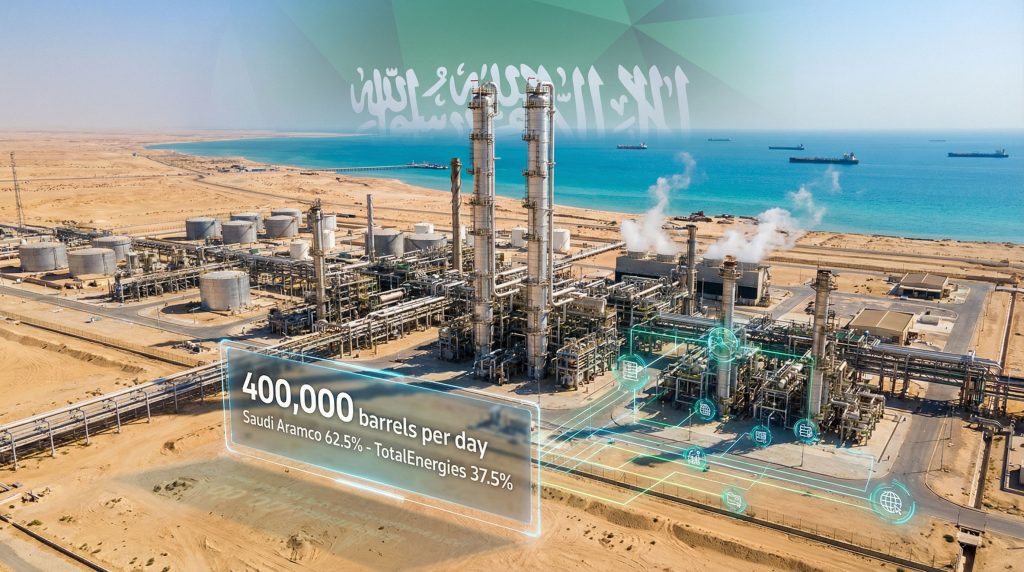
Regional energy infrastructure vulnerabilities have emerged as critical factors reshaping global petroleum markets, with processing facility resilience becoming increasingly important for supply chain stability. The interconnected nature of modern refining networks means that individual facility disruptions can create cascading effects across multiple market segments, influencing everything from crude oil pricing to refined product availability. The recent SATORP refinery shutdown highlights these vulnerabilities whilst demonstrating the sophisticated crisis management protocols that modern energy companies have developed.
Understanding the Strategic Architecture of Joint Venture Energy Operations
The SATORP refinery represents a sophisticated example of international energy partnership structures, combining Saudi Aramco's 62.5% majority ownership with TotalEnergies' 37.5% strategic stake. This facility processes 400,000 barrels per day through dual processing trains, utilising advanced hydrocracking and reforming technologies designed for premium fuel production.
Located on Saudi Arabia's Eastern Province Gulf coast, the facility maintains critical integration with the kingdom's export pipeline network and proximity to major Persian Gulf shipping lanes. This positioning enables direct connection to domestic fuel distribution systems whilst serving regional petrochemical supply chains.
The joint venture structure provides several operational advantages:
- Risk distribution across two major energy corporations with different geographic strengths
- Technology sharing between European and Middle Eastern operational expertise
- Capital optimisation through shared infrastructure investments
- Market access via TotalEnergies' international distribution networks
- Operational resilience through diversified management protocols
Processing capacity at SATORP includes sophisticated refining units capable of handling various crude oil grades, with particular emphasis on producing high-quality transportation fuels and petrochemical feedstocks. The facility's dual-train configuration allows for continued partial operations during maintenance cycles, though both units require coordination for optimal efficiency.
When big ASX news breaks, our subscribers know first
Regional Energy Infrastructure Vulnerability Patterns
Middle East energy facility targeting has followed identifiable patterns since early 2025, with infrastructure selection based on strategic importance rather than operational complexity. Analysis of recent incidents reveals systematic approaches to disrupting key processing nodes within regional supply networks, as evidenced by oil price movements responding to facility disruptions.
The vulnerability assessment framework for major energy operations considers multiple overlapping factors:
| Risk Category | SATORP Facility Rating | Mitigation Measures |
|---|---|---|
| Geographic exposure | High (coastal location) | Enhanced perimeter security |
| Processing complexity | Medium (dual-train system) | Redundant control systems |
| Strategic importance | Critical (export capacity) | Emergency response protocols |
| Recovery timeline | 2-4 weeks estimated | Accelerated repair procedures |
Escalation patterns typically target facilities with maximum economic impact whilst minimising civilian casualties, focusing on processing units rather than storage infrastructure. The timing of such incidents often coincides with periods of heightened regional tensions or in response to specific geopolitical developments.
Furthermore, energy companies operating in volatile regions have developed increasingly sophisticated threat assessment methodologies. These approaches enable proactive security adjustments based on changing regional dynamics and incorporate real-time intelligence gathering with predictive modelling systems.
Market Response Mechanisms to Processing Disruptions
The temporary SATORP refinery shutdown creates immediate ripple effects across multiple market segments. Regional fuel supply gaps require rapid adjustments within domestic Saudi distribution networks, whilst export flow modifications necessitate rerouting refined products to alternative facilities.
Short-term market consequences include:
- Crude oil price pressure from reduced immediate refining demand
- Regional product premium increases as supply tightens
- Transportation fuel cost adjustments in Gulf markets
- Petrochemical feedstock constraints affecting downstream industries
- Strategic inventory activation to maintain supply continuity
Price volatility modelling suggests that 400,000 bpd processing disruptions typically generate 2-4% regional product price increases within the first week. However, crude oil prices may experience temporary downward pressure as reduced refining demand creates a localised supply surplus, particularly when considering broader OPEC production impact dynamics.
In addition, market participants have developed increasingly sophisticated hedging strategies to manage such disruptions. These mechanisms include physical inventory positioning, derivative contracts, and alternative supply agreements that provide protection against both supply shortages and price volatility.
Alternative Processing Network Activation Strategies
Saudi Arabia's refining infrastructure demonstrates significant redundancy capabilities, with multiple facilities capable of absorbing increased throughput during emergency situations. The Ras Tanura Complex, with 550,000 bpd capacity, represents the largest alternative processing option, whilst the newer Jazan integrated facility provides 400,000 bpd of modern refining capability.
Key backup processing facilities include:
- Ras Tanura Complex: 550,000 bpd with potential expansion capability
- Riyadh Refinery: 120,000 bpd focused on domestic market supply
- Yanbu facilities: 400,000 bpd Red Sea coast operations with export flexibility
- Jazan integrated complex: 400,000 bpd newest operational capacity with advanced technology
Regional processing alternatives extend beyond Saudi borders, with UAE refining sectors maintaining spare capacity utilisation options and Kuwait's Al-Zour facility capable of accelerated ramp-up procedures. Qatar's condensate processing flexibility and Bahrain's ongoing modernisation programmes contribute additional backup capabilities.
The activation of alternative processing capacity typically requires 48-72 hours for operational adjustments, depending on current utilisation rates and product specification requirements. Consequently, logistics coordination becomes critical during such transitions, as transportation infrastructure must accommodate revised routing patterns.
Corporate Crisis Management Implementation Protocols
TotalEnergies' response to the SATORP facility disruption demonstrates sophisticated crisis management protocols developed through decades of international energy operations. Damage assessment timelines follow structured engineering evaluation phases, with initial assessments completed within 24-48 hours and comprehensive technical evaluations requiring 1-2 weeks.
Insurance claim procedures for business interruption coverage activate automatically upon facility shutdown declarations. Political risk insurance provides additional protection against geopolitically-motivated disruptions, whilst joint venture liability distribution mechanisms ensure proportional responsibility for recovery costs.
Operational continuity strategies include:
- Alternative supply arrangements through third-party processing agreements
- Product exchange agreements with regional refiners
- Inventory reallocation from strategic reserves
- Customer notification protocols with adjusted delivery schedules
- Financial hedging activation to manage price exposure
TotalEnergies' diversified portfolio across Qatar LNG operations and UAE onshore production provides natural operational hedging against single-facility disruptions. This geographic diversity enables maintained cash flow generation during facility-specific interruptions, supporting overall corporate financial stability.
However, stakeholder communication protocols emphasise transparent information sharing whilst maintaining operational security requirements. For instance, investor relations teams coordinate with operational management to provide timely updates without compromising competitive positions or security considerations.
What Are the Key Recovery Timelines for Major Refinery Disruptions?
Recovery timelines vary significantly based on incident severity and facility complexity. Initial damage assessments typically require 24-48 hours, whilst comprehensive engineering evaluations extend to 1-2 weeks. Full operational restoration can range from 2-6 weeks depending on equipment damage and replacement part availability.
Enhanced Infrastructure Protection System Development
The evolution of energy facility security measures reflects increasingly sophisticated threat environments, with protection systems integrating physical, cyber, and operational security elements. Advanced perimeter defence technologies now include layered detection systems, automated response capabilities, and real-time threat assessment protocols.
Cyber-physical security integration represents a critical advancement, as modern refining operations rely heavily on computerised control systems vulnerable to both physical and digital attack vectors. Protection strategies must address potential coordinated attacks targeting both operational technology and information technology systems simultaneously.
Investment requirements for comprehensive security enhancements vary significantly by facility size and complexity:
| Security Category | Investment Range | Implementation Timeline | Operational Impact |
|---|---|---|---|
| Physical hardening | $50-100 million per facility | 12-18 months | Minimal during installation |
| Cybersecurity upgrades | $10-25 million per site | 6-12 months | Temporary system redundancy |
| Emergency response | $20-40 million regional | 9-15 months | Enhanced coordination capability |
| Insurance adjustments | 15-25% premium increase | Immediate implementation | Budget reallocation required |
Rapid response team positioning has become standard practice for major energy facilities, with specialised personnel trained in both security and operational recovery procedures. These teams maintain 24/7 readiness capabilities and coordinate closely with local law enforcement and military units when necessary.
The next major ASX story will hit our subscribers first
Investment Decision Framework Evolution in Energy Markets
Geographic risk diversification strategies have gained prominence among international energy companies, with increased focus on non-Middle East refining capacity development. Investment committees now systematically evaluate political stability factors alongside traditional economic metrics when assessing major infrastructure projects, particularly considering Saudi Arabia exploration impact on global energy markets.
Strategic partnership structures have evolved to provide enhanced risk sharing mechanisms, with joint ventures incorporating specific force majeure provisions and insurance requirements. Technology transfer agreements increasingly include provisions for operational resilience and emergency response capability development.
Alternative energy transition considerations have accelerated following infrastructure disruption events, as companies evaluate the relative stability of renewable energy investments compared to traditional petroleum processing facilities. However, the immediate-term necessity of refining capacity maintains strong investment justification for facility upgrades and security enhancements.
Furthermore, regulatory and policy response frameworks continue developing enhanced international cooperation protocols, with energy security legislation addressing infrastructure protection standards and emergency response coordination improvements. These developments influence investment decisions by providing clearer operational parameters and risk allocation mechanisms.
Supply Chain Resilience and Market Structure Implications
Critical infrastructure mapping initiatives have emerged as essential tools for energy companies and government agencies, providing comprehensive vulnerability assessments across entire supply networks. These mapping exercises identify potential cascade failure points and enable proactive resilience planning, particularly important given US oil production decline trends affecting global supply dynamics.
Alternative routing capability development represents a significant area of ongoing investment, with companies establishing multiple transportation pathways and processing options to maintain operational flexibility during disruption events. This approach requires substantial capital investment but provides essential business continuity protection.
Strategic reserve management optimisation has evolved beyond traditional inventory holding to include dynamic reallocation capabilities and rapid deployment protocols. Modern reserve systems integrate real-time market data with predictive modelling to optimise both security and economic objectives.
Market structure evolution trends indicate movement toward more decentralised processing networks, with regional energy hub redundancy planning becoming standard practice. This development reduces systemic risk whilst potentially increasing overall infrastructure investment requirements across the industry.
"The energy sector's adaptation to increased infrastructure vulnerability demonstrates the industry's capacity for innovation under pressure, with technological and financial solutions emerging to address previously unmanaged risk factors."
Financial instrument development for risk management continues expanding, with new derivative products addressing specific geopolitical risk factors and infrastructure disruption scenarios. These tools enable more sophisticated risk management strategies whilst providing market participants with enhanced hedging capabilities, offering insights similar to those found in oil price crash insights analysis.
The SATORP refinery shutdown represents more than an isolated operational disruption; it exemplifies the complex interplay between geopolitical tensions, infrastructure vulnerability, and market resilience mechanisms that increasingly define modern energy markets. As companies and governments continue developing enhanced protection and response capabilities, the industry's evolution toward greater stability and security provides a foundation for sustained global energy supply reliability despite ongoing regional challenges.
Could Energy Infrastructure Disruptions Signal New Investment Opportunities?
Discovery Alert's proprietary Discovery IQ model identifies emerging opportunities in resources and energy sectors through real-time ASX announcement analysis, helping investors navigate market volatility created by global infrastructure disruptions. Start your 14-day free trial today to gain immediate access to actionable investment insights across over 30 commodities, including energy and critical minerals that benefit during supply chain disruptions.