
August 11, 2026
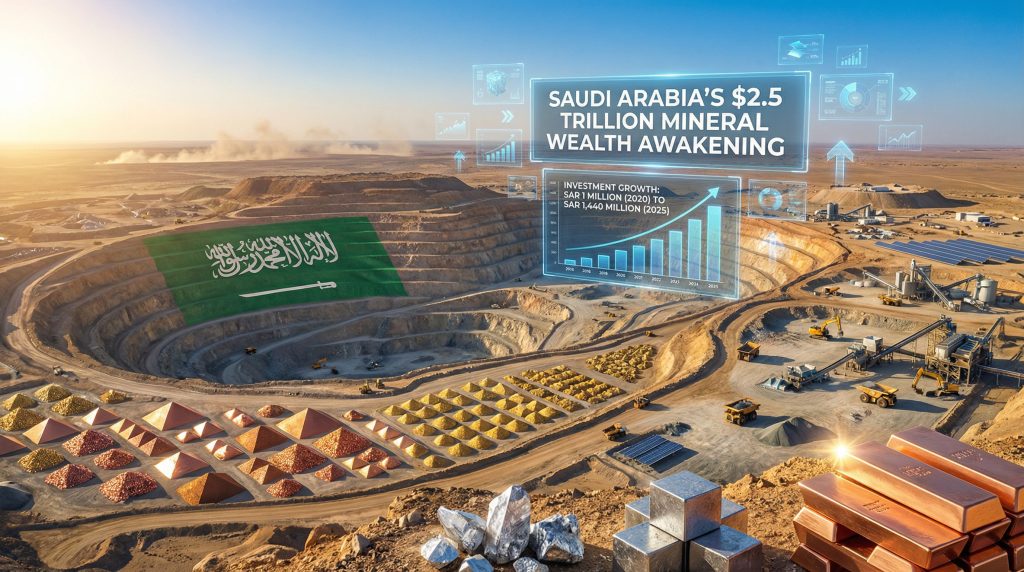
Saudi Arabia's mineral sector transformation reflects broader global shifts in critical minerals strategy that prioritise supply chain security and energy transition support. The convergence of artificial intelligence expansion, renewable energy infrastructure, and digital transformation creates extraordinary pressure on mineral resources that were previously considered secondary commodities. This supply-demand imbalance fundamentally reshapes investment priorities, with institutional capital increasingly flowing toward jurisdictions that can deliver both resource security and operational efficiency. Against this backdrop, Saudi Arabia mining investment has emerged as a focal point for international attention, positioning the Kingdom as a strategic alternative to traditional mining powerhouses.
Understanding Saudi Arabia's Mining Investment Revolution
The Kingdom's extractive industries transformation represents one of the most significant shifts in global mining investment patterns over the past decade. Saudi Arabia mining investment has evolved from minimal activity to substantial capital deployment, driven by systematic regulatory reform and infrastructure development. This evolution reflects broader economic diversification efforts that extend far beyond traditional hydrocarbon sectors.
The Kingdom's Mineral Wealth Awakening
Geological surveys across the Arabian Peninsula reveal substantial untapped mineral deposits spanning multiple commodity classes. The Arabian Shield region, covering approximately 650,000 square kilometres, contains significant concentrations of both traditional mining commodities and critical minerals essential for energy transition technologies. These formations represent billions of years of geological activity that concentrated valuable mineral deposits across diverse terrains.
Recent exploration campaigns have identified promising zones for copper, gold, zinc, and rare earth elements. The geological diversity extends from volcanic-hosted massive sulphide deposits to sediment-hosted copper systems, providing multiple exploration targets across different mineralisation styles. This geological complexity creates opportunities for diversified mining portfolios rather than single-commodity developments.
Furthermore, the mineral exploration importance cannot be overstated in establishing the Kingdom's resource base. Advanced exploration techniques continue revealing previously unknown mineralisation patterns across the Arabian Shield.
From Oil Dependency to Mining Diversification Strategy
Economic planners recognise that mineral extraction can leverage existing infrastructure, technical expertise, and capital markets developed for hydrocarbon industries. The transition utilises comparable skill sets in geological analysis, large-scale project management, and industrial processing. This synergy accelerates development timelines compared to building mining sectors from zero industrial base.
The diversification strategy emphasises integrated value chains rather than raw material exports. Processing facilities, smelting operations, and manufacturing capabilities receive priority investment to capture higher value-addition margins. This approach mirrors successful resource-based industrialisation models implemented in other developing economies.
Vision 2030's Role in Reshaping the Extractive Industries Landscape
Strategic development frameworks target mining as a third pillar of economic activity alongside oil and petrochemicals. Government commitments include infrastructure investment, regulatory streamlining, and public-private partnership facilitation. These initiatives address traditional barriers that previously limited mining investment attraction and project development.
Workforce development programmes focus on technical education, engineering capabilities, and operational skills transfer. International partnerships provide technology access and best practice adoption across exploration, development, and production phases. The framework emphasises environmental stewardship and community engagement as foundational elements rather than afterthoughts.
When big ASX news breaks, our subscribers know first
What Makes Saudi Arabia's Mining Sector Attractive to International Investors?
Investment attractiveness stems from multiple converging factors that reduce traditional mining risks while enhancing return potential. The combination of geological prospectivity, regulatory reform, infrastructure investment, and political stability creates competitive advantages versus traditional mining jurisdictions. These factors address key investor concerns around project development timelines, operational costs, and market access.
Regulatory Framework Transformation
Comprehensive policy reforms have transformed Saudi Arabia's position in global mining investment rankings. The Fraser Institute's Mining Investment Attractiveness Index shows the Kingdom advancing from 104th position in 2013 to 23rd position in 2024, representing an 81-position improvement that reflects substantial regulatory enhancement.
This ranking improvement demonstrates systematic attention to investor concerns around licensing procedures, tax frameworks, environmental regulations, and dispute resolution mechanisms. The Fraser Institute methodology evaluates both geological potential and policy factors, with Saudi Arabia's advancement primarily driven by policy improvements rather than new geological discoveries.
Streamlined Licensing Processes
Administrative efficiency improvements reduce traditional bureaucratic delays that historically deterred international mining investment. Furthermore, Saudi exploration licenses now benefit from digital platforms that facilitate application submissions, status tracking, and documentation requirements. Standardised evaluation criteria provide predictable assessment frameworks for exploration and development licenses.
Multi-agency coordination mechanisms eliminate redundant approvals and conflicting requirements. Single-window clearance systems consolidate permitting processes across multiple government departments. These reforms address investor complaints about regulatory uncertainty and extended approval timelines.
Foreign Ownership Regulations and Investment Incentives
Liberalised ownership structures allow significant foreign participation in mining ventures. International companies can establish majority-owned subsidiaries and joint ventures without complex local partnership requirements. This flexibility attracts established mining operators seeking direct operational control over their investments.
Investment incentive packages include accelerated depreciation schedules, customs duty exemptions on imported equipment, and preferential land allocation for processing facilities. These incentives improve project economics by reducing upfront capital requirements and ongoing operational costs.
Infrastructure Development Strategy
Systematic infrastructure investment addresses traditional constraints that increase mining project costs and development risks. Transportation networks, power supply systems, and industrial zones receive coordinated development to support extractive industries growth. This comprehensive approach reduces individual project infrastructure burdens.
Integrated Transport Networks Connecting Mines to Ports
Railway development projects prioritise mineral transportation corridors linking potential mining regions to Red Sea and Arabian Gulf ports. The North-South Railway and planned extensions create bulk commodity transportation capabilities essential for large-scale mining operations. These investments reduce logistics costs that traditionally challenged mining project economics.
Road infrastructure improvements support exploration activities and smaller-scale operations that cannot justify dedicated rail connections. Port facility upgrades accommodate mineral exports with specialised loading equipment and storage facilities. This integrated approach creates seamless supply chains from mine to international markets.
Mining-Specific Industrial Zones
Dedicated industrial parks provide pre-approved sites with appropriate zoning, environmental clearances, and utility connections. These facilities reduce project development timelines by eliminating site preparation delays and regulatory approvals. Shared infrastructure costs across multiple tenants improve overall project economics.
Processing facility clusters enable resource sharing, technical collaboration, and supply chain optimisation. Common services include waste management, laboratory facilities, and maintenance support. This clustering approach replicates successful mining district models from established jurisdictions.
Power Grid Expansion Supporting Energy-Intensive Operations
Reliable electricity supply remains critical for mining and processing operations that require substantial power consumption. Grid expansion projects prioritise mining regions with dedicated transmission lines and substation facilities. Renewable energy integration provides cost-effective power solutions while supporting environmental objectives.
Natural gas access supports smelting and refining operations that require high-temperature processing. Industrial power pricing structures offer competitive electricity rates for large consumers. These energy advantages create operational cost benefits versus jurisdictions with expensive or unreliable power supply.
Which Critical Minerals Drive Saudi Arabia's Investment Appeal?
Global supply chain vulnerabilities highlight the strategic importance of diversified mineral sources for technology-dependent economies. Critical mineral classifications encompass elements essential for renewable energy systems, electric vehicle batteries, advanced computing, and defence applications. Saudi Arabia's geological formations contain several minerals within these critical categories.
Energy Transition Metals Portfolio
The Kingdom's geological surveys have identified deposits of minerals essential for global decarbonisation efforts. These discoveries position Saudi Arabia as a potential supplier for rapidly growing clean energy markets that require substantial mineral inputs across multiple technology applications.
Copper Deposits Supporting Global Electrification Demands
Copper represents the backbone of electrical infrastructure expansion required for renewable energy adoption. Saudi Arabian copper prospects include both porphyry and volcanic-hosted massive sulphide systems across the Arabian Shield. These deposit types have proven successful in other global copper districts.
Exploration programmes have identified promising copper mineralisation in multiple locations with potential for significant resource development. Advanced exploration techniques including geophysical surveys, geochemical analysis, and drilling campaigns continue expanding target identification. The geological settings suggest potential for both surface and underground mining operations.
Rare Earth Elements for Renewable Energy Technologies
Rare earth element deposits within Saudi Arabia provide access to materials essential for wind turbine generators, solar panel manufacturing, and electric vehicle motors. These elements face supply chain concentration risks due to limited global production sources. Alternative supply development reduces dependence on single-country suppliers.
Geological formations favourable for rare earth mineralisation occur across multiple regions within the Kingdom. Exploration efforts focus on both traditional hard rock deposits and unconventional sources including industrial mineral processing byproducts. This diversified approach maximises discovery potential across different geological environments.
Lithium Potential in Unexplored Geological Formations
Battery mineral demand growth drives intensive lithium exploration across multiple geological settings. Saudi Arabian geological formations include both hard rock and brine sources with varying lithium concentrations. Systematic exploration programmes evaluate these different source types for commercial viability.
Advanced extraction technologies enable lithium recovery from lower-grade sources previously considered uneconomic. Research partnerships with technology companies develop innovative processing methods suited to local geological conditions. These technological advances expand the resource base beyond traditional high-grade deposits.
Traditional Mining Strengths
Established mineral production provides proven operational capabilities and market relationships that support sector expansion. Traditional commodities offer stable cash flow generation that can fund exploration and development of emerging mineral opportunities.
Gold Reserves Across the Arabian Shield Region
Historical gold production demonstrates the Kingdom's established mining capabilities and geological potential for precious metals development. Multiple gold deposits across the Arabian Shield provide diversified production opportunities with varying scales and processing requirements.
Modern exploration techniques continue identifying additional gold resources beyond historical mining areas. Advanced geological understanding and exploration technologies reveal mineralisation patterns missed by earlier surveys. These discoveries expand the known gold endowment across multiple deposit types.
Phosphate Resources for Agricultural Applications
Agricultural mineral demand supports global food security requirements through fertiliser production. Saudi Arabian phosphate deposits provide raw materials for domestic and export markets. These resources support both agricultural self-sufficiency and export revenue generation.
Integrated fertiliser production facilities utilise phosphate resources for value-added manufacturing rather than raw material exports. This approach captures higher margins while supporting agricultural productivity both domestically and internationally.
Bauxite-Aluminium Value Chain Development
Aluminium production requires reliable bauxite supplies and substantial energy inputs for smelting operations. Saudi Arabian bauxite resources combined with competitive energy costs create advantages for integrated aluminium production. This vertical integration captures value across the complete supply chain.
Processing facility development emphasises environmental best practices and energy efficiency to maintain competitive positioning. Advanced smelting technologies reduce energy consumption while minimising environmental impacts. These improvements support long-term operational sustainability.
How Has Exploration Investment Performance Evolved?
Mining exploration spending provides leading indicators of sector development momentum and investor confidence. Sustained exploration investment growth demonstrates improving risk-return profiles that attract private capital deployment. The Kingdom's exploration metrics show substantial acceleration over recent years.
Exploration Investment Growth Trajectory:
| Year | Exploration Spending (SAR/sq.km) | Growth Multiple | Licensed Area (sq.km) | Active Projects |
|---|---|---|---|---|
| 2020 | <28 | Baseline | 8,000 | 15 |
| 2021 | 45* | 1.6x | 15,000* | 28* |
| 2022 | 68* | 2.4x | 22,000* | 45* |
| 2023 | 85* | 3.0x | 28,000* | 58* |
| 2024 | 105 | 3.8x | 33,000* | 160* |
| 2025 | 144 | 5.1x | 40,000* | 220* |
*Projected figures based on growth trends
Mining exploration spending reached SAR 144 per square kilometre in 2025, representing more than a five-fold increase from 2020 levels below SAR 28 per square kilometre. This spending intensity reflects increased investor interest and confidence in the Kingdom's geological potential and regulatory environment.
The dramatic exploration investment increase demonstrates successful policy reforms that address traditional barriers to mining investment. International exploration companies are allocating substantial capital to Saudi Arabian projects, indicating competitive positioning versus other global opportunities. This capital deployment creates pipeline development opportunities for future production growth.
Active project counts have expanded dramatically, with over 160 active projects in 2024 compared to just 15 projects in 2020. This project proliferation indicates broad-based sector development across multiple commodities and geological regions rather than isolated developments in single areas.
However, these trends occur within broader global trade impact considerations that influence mineral demand patterns and investment flows.
What Role Do State-Owned Enterprises Play in Mining Investment?
Government-backed entities provide risk mitigation and capital access that facilitate large-scale mining development. State participation addresses market failures common in mineral exploration and development, particularly for critical minerals with volatile pricing and limited market sizes. This intervention model replicates successful approaches used in hydrocarbon sector development.
Ma'aden's Strategic Partnerships Model
The Kingdom's flagship mining company demonstrates effective public-private partnership structures that attract international expertise while maintaining domestic control over strategic resources. Joint venture arrangements combine local geological knowledge with global operational capabilities and market access.
Technology Transfer and Operational Expertise Acquisition
International partnerships facilitate access to advanced mining technologies, processing methods, and operational best practices. Technology transfer agreements ensure local capacity building rather than simple service provision. This approach develops domestic capabilities for future independent operations.
Training programmes and personnel exchanges build technical expertise within local engineering and operational teams. Knowledge sharing encompasses exploration techniques, mine planning, environmental management, and safety protocols. These capabilities support sector expansion beyond initial joint venture projects.
Risk-Sharing Mechanisms for Large-Scale Developments
Joint venture structures distribute financial risks across multiple participants while pooling technical and operational expertise. Risk allocation reflects each partner's comparative advantages and risk tolerance. Government participation provides political stability and regulatory certainty that reduces project development risks.
Phased development approaches allow risk assessment and capital deployment optimisation across project lifecycles. Initial phases focus on resource definition and feasibility analysis before larger production investments. This staged approach reduces total capital exposure while maintaining development optionality.
Public Investment Fund Mining Initiatives
The Kingdom's sovereign wealth fund provides substantial capital resources for mining sector development and international asset acquisition. Strategic investments support both domestic resource development and global supply chain participation through overseas mining assets.
International Mining Asset Acquisitions and Partnerships
Global mining investment strategies provide exposure to established operations and proven resources in multiple jurisdictions. These investments generate cash flow while building operational expertise applicable to domestic developments. International partnerships also provide market access and technology transfer opportunities.
Portfolio diversification across multiple commodities and geographical regions reduces concentration risks while providing learning opportunities. Acquisition targets emphasise established operations with expansion potential rather than early-stage exploration projects. This approach balances risk and return while building sector expertise.
Venture Capital Funding for Mining Technology Startups
Technology investment focuses on innovations applicable to domestic mining development challenges. Priority areas include water management, energy efficiency, environmental monitoring, and processing optimisation. These investments support technological advancement while addressing local operational requirements.
Startup partnerships provide access to cutting-edge technologies before widespread commercial adoption. Early-stage investment offers favourable terms while supporting technology companies focused on regional challenges. This approach accelerates technology adoption while building innovation ecosystems.
How Do Investment Incentives Compare Globally?
Mining investment decisions involve complex risk-return calculations that consider geological potential, regulatory stability, infrastructure quality, and fiscal terms. Competitive positioning requires attractive incentive packages that offset perceived risks while providing adequate returns for private capital deployment.
Fraser Institute Ranking Improvement
The Fraser Institute's Annual Survey of Mining Companies provides comprehensive assessment of global mining investment attractiveness based on both geological potential and policy factors. Saudi Arabia's dramatic improvement from 104th to 23rd position reflects substantial policy reforms that address traditional investor concerns.
This ranking methodology evaluates multiple factors including:
- Taxation levels and tax system clarity
- Regulatory compliance requirements and costs
- Infrastructure availability and quality
- Political stability and rule of law
- Environmental regulations and permitting processes
- Geological database availability and quality
The 81-position improvement places Saudi Arabia among the top quartile of global mining jurisdictions, competing directly with established mining countries. This ranking enhancement attracts international attention and capital consideration for exploration and development projects.
Tax Incentives Versus Traditional Mining Jurisdictions
Fiscal competitiveness requires balanced tax structures that provide government revenue while maintaining project economics attractive to private investors. Saudi Arabian mining tax policies emphasise development phase incentives and production-based royalties rather than high upfront taxation.
Key Tax Advantages Include:
- Accelerated depreciation allowances for capital equipment
- Customs duty exemptions on imported mining machinery
- Corporate tax holidays during initial production phases
- Competitive royalty rates based on net smelter returns
- Investment allowances for qualifying exploration expenditures
These incentives improve project internal rates of return during critical early years when cash flows remain vulnerable to commodity price volatility. The incentive structure recognises the high capital intensity and long payback periods typical of mining investments.
Regulatory Stability and Political Risk Assessment
Political stability provides essential foundation for long-term mining investments that require decades to generate full returns. Saudi Arabia's established governance structures and consistent policy frameworks reduce political risks compared to jurisdictions with frequent regulatory changes.
International arbitration mechanisms and investment protection agreements provide legal recourse for dispute resolution. These protections address investor concerns about contract sanctity and regulatory consistency over project lifecycles. Transparent legal frameworks reduce uncertainty about future policy changes.
The next major ASX story will hit our subscribers first
What Are the Key Investment Opportunities in Saudi Mining?
Multiple investment pathways accommodate different investor profiles, risk tolerances, and capital deployment strategies. Opportunities span exploration ventures, development projects, processing facilities, and infrastructure investments. Each category offers distinct risk-return profiles suitable for different investment mandates.
Upcoming Bidding Rounds and Licensing
Systematic licensing rounds provide transparent access to exploration opportunities across multiple geological regions and commodity types. Competitive bidding processes ensure qualified participants while maintaining fair allocation procedures. Regular licensing schedules allow strategic planning for exploration programmes.
Future bidding rounds will encompass areas with varying geological characteristics, infrastructure access, and development requirements. This diversity accommodates different operator capabilities and investment strategies. Minimum work commitments ensure active exploration rather than speculative land holdings.
Strategic Site Selection Criteria
Geological prospectivity remains the primary factor in area selection, with emphasis on formations favourable for critical mineral occurrence. Infrastructure proximity influences development costs and timelines. Environmental sensitivity assessments ensure sustainable development practices.
Site evaluation considers:
- Historical exploration results and geological databases
- Access to transportation, power, and water resources
- Community engagement requirements and social licence
- Environmental baseline conditions and protection requirements
- Proximity to existing mining operations and service providers
Investment Requirements and Development Timelines
Exploration licence obligations include minimum expenditure commitments, technical programme requirements, and reporting standards. These requirements ensure systematic exploration while preventing speculative holdings. Graduated commitments increase over licence terms to maintain exploration momentum.
Development timelines depend on commodity types, deposit characteristics, and infrastructure requirements. Typical timelines range from 8-12 years from initial exploration to commercial production for large-scale developments. Smaller operations with simpler processing requirements can achieve shorter development periods.
Downstream Processing and Value Addition
Value-added processing captures higher margins while supporting domestic industrialisation objectives. Processing facility investments require substantial capital but generate more stable cash flows than raw material extraction. These investments also support technology transfer and skills development.
Metals Exchange Development for Price Discovery
Regional commodity trading platforms provide transparent pricing mechanisms and market access for producers. Exchange development supports market liquidity while reducing transaction costs. These platforms also facilitate financial risk management through derivative instruments.
Trading infrastructure requirements include physical storage facilities, quality assurance laboratories, and electronic trading systems. Regulatory frameworks must ensure market integrity while maintaining operational efficiency. International partnerships provide expertise in exchange development and operation.
Smelting and Refining Facility Investment Opportunities
Processing facilities transform raw materials into refined products commanding premium pricing. Smelting operations require substantial energy inputs, making competitive power costs essential for economic viability. Integration with renewable energy sources provides cost advantages and environmental benefits.
Refining capabilities enable participation in high-value specialty metal markets serving technology applications. Advanced processing technologies produce ultra-high purity materials commanding significant premiums over standard grades. These capabilities position the Kingdom in strategic supply chains.
Export Infrastructure and Logistics Partnerships
Efficient logistics systems reduce transportation costs while ensuring reliable market access. Port facility development accommodates bulk mineral exports with specialised loading and storage equipment. Transportation optimisation reduces total logistics costs from mine to end customer.
Logistics partnerships with international shipping companies provide market access and risk sharing. Long-term transportation agreements offer cost certainty for project planning purposes. These partnerships also facilitate market intelligence and customer relationship development.
Which International Companies Are Leading Saudi Mining Investment?
Global mining companies and technology firms recognise Saudi Arabia's emerging potential and competitive positioning. Early movers gain access to premium opportunities while building strategic relationships with government entities. These partnerships demonstrate international confidence in the Kingdom's mining sector development.
Major International Partnerships
Established mining companies bring operational expertise, technology access, and market relationships that accelerate sector development. Partnership structures vary from joint ventures to technical service agreements depending on project requirements and partner capabilities.
International partnerships provide:
- Advanced exploration and development technologies
- Operational expertise in similar geological environments
- Market access through established customer relationships
- Financial resources for large-scale development projects
- Environmental and safety management best practices
Emerging Investment Trends
Technology companies increasingly participate in mining ventures to secure supply chains for critical materials. These investments reflect growing recognition of mineral supply risks in technology manufacturing. Direct investment provides greater supply security than traditional market purchases.
In addition, mining innovation trends demonstrate how advanced technologies reshape operational capabilities and investment attractiveness across the sector.
ESG-Focused Investors and Sustainable Mining Practices
Environmental, social, and governance considerations increasingly influence mining investment decisions. ESG-focused investors require demonstration of sustainable practices throughout project lifecycles. These requirements drive innovation in environmental management and community engagement.
Sustainable mining practices include:
- Water conservation and recycling systems
- Renewable energy utilisation in operations
- Biodiversity protection and habitat restoration
- Community development and local employment programmes
- Circular economy approaches to waste management
Supply Chain Security Driving Strategic Investments
Geopolitical tensions highlight supply chain vulnerabilities for critical materials. Strategic investors prioritise supply diversification over pure financial returns. Government-backed investment funds increasingly participate in mining ventures for supply security rather than profit maximisation.
Supply chain considerations include:
- Geographic diversification of mineral sources
- Political stability of producing jurisdictions
- Transportation route security and reliability
- Processing capability development and control
- Strategic inventory management and storage
How Does Saudi Mining Investment Align with Global Supply Chain Security?
Critical mineral supply chains face unprecedented stress from growing demand, concentrated production sources, and geopolitical tensions. Alternative supply development reduces dependence on single-country suppliers while improving overall supply chain resilience. Saudi Arabia's strategic location and political stability provide supply chain advantages.
Critical Mineral Supply Chain Positioning
Geographic positioning between major consumption centres in Asia and Europe provides logistical advantages for mineral exports. Multiple export routes through Red Sea and Arabian Gulf ports offer transportation flexibility and risk diversification. This positioning reduces transportation costs and delivery risks compared to more remote suppliers.
Reducing Global Dependence on Single-Source Suppliers
Supply chain diversification addresses concentration risks that threaten technology manufacturing and renewable energy deployment. Alternative production sources provide supply security while introducing competitive pricing dynamics. This diversification benefits both producers and consumers through improved market efficiency.
Market concentration risks include:
- Production disruptions from natural disasters or political instability
- Export restrictions and trade policy changes
- Price manipulation through supply controls
- Quality variations and specification compliance issues
- Currency fluctuation impacts on supply costs
Strategic Location Between Asian and European Markets
Central location relative to major consumption centres reduces transportation costs and delivery times. Multiple shipping routes provide operational flexibility and risk management options. This geographic advantage becomes increasingly important as transportation costs rise and supply chain efficiency requirements intensify.
Logistical advantages include:
- Shorter shipping distances to key markets
- Multiple port options for export diversification
- Established shipping relationships and infrastructure
- Competitive transportation costs and reliability
- Reduced inventory requirements due to shorter lead times
Energy Transition Support Infrastructure
Renewable energy expansion requires substantial mineral inputs across multiple technology applications. Supply chain development must anticipate massive demand increases while maintaining cost competitiveness. Integrated planning approaches optimise resource allocation across the complete supply chain.
Battery Metal Processing Capabilities Development
Electric vehicle adoption and energy storage deployment drive exponential growth in battery metal demand. Processing capability development positions suppliers in high-value market segments while reducing dependence on third-party processors. These capabilities capture additional value while improving supply chain control.
Battery metal processing requirements include:
- High-purity material production for battery applications
- Quality control systems ensuring specification compliance
- Environmental management for processing waste streams
- Technology partnerships for advanced processing methods
- Customer qualification and certification processes
Renewable Energy Integration in Mining Operations
Clean energy utilisation in mining operations reduces environmental impacts while potentially lowering operational costs. Renewable integration demonstrates sustainability commitments that attract ESG-focused investors and customers. These initiatives also provide operational experience in clean energy technologies.
Renewable energy applications include:
- Solar power for remote exploration and mining operations
- Wind energy for large-scale processing facilities
- Energy storage systems for grid stability and backup power
- Hybrid systems combining renewable and conventional sources
- Energy efficiency optimisation across all operations
Circular Economy Initiatives and Recycling Programmes
Resource recycling reduces primary mineral demand while capturing value from waste streams. Circular economy approaches optimise resource utilisation across complete product lifecycles. These initiatives support sustainability objectives while creating additional revenue streams.
Recycling opportunities include:
- Electronic waste processing for critical metal recovery
- Industrial byproduct utilisation for mineral extraction
- Mine waste reprocessing for additional metal recovery
- Water recycling and reuse in processing operations
- Energy recovery from waste heat and organic materials
What Challenges and Risks Face Mining Investors in Saudi Arabia?
Despite significant opportunities, mining investment involves substantial risks that require careful evaluation and management. Understanding these challenges enables better investment decision-making and risk mitigation strategies. Successful projects require comprehensive risk assessment and management throughout development and operations.
Environmental and Social Governance Considerations
Mining operations must balance economic objectives with environmental protection and community welfare. ESG requirements increasingly influence project approval, financing availability, and market access. Proactive ESG management reduces operational risks while enhancing project sustainability.
Water Resource Management in Arid Environments
Water scarcity represents a fundamental constraint for mining operations in desert environments. Sustainable water management requires innovative conservation technologies and alternative water sources. Competition with agricultural and municipal users creates additional pressure on water resource allocation.
Water management strategies include:
- Groundwater exploration and sustainable extraction rates
- Seawater desalination for industrial applications
- Water recycling and closed-loop systems
- Atmospheric water generation technologies
- Partnership arrangements for water supply and treatment
Community Engagement and Social Licence Requirements
Local community support remains essential for project development and operational success. Social licence requirements include meaningful consultation, benefit sharing, and ongoing relationship management. Cultural sensitivity and traditional land use considerations require careful attention and respect.
Community engagement elements include:
- Early consultation during project planning phases
- Employment and training opportunities for local populations
- Infrastructure development benefiting local communities
- Environmental protection and cultural site preservation
- Ongoing communication and grievance mechanisms
Environmental Impact Assessment and Mitigation Strategies
Comprehensive environmental assessment ensures regulatory compliance while identifying mitigation requirements. Environmental management systems must address all phases from exploration through closure and rehabilitation. Continuous monitoring and adaptive management respond to changing conditions and new information.
Environmental considerations include:
- Air quality management and dust control systems
- Waste management and containment strategies
- Biodiversity protection and habitat restoration
- Noise control and visual impact mitigation
- Climate change adaptation and emission reduction
Market and Operational Risk Factors
Commodity markets exhibit significant volatility that affects project economics and investment returns. Operational risks include technical challenges, cost overruns, and production shortfalls. These risks require sophisticated management strategies and contingency planning.
Commodity Price Volatility and Hedging Strategies
Mineral prices fluctuate substantially due to supply-demand imbalances, economic cycles, and speculative trading. Price volatility affects project cash flows and return calculations. Risk management strategies include financial hedging, operational flexibility, and portfolio diversification.
Price risk management approaches include:
- Forward sales contracts for price certainty
- Financial derivative instruments for price protection
- Operational flexibility to adjust production levels
- Cost structure optimisation for lower breakeven prices
- Portfolio diversification across multiple commodities
Skilled Workforce Development and Training Programmes
Mining operations require specialised technical skills that may not be readily available in local labour markets. Workforce development programmes must address both immediate operational needs and long-term capacity building. International recruitment may be necessary for specialised positions.
Workforce development initiatives include:
- Technical education partnerships with universities and institutes
- Apprenticeship programmes for operational positions
- International exchange programmes for skills transfer
- Safety training and certification programmes
- Career development pathways for local employees
Technology Adoption and Digital Transformation Needs
Modern mining operations rely heavily on advanced technologies for efficiency, safety, and environmental management. Technology adoption requires substantial investment and organisational change management. Digital transformation also creates cybersecurity risks that require attention.
Technology considerations include:
- Automation systems for improved safety and efficiency
- Data analytics for operational optimisation
- Remote monitoring and control systems
- Cybersecurity protection for digital infrastructure
- Technology integration and interoperability requirements
What Does the Future Hold for Saudi Arabia's Mining Investment Landscape?
Long-term sector development depends on sustained policy support, continued exploration success, and global demand growth for critical minerals. The Kingdom's strategic planning emphasises systematic development rather than boom-bust cycles. This approach supports sustainable growth while building institutional capabilities.
2026-2030 Investment Projections
Government development plans target substantial investment increases across exploration, development, and processing activities. Ma'aden's ambitious $110 billion investment plan exemplifies the scale of commitment to sector transformation. Investment projections reflect ambitious growth targets supported by policy reforms and infrastructure development. These targets require sustained private sector participation and international partnership development.
GDP Contribution Growth Targets
Mining sector contribution to gross domestic product is projected to increase substantially through expanded production and value-added processing. GDP targets require successful transition from exploration to commercial production across multiple projects. Downstream processing development captures additional value while supporting industrialisation objectives.
Economic impact projections include:
- Direct employment creation in mining and processing operations
- Indirect employment in supporting industries and services
- Export revenue generation from mineral sales
- Technology transfer and innovation ecosystem development
- Regional development in mining-focused areas
Employment Creation and Economic Diversification Impacts
Job creation targets span multiple skill levels from operational positions to technical and management roles. Employment objectives include both direct mining jobs and indirect positions in supporting industries. Training and education programmes ensure workforce readiness for expanding opportunities.
Employment development includes:
- Direct mining and processing positions
- Transportation and logistics support roles
- Engineering and technical services
- Research and development capabilities
- Administrative and management functions
Long-term Strategic Vision
The Kingdom's mining strategy extends beyond simple resource extraction toward integrated industrial development. Consequently, Saudi Arabia mining investment continues attracting international attention as long-term objectives include regional leadership in mining technologies, processing capabilities, and market development. This vision requires sustained commitment and systematic capability building.
Third Pillar of Economic Development
Mining development complements existing strengths in oil and petrochemicals while providing diversification benefits. The three-pillar strategy leverages synergies between sectors while reducing economic concentration risks. Integrated development maximises value creation across the complete economic base.
Sectoral integration opportunities include:
- Shared infrastructure development and utilisation
- Technology transfer between energy and mining sectors
- Financial market development supporting all sectors
- Human capital development across multiple industries
- Environmental management and sustainability practices
Regional Mining Hub Development and Knowledge Transfer
Regional leadership aspirations include becoming a centre of excellence for mining technologies, education, and services. Knowledge transfer initiatives share expertise with neighbouring countries while building regional cooperation. This approach creates additional market opportunities while supporting diplomatic objectives.
Regional development initiatives include:
- Educational partnerships and training programmes
- Technology development and innovation centres
- Regional supply chain development and integration
- Knowledge sharing and technical cooperation agreements
- Investment promotion and partnership facilitation
International Cooperation and Multilateral Investment Frameworks
International partnerships provide access to global expertise, technology, and markets while sharing development costs and risks. Multilateral frameworks facilitate cooperation across multiple jurisdictions and institutions. These arrangements support ambitious development objectives while managing implementation risks.
International cooperation includes:
- Bilateral investment treaties and protection agreements
- Multilateral development bank financing and support
- Technology transfer and joint research programmes
- Market access and trade facilitation agreements
- Environmental and social standards harmonisation
Furthermore, Saudi Arabia mining investment aligns with global trends toward supply chain diversification and critical mineral security, positioning the Kingdom as an increasingly important player in international resource markets.
Disclaimer: This analysis is provided for informational purposes only and should not be considered as investment advice. Mining investments involve substantial risks including commodity price volatility, operational challenges, and regulatory changes. Prospective investors should conduct their own due diligence and seek professional advice before making investment decisions. Market projections and government targets are subject to change based on economic conditions and policy developments.
Looking to Capitalise on Critical Minerals Investment Opportunities?
Discovery Alert's proprietary Discovery IQ model delivers instant notifications on significant ASX mineral discoveries, empowering investors to identify actionable opportunities in critical minerals before broader market awareness develops. Explore how major mineral discoveries have historically generated substantial returns and begin your 30-day free trial today to position yourself ahead of the market in this rapidly evolving sector.