
August 6, 2026
Looking at this comprehensive article about energy infrastructure vulnerabilities and the Saudi Aramco LPG outage, I'll strategically insert the internal and external links with natural anchor texts that enhance the flow and provide additional value to readers.
The concentration of global LPG exports in the Middle East creates strategic vulnerabilities that extend beyond immediate supply concerns. Moreover, the US natural gas outlook suggests potential shifts in energy production patterns that could influence global LPG markets. Furthermore, understanding broader oil price movements provides essential context for energy market volatility.
Technical Infrastructure Complexity of Global LPG Operations
Modern LPG export facilities represent some of the most technically sophisticated infrastructure in the global energy system. These terminals handle both propane and butane products through specialized delivery systems that must maintain precise pressure tolerances and temperature controls throughout the loading process.
The Saudi Aramco LPG outage in Juaymah demonstrates the critical role these facilities play in global energy security. As the world's seventh-largest LPG export terminal, Juaymah has consistently delivered more than 450,000 tons in average monthly exports over the past two years, according to shiptracking data analysis.
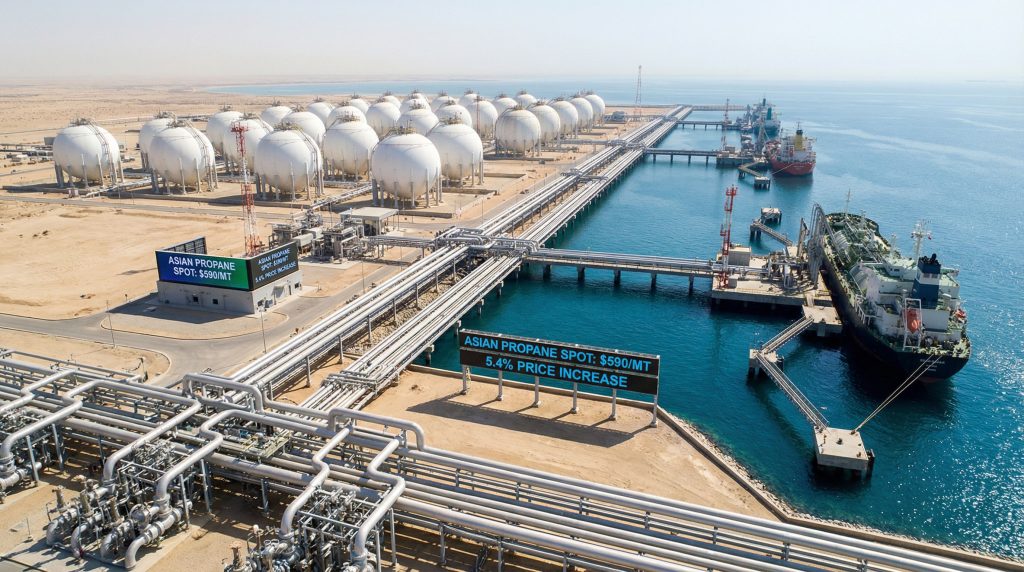
The scale of this operation becomes evident when considering the technical specifications required for such throughput. LPG terminals utilize complex trestle pipeline systems that extend into coastal waters, enabling large carrier vessels to load directly from processing facilities onshore. These systems incorporate multiple safety protocols, pressure monitoring stations, and automated shutoff mechanisms designed to prevent catastrophic failures.
Key operational metrics for major LPG facilities include:
- Daily processing capacity measured in thousands of tons
- Simultaneous vessel loading capabilities (typically 2-4 berths)
- Storage tank farm capacity for propane and butane segregation
- Pipeline pressure ratings exceeding 1,000 PSI for efficient transfer rates
The engineering challenges inherent in coastal LPG operations extend beyond simple product transfer. Marine environments subject infrastructure to corrosive conditions, temperature fluctuations, and mechanical stress from wave action and vessel movements. Regular maintenance schedules must account for these factors while minimizing operational downtime.
When big ASX news breaks, our subscribers know first
Structural Vulnerabilities in Critical Energy Infrastructure
The February 23 incident that triggered the current Saudi Aramco LPG outage in Juaymah highlights the vulnerability of concentrated infrastructure systems. Saudi Aramco reported structural damage to a portion of the delivery segment carrying both propane and butane, though the specific cause remains under evaluation.
Industry sources familiar with the situation indicate the repair timeline extends at least one month, with operations not expected to resume before late March 2026. This duration suggests more than superficial damage, likely involving critical structural components that require specialized repair equipment and materials.
Trestle pipeline systems face several potential failure modes:
- Corrosion-induced structural weakness from prolonged seawater exposure
- Mechanical fatigue from repeated loading cycles and vessel movements
- Foundation settlement affecting pipeline alignment and stress distribution
- Third-party impact from vessel operations or marine construction activities
The assessment and repair process for such damage involves comprehensive structural engineering analysis, often requiring underwater inspection teams and specialized welding capabilities for marine environments. Weather conditions significantly impact repair schedules, particularly in the Persian Gulf region where seasonal variations affect safe working conditions.
Force majeure declarations in such situations trigger complex contractual obligations across the global LPG supply chain. Saudi Aramco's announcement that both scope and duration remain under evaluation indicates the company continues assessing the full extent of required repairs.
Asian Market Exposure and Supply Dependencies
The concentration of LPG demand in Asian markets creates particularly acute vulnerability to Middle Eastern supply disruptions. India absorbs at least 60% of Juaymah's annual LPG exports, representing a critical dependency for the world's most populous nation's energy security.
This concentration translates into immediate supply gaps when facilities like Juaymah go offline. Up to 10 LPG cargoes scheduled for March delivery to India have been cancelled, according to refining industry sources. Each standard LPG cargo typically carries 40,000-45,000 tons of product, suggesting potential shortfalls exceeding 400,000 tons for India alone.
Regional Supply Chain Analysis
Asian LPG consumption patterns reveal strategic vulnerabilities:
- India: Primary use for residential cooking fuel and automotive applications
- China: Heavy petrochemical feedstock demand for propylene production
- Japan: Residential heating demand peaks during winter months
- South Korea: Integrated petrochemical complex requirements
The timing of the Juaymah outage coincides with typically high seasonal demand across Asia. Winter heating requirements in northern regions, combined with ongoing petrochemical production schedules, limit the flexibility of consuming nations to absorb supply shortfalls through demand reduction.
Transportation logistics compound these challenges. Alternative supply sources from the United States or other Middle Eastern producers face longer shipping routes to Asian markets, increasing both costs and delivery timeframes. LPG prices soar as spot charter rates for LPG carriers typically spike during supply disruptions as buyers compete for available tonnage.
Monthly tonnage calculations suggest Asian markets face minimum shortfalls of 450,000 tons during the Juaymah outage period, with cumulative impacts growing if repairs extend beyond initial projections.
Price Dynamics and Market Response Mechanisms
LPG markets demonstrate high sensitivity to supply disruptions due to limited storage capacity and seasonal demand patterns. The Saudi Aramco LPG outage in Juaymah has driven price increases across global markets at a time when winter demand traditionally peaks for heating applications.
Unlike crude oil markets with substantial strategic reserves, LPG markets operate with relatively tight inventory buffers. Most consuming nations maintain only modest storage capabilities, making supply disruptions immediately visible in pricing mechanisms.
Factors amplifying price volatility include:
- Seasonal demand peaks for residential heating in northern hemisphere markets
- Petrochemical feedstock requirements that cannot be easily substituted
- Limited storage capacity at import terminals restricting inventory buffers
- Transportation constraints affecting alternative supply sourcing
Market participants closely monitor inventory levels at key import facilities. Japan, South Korea, and Chinese terminals typically report weekly stock levels, providing early indicators of tightening supply conditions. When these inventories begin drawing down rapidly, spot prices respond within days rather than weeks.
The interconnected nature of global LPG pricing means disruptions in one region quickly transmit to others. European prices often move in sympathy with Asian markets despite different supply sources, as arbitrage opportunities encourage cargo diversions when price differentials become attractive.
Price Formation Mechanisms
Key pricing benchmarks respond to supply disruptions through:
- Spot market premiums over contract prices reflecting immediate scarcity
- Freight rate increases as buyers compete for available shipping capacity
- Regional price spreads widening between supply surplus and deficit areas
- Forward curve backwardation indicating near-term supply tightness
Market makers and commodity traders play crucial roles in price discovery during disruptions. Their willingness to hold inventory or commit to forward sales often determines whether temporary supply gaps translate into sustained price increases or brief market adjustments.
Alternative Supply Sources and Market Rebalancing
The United States emerges as the primary beneficiary of Middle Eastern LPG supply disruptions, possessing substantial propane and butane production capacity alongside near-record inventory levels. However, analysing the US oil production impact reveals potential constraints on associated gas processing capacity. Current US inventories for the winter demand season project to reach the highest levels on record, providing ample supply for export diversions.
Greg Bower from New Stone Americas notes that the Juaymah outage will likely redirect business to US exporters as Asian buyers seek replacement cargoes. However, he emphasises that abundant US inventories will likely limit significant price increases despite increased demand from Asia.
US Export Capacity Analysis
American LPG export capabilities include:
- Multiple Gulf Coast terminals with expansion capacity for increased throughput
- Integrated production from both oil refining and natural gas processing
- Established shipping routes to Asian markets with competitive transportation costs
- Flexible contract structures allowing spot cargo diversions
The US advantage extends beyond simple production capacity. American LPG producers benefit from integrated supply chains connecting shale gas production, processing facilities, and export terminals. This integration provides operational flexibility when global market conditions shift rapidly.
Transportation economics favour US alternatives during Middle Eastern supply disruptions. While shipping distances from the US Gulf Coast to Asia exceed those from the Persian Gulf, the differential narrows when accounting for cargo availability and scheduling flexibility.
Regional Middle Eastern Alternatives
Other Middle Eastern producers possess limited spare capacity to offset Juaymah's lost production. Qatar, UAE, and Kuwait operate their LPG facilities near design capacity, with existing production committed to long-term contracts.
Regional supply constraints include:
- Qatar: Existing production tied to long-term Asian buyers
- UAE: Limited incremental capacity beyond current commitments
- Kuwait: Domestic consumption priorities limiting export availability
- Iraq: Infrastructure limitations restricting export growth
The concentration of Middle Eastern LPG production in relatively few facilities creates systemic vulnerability. Unlike crude oil production with multiple field development options, LPG output depends on specific processing infrastructure that requires years to expand meaningfully.
Engineering Timeline and Repair Complexity
The minimum one-month repair timeline for the Saudi Aramco LPG outage in Juaymah reflects the complexity of marine infrastructure restoration. Industry sources suggest repairs could extend longer depending on damage assessment results and weather conditions affecting marine construction activities.
Specialised equipment requirements for trestle pipeline repairs include underwater welding capabilities, heavy-lift vessels for component installation, and precise alignment tools to restore structural integrity. These resources often require scheduling weeks in advance, particularly in regions with concentrated offshore construction activity.
Critical repair phases typically include:
- Comprehensive damage assessment using underwater inspection technology
- Engineering analysis to determine structural repair specifications
- Material procurement for specialised marine-grade components
- Marine construction requiring favourable weather and sea conditions
- Pressure testing to verify system integrity before restart
- Regulatory approvals confirming safety compliance
Weather patterns in the Persian Gulf region significantly impact marine construction schedules. Seasonal wind patterns, wave heights, and visibility conditions create operational windows that may constrain repair timing regardless of material and equipment availability.
The scope of evaluation that Saudi Aramco continues to conduct suggests potential complications beyond initial assessments. Complex structural damage often reveals additional issues during detailed inspection, potentially extending repair timelines beyond initial projections.
Force Majeure and Contract Implications
Legal frameworks governing LPG supply contracts typically include force majeure provisions covering infrastructure failures beyond operational control. These provisions allow suppliers to suspend deliveries without penalty during qualifying events, but also trigger customer notification and alternative sourcing obligations.
Standard contract modifications during force majeure include:
- Delivery schedule adjustments for affected cargo volumes
- Alternative sourcing arrangements at buyer's option
- Price mechanism adjustments reflecting spot market conditions
- Insurance claim procedures for covered losses
Major LPG buyers maintain contingency sourcing arrangements specifically for such disruptions. These arrangements often involve framework agreements with alternative suppliers, pre-negotiated pricing mechanisms, and shipping capacity reservations.
The next major ASX story will hit our subscribers first
Infrastructure Resilience and Energy Security Implications
The Saudi Aramco LPG outage in Juaymah exposes broader vulnerabilities in global energy infrastructure design. Single points of failure in critical supply chains create systemic risks that extend far beyond immediate operational impacts.
Modern energy security planning increasingly emphasises supply diversification and infrastructure redundancy. However, the capital intensity of LPG processing and export facilities limits the economic feasibility of substantial backup capacity in many regions.
Strategic considerations for energy security include:
- Geographic diversification of supply sources to reduce concentration risk
- Infrastructure redundancy through multiple facility development
- Inventory management balancing storage costs against supply security
- Alternative fuel pathways reducing dependence on specific products
Importing nations face difficult tradeoffs between cost optimisation and supply security. Long-term contracts with single suppliers often provide favourable pricing but create vulnerability to operational disruptions like the current Juaymah situation.
Investment Implications and Market Evolution
Infrastructure disruptions like the current outage often catalyse investment in alternative supply sources and transportation capacity. Furthermore, examining the oil price rally analysis provides insights into how geopolitical factors influence energy investment decisions. LPG shipping companies may benefit from increased demand for vessel capacity as buyers diversify sourcing arrangements.
Potential investment opportunities include:
- US export terminal expansion to capture market share from Middle Eastern competitors
- LPG carrier fleet expansion addressing transportation bottlenecks
- Alternative supplier development in regions with unutilised production potential
- Storage facility investment in major consuming markets
Private equity and infrastructure investment funds increasingly target energy logistics assets that benefit from supply chain disruptions. These investments often provide steady returns during normal market conditions while capturing upside during periodic disruptions.
The long-term implications may include permanent market share shifts away from facilities perceived as higher operational risk. Buyers often retain diversified sourcing arrangements established during disruptions even after original suppliers restore operations.
Historical Context and Precedent Analysis
Previous LPG terminal outages provide context for understanding market recovery patterns and duration impacts. Major facility disruptions typically resolve within 1-3 months depending on damage severity and repair complexity.
Notable historical precedents include:
- Malaysia's Bintulu terminal: 2019 maintenance outage lasting 6 weeks
- Australia's Darwin facility: Weather-related damage requiring 2-month repairs
- Qatar's Ras Laffan terminal: Equipment failure causing 5-week shutdown
- Trinidad's Point Fortin facility: Fire damage extending repairs to 3 months
Market recovery patterns show price premiums typically peak within the first two weeks of disruption announcements, then moderate as alternative supply sources activate and inventory draws begin compensating for lost production.
The duration of price impacts often extends beyond facility restart dates due to inventory replenishment requirements and contract renegotiations. Buyers may continue paying premiums for several months while rebuilding safety stock levels depleted during the disruption period.
Industry Response Evolution
Each major facility outage contributes to industry learning regarding emergency response protocols and supply chain management. Modern disruptions trigger more sophisticated alternative sourcing mechanisms compared to incidents from previous decades.
Contemporary industry responses include:
- Real-time inventory monitoring enabling faster supply adjustment decisions
- Pre-positioned alternative supply contracts reducing sourcing delays
- Enhanced weather forecasting improving repair timeline accuracy
- Improved damage assessment technology accelerating repair planning
The globalisation of LPG markets means disruptions now propagate more quickly but also resolve faster through improved information flow and coordinated industry response mechanisms. Additionally, understanding OPEC production impact helps contextualise how coordinated production decisions influence global energy markets.
Market Monitoring and Trading Strategies
Professional energy traders monitor specific indicators during supply disruptions to anticipate price movements and identify arbitrage opportunities. The Saudi Aramco LPG outage in Juaymah creates multiple observable metrics that inform trading decisions.
Critical monitoring indicators include:
- Daily spot price movements in Asian propane and butane markets
- Shipping rate changes for LPG carriers on key trade routes
- Inventory drawdown rates at major import terminals across Asia
- Alternative supplier announcements regarding increased production
- Repair progress updates from Saudi Aramco communications
- Weather forecasts affecting repair timeline feasibility
Sophisticated market participants employ multiple data sources to track these indicators in real-time. Commercial satellite imagery can provide independent verification of repair activity progress, while shipping transponder data reveals cargo flow patterns and vessel availability.
Strategic Trading Considerations
Key strategic elements during supply disruptions:
- Contango/backwardation analysis in forward price curves indicating market tightness
- Geographic arbitrage opportunities between supply surplus and deficit regions
- Seasonal demand forecasting affecting price sustainability beyond repair completion
- Currency hedging for international cargo purchases during volatile periods
Risk management becomes particularly critical during supply disruptions when price volatility increases substantially. Professional traders often reduce position sizes while increasing hedging activity to maintain portfolio stability during uncertain market conditions.
The interconnected nature of global energy markets means LPG disruptions can influence related commodity prices including natural gas, crude oil products, and petrochemical feedstocks. Comprehensive trading strategies account for these cross-commodity relationships.
Future Implications and Strategic Planning
The Saudi Aramco LPG outage in Juaymah represents more than a temporary supply disruption; it highlights the evolving nature of global energy security challenges in an increasingly interconnected world. As energy consumption patterns shift and infrastructure aging accelerates, similar incidents may become more frequent absent proactive investments in resilience.
Long-term strategic implications include:
- Infrastructure investment priorities emphasising redundancy over pure cost optimisation
- Supply diversification strategies reducing dependence on single facilities or regions
- Technology adoption improving monitoring and predictive maintenance capabilities
- Regulatory framework evolution addressing infrastructure resilience requirements
Climate change introduces additional complexity to infrastructure planning as extreme weather events become more frequent and severe. Coastal facilities like Juaymah face increasing exposure to storm surge, temperature extremes, and other environmental stressors that may accelerate maintenance requirements.
The energy transition toward renewable sources paradoxically may increase short-term dependence on reliable fossil fuel infrastructure. As traditional energy systems transform, maintaining operational reliability in existing facilities becomes more critical during the transition period.
Geopolitical Considerations
Energy infrastructure disruptions inevitably carry geopolitical implications, particularly when they affect critical supply relationships between producing and consuming nations. The current situation may influence long-term energy partnership arrangements and strategic planning across multiple governments.
Policy considerations include:
- Strategic reserve policies balancing storage costs against supply security
- International cooperation mechanisms for emergency supply sharing
- Investment incentives encouraging infrastructure resilience improvements
- Trade relationship diversification reducing single-source dependencies
The concentration of global LPG exports in the Middle East creates strategic vulnerabilities that importing nations increasingly recognise require mitigation through diversified supply arrangements and enhanced domestic storage capabilities.
This analysis reflects publicly available information as of the publication date. Energy markets involve substantial risks, and commodity trading decisions should incorporate comprehensive risk management strategies and professional advisory guidance. Market conditions and facility operational status may change rapidly, affecting the relevance of specific observations and projections presented.
Looking to Capitalise on Energy Market Disruptions Like These?
Discovery Alert's proprietary Discovery IQ model delivers instant notifications on significant ASX mineral discoveries, helping subscribers identify actionable investment opportunities in energy and commodities sectors ahead of broader market awareness. Begin your 14-day free trial today and explore how major mineral discoveries have historically generated substantial returns during periods of market volatility.