
August 7, 2026
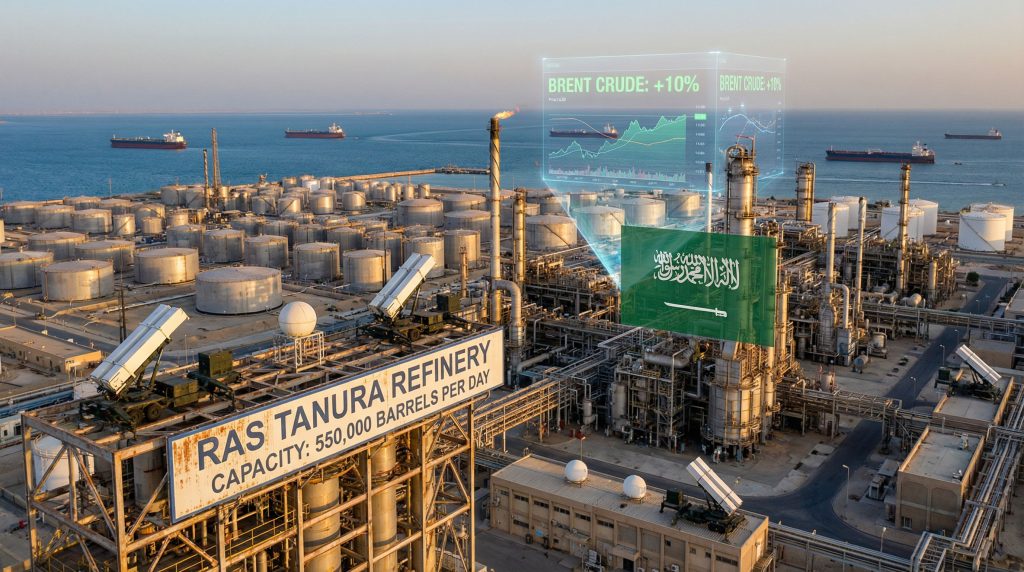
The Middle East's energy infrastructure faces unprecedented challenges as modern warfare tactics evolve beyond conventional battlefields. Recent developments demonstrate how precision targeting of strategic facilities can create cascading economic effects that ripple through global markets. The Saudi Aramco Ras Tanura refinery drone strike exemplifies this new paradigm, where sophisticated drone technology enables adversaries to target critical energy nodes with surgical precision, maximizing economic disruption while maintaining plausible deniability.
Strategic Geography and Asymmetric Targeting Vulnerabilities
Geographic Positioning and Strategic Value
The Persian Gulf's energy infrastructure operates within a complex web of geographic vulnerabilities that amplify the impact of targeted disruption campaigns. Facilities positioned along the Gulf's western coastline face exposure to multiple threat vectors, with proximity to adversarial territories creating shortened response windows for defensive systems.
The Saudi Aramco Ras Tanura refinery drone strike exemplifies this geographic vulnerability matrix. Located in Saudi Arabia's Eastern Province, the facility sits within 150-200 kilometers of Iranian territorial boundaries, positioning it within optimal range for sophisticated unmanned aerial systems. This proximity factor transforms what would otherwise be logistically complex operations into tactically feasible precision strikes.
Furthermore, the Strait of Hormuz throughput statistics reveal the cascading impact potential of coordinated infrastructure targeting. Approximately 20-21% of global oil consumption transits through this waterway annually, according to U.S. Energy Information Administration data. When combined with precision strikes against export terminals like Ras Tanura, the multiplicative effect creates supply chain disruptions that extend far beyond immediate production losses.
Regional targeting patterns demonstrate strategic selection based on integrated export capabilities rather than pure production volumes. Ras Tanura functions simultaneously as a refining center and crude export terminal, meaning operational disruption affects both domestic energy security and international supply networks. This dual-functionality makes such facilities disproportionately valuable targets in economic warfare scenarios.
The interconnected nature of Saudi Arabia energy licenses and regional production agreements creates additional vulnerabilities when key processing facilities face disruption.
Refining Capacity and Economic Impact Metrics
The economic mathematics of infrastructure targeting reveals why precision strikes against specific facilities generate outsized market responses. Ras Tanura's 550,000 barrels per day (bpd) processing capability represents approximately 30-33% of Saudi Arabia's total domestic refining capacity, estimated at 2.4 million bpd across all facilities.
Daily revenue impact calculations demonstrate the immediate economic consequences:
| Operational Status | Daily Output | Revenue Impact (@ $85/barrel) |
|---|---|---|
| Full Operation | 550,000 bpd | $46.75 million |
| Complete Shutdown | 0 bpd | $46.75 million daily loss |
| 30-day Recovery Period | Extended closure | $1.4-1.5 billion total impact |
The Saudi Aramco Ras Tanura refinery drone strike triggered precautionary shutdowns rather than damage-forced closures, indicating operational decision-making based on threat assessment protocols. This suggests reserve capacity cushioning exists within the Saudi system, allowing for strategic flexibility during crisis periods.
Downstream distribution networks amplify the impact beyond immediate production statistics. Ras Tanura's refined products flow into Asia-Pacific markets through established channels:
• Diesel and gasoil exports to Indian refinery complexes
• Naphtha shipments to regional petrochemical facilities
• Jet fuel distribution across Gulf aviation sectors
The interconnected nature of these supply relationships means facility closure creates cascading shortages across multiple product categories and geographic regions simultaneously.
When big ASX news breaks, our subscribers know first
Market Volatility and Supply Chain Disruption Analysis
Immediate Market Response Patterns
Financial markets demonstrate sophisticated pricing mechanisms that incorporate both physical supply disruption and escalation probability assessments. The Brent crude futures surge of roughly 10% following the Ras Tanura incident represents market participants pricing in multiplicative uncertainty rather than simple supply arithmetic.
Price movement calculations reveal the mathematical impact:
• Pre-incident Brent pricing: Approximately $82/barrel
• Post-incident surge: 10% increase to $90.20/barrel
• Intraday volatility: $8.20/barrel movement within trading session
This volatility magnitude exceeds proportional supply loss calculations, indicating that supply anxieties drive price discovery more than immediate physical shortages. The psychological component of infrastructure targeting creates premium pricing that reflects worst-case scenario planning rather than current supply deficits.
Additionally, oil price volatility trends demonstrate how geopolitical tensions compound market uncertainty beyond fundamental supply-demand calculations.
Futures contract mechanics amplify these movements through standardized trading structures. Each Brent crude contract represents 1,000 barrels, meaning the $8.20/barrel movement translates to $8,200 per contract impact. This magnitude triggers margin calls and position liquidations across derivative markets, creating secondary waves of volatility.
The Strait of Hormuz shipping disruption compounds refinery closure impacts through dual-vector supply chain stress. Vessels attacked around the strait on preceding days created shipping delays that, when combined with Ras Tanura closure, generated multiplicative rather than additive market anxiety. According to Upstream Online reports, the coordinated nature of these attacks suggests strategic planning designed to maximize economic impact.
Supply Chain Vulnerability Assessment
Regional production data reveals how precautionary shutdowns cascade across interconnected energy networks beyond immediate target zones. Iraqi Kurdistan production facilities shut down 200,000 bpd over the weekend as defensive measures, despite no direct targeting of those installations.
Combined regional supply loss aggregation:
• Ras Tanura (Saudi Arabia): 550,000 bpd shutdown
• Iraqi Kurdistan: 200,000 bpd precautionary closure
• Total immediate supply loss: 750,000 bpd (approximately 0.75% of global supply)
This aggregation pattern demonstrates how infrastructure interdependencies create supply chain vulnerabilities that extend beyond direct attack targets. Operators across the region implement risk mitigation protocols based on threat clustering rather than facility-specific assessments.
Alternative routing capacity analysis reveals both resilience mechanisms and potential bottlenecks. Saudi Arabia maintains the East-West Pipeline system with 5 million bpd capacity as a geographic bypass to Hormuz transit routes. However, pipeline utilisation at peak capacity creates vulnerability concentration if primary export terminals face extended disruption.
Strategic Petroleum Reserve activation protocols provide emergency supply cushioning, with U.S. SPR holdings of approximately 370-400 million barrels available at maximum 4.5 million bpd drawdown rates. This provides 82-89 days of emergency supply coverage, though activation typically requires 3-7 days of political negotiation before actual release authorisation.
Historical Precedent Analysis and Recovery Frameworks
The 2019 Abqaiq-Khurais Attack Framework
The September 2019 coordinated strikes against Saudi facilities established operational resilience benchmarks that inform current response frameworks. Those attacks temporarily eliminated 5.7 million bpd of production capacity, representing 55.3% of Saudi Arabia's total output at that time from a national capacity of 10.3 million bpd.
Comparative impact analysis between historical and current incidents:
| Attack Event | Production Loss | Percentage Impact | Price Response |
|---|---|---|---|
| 2019 Abqaiq-Khurais | 5.7 million bpd | 55% of Saudi capacity | 14-15% Brent surge |
| 2026 Ras Tanura | 550,000 bpd | 23% of Saudi refining | 10% Brent surge |
The 2019 recovery timeline demonstrated Saudi operational flexibility previously underestimated by market analysis. Production restoration achieved 80% capacity within 2-3 weeks, with full operational parameters restored within 4-6 weeks. This established precedent suggests current disruption impacts may prove shorter-duration than initial market pricing assumes.
Insurance market response patterns from the 2019 incident created premium adjustment frameworks still applicable to current situations. Insurance costs for Middle Eastern oil infrastructure increased 15-25% for 12-18 month periods before normalising, establishing precedent for current premium recalibration across the sector.
Attack methodology evolution reveals technological advancement trajectories between 2019 and current capabilities. The earlier attacks employed both cruise missiles and suicide drones in coordinated strikes against geographically separated targets. Current attacks appear to utilise drone-only approaches, suggesting either enhanced drone capability development or strategic choice of lower-escalation vectors.
Regional Maritime Campaign Lessons
Previous targeting of Ras Tanura by Yemen's Iran-aligned Houthis in 2021 established the facility as a known vulnerability within regional conflict calculations. Saudi officials characterised that earlier incident as a failed assault on global energy security, indicating the facility's strategic importance extends beyond national energy considerations to international stability frameworks.
Maritime disruption patterns from 2021-2024 Red Sea shipping campaigns provide escalation management insights relevant to current Strait of Hormuz tensions. Coalition defence system effectiveness rates during those campaigns revealed both capabilities and limitations of integrated air defence networks protecting critical energy transit routes.
Economic warfare strategy evolution demonstrates progressive sophistication in target selection methodologies. Earlier campaigns focused on maximum psychological impact through high-visibility attacks. Current patterns suggest shift toward precision targeting of integrated facilities that maximise economic disruption through supply chain interdependency exploitation.
Geopolitical Calculus and Strategic Escalation Frameworks
Iran's Strategic Calculus in Gulf Operations
Regional conflict analysis reveals systematic targeting methodologies designed to maximise economic pressure while maintaining escalation control below conventional warfare thresholds. The coordination of Ras Tanura strikes with concurrent Strait of Hormuz vessel attacks demonstrates integrated operational planning across multiple pressure points.
Proxy warfare coordination patterns indicate strategic delegation of operations across regional theaters to maintain plausible deniability frameworks. The utilisation of technically sophisticated drone systems suggests technology transfer relationships that enable precision targeting while preserving strategic distance from direct confrontation scenarios.
Economic pressure point identification methodologies target facilities with maximum downstream impact potential. Rather than focusing on pure production volume targets, current strategies prioritise integrated facilities that affect both domestic consumption and international export networks simultaneously.
Escalation ladder management appears designed to create economic costs without triggering conventional military responses. The precision nature of infrastructure targeting allows for significant economic impact while avoiding civilian casualties that might justify broader military retaliation.
Saudi Arabia's Defence Posture Evolution
Risk intelligence assessments indicate the Saudi Aramco Ras Tanura refinery drone strike represents escalation that positions Gulf energy infrastructure directly within Iran's targeting framework. This development suggests movement toward closer coordination between Saudi Arabia and neighbouring Gulf states with U.S. and Israeli military operations.
Defence system integration improvements since 2019 attacks include enhanced Patriot missile system deployment patterns and integrated radar network coverage of industrial facilities. However, drone technology advancement appears to be outpacing defensive capability development, creating ongoing vulnerability gaps.
Regional alliance coordination mechanisms have evolved to include enhanced intelligence sharing and coordinated response protocols among Gulf Cooperation Council members. These frameworks aim to create collective defence capabilities that supplement individual national defence systems.
Moreover, the broader implications of trade war market impact on regional energy security create additional complexity for defence planning and strategic positioning.
Investment Strategy Implications and Risk Assessment
Risk Premium Calculations for Gulf Assets
Energy infrastructure attacks generate quantifiable risk premiums that affect investment positioning across multiple asset classes. Current market conditions suggest premium calculations based on historical precedent and escalation probability assessments:
| Risk Factor | Premium Impact | Duration | Asset Class Affected |
|---|---|---|---|
| Drone strike frequency | 8-12% | 3-6 months | Energy equities, commodities |
| Shipping lane closures | 15-20% | 1-2 months | Transportation, insurance |
| Refinery capacity loss | 5-8% | 6-12 months | Downstream products |
| Regional conflict escalation | 10-25% | 12-18 months | Broad market indices |
Currency stability impacts affect oil-dependent economies through multiple transmission mechanisms. Energy export revenue disruption creates current account pressures that manifest in currency volatility and sovereign risk premium adjustments.
Bond yield spread analysis for regional sovereigns reveals risk assessment evolution as markets price in extended conflict scenarios. Gulf Cooperation Council sovereign bonds demonstrate differentiated pricing based on perceived vulnerability to infrastructure attacks and economic diversification levels.
Alternative Energy Transition Acceleration
Infrastructure vulnerability concerns accelerate investment flows toward renewable energy alternatives and energy independence technologies. The Saudi Aramco Ras Tanura refinery drone strike exemplifies the systematic risks that drive strategic energy diversification initiatives across both producing and consuming nations.
Strategic metal demand implications include increased requirements for lithium, rare earth elements, and other critical minerals policies necessary for renewable energy infrastructure development. Supply chain security concerns extend from hydrocarbon infrastructure to critical mineral extraction and processing facilities.
Grid resilience infrastructure investment priorities shift toward distributed generation systems and storage capabilities that reduce dependence on large-scale centralised facilities vulnerable to precision targeting.
Furthermore, energy transition security considerations become paramount as nations seek to reduce dependence on vulnerable centralised energy infrastructure.
Energy transition acceleration creates investment reallocation patterns as capital flows shift from traditional hydrocarbon infrastructure toward renewable alternatives perceived as more geographically dispersed and therefore less vulnerable to coordinated attacks.
Technology Integration and Threat Detection
Advanced Detection and Interception Systems
Modern infrastructure protection relies on integrated technology platforms that provide early warning and automated response capabilities. Radar network integration combines ground-based, maritime, and airborne detection systems to create comprehensive surveillance coverage of critical facilities and transit routes.
Autonomous defence platform deployment enables rapid response to identified threats without requiring human decision loops that could delay interception timing. These systems must balance automated response capabilities with appropriate human oversight to prevent accidental escalation.
Artificial intelligence threat assessment protocols analyse multiple data streams to identify attack patterns and predict likely targeting priorities. Machine learning algorithms process satellite imagery, communication intercepts, and behavioural pattern analysis to provide early warning of potential strikes.
Predictive Analytics for Threat Assessment
Satellite imagery analysis provides early warning capabilities through monitoring of adversarial preparation activities and equipment movements. High-resolution imagery can identify launch preparation activities and deployment patterns that precede infrastructure attacks.
Social media monitoring for operational intelligence reveals planning activities and post-attack assessment data that inform defensive positioning. Open source intelligence gathering provides insights into operational planning and effectiveness evaluation by adversarial forces.
Economic indicator correlation with attack probability helps predict timing and targeting priorities based on market conditions and geopolitical developments. Historical analysis reveals patterns between economic stress periods and infrastructure targeting frequency.
Predictive analytics integration enables proactive defence positioning rather than reactive response strategies. This approach allows defensive resources to be allocated based on threat probability assessments rather than uniform distribution across all potential targets.
The next major ASX story will hit our subscribers first
Market Psychology and Economic Transmission Mechanisms
Market Volatility Measurement Framework
VIX correlation with energy price movements reveals how infrastructure attacks affect broader market sentiment beyond commodity pricing. Equity market volatility indices typically increase 15-25% during Middle Eastern infrastructure targeting campaigns, indicating risk contagion across asset classes.
Currency stability impacts on oil-dependent economies create additional transmission mechanisms for energy infrastructure disruption. Export revenue volatility affects current account balances and sovereign risk assessments across Gulf Cooperation Council members.
Bond yield spread analysis for sovereign risk assessment reveals differentiated market pricing based on perceived infrastructure vulnerability. Countries with greater energy export dependence and infrastructure concentration face higher risk premiums during regional conflict periods.
Consumer Price Impact Transmission
Petrol price elasticity in major consuming nations demonstrates how infrastructure attacks affect household economics across global markets. A 10% crude price increase typically translates to 6-8% petrol price increases within 2-3 weeks, affecting consumer spending patterns and economic growth trajectories.
Industrial input cost adjustment timelines vary by sector and geographic location, with transportation-intensive industries experiencing more immediate impact from energy price volatility. Manufacturing sectors dependent on petrochemical inputs face both direct cost increases and supply availability concerns.
Inflation expectation anchoring challenges emerge when energy price volatility persists beyond short-term market disruptions. Central banks must balance energy-driven inflation pressures against broader economic stability concerns when infrastructure attacks create sustained supply uncertainty.
Consumer behaviour adaptation includes demand destruction at sustained higher price levels and substitution effects toward alternative energy sources when traditional supplies face consistent disruption risks.
Strategic Investment Positioning and Risk Management
Portfolio Diversification Strategies
Geographic exposure balancing across energy production regions reduces vulnerability to concentrated infrastructure attacks. Investment portfolios that maintain exposure to North American shale, North Sea, and West African production benefit from supply source diversification during Middle Eastern disruptions.
Sector allocation strategies balance traditional energy investments with renewable energy positions that may benefit from accelerated adoption during infrastructure vulnerability periods. The transition toward distributed generation systems creates investment opportunities in solar, wind, and battery storage technologies.
Currency hedging for commodity price volatility provides protection against energy-driven exchange rate movements. Oil-importing nations' currencies typically weaken during sustained energy price increases, while oil-exporting nations face currency volatility based on export revenue uncertainty.
Long-term Structural Investment Themes
Energy independence infrastructure development creates investment opportunities in domestic production capabilities, strategic storage facilities, and alternative energy technologies. Nations prioritise energy security following infrastructure attack demonstrations, driving capital allocation toward resilience-focused projects.
Critical mineral supply chain security investments address strategic material requirements for renewable energy infrastructure. Lithium, rare earth elements, and copper supply chains face similar vulnerability concerns as traditional energy infrastructure, creating security-focused investment themes.
Climate resilience technology advancement opportunities emerge as energy systems require enhanced protection against both physical attacks and extreme weather events. Investment flows toward hardened infrastructure, distributed generation, and autonomous defence systems reflect these combined risk factors.
The Saudi Aramco Ras Tanura refinery drone strike illustrates how precision targeting of critical infrastructure creates cascading economic effects that extend far beyond immediate production losses. Investment strategies must incorporate both traditional energy security considerations and emerging technological solutions that address evolving threat landscapes in global energy markets.
"The targeting of key energy infrastructure represents a fundamental shift in asymmetric warfare tactics, where economic disruption becomes the primary objective rather than territorial gains," according to regional security analysts monitoring Gulf developments.
Disclaimer: This analysis contains forward-looking assessments based on current market conditions and historical precedents. Energy infrastructure investments carry inherent risks related to geopolitical developments, technological changes, and market volatility. Investors should conduct independent research and consider professional financial advice before making investment decisions based on regional conflict scenarios or energy security assessments.
Ready to Navigate Energy Infrastructure Investment Opportunities?
Energy infrastructure disruptions like the Saudi Aramco Ras Tanura refinery drone strike create immediate market volatility and long-term investment opportunities across multiple sectors. Discovery Alert's proprietary Discovery IQ model delivers real-time alerts on significant ASX mineral discoveries, helping investors identify actionable opportunities in critical minerals, energy transition metals, and strategic resources that benefit from shifting global energy dynamics. Begin your 14-day free trial today to position yourself ahead of market movements driven by evolving energy security priorities.