
May 20, 2026
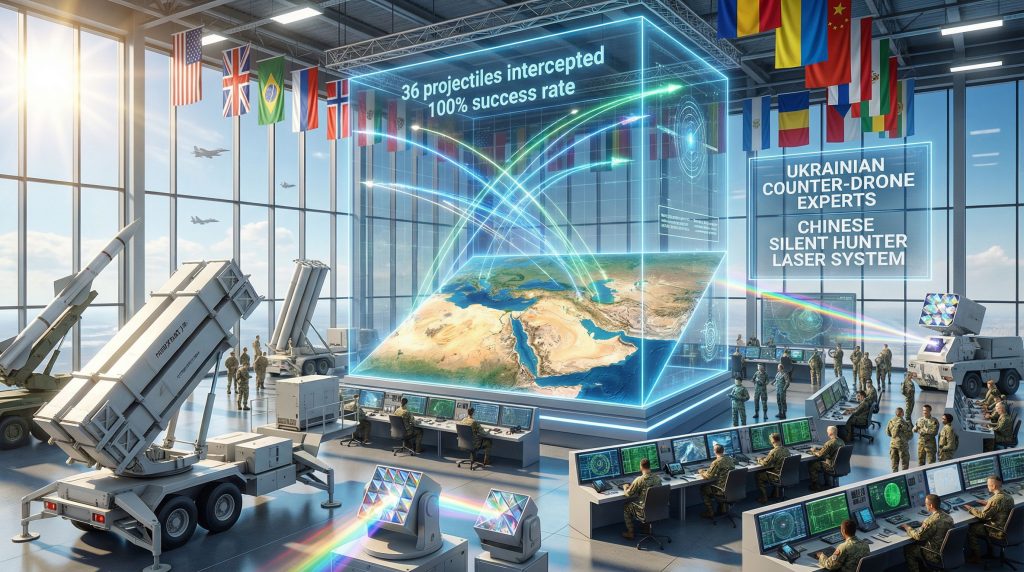
Regional air defense networks operate under increasingly complex threat environments that demand millisecond precision and multi-layered coordination. Modern aerial warfare has evolved beyond traditional aircraft encounters to encompass swarms of unmanned systems capable of overwhelming single-point defense mechanisms. The strategic calculus of protecting critical infrastructure now requires integration across radar networks, missile systems, and emerging directed-energy platforms that can respond to threats moving at unprecedented speeds and volumes. Recent developments have highlighted how the Saudi defense ministry drones intercepted operations demonstrate the evolving nature of regional security challenges.
Understanding Modern Aerial Defense Architecture in High-Risk Zones
Contemporary air defense systems rely on sophisticated multi-tiered approaches that create overlapping fields of protection across strategic regions. These networks combine long-range detection capabilities with rapid-response interception technologies designed to neutralize threats before they reach their intended targets.
Multi-Layered Defense Systems: The Foundation of Regional Security
Patriot PAC-3 systems form the backbone of medium-range interception capabilities, with an engagement envelope extending approximately 15 kilometers against tactical ballistic missiles. These systems utilize hit-to-kill kinetic warhead technology that eliminates targets through direct impact rather than explosive proximity, significantly reducing collateral damage risks in populated areas.
THAAD (Terminal High Altitude Area Defense) systems provide long-range ballistic missile defense integration with ranges exceeding 150 kilometers against aircraft and 40-150 kilometers against tactical ballistic missiles. The system's reaction time of approximately 60 seconds from detection to intercept creates critical windows for threat assessment and engagement authorization.
Modern defense architectures typically employ three distinct operational tiers:
- Tier 1 (Strategic): Long-range systems including THAAD and S-400 platforms
- Tier 2 (Tactical): Medium-range systems such as Patriot PAC-3 and Hawk configurations
- Tier 3 (Terminal): Short-range systems including MANTIS and Avenger units
Real-Time Threat Detection and Response Protocols
Automated sensor-to-interceptor coordination systems enable defense networks to process multiple simultaneous threats while maintaining engagement priority algorithms. These systems integrate radar signatures, satellite reconnaissance, and ground-based monitoring stations to create comprehensive threat pictures updated in real-time.
The coordination between detection and response systems follows NATO Standard protocols, though regional implementations vary based on specific geographical and operational requirements. Electronic warfare capabilities provide additional layers of protection through signal jamming and cyber countermeasures that can disable incoming threats without kinetic engagement.
When big ASX news breaks, our subscribers know first
Analyzing Regional Drone Activity Patterns
The proliferation of unmanned aerial systems has fundamentally altered the strategic landscape for regional security planners. These platforms offer adversaries cost-effective means of conducting surveillance, harassment, and precision strikes against high-value targets while minimizing direct military confrontation risks.
Technology Transfer and Tactical Evolution
International expertise deployment in counter-drone operations has accelerated knowledge transfer between regions experiencing similar threats. Battle-tested methodologies from active conflict zones provide operational frameworks that can be adapted to local geographic and political conditions.
Cross-border knowledge sharing in defensive technologies enables rapid capability development without requiring extensive indigenous research and development programs. This collaborative approach allows regional partners to implement proven countermeasures while developing specialized capabilities tailored to specific threat environments.
Critical Infrastructure Vulnerability Assessment
Energy sector installations represent primary targets for aerial threats due to their economic significance and relatively concentrated geographic footprints. The interconnected nature of modern energy infrastructure means that successful strikes against key facilities can create cascading effects across entire regional networks. Furthermore, recent energy security insights demonstrate how regional vulnerabilities extend beyond immediate defense concerns.
Energy Sector Exposure Analysis
Eastern Province oil facilities concentrate the majority of Saudi Arabia's petroleum production capacity, making them strategically valuable targets. The Ghawar oil field contains approximately 70 billion barrels of proven reserves, representing one of the world's largest concentrations of recoverable petroleum.
Pipeline infrastructure vulnerability mapping reveals critical chokepoints where successful attacks could disrupt significant portions of regional energy exports. The East-West Pipeline (Petroline) maintains a capacity of approximately 5 million barrels per day and provides crucial alternative routing that bypasses the Strait of Hormuz. In addition, understanding energy export challenges provides context for global supply chain vulnerabilities.
| Infrastructure Component | Daily Capacity | Strategic Significance |
|---|---|---|
| Ghawar Oil Field | 5+ million barrels | Primary production hub |
| East-West Pipeline | 5 million barrels | Hormuz bypass route |
| Eastern Province Refineries | 2.5+ million barrels | Export processing |
Economic Impact Modeling of Successful Strikes
Historical precedent demonstrates significant market sensitivity to regional energy infrastructure disruptions. The 1973 Arab Oil Embargo resulted in oil prices increasing approximately 300 percent, from roughly $3 to $12 per barrel. The 2003 Iraq War saw prices rise from approximately $30 to over $50 per barrel during subsequent months as markets priced in supply disruption risks.
Global energy markets maintain strategic petroleum reserves as buffers against production disruptions, though these measures provide only short-term protection against sustained threats. The Strait of Hormuz facilitates transit of approximately 21 percent of globally traded petroleum and 21 percent of global LNG exports, according to U.S. Energy Information Administration data.
Defense Operation Performance Metrics
Recent reports from the Saudi Defense Ministry indicate successful interception of aerial threats targeting regional infrastructure. Major General Turki Al-Maliki confirmed that Saudi defense ministry drones intercepted operations have maintained consistent success rates against incoming projectiles.
Statistical Analysis of Recent Defense Operations
According to official announcements, Saudi defense ministry drones intercepted multiple aerial threats during recent operations, demonstrating the effectiveness of integrated air defense systems. These interceptions occurred across multiple regional sectors, including areas containing critical energy infrastructure.
The sustained success of Saudi defense ministry drones intercepted operations reflects significant investments in defensive capabilities and operator training programs. Historical comparison data shows that achieving consistent interception rates requires extensive coordination between detection systems, command structures, and engagement platforms.
Comparative Regional Defense Capabilities
Gulf Cooperation Council (GCC) member states have implemented coordinated defense mechanisms that enable information sharing and mutual support during threat scenarios. Established in 1981, the GCC includes Saudi Arabia, UAE, Kuwait, Qatar, Bahrain, and Oman, creating a collective security framework for regional stability.
Shared intelligence and early warning systems allow member states to coordinate responses to threats that may transit multiple national boundaries. This collaborative approach maximises defensive coverage while optimising resource allocation across participating nations.
International Military Cooperation Frameworks
Cross-border defense technology integration has become increasingly important as threats evolve beyond traditional state-to-state confrontations. Regional partnerships enable rapid deployment of specialised capabilities and expertise that may not be available through domestic sources alone.
Specialist Deployment and Knowledge Transfer
Ukraine has developed significant counter-drone expertise through defensive operations conducted since 2022, creating valuable operational knowledge that can benefit other regions facing similar threats. NATO countries have provided various forms of military support and advisory roles that facilitate technology transfer and tactical adaptation.
Real-world testing of advanced defensive systems provides operational validation that laboratory testing cannot replicate. These deployments enable rapid identification of system limitations and operational requirements that inform future capability development programmes.
Technology Acquisition and Modernisation Programmes
Defense partnerships in the Gulf region historically include American, European, and increasingly Asian defense contractors who provide specialised systems and training support. The Stockholm International Peace Research Institute (SIPRI) documents significant regional defense expenditure, with Saudi Arabia maintaining approximately $55.6 billion in annual defense spending as of 2023.
Indigenous capability development initiatives aim to reduce dependence on external suppliers while building domestic expertise in critical defense technologies. These programmes balance immediate operational requirements with long-term strategic autonomy objectives.
Economic Market Response Patterns
Financial markets demonstrate heightened sensitivity to regional security incidents that threaten energy infrastructure or major shipping routes. Historical analysis reveals consistent patterns in how energy commodities respond to geopolitical tensions and actual supply disruptions. However, broader trade war impacts also influence regional market dynamics.
Energy Market Volatility Patterns
The Strait of Hormuz represents a critical chokepoint where approximately 21 million barrels of oil transit daily. Historical precedent from the 1980-1988 Iran-Iraq War demonstrated how regional conflicts can trigger shipping insurance premium increases of 200-500 percent, according to Lloyd's of London historical data.
Alternative routing through the East-West pipeline system provides strategic flexibility that reduces market vulnerability to Hormuz-related disruptions. This infrastructure enables continued exports even under scenarios where traditional shipping routes face restrictions or elevated risk profiles. Moreover, consideration of oil production impact factors remains crucial for market stability.
Defense Spending Acceleration Trends
Middle East regional defense expenditure reflects ongoing security prioritisation, with collective Gulf Cooperation Council (GCC) spending representing significant portions of national budgets. The United Arab Emirates maintains approximately $16.6 billion in annual defense spending, according to SIPRI military expenditure database.
Private sector security investment increases typically follow regional threat escalations as companies implement enhanced protection measures for personnel and infrastructure. These investments span physical security upgrades, cybersecurity enhancements, and business continuity planning.
The next major ASX story will hit our subscribers first
Long-Term Strategic Implications
Regional defense capabilities continue evolving in response to emerging threat vectors that challenge traditional security paradigms. The integration of artificial intelligence, autonomous systems, and directed-energy weapons represents significant technological advancement opportunities for defense networks. For instance, critical minerals policy developments will significantly impact future defense technology supply chains.
Escalation Pathway Analysis
International diplomatic intervention mechanisms exist through established multilateral organisations, though their effectiveness varies based on specific conflict dynamics and participant cooperation levels. The United Nations Security Council maintains formal procedures for addressing regional security threats, though consensus requirements can limit rapid response capabilities.
Regional alliance strengthening mechanisms provide frameworks for coordinated responses to shared security challenges. These arrangements enable resource pooling and capability sharing that individual nations might not achieve independently.
Technology Development Acceleration
Next-generation counter-drone systems incorporate machine learning algorithms that can identify and classify threats more rapidly than human operators. Artificial intelligence integration in defense networks represents ongoing development across NATO and allied countries, according to U.S. Department of Defense strategic documents.
Autonomous response capability advancement aims to reduce human decision-making bottlenecks in high-speed engagement scenarios. These systems require careful development to maintain appropriate human oversight while enabling rapid response to time-critical threats.
Regional Stability Maintenance Strategies
Diplomatic and military balance strategies require coordination between multiple stakeholders who may have divergent interests but share common concerns about regional stability. Effective frameworks balance deterrence capabilities with diplomatic engagement mechanisms that address underlying sources of tension.
Multilateral Cooperation Frameworks
Pakistan has historically mediated regional disputes, including Saudi-Iranian tensions, and acknowledged its stakeholder role in the 2023 China-brokered Saudi-Iran rapprochement. This diplomatic engagement demonstrates the importance of neutral parties in facilitating dialogue between primary competitors.
Egypt maintains strategic influence through its administration of the Suez Canal and historical role in Arab-level diplomacy and mediation efforts. Egyptian Ministry of Foreign Affairs statements and UN Security Council records document consistent engagement in regional stability initiatives.
Turkey's position as a NATO member with significant military capabilities in the Eastern Mediterranean enables unique contributions to regional security dialogue. Turkish diplomatic engagement spans multiple regional actors while maintaining Western alliance commitments.
Deterrence Strategy Effectiveness
Demonstration of defensive capabilities serves conflict prevention functions by increasing the costs and reducing the success probability of aggressive actions. Saudi Arabia's Vision 2030 strategic framework emphasises regional stability as essential for economic development and social transformation objectives.
Regional power balance maintenance requires ongoing assessment of military capabilities, diplomatic relationships, and economic interdependencies that influence strategic decision-making. Economic incentive structures for de-escalation include trade relationships, investment partnerships, and shared infrastructure projects that create mutual stakes in stability.
Consequently, the sustained effectiveness of Saudi defense ministry drones intercepted operations demonstrates how advanced defensive systems can contribute to broader regional stability. These capabilities, when combined with diplomatic engagement and multilateral cooperation, create comprehensive security frameworks that address contemporary threats while maintaining strategic balance.
Recent drone attacks continue to test regional defense systems, highlighting the ongoing need for technological advancement and international cooperation.
Investment Disclaimer: This analysis is provided for educational and informational purposes only. Regional security developments can significantly impact energy markets, defense contractor valuations, and broader economic conditions. Potential investors should conduct independent research and consult qualified financial advisors before making investment decisions related to defense, energy, or regional market exposures. Past performance and historical precedents do not guarantee future results, and geopolitical developments carry inherent unpredictability that can affect market outcomes.
Ready to Track Defence Technology and Energy Market Opportunities?
Discovery Alert's proprietary Discovery IQ model delivers real-time alerts on significant ASX mineral discoveries in critical sectors including rare earths and energy transition minerals essential for modern defence systems. With defence spending acceleration and critical infrastructure protection driving demand for specialised materials, subscribers gain instant access to actionable trading opportunities ahead of broader market recognition.