May 19, 2026
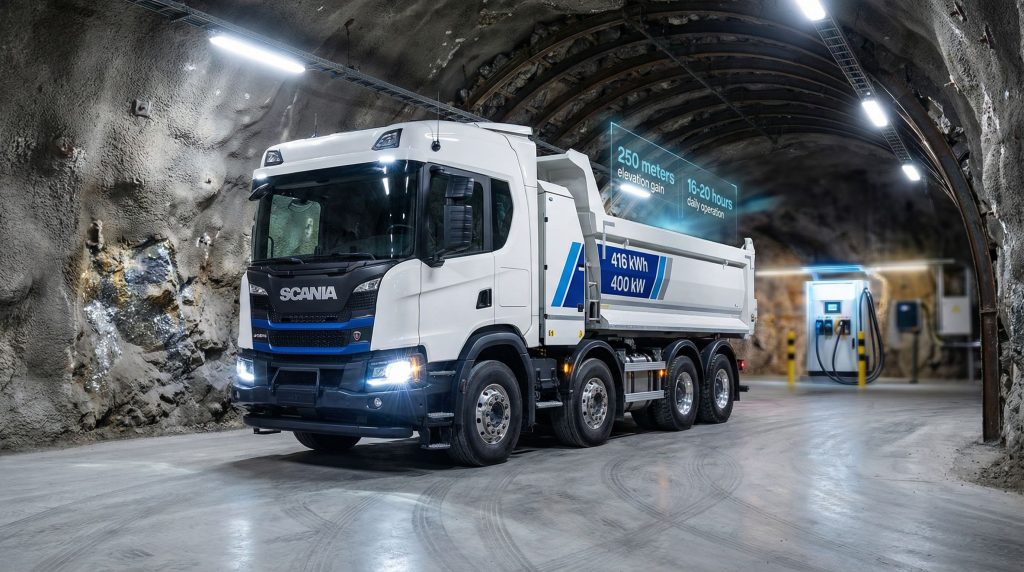
The mining industry stands at a pivotal moment where Scania mining truck electrification initiatives are transforming underground operations through advanced battery-electric powertrains. Modern mining operations face unprecedented pressures to reduce carbon emissions while maintaining productivity levels, creating demand for advanced drivetrain solutions that can handle extreme operational demands. Electric powertrains designed for 60-tonne payloads represent a significant engineering achievement, requiring sophisticated integration of battery management, thermal control, and drivetrain optimisation. Furthermore, these developments align with broader trends in electric vehicles in mining operations worldwide.
Advanced Battery Architecture for Extreme Mining Loads
The foundation of successful Scania mining truck electrification lies in sophisticated battery configurations designed specifically for heavy-duty underground operations. Modern electric mining trucks utilise dual MP20 battery pack systems delivering 416 kWh combined capacity, representing a departure from single-battery designs used in lighter commercial vehicles.
Power Density Requirements for 60-Tonne Operations
Electric mining trucks operating with 38-tonne payloads require power systems capable of matching diesel performance under extreme conditions. The 400 kW electric motor specification provides equivalent torque delivery to traditional diesel powertrains whilst eliminating exhaust emissions in confined underground spaces.
Battery thermal management becomes critical when operating in underground environments where ambient temperatures remain relatively stable but ventilation limitations restrict heat dissipation options. The dual-pack configuration distributes thermal loads across multiple battery modules, reducing hot-spot formation and extending operational life under continuous cycling conditions.
Key technical specifications for heavy-duty mining applications include:
- Energy density optimisation for weight distribution
- Rapid discharge capability during loaded climbing
- Regenerative charging during descent phases
- Temperature stability across 16-20 hour operational cycles
Drivetrain Engineering for Underground Navigation
The evolution from 6×4 to 8×4 configurations in Scania mining truck electrification projects demonstrates how wheel arrangement affects manoeuvrability in confined spaces. Twin steerable front axles improve turning radius performance, essential for navigating narrow underground access roads whilst carrying maximum payloads.
Regenerative braking systems become particularly valuable on routes with 250-metre elevation changes, where descent phases can recover significant energy for battery recharging. This energy recovery capability reduces overall power consumption and extends operational range between charging cycles. Additionally, these developments contribute to broader mining decarbonisation benefits across the industry.
When big ASX news breaks, our subscribers know first
Underground Mining's Unique Electrification Obstacles
Converting mining operations to electric powertrains presents challenges distinct from surface transportation electrification. Underground environments impose constraints that affect every aspect of electric vehicle design, from cooling systems to maintenance accessibility. These challenges require innovative solutions as described by Scania's comprehensive electrification strategy for mining operations.
Environmental Constraints in Confined Operations
Underground mining operations typically maintain stable temperatures year-round but face ventilation limitations that affect battery thermal management. Traditional cooling approaches using ambient air circulation become inadequate when operating in tunnels with restricted airflow.
The continuous operational profile of mining trucks creates sustained thermal loads on battery systems. With 16-20 hours of daily operation on demanding routes, thermal cycling stress accumulates rapidly compared to typical commercial vehicle applications.
Critical environmental factors affecting underground electric truck performance:
- Limited natural ventilation for heat dissipation
- Narrow tunnel clearances restricting vehicle dimensions
- Dust accumulation on cooling systems and electrical contacts
- Humidity variations affecting electrical component longevity
Infrastructure Integration Challenges
Installing high-power charging infrastructure in underground locations requires specialised engineering approaches. Underground electrical systems must accommodate charging loads whilst maintaining safety redundancy for continuous mining operations.
Power distribution networks in confined spaces face unique design challenges, including cable routing through active mining areas and maintaining accessibility for maintenance without disrupting operations. The placement of charging stations must balance operational convenience with safety requirements and geological stability considerations.
Operational Performance Data from Active Mining Sites
Real-world performance metrics from the Malmberget iron ore mine provide insights into how electric trucks perform under actual mining conditions. The 5-kilometre route with significant elevation changes serves as a comprehensive test environment for drivetrain performance, battery management, and operational reliability. However, these developments also highlight the importance of AI-powered mining efficiency in optimising electric vehicle operations.
Malmberget Field Testing Results
The following performance comparison demonstrates electric truck capabilities versus diesel equivalents in active mining operations:
| Performance Metric | Electric Truck | Diesel Equivalent |
|---|---|---|
| Payload Capacity | 38 tonnes | 38 tonnes |
| Route Distance | 5 kilometres | 5 kilometres |
| Elevation Gain | 250 metres | 250 metres |
| Daily Operating Hours | 16-20 hours | 16-20 hours |
| Maintenance Frequency | Extended intervals | Standard intervals |
The extended maintenance intervals for electric trucks result from reduced mechanical complexity compared to diesel powertrains. Elimination of engine oil changes, reduced brake wear from regenerative systems, and fewer moving parts contribute to lower maintenance requirements.
Battery Performance Under Continuous Loading
Continuous operation cycles place significant demands on battery management systems. The 250-metre elevation gain repeated multiple times daily creates charging and discharging patterns that test battery durability under real mining conditions.
Energy consumption patterns vary significantly based on loading conditions, with loaded uphill segments consuming maximum power whilst descent phases provide regenerative charging opportunities. This cycling pattern differs substantially from highway driving applications typically used for electric vehicle testing.
Battery state management becomes critical for maintaining operational availability throughout 16-20 hour shifts. Charging strategies must accommodate operational schedules whilst avoiding deep discharge conditions that could reduce battery lifespan. Moreover, these considerations connect directly to advances in battery recycling breakthrough technologies.
Modular Platform Approaches to Mining Customisation
Scania mining truck electrification utilises modular platform architecture enabling customisation for diverse mining applications. This approach allows configuration scaling from current 6×4 and 8×4 arrangements to projected 10×6 configurations for higher capacity requirements.
Scalable Configuration Development
The progression from single-axle to twin steerable front axle configurations demonstrates how modular platforms accommodate evolving operational requirements. Each configuration addresses specific operational challenges whilst maintaining component commonality for maintenance and parts inventory efficiency.
Battery capacity scaling represents another dimension of modular design, with current 416 kWh configurations potentially expanding to 624 kWh for extended range applications. This 50% capacity increase would enable longer haul distances or higher payload operations whilst maintaining charging infrastructure compatibility.
Configuration options for different mining applications include:
- 6×4 arrangements for standard underground operations
- 8×4 configurations for enhanced manoeuvrability requirements
- Future 10×6 designs for maximum payload applications
- Cab height variations for different tunnel clearance requirements
Fleet Management Integration Capabilities
Electric mining trucks require integration with existing fleet management systems whilst accommodating new requirements for charging coordination and battery monitoring. Operational scheduling must balance production requirements with charging availability to maintain continuous operations.
Driver training programmes address the transition from diesel to electric operation, including understanding regenerative braking systems, battery management displays, and emergency procedures specific to electric powertrains.
Economic Analysis of Electric Mining Fleet Transitions
The financial implications of converting mining fleets to electric powertrains extend beyond vehicle acquisition costs to include infrastructure investments, operational changes, and long-term maintenance considerations. Furthermore, these transitions form part of broader mining industry innovation initiatives across the sector.
Infrastructure Investment Requirements
Underground charging infrastructure installation represents a significant capital investment requiring specialised electrical engineering for mining environments. High-power charging systems must integrate with existing mine electrical systems whilst maintaining safety standards for underground operations.
"Infrastructure costs for underground charging stations typically exceed surface installations due to specialised electrical equipment, safety systems, and installation complexity in active mining environments."
Grid capacity upgrades may be necessary to support simultaneous charging of multiple electric trucks during shift changes or maintenance periods. Power demand calculations must account for peak charging loads whilst maintaining capacity for other mining operations.
Operational Cost Structure Changes
Electric truck operations eliminate fuel costs whilst introducing electricity and battery management expenses. The cost structure transformation affects budgeting approaches and operational planning for mining companies.
Maintenance cost reductions stem from simplified powertrains with fewer moving parts, reduced brake wear through regenerative systems, and elimination of engine-related service requirements. However, battery replacement costs at end-of-life represent a significant future expense requiring financial planning.
Performance Scaling Across Diverse Mining Operations
Electric truck performance characteristics vary significantly across different mining environments, from underground operations to open-pit facilities. Understanding these performance variations enables appropriate deployment strategies for different mining contexts.
Underground Versus Surface Operation Differences
Underground mining operations benefit from stable environmental conditions but face infrastructure constraints that limit charging options and maintenance accessibility. Surface operations allow more flexible charging infrastructure placement but must accommodate weather exposure and longer haul distances.
Battery range considerations become particularly important for surface operations where haul distances may exceed underground route lengths. Cold weather performance affects battery capacity and charging rates in outdoor environments, requiring thermal management strategies different from underground applications.
Operational characteristics comparison:
- Underground operations: Stable temperatures, limited ventilation, confined spaces
- Surface operations: Weather exposure, unlimited charging placement, longer distances
- Infrastructure requirements: Underground electrical complexity versus surface accessibility
- Maintenance approaches: Confined space procedures versus open-area servicing
Mining Type and Operational Intensity Variables
Different mineral types create varying operational demands affecting electric truck performance and battery consumption patterns. Iron ore mining with high-volume waste rock transport presents different challenges compared to precious metal operations with lower volume but higher value materials.
Continuous operation mining requires different charging strategies than batch operations with natural downtime periods. Load density variations affect energy consumption per ton-kilometre, influencing operational efficiency calculations and battery sizing requirements.
The next major ASX story will hit our subscribers first
Technological Advancement Drivers in Mining Electrification
The development of mining-specific electric vehicles accelerates broader technological improvements in battery density, charging systems, and drivetrain integration. Mining applications provide demanding test environments that push technology boundaries beyond typical commercial vehicle requirements.
Next-Generation Battery Technology Integration
Solid-state battery development shows promise for mining applications due to improved energy density and enhanced safety characteristics. These advanced battery technologies could significantly reduce vehicle weight whilst increasing capacity and operational range.
Fast-charging capabilities represent another critical advancement area, with potential for reducing operational downtime through rapid charging during brief operational pauses. Current charging technology requires longer periods that must be integrated into operational schedules.
Battery lifecycle management becomes increasingly important as electric mining fleets expand. Recycling programmes for end-of-life batteries provide material recovery whilst addressing environmental disposal concerns.
Autonomous System Compatibility
Electric powertrains offer enhanced compatibility with autonomous vehicle systems compared to diesel alternatives. Precise speed control, instant torque delivery, and reduced vibration contribute to improved sensor performance and automated operation capabilities.
Reduced operator exposure in hazardous underground environments represents a significant safety benefit when combining electric trucks with autonomous operation systems. This combination addresses both environmental and safety objectives simultaneously.
Measuring Electrification Implementation Success
Mining companies evaluate electric truck performance through multiple metrics encompassing operational efficiency, environmental impact, and economic performance. These measurements guide decisions about fleet expansion and technology adoption strategies. Additionally, developments in electric mining technology continue to provide valuable insights for industry-wide implementation.
Environmental Impact Assessment
The annual transport of over 5 million tonnes of waste rock at operations like Malmberget provides substantial opportunities for emissions reduction through electrification. CO₂ emissions elimination from transportation represents a significant portion of mining operations' environmental footprint.
Underground air quality improvements benefit worker health and safety by eliminating diesel exhaust emissions in confined spaces. Reduced ventilation requirements for exhaust removal can decrease overall mine energy consumption and operational costs.
Environmental benefit measurements include:
- Direct CO₂ emissions elimination from transportation
- Improved underground air quality metrics
- Reduced noise pollution for worker comfort
- Potential for renewable energy integration with charging systems
Operational Efficiency Indicators
Productivity maintenance during electric truck deployment demonstrates successful technology integration without compromising mining output. Equipment availability and reliability metrics compare electric truck performance to established diesel baselines.
Driver satisfaction and operational feedback provide qualitative insights into technology acceptance and operational effectiveness. Training effectiveness and adaptation periods influence overall implementation success.
Future Development Trajectory for Electric Mining Equipment
The evolution of Scania mining truck electrification projects indicates broader industry trends toward comprehensive fleet electrification and integration with renewable energy systems. Technology development continues addressing current limitations whilst expanding operational capabilities.
Industry Adoption Timeline Projections
LKAB's commitment to significant fleet electrification demonstrates industry confidence in electric truck technology maturation. The progression from pilot programmes to operational deployment follows typical industrial technology adoption patterns with accelerating implementation as technology proves reliable.
Integration with renewable energy sources for charging infrastructure aligns with broader mining industry sustainability objectives. Solar and wind power systems can provide clean electricity for truck charging, creating truly zero-emission transportation systems.
Future development areas include:
- Increased payload capacities through battery density improvements
- Extended operational range for larger mining operations
- Smart mining ecosystem integration with automated systems
- Renewable energy integration for sustainable charging infrastructure
Technology Roadmap Evolution
Battery technology advancement continues improving energy density whilst reducing costs, making electric trucks increasingly competitive with diesel alternatives. Charging infrastructure development enables faster charging times and improved operational integration.
The integration of electric trucks with comprehensive smart mining systems creates opportunities for optimised fleet management, predictive maintenance, and autonomous operation coordination. These technological convergences position electric trucks as components of broader mining digitalisation initiatives.
Understanding Electric Mining Truck Implementation
How do electric mining truck batteries perform during extended underground operations?
Electric mining truck batteries in underground operations utilise dual-pack configurations providing 416 kWh capacity for sustained performance during 16-20 hour operational cycles. Temperature stability in underground environments actually benefits battery performance compared to surface operations with extreme weather variations.
What maintenance advantages do electric mining trucks provide over diesel alternatives?
Electric mining trucks eliminate engine oil changes, reduce brake wear through regenerative braking systems, and require fewer scheduled maintenance interventions due to simplified powertrains with fewer moving parts. This results in extended maintenance intervals and reduced operational disruption.
Can electric mining trucks operate effectively in various weather conditions?
Underground electric mining truck operations benefit from stable environmental conditions year-round, whilst surface applications require thermal management systems designed for extreme temperature variations. Battery performance optimisation includes heating and cooling systems maintaining optimal operating temperatures.
How do charging times compare to traditional diesel refuelling procedures?
Current charging technology requires integration with operational schedules rather than quick refuelling stops typical of diesel operations. However, planned charging during shift changes or meal breaks can minimise operational disruption whilst providing sufficient energy for continued operations.
Electric Mining Trucks: Transforming Industrial Transportation
The successful deployment of electric mining trucks in demanding underground operations demonstrates the maturation of electric vehicle technology for industrial applications. Scania mining truck electrification projects provide evidence that electric powertrains can meet the rigorous demands of continuous mining operations whilst delivering environmental and operational benefits.
Strategic Implementation Considerations
Mining companies adopting electric truck technology gain competitive advantages through reduced operational costs, improved environmental compliance, and enhanced worker safety. The elimination of diesel exhaust in underground environments creates healthier working conditions whilst reducing ventilation requirements.
Technology leadership in industrial electrification positions early adopters for future regulatory requirements and operational advantages as electric truck technology continues improving. The combination of environmental benefits, operational cost reductions, and technological advancement creates compelling business cases for mining fleet electrification.
The progression from pilot programmes to operational deployment demonstrates that electric mining trucks represent practical solutions for industrial transportation rather than experimental technology, establishing the foundation for widespread adoption across the mining industry.
Want to Capitalise on Mining Technology Breakthroughs?
Discovery Alert's proprietary Discovery IQ model delivers instant notifications when ASX-listed companies announce significant mining technology partnerships or electrification breakthroughs, empowering subscribers to identify actionable opportunities before the broader market responds. Experience how major technological shifts in mining can create substantial investment returns by exploring Discovery Alert's discoveries page, then start your 30-day free trial to position yourself ahead of emerging market trends.