August 22, 2026
Understanding Scientific Rigor in Critical Materials Research
Environmental assessment methodologies within the critical minerals sector have undergone significant scrutiny following recent high-profile journal retractions. The intersection of geopolitical urgency for supply chain diversification and rigorous scientific standards presents complex challenges for researchers, investors, and policymakers navigating resource development decisions. Furthermore, nature retracts study on lithium exploration environmental impact has highlighted the importance of methodological rigor in politically sensitive research areas.
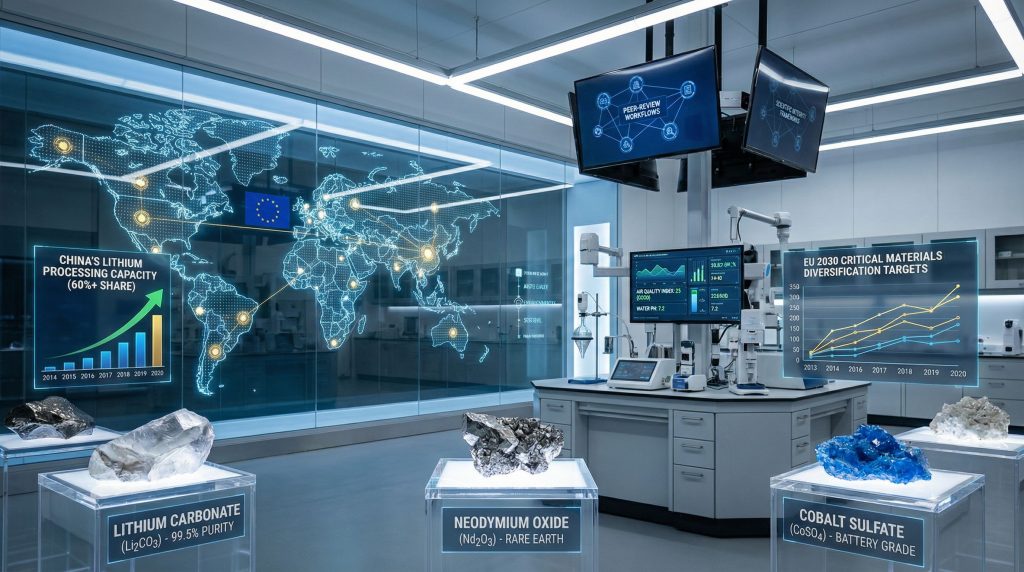
The pursuit of lithium supply chain independence has intensified following China's dominance in processing capacity, controlling over 60% of global lithium processing infrastructure. This geopolitical reality creates pressure for accelerated Western resource development while maintaining environmental protection standards that satisfy both regulatory requirements and ESG investment criteria. Additionally, mining industry trends indicate increasing emphasis on environmental accountability.
When big ASX news breaks, our subscribers know first
What Does the Recent Nature Portfolio Retraction Reveal About Environmental Research Standards?
Scientific Reports, part of the Nature Portfolio family, retracted a 2024 study on January 10, 2026, that previously claimed lithium exploration activities caused environmental contamination in Serbia's Jadar Valley. This retraction, based on methodological shortcomings rather than fraud, highlights critical gaps in environmental assessment protocols for critical minerals projects.
The nature retracts study on lithium exploration environmental impact incident represents a significant moment for scientific publishing standards. Research published in environmental impact studies demonstrates the complexity of attributing contamination sources in areas with extensive industrial history.
Methodological Requirements for Valid Environmental Impact Studies
The retracted study demonstrated several fundamental flaws in environmental assessment methodology. Independent peer review identified three critical deficiencies that render environmental impact claims scientifically indefensible:
- Absence of pre-exploration baseline data preventing establishment of causation versus correlation
- Shallow groundwater sampling providing incomplete hydrogeological assessment
- Limited sampling density insufficient for achieving statistical significance thresholds
Proper environmental impact studies require minimum two-year seasonal baseline data collection to capture hydrological variations and establish temporal trends. This extended timeframe allows researchers to distinguish natural geochemical fluctuations from anthropogenic influences, particularly critical in regions with complex geological formations like the Jadar basin.
Statistical significance thresholds for environmental contamination claims demand spatial sampling densities that capture representative conditions across affected watersheds. The Serbia study's sampling approach failed to meet these standards, undermining the validity of causal linkages between exploration activities and observed contamination levels.
Peer Review Evolution in High-Stakes Resource Development
Post-publication review mechanisms have gained prominence in contentious research areas where scientific findings influence regulatory and investment decisions. The Serbia case exemplifies how independent technical validation serves as essential quality control for politically sensitive environmental studies.
Editorial decision-making frameworks at major journals increasingly incorporate geopolitical sensitivity assessments when evaluating environmental research. The Nature Portfolio editors' determination that underlying measurements were technically sound but interpretively overstated reflects evolving standards for causal language in high-stakes resource development contexts.
Post-publication peer review identified that limited sampling density and shallow groundwater data were insufficient to establish causation between exploration activities and observed contamination levels.
How Do Legacy Mining Activities Complicate Modern Environmental Assessments?
Historical mining activities create attribution complexity that challenges modern environmental assessment methodologies. The Jadar Valley case demonstrates how legacy contamination sources can confound attempts to establish causation for recent exploration activities.
In contrast, projects implementing mine reclamation innovations demonstrate improved environmental stewardship standards. However, the complexity of historical contamination requires sophisticated analytical approaches.
Historical Contamination Sources in Mining Regions
The 2014 Stolice mine tailings spill released arsenic-contaminated waste into the same watershed system later targeted for lithium exploration. This historical incident exemplifies how legacy mining activities create long-term environmental impacts that persist and redistribute through natural hydrological processes.
| Contamination Source | Timeline | Impact Duration | Detection Challenges |
|---|---|---|---|
| Tailings spills | Immediate | 10-50 years | Flood redistribution |
| Natural geochemistry | Geological | Permanent | Baseline establishment |
| Exploration drilling | 1-5 years | Variable | Attribution complexity |
Flood redistribution represents a particularly challenging detection problem in regions with seasonal hydrological variations. Legacy tailings materials can be remobilized during precipitation events, creating contamination patterns that superficially appear linked to contemporaneous activities rather than historical sources.
Distinguishing Natural vs. Anthropogenic Contamination
Geochemical fingerprinting techniques provide essential tools for source identification in complex contamination scenarios. The Jadar basin contains naturally elevated boron and lithium concentrations due to geological formation characteristics, requiring sophisticated analytical approaches to distinguish natural occurrence from anthropogenic sources.
Isotopic analysis examines isotopic ratios that vary between natural geological sources and anthropogenic processing activities. This methodology enables researchers to differentiate between naturally occurring elements and those introduced through mining or exploration processes.
Trace element patterns create characteristic signatures for specific contamination sources. Historical mining waste exhibits distinct elemental compositions that differ from both natural geological backgrounds and recent exploration-related contamination.
Hydrogeological modeling for contaminant pathway analysis maps groundwater flow directions and velocities to predict contamination distribution patterns. These models incorporate seasonal variations and extreme precipitation events that influence contaminant transport mechanisms.
Why Are Environmental Baselines Critical for ESG Investment Decisions?
Environmental, Social, and Governance investment frameworks increasingly depend on scientifically defensible environmental impact assessments. Institutional investors utilise baseline data quality as a primary risk assessment criterion for critical minerals projects.
The nature retracts study on lithium exploration environmental impact case demonstrates why investors must evaluate environmental claims carefully. Studies on lithium mining environmental implications highlight the complexity of environmental assessment in critical minerals development.
Regulatory Framework Requirements Across Jurisdictions
The EU Critical Raw Materials Act establishes mandatory baseline environmental data collection as a prerequisite for permitting critical minerals projects within European Union territory. This legislation represents a significant shift toward science-based regulatory approval processes.
US NEPA requirements under the National Environmental Policy Act mandate comprehensive environmental impact assessments for mineral development on federal lands. Federal agencies must establish pre-development environmental conditions as regulatory baselines for impact evaluation.
International Finance Corporation Performance Standards require Environmental and Social Baseline Assessments before project development. These standards influence global project financing availability through major development financial institutions.
Moreover, mining permitting processes have evolved to incorporate more rigorous environmental evaluation criteria.
Investment Risk Mitigation Through Scientific Due Diligence
Third-party environmental validation protocols have become standard practice in mining merger and acquisition transactions. ESG rating agencies incorporate baseline data quality into project evaluation methodologies, directly influencing capital allocation decisions.
Insurance implications of contested environmental studies create significant financial risks for project developers. Environmental liability insurers require documented baseline data to establish pollution exclusion coverage boundaries, as absent baseline documentation creates unlimited liability exposure.
Stakeholder engagement strategies for scientific transparency help mitigate reputational risks associated with environmental controversies. Projects with robust baseline documentation demonstrate commitment to environmental stewardship and regulatory compliance.
What Role Does Scientific Integrity Play in Resource Geopolitics?
Scientific credibility functions as a legitimising framework for resource development in democratic societies. High-quality environmental research supports regulatory approval certainty, while contested studies enable project delays that can serve competing geopolitical interests.
Critical Minerals Supply Chain Security Considerations
Western lithium supply independence represents a strategic objective for both the United States and European Union. Domestic resource development requires social licence that depends partly on environmental assessment credibility and public trust in scientific institutions.
China's 60%+ global market share in lithium processing capacity creates strategic vulnerability for Western economies pursuing electric vehicle deployment and renewable energy infrastructure. This geopolitical asymmetry drives regulatory acceleration pressures that can compromise environmental assessment thoroughness.
European Union's 2030 critical materials diversification targets establish aggressive timelines for supply chain localisation. These policy objectives create tension between accelerated permitting frameworks and environmental protection safeguards.
Balancing Environmental Protection with Strategic Resource Development
Accelerated permitting frameworks risk undermining environmental safeguards if baseline data collection requirements are compressed to meet geopolitical timelines. The nature retracts study on lithium exploration environmental impact case demonstrates how inadequate baseline establishment can subsequently undermine project legitimacy and regulatory approval certainty.
Public acceptance challenges in democratic resource governance depend heavily on scientific credibility and environmental assessment quality. Communities require confidence that environmental impacts are properly understood and mitigated before accepting resource development projects.
Scientific communication strategies for complex technical issues must balance accessibility with technical accuracy. Environmental research findings require careful interpretation to avoid overstated causal claims that subsequently face scientific scrutiny and potential retraction.
How Should Investors Evaluate Environmental Claims in Mining Projects?
Due diligence frameworks for environmental risk assessment must incorporate scientific credibility evaluation alongside traditional technical and financial analysis. The Serbia retraction case provides instructive lessons for investment risk mitigation strategies.
Modern approaches increasingly incorporate AI in mining operations for environmental monitoring and risk assessment.
Due Diligence Framework for Environmental Risk Assessment
Multi-source environmental data verification requirements help investors avoid reliance on single studies that may contain methodological flaws. Independent peer review and replication of key findings provide additional validation layers for environmental impact claims.
Temporal baseline establishment protocols require minimum two-year pre-development monitoring to capture seasonal variations and hydrological cycles. Projects lacking adequate baseline data face elevated regulatory and reputational risks.
Third-party validation of environmental impact assessments through qualified independent consultants provides objective evaluation of study quality and methodological rigour. This approach helps investors identify potential scientific controversies before they impact project timelines or regulatory approval.
Red Flags in Environmental Research Quality
Several indicators suggest potential methodological weaknesses in environmental studies that warrant additional scrutiny:
- Absence of pre-activity baseline measurements prevents establishment of causation
- Insufficient sampling density reduces statistical power and generalisability
- Failure to account for historical contamination sources creates attribution errors
- Overstated causal language without supporting statistical evidence indicates interpretive bias
Compliance with international environmental assessment standards provides baseline quality assurance. Projects meeting IFC Performance Standards, US NEPA requirements, or EU Critical Raw Materials Act standards demonstrate commitment to scientific rigour.
The next major ASX story will hit our subscribers first
What Are the Broader Implications for Critical Minerals Development?
The Nature Portfolio retraction signals evolving expectations for environmental research quality in critical minerals development. This incident will likely influence future regulatory standards and investment evaluation criteria.
Furthermore, mining sustainability transformation efforts increasingly emphasise scientific rigour in environmental assessment.
Scientific Standards Evolution in Resource Assessment
Enhanced peer review protocols for politically sensitive research may become standard practice for environmental studies in critical minerals development. Post-publication review mechanisms provide additional quality control layers for high-stakes research areas.
Integration of multiple data sources for comprehensive environmental evaluation reduces reliance on individual studies that may contain methodological limitations. Regulatory agencies increasingly require corroborating evidence from independent research groups.
Standardised methodologies for exploration impact assessment would help ensure consistency and comparability across projects and jurisdictions. Industry-wide protocols could reduce methodological disputes and improve scientific credibility.
Future Research Directions for Environmental Impact Studies
Real-time monitoring technologies enable continuous environmental assessment rather than periodic sampling approaches. These systems provide higher temporal resolution data that improves causal attribution capabilities.
Machine learning applications for contamination source identification could automate geochemical fingerprinting processes and improve accuracy of source attribution in complex contamination scenarios.
Blockchain-based data integrity systems for environmental monitoring would provide tamper-proof records of environmental data collection and analysis, enhancing scientific credibility and regulatory confidence.
Frequently Asked Questions About Environmental Research in Mining
Investment and regulatory communities require clarity on environmental assessment standards following high-profile retractions and methodological controversies.
How Long Should Baseline Data Collection Occur Before Exploration?
Environmental assessment best practices recommend minimum two-year seasonal variation capture to establish representative baseline conditions. This timeframe enables characterisation of:
- Hydrological cycle completion for groundwater assessment
- Seasonal biological variations affecting ecosystem baseline establishment
- Multiple sampling points across watershed systems for spatial representation
Extended baseline periods provide stronger statistical foundations for subsequent impact attribution and reduce scientific controversy risks.
What Makes Environmental Research Legally Defensible?
Legally defensible environmental research requires several key characteristics:
- Peer-reviewed publication in recognised scientific journals with rigorous review processes
- Independent replication of key findings by unaffiliated research groups
- Compliance with international environmental assessment standards including IFC Performance Standards and applicable national regulations
Methodological transparency and data availability for independent verification strengthen legal defensibility and reduce litigation risks associated with environmental claims.
Disclaimer: This analysis is for educational purposes and does not constitute investment advice. Environmental assessment standards and regulatory requirements vary by jurisdiction and continue evolving. Investors should conduct independent due diligence and consult qualified professionals before making investment decisions related to critical minerals projects.
Ready to Identify the Next Major Critical Materials Discovery?
Discovery Alert's proprietary Discovery IQ model delivers real-time notifications on significant ASX mineral discoveries, transforming complex geological announcements into actionable investment insights for both seasoned investors and newcomers. Visit Discovery Alert's discoveries page to explore how historic mineral discoveries have generated substantial returns, and begin your 30-day free trial today to position yourself ahead of market movements in the critical materials sector.