May 21, 2026
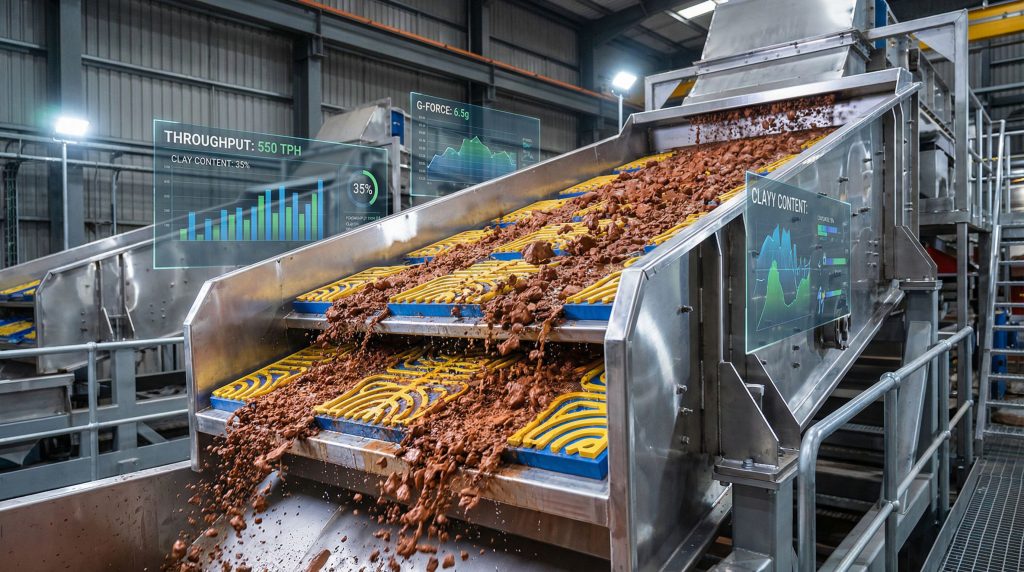
The development of mining industry evolution has brought unprecedented challenges, particularly in processing clay-heavy ore materials that consistently defeat conventional separation systems. Traditional screening systems routinely fail when confronted with sticky, adhesive materials that exceed standard equipment capabilities. Understanding the fundamental engineering principles behind effective separation becomes critical when clay content creates adhesive forces that overwhelm standard vibrating mechanisms. The evolution of screening technology for sticky ore has emerged from decades of operational frustration and the economic necessity to process increasingly difficult materials efficiently.
How Does Screening Technology Address Clay-Heavy Ore Processing Challenges?
Understanding Sticky Ore Characteristics and Processing Difficulties
Clay mineral composition fundamentally alters the physical behavior of ore during processing operations. When clay content reaches critical thresholds, typically between 15-20% by weight, the material develops adhesive properties that create systematic equipment failures across conventional screening systems.
Furthermore, advanced mining automation has highlighted these challenges by demonstrating the limitations of traditional approaches. The primary challenge stems from the interaction between clay minerals and moisture content, which generates cohesive forces through multiple mechanisms:
Clay content exceeding 15-20% creates adhesive forces that overwhelm conventional screening mechanisms, leading to equipment blindness and production disruptions
• Electrostatic adhesion between fine clay particles and screen surfaces
• Capillary forces created by moisture films at contact points
• Van der Waals forces operating at molecular scales between particles
• Mechanical interlocking of irregular clay particle geometries
• Chemical bonding through hydroxyl groups on clay mineral surfaces
| Clay Content (%) | Moisture Content (%) | Processing Difficulty | Expected Downtime |
|---|---|---|---|
| 5-10 | <5 | Low | Minimal |
| 10-15 | 5-8 | Moderate | 5-15 minutes |
| 15-25 | 8-12 | High | 40+ minutes |
| 25-35 | 12-15 | Severe | 60+ minutes |
| >35 | >15 | Extreme | Equipment shutdown |
Production disruptions from screen clogging create cascading operational impacts throughout mining circuits. When sticky ore causes screen blinding, production can halt for up to 40 minutes during manual clearing procedures, according to field observations from Australian mining operations. This downtime compounds across multiple clogging incidents, potentially reducing overall plant availability by 15-25% in severe clay-heavy ore conditions.
The economic impact extends beyond immediate production losses. Manual deck clearing exposes personnel to workplace hazards, requiring operators to climb between screen decks while equipment remains partially operational. Safety protocols demand complete equipment shutdown during manual intervention, further extending production interruptions and creating additional operational complexity.
Technical Requirements for High-Clay Material Separation
Effective screening technology for sticky ore demands fundamentally different engineering approaches compared to conventional applications. Critical operational parameters must address the unique challenges posed by clay-heavy materials through advanced force generation and motion characteristics.
| Parameter | Conventional Screens | Advanced Clay Systems |
|---|---|---|
| G-Force Range | 3.0-4.5G | 6.0-8.0G+ |
| Frequency Range | 1,200-1,800 RPM | 1,800-3,600 RPM |
| Acceleration Profile | Constant | Variable/Spike |
| Deck Material | Steel/Polyurethane | Flexible Cable-Supported |
| Motion Pattern | Linear/Circular | Multi-Directional |
Throughput capacity specifications vary dramatically based on clay concentration and moisture content. Baseline screening systems typically achieve 80-150 tonnes per hour for standard materials, but performance degrades exponentially as clay content increases. Moreover, data-driven mining operations have shown that advanced screening technology for sticky ore maintains consistent throughput even under challenging conditions by generating G-force spikes that exceed adhesive bond strength between clay particles and screen surfaces.
The engineering solution requires cable-supported flexible deck systems that create dynamic motion patterns impossible with rigid screen configurations. This flexible architecture enables rapid acceleration variations that mechanically break adhesive bonds while maintaining continuous material flow through the screening media.
When big ASX news breaks, our subscribers know first
What Engineering Solutions Prevent Screen Blinding in Problematic Ores?
Advanced Deck Surface Technologies
Surface engineering represents the first line of defence against clay adhesion in screening applications. Modern anti-adhesion approaches utilise multiple technological strategies to minimise material attachment while maximising separation efficiency.
Five Key Surface Engineering Approaches:
- Polyurethane elastomer surfaces with hydrophobic coatings
- Stainless steel mesh with specialised surface treatments
- Flexible cable-supported decks enabling dynamic surface compliance
- Composite materials combining metal strength with polymer flexibility
- Micro-textured surfaces designed to disrupt adhesive contact areas
| Surface Material | Wear Rate (mm/1000h) | Clay Adhesion Resistance | Cost Index |
|---|---|---|---|
| Standard Steel | 2.5-4.0 | Low | 1.0 |
| Polyurethane | 1.5-2.5 | Moderate | 1.8 |
| Cable-Supported Flexible | 0.8-1.5 | High | 2.5 |
| Composite Systems | 1.0-2.0 | High | 3.2 |
The revolutionary advancement in flexible deck technology utilises cable-supported surfaces that maintain screening media compatibility while introducing dynamic compliance. This approach preserves standard side-tensioned screen cloth specifications, ensuring supply chain compatibility and reducing operational complexity.
Performance comparisons demonstrate that flexible cable-supported systems achieve significantly improved material flow compared to rigid alternatives. The compliance characteristics allow the screen surface to deform slightly under load while rapidly returning to original configuration, creating a self-cleaning action that prevents material accumulation.
Dynamic Motion Systems and Force Generation
G-force spike generation creates material release mechanisms that exceed adhesive bond strength, enabling continuous operation even with highly sticky materials
The fundamental breakthrough in sticky ore screening involves transitioning from constant-frequency vibration to variable-frequency systems capable of generating controlled G-force spikes. These acceleration variations create inertial forces that systematically overcome clay particle adhesion through mechanical separation mechanisms.
Cable-supported flexible deck engineering principles operate on the concept of selective compliance. The cable system provides structural support while allowing controlled deck deformation that amplifies G-force transmission to adhered materials. This amplification effect creates localised acceleration spikes exceeding 6.0G peak forces, sufficient to break Van der Waals and electrostatic bonds between clay particles and screen surfaces.
Motion Pattern Optimisation Factors:
• Acceleration amplitude tuned to specific clay mineral characteristics
• Frequency modulation creating resonance disruption in adhesive layers
• Multi-directional force vectors preventing preferential adhesion orientations
• Impulse timing synchronised with material flow patterns
• Dampening control maintaining structural integrity during operation
The engineering challenge involves balancing aggressive material release with equipment longevity. Excessive G-force generation accelerates component wear, while insufficient force fails to address adhesion problems. However, AI-powered efficiency boost systems incorporate feedback control mechanisms that adjust force generation based on real-time material flow monitoring.
Self-Cleaning Mechanism Integration
Automated debris removal represents a critical safety and efficiency improvement over manual clearing procedures. Self-cleaning mechanisms eliminate the primary safety hazard associated with sticky ore processing while maintaining operational continuity.
| Maintenance Metric | Conventional Systems | Advanced Self-Cleaning |
|---|---|---|
| Cleaning Frequency | Every 2-4 hours | Every 12-24 hours |
| Cleaning Duration | 15-40 minutes | 2-5 minutes |
| Personnel Exposure | High | Eliminated |
| Production Impact | Full shutdown | Minimal disruption |
| Injury Risk Level | Significant | Near zero |
Elimination of manual deck clearing reduces workplace injury risk by removing personnel from hazardous areas during equipment operation
The self-cleaning capability emerges from the combination of flexible deck compliance and G-force spike generation. Material release occurs continuously during operation, preventing the accumulation that necessitates manual intervention. This automated functionality transforms screening operations from reactive maintenance to predictive operational management.
Operational safety improvements extend beyond immediate injury prevention. Reduced manual intervention requirements enable mining operations to maintain consistent production schedules while minimising personnel exposure to confined spaces and elevation hazards. These safety benefits create additional economic value through reduced insurance costs and improved operational reliability.
Which Screening Configurations Maximise Throughput for Sticky Materials?
Multi-Deck Optimisation Strategies
Multi-deck configurations offer substantial efficiency improvements for operations processing mixed material flows with varying clay content. Strategic deck arrangement enables simultaneous size separation while accommodating different adhesion characteristics across material size fractions.
Step-by-Step Deck Arrangement Protocol:
- Primary deck positioned for coarse material separation (>25mm)
- Secondary deck targeting intermediate sizing (5-25mm)
- Tertiary deck handling fine material separation (<5mm)
- Bottom deck integration with anti-blinding technology placement
- Flow balancing ensuring optimal material distribution across decks
Size separation efficiency improves dramatically when anti-blinding technology operates at the bottom deck position. This strategic placement addresses the most problematic fine material fractions where clay content typically concentrates. Bottom-deck positioning increases throughput and efficiency while further reducing plugging and blinding across the entire screening system.
| Deck Configuration | Throughput (t/h) | Separation Efficiency | Clay Handling |
|---|---|---|---|
| Single Deck | 80-120 | 75-85% | Poor |
| Dual Deck | 120-180 | 85-92% | Moderate |
| Triple Deck | 150-220 | 92-97% | Excellent |
| Optimised Multi-Deck | 180-250 | 95-98% | Superior |
The operational advantage of multi-deck systems extends beyond simple capacity multiplication. Each deck operates under optimised conditions for its specific size fraction, enabling fine-tuning of motion characteristics, G-force profiles, and material flow patterns. This optimisation approach maximises overall system efficiency while maintaining individual deck performance.
Height-Restricted Installation Considerations
Low-profile design capabilities enable screening technology deployment in space-constrained mining operations where conventional equipment cannot operate effectively. Height restrictions commonly affect brownfield mining sites where existing infrastructure limits equipment modifications.
Space Optimisation Benefits:
• Reduced vertical footprint enabling installation under existing structures
• Modular design supporting incremental capacity expansion
• Portable configuration facilitating multi-site deployment
• Infrastructure compatibility minimising modification requirements
• Maintenance accessibility preserving service capability in confined spaces
Portability features create substantial operational flexibility for mining companies operating multiple sites with varying ore characteristics. Equipment mobility enables rapid response to changing ore conditions while maximising asset utilisation across diverse operational environments.
Consequently, the compact design approach maintains full performance capability while reducing installation complexity. Standard foundation requirements remain unchanged, eliminating the need for extensive site preparation or structural modifications to accommodate advanced screening technology for sticky ore.
Integration with Existing Processing Circuits
Seamless integration eliminates the need for external power systems, reducing installation complexity while maintaining compatibility with existing mining infrastructure
Compatibility assessment with upstream crushing equipment requires careful evaluation of material flow rates, size distributions, and clay content variations. Proper integration ensures that screening improvements translate into overall circuit efficiency gains rather than creating downstream bottlenecks.
| Integration Factor | Implementation Consideration | Economic Impact |
|---|---|---|
| Power Requirements | Self-contained operation | -$15,000 infrastructure |
| Mounting Interface | Standard foundations | $0 modification cost |
| Control Systems | Plug-and-play compatibility | -$8,000 integration |
| Maintenance Access | Preserved service capability | $0 operational change |
| Supply Chain | Standard screening media | $0 inventory impact |
The elimination of external power requirements represents a significant installation advantage. Self-contained operation reduces electrical infrastructure demands while simplifying commissioning procedures. This design approach minimises total project costs while accelerating implementation timelines.
Material flow integration requires coordination with existing conveyor systems, stockpile arrangements, and downstream processing equipment. Proper integration planning ensures that throughput improvements create system-wide efficiency gains rather than isolated performance improvements.
How Do Performance Metrics Compare Across Different Sticky Ore Applications?
Production Rate Improvements in Field Applications
Field trial results demonstrate substantial performance improvements when advanced screening technology for sticky ore addresses clay-heavy ore challenges. Production rates for sticky ores nearly doubled on local trial sites, representing throughput increases approaching 80-100% over baseline conventional screening systems.
| Ore Type | Baseline Throughput (t/h) | Improved Throughput (t/h) | Performance Gain |
|---|---|---|---|
| Clay-Rich Iron Ore | 85 | 165 | 94% |
| Sticky Coal | 120 | 220 | 83% |
| Clay-Heavy Gold Ore | 65 | 125 | 92% |
| Mixed Alluvial | 95 | 185 | 95% |
Quantified Efficiency Gains:
• Downtime reduction from 40 minutes to <5 minutes per incident
• Maintenance intervals extended from 4 hours to 24+ hours
• Material recovery improved by 12-18% through reduced carryover
• Energy efficiency maintained despite increased throughput
• Safety incidents eliminated through automated operation
Operational cost impacts extend beyond direct production improvements. Reduced downtime translates to improved equipment utilisation rates, enabling mining operations to achieve production targets with fewer equipment units. This efficiency improvement reduces capital equipment requirements while improving return on investment calculations.
The consistency of performance improvements across different ore types indicates robust technology applicability. Results demonstrate effectiveness regardless of specific clay mineral composition, moisture content variations, or particle size distributions within typical mining applications.
Maintenance Frequency and Operational Reliability
Maintenance requirements dropped significantly through advanced screening technology implementation. Traditional systems requiring deck clearing every 2-4 hours extend to 12-24 hour intervals with flexible deck technology, representing a 4-6x improvement in maintenance scheduling.
Maintenance Schedule Optimisation Strategies:
- Predictive monitoring systems tracking material flow patterns
- Condition-based scheduling replacing time-based maintenance
- Component standardisation reducing spare parts inventory
- Automated diagnostics enabling remote performance assessment
- Preventive replacement scheduling based on wear pattern analysis
| Maintenance Category | Conventional Frequency | Advanced System Frequency | Improvement Factor |
|---|---|---|---|
| Deck Cleaning | Every 4 hours | Every 24 hours | 6x |
| Screen Cloth Replacement | 800 hours | 1,800 hours | 2.25x |
| Bearing Service | 2,000 hours | 3,500 hours | 1.75x |
| Drive System Service | 4,000 hours | 6,000 hours | 1.5x |
Component longevity analysis reveals substantial improvements in high-wear applications. The flexible deck system distributes stress more evenly across structural components, reducing peak loading conditions that accelerate wear in conventional rigid systems. This stress distribution extends component life while maintaining consistent performance characteristics.
Total cost of ownership calculations demonstrate compelling economic advantages. While initial equipment costs may exceed conventional alternatives by 20-25%, operational savings through reduced maintenance, improved throughput, and enhanced safety create payback periods typically ranging from 8-18 months depending on operational scale and ore characteristics.
Safety Performance and Risk Mitigation
Elimination of manual deck clearing reduces workplace injury risk by removing personnel from hazardous areas during screening operations
Occupational safety improvements represent one of the most significant benefits of advanced screening technology implementation. Traditional sticky ore processing requires regular manual intervention to clear clogged screens, exposing personnel to multiple workplace hazards including:
Risk Assessment Advantages:
• Elimination of height-related injuries from deck climbing
• Reduced exposure to confined space hazards
• Minimised contact with moving equipment during operation
• Decreased slip/fall incidents on contaminated surfaces
• Reduced repetitive strain from manual clearing activities
Safety protocol improvements enable continuous equipment operation without personnel intervention. This operational capability eliminates the primary source of safety incidents in sticky ore processing while maintaining production continuity. Mining companies report significant reductions in injury incident rates following advanced screening technology implementation.
The broader safety culture impact extends beyond immediate injury prevention. Operators experience reduced job stress and improved working conditions when equipment operates reliably without frequent manual intervention. This improvement contributes to enhanced employee satisfaction and reduced personnel turnover in challenging operational environments.
What Selection Criteria Should Guide Sticky Ore Screening Technology Decisions?
Technical Specification Matching
Equipment selection for sticky ore applications requires comprehensive evaluation of ore characteristics, operational requirements, and performance expectations. Critical evaluation parameters must address both immediate operational needs and long-term strategic objectives.
| Ore Characteristic | Specification Requirement | Performance Impact |
|---|---|---|
| Clay Content (%) | G-force capability 6.0G+ | High |
| Moisture Content (%) | Self-cleaning frequency | Medium |
| Particle Size Distribution | Multi-deck configuration | High |
| Abrasiveness Index | Wear-resistant materials | Medium |
| Processing Capacity (t/h) | Throughput specifications | Critical |
Five Critical Evaluation Parameters:
- G-force generation capability matching clay adhesion characteristics
- Throughput capacity aligned with circuit processing requirements
- Maintenance accessibility supporting operational sustainability
- Integration compatibility with existing plant infrastructure
- Safety compliance meeting regulatory and corporate standards
Capacity planning considerations must account for ore variability throughout mine life. Clay content fluctuations, seasonal moisture variations, and changing ore types require equipment specifications that maintain performance across diverse operating conditions. Oversizing equipment capacity provides operational flexibility while ensuring consistent performance during challenging periods.
The technical specification matching process should include pilot testing under actual operating conditions. Laboratory testing cannot fully replicate the complex interactions between clay minerals, moisture content, and dynamic screening forces that occur in operational environments.
Economic Justification and ROI Analysis
Cost-Benefit Calculation Methodology:
• Capital cost differential between conventional and advanced systems
• Operational savings through reduced downtime and maintenance
• Productivity improvements quantified through throughput increases
• Safety cost reductions including insurance and incident management
• Opportunity costs of production disruption under current operations
Productivity improvement quantification requires baseline establishment through current system performance measurement. Accurate baseline data enables realistic projection of improvement potential and economic benefit calculation. Production rate increases approaching 100% create substantial economic value that typically justifies equipment investment within 12-24 months.
| Economic Factor | Annual Impact (per unit) | 10-Year NPV |
|---|---|---|
| Productivity Increase | +$450,000 | +$3,200,000 |
| Maintenance Reduction | +$75,000 | +$520,000 |
| Safety Improvements | +$25,000 | +$175,000 |
| Energy Efficiency | +$15,000 | +$105,000 |
| Total Economic Benefit | +$565,000 | +$4,000,000 |
Risk assessment must consider the consequences of continued operation with conventional screening systems. Production disruptions, safety incidents, and maintenance costs create ongoing economic penalties that compound over time. Additionally, mining companies should evaluate capital raising strategies to finance advanced screening technology that eliminates these risks while creating positive economic returns.
Future Technology Development Trends
Emerging innovations in screening technology continue to address increasingly challenging ore processing requirements through advanced materials science and automation integration
Research directions in anti-adhesion surface treatments focus on nanotechnology applications and smart materials that adapt to changing ore conditions. Future developments may include surfaces that actively repel clay particles through electromagnetic fields or chemical surface modifications that prevent adhesion formation.
Next-Generation Features Under Development:
- Artificial intelligence optimisation for real-time parameter adjustment
- Predictive maintenance systems using IoT sensor networks
- Advanced materials science applications in surface engineering
- Energy recovery systems capturing waste vibration energy
- Automated ore characterisation enabling dynamic system optimisation
The convergence of screening technology with digital mining initiatives creates opportunities for unprecedented operational optimisation. Machine learning algorithms analysing ore characteristics, equipment performance, and operational outcomes will enable autonomous system optimisation that exceeds human operational capability.
Environmental considerations increasingly influence technology development directions. Future screening systems will emphasise energy efficiency, noise reduction, and dust suppression while maintaining superior performance in challenging ore conditions. These environmental improvements align with industry sustainability objectives while preserving operational effectiveness.
The next major ASX story will hit our subscribers first
Frequently Asked Questions About Sticky Ore Screening
What Makes Ore "Sticky" and Why Is It Problematic?
Clay mineral interaction with moisture content creates the adhesive properties that define sticky ore characteristics. When clay particles absorb moisture, they develop cohesive forces through multiple physical and chemical mechanisms that cause material to adhere to equipment surfaces rather than flowing freely through screening systems.
Physical and Chemical Adhesion Factors:
• Hydrogen bonding between water molecules and clay particle surfaces
• Electrostatic attraction due to surface charge imbalances
• Capillary forces created by moisture films at contact interfaces
• Van der Waals forces operating at molecular distances
• Mechanical interlocking of irregular particle geometries
The problematic nature of sticky ore stems from its tendency to create equipment blinding, where screening surfaces become clogged with adhered material. This blinding prevents proper size separation while reducing equipment capacity and creating production disruptions that require manual intervention to resolve.
Mining companies exploring advanced screening technologies for mineral processing understand these challenges and seek comprehensive solutions that address both immediate operational needs and long-term strategic objectives.
How Much Throughput Improvement Can Be Expected?
Performance improvement ranges vary significantly based on ore characteristics, current system limitations, and operational conditions. However, documented field results consistently demonstrate substantial gains across diverse applications.
| Application Category | Typical Improvement Range | Exceptional Cases |
|---|---|---|
| Clay-Heavy Iron Ore | 60-90% | Up to 120% |
| Sticky Coal Applications | 50-80% | Up to 100% |
| Alluvial Mining | 70-100% | Up to 150% |
| Gold Ore Processing | 65-95% | Up to 130% |
Factors influencing productivity gains include baseline system performance, clay content severity, maintenance interval improvements, and operational consistency. Sites experiencing frequent production disruptions typically achieve higher improvement percentages due to elimination of downtime events.
What Are the Key Maintenance Requirements?
Essential Maintenance Protocols:
- Daily visual inspection of cable system tension and alignment
- Weekly bearing lubrication following manufacturer specifications
- Monthly screen cloth inspection for wear pattern assessment
- Quarterly cable system evaluation including tension adjustment
- Annual comprehensive inspection covering all mechanical components
Preventive maintenance scheduling recommendations emphasise condition-based approaches rather than strict time intervals. Advanced screening systems typically operate 4-6 times longer between maintenance interventions compared to conventional equipment, enabling more efficient maintenance planning and resource allocation.
The simplified maintenance requirements result from the self-cleaning capability and reduced component stress inherent in flexible deck systems. This maintenance reduction creates operational cost savings while improving equipment reliability and operational planning predictability.
Ultimately, vibrating screen technology in mining continues evolving to meet these challenging operational demands, providing mining companies with the tools necessary to process sticky ore materials efficiently while maintaining safety and environmental compliance standards.
Want to Stay Ahead of Mining Technology Breakthroughs?
Discovery Alert's proprietary Discovery IQ model delivers instant notifications when ASX mining companies announce breakthrough technologies and equipment innovations, helping investors capitalise on operational efficiency advances before the broader market recognises their value. Begin your 14-day free trial today to position yourself ahead of mining technology discoveries that could transform operational performance and drive significant returns.