June 22, 2026
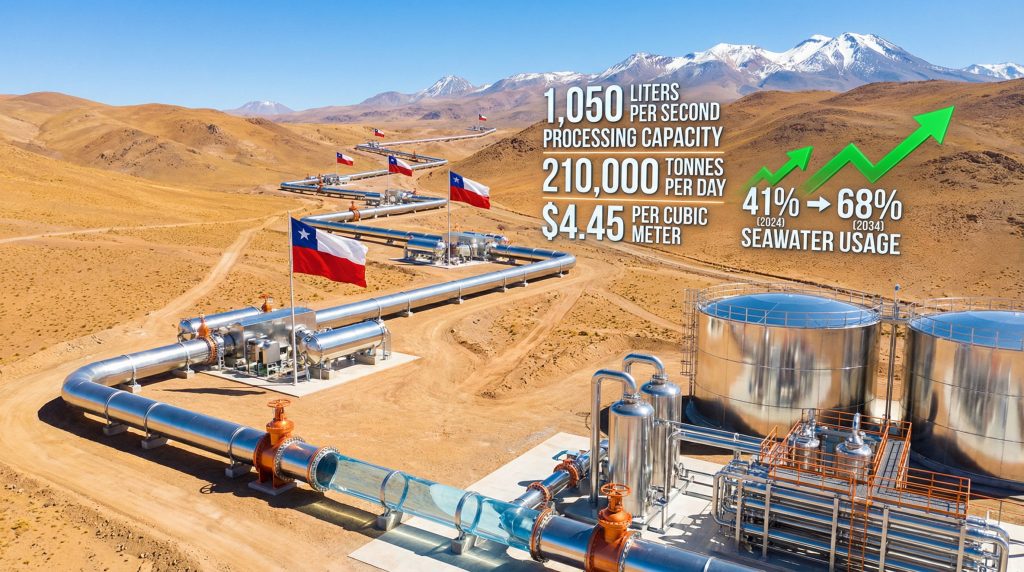
The engineering challenges of extreme elevation water transport have reached new heights with sophisticated infrastructure solutions that address water security in the world's most demanding mining environments. Furthermore, the seawater pumping system for Chile's Collahuasi mine exemplifies how advanced engineering solutions tackle the complex requirements of high-altitude water delivery. In addition, these systems demonstrate how innovation trends continue to reshape modern mining operations across challenging terrains.
Engineering Challenges of Extreme Elevation Water Transport
The seawater pumping system for Chile's Collahuasi mine demonstrates how advanced engineering solutions address the unique challenges of high-altitude water transport. Moving water from sea level to elevations exceeding 4,400 meters requires precise pressure management across multiple elevation zones. Consequently, each stage demands specific technical specifications to maintain system integrity throughout the transport network.
Technical Requirements for Multi-Stage Pumping Operations
High-altitude water transport systems must overcome significant hydrostatic pressure challenges through carefully engineered pump station configurations. The Collahuasi infrastructure employs a five-station pumping configuration designed to manage pressure differentials across the 4,400-meter elevation gain. Moreover, each station is positioned at calculated intervals to optimise energy efficiency and system reliability.
The 194-kilometre pipeline utilises 44-inch diameter specifications to maintain adequate flow rates while minimising pressure losses over the extended distance. This diameter selection represents a balance between construction costs and operational efficiency. Furthermore, it ensures sufficient water delivery capacity while managing the substantial infrastructure investment required for such extensive pipeline networks.
Energy consumption calculations for extreme elevation pumping systems typically account for both the gravitational work required to lift water and the friction losses inherent in long-distance transport. However, the distributed pumping approach reduces peak power requirements at any single location while providing system redundancy critical for continuous mining operations.
Pressure Management Systems and Pipeline Integrity
Maintaining pipeline integrity at extreme altitudes requires sophisticated pressure relief and drainage management systems. The Collahuasi system incorporates six drainage stations strategically positioned along the pipeline route to manage pressure accumulation. Additionally, these stations provide emergency overflow capacity during maintenance operations or system anomalies.
The drainage station configuration serves multiple operational functions:
- Pressure relief during pipeline maintenance or emergency shutdowns
- System segmentation allowing isolated maintenance of specific pipeline sections
- Overflow management preventing catastrophic pressure buildup
- Flow regulation enabling precise water delivery control
Pipeline material specifications for high-altitude seawater transport must account for corrosion resistance, thermal expansion at varying elevations, and seismic considerations in mountainous terrain. Consequently, the selection of appropriate steel grades and protective coatings becomes critical for achieving the 20-year operational continuity targeted by modern mining infrastructure projects.
When big ASX news breaks, our subscribers know first
Water Security Solutions in Mining Corridor Development
The Atacama Desert mining corridor represents one of the world's most challenging environments for water-dependent industrial operations. Regional water scarcity has intensified as mining operations expand and traditional water sources become increasingly stressed. As a result, this drives the economic justification for billion-dollar seawater infrastructure investments alongside sustainability transformation initiatives.
Economic Justification for Seawater Infrastructure
The $1 billion infrastructure investment for the Collahuasi seawater pumping system reflects the strategic value mining companies place on water security. This capital expenditure must be evaluated against the alternative costs of production disruption, reduced mining capacity, or complete operational shutdown during extended drought periods.
Water supply reliability calculations become particularly critical when considering that the Collahuasi mine produced 406,100 tons of copper in 2025, representing substantial revenue streams dependent on consistent water availability. Furthermore, the 27.3% production decline experienced in 2025 due to harder, lower-grade ores demonstrates how operational challenges compound when water security becomes uncertain.
| Infrastructure Component | Specification | Operational Impact |
|---|---|---|
| Pumping Stations | 5 stations across 4,400m elevation | Distributed pressure management |
| Drainage Systems | 6 stations along 194km route | System reliability and maintenance access |
| Pipeline Diameter | 44-inch specification | Flow capacity optimisation |
| Storage Capacity | 49,000 cubic metre facility | Buffer storage for operational continuity |
The economic analysis must also consider the escalating costs of alternative water sources as regional competition intensifies. Traditional continental water sourcing becomes increasingly expensive as aquifer depletion accelerates and regulatory restrictions on groundwater extraction tighten across Chilean mining regions.
Comparative Analysis of Water Sourcing Strategies
Seawater desalination represents a paradigm shift from traditional mining water sourcing approaches, offering theoretically unlimited supply capacity constrained primarily by energy costs and environmental regulations rather than geological availability. The 1,050 litres per second desalination capacity provides substantial baseline water security independent of seasonal precipitation variations.
The integration of desalination technology with long-distance pumping systems creates operational complexities requiring specialised expertise. Techint has successfully completed the advanced engineering infrastructure, while Spain's Acciona company provided the desalination technology, indicating the international scope of technical knowledge required for such projects.
Regional mining operations increasingly view water infrastructure as shared utility systems rather than individual project components. Consequently, the potential for grid-connected water distribution networks serving multiple mining operations could substantially improve the economic viability of large-scale seawater infrastructure investments.
Advanced Desalination Integration with Transport Networks
Modern mining water systems require sophisticated integration between coastal desalination facilities and high-altitude distribution networks. The technical complexity of maintaining water quality standards across long-distance transport while managing the energy requirements of multi-stage pumping creates unique engineering challenges. For instance, these challenges align with broader energy transition strategies shaping the mining sector.
Reverse Osmosis Processing for Mining Applications
Mining operations demand water quality specifications that often exceed municipal standards, particularly for processes involving mineral flotation, dust suppression, and equipment cooling. The reverse osmosis desalination capacity of 1,050 litres per second must consistently deliver water meeting these stringent quality requirements while maintaining operational reliability.
Pre-treatment systems for seawater desalination in mining applications typically include:
- Intake screening to remove marine organisms and debris
- Coagulation and flocculation for suspended solids removal
- Filtration systems for fine particulate elimination
- Chemical treatment for biofouling prevention
Post-treatment requirements ensure the desalinated water meets specific mining process needs, including pH adjustment, mineral content optimisation, and corrosion inhibitor addition for pipeline transport. The 49,000 cubic metre storage facility provides buffering capacity essential for managing the variability inherent in both desalination output and mining water demand.
Storage and Transfer Infrastructure Design
Large-scale water storage at high altitude presents unique engineering challenges related to thermal management, structural integrity under varying atmospheric pressure, and accessibility for maintenance operations. The transfer station design must accommodate the operational requirements of continuous mining while providing sufficient reserve capacity for extended maintenance periods.
Storage facility specifications include considerations for:
- Thermal insulation preventing freezing at high altitude
- Structural reinforcement for extreme weather conditions
- Access systems for routine maintenance and emergency repairs
- Flow control mechanisms enabling precise water distribution
The integration of storage capacity with pumping systems requires sophisticated control algorithms managing water levels, flow rates, and pressure differentials across the entire transport network. These control systems must maintain operational continuity despite equipment failures, weather disruptions, or maintenance requirements.
Environmental Compliance and Regulatory Framework
Environmental regulations significantly influence the design and operation of large-scale seawater infrastructure projects. The scale of water intake, processing, and brine disposal requires comprehensive environmental impact assessment and ongoing monitoring to ensure ecosystem protection.
Environmental Impact Assessment Requirements
Coastal seawater intake systems must demonstrate minimal impact on marine ecosystems while providing reliable water supply for mining operations. The environmental assessment process evaluates potential effects on fish populations, benthic communities, and coastal water quality through comprehensive baseline studies and impact modelling.
Brine disposal from desalination operations requires careful management to prevent localised salinity increases that could harm marine life. The volume of brine generated from 1,050 litres per second desalination capacity necessitates sophisticated disposal strategies. Macquarie's insights demonstrate how sustainable water solutions are advancing Chile's mining sector through innovative approaches.
The regulatory framework governing seawater infrastructure projects typically includes:
- Marine ecosystem protection requirements during construction and operation
- Water quality monitoring protocols for both intake and discharge
- Noise and visual impact mitigation during pipeline installation
- Emergency response procedures for system failures or environmental incidents
Sustainability Metrics and Long-Term Environmental Planning
The transition toward seawater-based mining operations reflects broader industry sustainability goals, with projections indicating substantial growth in seawater utilisation across Chilean mining operations. This shift requires comprehensive lifecycle assessment considering energy consumption, infrastructure durability, and environmental restoration requirements.
Energy efficiency optimisation becomes critical for reducing the carbon footprint of high-altitude water transport systems. The substantial power requirements for pumping water over 4,400 metres of elevation create significant operational emissions unless integrated with renewable energy sources or energy recovery systems.
Long-term environmental planning must account for infrastructure decommissioning and site restoration requirements following mine closure. The permanent nature of pipeline installations and pumping stations requires advance planning for environmental remediation and land use restoration.
Technological Innovation in Extreme Environment Operations
The development of reliable high-altitude seawater pumping system for Chile's Collahuasi mine drives technological advancement across multiple engineering disciplines. Innovation opportunities span materials science, control systems, energy management, and predictive maintenance technologies specifically adapted for extreme environmental conditions. Furthermore, data-driven operations are revolutionising how these complex systems are monitored and optimised.
Advanced Materials and System Redundancy
Pipeline materials for extreme altitude applications must withstand significant temperature variations, seismic activity, and corrosive seawater exposure while maintaining structural integrity over multi-decade operational periods. Advanced steel alloys and protective coating systems represent ongoing areas of technological development.
System redundancy design enables continued operations during equipment maintenance or component failures. The distributed pumping approach provides inherent redundancy, with multiple stations capable of managing reduced flow rates during partial system shutdowns.
Remote monitoring and control systems enable comprehensive system management across the 194-kilometre pipeline network. These systems provide real-time data on:
- Flow rates and pressure at each pumping station
- Water quality parameters throughout the transport system
- Equipment performance indicators for predictive maintenance
- Environmental conditions affecting system operation
Energy Recovery and Optimisation Systems
The substantial energy requirements for high-altitude water pumping create opportunities for innovative energy recovery systems. Gravity-assisted return flow systems could potentially recover energy during maintenance operations or emergency drainage procedures.
Integration with renewable energy sources offers potential for reducing operational costs and environmental impact. Solar and wind energy systems could provide supplementary power for pumping operations, particularly during periods of peak renewable energy generation.
Advanced control algorithms optimise pumping efficiency by adjusting flow rates and pressure differentials based on real-time demand and energy costs. These systems can significantly reduce operational expenses while maintaining reliable water delivery to mining operations.
Regional Mining Competitiveness and Strategic Positioning
Water infrastructure development significantly influences regional mining competitiveness, particularly in arid environments where water availability constrains operational capacity. The successful implementation of seawater pumping system for Chile's Collahuasi mine demonstrates technological capabilities that position Chilean mining operations advantageously in global markets.
Production Capacity Maintenance During Water Scarcity
Mining operations in water-scarce regions face production constraints during extended drought periods, potentially reducing output and increasing per-unit production costs. Reliable seawater infrastructure provides operational stability independent of regional precipitation patterns or groundwater availability.
The 20-year operational timeline for seawater infrastructure investments provides long-term production security essential for mining project financing and expansion planning. This operational continuity becomes particularly valuable as ore grades decline and processing requirements intensify.
Water security infrastructure enables mining operations to maintain consistent production schedules despite regional water shortages affecting other industrial users. This competitive advantage becomes increasingly significant as water competition intensifies across Chilean mining regions.
Technology Transfer and Industry Standardisation
The successful implementation of extreme altitude seawater pumping systems creates opportunities for technology transfer to similar mining projects globally. The engineering expertise developed through projects like the Collahuasi system represents valuable intellectual property for future infrastructure development.
Industry standardisation of high-altitude pumping specifications could reduce costs and improve reliability for future projects through economies of scale in equipment manufacturing and installation expertise. Standardised approaches also facilitate knowledge sharing and best practice development across the global mining industry.
International collaboration between engineering firms, technology providers, and mining companies accelerates innovation in extreme environment infrastructure development. The involvement of companies like Spain's Acciona demonstrates the global nature of expertise required for such complex projects.
The next major ASX story will hit our subscribers first
What Does This Mean for Future Mining Infrastructure Development?
The successful completion of the Collahuasi seawater pumping system establishes a precedent for large-scale water infrastructure investment in mining operations. Future projects may benefit from lessons learned during the 2022-2026 construction period while addressing increasingly challenging operational environments. For instance, industry professionals attending the innovation expo can explore how these advancements shape the sector's future.
How Can Regional Mining Networks Scale These Solutions?
The potential for shared water infrastructure among multiple mining operations could substantially improve project economics through distributed cost sharing. Regional water distribution networks serving multiple mines could optimise capacity utilisation while reducing individual project investment requirements.
Grid-connected water systems would enable flexible capacity allocation based on operational requirements, seasonal demand variations, and maintenance schedules. Such systems could provide enhanced reliability through redundant supply pathways and shared storage capacity.
The development of water infrastructure corridors serving multiple mining operations requires coordination between companies, regulatory authorities, and local communities to ensure equitable access and environmental protection. These collaborative approaches may become essential as water resources become increasingly constrained.
Innovation Opportunities in Extreme Environment Engineering
Continued advancement in high-altitude pumping technology could reduce the costs and improve the reliability of future seawater infrastructure projects. Areas of ongoing innovation include:
- Advanced pump technologies optimised for extreme altitude operation
- Smart pipeline systems with integrated monitoring and self-diagnostic capabilities
- Energy storage solutions enabling operation during power disruptions
- Modular construction approaches reducing installation time and costs
The integration of artificial intelligence and machine learning technologies could optimise system performance through predictive maintenance, demand forecasting, and energy efficiency optimisation. These technologies may become standard components of future mining water infrastructure projects.
Environmental monitoring and mitigation technologies will continue advancing to address regulatory requirements and sustainability goals. Advanced sensors, automated response systems, and ecosystem restoration technologies represent areas of continued innovation essential for future project approval and operation.
Disclaimer: This article contains analysis and projections based on publicly available information. Mining infrastructure investments involve substantial risks including regulatory changes, environmental challenges, and operational uncertainties. Readers should conduct independent research and consult qualified professionals before making investment decisions related to mining operations or infrastructure projects.
Ready to Capitalise on Chile's Mining Infrastructure Boom?
Discovery Alert's proprietary Discovery IQ model delivers instant notifications on significant ASX mineral discoveries, empowering investors to identify actionable opportunities in companies advancing similar game-changing infrastructure projects. Begin your 14-day free trial today and explore how historic mining discoveries have generated substantial returns for early investors.