
August 14, 2026
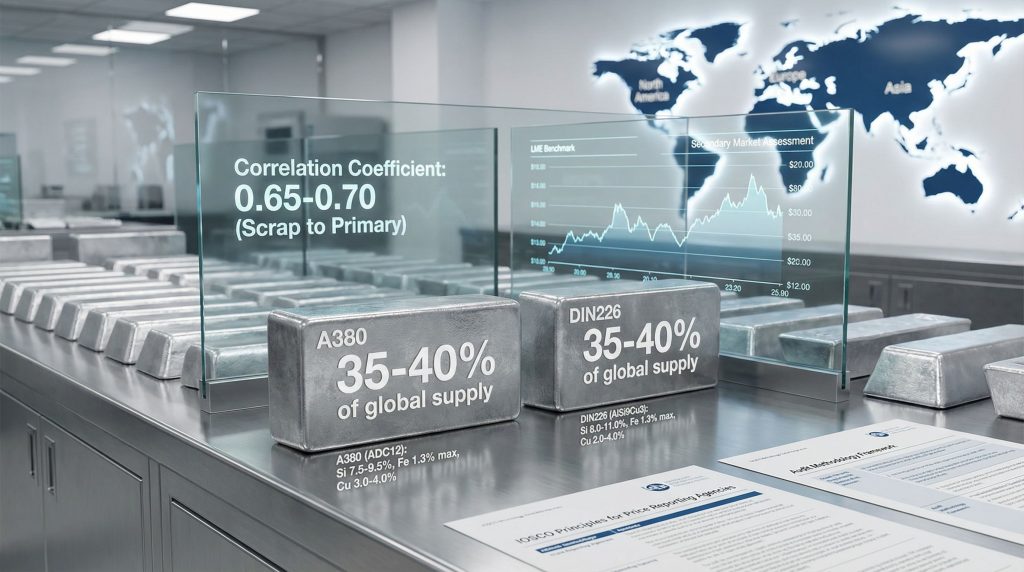
Secondary aluminium markets operate through sophisticated valuation frameworks that differ significantly from traditional exchange-traded metals pricing. Unlike primary aluminium which trades on standardised London Metal Exchange contracts, recycled aluminium requires specialised assessment methodologies that account for alloy specifications, regional processing costs, and supply chain complexities inherent to recycling operations. These audited secondary aluminium price assessments provide essential market intelligence for participants navigating this complex trading environment.
Understanding Secondary Aluminium Market Valuation Frameworks
The recycling industry has developed distinct classification systems that separate secondary aluminium from virgin metal production. These frameworks recognise fundamental differences in production processes, quality variations, and end-market applications that create unique pricing dynamics. Furthermore, the industry evolution trends continue shaping how market participants approach valuation methodologies.
Defining Secondary Aluminium in Global Trading Systems
Secondary aluminium encompasses all recycled aluminium products derived from post-consumer scrap, manufacturing waste, and end-of-life components. This material flows through specialised processing facilities where sorting, cleaning, and remelting operations transform mixed scrap into standardised alloy ingots meeting specific compositional requirements.
The technical distinction between primary smelted aluminium and recycled secondary alloys creates separate market segments with independent pricing mechanisms. Primary aluminium emerges from bauxite ore processing in energy-intensive smelting operations, while secondary production requires approximately 95% less energy through remelting processes.
Key alloy specifications drive price differentiation across global markets. A380 represents the most widely traded die-casting alloy specification, particularly for automotive applications requiring specific silicon, copper, and iron content ratios. DIN226 serves as the European equivalent designation, maintaining compositional compatibility whilst adhering to German industrial standards.
Additional specifications include 319 alloy for general casting applications and 356 alloy for high-performance casting requirements in aerospace and automotive sectors. Each specification commands distinct premiums based on compositional purity, processing difficulty, and end-market demand characteristics.
The Role of Price Reporting Agencies in Metal Markets
Price Reporting Agencies establish transparent benchmarks that enable efficient price discovery across fragmented secondary aluminium markets. Unlike centralised exchange trading, secondary aluminium transactions occur through bilateral negotiations between processors, converters, and end-users across multiple geographic regions.
PRAs collect transaction data from market participants, apply standardised methodologies, and publish verified price assessments that serve as industry benchmarks. This function becomes particularly crucial in secondary markets where transaction volumes remain smaller and more dispersed compared to primary metal trading.
The differentiation between exchange-traded prices and physical market assessments reflects structural differences in market organisation. LME contracts provide standardised delivery terms and quality specifications, while physical secondary markets require location-specific pricing that accounts for transportation costs, processing capabilities, and regional supply-demand imbalances.
Regional pricing variations carry operational significance for market participants managing supply chains across multiple jurisdictions. European assessments typically reflect delivered pricing conventions, North American markets use Midwest delivery premiums, and Asian markets often operate on import parity calculations that factor international shipping costs and customs duties.
When big ASX news breaks, our subscribers know first
How Do IOSCO Audit Standards Transform Price Assessment Reliability?
The International Organization of Securities Commissions has established comprehensive principles governing Price Reporting Agency operations, creating standardised frameworks for methodology transparency and data integrity verification. These standards address growing institutional demand for regulatory-compliant benchmark pricing in commodity markets.
International Organization of Securities Commissions Framework
IOSCO principles for Price Reporting Agencies establish governance standards that ensure methodological rigour and operational transparency. The framework requires systematic documentation of price discovery processes, stakeholder consultation mechanisms, and independent verification procedures that validate assessment accuracy.
Mandatory audit requirements for financial benchmark compliance create institutional-grade reliability standards that enable broader adoption of commodity price assessments in financial applications. Banks, investment funds, and corporate treasury operations increasingly require IOSCO-compliant benchmarks for derivative pricing, risk management, and regulatory reporting purposes.
These compliance requirements significantly impact regulatory acceptance and institutional trading patterns. Financial institutions subject to Basel III capital requirements or IFRS accounting standards often mandate IOSCO-audited benchmarks for fair value measurements and derivative valuation purposes.
Audit Methodology Components
Data collection transparency requirements mandate systematic documentation of all information sources used in price assessment calculations. PRAs must maintain detailed records of transaction reports, market participant feedback, and expert judgement applications that contribute to published benchmarks.
Market participant verification processes ensure data quality through systematic validation of submitted information. This includes verification of counterparty identities, transaction authenticity, and pricing terms consistency across multiple data sources.
Publication frequency and timing standardisation creates predictable market information flows that enable efficient price discovery. Regular assessment schedules allow market participants to incorporate benchmark pricing into procurement decisions, contract negotiations, and risk management strategies.
Quality control mechanisms for outlier detection involve statistical analysis of submitted data to identify potentially erroneous or manipulative information. These systems automatically flag unusual price movements, volume concentrations, or timing anomalies that require additional investigation before publication.
Which Technical Specifications Drive Secondary Aluminium Pricing?
Alloy composition requirements create distinct market segments within secondary aluminium trading, with each specification commanding different premiums based on processing complexity and end-market applications. Understanding these technical distinctions enables market participants to identify arbitrage opportunities and optimise procurement strategies.
European Market Assessment Standards
European secondary aluminium assessments focus primarily on pressure die-casting applications that require precise compositional control for automotive and industrial manufacturing applications.
Key European Secondary Aluminium Specifications:
| Alloy Type | Silicon Content | Iron Content | Copper Content | Primary Applications |
|---|---|---|---|---|
| DIN226/A380 | 8.5-9.5% | Max 1.3% | 3.0-4.0% | Pressure die casting |
| Taint/Tabor | Variable | Variable | Low | General recycling |
| LM24 | 8.0-10.5% | Max 1.9% | 3.0-4.0% | Sand casting applications |
The MB-AL-0005 assessment covers aluminium pressure diecasting ingot DIN226/A380 delivered Europe, reflecting the dominant specification for automotive engine blocks, transmission housings, and structural components requiring high strength-to-weight ratios.
Silicon content within the 8.5-9.5% range provides optimal fluidity characteristics for pressure die-casting operations whilst maintaining mechanical properties required for structural applications. Copper additions in the 3.0-4.0% range enhance strength characteristics but must be carefully controlled to prevent hot cracking during casting operations.
North American Pricing Benchmarks
North American secondary aluminium markets operate on distinct specification standards that reflect regional automotive industry requirements and recycling infrastructure capabilities. The A380.1 designation represents the primary specification for die-casting applications across United States and Canadian markets.
MB-AL-0040 assessment methodology covers aluminum alloy A380.1 delivered Midwest, establishing pricing benchmarks for the largest consumption region in North America. Midwest delivery premium calculations account for transportation costs from major recycling centres in the Great Lakes region to automotive manufacturing facilities concentrated in Michigan, Ohio, and Indiana.
Payment terms significantly impact pricing structures in North American markets. Standard net-30 and net-60 payment terms create financing costs that processors incorporate into delivered pricing. Large-volume purchasers often negotiate extended payment terms that require corresponding price adjustments to account for working capital costs.
Asian Market Dynamics
Asian secondary aluminium markets demonstrate increasing sophistication as automotive manufacturing capacity expands across China, Japan, and Southeast Asian countries. ADC12 alloy specifications dominate automotive die-casting applications, reflecting Japanese automotive industry influence on regional specification development.
Zorba scrap pricing mechanisms provide important input cost benchmarks for secondary aluminium processors across Asia. Zorba represents mixed non-ferrous scrap containing aluminium, copper, and other metals that requires sophisticated sorting and processing capabilities to extract aluminium fractions suitable for remelting.
Import dependency factors create unique pricing dynamics in Asian markets where domestic scrap generation remains insufficient to meet growing secondary aluminium demand. Import parity calculations must account for international freight rates, customs duties, and currency fluctuation risks that create volatility in delivered pricing.
What Methodologies Do Leading Assessment Providers Use?
Price assessment methodologies combine multiple data collection approaches to capture comprehensive market activity across fragmented secondary aluminium trading networks. Understanding these methodologies enables market participants to interpret published benchmarks accurately and identify potential trading opportunities.
Data Collection Frameworks
Primary Data Sources include:
- Smelter transaction reports documenting purchases from scrap suppliers
- Die-caster purchase agreements covering regular supply arrangements
- Scrap dealer trading activity across regional collection networks
- Converter toll processing fees for specification upgrading services
- Semi-fabricator input costs for downstream processing operations
Transaction-based data collection focuses on actual traded prices rather than indicative quotes or theoretical calculations. This approach ensures published assessments reflect genuine market activity rather than speculative pricing that may not represent executable transaction levels.
Market maker submissions provide additional data points from participants actively buying and selling secondary aluminium across multiple specifications and geographic regions. These participants often maintain sophisticated pricing models that account for specification premiums, transportation costs, and processing margins.
Price Discovery Mechanisms
Spot transaction weighting methodologies prioritise recent trading activity whilst incorporating longer-term contract pricing to smooth short-term volatility. This balanced approach prevents artificial price movements caused by isolated transactions whilst maintaining sensitivity to genuine market trends.
Bid-offer spread analysis techniques evaluate market liquidity by examining the differential between buying and selling interest across different specifications and delivery terms. Narrow spreads indicate active trading and price transparency, while wide spreads suggest limited liquidity or information asymmetries.
Volume-weighted average calculations ensure larger transactions receive appropriate influence in benchmark determinations whilst preventing small, potentially unrepresentative trades from skewing published assessments. Minimum transaction sizes often apply to maintain statistical significance.
Expert judgement application protocols provide mechanisms for incorporating market intelligence that may not appear in quantifiable transaction data. Experienced analysts evaluate market conditions, supply disruptions, and demand shifts that influence pricing trends beyond historical transaction patterns.
Geographic Coverage Strategies
Regional Assessment Approaches:
- North American truckload quantity standards reflecting typical shipment sizes
- European CIF/delivered pricing conventions including transportation and insurance
- Asian import parity calculations based on international arbitrage opportunities
- Cross-regional arbitrage opportunity tracking for integrated trading strategies
Geographic segmentation recognises fundamental differences in market structure, logistics costs, and regulatory environments that create persistent price differentials across regions. These variations enable international trading opportunities for participants with global supply chain capabilities.
Transportation cost modelling incorporates fuel price fluctuations, driver availability, and regulatory changes affecting trucking operations. These factors create short-term pricing volatility that requires sophisticated risk management approaches for market participants.
How Do Secondary Aluminium Prices Correlate with Primary Metal Markets?
The relationship between recycled and virgin aluminium pricing reflects complex interactions between energy costs, processing requirements, and quality specifications that create both correlation and divergence opportunities for informed market participants. Furthermore, effective commodity volatility hedging strategies must account for these relationships.
LME Relationship Analysis
Secondary aluminium pricing maintains directional correlation with London Metal Exchange benchmarks whilst operating through distinct supply-demand fundamentals that create persistent basis relationships. Energy-intensive primary production creates floor pricing for secondary alternatives, but processing costs and specification requirements generate independent price movements.
LME aluminum futures provide hedging mechanisms for secondary market participants managing price risk exposure. However, basis risk between LME contracts and physical secondary pricing requires sophisticated risk management strategies that account for specification premiums, transportation costs, and processing margins.
Market participants often establish trading strategies that capture basis relationships between primary and secondary pricing whilst managing exposure to general aluminium price movements. These approaches require detailed understanding of cost structures across both primary smelting and secondary processing operations.
Scrap Premium Calculations
Secondary aluminium pricing operates independently from LME benchmarks due to recycling costs, alloy specifications, and regional supply-demand imbalances, creating arbitrage opportunities for informed traders who understand the technical and logistical factors driving price differentials.
Scrap premiums reflect the economic value of avoiding primary production costs whilst accounting for additional processing requirements in secondary operations. These calculations must incorporate collection costs, sorting expenses, contamination losses, and remelting energy consumption that differ significantly from primary smelting economics.
Regional scrap availability creates geographic pricing variations that persist due to transportation costs and processing infrastructure limitations. Areas with concentrated manufacturing activity generate higher scrap volumes, creating local supply advantages that translate into competitive pricing for secondary producers.
Conversion Cost Variables
Energy costs in remelting operations represent the largest variable expense in secondary aluminium production, but remain substantially lower than primary smelting requirements. Natural gas price fluctuations directly impact processing margins and influence secondary aluminium pricing relative to primary alternatives.
Sorting and processing expenses vary significantly based on scrap quality and contamination levels. Clean manufacturing scrap commands premium pricing due to minimal processing requirements, whilst mixed consumer scrap requires extensive sorting, cleaning, and quality control procedures that increase conversion costs.
Transportation logistics premiums reflect fuel costs, driver availability, and regulatory compliance expenses that affect delivered pricing across different geographic markets. These costs create persistent regional price differentials that enable location-based arbitrage strategies.
Environmental compliance costs include emissions control systems, waste handling procedures, and regulatory reporting requirements that add fixed cost components to secondary processing operations. These expenses contribute to minimum viable processing margins that influence pricing floor levels.
What Are the Key Applications Driving Secondary Aluminium Demand?
End-market applications determine specification requirements and quality standards that directly influence secondary aluminium pricing structures across different geographic regions and processing capabilities.
Automotive Industry Requirements
Die-casting alloy specifications for engine blocks require precise compositional control to ensure thermal conductivity, corrosion resistance, and mechanical strength characteristics. A380 and DIN226 specifications meet these requirements whilst enabling cost-effective manufacturing through recycled content utilisation.
Lightweighting trends continue increasing aluminium content per vehicle as automotive manufacturers pursue fuel efficiency improvements and electric vehicle development. Industry projections indicate average aluminium content per vehicle increasing from current levels near 400 pounds to over 500 pounds within the next decade.
Electric vehicle battery housing applications create new demand segments for secondary aluminium with specialised requirements for thermal management and electromagnetic shielding. These applications often accept recycled content whilst maintaining stringent quality specifications that command premium pricing.
Construction and Infrastructure Uses
Extrusion alloy demand for building systems creates substantial secondary aluminium consumption through window frames, curtain wall systems, and structural components. Construction applications typically accept higher recycled content percentages compared to automotive applications due to less stringent performance requirements.
Recycled content requirements in green building standards drive institutional demand for verified secondary aluminium products. LEED certification programmes and similar environmental rating systems create market premiums for materials with documented recycled content percentages.
Infrastructure project aluminium intensity continues growing through transportation system upgrades, renewable energy installations, and telecommunications equipment deployment. These applications often prioritise cost-effectiveness over maximum performance specifications, creating favourable demand conditions for secondary aluminium products.
The next major ASX story will hit our subscribers first
How Can Market Participants Utilise Audited Secondary Aluminium Price Assessments?
Audited secondary aluminium price assessments provide institutional-grade transparency for trading, procurement, and investment decisions by delivering IOSCO-compliant benchmarks that reflect actual market conditions rather than theoretical exchange prices. Moreover, these assessments integrate well with comprehensive investment strategy components for portfolio management.
Trading and Hedging Applications
Physical contract pricing mechanisms increasingly reference audited price assessments to establish transparent, defensible pricing terms that reduce counterparty disputes and enable efficient contract administration. Standard industry contracts often incorporate published benchmarks with agreed-upon timing and specification adjustments.
Risk management strategy development benefits from reliable benchmark pricing that enables accurate exposure measurement and hedging effectiveness evaluation. Financial institutions and corporate treasury operations require audited benchmarks for regulatory reporting and risk monitoring purposes.
Arbitrage opportunity identification requires sophisticated analysis of price relationships between different specifications, geographic markets, and delivery terms. Audited secondary aluminium price assessments provide the data foundation for quantitative trading strategies that capture these pricing inefficiencies.
Supply Chain Planning Benefits
Procurement budget forecasting utilises historical benchmark data and forward price indicators to establish realistic cost projections for annual planning cycles. Manufacturing companies with significant aluminium consumption rely on these assessments for strategic sourcing decisions and supplier negotiations.
Inventory valuation accuracy improves through mark-to-market pricing based on published benchmarks that reflect current market conditions rather than historical cost accounting methods. This approach provides more accurate financial reporting and working capital management.
Supplier negotiation benchmarking enables procurement professionals to evaluate proposed pricing terms against transparent market references, improving negotiating positions and contract terms. Published assessments create objective price discovery that reduces information asymmetries between buyers and sellers.
Investment Decision Support
Audited secondary aluminium price assessments enable sophisticated investment analysis by providing reliable historical data and current market intelligence that supports valuation models and strategic planning processes across the recycling industry value chain. Additionally, the integration of data-driven mining approaches enhances decision-making capabilities.
Capital allocation decisions in recycling infrastructure, processing technology, and collection networks require accurate market intelligence to evaluate investment returns and competitive positioning. Published benchmarks provide essential data for business case development and strategic planning.
Mergers and acquisition activity in the secondary aluminium sector relies heavily on benchmark pricing data for valuation purposes, due diligence analysis, and deal structuring. Investment banks and private equity firms require audited price assessments for transaction modelling and risk evaluation.
What Trends Are Shaping Secondary Aluminium Assessment Evolution?
Market development continues driving assessment methodology improvements that address evolving industry requirements for transparency, accuracy, and regulatory compliance across global trading networks. This evolution aligns with broader Fastmarkets price assessment methodologies being refined industry-wide.
Sustainability Reporting Integration
Carbon footprint tracking in price assessments responds to growing institutional demand for environmental impact measurement across commodity supply chains. Market participants increasingly require carbon intensity data alongside traditional pricing information to support sustainability reporting and ESG investment strategies.
Recycled content verification requirements create additional data collection and validation processes that ensure published benchmarks accurately reflect material origin and environmental attributes. These capabilities support green financing initiatives and sustainable procurement programmes.
ESG compliance measurement frameworks integrate environmental, social, and governance factors into price assessment methodologies, creating comprehensive evaluation tools that address institutional investor requirements for sustainable commodity investments.
Digital Platform Development
API integration for real-time price feeds enables automated pricing systems that incorporate benchmark data directly into enterprise resource planning systems, treasury management platforms, and trading applications. This functionality reduces manual data entry requirements and improves pricing accuracy.
Mobile application accessibility provides market participants with immediate access to price information and market intelligence through smartphone and tablet interfaces. These tools enable field-based decision making and improve information distribution across global organisations.
Excel add-in functionality delivers seamless integration with existing analytical workflows, enabling procurement teams and financial analysts to incorporate benchmark pricing directly into existing spreadsheet models and reporting systems.
Regulatory Compliance Enhancement
Annual methodology review processes ensure assessment procedures remain current with evolving market structures and regulatory requirements. These systematic reviews incorporate stakeholder feedback and market development trends to maintain benchmark relevance and accuracy.
Market consultation requirements mandate formal stakeholder engagement before implementing material methodology changes, ensuring industry input guides assessment development and maintains market acceptance of published benchmarks.
Transparency reporting obligations require detailed documentation of assessment procedures, data sources, and quality control mechanisms that enable independent verification of benchmark integrity and regulatory compliance.
Implementation Considerations for Market Participants
Audited secondary aluminium price assessments require systematic integration into existing business processes to maximise value creation and risk management effectiveness across procurement, trading, and financial reporting functions. Furthermore, developing comprehensive ETC investment guide understanding enhances portfolio diversification strategies.
Technology Infrastructure Requirements
Data integration systems must accommodate multiple assessment frequencies, specification variations, and geographic coverage requirements that characterise secondary aluminium markets. Enterprise systems require flexible configuration capabilities to handle diverse pricing structures and delivery terms.
Quality assurance protocols ensure data accuracy and timeliness across multiple price series and delivery mechanisms. Organisations require systematic validation procedures that verify benchmark data integrity and identify potential errors before integration into business-critical applications.
Risk Management Integration
Exposure measurement systems require sophisticated mapping between physical market positions and available benchmark assessments to ensure accurate risk quantification and hedging effectiveness evaluation. This process demands detailed understanding of specification relationships and basis risk characteristics.
Hedge accounting applications under IFRS and US GAAP accounting standards require documented effectiveness testing procedures that demonstrate statistical relationships between hedge instruments and underlying exposures measured using audited price assessments.
Frequently Asked Questions About Audited Secondary Aluminium Pricing
How Often Are Secondary Aluminium Prices Updated?
Daily assessment schedules apply to major market centres including European DIN226/A380 pricing and North American A380.1 benchmarks, reflecting active trading volumes and market participant requirements for current pricing information.
Weekly publication cycles serve specialised alloy specifications with lower trading frequency but consistent market activity. These assessments provide reliable benchmarks for contract pricing whilst maintaining cost-effective publication schedules.
Monthly comprehensive market analysis reports supplement regular price assessments with detailed commentary on supply-demand fundamentals, regulatory developments, and industry trends affecting secondary aluminium markets.
What Distinguishes Audited from Non-Audited Assessments?
IOSCO compliance verification processes require independent validation of methodology procedures, data collection practices, and quality control systems that ensure benchmark integrity and regulatory acceptance for financial applications.
Independent methodology reviews involve third-party verification of assessment procedures against established industry standards and regulatory requirements. These reviews provide institutional confidence in benchmark reliability and accuracy.
Regulatory acceptance for financial applications enables broader utilisation of audited benchmarks in derivative instruments, fair value measurements, and risk management applications subject to banking and securities regulations.
Which Regions Offer the Most Reliable Price Transparency?
North American market maturity advantages include established trading relationships, standardised specifications, and sophisticated logistics infrastructure that enable consistent price discovery and benchmark accuracy.
European regulatory framework benefits provide comprehensive oversight of commodity market operations, including price reporting agency governance and benchmark administration standards that enhance market transparency and investor protection.
Asian market development trajectories indicate improving transparency and standardisation as trading volumes grow and institutional participation increases across China, Japan, and Southeast Asian countries.
Note: This analysis is based on publicly available information and industry practices as of 2026. Market participants should consult current methodology documents and conduct independent due diligence before making trading or investment decisions. Price assessments may not reflect all market conditions and should be used in conjunction with other market intelligence and risk management practices.
Looking to Capitalise on Metal Market Opportunities?
Discovery Alert's proprietary Discovery IQ model delivers real-time notifications on significant ASX mineral discoveries, including those in the aluminium and secondary metals sectors, ensuring you're positioned ahead of market movements. Join thousands of investors who rely on Discovery Alert's instant discovery notifications to identify actionable opportunities before they become mainstream knowledge, and begin your 30-day free trial today to secure your competitive advantage.